Showing posts with label NASA. Show all posts

Sunday, June 27, 2021

Universal Truths in McRaven’s ‘Code’

Review by Bill Doughty

Leadership skills and virtuous behavior are built into the human DNA.


That’s the conclusion of Adm. William H. McRaven (U.S. Navy Retired) author of “The Hero Code: Lessons Learned from a Life Well Lived” (Grand Central Publishing, Hachette Book Group, 2021).

“There is a hero in all of us. There is an innate code that has been there since the birth of mankind. It is written in our DNA. It is what drove the great expansion of humanity out of Africa. It summoned the explorers to cross the deserts and the seas. It helped create the great faiths. It emboldened the early scientists and philosophers. It nurtured the ill and infirm. It spoke truth to the masses. It brought order to chaos and hope to the desperate. This code is not a cipher, or a cryptograph, or a puzzle to be solved. It is a moral code, an internal code of conduct that drives the human race to explore, to nurture, to comfort, to inspire, and to laugh so that societies can flourish.”

McRaven helps readers and leaders tap into their innate evolved DNA. Like Richard Dawkins in “Unweaving the Rainbow,” McRaven calls for humility, respect, and courage as he gently reminds us of our mortality and relative insignificance in space and time.

McRaven writes this universal truth:

“To be humble is to recognize that one’s intellect, one’s physical strengths, one’s wealth all pale when compared to the vastness, the complexity, the richness, the power, and the grandeur of the universe. And if we are humbled by our place in the universe, then we are much more likely to see that our differences are infinitely small. We are much more likely to see that our understanding is equally fraught and that our power to overcome even he tiniest challenges is similarly difficult. Humility is born out of respect. Respect for what we do not know. Respect for what we cannot readily see. But out of this humble approach to life, we are more likely to appreciate the beauty that surrounds us, more likely to gaze into a microscope or peer at the stars and be awed, more likely to be inspired by little acts of kindness. And we are much more likely to treat others as we would have them treat us.”
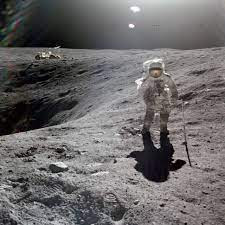
Charles Duke steps on the moon during Apollo 16, April 1972. 
In a poignant post-Trump insight, McRaven writes: “The power of humility is that it brings us closer together, and the role of every hero is to unite people, not divide them.”

Throughout this compact but powerful book McRaven tells stories of true heroes such as Air Force General Charles Duke, the youngest astronaut (so far) to walk on the moon; Marine Private First Class Ralph Johnson, who in 1968 leapt on a grenade and “gave his last full measure of devotion to the men he served with;” Gary Sinise, who selflessly brought educational supplies to a war zone in Afghanistan as part of Operation International Children; and Sen. John S. McCain III, a POW survivor and true American hero, who showed McCraven humility, gratitude, honor, and a sense of humor.


Abraham Lincoln
Being able to laugh at oneself is the sign of strength, and McRaven presents a self-deprecating joke Abraham Lincoln told to people: “(Lincoln) loved to tell the story of a man who approached him on a train one day. The man said, ‘I have an article in my possession which belongs to you.’ Taking a jack-knife from his pocket, the man explained, ‘This knife was placed in my hands with the promise that I was to keep it until I found a man uglier than myself. Allow me now to say, sir, that I think you are fairly entitled to the property.’”

McRaven introduces lesser-known heroes, too, including Navy Capt. Ted Grabowsky, who taught that “honesty is the cornerstone of integrity, the foundation upon which all other aspects of your character will be built.” He tells us of cancer researcher Dr. Jim Allison, who personifies perseverance (and has an interesting connection to the great Willie Nelson). And, he shares a personal story about cancer doctor Michael Keating, who shows that hope and change can be the strongest forces in the universe.


Ten years ago this year McRaven, under Commander in Chief President Barack Obama, commanded the Navy SEALs who brought justice to Osama bin Laden. If that was a career high for him, surely one of his deepest lows came in a separate combat action when some of the military forces under McRaven’s command mistakenly killed two non-enemy sons and a daughter of a father in Afghanistan. In the tenth chapter McRaven relates in heartbreaking detail how he met with that father and how forgiveness can be transforming.

During a Profiles in Leadership seminar, Retired U.S. Navy Adm. William H. McRaven speaks to service members inside the Pfingston Reception Center located on Joint Base San Antonio – Lackland, Texas, Jan. 10, 2018, about character and how it applies to leadership. (TSgt. Ave I. Young)

The "Forgiveness" chapter’s epigram is by Mahatma Gandhi: “The weak can not forgive; forgiveness is the attribute of the strong.” We can tie McRaven’s wisdom –– giving up the burden of hatred –– to the current state of society in 2021: intolerant political correctness, QAnon conspiracies, cancel culture, voter suppression, and domestic extremism and terrorism, including the Jan. 6 insurrection attack on the Capitol –– seeking to divide rather than unite.

“Society today seems to be easily offended. We are quick to anger, and some people believe every offensive act, no matter the intent, requires a swift rebuke. The hardest thing any hero can do is to forgive. It is easier to storm the hill, fight the fire, and stop a madman with a gun. It is hard to forgive, because we are afraid. Afraid that forgiving will take away the anger that drives us, the hatred that motivates us, the righteous indignation of being wronged. We want more than anything to harness the outrage, feel the power of injustice, and the fury of discontent, so we can lash out at the offender and feel justified. We think that retribution, no matter how small or how large, will sooth our soul.

It will not.”

He advises, “Be the victor, not the victim.”
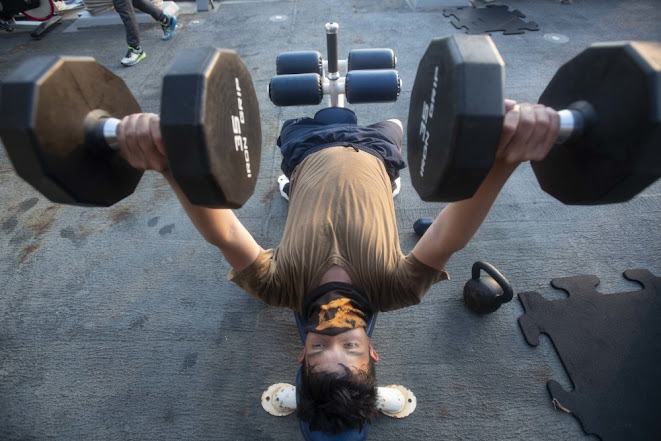

Boatswain's Mate Seaman Apprentice Esau Arellano aboard guided-missile destroyer USS Ralph Johnson (DDG 114), Aug. 4, 2020. (MC3 Anthony Collier)

His code begins with “courage.” He advises, “Take one step forward and face your inner demons. And if you take that one step forward you will find the courage you seek…”


It takes profound individual courage, for example, to confront the universal human truth of our mortality. Which reminds me again of Richard Dawkins, who writes in “Unweaving the Rainbow”: “We are going to die, and that makes us the lucky ones. Most people are never going to die because they are never going to be born. The potential people who could have been here in my place but who will in fact never see the light of day outnumber the sand grains of Arabia.”


In “Hero Code” McRaven gives respect to courageous heroes. He quotes John Adams, William Penn, Mark Twain, Winston Churchill, Anne Frank, Fyodor Dostoevsky, Nelson Mandela, Helen Keller, Sonia Sotomayor, among others.


McRaven distills his perspective on heroism down to each individual. He recommends readers find their talent “and use it to inspire others –– to give hope, to make tomorrow a better day.”


This compact book is packed with bite-sized philosophy, common-sense ethos, and universal wisdom.

Monday, March 29, 2021

‘Gutsy’ Women Knocking on the Door

Review by Bill Doughty

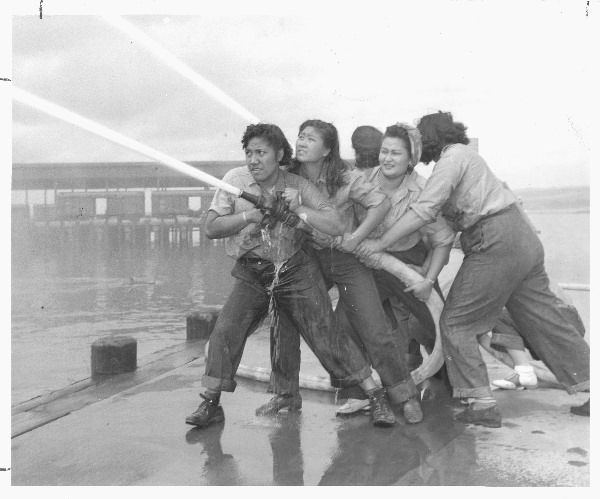
In an iconic photo, four Asian American Pacific Islander women at the Pearl Harbor Naval Shipyard train in firefighting. Long mislabeled as taken during the attack of Dec. 7, 1941, the photo in fact portrays some of  the strong women who applied to support the Navy’s war efforts in the wake of that attack. From left to right: Elizabeth Moku, Alice Cho, Katherine Lowe, and Hilda Van Gieson.


Over time, history usually has a way of sorting out fact from fiction.


Rear Adm.Grace Hopper, "Mother of Computing"
The facts and highlights of strong women of grit and grace are spotlighted in a book recommended for Women’s History Month. Profiles of more than 100 women come to life in “The Book of Gutsy Women” by Hillary Rodham Clinton and Chelsea Clinton (Simon & Schuster, 2019).

Among the women profiled are some we featured in Navy Reads posts: Rear Adm. Grace Hopper, Ada Lovelace, Rachel Carson, Marjory Stoneman Douglas, Margaret Chase Smith, Malala Yousafzai, and Maya Angelou. This book includes mini-biographies of both famous (Clara Barton, Helen Keller, Ida B. Wells, Maya Lin, Gabby Giffords, Greta Thunberg, and Venus and Serena Williams) as well as less-well-known women (Rigoberta Menchu Tum, Dr. Gao Yaojie, Nelba Marquez-Greene, Wangari Maathai, and Jineth Bedoya Lima).


Chelsea and Hillary Clinton, 2011
Hillary and Chelsea each provide essays about their subjects. They also offer personal perspectives about the women who have inspired and enlightened them – women who have made a difference in the world. The book is organized in sections: early inspirations, education pioneers, earth defenders, explorers and inventors, healers, athletes, advocates and activists, storytellers, elected leaders, groundbreakers, and women’s rights champions.

Chelsea writes, “I learned of Grace (Hopper) in 1996, when the navy named a new ship the USS Hopper (DDG 70) in her honor … I learned even more about her when I spoke many years later at the Grace Hopper celebration, the largest gathering of women technologists in the world.”


Former First Lady, senator, and Secretary of State Hillary Clinton reflects about the suffragists who knocked on the door, marched in the street, and fought for women to be able to vote in the United States one hundred years ago. That right was guaranteed with the passing of the Nineteenth Amendment to the U.S. Constitution, but it was a right that took decades to apply to women of color:

“Reading the words of the Nineteenth Amendment today, it’s hard not to wonder why it took so long” ‘The right of citizens of the United States to vote shall not be denied or abridged by the United States or by any State on account of sex. Congress shall have the power to enforce this article by appropriate legislation.’ But, of course, it was a long struggle because it was about so much more than the right of women to vote. It was about race, class, and deeply held cultural and religious views about women’s subordinate roles to men in society. It was about men’s –– and some women’s –– insecurities and fears of the unknown. These challenges are still present today.

The franchise –– the basic right of citizenship –– is still being fought over between those of us who believe every citizen should be able to vote and have that vote counted, and those who want to restrict the vote by erecting barriers against people, largely still based on race.”

Celia Ou, a graduate student at Scripps Institution of Oceanography, monitors computer screens displaying detailed sonar imaging of the ocean floor aboard the Auxiliary General Oceanographic Research (AGOR) vessel R/V Sally Ride, Dec. 15, 2016. (John F. Williams)


Nearly all the Gutsy women featured in this book faced and overcame some kind of obstacles of discrimination. Chelsea Clinton says this about space pioneer astronaut Sally Ride, the first American woman in space (in 1983) and a champion of STEM education for young people worldwide:

“Even after her death in 2012, Sally Ride kept breaking barriers. She came out as a lesbian quietly, without fanfare … Not long after her death, Tam [O’Shaughnessy, her partner of 27 years] received a call that surprised her, from Ray Mabus, then secretary of the navy. The navy hoped to honor Sally by naming a research vessel after her. Secretary Mabus was calling to ask whether Tam would be the ship’s sponsor – a role that had, up until that point, been filled by the wife of the man for whom the ship was named. ‘I think it is fitting the the celebration of Sally’s legacy as a pioneering space explorer and a role model includes an acknowledgment of who she really was and what she cared about,’ said Tam. The R/V Sally Ride, commissioned in 2016, is the first navy research ship named for a woman. Her legacy lives on in the scientific curiosity sparked in the girls and boys she continues to inspire, the ship that bears her name, and a spot on the moon named after her by NASA.”

Military readers may find fascinating nuggets of history in the essays about Sylvia Earle, Mary McLeod Bethune, Florence Nightingale, Eleanor Roosevelt, and Mary Edwards Walker. Chelsea writes this about Walker:

“…Dr. Mary Edwards Walker, the only woman in her medical school class at Syracuse Medical College in 1855. She was a practicing physician when the Civil War broke out. She desperately wanted to enlist in the Union Army as a surgeon but wasn’t allowed to because she was a woman. Initially she was called a nurse, since women generally weren’t considered doctors. Because women were not allowed to enlist, Mary had to volunteer, working for free at a temporary hospital, first in Washington and then in Virginia, where she traveled to Union field hospitals across the commonwealth … When her medical credentials were finally accepted she moved to Tennessee and became a War Department surgeon – a paid position that was the equivalent of a lieutenant in status.”


Dr. Sylvia Earle became chief scientist at the National Oceanic and Atmospheric Administration in 1990. She pioneered research in preserving 
and protecting the ocean, including the study of damage to coral reefs. Her inspiring TED talk, above, is a call to action. Hillary writes:

“When I think of Sylvia’s work, I am reminded how important it is for all of us to peruse and consider what we want to leave to the generations who come after us –– how they’ll honor the past, imagine the future, and give gifts to those who will live out their lives long after we’re gone. That’s exactly what Sylvia’s life as a scientist, an engineer, a teacher, and an explorer should inspire all of us to do: we must preserve our oceans for the future.”

Last year, this book generated controversy because of the women who were not included. For example, there is an unfortunate dearth of women who have served in or with the military. Surely, the authors could have included a “protectors” section filled with inspiring women who served in uniform.


Despite the intriguing photo on the cover, there is little focus on the women who served on the Homefront during the Second World War. In fact, there’s no explanation of the colorized photo of the women firefighters at the Pearl Harbor Naval Shipyard.

Yet, considering the general lack of attention toward the achievements of women in American and world history for many generations, it is refreshing to see a book of this scope. Women continue to knock on the door, push through the glass ceiling, and demand equality.


“The Book of Gutsy Women” illustrates the strengths of women throughout history, often in the face of sexism, misogyny, harassment, and patriarchy. It highlights the facts of women’s history and showcases women’s contributions to creating a better world now and in the future.

Monday, June 15, 2020

Change 'How and How Fast'?

NASA
Review by Bill Doughty

How and how fast humans move to confront climate change is at the core of "The Uninhabitable Earth: Life After Warming" by David Wallace-Wells (Tim Duggan Books, Crown Publishing Group; 2019).

The Aedes Aegypi mosquito can carry the Zika virus. (CDC/James Gathany)
Among the threats of a continually warming planet are disease hot zones and pandemics:
"There are now, trapped in Arctic ice, diseases that have not circulated in the air for millions of years –– in some cases, since before humans were around to encounter them. Which means our immune systems would have no idea how to fight back when those prehistoric plagues emerge from the ice. Already, in laboratories, several microbes have been reanimated..."
The author describes reanimation of bacteria (and a worm) from tens of thousands of years ago, even some microorganisms from millions of years ago. He shows the connection between a warming world and increasing Zika, Lyme disease, malaria, and yellow fever.

Written before Covid-19 was discovered outside of China, "The Uninhabitable Earth" warns of "plagues that climate change will confront us with for the very first time –– a whole new universe of diseases humans have never before known to even worry about ... Scientists guess the planet could harbor more than a million yet-to-be-discovered viruses. Bacteria are even trickier..."

Sunset in southern California during fires, Oct. 23, 2007. CA National Guard.
Wallace-Wells offers the usual dystopian menu of threats: famine, rising ocean levels, floods, unbreathable air, economic collapse, mass extinctions, more destructive storms, greater displacement and migration, and growing conflicts and war.

Countries at risk for conflicts and/or civil war, according to researchers, are Haiti, Pakistan, India, Philippines, Cambodia, and Guatemala.
Climate change represents a growing threat to the U.S. military –– particularly for the Navy –– as water levels rise at some bases and Arctic melting opens new pathways to potential conflict. Some rivals and competitors are taking advantage of the situation even as free nations insist on honoring treaties and freedom of navigation.
"Given the right war-gaming cast of mind, it is also possible to see the aggressive Chinese construction activity in the South China Sea, where whole new artificial islands have been erected for military use, as a kind of dry run, so to speak, for life as a superpower in a flooded world. The strategic opportunity is clear, with so many of the existing footholds –– like all those low-lying islands the United States once used to stepping-stone its own empire across the Pacific –– expected to disappear by the end of the century, if not before. The Marshall Islands archipelago, for instance, seized by the U.S. during World War II, could be rendered uninhabitable by sea-level rise as soon as midcentury, the U.S. Geological Society has warns; its islands will be underwater even if we meet the Paris goals."
Ships and submarines from the Republic of Singapore Navy and U.S. Navy gather in formation in the South China Sea July 21, 2015 during the underway phase of Cooperation Afloat Readiness and Training (CARAT) Singapore 2015. CARAT is an annual, bilateral exercise series with the U.S. Navy, U.S. Marine Corps and the armed forces of nine partner nations. (U.S. Navy photo by Mass Communication Specialist 2nd Class Joe Bishop/Released)
China could be capitalizing on the changing environment at the same time that it may be slow-walking a green revolution, yet "it does hold nearly all the cards." How –– and how fast –– China will go greener becomes the question:
"How and how fast China manages it own transition from industrial to postindustrial economy, how and how fast it 'greens' the industry that remains, how and how fast it remodels agricultural practices and diet, how and how fast it steers the consumer preferences of its booming middle and upper classes away from carbon intensity –– these are not the only things that will determine the climate shape of the twenty-first century. The courses taken by India and the rest of South Asia, Nigeria and rest of sub-Saharan Africa, matter enormously. But China is, at present, the largest of those nations, and by far the wealthiest and most powerful. Through its Belt and Road Initiative, the country has already positioned itself as a major provider, in some cases the major provider, of the infrastructure of industry, energy, and transportation in much of the rest of the developing world. And it is relatively easy to imagine, at the end of a Chinese century, an intuitive global consensus solidifying –– that the country with the world's largest economy (therefore most responsible for the energy output of the planet) and the most people (therefore most responsible for the public health and well-being of humanity) should have something more than narrowly national powers over the climate policy of the rest of the 'community of nations,' who would fall into line behind it."
Global warming, like a pandemic, does not respect walls or borders.

"No human has ever lived on a planet as hot as this one; it will get hotter," Wallace-Wells writes.

Unless the human race as a community of nations faces the threat, the world will cross a tipping point. Already, 96 percent of the world's mammals by weight are either humans or domesticated animals (livestock or pets); only 4 percent are still wild. We see a mass die-off of bees from the world's ecosystem. A dead honeybee is featured on the cover of "The Uninhabitable Earth."

"The arrival of this scale of climate suffering in the modern West will be one of the great and terrible stories of the coming decades," Wallace-Wells says, describing the "Anthropocene" era. "There, at least, we've long thought that modernity had paved over nature, completely, factory by factory and strip mall by strip mall."

Great minds have identified the threats and outlined solutions. Here's what we need to do as individuals and nations: control population, reduce fossil fuels including with a carbon tax, incentivize use of green technologies, phase out dirty energy, consider new approaches to agriculture and diet, and invest in carbon capture. Although the Navy has embraced a need go green –– seeing clearly the threats of climate change and global warming –– some people still reject science, deny reality and resist change.

Green technology: Lance Cpl. James Russell, an electrician with Combat Logistics Battalion 3, 3rd Marine Logistics Group, explains how he and other Marines operate MAGS (Micro Auto Gasification System) at Pohakuloa Training Area, Hawaii, Jan 25, 2013. The system was tested as a waste disposal solution during Lava Viper, a Marine Corps field training exercise. Processing about 50 pounds of solid waste per hour, MAGS is capable of handling the daily waste disposal needs of approximately 1,000 troops, converting 95 percent of the waste to gas, which is then used to fuel the process. (Photo by Cpl. Ben Eberle)
Wallace-Wells presents a wealth of information on many levels and refers to an enlightened group of authors and thinkers including Albert Einstein, Joseph Conrad, Paul Ehrlich, Jared Diamond, E.O. Wilson, H.G. Wells, Steven Pinker, Bill McKibben, and Yuval Noah Harari.

Harari, author of "Sapiens," explains the resistance to action against climate change because of humans' belief in myths. We often fail to react to gradual threats only when our paradigms are shattered.

An example of this phenomenon –– a sudden shattering of a paradigm –– may be seen in the widespread realization this month that systemic racism still exists in some areas of society and cannot be tolerated.
NASA


As for reclaiming a habitable Earth, will global citizens again rise and come together? In the midst of this pandemic, will we have a similar revelation and awakening regarding the need for global change? To use Wallace-Wells's words: "How and how fast?"

Tuesday, December 31, 2019

Sailors & Marines First Whistleblowers

Review by Bill Doughty

Even as Americans fought to become a nation, some of the first Sailors and Marines stood up for honor, courage and commitment by reporting to Congress the unethical corruption and abusive misconduct of their commodore, Capt. Esek Hopkins.

And Congress stood up for them.

Two hundred and forty-two years ago – January 2, 1778 – Congress voted to fully terminate Hopkins's service and have him removed from the Navy.

America's first whistleblowers included Captain of the Marines John Grannis, Third Lieutenant Richard Marven (or Marvin) and Midshipman Samuel Shaw along with seven other Marines and Sailors, according to Stephen Martin Kohn, distinguished attorney and author of the comprehensive "The New Whistleblower's Handbook: A Step-by-Step Guide to Doing What's Right and Protecting Yourself" (Lyons Press, 2017). Their bravery came before a U.S. Constitution or First Amendment was created to protect them.
"These sailors [and Marines] were devoted to fighting and winning the War for Independence. They were revolutionaries, risking their lives to build a free and independent America; they wanted nothing more than to fight and defeat their British foes. However, they feared that their commander could not successfully lead any such effort, for his tactics foreshadowed doom for the new American Navy. They blew the whistle on the mistreatment of prisoners almost 250 years before other whistleblowers exposed mistreatment of prisoners in the modern 'war on terror.'"
The Sailors' commander, Esek Hopkins, was commander-in-chief of the young Continental Navy. He came from a powerful family; his brother was governor of Rhode Island and a signer of the Declaration.

The Marines and Sailors, including the ship's carpenter and chaplain, petitioned Congress and reported allegations in letters that Hopkins "treated prisoners in the most inhuman & barbarous manner." He also failed to attack a British frigate that ran aground, and he disobeyed, disregarded and dismissed the U.S. Congress.

In "The New Whistleblower's Handbook" author Kohn publishes some of the testimony presented to Congress's Marine Committee, which conducted an investigation into the allegations and suspended the highest-ranking naval officer.

"John Hancock, the president of the Continental Congress, and the most famous signer of the Declaration of Independence, certified the resolution and ordered that it be served on Hopkins," Kohn writes. "Hopkins remained under suspension for over nine months. He never appeared before Congress to refute the allegations."

In a typical response to whistleblower complaints, Hopkins retaliated against his accusers, holding a sham court-martial and even jailing two of the men, who again petitioned Congress for help.
"On July 30, 1778, the Continental Congress came to the defense of Marvin (Marven) and Shaw. The Congress, without any recorded dissent, passed a resolution that encouraged all citizens to blow the whistle on official misconduct. Perhaps for the first time in world history – and unquestionably for the first time in the history of the United States – a government recognized the importance of whistleblowers in exposing official misconduct of high-ranking officials working for the government itself. The act of Congress could have been written today: 
'That it is the duty of all persons in the service of the United States, as well as all other inhabitants thereof, to give the earliest information to Congress or any other proper authority of any misconduct, frauds or misdemeanors committed by any persons in the service of these states, which may come to their knowledge.'"
The Founders authorized the government to pay the attorney fees for the jailed whistleblowers who Hopkins charged with libel. Congress also prevented obstruction by authorizing the release of all pertinent government records.

The whistleblowers were vindicated, and Congress ordered Hopkins to pay their court costs. Kohn contends that the case connects directly to the adoption of the First Amendment more than a decade later. The Navy whistleblower case influenced other acts in the 19th and 20th centuries and was recognized in a unanimous resolution by the U.S. Senate on July 7, 2016, honoring the Sailors and Marines and recommitting to support and protection of whistleblowers.

A Revolutionary Civil War Issue

The need for protecting whistleblowers seems to re-arise about during times of national division and increased defense spending. During the Civil War, Congress investigated frauds by government contractors such as selling sawdust as gunpowder, overcharging taxpayers, and otherwise "profiting from the terrible costs of war."
"When Congress investigated the frauds, it discovered that insider employees had blown the whistle and were subjected to retaliation. In one case the employee architect of the Benton barracks in Missouri reported that he was 'cursed and abused,' 'terrified,' and threatened with imprisonment for blowing the whistle on bribes paid to obtain construction contracts for the barracks."
This led to President Lincoln signing the False Claims Act, March 2, 1863, as protection for taxpayers and the treasury. The FCA became important two generations later in the lead-up to World War II to identify companies using deceptive contracting means to sell defective equipment, including "substandard' steel to the Navy."

Government contractors with powerful lobbying nearly defeated the FCA, and another generation went by before it became revitalized under the False Claims Reform Act and amendments. This was during the time of the $435 hammer, $640 toilet seat and $7,622 coffee pot.
"At the height of the 'Reagan Revolution,' and its gargantuan increases in defense spending, a freshman senator from Iowa, Senator Chuck Grassley, led the charge to increase oversight and accountability for federal spending by resurrecting the False Claims Act ... On October 27, 1986, the False Claims Reform Act was overwhelmingly passed by Congress and signed into law by President Ronald Reagan."
Sen. Chuck Grassley (Republican, Iowa) and Maj. Gen. Laura Richardson participate in a Senate Veterans Affairs Committee and Joint Services reception held at the Russell Senate Office Building, Wednesday, Nov. 4, 2015. (U.S. Coast Guard photo by Petty Officer 2nd Class David Marin)
The reinvigorated act restored the rights of whistleblowers to report fraud, waste and abuse, and demonstrated the federal government's protection of whistleblowers.

The explosion of the Space Shuttle Challenger in 1986 led to an investigation that showed employees within Morton-Thiokol, a private contractor, had tried to blow the whistle over safety concerns. Nuclear power safety concerns, Enron's devastating scandal, Bernie Madoff's Ponzi scheme, a company knowingly selling salmonella-contaminated peanut butter – all these cases involved whistleblowers, and each is discussed in the handbook.

But this book is not just about history.

"The New Whistleblower's Handbook" is also a practical, comprehensive (550 pages) guide for federal workers, private industry employees and the general public. It outlines hundreds of strategies and regulations related to whistleblowing in and out of government, acknowledging, "There is no single comprehensive national whistleblower protection law."

What are the pitfalls of using a company hotline? What if a complaint is with one's supervisor and manager? What are deadlines and statutes affecting different types of whistleblower rights? What about military service members?
"The Military Whistleblower Protection Act permits members of the armed services to lawfully communicate with Congress, their chain of command, and military inspectors general. The Act also permits members of the armed services to raise allegations of violations of law, discriminatory conduct and 'gross mismanagement, a gross waste of funds, an abuse of authority, or a substantial and specific danger to public health and safety."
Kohn provides information about deadlines, appeal rights, and relief entitlements.

Federal employees can get information about the Office of Special Counsel (https://osc.gov) and Merit Systems Protection Board (www.mspb.gov).

Capt. Mark P. O'Malley, the commanding officer of Coast Guard Sector Baltimore, gives his remarks during a press conference regarding a case between the United States of America and Irika Shipping S.A., a ship management corporation sentenced to pay $4 million for deliberately discharging oil and waste into the ocean, Sept. 21. A Coast Guard inspection crew discovered that the motor vessel Iorana, a Greek flagged cargo ship managed by Irika Shipping S.A., used a "magic hose" to bypass a oily water separator in order to discharge what was later revealed to be approximately 6,000 gallons of oil contaminated sludge and bilge waste. (Photo by: Petty Officer 3rd Class Robert Brazzell)

There's an APPS for That

Kohn explains various laws, regulations and specific acts like FCA, Dodd-Frank, Sarbanes-Oxley, Lacey, Atomic Energy, Airline Safety, OSHA, HIPAA, and environmental protection initiatives, including the Act to Prevent Pollution from ships. The latter incentivizes reporting with rewards and is having a positive affect on cleaning the oceans and protecting wildlife.
"Currently, most, if not all Act to Prevent Pollution from Ships (APPS) ocean pollution cases are brought to the government's attention by whistleblowers, and these sources are now the key to the successful prosecution of ocean polluters. APPS includes a whistleblower reward provision that, over time, has proved vital to enforcing laws preventing pollution on the high seas.How can the United States obtain jurisdiction over pollution that is dumped into the high seas, outside U.S. territorial waters? Jurisdiction is based on how the United States implements the International Convention for Prevention of Pollution from Ships, as modified by the protocol of 1978, better known simply as the MARPOL Protocol, the leading international treaty protecting the oceans from pollution."
Kohn notes that in the past ten years the U.S. government, in cooperation with whistleblowers, collected about $279 million in fines and penalties from polluters who violated the APPS. Reports are made through the U.S. Coast Guard National Response Center, 800-424-8802; www.nrc.uscg.mil.

Tim Todaro, deputy inspector general, Regional Health Command-Pacific, leads his team through a practical exercise Jan. 12 during a Department of Defense Office of the Inspector General whistleblower reprisal investigations course, Jan. 12, 2017, at Joint Base Lewis-McChord, Wa. (Photo by Flavia Hulsey)

Risks and Rewards

Whistleblowers in and out of government in various industries and activities have saved taxpayers billions of dollars. In one IRS case, whistleblower Bradley Birkenfeld helped U.S. taxpayers recover more than 13.7 billion from wealthy tax evaders. He was awarded $104 million as part of a successful whistleblower claim.

But the serious act of whistleblowing carries risks. Employers and people in power are apt to "circle the wagons and shoot the messenger."
"One of the biggest mistakes shared by most whistleblowers at the onset of a case is the belief that somehow doing the 'right thing' will be rewarded and that the system will naturally work. Although a nice thought, that is the exception, not the rule. Regardless of the reputation of one's boss, it is simply not possible to predict how a company will respond to a report of wrongdoing by one of its own employees."
For whistleblowers who find the courage to stand up and report crimes, "there is no choice but to prepare a defense for his or her career and reputation," Kohn advises.

He presents hundreds of resources and points of contact for further research. The national framework of federal and state laws, including ongoing refinement of anti-retaliation laws, "is extremely complex and consists of numerous federal and state laws, but it is also plagued by loopholes and technicalities that cause unnecessary hardship to many employees."

Thomas Jefferson Memorial (Photo by TSgt. Eric Miller)
Kohn concludes with this reason for patriotic Americans to stand up for the First Amendment  and against corruption and – like the early Sailors and Marines and the nation's founders – denounce malfeasance:

"Corruption is a cancer on all democratic institutions. It converts the 'rule of law' to the 'rule of backdoor influence.' Greed trumps justice."

Thursday, July 11, 2019

How Navy & Marines Reached the Moon 50 Years Ago

Glenn and Armstrong, survival training in Panama, 1963. NASA
Review by Bill Doughty

July 20, 1969: A Sailor (Neil Armstrong) became the first human to step on the moon. 

Earlier in the decade, another Sailor (Alan Shepard) was the first American to travel in space, and a Marine (John Glenn) was the first American to orbit Earth.

A United States president and vice president (both Navy veterans) along with a NASA administrator (a former Marine) provided key leadership so Americans could plant the American flag in the Sea of Tranquility fifty years ago this month.

That flag – once red, white and blue – is now bleached white by UV radiation, according to Douglas Brinkley in "American Moonshot: John F. Kennedy and the Great Space Race" (HarperCollins, 2019).

From War/Destruction to Peace/Discovery

Writing with a journalist/historian's touch, Brinkley shows how the influence of World War II – and the resultant Cold War – brought about the Space Race between the United States and the Soviet Union. It was a race that the Soviets proved to dominate – hare to tortoise – in the early 1960s.

"Space was America's Cold War Manifest Destiny," Brinkley writes, "and the Mercury astronauts wore its rough-and-ready trailblazers, following in the footsteps of Kennedy's own World War II Generation and almost two centuries of American adventurers before."

America's moonshot would not have happened in 1969 without JFK's drive.

John F. Kennedy, who had some health issues even as a young man, was at first rejected from service, but he used his father's influence to help him get into the Navy. 
"When the Japanese bombed Pearl Harbor on December 7, 1941 – 'a date that will live in infamy,' as President Roosevelt termed it – Jack and Joe Kennedy were already in uniform and ready for combat duty. They would never have to scrub off the taint of using their father's influence to avoid military service. Four days after Pearl Harbor, Nazi Germany and the Axis partners declared war on the United States. 'Industrial Mobilization' became an urgent catchphrase across the nation. Military bases were built on empty land. Factories were adapted to switch from manufacturing consumer goods to producing war matériel. Between 1940 and 1943, enlistment in the U.S. 
Armed Forces expanded from fewer than five hundred thousand to more than nine million. Mobilization efforts swelled in every direction, from far-flung Honolulu to the shipyards of Norfolk."
A young JFK.
JFK showed his profile in courage in the War in the Pacific, and was profoundly affected when his big brother, Joseph Jr., was killed on a combat mission. Joe's plane exploded in mid-air in what proved to be an unsuccessful bombing mission against a Nazi missile base.

Brinkley posits that Hitler's missile program laid the foundation for NASA's success, particularly with the help of former Nazi scientist Wernher von Braun. Kennedy was motivated and propelled by a combination of influences, including his father's drive, his brother's death, and a vision of the future for America and the world.

JFK, followed by LBJ and assisted by NASA administrator James Webb, a Marine major in WWII, presented the vision, the mission and the will to reach the Moon, despite other challenges and sea changes in the 60s – including the Cuban Missile Crisis, civil rights movement and Vietnam.

JFK's visionary leadership, combined with the hard work and creative innovation of an elite civilian-military team, the United States discovered a world of innovation in space, including communication, mapping and global positioning satellites; commercial air transport; and the microchip.

Navy veterans/leaders kept space closed to militarization and turned away from nuclear atmospheric testing and proposals to put nuclear weapons in space.

In Kennedy's challenge to go to the Moon, he said – with speechwriter Ted Sorensen's help in balancing optimism with humility – "we meet in an hour of change and challenge, in a decade of hope and fear, in an age of both knowledge and unforgettable ignorance. The greater our knowledge increases, the greater our ignorance unfolds."

Naval Propulsion Into Space

While the sea services were joined by the Army and Air Force and led by civilians in developing the space program, Brinkley reveals various naval ties – Navy and Marine Corps connections – to putting Americans into space:

CNO Adm. Arleigh Burke joins JFK and LBJ to observe the successful mission by Alan Shepard.
  • Secretary of the Navy James Forrestal mentored Navy veteran-turned-politician JFK on "post-war national security imperatives," preparing him for his next roles in public service.
  • On May 5, 1961 Chief of Naval Operations Admiral Arleigh Burke was with JFK and LBJ to observe news coverage Alan Shepard's successful flight into space.
  • NASA Administrator James Webb was a major in the Marine Corps in WWII, tasked with running the U.S. radar system for the planned invasion of Japan, ultimately unnecessary after the bombing of Hiroshima and Nagasaki and Imperial Japan's surrender.
  • The Naval Research Laboratory announced Sputnik's successful orbit of the Earth on Oct. 4, 1957.
  • The Navy led development of the Vanguard satellite, which experienced fits and starts (though former Nazi Wernher von Braun, supported by Senator Barry Goldwater, favored the Army's satellite hardware and development – as well as militarization of space).
  • Among the hundreds of U.S. Navy ships involved in the recovery of astronauts and development of the space program were USS Lake Champlain (CV-39), USS Decatur (DD-936), USS Intrepid (CV-11), USS Kearsarge (LHA-3), USS Noa (DD-841) and USS Randolph (CV-15). Navy helos, divers, tracking and personnel were also critical to the success of the program. (Check out the extensive list of recovery ships on NASA's history site.)
  • Lt. Cmdr. Victor Prather, a Navy flight surgeon, lost his life testing the full-pressure Mark IV space suit. Other military veterans as well as civilians paid the ultimate price over the years as the space program developed.
  • Shepard was a  Navy test pilot and "military aviation superstar" who had served aboard USS Cogswell (DD-651) during WWII and as a squadron operations officer aboard USS Orinsky (CV-34) during the Korean War. He was a leader among astronauts and became the oldest man to walk on the moon, at the age of 47.
  • Naval aviator Neil Armstrong "had become one of the most respected jet pilots of the Korean War generation, part of an 'ace club' that also included John Glenn and Wally Schirra."
  • Marine John Glenn distinguished himself in World War II and the Korean War. He became a close friend of both President Kennedy and younger brother Robert F. Kennedy. Glenn represented all astronauts at JFK's funeral. After leaving NASA he entered further public service, running for the United States Senate. Jacqueline Kennedy called on Glenn and asked him to comfort her children Caroline and John Jr.  after JFK was killed. Glenn would do the same for RFK's children in 1968 after Bobby Kennedy was murdered.
  • Astronaut Scott Carpenter, a Navy test pilot who followed John Glenn into space, had served in the Korean War, flying "numerous reconnaissance and antisubmarine missions along both the Siberian and Chinese coasts."
  • Astronaut Wally Schirra served aboard Navy cruiser USS Alaska (CB-1) during WWII. After the war he married the stepdaughter of Adm. James L. Holloway, Jr. (father of a future CNO).
  • A big supporter of the Navy in Congress – U.S. Senator John C. Stennis (D-Mississippi) is quoted: "Whoever controls space controls the world." is the namesake for the aircraft carrier USS John C. Stennis (CVN-74).
  • SECNAV Fred North, along with LBJ and SECDEF Robert McNamara, accompanied President Kennedy for a visit to Houston, Sept. 11-12, 1962.
  • Although patriarchy and prejudice prevented qualified women (along with non-Christians and non-whites) from becoming astronauts in the early 60s, the Naval School of Aviation Medicine began testing women – seasoned pilots. Dr. William "Randy" Lovelace II, an aeromedical pioneer, "believed that women were better equipped psychologically for NASA space travel because they were, on average, shorter and smaller than men, needed less food and oxygen, and had better blood circulation and fewer cardiac problems." Unfortunately, when NASA and Congress learned about the initiative, the program was shut down, postponing and delaying fulfillment of the promise of equality.
President Kennedy visits Cape Canaveral Nov. 16, 1963.
Cape Kennedy, Vindications, Revelations

Shortly before JFK was killed in Dallas, Texas, he visited Cape Canaveral, Florida, Nov. 16, 1963. "The president's visit to Cape Canaveral had reinforced his faith in exactly what a gargantuan, well-funded, centralized government project could achieve in breakneck time."

Navy, led by USS Wasp (CV-18), recovers Gemini 9 capsule.
Within a week of Kennedy's assassination, LBJ proclaimed a new name for Cape Canaveral: Cape Kennedy.

Interestingly, Brinkley shows how Kennedy was wrong about his claim of a big missile gap with the Soviets, something he proclaimed in what would today be called "fake news." Kennedy made that claim in pointed attacks against President Eisenhower in the late 1950s.

In some ways Ike was vindicated by what Kennedy learned when he came into office (and what was then reported in the New York Times). Eisenhower had quietly kept pace in space in the 50s, deploying reconnaissance and missile-detection satellites.
"All JFK's taunts at Ike had been overdrawn. The fact were that when Eisenhower left the White House, the United States had one hundred sixty operational ICBMs to a paltry four R-7s in the Soviet arsenal. Kennedy now gladly accepted this reality. Later in 1961, Corona satellite intelligence indicated that Khrushchev, expectations aside, had only six ICBMs. Kennedy and Johnson's campaign swipes that Eisenhower and Nixon were the architects of a national security missile strategy of 'drift, delay, and dilution' had clearly been off base. Furthermore, America's three coastal launch sites (Cape Canaveral, Florida; Vandenberg Air Force Base, California; and Wallops Island, Virginia) were already operating around the clock to further spaceflight advancement. Each of these sites had technical facilities, a control center, and the most modern of launchpads. What Kennedy learned was that Eisenhower had actually done an able job of building up U.S. defenses. When Ike was inaugurated for his first term in 1953, the air force still used piston-driven bombers, and navy strategy focused on basing ships around the Pacific. By the time he handed the reins over to JFK, the United States had developed reconnaissance and communication satellite capabilities. And there were nuclear submarines – including the USS George Washington (SSBN-598) – deployed the very month Kennedy was elected and able to carry sixteen nuclear Polaris missiles. Five generations of rockets – starting with the early Vanguard, and then onward with ICBMs like Atlas and Titan – were born in the Eisenhower years. The army had teams designing heavy-launch Saturn rockets, while the air force, not to be outdone, had made headwind with its Space Launching System (SLS), experimenting with a myriad of launch configurations using solid-fuel boosters and hydrogen/oxygen upper states. The Strategic Air Command had more than fifteen hundred jet bombers capable of dropping hydrogen bombs on America's enemies."
Still, JFK was passionate about winning the Space Race for "global prestige" as he fought for peaceful exploration rather than exploitation – for discovery instead of dominance. Already in the 60s there were overtures of joint collaborative missions with the Soviets. But, "For Kennedy, much depended on the United States going to the moon, beating the Soviet Union, being first, winning the Cold War in the name of democracy and freedom, and planting the American Flag on the lunar surface."


Today, as we learned, that flag from 1969 is bleached white. But, rather than being a flag of surrender to the new frontier, perhaps it's a blank slate that could represent a renewable spirit of cooperation and collaboration, reflected in the words of a naval aviator: "one giant leap for mankind."

The American flag planted on the surface of the moon.


Bonus – The U.S. Navy recovers John Glenn: