Showing posts with label Mark Twain. Show all posts

Thursday, August 13, 2026

Hertling’s Found Haiku, ‘Polished Diamonds’

Review by Bill Doughty––


Retired U.S. Army Lt. Gen. Mark Hertling concludes his vital book “If I Don’t Return” with deep reflection and a hope that the advice he offer is received as intended: as a gift to help others.


Much of his advice is reflected in a prayer by General Douglas MacArthur, “Build Me a Son, O Lord.” 


Citing elements of the prayer, Hertling writes,

“Be strong enough to admit weakness. Be brave enough to face yourself. Hold you head up in honest defeat and lower it in victory. Be selfless, kind, and fair. Seek the truth and laugh often. Choose service over self. Draw out the myriad motivations that live in others. Polish diamonds –– gently, patiently, precisely –– until their brilliance helps others see. Our world needs all of that, from each of us.”

The following “found haiku” (unintended poetic prose revealed in 5-7-5 syllables) are polished diamonds quoted from Hertling’s book:


In his introduction:


In these pages, strength

In values. In character.

In purpose. In love


From a key section, “Make it Matter”:


Don’t delay. Don’t wait.

Don’t count the days. Instead, make

every day count


Regarding the value of the military family’s support back home (from a saying by Martha Summerhayes written in 1866):


I had cast my lot

with a soldier, and where he 

was, was home to me


On the importance of civilian communities’ expressions of appreciation and kindness to deployed service members:


We should all take that

lesson to heart. Make someone

feel better today


After appreciating the “permanence” of death and environmental destruction in the aftermath of combat:


The awareness that

long after war’s end, it is

the loss that endures


On the biggest “diamond” in his book –– finding and embracing humility:


Victory is a

terrible teacher if you

let it flatter you

Humility is a core value for Hertling, especially important for good leaders. “Take your job, but never yourself, seriously,” he advises.


In a very personal insight, Hertling discusses his Christian faith and how prayer helped him early in his life, especially when deployed to Desert Shield and in Desert Storm.


“Over time, my faith has become less about answers and more about the courage to ask better questions,” he writes. “To walk into uncertainty with conviction, not arrogance.”


Curiosity led him to explore other religious scriptures and beliefs.


“My faith now includes mystery –– and mystery requires humility.” [And THAT is a near found haiku.]


Hertling says, “It’s good to be humble enough to learn. To be bold enough to explore. And to be wise enough to know that culture isn’t about comparison. It’s about connections,” he writes. Hertling made lifelong connections wherever he was stationed, including in Germany (right).

Humility. Connections. Honor, Courage and Commitment…


It is impossible to read “If I Don’t Return” without thinking about current chaos in 2026: the War with Iran and suffering of Sailors aboard USS Abraham Lincoln (CVN-72).; the cruelty by ICE “shock troops” on American streets; ongoing efforts at election interference and other attacks on constitutional democracy; and corruption of the Justice Department, Department of Defense, and the greedy president and his family.


“Humility prevents power from becoming arrogance, wisdom from becoming pride, and strength from becoming cruelty,” Hertling writes. “Humility is not the absence of strength –– it is strength under control.”


Throughout this great book, Hertling not surprisingly quotes a lot of Lao Tzu and Clausewitz, philosophers who have long inspired military leaders. But he also works in some Mark Twain, Epictetus, and even Michael Jordan, Mike Tyson, and Yogi Berra.

And, a quote from an episode of the popular show Ted Lasso stands out.


Hertling writes,

“Lasso explains that people often judge too quickly because they think they know enough about someone or something. He mentions a quote he once saw on a wall: ‘Be curious, not judgmental.’ The rest of the episode doesn't matter, because that's the best advice for leaders. Curiosity keeps you learning. Curiosity keeps you humble. And curiosity keeps you open to the possibility that the next great lesson may come from the most unexpected source.”

This book is a must-read for any military leader, and in Hertling’s mind that means anyone in uniform. But it also written as a guide for anyone in business, medicine, sports, or other fields.


American hero and Hertling’s friend, retired Admiral William H. McRaven, agrees. His extended blurb reads:

“‘If I Don't Return’ is the story every soldier wants to tell but struggles to put into words. Deeply personal, incredibly moving, and storytelling at its finest! Mark Hertling has written a timeless tale of life as a soldier, a father, and a wartime leader, but this book is about more than combat— it is about how we face life's greatest challenges with faith, wisdom, and gratitude. Everyone who is searching will find something of value in this beautifully written narrative.”

McRaven is, of course, former commander of U.S. Special Operations Command, who under orders from Commander in Chief President Barack Obama found and killed Osama bin Laden.


Filled with polished diamonds of wisdom, “If I Don’t Return: A Father’s Wartime Journal” by Mark Hertling, Lieutenant General, U.S. Army (Retired) is published by Ballast Books, 2026.

Wednesday, January 25, 2023

Does Taiwan Rhyme with Ukraine?

Review by Bill Doughty––

In “War and Peace in the Taiwan Strait” (Columbia University Press, 2022), Scott L. Kastner examines the likelihood of conflict in Asia. However, readers may find themselves thinking about the actual war in Europe. More about that in a moment…


Kastner’s well-researched book considers the possibility that the People’s Republic of China will take military action –– in the form of a military blockade or outright invasion –– against the democratic citizens of Taiwan (a country which has has been, in reality, an independent nation since 1949).

Kastner presents a brief history of the formation of Republic of China after the civil war of 1949, including Taiwan's flirtation with autocracy and martial law and eventual full embrace of democracy. Then he gets to the heart of his thesis: that there is a balance between sovereignty and reunification, with “status quo” as the fulcrum keeping peace, and with ambiguous options clouding an uncertain future.


The power balance in the region, he notes, has changed in recent years as China’s economy and military have grown –– along with nationalism. “Although the balance of power has clearly shifted in Beijing’s favor, attempting to seize and occupy Taiwan would still represent a highly risky and costly undertaking that might fail spectacularly.”


A key to preventing war, many analysts believe, is deterrence, predicated on the strength of the economy and military of the United States, which is committed to maintaining peace and cooperation on the global commons.


U.S. Chairman of the Joint Chiefs of Staff Gen. Mark Milley said recently, “As long as we remain number one, then we will deter the war that people worry about, a great power war between China and the United States.”

Kastner writes:

“The U.S. Navy has announced numerous transits through the Taiwan Strait over the past few years, including several by guided missile destroyers; these high-profile transits could also indicate some strengthening of U.S.-Taiwan security ties. The frequency of transits has varied considerably over time, however, and long-term trends (at least over the past decade and a half) are ambiguous. Transits occurred on average 5.5. times per year from 2007 to 2010, increased to nearly 10 per year from 2011 to 2016 on average, and dropped to 4 per year from 2017 to 2018, before increasing sharply in 2019 and 2020. On the other hand, the recent uptick in transits is notable, and it is worth highlighting as well that U.S. officials have begun to announce these transits on a regular basis –– whereas in the past they typically went unannounced.”

Kastner also examines the commitment by the U.S. Congress and American presidents to supporting Taiwan's security. (This book was apparently published just before former Speaker of the House Nancy Pelosi’s notable visit to Taipei last year.)

Kastner notes, “U.S. Secretary of State Anthony Blinken warned in April 2021 that it would be ‘a serious mistake for anyone to try to change the existing status quo by force.’”


Still, XI and Communist China threatens invasion by force if the One-China policy is not realized. While Kastner contends “war is not inevitable,” he has an ominous observation:

“Were armed conflict to occur in the Taiwan Strait, at its root would be an intractable sovereignty dispute that has persisted since the end of the Chinese Civil War. In its current manifestation, the dispute centers on Taiwan’s status: whether Taiwan should be considered part of China now, and whether it should be formally unified with mainland China in the future. The PRC views itself as the sole legal government of China, Taiwan as part of China in principle, and formal unification as an important national goal. While Beijing has embraced a policy of ‘peaceful unification,’ it has refused to renounce the use of force and has explicitly threatened to go to war if Taiwan were to formally declare its independence from China, be occupied by foreign forces, or delay –– indefinitely –– negotiations over formal unification. In Taiwan, even though individuals have widely divergent views on cross-Strait policy, and even though the two major parties differ considerably in their approach to China, there nevertheless exists wide agreement that Taiwan (or the ROC) is a sovereign state, and there is very little support for near-term unification with the PRC.”

Kastner concludes ominously, “Absent a dramatic change in circumstances, then, there is little prospect for the two sides peacefully resolving the underlying dispute.”


Does Taiwan rhyme with Hong Kong?

The citizens of Taiwan see what is unfolding in Hong Kong –– as China cracks down on democracy and independence there. They want no part of the loss of freedom they see there and in Tibet, another formerly autonomous region, as a result of China's political system, management, and control.


In Hong Kong, new PRC laws allow interference in the judicial system and schools. Independent newspapers and voices are shut down. Security officers patrol the streets. "The undercutting of autonomy in Hong Kong sends an especially troubling signal to Taiwan given that Beijing also calls its proposed formula for Taiwan "one China, two systems."


Does Taiwan rhyme with Korea?

In North Korea, “Supreme Leader” Kim Jong-un threatens ethnically identical South Koreans. Kastner compares the U.S. promise to support Taiwan with the “iron-clad” commitment to defend the Republic of Korea if attacked by autocratic Communist North Korea, as happened in 1950.


[Recently, the world learned that North Korea, which is still supported by China, is providing weapons to Russia’s Wagner Group in support of Putin’s war of terrorism in Ukraine.]


Does Taiwan rhyme with Ukraine?

In Europe, Putin kills and terrorizes the people of Ukraine despite their same ethnicity.


Just as the PRC sees Taiwan as critical to its expansion throughout Asia, Putin sees Ukraine as a strategic bulwark against the West and his revanchist goals in Eastern Europe.


Meanwhile, the Communist Party observes Ukraine and sees how Putin’s war continues to backfire: instead of an easy takeover, he has lost tens of thousands of soldiers; instead of weakening NATO and the West, he has strengthened the free world’s resolve; and instead of reunification, he is causing deep rifts within his own country.


One year ago, the world was still hopeful that Putin’s threats, maneuvers, and calls for “unification” would not lead to war despite his previous invasions of Georgia and Crimea. Today, we see Russia’s campaign of terrorism and violence continue as the war nears its one year anniversary.


China must be as surprised as Putin in seeing Ukraine's resolve and the free world’s coalition led by President Biden with the support of the U.S. Congress. So far.


Just this week, the Biden administration authorized sending 30 Abrams tanks to Ukraine; Germany announced it is sending dozens of Leopard 2 tanks.


Does Taiwan rhyme with Finland?

Seeing the parallels between Taiwan and Ukraine becomes clearer through the lens of the history of the Soviet Union, including what happened in the Winter War between the USSR and Finland in 1939 (ten years before Chinese nationalists fled to Taiwan). The Soviets invaded ethnically similar Finland, at the same time that Germany did the same to its neighbors in Central Europe.


Citing the conclusions of Stanford’s James D. Fearon, Kastner writes about the dangers of accommodation and appeasement and why a country may choose to “roll the dice” and accept war over loss of territory or independence.

“Fearon suggests the Winter War between the Soviet Union and Finland can be explained in part by this dynamic, where Finland preferred to fight rather than yield to Soviet demands to cede some small islands in the Gulf of Finland that Moscow viewed as strategically important: here, Helsinki feared that ceding the islands would give the USSR more leverage to demand further concessions in the future, and Stalin presumably couldn’t be trusted to honor a promise not to do so. Leaders in Taiwan will likewise be reluctant to accommodate the PRC by yielding ground on the island’s sovereign status, unless they can be confident that Beijing could be trusted to honor commitments not to take advantage of the increased bargaining power such accommodation would provide. Unfortunately, there are a number of reasons to doubt the credibility of PRC promises in this regard…”

As for the possibility of actual war between China and Taiwan, Kastner admits pessimism but says conflict is not inevitable. He notes the precariousness of Taiwan’s position: unable to declare total independence as a sovereign nation but also unable to appease China, which would risk losing freedom and democracy for its people.


USS Antietam (CG-54) and USS Chancellorsville (CG-62) transit the Taiwan Strait in August 2022. (MC2 Justin Stack)
Prevention of conflict, Kastner says, depends on good communication and information, as well as continued credible commitment to deterrence in the name of peace [to echo Gen. Milley].

“If the United States were to abandon Taiwan,” Kastner writes, “the risk of cross-strait war would likely increase.” There may be no evidence that Mark Twain ever said, “History never repeats itself, but it does often rhyme.” But in an unpublished manuscript, “Mark Twain in Eruption,” he did write that “It is not worthwhile to try to keep history from repeating itself, for man’s character will always make the preventing of the repetitions impossible.”


In “War and Peace in the Taiwan Strait” Kastner includes a huge section of historical and analytical notes and another lengthy set of references, including Shelley Rigger, Michael Beckley, Jessica Chen Weiss, Qiang Xin, Robert Sutter, Alan Romberg, Russell Hsiao, Richard C. Bush, Thomas J. Christensen, T. Y. Wang, and James D. Fearon, among dozens of other experts.


Unfortunately, there is a dearth of analysis in this book of the role and importance of Japan, not to mention other nations such as the Australia, New Zealand, and the Republic of the Philippines and as part of the strategic balance in the region. Kastner admits early in his introduction that his work is an overall analysis, not an evaluation of military strategy, weapons systems, or potential PRC planning. Still, for Navy readers this book presents a worthwhile examination of ambiguity and precariousness in the Taiwan Strait.


Secretary of Defense Lloyd J. Austin III and Chairman of the Joint Chiefs of Staff Gen. Mark Milley speak at the eighth Ukraine Defense Contact Group meeting at Ramstein Air Base, Germany, Jan. 20, 2023. The meeting brought together representatives from more than 50 nations and organizations to determine the best way to get the military capabilities that Ukraine needs to repel Russian forces from their sovereign territory. (DoD photo by U.S. Air Force Tech. Sgt. Jack Sanders)

Tuesday, October 25, 2022

History Rhymes / ‘Proud Tower’ 2

Review by Bill Doughty––

More than a hundred years ago the United States was a divided government: The House of Representatives balance was 168 to 160, with Republicans holding a “wafer thin” lead. In the Senate, Democrats, mostly from the South, obstructed legislation that allowed “Negroes” to participate in politics. President Benjamin Harrison, a Republican, was elected despite losing the popular vote. Ultranationalism was on the rise.


Harrison, according to author Barbara W. Tuchman, “sat on that unstable throne so oddly carpentered by the electoral college system.” Tuchman takes a deep dive into American and European history in her eye-opening book “The Proud Tower: A Portrait of the World Before the War: 1890-1914” (MacMillan, 1966).


We read about a number of fascinating characters, including then-Capt. Alfred Thayer Mahan, Republican Speaker of the House Thomas B. Reed, U.S. Labor Leader Samuel Gompers, British Admiral Sir John Fisher, and French Socialist leader Jean Jaurés. She also touches on the lives, work and impact of other characters, including U.S. Secretary of the Navy John D. Long, who was “friendly and easygoing” but less effective than Assistant Secretary Theodore Roosevelt; Harvard President William Eliot, who, like Reed, opposed expanding the Navy and even opposed a standing army; and irascible British Prime Minister Lord Salisbury, who personified centuries of patriarchy.

Tuchman describes the “cigar and paunch” nobility that ruled Britain as “particularly literate, self-consciously clever and endlessly self-admiring.” Men with land ruled and grew more wealthy; “ladies came down to breakfast in hats and at afternoon tea reigned in elaborate tea gowns.”


The beginning of the 20th century was a time of cataclysmic change as technology helped accelerate imperialist impulses. In the United States, Congress debated westward global expansion and annexation of Hawaii, called for by Mahan.


We get amazing descriptions of the characters involved. For example, Speaker of the House Reed:

“A physical giant, six feet three inches tall, weighing almost three hundred pounds and dressed completely in black, ‘out of whose collar rose an enormous clean-shaven baby face like a Casaba melon flowering from a fat black stalk…’ Speaking in a slow drawl, he delighted to drop cool pearls of sarcasm into the most heated rhetoric and to watch the resulting fizzle with the bland gravity of a New England Buddha.”

Reed
Speaker Reed, of Maine, a veteran of the Civil War, was personally opposed to expansion in the Pacific, but he eventually allowed a vote in Congress. The vote was 209 to 91, “with practically unanimous Republican support.” Opposition to building up the Navy and expanding into the Pacific was swept away by the Spanish-American War.

Reed dealt with issues familiar to us today such as ensuring a representative government, achieving a quorum, opposing the silent filibuster, combatting tyranny, and confronting contested elections in January. Reed’s friend Mark Twain supposedly said, “History doesn't repeat itself but it often rhymes.”


At the turn of the century, opposition to ruling classes grew stronger. People protested gross inequality, poor working conditions, and politicians who prevented others, including women, from voting. Tuchman shows how Victorianism began to die but how Anarchists, Socialists, and Ultra-nationalists came to life. The “chronic war between the Church and the republic” continued to be fought for control of education, personal freedom, and collective civil rights.


In post-Napoleon, post-revolution France, “the nation was at odds with itself,” exemplified with the Dreyfus Affair, involving a Jewish military man and accusations of espionage. “The sudden and malign bloom of anti-Semitism in France was part of a wider outbreak,” Tuchman writes.


Tuchman’s foreword to “The Proud Tower” is a testament to humility; she admits the limitations of her undertaking in covering a period of history so selectively. The same can be said about this review; for this Navy Reads blog, I try to choose books and themes that would be most interesting to military readers, history buffs, and critical thinkers.


As always, reading the entire book offers greater depth, context, and knowledge.

Whiteman
I rescued this book from a used book store in Hawaii, and –– like every other Barbara Tuchman book, especially her landmark "The Guns of August" published 60 years ago –– it did not disappoint. 

The copy I found, by the way, once belonged to an Air Force major (“from the library of …”) who, himself, had salvaged it after it had been discarded by Whiteman Air Force Base library in Missouri.


Somehow the book's origin gives it more relevance. Whiteman AFB’s namesake is 2nd Lt. George Whiteman, who was killed in the attacks on Pearl Harbor and Oahu on Dec. 7, 1941. Of course, Pearl Harbor is now home to the Battleship Missouri Museum.


History rhymes.

Sunday, June 27, 2021

Universal Truths in McRaven’s ‘Code’

Review by Bill Doughty

Leadership skills and virtuous behavior are built into the human DNA.


That’s the conclusion of Adm. William H. McRaven (U.S. Navy Retired) author of “The Hero Code: Lessons Learned from a Life Well Lived” (Grand Central Publishing, Hachette Book Group, 2021).

“There is a hero in all of us. There is an innate code that has been there since the birth of mankind. It is written in our DNA. It is what drove the great expansion of humanity out of Africa. It summoned the explorers to cross the deserts and the seas. It helped create the great faiths. It emboldened the early scientists and philosophers. It nurtured the ill and infirm. It spoke truth to the masses. It brought order to chaos and hope to the desperate. This code is not a cipher, or a cryptograph, or a puzzle to be solved. It is a moral code, an internal code of conduct that drives the human race to explore, to nurture, to comfort, to inspire, and to laugh so that societies can flourish.”

McRaven helps readers and leaders tap into their innate evolved DNA. Like Richard Dawkins in “Unweaving the Rainbow,” McRaven calls for humility, respect, and courage as he gently reminds us of our mortality and relative insignificance in space and time.

McRaven writes this universal truth:

“To be humble is to recognize that one’s intellect, one’s physical strengths, one’s wealth all pale when compared to the vastness, the complexity, the richness, the power, and the grandeur of the universe. And if we are humbled by our place in the universe, then we are much more likely to see that our differences are infinitely small. We are much more likely to see that our understanding is equally fraught and that our power to overcome even he tiniest challenges is similarly difficult. Humility is born out of respect. Respect for what we do not know. Respect for what we cannot readily see. But out of this humble approach to life, we are more likely to appreciate the beauty that surrounds us, more likely to gaze into a microscope or peer at the stars and be awed, more likely to be inspired by little acts of kindness. And we are much more likely to treat others as we would have them treat us.”

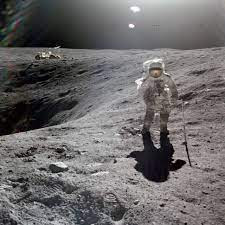
Charles Duke steps on the moon during Apollo 16, April 1972. 
In a poignant post-Trump insight, McRaven writes: “The power of humility is that it brings us closer together, and the role of every hero is to unite people, not divide them.”

Throughout this compact but powerful book McRaven tells stories of true heroes such as Air Force General Charles Duke, the youngest astronaut (so far) to walk on the moon; Marine Private First Class Ralph Johnson, who in 1968 leapt on a grenade and “gave his last full measure of devotion to the men he served with;” Gary Sinise, who selflessly brought educational supplies to a war zone in Afghanistan as part of Operation International Children; and Sen. John S. McCain III, a POW survivor and true American hero, who showed McCraven humility, gratitude, honor, and a sense of humor.


Abraham Lincoln
Being able to laugh at oneself is the sign of strength, and McRaven presents a self-deprecating joke Abraham Lincoln told to people: “(Lincoln) loved to tell the story of a man who approached him on a train one day. The man said, ‘I have an article in my possession which belongs to you.’ Taking a jack-knife from his pocket, the man explained, ‘This knife was placed in my hands with the promise that I was to keep it until I found a man uglier than myself. Allow me now to say, sir, that I think you are fairly entitled to the property.’”

McRaven introduces lesser-known heroes, too, including Navy Capt. Ted Grabowsky, who taught that “honesty is the cornerstone of integrity, the foundation upon which all other aspects of your character will be built.” He tells us of cancer researcher Dr. Jim Allison, who personifies perseverance (and has an interesting connection to the great Willie Nelson). And, he shares a personal story about cancer doctor Michael Keating, who shows that hope and change can be the strongest forces in the universe.


Ten years ago this year McRaven, under Commander in Chief President Barack Obama, commanded the Navy SEALs who brought justice to Osama bin Laden. If that was a career high for him, surely one of his deepest lows came in a separate combat action when some of the military forces under McRaven’s command mistakenly killed two non-enemy sons and a daughter of a father in Afghanistan. In the tenth chapter McRaven relates in heartbreaking detail how he met with that father and how forgiveness can be transforming.

During a Profiles in Leadership seminar, Retired U.S. Navy Adm. William H. McRaven speaks to service members inside the Pfingston Reception Center located on Joint Base San Antonio – Lackland, Texas, Jan. 10, 2018, about character and how it applies to leadership. (TSgt. Ave I. Young)

The "Forgiveness" chapter’s epigram is by Mahatma Gandhi: “The weak can not forgive; forgiveness is the attribute of the strong.” We can tie McRaven’s wisdom –– giving up the burden of hatred –– to the current state of society in 2021: intolerant political correctness, QAnon conspiracies, cancel culture, voter suppression, and domestic extremism and terrorism, including the Jan. 6 insurrection attack on the Capitol –– seeking to divide rather than unite.

“Society today seems to be easily offended. We are quick to anger, and some people believe every offensive act, no matter the intent, requires a swift rebuke. The hardest thing any hero can do is to forgive. It is easier to storm the hill, fight the fire, and stop a madman with a gun. It is hard to forgive, because we are afraid. Afraid that forgiving will take away the anger that drives us, the hatred that motivates us, the righteous indignation of being wronged. We want more than anything to harness the outrage, feel the power of injustice, and the fury of discontent, so we can lash out at the offender and feel justified. We think that retribution, no matter how small or how large, will sooth our soul.

It will not.”

He advises, “Be the victor, not the victim.”


Boatswain's Mate Seaman Apprentice Esau Arellano aboard guided-missile destroyer USS Ralph Johnson (DDG 114), Aug. 4, 2020. (MC3 Anthony Collier)

His code begins with “courage.” He advises, “Take one step forward and face your inner demons. And if you take that one step forward you will find the courage you seek…”


It takes profound individual courage, for example, to confront the universal human truth of our mortality. Which reminds me again of Richard Dawkins, who writes in “Unweaving the Rainbow”: “We are going to die, and that makes us the lucky ones. Most people are never going to die because they are never going to be born. The potential people who could have been here in my place but who will in fact never see the light of day outnumber the sand grains of Arabia.”


In “Hero Code” McRaven gives respect to courageous heroes. He quotes John Adams, William Penn, Mark Twain, Winston Churchill, Anne Frank, Fyodor Dostoevsky, Nelson Mandela, Helen Keller, Sonia Sotomayor, among others.


McRaven distills his perspective on heroism down to each individual. He recommends readers find their talent “and use it to inspire others –– to give hope, to make tomorrow a better day.”


This compact book is packed with bite-sized philosophy, common-sense ethos, and universal wisdom.