Showing posts with label civil war. Show all posts

Thursday, July 27, 2023

Slavery & its Aftermath: Revisiting Lyceum


Review by Bill Doughty––

The shadow of Lincoln looms over some politicians who restrict certain books and the teaching of slavery. Learning about American history, both shiny and tarnished aspects, is key to a strong republic and successful self-government, as suggested in Diana Schaub’s “His Greatest Speeches: How Lincoln Moved the Nation” (St. Martin’s Press, 2021).


Schaub examines three speeches and related dates as “punctuation points”: Lincoln’s Second Inaugural, with themes tied to 1619 and the beginning of the sin of slavery of African Americans in North America; The Gettysburg Address, echoing 1776 and the Declaration of Independence; and young Lincoln's Lyceum speech, bringing forth ideals outlined in the Constitution of 1787: “American purpose and destiny” and respect for law and order.

Lincoln wanted to place slavery “in the course of ultimate extinction.” He wanted progressive perpetuation of the nation in the face of disintegration. He called for a continued pursuit of “a more perfect union.”


This book is essential to understanding the reasons for (1) the insurrection of January 6, 2021, (2) the rise of white nationalism and violent extremism, (3) threats of a potential  autocracy, and (4) the need to defend the Constitution and protect the rule of law, voting rights and personal freedoms.


In his Lyceum address, Lincoln said, “The lawless in spirit are encouraged to become lawless in practice; and having been used to no restraint, but dread punishment, they thus become absolutely restrained. Having ever regarded Government as their deadliest bane, they make a jubilee of the suspension of its operations; and pray for nothing so much as its total annihilation.”


He called such lawlessness “Mobocratic spirit,” in which anger makes restraint more difficult. Lincoln saw “increasing disregard for the law” and risk of despotic autocracy that “fits the very definition of arbitrary rule: unlimited, unrestrained, capricious,” Schaub writes. “By contrast, these constitutionally articulated parts divide and check power through their complex relation to one another.”


Master Chief Marcious Kelley and another Sailor assigned to the Nimitz-class aircraft carrier USS Abraham Lincoln (CVN 72) visit the Martin Luther King Jr. Memorial in Washington D.C., January 27, 2017. USS Lincoln organized a tour for 23 Sailors of the Lincoln Memorial, the Martin Luther King Jr. Memorial and the African-American History Museum. (Matthew Herbst)


Schaub compares Martin Luther King Jr.’s nonviolence with the concept of peaceableness: “Peaceableness is a demanding standard –– more demanding than non-violence since it applies to the attitude of those gathered, not just their actions.” Schaub also analyzes Lincoln's philosophy with the thinking of Frederick Douglass and Malcolm X, more prone to condoning violence than preaching peaceableness.


The Lyceum speech ties back to another great American, President George Washington, and specifically Washington’s Farewell Address and warnings, not only of threats from other nations, but also of divisions from within. Schaub writes:

“Washington warns against sectionalism that would ‘tend to render Alien to each other those who ought to be bound together by fraternal affection’; Lincoln worries about ‘the alienation of their affections from the Government’ –– a generalized, rather than sectional, alienation felt by ‘the American People.’ Washington announces in the strongest terms that compliance with the law and the Constitution is ‘sacredly obligatory upon all’; the lesson in democratic theory is reiterated by Lincoln and supplemented with his call for a ‘political religion’ or ‘reverence’ for the Constitution and laws. Washington inveighs against the dangerous effects of ‘the strongest passions’ and the ‘cunning, ambitious and unprincipled men’ who would ‘usurp for themselves the reins of Government’; Lincoln, too, disparages passion –– calls it ‘our enemy’ –– and puts us on guard against the unbounded ambition of the republic-destroyers.”

The Founders, including Washington and especially Hamilton and Madison, were “aware of the power latent in the love of fame” so they set up a complex system of checks and balances to protect against the rise of a narcissistic ego-driven autocrat. The checks include the legislative, judicial, and executive branches as well as the balance of national/federal and state power.


Navy Recruiter PO Jasmine Allen (CPO Todd Macdonald)
“According to Lincoln,” Schaub writes, “the only restraint upon the incipient tyrant must come from the concerted resistance of … the people.”

In order to progress from slavery, insurrection, racism and discrimination toward that "more perfect union," one needs faith in reason and critical thinking, not in passion and pure emotion.


Lincoln and Washington used the word “passion” in its original meaning, that of strong feelings of a negative nature. Think: January 6th rioters and insurrectionists.


Lincoln said, perhaps presciently, “Passion has helped us [in the Revolutionary War], but it can do so no more. It will in future be our enemy.”


“Passion,” to Lincoln, meant more hate, revenge, and fear –– more divisiveness. He even eschewed compassion, choosing instead to approach issues with logic.


According to Schaub, “Lincoln sought always to lift the slavery debate to the level of principle and unimpassioned reason, avoiding the dangerous ground of compassion, anger, and blame.”


In Lincoln’s case, the strong passions of the mob included vigilantism and lynchings that were happening especially in the South in the aftermath of the Civil War. His description of black bodies hanging from trees like so much Spanish moss reminds people of the Billie Holiday song “Strange Fruit,” Schaub observes.


While the mob’s desire was to crack down on what they saw as crimes, they in fact emboldened the criminals. “When law is disregarded for the sake of justice, that provides license for those who would disregard law for purposes of their own.”

Lincoln believed in obeying even “bad laws” until they could be changed. That is where his and MLK’s philosophy splits. In “Letter from a Birmingham Jail,” King calls for disobeying unconscionable laws but, importantly, disobeying them openly and lovingly.


Yet, Schaub presents an example of Lincoln disobeying a law when the standard for doing so was “too intolerable.” It occurred during the war when the widow of a white officer who died while commanding African American troops pleaded with President Lincoln. She asked for him to help “widows” of fallen black service members who hadn’t been able to marry before going off to war and so were ineligible for death benefits for themselves and their children. Lincoln stepped in “as if there had been a legal marriage” and arranged for help to the widows and orphans.


Schaub quotes Martin Luther King Jr. again later in “His Greatest Speeches”: “injustice anywhere is a threat to justice everywhere.” Schaub writes, “Aware of the inescapable reciprocity of rights –– Lincoln always insisted that it was imperative to restore the belief in universal equality for the sake of white citizens, as well as for the sake of the enslaved people.”


Schaub notes that Lincoln and King are “often viewed as our nation’s greatest moral lights.” The two great men would probably agree on Lincoln’s recommendations for preventing mobocracy and resulting autocracy.


Lincoln’s solutions, as revealed by Schaub:

— Have “reverence for the laws,” recognizing usurpation (wrongfully seizing power) is suicide. 

— Win public sentiment: with it, everything; without it, nothing. 

— Harness personal ambition rather than try to suppress it; steer ambition to the duties of office and the public good. 

— Recognize two fundamental blessings in the United States: Nature and Government: “Both legacies must be transmitted to the next generation.” 

— Be law-abiding, not out of fear but out of reverence. 

— Engage and prove the unproven proposition of the Founders, namely “the capability of a people to govern themselves.” Vote. 

— Become an educated citizenry; more education, more books! [It was remarkable and memorable when former CNO Adm. Jon Greenert unveiled his take on the Navy’s Reading Program in 2012 by standing in front of hundreds of books –– all related to Abraham Lincoln.]

“In his first appearance on the political stage, announcing his candidacy for office in 1832, Lincoln endorsed public education so that citizens might, through the reading of history, ‘duly appreciate the values of our free institutions.’ He makes a similar linkage here, telling us that the system of political institutions serves ‘the ends of civil and religious liberty’ and that the whole elaborate arrangement requires ‘general intelligence’ on the part of the people.”

Lincoln refers to a tangible “fabric of freedom.”


A command ball cap from the Ticonderoga-class guided-missile cruiser USS Gettysburg (CG 64) rests upon on a stone wall on the battlefields of Gettysburg, Pa. The ship’s crew visited and paid honor to the ship’s longstanding ties to its namesake town, July 2, 2015. (MC3 Rachel E. Rakoff)

In “His Greatest Speeches,” Schaub dissects not only the Lyceum speech, but also the most famous American speech, The Gettysburg Address, as well as The Second Inaugural Address, where Lincoln says –– relevant to today’s controversies about what is taught in schools –– achievement of “a just and lasting peace among ourselves” requires reconciliation through what Schaub calls truth-telling and an inquiry into the cause and purpose of the war.”

In other words, we must teach the truth about slavery, the original sin, and take truth out from the shadows.

Saturday, July 15, 2023

‘Second’ Thoughts: ‘Race and Guns’

Review by Bill Doughty––

“This is not a pro-gun or anti-gun book,” Carol Anderson writes.


It’s a book about disparate treatment, discrimination, and outright racism when it comes to the application of –– and even the creation of –– the Second Amendment: “The Second: Race and Guns in a Fatally Unequal America” (Bloomsbury Publishing, 2021).

How and why is there a “right to bear arms” in the Constitution’s Bill of Rights? What is a “well-regulated militia”? How has the United States military been part of or affected by the Second Amendment and its application? How is disparity as obvious as black and white?


Anderson explores the origins of the Second Amendment and the Constitution itself. Madison worked tirelessly to build the document that would replace the rickety Articles of Confederation and set forth the ethos and ideals of the new nation based on equality and freedom.

“But those intentions of creating a strong, viable republic committed to its lofty ideas crashed headlong into the unspoken reality of America: ‘Slavery was the largely unmentioned monster in the basement of the new nation.’ It was so fearsome that its name, like a dreaded demon, was never to be mentioned in the Constitution lest it erupt out from its darkened and dank lair and tear the fragile nation apart. There was something else besides fear, though, that required slavery to remain like a terrifying wrath haunting the nation’s founding document: guilt. John Dickinson, a delegate from Pennsylvania who drafted the original Articles of Confederation, noted that the very omission of ‘the WORD slavery…[from the Constitution was to] conceal a principle of which we are ashamed.’”

As many Northern states were eliminating slavery from within their borders, southern states, especially South Carolina, was doubling down on the institution, threatening no support for the Constitution if the Atlantic slave trade were curtailed by legislation. Politicians from the Deep South showed extreme hypocrisy: on one hand forbidding enslaved people from citizenship, and on the other hand demanding they be counted in a census so the South would have more representation in Congress (leading to the cursed Three-Fifths Compromise by the Supreme Court).


Anderson shows how the Second Amendment was also a compromise under the shadow of States’ Rights: the resistance to pay for a standing army and the fear, not just of government tyranny, but also primarily of slave revolts.

An armed “well-regulated militia” was a whites-only concept meant to protect landowners from their chattel slaves who might seek freedom by any means necessary.


Wealthy landowners two hundred years ago had every right to be afraid, considering violent slave rebellions in Haiti, Richmond, and New Orleans. Anderson describes the horrors associated with the revolts and what happened to captured insurgents: torture, mutilation, heads on poles.


In the South in the 1800s homes of black people were routinely searched. Guns and books along with other educational material were confiscated. Anderson writes, “Gun control laws, to be clear, were everywhere in antebellum America. Indeed, ‘the South was the gun control center of the United States…’”


The “bravado” of a well-regulated militia was revealed in the War of 1812 against Great Britain. The British captured and burned the White House and U.S. Capitol, including the Library of Congress, in 1814. The young nation, under attack, in fact needed a standing army and navy.


As the British did in the Revolutionary War, they promised freedom to enslaved people in the War of 1812. Nevertheless, the American military recruited African Americans who fought and helped win the war. Of the three thousand soldiers and sailors who fought in the Battle of New Orleans, for example, six hundred were black.


Immediately after the war, General Andrew Jackson ordered blacks to be “summarily dismissed.” People of color were again banned from owning guns or ammunition. If found with a firearm, they were whipped. Endemic racism prevailed and was exacerbated by the Fugitive Slave Act of 1850, which “was supposed to be part of a sectional compromise that would keep the United States actually united. Instead, it was a law that was so hated that the seams in the American fabric began to visibly tear apart.”

The Civil War, which should have been a turning point for African Americans and their freedoms –– including the right to bear arms –– was largely a met with “nearly impenetrable barriers” of racism: Jim Crow laws, disparate treatment, and bigotry. “Andrew Johnson, who ascended the presidency after Lincoln’s assassination, was instrumental in sabotaging efforts to craft a political and legal environment in which the formerly enslaved and free blacks could live fully.” Johnson pardoned many Confederacy leaders and supported States’ Rights to restrict citizenship, gun ownership, and other rights of African Americans.


Using carefully sourced documentation, Anderson presents the history of lynchings, massacres, and other violences committed against blacks, including black soldiers in the early 1900s. “The United States was a nation locked into a prison of anti-blackness absolutely unsafe for democracy and also for African Americans.


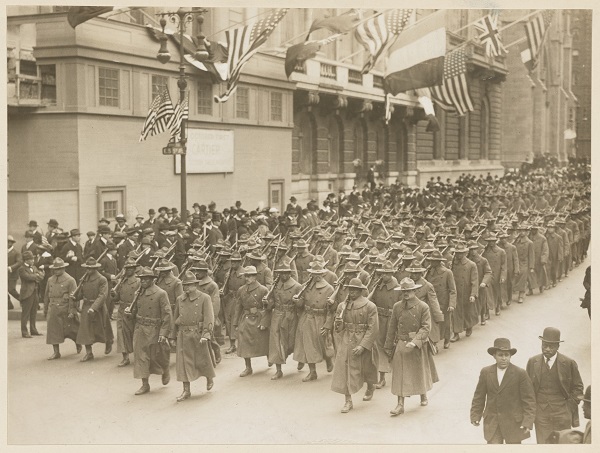
Many Americans who lived through the Civil War were still alive when the United States entered World War I. As the United States prepared to fight in Europe, the military had trouble filling its ranks so opened recruitment to black American men via the 1917 Selective Service Act, still ensuring units were segregated but led only by white officers. Even then, some politicians from former Confederate states opposed the initiative, which allowed blacks to carry, train, and use weapons.

Imagine the tension in Houston, Texas (the last state to acknowledge in 1865 the emancipation of enslaved people) when black soldiers were ordered to be stationed there in 1917 during WWI. Troops of the Army’s Third Battalion, Twenty-Fourth Infantry Regiment –– who had fought for the United States in Cuba, the Philippines, and Mexico –– were assigned to guard duty at a Houston army base. 


The soldiers faced intense racism and discrimination by the local population, including the police, who referred to them in derogatory terms and dehumanizing disrespect. Clashes were frequent with law enforcement and white contract workers, who refused to show I.D.s to or “obey” black soldiers.


After civilian police officers beat two soldiers, shooting at one, dozens of members of the Twenty-Fourth armed themselves and marched to confront the police. The resulting confrontation resulted in the deaths of four soldiers and more than a dozen whites, including some police.


“Military justice was swift,” Anderson writes. “Nineteen of the soldiers were executed immediately after the trial and fifty-four were sentenced to prison.”


Anderson’s book is rich in history of the Second Amendment –– especially related to the Constitutional Convention, events in the divisive 19th century, and milestones in the turbulent early 20th century.


“The Second” loses steam, though, by the time the chronology reaches the Second World War and Civil Rights movement of the 1950s and 60s, with a comparative dearth of discussion about that era. Nevertheless, Anderson finishes strong in bringing the issue to the 21st century: no-knock warrants, stand-your-ground laws, open-carry and concealed weapon legislation –– and how they impact African Americans today.

Readers are left to contemplate: How does freedom to own, carry, and use firearms balance with the freedom from being shot? Who is responsible for a tyranny of gun violence in the United States?


This may not be “a pro-gun or anti-gun book,” but it is a fascinating, disturbing, and enlightening examination of the origins of the Second Amendment and its surprising relevance to the military and American wars as well as the meaning of true freedom.


[Anderson capitalizes “Black” but lower-cases “white” when writing about people. While I understand the rationale for that style choice, I but don’t agree with the premise and prefer lower-case for both, in the spirit of Adam Serwer and Isabel Wilkerson.]

Wednesday, April 19, 2023

Jimmy Carter Paradox Part 3: Fundamentalism

Review by Bill Doughty––

In a bipolar and increasingly monochrome America, Jimmy Carter paints colorful bridges to attempt to bring people together, including people of different religious beliefs.

Carter is the most devout life-long religious person elected to the presidency in modern U.S. history. His father was a deacon at his Plains Baptist Church in Georgia, and Carter has attended or led weekly Sunday school Bible lessons his whole life.


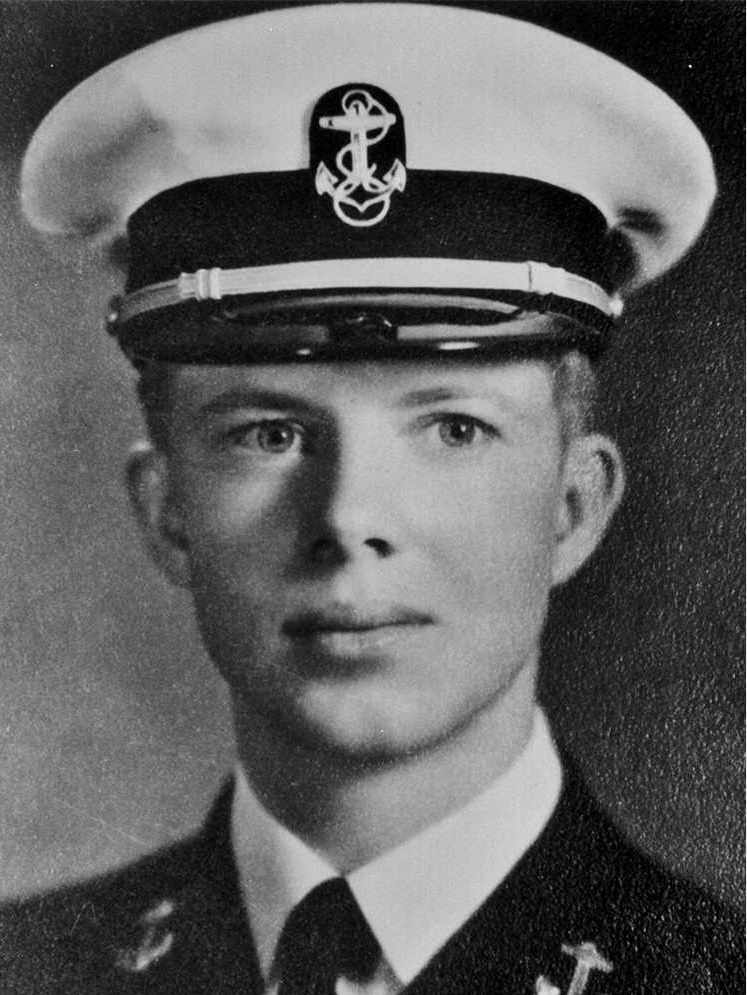
He led Bible study at Annapolis, for example, while he was a midshipman at the U.S. Naval Academy during World War II.


Paradoxically…

  • Carter studies both the Old and New Testaments as a former missionary and self-described “evangelical Christian and a Baptist.” Yet, he decries the rise of religious fundamentalism and is strongly in favor of the wall of separation between State and Church.
  • Despite his reliance on the comfort of his faith and daily prayer, he is not in favor of mandatory prayer in school, government displays of the Ten Commandments, or legislative decisions based on interpretations of the Bible over the Constitution.

This is the third in a series of reviews of “Our Endangered Values: America’s Moral Crisis” (Simon & Schuster, 2005).


Carter sat down to write the book several years after fundamentalist Islamist extremists attacked the United States on September 11, 2001. It was published in the aftermath of the U.S. invasion of Iraq ordered by President George W. Bush twenty years ago. This book is still relevant and timely –– explaining why the United States has become so fractured and why fundamentalism is so dangerous.

“The most important factor is that fundamentalists have become increasingly influential in both religion and government, and have managed to change the nuances and subtleties of history debate into black-and-white rigidities and the personal derogation of those who dare to disagree. At the same time, these religious and political conservatives have melded their efforts, bridging the formerly respected separation of church and state. This has empowered a group of influential ‘neoconservatives,’ who have been able to implement their long-frustrated philosophy in both domestic and foreign policy.”

Carter notes, “Narrowly defined theological beliefs have been adopted as the rigid agenda of a political party.” He adds,”The irresolvable differences of opinion on abortion, homosexuality, and other sensitive social issues have been exacerbated by the insistence of intensely committed hardliners on imposing their minority views on a more moderate majority.”
 

Compared to his time in the White House in the mid-to-late 70s, Carter concludes, “Stronger and sharper partisan differences have evolved among Americans in recent years.”


As president, he was able to work with both Republicans and Democrats who put country and people above party and personal interests. What was still growing in 2005, when this book was published, has metastasized in 2023. Here's how Carter saw it nearly twenty years ago:

“Nowadays, the Washington scene is completely different, with almost every issue decided on a strictly partisan basis. Probing public debate on key legislative decision is almost a thing of the past. Basic agreements are made between lobbyists and legislative leaders, often within closed party caucuses where rigid discipline is paramount. Even personal courtesies, which had been especially cherished in the U.S. Senate, are no longer considered to be sacrosanct. This deterioration in harmony, cooperation, and collegiality in the Congress is, at least in part, a result of the rise of fundamentalist tendencies and their religious and political impact.”

Carter blames not only the rise of fundamentalism but also the impact of dark money in politics thanks to some large corporations and billionaires. One could argue that the differences have only grown even sharper and stronger in 2023, with help from social media algorithms, right wing media caught telling lies, and a more partisan judiciary.


Early in “Our Endangered Values” Carter identifies “prevailing characteristics” of intense fundamentalism. These characteristics can apply to Middle East ayatollahs or to homegrown “prophets” like Waco’s David Koresh:

  1. Almost always, they are groups led by authoritarian males who want to subjugate women.
  2. They believe the past is better than the present. [And they try to whitewash history.]
  3. Self-righteousness: “Fundamentalists draw clear distinctions between themselves, as true believers, and others, convinced that they are right and that anyone who contradicts them is ignorant and possibly evil."
  4. Anger: They are quick to threaten or even initiate physical attacks on others who don’t share their beliefs.
  5. Fundamentalists define themselves in an “increasingly narrow and restricted” way.

The bottom line, according to Carter, is that fundamentalists [including Islamists, Christian nationalists, white supremacists, Opus Dei, etc.] believe in an ideology that is based on rigidity, domination, and exclusion. They abandon the rule of order, social justice, and environmental stewardship in favor of selfishness, greed, power, and control of others.

While reading and ruminating about “Our Endangered Values” over the past several weeks I also finished reading Daniel Byman’s “Spreading Hate: The Global Rise of White Supremacist Terrorism” (Oxford University Press, 2022). It’s a terrific companion that overlaps nicely with Carter’s observations.


Byman presents a history of extremism, militancy, and terrorism by white supremacists, antigovernment activists, Christian nationalists, and authoritarian anarchists. Like other authors and historians, such as Michelle Goldberg and Kathleen Belew (who is cited several times), Byman shows how often military veterans –– such as Oklahoma City bomber Timothy McVeigh, who was also associated with the Christian Identity movement –– have been involved in anti-government violence.


More than ten percent of the people arrested for participating in the insurrection of the Capitol on January 6, 2001, are military veterans. It’s no wonder DOD is trying to root out domestic extremists in its ranks.


But it's not all doom and gloom.


In “Spreading Hate” Byman gives a hopeful view of curbing White Power power. The FBI demolished the Ku Klux Klan. Informants regularly turn on violence-prone militia extremists. The federal government learned lessons from Waco (thirty years ago today) and Ruby Ridge, so does not respond with overwhelming violence when provoked. Perhaps most importantly, public sentiment turns against mass shooters and other terrorists who try to bring about anarchy and civil war.


Charlottesville rally, August 2017.
I doubt even Jimmy Carter back in 2005 could have imagined the white supremacy rally in Charlottesville in 2017, the J6 Capitol insurrection in 2021, or the continuing rise of influential Republican representative Marjorie Taylor Greene, from his own state of Georgia.

Speaking of civil war –– Antithetical to Carter, Greene calls for a “national divorce” of red and blue states. Greene has also come out against support for the defense of Ukraine against the Russian invasion, which is supported by the Russian Orthodox Church.


Greene recently expressed support for the Air Force national guardsman who leaked top secret Pentagon documents. (The documents came to light because of their appearance on a pro-Russian site helmed by former Navy petty officer Sarah Bils, according to USNI News.)


Greene tweeted: "Jake Teixeira is white, male, christian, and antiwar. That makes him an enemy to the Biden regime.”


Paradoxically, Biden, like Jimmy Carter, is a deeply religious president who sees the world through moderate, and some would now say progressive, eyes. In 1976 Biden was the first senator to endorse Carter for the presidency.

As for Carter, he is genuinely and deeply religious, and his interpretation of Christian values is based on caring for and about others, not alienating them. As a farmer, teacher, and builder, he tries to create bridges between people and away from blind fundamentalism.


Carters and Reagans at the Carter Center opening in 1986.
“There is obviously a widespread, carefully planned, and unapologetic crusade under way from both sides to merge fundamentalist Christians with the right wing of the Republican Party,” Carter writes. “Although considered to be desirable by some Americans, this melding of church and state is of deep concern to those who have always relished their separation as one of our moral values.”

Carter reflects, “Despite what I consider to be a constitutional and biblical requirement for the separation of church and state, I must acknowledge that my own religious beliefs have been inextricably entwined with the political principles I have adopted.” Much is left up to interpretation and selective understanding of religious texts, he says.


Carter’s nuanced views in “Our Endangered Values” includes further discussion of the treatment of women, the rights of homosexuals, and stewardship of the environment, among other controversial issues.


He also explores issues of gun control and abortion –– parts 1 and 2 of this series.


His commitment to compassion and his consideration of the views of others is welcome and especially relevant in a divided America in 2023. Today, his Carter Presidential Center in Atlanta, which includes the Carter Presidential Library and Museum, welcomes people from all over the world who want to learn, live in peace, and work together in support of human rights.


The Carter Presidential Library and Museum