Showing posts with label SEALs. Show all posts

Wednesday, September 13, 2023

McRaven’s ‘Simple’ Bullfrog Advice

Review by Bill Doughty––

Seventy-three years ago, September 15, 1950, Gen. Douglas MacArthur landed at Inchon, Korea. In the following weeks, U.S. forces began to rout the communist North Korean army and push them almost to the Yalu River near China. Then, in November the Americans encountered well-armed Chinese interventionists supporting the North Koreans.


“Hill 205 seemed an unlikely place for an Army legend to be born,” writes Admiral William H. McRaven (U.S. Navy, Ret.) at the beginning of chapter 7 of “The Wisdom of the Bullfrog: Leadership Made Simple (But Not Easy). McRaven recounts the actions of Army Ranger First Lieutenant Ralph Puckett, who in 2021 received the Medal of Honor, presented by President Joe Biden for actions in Korea. At great personal risk, Puckett helped his Rangers locate and attack camouflaged Chinese machine gun nests and mortar teams that pinned them down.

“Puckett, who had positioned himself at the front of the advancing Rangers, knew there was only one thing he could do. With complete disregard for his own life, Ralph Puckett rose from his foxhole and dashed out into the open field, forcing the Chinese to take aim at the young lieutenant. As the machine gunners began to fire a the sprinting Puckett, the Rangers spotted their positions and engaged them. Puckett returned to his foxhole only to catch his breath, and then leaped out and ran into the open again. With each dash by Puckett into the exposed terrain, the Rangers were able to isolate and destroy more enemy machine gunners.

“Having suppressed the small arms fire, the Rangers proceeded to take Hill 205. History would show that over the next two days, the Rangers under the command of Ralph Puckett would fight off wave after wave of Chinese assaults that took the lives of ten Rangers and left thirty-one wounded, including Puckett.”

Puckett would again serve with honor in Vietnam, where he earned the Distinguished Service Cross and two Silver Stars and was personally recognized by President Lyndon B. Johnson.


McRaven uses the story of Puckett’s heroism at Hill 205 to illustrate the Ranger motto “Sua Sponte” (“Of Your Own Accord”).  “In other words, doing what needs to be done without being told to do so,” McRaven explains.

“There is often the misguided belief that soldiers only follow orders, but the strength of the American military is that the great soldiers, the truly great leaders, do what is right without being told. They do what is right to protect their men and women.”


Senior military leaders expect even young and relatively junior service members to take the initiative when necessary. Such integrated empowerment is a cornerstone of leadership, and can be effective not only in the military but also in business, sports, medicine, citizenship, and developing a healthy family.


A simple, powerful concept. Which is also a good descriptor for this small but excellent book.


Memorial statue of Basilone in New Jersey
“Sua Ponte” is just one of the ideas presented here by the author of “Make Your Bed,” “The Hero Code,” and “Sea Stories.”

McRaven opens his latest book with a discussion with the most important aspects of being a good leader: Honor and integrity, captured in legendary United States Marine hero Sgt. John Basilone’s motto: “Death before Dishonor.” Honor and integrity are the foundation of a trustworthy leader.


Another motto explored in “Bullfrog” is the British Special Air Service’s Qui Audet adipiscitur: "Who dares, wins."


An honorable leader who demonstrates commitment, hard work, and initiative, will earn the trust of their followers, according to McRaven. Stamina, a willingness to sacrifice, and confidence, along with humility and the ability to make hard choices, are also important leadership qualities. Commanders “must have perseverance and, above all, confidence in ourselves.”


All the above qualities and more were personified by Adm. Chester W. Nimitz in World War II, particularly in the Battle of Midway: The great admiral faced a difficult choice about whether to ambush the Imperial Japanese Navy at Midway. “The fate of the entire Navy, and perhaps our nation, rested on this decision,” McRaven writes. “But history would show that the Battle of Midway was the single most decisive naval battle of the war and turned the tide in the Pacific.


Other legendary leaders highlighted in this outstanding book include father of the Navy SEALs, Adm. Chuck LeMoyne; WWII British officer and father of the SAS, Col. David Stirling; U.S. Special Operations leader Gen. Stanley McChrystal; Air Force visionary Billy Michell; Vietnam War hero Col. Elliot “Bud” Sydney; and former president Barack Obama, who, like Nimitz and Midway, faced a difficult decision, with uncertain information, about launching the mission to capture Osama bin Laden.


“It was an enormous risk, but one the president knew he had to take. I admired his guts –– Who Dares Wins –– but more importantly,” McRaven reflects about Obama, “I admired his intellect for understanding the nature of the risks he was assuming.”

Good leaders attack problems aggressively. “Mistakes of action are far less consequential than mistakes of inaction,” he notes. Hope, luck, and desire are important, but they are not a strategy. “Be a risk-taker, but manage the risk through extensive planning, preparation, and proper execution.”

All Hands: McRaven speaks to service members at Bagram Air Field, Afghanistan, Thanksgiving Day, 2013. (Army Staff Sgt. Osvaldo Equite)
Each chapter features an insightful epigram quotation by well-known and sometimes surprising people: Abraham Lincoln, Marie Curie, Alvin Toffler, Oprah Winfrey, Michael Jordan, William Shakespeare, Tacitus, Booker T. Washington, Coach Mike Krzyzewski, and Taylor Swift.

Yes, Taylor Swift.


In fact, her epigram quote for chapter ten, titled “No Plan Survives First Contact with the Enemy,” is a found haiku:


Just because you made

a good plan doesn’t mean that’s

what’s gonna happen


McRaven discusses the importance of planning, inspecting, and always having a plan B.

When one of their helicopters became damaged in the bin Laden raid, the well-trained and ready SEALs adjusted, overcame, and accomplished their mission. Training mitigates risk and saves lives.

Importantly, McRaven notes that even the best leaders will have setbacks and seemingly insurmountable challenges. But how they deal with failures and obstacles makes all the difference.

This is a great book for any new leader, would-be commander, and anyone interested in the importance of character, competence, and ethical behavior –– integrity –– in military and national leadership.


There are many references in “Bullfrog” to Basic Underwater Demolition/SEAL training, Coronado, and San Clemente. But there is an unexpected thread throughout the book leading through Hawaii, which help illustrate key leadership principles.


“The Wisdom of the Bullfrog” concludes with a spotlight on Navy SEAL Lt. Michael Murphy’s favorite book, “Gates of Fire” by Steven Pressfield. "Gates of Fire" is also a favorite of Gen. James Mattis (USMC, Ret.) and is a recommendation by Adm. James Stavridis (USN, Ret.). The novel is or has been on the reading lists of many military leaders, including the Commandant of the Marine Corps (currently a vacant position).


Pressfield speaks to Marines and fellow veterans at Camp Pendleton in 2011. (Sgt. Skyler Tooker)
“Gates of Fire” imagines the 300 Spartans who fought valiantly in the Battle of Thermopylae in 480 BCE. In the fictionalized account, Pressfield, a former Marine, channels what the last Spartan may have said about his king, King Leonidas, and what made his king such a great leader: “A king does not abide within his tent while his men bleed and die upon the field. A king does not dine while his men go hungry, nor sleep when they stand at watch upon the wall, A king does not command his men’s loyalty through fear nor purchase it with gold; he earns their love by the sweat of his own back and the pains he endures for their sake. That which comprises the harshest burden, a king lifts first and sets down last. A king does not require service of those he leads but provides it to them…”

While not always easy –– and often extremely hard to live by –– McRaven’s leadership principles are actually “simple” he says. He offers a list of sayings taken from his chapter headings and a QR code at the end of the book for readers to obtain a printable version of the “Wisdom of the Bullfrog.” (The term Bullfrog refers to the the longest serving Navy SEAL on active duty, which McRaven once was for nearly 40 years.)


Sometimes advanced age has its leadership advantages.

Tuesday, May 17, 2022

‘American Buffalo’ by Steven Rinella

Review by Bill Doughty––

America’s most famous living hunter-conservationist is Steven Rinella. He is the brain and heart of the MeatEater Netflix show, podcast, and franchise. Rinella believes in respect for nature, conservation, and the environment. And he sees a deep connection between us and our food.


On one of his shows Rinella takes former Navy SEAL and Navy Reservist Cmdr. Rorke Denver, for a hunt in Alaska for black bear.* Denver is a fellow author who starred in “Act of Valor.” They eventually find a bear, and when he looks through the rifle’s scope at the bear now coming closer, Denver pauses to appreciate the beauty and power of the life he is about to take.


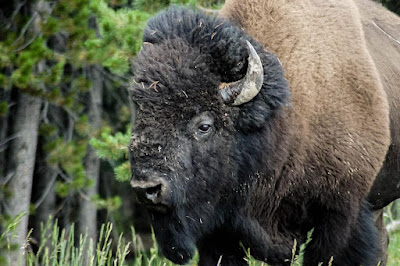
Rinella has a similar moment when he sights a buffalo, as described in gripping detail in “American Buffalo: In Search of a Lost Icon” (Spiegel & Grau, Doubleday, Random House; 2008).


A North American buffalo.
Lucky to have won a lottery for a hunting permit for wild buffalo, Rinella is luckier still to be one of a few who actually finds and shoots one. His journey in Alaska, eluding bears and other predators, battling the elements, and navigating dangerous waterways, is compelling. So is his moment of truth as he prepares to shoot. His careful butchering of the animal is presented in precise detail. Though written fourteen years ago –– before Rinella became a world-renowned figure –– this book reveals the talents of a gifted writer and outdoorsman.

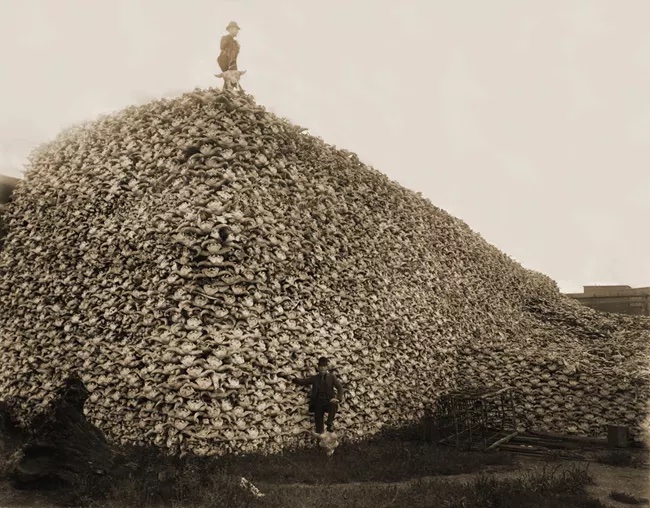
But what makes “American Buffalo” truly great and lasting is the author’s panoramic view of time and a philosophical connection to nature and life. He looks unblinkingly at the devastating destruction and near extinction of bison and other species in North America, lamenting the wanton greed and shortsightedness of people who killed only for profit and trophy. Rinella eats what he kills.


In this photo from 1892, men stand next to and atop a pile of American bison skulls waiting to be ground up for fertilizer.

Like other hunters, he sees the animal’s skull as a kind of connection to life’s mysteries.

“Buffalo skulls were put to various uses by Indians, most of a spiritual or metaphysical nature. The buffalo skull was an especially potent symbol to many Plains Indians tribes, but not because it equaled death. Rather, a skull represented a form of rebirth to many tribes. To reduce a buffalo to its skeleton was like ushering the animal back to a sort of primordial starting line, or beginning. The clean skull allowed for continuity, like a blank canvas upon which future buffalo could be created…

“I’m not a particularly religious person, though I do sense an inkling of the spiritual when I look at this buffalo skull. Many people have tried to explain to me what they feel when they look at a crucifix of Torah scroll; it’s an emotion often described as a mixture of gratitude, devotion, continuity, and awe. Looking at a buffalo skull is probably the closest I’ll ever come to experiencing those feelings, however faintly, and I’m glad to have a taste of that…”

Rinella describes how he embraces the privilege of being alive for the relatively short time we have.


Alaska's Copper River Valley
He searches for meaning and symbols. He calls the landscape he hunts in a "trophy."

And he questions the connection between his reverence for the animal he hunts and his commitment to killing and eating it.

“In a historical sense, I suppose that my confused and convoluted relationship to the buffalo is nothing new. For the entirety of man’s existence in North America, we’ve struggled with the meaning of this animal, with the ways in which its life is intertwined with our own. I think of the first hunters who walked through some long-ago gap between glaciers and stumbled onto a landscape populated with strange and massive creatures. The buffalo was just one of many then, a giant among a host of other giants, but over time these many animals were whittled away by the forces of man and nature. Eventually the buffalo stood alone, like the winning contestant in a game show.

“The prize was humanity’s never-ending attention, which was ultimately a bittersweet award. For thousands of years, the first people of North America fed on the buffalo’s meat and wore the buffalo’s skin, and then made a deity of the animal as a way of reconciling their need to slaughter the thing that granted them life. My own European ancestors came to the New World and scoffed at the heathen nature of the Indians’ ideas, then stood by as the buffalo nearly vanished from the earth beneath their notion that the animal was an expendable gift of their own God, a commodity meant to get them started before stepping aside and letting ‘civilization’ bloom in the wilderness.”

Throughout this book, Rinella blends spirituality with superstition, history with mystery, and his own life’s experiences within the context of our shared science and reality.


“American Buffalo” opens with an extended soliloquy about Neil Young and his early band Buffalo Springfield.

In a fun and mind-bending “association game,” he links “For What It’s Worth," a song against the Vietnam War ; Dances with Wolves, filmed in Canada; Hernando Cortéz of Spain; Crazy Horse of the Oglala Sioux; Springfield rifles; the Civil War; Black Diamond, the buffalo on the American nickel coin; President Theodore Roosevelt, hunter and conservationist; and the city of Buffalo, New York.

"Buffalo," is the name of cities in eighteen states. But, Rinella notes, no wild buffalo lived near Buffalo, New York.


On Saturday, Buffalo was the site of another race-based mass shooting by a white supremacist with an AR-15 "assault-style" rifle. Today, President Biden and First Lady Jill Biden visited Buffalo. Biden, a lifelong supporter of the Second Amendment, has asked Congress to pass legislation to require new background checks for gun buyers, and ban military-style "weapons of war" and large-capacity ammunition magazines.


Steven Rinella
Rinella does not hunt with AR-15s. He uses bolt-action rifles, pump shotguns, and bows and arrows for hunting. Rinella is an ethical hunter who calls himself “an evironmentalist with a gun.”

He became interested in environmental issues, according to a profile earlier this year in The New York Times by Malia Wollan, when one of his big brothers gave him a paperback of Aldo Leopold’s “A Sand County Almanac.”According to Wollan, “Most people read Leopold as belonging to the pantheon of American environmental writers, with the likes of Henry David Thoreau, Rachel Carson and John Muir. Rinella reads Leopold as a fellow hunter.” (Marjory Stoneman Douglas is another great environmentalist in that pantheon.)


On his latest podcast, Rinella discusses hunting, fishing, and books. He talks to Cameron Hanes about Hanes’s new book, “Endure: How to Work Hard, Outlast, and Keep Hammering,” with a foreword by Joe Rogan and afterword by David Goggins. Hanes says, “If you wish you could run farther and shoot straighter, this book is for you.”


Rinella, himself, is the author of a half-dozen books, with more planned for release in coming months and years, including books for children, outdoor cooking, and an “atlas for the outdoors.”


Steven Rinella, the “environmentalist with a gun,” is also a philosopher with a pen and a voice.

Some people, especially vegans and those who prefer not to think about where their super market food comes from, will be turned off by the whole MeatEater oeuvre. But that’s the beauty of American freedom, diversity, and the right to choose.


In the MeatEater episode with former Navy SEAL Rorke Denver, after Denver bags his bear, and just before he and Rinella skin and butcher it, Rinella expresses his appreciation for the service and sacrifice of Denver and other veterans who serve in the nation’s defense.


In “American Buffalo: In Search of a Lost Icon” readers can discover an ethos of honor, courage, and commitment.


*(Top photo: Denver and Rinella trek their bear meat and fur out of the Alaskan wilderness in a scene from MeatEater, YouTube.)

Friday, November 19, 2021

Eddie Gallagher & Alpha ‘Loyalty’

Review by Bill Doughty––

David Philipps gives a passionate and compassionate profile of a case that hit the U.S. Navy like a “missile” –– that of former U.S. Navy SEAL Chief Petty Officer Eddie Gallagher, accused of war crimes after his deployment with the Alpha platoon of SEAL Team 7 in “ALPHA: Eddie Gallagher and the War for the Soul of the Navy SEALS” (Penguin Random House, 2021).


This is a book about accountability and justice. And karma.


SEALs in Alpha Platoon, wearing their tridents and under the logo of the “Bad Karma Chick,” saw their role as the embodiment of bad karma: “Alpha was there to make sure that bad things happened to bad people.”

“ALPHA” reads less like a book about war and more like a Shakespearean tragedy of an elite American warfighter who chose a noble journey but somehow took a wrong path. Eddie Gallagher began his career as a Hospital Corpsman and tried in vain to become a SEAL until the Afghanistan and Iraq wars opened a sudden need for more of the Navy’s special operations warfare specialists and Gallagher was accepted. He deployed seven times overseas in the so-called war on terror.


Philipps describes the warfighter after seventeen years of service this way:

“Eddie looked like a Navy SEAL poster boy. He had close-cropped blond hair, glacier-like blue eyes, a strong, square jaw, the shoulders of a lion, and a lion’s killer instinct. He was fast, agile, strong, and a dead shot. But a closer look revealed a face deeply lined from years in the desert sun. After so many deployments, the mileage was starting to show. He was thirty-nine years old. In the military, where the average age is twenty-seven, he was closing in on obsolescence. His back hurt. His neck hurt. His shoulders hurt. He had ringing in his ears from too many gunfights. Sometimes he had trouble remembering  things. Not that he regretted any of it. For all the talk about post-traumatic stress disorder and the unfair burden the nation had put on its warfighters, Eddie never once saw combat as a hardship. He had chosen it. He was good at it. He thrived on it. Truth be told, it was cool as hell. He loved the heart-pounding exhilaration of gunfights. He loved the simple intensity of war. Sometimes he felt it was the only thing that made sense. If there were bad guys out there looking to take on the United States and become martyrs, he was happy to punch their ticket.”

But –– “Beneath that SEAL veneer was a history of disappointments and screw-ups that had dogged him for much of his life,” Philipps writes later in “ALPHA.”


This book reveals a tectonic struggle: rule-of-law ethos exemplified by Adm.(Ret.) William McRaven versus a no-rules “pirate” death-cult personified by former Vietnam-era SEAL Cmdr.(Ret.) Richard “Demo Dick” Marcinko –– and Gallagher.

One side prefers to be quiet, humble, and righteous in their work. The other side is all bravado, might-makes-right, and anything goes, including killing unarmed civilians and prisoners when necessary.


One side meant it when they took their oath to support and defend the Constitution; they are loyal to each other and to the mission. The other side abuses power and demands loyalty in a cult of personality, often putting the mission and team in unnecessary danger.


One side has to work silently within the constraints of the Uniformed Code of Military Justice, committed to truth and justice. The other side uses TV, radio, and social media to bend information, threaten opponents, and smear the Navy chain of command.


One side lives by the SEAL Ethos. The other does not.

“…My loyalty to Country and Team is beyond reproach. I humbly serve as a guardian to my fellow Americans always ready to defend those who are unable to defend themselves. I do not advertise the nature of my work, nor seek recognition for my actions. I voluntarily accept the inherent hazards of my profession, placing the welfare and security of others before my own. 

“I serve with honor on and off the battlefield. The ability to control my emotions and my actions, regardless of circumstance, sets me apart from others. Uncompromising integrity is my standard. My character and honor are steadfast. My word is my bond…”

Gallagher stood trial for allegedly murdering a defenseless Iraqi teenager aligned with ISIS by stabbing him with a knife. Gallagher was turned in by a number of his SEAL teammates, who also claimed to have witnessed him shooting indiscriminately into civilian areas as well as deliberately shooting an unarmed girl and an old man.


Philipps provides damning information about Gallagher’s character, including allegations of stealing from the Navy as well as fellow SEALs, illegal habitual drug use, false claims for a Purple Heart and other medals, lying and putting SEALs in harms way for personal gain, and threatening murder in an attempt to cover up his crimes.


The truth emerges thanks to information from key members of the Alpha Team as well as evidence gathered by NCIS and New York Times, where Philipps is a Pulitzer Prize winning national correspondent.


“ALPHA”
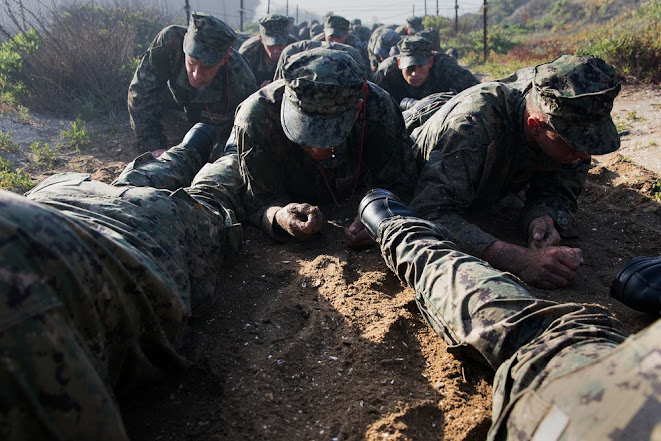
presents a brief history of the Navy SEALs, from their founding by Navy WWII veteran President John F. Kennedy, through Vietnam and into the 21st century. Philipps describes the rigorous body-breaking BUD/S training SEALS undergo in Coronado, San Diego –– a crucible where instructors are “striking down hubris like ancient gods.”

He introduces readers to a fascinating cast of characters, each on a spectrum of loyalty to each other, to Navy core values, and to the Constitution. There’s LPO (now Chief) Craig Miller, in many ways the hero of this tragedy; CAPT Matt Rosenbloom, a leader of leaders who put his SEALs ahead of outside threats, including to his career; and Secretary of the Navy Richard Spencer, who, like other characters in this story, tries to build a bridge to what was right, only to see his infrastructure crumble under politics and undue influence by the commander in chief.


When SECNAV Spencer was fired for appearing to disobey the president’s bidding immediately, Spencer said it was “just politics,” but was it “just” –– in both meanings of the word? Spencer, a former Marine whose mentor was SECDEF James Mattis, believed in strong standards and values. He tried to allow the SEALs to conduct an ethical review. Philipps writes, “Civilian rule of the military was a delicate thing. It required respect, deference, and a mutual understanding.” It did not do well with heavy-handed tipping of the scale of justice.


Trump and Gallagher
Philipps shows former President Trump’s role in the Gallagher case; disgraced Trump acolytes Bernard Kerik and Duncan Hunter as well as Trump lawyer Marc Mukasey helped Gallagher. Later, Gallagher hobnobbed with Michael Flynn, Erik and Donald Trump Jr., and Rudy Giuliani. Gallagher endorsed and campaigned for Donald Trump, and was feted at Mar a Lago. Trump granted clemency to Gallagher and pardoned two other service members who had been found guilty of war crimes.

The dark side of “loyalty” can be seen in the insurrection of Jan. 6, 2021. It can be seen in the code of silence over police brutality and killings that prompted the BLM protests and riots in the summer of 2020. The dark side of “loyalty” can be found in grievance and resentment and fear of the Other. It can be seen in anyone forgetting their oath to the Constitution and pledging their loyalty to a Big Lie and cult of personality that rejects democracy and embraces fascism and autocracy.


Facebook provides a platform for SEALs to express their support of Gallagher and the “pirate” ethos. “None of the SEALs on Facebook seemed to care that a chief had targeted civilians,” Philipps says. “They were just mad that guys in Alpha had said anything about it.”


"ALPHA" tells the story of true loyalty. Some characters, notably another former corpsman and SEAL, Corey Scott, fail in their commitment to the truth. Others, like Chief Craig Miller, rise to the challenge and stand tall.


Karma is on their side.


Miller, the leading petty officer of Alpha platoon during the Iraq deployment of 2017, uses his experience to teach young SEAL leaders about ethical choices, norms and virtues. Philipps describes Miller’s view: “In real ways, the future of humanity was built by the small actions of millions of everyday folks, and it could be torn down the same way.”


U.S. Navy SEAL candidates participate in Basic Underwater Demolition/SEAL (BUD/S) training. SEALs are the maritime component of U.S. Special Forces and are trained to conduct a variety of operations from the sea, air and land. (U.S. Navy photo by Petty Officer 1st Class Abe McNatt)

(This year a podcast called “The Line” explored various sides of the Eddie Gallagher saga and his war crimes trial in 2019 based on witness reports that he stabbed the ISIS teenager to death. In the podcast Gallagher says, “We killed that guy. Our intention was to kill him.” Gallagher admits. “It was to do medical scenarios on him until he died,” adding “He was going to die regardless. ... We weren't taking any prisoners.”

Speaking of karma: 

A new four-part documentary video series on Apple+, also called "The Line,” airs starting today.

"The Line" is by a team led by filmmaker Alex Gibney, Oscar winner for 2007’s Afghanistan War documentary "Taxi to the Dark Side." Directors Doug Shultz and Jeff Zimbalist obtained the participation of Gallagher; his wife, Andrea; and the members of SEAL Team 7 who stepped forward to accuse Gallagher of war crimes, and all appear on camera.)


Sunday, June 27, 2021

Universal Truths in McRaven’s ‘Code’

Review by Bill Doughty

Leadership skills and virtuous behavior are built into the human DNA.


That’s the conclusion of Adm. William H. McRaven (U.S. Navy Retired) author of “The Hero Code: Lessons Learned from a Life Well Lived” (Grand Central Publishing, Hachette Book Group, 2021).

“There is a hero in all of us. There is an innate code that has been there since the birth of mankind. It is written in our DNA. It is what drove the great expansion of humanity out of Africa. It summoned the explorers to cross the deserts and the seas. It helped create the great faiths. It emboldened the early scientists and philosophers. It nurtured the ill and infirm. It spoke truth to the masses. It brought order to chaos and hope to the desperate. This code is not a cipher, or a cryptograph, or a puzzle to be solved. It is a moral code, an internal code of conduct that drives the human race to explore, to nurture, to comfort, to inspire, and to laugh so that societies can flourish.”

McRaven helps readers and leaders tap into their innate evolved DNA. Like Richard Dawkins in “Unweaving the Rainbow,” McRaven calls for humility, respect, and courage as he gently reminds us of our mortality and relative insignificance in space and time.

McRaven writes this universal truth:

“To be humble is to recognize that one’s intellect, one’s physical strengths, one’s wealth all pale when compared to the vastness, the complexity, the richness, the power, and the grandeur of the universe. And if we are humbled by our place in the universe, then we are much more likely to see that our differences are infinitely small. We are much more likely to see that our understanding is equally fraught and that our power to overcome even he tiniest challenges is similarly difficult. Humility is born out of respect. Respect for what we do not know. Respect for what we cannot readily see. But out of this humble approach to life, we are more likely to appreciate the beauty that surrounds us, more likely to gaze into a microscope or peer at the stars and be awed, more likely to be inspired by little acts of kindness. And we are much more likely to treat others as we would have them treat us.”

Charles Duke steps on the moon during Apollo 16, April 1972. 
In a poignant post-Trump insight, McRaven writes: “The power of humility is that it brings us closer together, and the role of every hero is to unite people, not divide them.”

Throughout this compact but powerful book McRaven tells stories of true heroes such as Air Force General Charles Duke, the youngest astronaut (so far) to walk on the moon; Marine Private First Class Ralph Johnson, who in 1968 leapt on a grenade and “gave his last full measure of devotion to the men he served with;” Gary Sinise, who selflessly brought educational supplies to a war zone in Afghanistan as part of Operation International Children; and Sen. John S. McCain III, a POW survivor and true American hero, who showed McCraven humility, gratitude, honor, and a sense of humor.


Abraham Lincoln
Being able to laugh at oneself is the sign of strength, and McRaven presents a self-deprecating joke Abraham Lincoln told to people: “(Lincoln) loved to tell the story of a man who approached him on a train one day. The man said, ‘I have an article in my possession which belongs to you.’ Taking a jack-knife from his pocket, the man explained, ‘This knife was placed in my hands with the promise that I was to keep it until I found a man uglier than myself. Allow me now to say, sir, that I think you are fairly entitled to the property.’”

McRaven introduces lesser-known heroes, too, including Navy Capt. Ted Grabowsky, who taught that “honesty is the cornerstone of integrity, the foundation upon which all other aspects of your character will be built.” He tells us of cancer researcher Dr. Jim Allison, who personifies perseverance (and has an interesting connection to the great Willie Nelson). And, he shares a personal story about cancer doctor Michael Keating, who shows that hope and change can be the strongest forces in the universe.


Ten years ago this year McRaven, under Commander in Chief President Barack Obama, commanded the Navy SEALs who brought justice to Osama bin Laden. If that was a career high for him, surely one of his deepest lows came in a separate combat action when some of the military forces under McRaven’s command mistakenly killed two non-enemy sons and a daughter of a father in Afghanistan. In the tenth chapter McRaven relates in heartbreaking detail how he met with that father and how forgiveness can be transforming.

During a Profiles in Leadership seminar, Retired U.S. Navy Adm. William H. McRaven speaks to service members inside the Pfingston Reception Center located on Joint Base San Antonio – Lackland, Texas, Jan. 10, 2018, about character and how it applies to leadership. (TSgt. Ave I. Young)

The "Forgiveness" chapter’s epigram is by Mahatma Gandhi: “The weak can not forgive; forgiveness is the attribute of the strong.” We can tie McRaven’s wisdom –– giving up the burden of hatred –– to the current state of society in 2021: intolerant political correctness, QAnon conspiracies, cancel culture, voter suppression, and domestic extremism and terrorism, including the Jan. 6 insurrection attack on the Capitol –– seeking to divide rather than unite.

“Society today seems to be easily offended. We are quick to anger, and some people believe every offensive act, no matter the intent, requires a swift rebuke. The hardest thing any hero can do is to forgive. It is easier to storm the hill, fight the fire, and stop a madman with a gun. It is hard to forgive, because we are afraid. Afraid that forgiving will take away the anger that drives us, the hatred that motivates us, the righteous indignation of being wronged. We want more than anything to harness the outrage, feel the power of injustice, and the fury of discontent, so we can lash out at the offender and feel justified. We think that retribution, no matter how small or how large, will sooth our soul.

It will not.”

He advises, “Be the victor, not the victim.”


Boatswain's Mate Seaman Apprentice Esau Arellano aboard guided-missile destroyer USS Ralph Johnson (DDG 114), Aug. 4, 2020. (MC3 Anthony Collier)

His code begins with “courage.” He advises, “Take one step forward and face your inner demons. And if you take that one step forward you will find the courage you seek…”


It takes profound individual courage, for example, to confront the universal human truth of our mortality. Which reminds me again of Richard Dawkins, who writes in “Unweaving the Rainbow”: “We are going to die, and that makes us the lucky ones. Most people are never going to die because they are never going to be born. The potential people who could have been here in my place but who will in fact never see the light of day outnumber the sand grains of Arabia.”


In “Hero Code” McRaven gives respect to courageous heroes. He quotes John Adams, William Penn, Mark Twain, Winston Churchill, Anne Frank, Fyodor Dostoevsky, Nelson Mandela, Helen Keller, Sonia Sotomayor, among others.


McRaven distills his perspective on heroism down to each individual. He recommends readers find their talent “and use it to inspire others –– to give hope, to make tomorrow a better day.”


This compact book is packed with bite-sized philosophy, common-sense ethos, and universal wisdom.