Showing posts sorted by relevance for query mandela. Sort by date Show all posts

Thursday, December 26, 2013

The Collective Wisdom of Reading Nelson Mandela

by Bill Doughty
Reading "Conversations With Myself" by Nelson Mandela (with a foreword by President Barack Obama) is like being invited to rummage through the great South African leader's desk: seeing his notes, letters, appointments and reading list -- everything from the mundane to the sublime.

The book is a terrific compendium to "Long Walk to Freedom" and helps the reader comprehend the tragedy Mandela endured away from his family.

While in prison in 1968, Mandela lost his mother.  Within months his son Madiba Thembekile ("Thembi") was killed. Nelson Mandela expresses a deep sense of loss in his correspondence during that time:  "The crop of miseries we have harvested..."

He writes to friends and enemies, but the deepest and most powerful letters are to family, especially his wife Winnie and children, including daughter Zindzi Mandela, a published poet who wrote, "Black As I Am."

Zindzi's poem "A Tree Was Chopped Down" is included in "Conversations," and Nelson Mandela explores the analogies, metaphors and memories the poem evokes.  "I was clearly fascinated by the symbolism of contradiction that clearly looms from the lines," Mandela writes.  "It is perhaps this type of contradiction that is inherent in almost every aspect of life.  In nature and society these contradictions are in the centre of every phenomenon and can stimulate the urge for serious thinking and real progress."

Nelson Mandela describes the tree he sees in Zindzi's work:
"It seems to have been struck by lightning during the stone age and its sap to have been drained by a thousand vampires.  It inanimate objects could ever become ghosts, that tree would easily have been one.  Age or disease have destroyed it.  It can no longer trap the energy of sunlight nor draw the vital water supplies from the soul below.  Its branches and its leaves, its beauty and dignity that once caught the eye of nature lovers and game of all kinds have disappeared.  The tree is no more than firewood on roots.  It is barren as an iron-stone and few people will easily believe that at some [time] in the course of its history it could bear fruit."
Yet, Mandela pivots to hope and meaning, with memories of a "loving peach tree" and rebirth, including the birth of his children.

He writes to Zindzi, "... a good pen can also remind us of the happiest moments in our lives, bring noble ideas into our dens, our blood and our souls.  It can turn tragedy into hope and victory."

In "Conversations With Myself" we see Mandela's introspection, resilience and reconciliation during 27 years in prison.

He discusses books, authors and literature throughout the book -- from Xhosa and Sotho African literature to Sophocles, Shakespeare, Clausewitz and Tolstoy.
U.S. First Lady Michelle Obama visits Mandela in Johannesburg, June 21, 2011.
Other books Mandela mentioned in "Conversations" include "Red Star Over China" by Edgar Snow, "Bury My Heart at Wounded Knee" by Dee Brown, and "The Revolt" by Menachem Begin.

In a letter to his son Makgatho dated July 28, 1969 Mandela puts the moon landing in context, advising his son "to work hard and systematically in your studies."
"Remember that we live in a new age of scientific achievement, the most staggering of which is the recent landing of man on the moon.  That is a sensational event that will enrich man's knowledge of the universe and that may even result in a change of modification of many fundamental assumptions in many fields of knowledge.  The younger generation must train and prepare themselves so that they can easily grasp the far-reaching repercussions of developments in the realm of space."
Mandela saw a future of technological and social advances based on freedom, equality and democracy.  In a  letter to Senator Douglas Lukhele in Swaziland, dated Aug. 1, 1970, Mandela writes:
"I am influenced more than ever before by the conviction that social equality is the only basis of human happiness ... It is around these issues that my thoughts revolve.  They are centred on humans, the ideas for which they strive; on the new world that is emerging; the new generation that declares total war against all forms of cruelty, against any social order that upholds economic privilege for a minority and that condemns the mass of the population to poverty and disease, illiteracy and the host of evils that accompany a stratified society."
A "found haiku" in that same letter:
the anchor of all
my dreams is the collective
wisdom of mankind

Mandela valued reading, study and introspection.  He dedicated his life to social justice.  Before his passing, the Nelson Mandela Foundation was created so his legacy would live on, like seedlings from a tree, part of a collective wisdom for all time.
Archbishop Desmond Tutu, right, hands Mandela the five-volume report produced by his Truth and Reconciliation Commission (TRC) on Oct. 29, 1998.

Sunday, January 12, 2014

A Kennedy/Lincoln Link to Mandela

Review by Bill Doughty

Fifty years ago -- Jan. 14, 1964 -- JFK's former top advisor, still grieving from Kennedy's assassination, walked into the Oval Office with his formal letter of resignation to President Lyndon B. Johnson.
Ted Sorensen was a top advisor and writer for Senator-then-President John F. Kennedy.  His 2008 autobiography "Counselor: A Life at the Edge of History" is a remarkable behind-the-scenes look at successes and failures in the 1950s and 60s.  Sorensen discusses his role in helping write the former naval officer's "Profiles in Courage" and discusses Lincoln, Civil Rights, Cuban Missile Crisis, LBJ, Nixon, MLK, Vietnam and Nelson Mandela, among other subjects.

Historians consider him to be not at the edge but at the center of history.  He drafted speeches to the nation, wrote articles for the president for influential publications and penned influential correspondence to Soviet Union's leader Nikita Khruschchev.  He was at the heart of the crisis (Cuba) that brought our nation the closest it may have ever been to nuclear war.
Sorensen siblings read Life magazine at home in Lincoln, Nebraska; Ted at left.
Born in Lincoln, Nebraska, Sorensen attended college at the University of Nebraska with contemporary Johnny Carson (Malcolm X was another Nebraskan he mentions in "Counselor").  

Sorensen reflects, "I have occasionally wondered: Can a political career be affected by the name of one's hometown? Hope? Independence?  What I do know is that growing up in a city named for Abraham Lincoln, whose stately statue stood by the state capitol n front of a wall on which his Gettysburg Address was inscribed, intensified my interest in the man, his life, and his speeches -- speeches I have been quoting ever since."

He writes in depth about his relationship with John F. Kennedy and the Kennedy family, including Robert F. Kennedy, Edward "Ted" Kennedy and father Joseph P. Kennedy.

In a chapter titled "My Perspective on JFK's Personal Life," Sorensen discusses JFK's virtues, including his service in the Navy as a "WWII combat hero in the Pacific," and vices, including reports of his infidelity.  "Once he became a popular national figure, enough men claimed to have serve on his little PT boat with him to have staffed a battleship ... and after his death, enough women claimed to have gone to bed with him to have left him time and energy for little else."


Sorensen writes of his role and arrangement  with JFK in producing the Pulitzer Prize winning "Profiles in Courage," featured recently here on Navy Reads.

As for Kennedy's own profile in courage, Sorensen says the failure to vote and speak out in a censure of fear monger Senator Joe McCarthy was the only lasting stain on JFK's and his political record.

After JFK's death Sorensen was unable to resolve his ambivalence about supporting President Johnson.  He says he was grateful that Johnson carried on Kennedy's fight for civil rights but profoundly disappointed about another key decision that affected history for decades.
Ted Sorensen in the White House.
"I felt an immense sympathy, almost pity, for the man who had fought the good fight against poverty and racial injustice, who had pushed through so much important legislation for those who, in the end, had turned against him.  then I thought of the tens of thousands of young Americans he had needlessly sent into an escalating war in Vietnam, and all the innocent civilians killed by the tons of American bombs he dropped on the North Vietnamese without breaking their will to battle for independence, and all the federal health and housing programs that had been financially starved because of that war -- and I could not find it in my heart to utter more than a few words of routine praise and gratitude for Lyndon B. Johnson.  For all his brilliant successes, I would always revere the tragically abbreviated thousand days of John F. Kennedy's New Frontier far more than the nearly two thousand days of war and waste in Johnson's Great Society."
After leaving federal service, Sorensen worked for a private legal firm, where in 1993 he met the head of the African National Congress Nelson Mandela.  Then, 20 years ago he took a New Year's to New York on an Irish businessman's private jet, where he talked to "Madiba" about celebrity-social issues, opinions about de Klerk and Mandela's personal-family issues.
"On our flight back to New York on O'Reilly's private jet, Mandela and I had a long, wide-ranging conversation, discussing everything from Jackie Onassis and Elizabeth Taylor (both of whom impressed him), to the singer Michael Jackson (was he guilty of sex abuse charges? Mandela asked), to his twenty-seven years' imprisonment and his family life ... He liked George H. W. Bush, who he said was the first head of state to call him upon his release from prison; but he had no regard for Ronald Reagan, who had once alleged that there was no true believer in democracy in Africa, then later amended that to say he had met one -- Zulu chief Mangosuthu G. Buthelezi, Mandela's principal rival, who, Mandela believed, sought guaranteed regional rule without being elected to the post and without cooperating with those who were elected."
Sen. Ted Kennedy presents a bust of JFK to Nelson Mandela, Boston 1990.
Published just two years prior to his death and well after the passing of principals JFK, First Lady Jackie Onassis, LBJ and others, Sorensen writes with the freedom of someone unconstrained to share his opinions -- at the edge or center of history.

In the book's epilogue, he writes:
"...half a century ago, John F. Kennedy showed in fewer than thousand days how quickly our country's role in the world can be changed for the better.  Ultimately, I predict, the American people will grow sick of cynically corrupt political hypocrisy and turn on those who permit our security and international standing to erode, our environment to be despoiled, our fiscal problems to worsen, and our energy independence to wither.  In time, they will return once again to the idealism of the New Frontier."
Ted Sorensen died in 2010. To the end he remained hopeful. He believed in equality. Like military leaders he said he admired most -- General Maxwell, Admiral Elmo Zumwalt and General Wesley Clark -- he believed in responsible use of military power.  He left a record of opening gates, building bridges and keeping faith in the future for a freer, more peaceful and safer world.

Sorensen concludes:
"I'm still an optimist.  I still believe that extraordinary leaders can be found and elected, that future dangers can be confronted and resolved, that people are essentially good and ultimately right in their judgments.  I still believe that a world of law is waiting to emerge, enshrining peace and freedom throughout the world.  I still believe that the mildest and most obscure of Americans can be rescued from oblivion by good luck sudden changes in fortune, sudden encounters with heroes."
He concludes, "I believe it because I lived it."

Sunday, September 2, 2018

'F-Word' Questions

Review by Bill Doughty

Our answers to ten questions can provide "reassurance or a warning we dare not ignore," says Madeleine Albright, author of "Fascism: A Warning" (Harper Collins, 2018).

Albright tracks the ebb and flow of fascism, "the F-word" she says, through history – taking root in modern times in the fertile period of discontent and upheaval between the two World Wars in the 1920s and 30s. 

Italian Mussolini arose in the Fasces movement, born nearly 100 years ago and modeled after concepts from the Roman Empire. Their symbol was a "fasces," a tight bundle of sticks with an eagle-headed scepter tied with an axe, an implement carried by Roman consuls. Germany's Hitler and Mussolini, at first, marched in lockstep.

Albright, an immigrant from Czechoslovakia who became U.S. Secretary of State, shows that fascism can come from either the right or the left. She identifies North Korea as an completely outright-fascist nation.

Another F-word: Fear

Fear is fascism's oxygen. "Fear is why fascism's emotional reach can extend to all levels of society," Albright says.

The America First movement in the late 1930s, founded in fear, culminated with the formation of the America First Committee in 1940. AFC "brought together pacifists, isolationists and Nazi sympathizers to fight against the country's prospective entry into World War II," she writes. "Four days after the Japanese attack on Pearl Harbor Hitler declared war on the United States the AFC soon disbanded."


Chaplin as Hitler; Oakie as Mussolini in "The Dictator."
Albright gives poignant history of modern fascism, largely but not exclusively from a European perspective. We "meet" Mussolini and Hitler, and we come face to face with Venezuela's Chavez, North Korea's Kim Jong-il (who Albright met 20 years ago), Hungary's Orbán, Turkey's Erdogan, Duterte of the Philippines, and Russia's Putin, a man she describes as "small and pale, so cold as to be almost reptilian."

One way to fight fear and fascism is with fun, making fun of falsehoods by a cult of personality. That's what Charlie Chaplain did in the 1930s, helping Americans understand the flaws in Hitler's and Mussolini's vision and resulting idolatry of their followers.

Fight for Freedom

She also introduces us to heroes of freedom and true representational government who were willing to fight racism and fascism.

Nobel Peace Prize winner Mandela
Consider South Africa's Nelson Mandela.
"(In 1962) Nelson Mandela began serving twenty-seven years, the prime of his life, in prison. His crime was to oppose the racist oppressors who had secured a monopoly on power and privilege in his country. The courageous dissident had a profound cause for grievance, a legitimate reason for bitterness, and thousands of days behind bars to cultivate hate. Instead he chose to spend time learning about the people who had put him in jail – the Afrikaners. He studied their language, history, resentments and fears. When the long-awaited day came and he was finally released, Mandela not only understood those who had thrown him into prison; he was able to communicate with them, find common ground with them, and – most astonishingly – lead them. As president, Mandela pushed back against the many in his party to wanted immediate justice for the multitude of wrongs done to members of the anti-apartheid movement. He appointed a Truth and Reconciliation Commission that received testimony from all sides. Unlike so many, he found the trappings of high office eminently resistible and refused to stand for a second term."


We also meet a founder of an independent Czechoslovakia, Tomáš Garrigue Masaryk, a believer in constitutional democracy 100 years ago. Albright writes:
"In 1918, Tomáš Garrigue Masaryk was sworn in as president of an independent Czechoslovakia. With his erect bearing, old-world manners, modern outlook, and fearless commitment to democratic principles – including feminism and pluralism – Masaryk commanded a global reputation, despite the modest dimensions of the nation he led. Due to his age, his health declined even as the threat from the Third Reich grew – in the 1930s, no fully democratic nation was more endangered. His response, when asked to explain what was at stake: 'Democracy is not a form of state, it is not just something that is embodied in a constitution; democracy is a view of life, it requires a belief in human beings, in humanity ... I have already said that democracy is a discussion. But the real discussion is possible only if people trust each other and if they try fairly to find the truth.'" For all its shortcomings, there is no other form of government to which such words apply. It is up to us to remedy democracy's faults when and wherever we can, but never to forget the underlying strengths. Up to us, as well, to realize that democracy has enemies who do not advertise that fact."
Above all, Albright warns against complacency and taking our democracy for granted.

She notes the watershed event for Americans in the previous century as the attack on Pearl Harbor, Dec. 7, 1941 forcing the United States into a two-front war. That war ultimately defeated fascism in Imperial Japan and in Germany and Italy. In 2018 all three of these former enemies of liberty are free, prosperous and democratic societies.

Albright provides decades of examples of the rise of despotism that seem to chip away at democratic nations – away from, in her words, "the wisdom of Lincoln or Mandela's largeness of soul." "Lincoln and Mandela fought with monsters; neither became one."

Ten F-word Warnings + Five More

Her ten "right questions" to us are directed to current and potential leaders to identify and fend off fascism as it develops:
  • Do they cater to our prejudices by suggesting that we treat people outside our ethnicity, race, creed, or party as unworthy of dignity or respect?
  • Do they want us to nurture our anger toward those who we believe have done us wrong, rub raw our grievances, and set our sights on revenge?
  • Do they encourage us to have contempt for our governing institutions and the electoral process?
  • Do they seek to destroy our faith in essential contributors to democracy such as an independent press and a professional judiciary?
  • Do they exploit the symbols of patriotism – the flag, the pledge – in a conscious effort to turn us against one another?
  • If defeated at the polls, will they accept the verdict or insist without evidence that they have won?
  • Do they go beyond asking for our votes to brag about their ability to solve all problems, put to rest all anxieties, and satisfy every desire?
  • Do they solicit our cheers by speaking casually and with pumped up machismo about using violence to blow enemies away?
  • Do they echo the attitude of Mussolini: 'The crowd doesn't have to know,' all it has to do is believe and 'submit to being shaped'?
  • Or do they invite us to join with them in building and maintaining a healthy center for our societies, a place where rights and duties are apportioned fairly, the social contract is honored, and all have room to dream and grow?
She praises George W. Bush for his even-keeled rejection of fear and hate in the wake of 9/11. We are reminded of the late Sen. John McCain's honorable stance against racist hatred when he politely but firmly corrected a supporter who attempted to slander his opponent, Barack Obama. McCain's concession speech is a much-cited example of grace, humility, honor, courage and commitment to the Constitution.

Albright and McCain discuss the legacy of Czechoslovakia's late President Václev Havel at the Library of Congress in 2014.
Albright said this about McCain in a tribute published by BBC: "I will remember him as one of the most valiant, patriotic and dedicated public servants I've ever met, somebody who understood the honor of serving his country and who served his country with honor." Albright and McCain traveled to her country of birth, Czechoslovakia, in 1990 to monitor fair elections.

Former U.S. Navy POW John McCain; Sen. McCain's strategist Steve Schmidt
McCain's former Republican campaign strategist was Steve Schmidt.

Schmidt sees a simple formula that explains the rise of fascism wherever it occurs, threatening and sometimes ending democracies. 

Would-be strongmen, he says: (1) incite "fervor in a base through constant lying" + (2) scapegoat "minority populations" + (3) allege "conspiracies" + (4) spread "a sense of victimizations among those fervent supporters" + (5) assert "the need to exert heretofore unprecedented power" to protect the victim class from the scapegoated minority.

"Through all of history," Schmidt says, when totalitarianism rises and democracies fall, "you will find those five behaviors." Schmidt warns of leaders who use fear, falsehoods and fake pronouncements that they are above the law. He also warns of attacks on a free press and the rule of law.

Attacks on truth, justice, accountability and the free press are steps on the road to an acceptance of fascism.

How can we fend off fundamental attacks on freedom? By recognizing attempts to influence us with Orwellian attempts at creating hyper-nationalism through fear and feelings over critical thinking and reason.

A Final Word

Scholar and modern philosopher Yuval Noah Harari, author of "Sapiens: A Brief History of Humankind," "Homo Deus: A Brief History of Tomorrow" and "21 Lessons for the 21st Century," gives compelling advice for the Information Age in this TED talk: "Why fascism is so tempting -- and how your data could power it."


From TED Talks: 

"In a profound talk about technology and power, author and historian Yuval Noah Harari explains the important difference between fascism and nationalism – and what the consolidation of our data means for the future of democracy. Appearing as a hologram live from Tel Aviv, Harari warns that the greatest danger that now faces liberal democracy is that the revolution in information technology will make dictatorships more efficient and capable of control. 'The enemies of liberal democracy hack our feelings of fear and hate and vanity, and then use these feelings to polarize and destroy,' Harari says. 'It is the responsibility of all of us to get to know our weaknesses and make sure they don't become weapons.'"

Wednesday, September 11, 2019

Mattis on Preventing Leadership Failure

Review by Bill Doughty

General Jim Mattis, former Secretary of Defense, says a commander who hasn't read hundreds of books is functionally illiterate and will be a failure in a position of leadership.

In his new memoir, "Call Sign Chaos: Learning to Lead" (Penguin Random House, 2019), he writes, “If you haven’t read hundreds of books, you are functionally illiterate, and you will be incompetent, because your personal experiences alone aren’t broad enough to sustain you,” Jim Mattis writes in his memoir. 

“Any commander who claims he is ‘too busy to read’ is going to fill body bags with his troops as he learns the hard way,” Mattis says.

On Sunday's Global Public Square with Fareed Zakaria, Mattis explains: "Life is too short and leadership roles are too short ... to learn everything you need to know based on your own experience."

As a leader of Marines and Sailors, Mattis says many of his best "new" ideas came from old books. Reading not only quenched his thirst for knowledge but also sharpened his critical thinking skills and strategic competency.

"Everyone has got to lead in their own way," Mattis told Zakaria. "But I would say you have to have a curiosity about life, you have to have a thirst for learning. You have to be committed to your own development if you're going to be a leader."

Written with Bing West, "Call Sign Chaos" is a fast-paced, no-nonsense jog through Mattis's career, with a long focus on his role as a warrior and leader of warriors in what he calls the War of Terrorism (not Terror).

“Reading sheds light on the dark path ahead,” Mattis says. “By traveling into the past, I enhance my grasp of the present.” The book is meant for leaders in the military as well as in business, sports, politics or other endeavors.

Among the best parts of the Mattis memoir are the appendices, including his resignation letter to President Trump, a memo justifying awards for his troops, and an insightful article in Business Insider about Mattis's book and author suggestions.

Here are Mattis's recommended books when he served as Secretary of Defense:

"With the Old Breed: At Peleliu and Okinawa" by E. B. Sledge (1981)
"One Bullet Away: The Making of a Marine Officer" by Nathaniel Fick (2005)
"Dereliction of Duty: Johnson, Robert McNamara, The Joint Chiefs of Staff, and the Lies that Led to Vietnam" by H.R. McMaster (1997)
"Fighting Talk: Forty Maxims on War, Peace, and Strategy" by Colin Gray (2007)
"The Future of Strategy" by Colin Gray (2015)
"Military Innovation in the Interwar Period" by Williamson Murray (1996)
"Before the First Shot Is Fired: How America Can Win Or Lose Off The Battlefield" by Tony Zinni (2014) 
"Scipio Africanus: Greater Than Napoleon" by Basil H. Liddell Hart (1926)
"My American Journey" by Colin Powell (1995)
"The Forgotten Soldier" by Guy Sajer (1971)
"Long Walk to Freedom" by Nelson Mandela (1994) Gates of Fire by Steven Pressfield (1998)
"Duty: Memoirs of a Secretary at War" by Robert Gates (2014)
"The Lessons of History" by Will and Ariel Durant (1968)
"The Greatest Raid of All" by Lucas Phillips (1958)
"The Personal Memoirs of Ulysses S. Grant" by Ulysses S. Grant (1885) March of Folly: "From Troy to Vietnam" by Barbara Tuchman (1984) The Guns of August by Barbara Tuchman (1962)
"Alexander Hamilton" by Ron Chernow (2004)
"Rise and Fall of the Great Powers" by Paul Kennedy (1987)
"Meditations" by Marcus Aurelius (161-180 AD)
"Diplomacy" by Henry Kissinger (1994)
"World Order" by Henry Kissinger (2014)
"Defeat into Victory" by Viscount Slim (1956)
"Just and Unjust Wars" by Michael Walzer (1977)
"War, Morality, and the Military Profession" by Malham Wakin (1979)
"For Country and Corps: The Life of General Oliver P. Smith" by Gail Shisler (2009) "Sherman: Soldier, Realist, American" by Basil H. Liddell Hart (1929)
"The Rules of the Game" by Andrew Gordon (1996)
"The Far Pavilions" by M. M. Kaye (1978)

Earlier in his career, as a leader of Marines, Mattis recommended or required a variety of books for his warriors. Among the recommendations are these titles:

"Gates of Fire: Epic Novel of the Battle of Thermopylae" – Stephen Pressfield
"A Bell for Adano" – John Hersey
"One Bullet Away: The Making of a Marine Officer" – Nathaniel Fick
"Achilles in Vietnam" – Jonathan Shay
"The Crusades Through Arab Eyes" – Amin Maalouf 
"The Village" – Bing West
"The Utility of Force" – General Rupert Smith
"The Crisis of Islam: Holy War and Unholy Terror" – Bernard Lewis
"Jihad: The Rise of Militant Islam in Central Asia" – Ahmed Rashid
"Taliban" – Ahmed Rashid
"Imperial Grunts" – Robert Kaplan
"What Went Wrong?: The Clash Between Islam and Modernity in the Middle East" – Bernard Lewis
"From Beirut to Jerusalem" – Thomas Friedman
"Bear Went Over the Mountain: Soviet Combat Tactics in Afghanistan" – Lester Grau
"The Other Side of the Mountain: Mujahideen Tactics in the Soviet-Afghan War" – Ali Ahmad Jalali and Lester Grau
"The Savage Wars of Peace: Small Wars and the Rise of American Power" – Max Boot
"Soldiers of God: With Islamic Warriors in Afghanistan and Pakistan" – Robert Kaplan
"Taliban: Militant Islam, Oil and Fundamentalism in Central Asia" – Ahmed Rashid
"The Punishment of Virtue" – Sarah Chayes
"Afghan Guerrilla Warfare" – Ali Ahmad Jalali
"What Everyone Needs to Know About Islam" – John Esposito
"The Battle for God" – Karen Armstrong
"Islamism and its Enemies in the Horn of Africa" – Alex De Waal
"No God but God: The Origins, Evolution and Future of Islam" – Reza Aslan
"The Idea of Pakistan" – Stephen Cohen

This Marines' Marine also reads poetry. “Other Men’s Flowers,” an anthology by Lord Wavell, is one of his personal favorites.


Mattis on 9/11

At last year's 9/11 commemoration ceremony at the Pentagon, then-SecDef Mattis said, "We commit ourselves to remembering and honoring the lives that might have been. They endowed us forever with an enduring sense of purpose," he said, and "in their passing they empowered us."

On Sunday's Face the Nation, Margaret Brennan asked Mattis whether the Taliban can be trusted "to make a clean break with terrorists and honor a diplomatic deal."

Mattis responded, "Well, you're going to the heart of the issue right there: can they be trusted? You remember when we reduced nuclear weapons with Russia we talked about 'trust, but verify.' In this case with this group, I think you want to verify then trust. We've asked them – demanded – that they break with Al-Qaeda since the Bush administration; they've refused to do so," Mattis said. 

"They murdered three thousand innocent people. Citizens of 91 countries on 9/11. We should never forget that."

Tuesday, May 12, 2015

McRaven & Russell on Fear, Hope and Beginning of Wisdom

by Bill Doughty

Retired Adm. William McRaven, former commander of the United States Special Forces Command, published a list of recommended books in 2013, the year before he retired. The list included some familiar Navy Reads favorites: "Blink" by Malcolm Gladwell, "The World is Flat 3.0" by Thomas Friedman, "Made to Stick" by Chip and Dan Heath, and "Eleven Rings" by NBA Coach Phil Jackson.

McRaven's book and author recommendations were presented to special operations warriors as a way to "understand contemporary issues, develop a strong appreciation of our history and heritage, and stimulate creative thinking to confront complex challenges." The complete list was published on "War on the Rocks."

When he promulgated his list McRaven said he valued critical thinking and analysis, and he expected his SEALS and other warfighters to confront challenges head-on. He suggested the same approach to new college graduates.

McRaven was a guest on this past Sunday's This Week show on ABC TV where he discussed his civilian job or "new mission" as Chancellor of the University of Texas system. Guest anchor Martha Raddatz played clips from his viral world-famous commencement address from last year at the UT with advice about what to do if you want to change the world. McRaven explained what he'd learned from SEAL training, starting with "make your bed."

McRaven challenged graduates, just as he challenged his warrior readers, to face their fears and embrace hope.

"If I have learned anything in my time traveling the world, it is the power of hope. The power of one person — Washington, Lincoln, King, Mandela and even a young girl from Pakistan, Malala — one person can change the world by giving people hope," he said to University of Texas graduates.

Nearly 100 years ago, in 1917, the year the United States entered World War I, philosopher Bertrand Russell wrote this about the subjects of fear and hope in an essay, "Education":
"No institution inspired by fear can further life. Hope, not fear, is the creative principle in human affairs. All that has made man great has sprung from the attempt to secure what is good, not from the struggle to avert what was thought evil. It is because modern education is so seldom inspired by a great hope that it so seldom achieves a great result. The wish to preserve the past rather than the hope of creating the future dominates the minds of those who control the teaching of the young. Education should not aim at a passive awareness of dead facts, but at an activity directed towards the world that our efforts are to create. It should be inspired, not by a regretful hankering after the extinct beauties of Greece and the Renaissance, but by a shining vision of the society that is to be, of the triumphs that thought will achieve in the time to come, and of the ever-widening horizon of man's survey over the universe. Those who are taught in this spirit will be filled with life and hope and joy, able to bear their part in bringing to mankind a future less somber than the past, with faith in the glory that human effort can create."
Russell, winner of the Nobel Prize for Literature in 1950 and author of "A History of Western Philosophy," is sometimes quoted in commencement ceremonies, too.

The excerpt above from "Education" was published in an anthology of nonfiction, fiction and poetry titled "The World's Best," edited by Whit Burnett (The Dial Press, New York, 1950).

Russell himself introduced the piece, "because reverence for human individuality and mental initiative are, in my opinion, of the utmost importance, and are increasingly threatened ..."

Russell was a pacifist who believed that a strategy of reason and cooperation was better than tactics of killing and conflict in dealing with complex challenges. An opponent to the First World War, he later came to support Britain in war against Germany in World War II when he saw there was no reasoning with Adolf Hitler.


Among Russell's famous quotes are: "War does not determine who is right – only who is left" and "To conquer fear is the beginning of wisdom..."

Saturday, August 26, 2017

He Made His Bed

Review by Bill Doughty
"Life is a struggle and the potential for failure is ever present, but those who live in fear of failure, or hardship, or embarrassment will never achieve their potential. Without pushing your limits, without occasionally sliding down the rope headfirst, without daring greatly, you will never know what is truly possible in your life."
Those are the words of retired Navy Adm. William H. McRaven, author of "Make Your Bed: Little Things That Can Change Your Life ... and Maybe Change the World" by Adm. William H. McRaven (Grand Central Publishing, Hachette Group, 2017)
Basic Underwater Demolition/SEAL students participate in Surf Passage at Naval Amphibious Base Coronado. Surf Passage is one of many physically demanding evolutions that are a part of the first phase of SEAL training. Navy SEALs are the maritime component of U.S. special forces and are trained to conduct a variety of operations from the sea, air and land. (DVIDS photo by Kyle Gahlau, Navy Media Content Services)
McRaven describes SEAL training in Coronado and the life-lessons to be learned, including: the importance of routine, perseverance and commitment, "even in the darkest moments;" failure makes people stronger; bold decision-making can and did save lives in Afghanistan; and to succeed "find someone to help you paddle."

Malala
He encourages people to face and keep paddling past their fears. It takes a team, but every individual can make a difference.
"If I have learned anything in my time traveling the world, it is the power of hope. The power of one person, a Washington, Lincoln, King, Mandela, and even a young girl from Pakistan, Malala. One person can change the world by giving people hope."
"Hope is the most powerful force in the universe. With hope you can inspire nations to greatness. With hope you can raise up the downtrodden. With hope you can ease the pain of unbearable loss. Sometimes all it takes is one person to make a difference."
Gen. John Kelly, United States Marine Corps, retired.
McRaven tells of the inspiring story of a visit to Dover Air Force Base by Marine Lt. Gen. John Kelly, then military assistant to the Secretary of Defense, to comfort families of dozens of service members killed in the war in Afghanistan. Kelly had lost a son in combat, Marine 1st Lt. Robert Kelly, killed in Afghanistan while serving with the Third Battalion, Fifth Marines. On that day at Dover, he provided real and personal comfort to others.
"Only John Kelly could have made a difference that day," McRaven writes. "His words were words of understanding. His were words of compassion, and above all, his were words of hope."

This small but powerful book is a quick and easy read but with a deceptively deep message of positivity in a pessimistic and divided time.
"...life is hard and sometimes there is little you can do to affect the outcome of your day. In battle soldiers die, families grieve, your days are long and filled with anxious moments. You search for something that can give you solace, that can motivate you to begin your day, that can be a sense of pride in an oftentimes ugly world. But it is not just combat. it is daily life that needs this same sense of structure. Nothing can replace the strength and comfort of one's faith, but sometimes the simple act of making your bed can give you the lift you need to start your day and provide you the satisfaction to end it right."
A Navy SEAL can inspire his team. His team can win a battle or cut off the head of a "snake." A battle or a key mission can win or stop a war.

One act can make a difference. "Start off by making your bed," advises McRaven. He made his bed and he changed his life and the lives of others, and he can change the lives of those willing to read and lead.
Former Navy Admirals McRaven and Stavridis
Before leaving the Navy after 37 years of distinguished service as a Navy SEAL, Adm. McRaven served as commander of U.S. Special Operations Forces. Like Adm. James Stavridis, who serves as dean of the Fletcher School of Law and Diplomacy, McRaven moved from leading in the military to leading in higher education. McRaven is chancellor of the University of Texas system.

Sunday, January 19, 2014

Wiretapping and Freedom and MLK

Review by Bill Doughty

"For students of freedom and teachers of history"

That's the dedication for Taylor Branch's 2013 "The King Years: Historic Moments in the Civil Rights Movement," a book of highlights of his MLK trilogy. 
"The King Years" offers highlights of "Parting the Waters," "Pillars of Fire" and "At Canaan's Edge," in which the Pulitzer Prize-winning Branch presents the definitive history of America's civil rights movement in the 1950s and 60s through the life of its chief architect, Dr. Martin Luther King, Jr.

Branch recognizes the limitations due to brevity in his 18 historical turning points from the 1954-1968 era represented in "The King Years."  Despite the "hybrid framework," as Branch calls it, the book is essential to anyone who wants to understand King's influence but who doesn't have time to read 2,306 pages that took Branch 24 years to write.
"Our goal in this edition is to convey both the spirit and sweep of an extraordinary movement.  Newer generations will find here the gist of a patriotic struggle in which the civil rights pioneers, like modern Founders, moved an inherited world of hierarchy and subjugation toward common citizenship.  Others can recall vivid triumph and tragedy at the heart of national purpose for the United States, whose enduring story is freedom.  The unvarnished history should resist fearful tides to diminish that story.  Above all, the King years should serve as a bracing reminder that citizens and leaders can work miracles together despite every hardship, against all odds."
Dr. King in Birmingham jail, 1967.
King's story begins in 1954, sixty years ago this year, the same year as the Supreme Court's landmark decision in Brown vs. Board of Education against school segregation.

From Montgomery to Nashville, Birmingham to Selma, with a requiem in Memphis, "The King Years" focuses on crossroads largely between Alabama and Tennessee -- with Birmingham at the center. 

"Birmingham had suddenly changed King from a tireless drone on the speaking circuit to the star of a swarming hive," Branch writes.  The author also makes stops in Mississippi, Chicago, Cow Palace, Atlantic City, Oslo and Vietnam.

The book explores the Dr. King's relationships with close advisors, religious leaders, politicians including LBJ, and government officials, notably J. Edgar Hoover who investigated King as a suspected communist.  He shows how FBI wiretapping contributed to "twisting every motive and circumstance ... spreading false information" in order to breed confusion, resentment and mistrust.
Who was listening?
More detail and context are described in the long historical narrative of Branch's trilogy.  For example -- from "Parting the Waters: America in the King Years 1954-1963":
"There was more to Hoover's reaction than either his hostility to communism or his prejudice against Negroes, both of which were strong.  Above all else, the Director was a consummate bureaucrat, sensitive to deep historical tides.  Twenty years earlier, the FBI had mushroomed in size to guard against Nazi espionage.  From a mid-Depression force of fewer than five hundred agents, the Bureau had more than tripled by Pearl Harbor, then tripled again by D-Day.  Hoover never needed further education on the advantages of an intelligence agency over a law enforcement department.  An intelligence agency enjoyed greater prestige, less danger of public failure, greater freedom and power through the mystique of secrecy, and an enhanced role for shaping national values and symbols.  To avoid postwar retrenchment at the FBI, he fought a protracted bureaucratic war to become chief of the new worldwide intelligence apparatus -- even though he spoke no foreign languages and never then or later set foot outside the United States.  On losing out finally to the newly created CIA, a vengeful Hoover had extracted from President Truman a major consolation prize: responsibility for 'background checks' and other loyalty investigations of federal employees.  Such work not only sustained the Bureau's manpower levels through the McCarthy era but vastly increased Hoover's political influence as the defender and oracle of domestic security."
J. Edgar Hoover advises President Richard Nixon.
"The King Years" doesn't include mention of the National Security Agency's Project Minaret, a surveillance initiative in the late 60s against MLK and other nonviolent activists and Vietnam protesters. Secret information about NSA's Project Minaret was revealed by the Church Commission and reported in recent months by PBS Frontline and George Washington University.

Taylor Branch concludes with an ode to the global legacy of nonviolence from "At Canaan's Edge."
"A paradox remains.  Statecraft is still preoccupied with the levers of spies and force, even though two centuries of increasingly lethal 'total war' since Napoleon suggest a diminishing power of violence to sustain governance in the modern world. Military leaders themselves often stress the political limits  Military leaders themselves often stress the political limits of warfare, but politics is slow to recognize the glaring impact of nonviolent power.  In 1987, students spilling into the streets of South Korea compelled a dictator to respect a permanent structure for elections.  In 1989, the Soviet empire suddenly dissolved in a velvet revolution of dockworkers' strikes and choruses of 'We Shall Overcome' at the dismantled Berlin Wall.  There was no warning from experts, nor any hint of the nuclear cataclysm long prepared for and dreaded.  That same year, Chinese students inspired the world from Tiananmen Square with nonviolent demonstrations modeled on the sit-ins, planting seeds of democracy in the authoritarian shell of Communist control.  In 1990, Nelson Mandela emerged from twenty-seven years in prison to a Cape Town Balcony, where he destroyed the iron rule of apartheid not with Armageddon's revenge but a plea for hopeful consent: 'Universal suffrage on a common voters' roll in a united, democratic, and non-racial South Africa is the only way to peace and racial harmony."
Branch's dedication at the beginning of "The King Years" -- "For students of freedom and teachers of history" -- explicitly highlights the importance of education in promoting freedom and democracy, principles the Navy defends around the world.

Sunday, June 27, 2021

Universal Truths in McRaven’s ‘Code’

Review by Bill Doughty

Leadership skills and virtuous behavior are built into the human DNA.


That’s the conclusion of Adm. William H. McRaven (U.S. Navy Retired) author of “The Hero Code: Lessons Learned from a Life Well Lived” (Grand Central Publishing, Hachette Book Group, 2021).

“There is a hero in all of us. There is an innate code that has been there since the birth of mankind. It is written in our DNA. It is what drove the great expansion of humanity out of Africa. It summoned the explorers to cross the deserts and the seas. It helped create the great faiths. It emboldened the early scientists and philosophers. It nurtured the ill and infirm. It spoke truth to the masses. It brought order to chaos and hope to the desperate. This code is not a cipher, or a cryptograph, or a puzzle to be solved. It is a moral code, an internal code of conduct that drives the human race to explore, to nurture, to comfort, to inspire, and to laugh so that societies can flourish.”

McRaven helps readers and leaders tap into their innate evolved DNA. Like Richard Dawkins in “Unweaving the Rainbow,” McRaven calls for humility, respect, and courage as he gently reminds us of our mortality and relative insignificance in space and time.

McRaven writes this universal truth:

“To be humble is to recognize that one’s intellect, one’s physical strengths, one’s wealth all pale when compared to the vastness, the complexity, the richness, the power, and the grandeur of the universe. And if we are humbled by our place in the universe, then we are much more likely to see that our differences are infinitely small. We are much more likely to see that our understanding is equally fraught and that our power to overcome even he tiniest challenges is similarly difficult. Humility is born out of respect. Respect for what we do not know. Respect for what we cannot readily see. But out of this humble approach to life, we are more likely to appreciate the beauty that surrounds us, more likely to gaze into a microscope or peer at the stars and be awed, more likely to be inspired by little acts of kindness. And we are much more likely to treat others as we would have them treat us.”

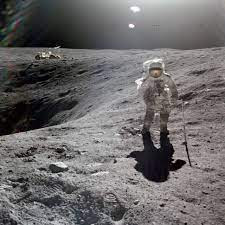
Charles Duke steps on the moon during Apollo 16, April 1972. 
In a poignant post-Trump insight, McRaven writes: “The power of humility is that it brings us closer together, and the role of every hero is to unite people, not divide them.”

Throughout this compact but powerful book McRaven tells stories of true heroes such as Air Force General Charles Duke, the youngest astronaut (so far) to walk on the moon; Marine Private First Class Ralph Johnson, who in 1968 leapt on a grenade and “gave his last full measure of devotion to the men he served with;” Gary Sinise, who selflessly brought educational supplies to a war zone in Afghanistan as part of Operation International Children; and Sen. John S. McCain III, a POW survivor and true American hero, who showed McCraven humility, gratitude, honor, and a sense of humor.


Abraham Lincoln
Being able to laugh at oneself is the sign of strength, and McRaven presents a self-deprecating joke Abraham Lincoln told to people: “(Lincoln) loved to tell the story of a man who approached him on a train one day. The man said, ‘I have an article in my possession which belongs to you.’ Taking a jack-knife from his pocket, the man explained, ‘This knife was placed in my hands with the promise that I was to keep it until I found a man uglier than myself. Allow me now to say, sir, that I think you are fairly entitled to the property.’”

McRaven introduces lesser-known heroes, too, including Navy Capt. Ted Grabowsky, who taught that “honesty is the cornerstone of integrity, the foundation upon which all other aspects of your character will be built.” He tells us of cancer researcher Dr. Jim Allison, who personifies perseverance (and has an interesting connection to the great Willie Nelson). And, he shares a personal story about cancer doctor Michael Keating, who shows that hope and change can be the strongest forces in the universe.


Ten years ago this year McRaven, under Commander in Chief President Barack Obama, commanded the Navy SEALs who brought justice to Osama bin Laden. If that was a career high for him, surely one of his deepest lows came in a separate combat action when some of the military forces under McRaven’s command mistakenly killed two non-enemy sons and a daughter of a father in Afghanistan. In the tenth chapter McRaven relates in heartbreaking detail how he met with that father and how forgiveness can be transforming.

During a Profiles in Leadership seminar, Retired U.S. Navy Adm. William H. McRaven speaks to service members inside the Pfingston Reception Center located on Joint Base San Antonio – Lackland, Texas, Jan. 10, 2018, about character and how it applies to leadership. (TSgt. Ave I. Young)

The "Forgiveness" chapter’s epigram is by Mahatma Gandhi: “The weak can not forgive; forgiveness is the attribute of the strong.” We can tie McRaven’s wisdom –– giving up the burden of hatred –– to the current state of society in 2021: intolerant political correctness, QAnon conspiracies, cancel culture, voter suppression, and domestic extremism and terrorism, including the Jan. 6 insurrection attack on the Capitol –– seeking to divide rather than unite.

“Society today seems to be easily offended. We are quick to anger, and some people believe every offensive act, no matter the intent, requires a swift rebuke. The hardest thing any hero can do is to forgive. It is easier to storm the hill, fight the fire, and stop a madman with a gun. It is hard to forgive, because we are afraid. Afraid that forgiving will take away the anger that drives us, the hatred that motivates us, the righteous indignation of being wronged. We want more than anything to harness the outrage, feel the power of injustice, and the fury of discontent, so we can lash out at the offender and feel justified. We think that retribution, no matter how small or how large, will sooth our soul.

It will not.”

He advises, “Be the victor, not the victim.”


Boatswain's Mate Seaman Apprentice Esau Arellano aboard guided-missile destroyer USS Ralph Johnson (DDG 114), Aug. 4, 2020. (MC3 Anthony Collier)

His code begins with “courage.” He advises, “Take one step forward and face your inner demons. And if you take that one step forward you will find the courage you seek…”


It takes profound individual courage, for example, to confront the universal human truth of our mortality. Which reminds me again of Richard Dawkins, who writes in “Unweaving the Rainbow”: “We are going to die, and that makes us the lucky ones. Most people are never going to die because they are never going to be born. The potential people who could have been here in my place but who will in fact never see the light of day outnumber the sand grains of Arabia.”


In “Hero Code” McRaven gives respect to courageous heroes. He quotes John Adams, William Penn, Mark Twain, Winston Churchill, Anne Frank, Fyodor Dostoevsky, Nelson Mandela, Helen Keller, Sonia Sotomayor, among others.


McRaven distills his perspective on heroism down to each individual. He recommends readers find their talent “and use it to inspire others –– to give hope, to make tomorrow a better day.”


This compact book is packed with bite-sized philosophy, common-sense ethos, and universal wisdom.