Showing posts sorted by relevance for query gandhi. Sort by date Show all posts

Friday, January 14, 2022

I’ll Vote for That: ‘Race’ as ‘Caste’


Review by Bill Doughty––

Although science says there is no such thing as race, that doesn’t mean there is no “racism.”


Under a guise of racism, a dominant class can subjugate, discriminate, and try to control a subordinate class, including by suppressing or subverting their right to vote –– based on superficial differences.


Isabel Wilkerson
Isabel Wilkerson makes the case for recasting, so to speak, “racism” as “casteism” in her indispensable book for our time: “Caste: The Origins of Our Discontents” (Random House, 2020), an Oprah’s Book Club selection.

As for “no such thing as race…”


Scientists call ‘race’ an artificial construct. Wilkerson writes this, citing a great Navy veteran scientist:

“Two decades ago, analysis of the human genome established that all human beings are 99.9 percent the same. ‘Race is a social concept, not a scientific one,’ said J. Craig Venter, the geneticist who ran Celera Genomics when the mapping was completed in 2000. ‘We all evolved in the last 100,000 years from the small number of tribes that migrated out of Africa and colonized the world.’” (Venter is a former Navy corpsman and Vietnam War veteran; we have featured his work and his autobiography several times here on Navy Reads.)

Now DNA kits ordered by mail show “that race as we have come to know it is not real,” Wilkerson says. “It is a fiction told by modern humans for so long that it has come to be seen as a sacred truth.”


Wilkerson interviews a Nigerian-born playwright, who says, “You know that there are no black people in Africa. Africans are not black. They are Igbo and Yoruba, Ewe, Akan, Ndebele. They are not black. They are just themselves. They are humans on the land. That is how they see themselves, and that is who they are.”

Dr. Martin Luther King Jr., who embraced the nonviolent teachings of Mohandas Gandhi, saw the issue of racism framed as casteism. Sixty-three years ago, in February 1959, he and his wife, Coretta Scott King, traveled to and within India, where MLK self-identified as “an untouchable.” The Kings visited the grave of Gandhi, laid a wreath, and prayed.


In India, people are born into castes that are supposedly divinely dictated. Discrimination against people considered part of the lower classes was acceptable, lawful, institutional. While civil rights laws in India in the 1940s (and in the United States in the 1960s) have made it illegal to discriminate, "both countries still live with the residue of codes that prevailed for far longer than they have not."

Casteism in the U.S. began more than a century before we became a nation.


Actions 


Beginning in 1619, Europeans brought Africans to the English colonies as property and to the very bottom of a social hierarchy. Confronting the morality of the institution led eventually and with great upheaval to the Emancipation Proclamation and American Civil War nearly 250 years later. But like it or not, racism, constructed within a framework of casteism, had been already institutionalized.

“In the decades to follow, colonial laws herded European workers and African workers into separate and unequal queues and set in motion the caste system that would become the cornerstone of the social, political, and economic system in America. This caste system would trigger the deadliest war on U.S. soil, lead to the ritual killings of thousands of subordinate-caste people in lynchings, and become the source of inequalities that becloud and destabilize the country to this day.”

“After the Civil War, Confederates blamed the people they had once owned for the loss of the war,” Wilkerson writes. There was a backlash to “take our country back.” The Lost Cause. The Big Lie.
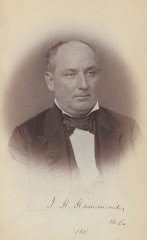

South Carolina's Hammond
Wilkerson contends, “Caste, along with its faithful servant race, is an x-factor in most any American equation, and any answer one might ever come up with to address our current challenge is flawed without it.”

She presents dozens of examples of the horrors inflicted by the dominant class in America over previous centuries, including torture, riots, and lynchings.


We learn of the horrid senator of South Carolina James Henry Hammon, who said, “God created slaves for us.” Hammon raped women, including his own daughter, and sexually assaulted four of his nieces. We also read the crushingly sad story of Willie James Howard, a 15-year-old black boy who made the fatal mistake of having a schoolboy crush on a white girl in 1943 in Grand Gulf, Mississippi. And, we hear of ludicrous practices under endogamy, miscegenation, and eugenics laws and theories.


A eugenics book published in 1916 by an American, Madison Grant, titled “The Passing of the Great Race,” became popular with white supremacists.


Adolf Hitler called it his bible.

The Nazis were inspired by how the American upper class treated blacks and especially indigenous peoples. But, fascist Germans of the 30s and 40s escalated and intensified the evil when they exterminated millions of people based on eugenics and claims of Aryan supremacy.


Hitler and Nazi casteism
A caste system set up by Hitler and the Nazis justified the torture and deaths of millions of Jews, homosexuals, Roma people, and people with disabilities. To the Nazis, it was “obvious Jews were a separate race.”

When Einstein, a Jew, escaped Germany as an immigrant to the United States, he was shocked to discover he had moved from a country of castes to another country where, this time, people of color were considered a subordinate class.


Once we accept the reality of caste systems, it helps us understand the point of view of others.


That includes many people in the privileged dominant class who feel fear and resentment when they start to lose their privileged position. “A caste system builds rivalry and distrust and lack of empathy,” Wilkerson contends.


Will the dominant class –– through fear, anger, and resentment –– do anything, accept anything, to try to retain the power hierarchy? Think: sedition, treason, secession.


This week, the U.S. Department of Justice announced the indictment of members of the Oath Keepers, including the far-right group’s Texas-based founder, on charges of seditious conspiracy related to the January 6, 2021, U.S. Capitol insurrection.

Oathkeepers stack into the U.S. Capitol, along with other Trump supporters, during the insurrection of Jan. 6, 2022.

Reactions


People confronted with scenes of outright violence respond in different ways. Some –– like those who attended lynchings of black people in the American South, or German citizens who swooned when Hitler’s stormtroopers returned from invading Poland –– react with joy. Other people may be outraged at first but later find justification for ignoring or even condoning the violence.


For example, despite being an advocate of slavery Secretary of the Navy James K. Paulding reacted strongly after he witnessed what Wilkerson describes as “barefoot men and women locked together with the weight of an ox-chain in the beating sun, forced to walk the distance to damnation in a state father south and riding behind them, ‘a white man on horse back, carrying pistols in his belt, and who, as we passed him, had the impudence to look us in the face without blushing.’” Paulding said he was outraged to see “such flagrant and indecent outrages upon humanity … a villain, in thus marching half naked women and men, loaded with chains, without being charged with a crime but that of being black…” [Paulding, SECNAV from 1838 to 1841, was a contemporary of David Dixon Porter, Isaac Hull, and John Rodgers, serving with them on the Board of Navy Commissioners. Paulding was an ardent defender of slavery and called abolitionists “satanic.” He is also remembered for being opposed to steamships and engineers in the Navy.]


The armed services have come a long way in promoting equality and dignity, especially since the 1960s; nevertheless, military readers will cringe at some of the lack of empathy and outright prejudice and bigotry in the past.


MA1 Laymoun Ferguson lights a candle on National Holocaust Remembrance Day at Commander, Fleet Activities Sasebo. (MC3 Mackenzie P. Adams)

Wilkerson reminds us that during World War I, black soldiers were segregated not only from their fellow white warfighters but also from their European counterparts in uniform.

“American military command informed the French of how they were to treat the black soldiers, clarified for them that these men were ‘inferior beings,’ no matter how well they performed on the front lines, that it was of the utmost importance’ that they be treated as inferior.

“The fact that military command would take the time in the middle of one of the most vicious wars in human history to instruct foreigners on the necessity of demeaning their own countrymen suggests that they considered adherence to caste protocols to be as important as conducting the war itself.”

Black American heroes like Pvt. Burton Holmes and Cpl. Freddie Stowers, both killed in action, were blocked from receiving the Medal of Honor, despite nominations by their white officers who witnessed their bravery and “broke with caste” to nominate them. [Holmes was awarded the Distinguished Service Cross posthumously in 1919; Stowers’s sisters accepted the MoH on their brother’s behalf in 1991, presented by Navy/WWII veteran President George H.W. Bush.]


Veterans of both world wars came back from the warfront to confront Jim Crow racism and the construction of more monuments to losing leaders of the Civil War.


The 90-foot tall, 17,000-square-foot carving at Stone Mountain, Kennesaw, Georgia, honoring the Confederacy. Carving began in 1964, the year of the Civil Rights Act and a year before the signing of the Voting Rights Act. The carving was dedicated by Vice President Spiro Agnew in 1970. It was completed in 1972.


Retractions


Confederates lost the war but won the peace, according to Wilkerson, especially when thousands of monuments, symbols, and namesakes to traitors who fought to defend slavery were set up throughout the United States.


Local governments removed statues of Robert E. Lee, including in Charlottesville and Richmond, Virginia, last summer, and in New Orleans, Louisiana, in 2017 after public hearings. In New Orleans:

“At one hearing, a Confederate sympathizer had to be escorted out by police after he cursed and gave the middle finger to the audience. A retired lieutenant colonel in the Marine Corps, Richard Westmoreland, came at it from the other side. He stood up and said that Erwin Rommel was a great general, but there are no statues of Rommel in Germany. ‘They are ashamed,’ he said. ‘The question is, why aren’t we?’”

Germany looks at its history “without blinking,” highlighting the shame of what the Nazis did –– and what good people failed to do; but, the Germans are neither ashamed nor too proud to confront their history. They reject the hate of the Nazis and honor the victims of the Third Reich.


Wilkerson notes that U.S. Confederacy monuments on pedestals such as those honoring Robert E. Lee –– as well as Georgia’s Stone Mountain, bigger than Mt. Rushmore, featuring Lee, Jefferson Davis, and Stonewall Jackson –– are up high so everyone has to literally look up at them. But in Germany, where there are numerous monuments to the victims but none to Nazis, people see stolpersteine, stumbling stones embedded in the cobblestones, each denoting a victim of the holocaust or other Nazi horrors. “Leaning over to read the names on the stumbling stones forces you to bow in respect,” Wilkerson observes.


Stolpersteine commemorate the victims of the Nazis, who receive no monuments in Germany for their lost cause. 


Traction


Sailors raise the flag on MLK Day in Yokosuka, Japan, Jan. 17, 2011.  (PO2 Devin Dow)
MLK’s famously said, “We shall overcome because the arc of the moral universe is long but it bends toward justice.” He marched in Selma for voting rights. He realized that voting rights in a full and open democracy were key to ending casteism.

Some of Wilkerson’s own personal first-hand examples of dealing with casteism, particularly in a restaurant, dealing with a plumber, or while flying first class, seem petty and unnecessary in the context of the moral universe presented in the bulk of her book. However, I can understand if others feel differently.


On the other hand, Wilkerson’s conclusions at the end of this great book are as big as an arc can be, and her optimism is inspiring:

“We look to the night sky and see the planets and stars, the distant lights as specks of salt, single grains of sand, and are reminded of how small we are, how insignificant our worries of the moment, how brief our time on this planet, and we wish to be part of something bigger than ourselves, to magnify our significance, to matter somehow as more than the dust that we are.

“Even the longest lived of our species spends but a blink of time in the span of human history. How dare anyone cause harm to another soul, curtail their life or life’s potential, when our lives are so short to begin with?”

                A view of our galaxy. (NASA)

Wilkerson concludes that the answer is in our hands: “We are responsible for our own ignorance or, with time and openhearted enlightenment, our own wisdom. We are responsible for ourselves and our own deeds or misdeeds in our time and in our own space and will be judged accordingly by succeeding generations.” Isn’t the answer truly in our hands when we hold a good book –– or a ballot?


Wilkerson, author of “The Warmth of Other Suns,” is a winner of the Pulitzer Prize. In 2016 President Barack Obama presented Wilkerson with the National Humanities Medal for "championing the stories of an unsung history."

Sunday, June 7, 2015

Mark Twain's Colors II: Thug Life

Review by Bill Doughty––

The original Thugs killed for the joy of taking lives, according to Mark Twain, author of "Following the Equator." One sees parallels with the self-proclaimed Islamic State or "Daesh" (aka ISIL/ISIS).

Indian "thugs" from around 1865 in Peshawar, now part of Pakistan. (Photo from NPR)

The word "thug" comes from an actual sect of religious extremist terrorists – the Thugee – who strangled and robbed men, women and children two hundred years ago in India. Murders were often carried out after the Thugs had gained the trust of their victims.

Twain first heard about the Thugs in the mid 1800s and read and wrote about them when he visited Bombay (Mumbai) in 1896.
"Fifty years ago, when I was a boy in the then-remote and sparsely peopled Mississippi valley, vague tales and rumors of a mysterious body of professional murderers came wandering in from a country which was constructively as far from us as the constellations blinking in space – India; vague tales and rumors of a sect called Thugs, who waylaid travelers in lonely places and killed them for the contentment of a god whom they worshiped; tales which everybody liked to listen to and nobody believed..."
Thugee belief: gaining trust, distracting victims, then striking from behind.
Twain devotes more than two chapters of his "Following the Equator" (Volume II) to discussing the Thugs, referencing a government report printed in Calcutta in 1840.


He describes the report by Major Sleeman, of the British Indian Civil Service, as "a clumsy, great, fat, poor sample of the printer's art, but good enough for a government printing-office in that old day and in that remote region, perhaps."
"The Thugs were worshipers of Bhowanee; and to this god they sacrificed anybody that came handy; but they kept the dead man's things themselves, for the god cared for nothing but the corpse. Men were initiated into the sect with solemn ceremonies. Then they were taught how to strangle a person with the sacred choke-cloth, but were not allowed to perform officially with it until after long practice ... the expert's work was instantaneous: the cloth was whipped around the victim's neck, there was a sudden twist, and the head fell silently forward, the eyes starting from the sockets; and all was over. The Thug carefully guarded against resistance. It was usual to get the victims to sit down, for that was the handiest position for business."
Mark Twain aboard USS Mohican, 1895. (PBS)
Twain became captivated with learning more about the cult, which included teenage boys and elderly men. He lauded Britain's "noble" task to remove them. And he saw parallels in other cultures. Twain asks about The Why – "what was the impulse?" Then he draws a surprising conclusion:
"Apparently, it was partly piety, largely gain, and there is reason to suspect that the sport afforded was the chiefest fascination of all ... That must really be the secret of the rise and development of Thugee. The joy of killing! the joy of seeing killing done – these are traits of the human race at large. We white people are merely modified Thugs; Thugs fretting under the restraints of a not very thick skin of civilization; Thugs who long ago enjoyed the slaughter of the Roman arena, and later the burning of doubtful Christians by authentic Christians in the public squares, and who now, with the Thugs of Spain and Nîmes, flock to enjoy the blood and misery of the bull-ring. We have no tourists of either sex or any religion who are able to resist the delights of the bull-ring when opportunity offers ..."
Beautiful "splendid" colors then and now in India. (Photo from PBS)
Twain also looks disapprovingly on the 19th century big game hunters in India who killed tigers and elephants – not for meat or out of necessity, but for the "sport" and joy of killing. He shines a harsh light on human nature, but sometimes his light reflects beauty in fiery spectacle.  

"Following the Equator" sings with colors, especially during Twain's visit to Bombay. Here is part of his description of the trip to Gallé Face by the seashore:
"What a dream it was of tropical splendors of bloom and blossom, and Oriental conflagrations of costume! The walking groups of men, women, boys, girls, babies – each individual was a flame, each group a house afire for color. And such stunning colors, such intensely vivid colors, such rich and exquisite minglings and fusings of rainbows and lightnings! And all harmonious, all in perfect taste; never a discordant note; never a color on any person swearing at another color on him or failing to harmonize faultlessly with the colors of any group the wearer might join. The stuffs were silk – thin, soft, delicate, clinging; and, as a rule, each piece a solid color: a splendid green, a splendid blue, a splendid yellow, a splendid purple, a splendid ruby, deep and rich with smoldering fires – they swept continuously by in crowds and legions and multitudes, glowing, flashing, burning, radiant; and every five seconds came a burst of blinding red that made a body catch his breath, and filled his heart with joy. And then, the unimaginable grace of those costumes! Sometimes a woman's whole dress was but a scarf wound about her person and her head, sometimes a man's was but a turban and a careless rag or two – in both cases generous areas of polished dark skin showing – but always the arrangement compelled the homage of the eye and made the heart sing for gladness."
What happens next in the parade of colors – breaking Twain's revery – is jarring and insightful, contrasting cultures, appreciating diversity and showcasing Twain's laugh-out-loud sense of humor. A recommended read.

Twain's "Following the Equator" was suggested in 2012 by Rear Adm. John Kirby, former U.S. Navy Chief of Information and former Pentagon spokesperson, now State Department spokesperson.  "Twain has always been my favorite author. I love his humor, his wit and the ease and simplicity of his writing. 'Following the Equator' captures his essence best, in my view," Kirby wrote.

Twain captures the common shared values of humanity, good and bad – including Thug Life in India two centuries ago. Read our first installment of "Mark Twain's Colors" published last year on Navy Reads  here.

As for the original 'gees – Thugees – read a fascinating post by Lakshmi Gandhi at National Public Radio. Gandhi ties in other aspects of American culture, including thuggish-ruggish music and a new genre of literature known as thug-lit. The big revelation: how the term "thug" has been misused but is being reshaped, especially considering the original murderous group from which the word originates.

Wednesday, December 2, 2020

History Has Its Eyes on – Hong Kong

Review by Bill Doughty––

The soundtrack to Joshua Wong's account of the trials and tribulations in Hong Kong can be found in Lin Manuel Miranda's "Hamilton."

"Unfree Speech: The Threat to Global Democracy and Why We Must Act, Now" by Joshua Wong (Penguin Books, 2020) is written by a young man who is "young, scrappy and hungry" and ready to "rise up." He seems to echo Hamilton: "I'm not going to waste my shot."


Wong's is the voice of a boy becoming a man –– a self-described "diehard fanboy" of Gundam, OnePiece, Marvel and DC comics, as well as a student of Gandhi and MLK. He and his close friends Agnes Chow and Ivan Lam (top photo) were sentenced to prison this week by a court in Hong Kong for a pro-democracy protest they held last year.*

Wong offers a brief history of the situation in Hong Kong since the time of the transfer of sovereignty from Great Britain to China, July 1, 1997: The recession in '97, the SARS outbreak in 2002, "misguided housing policies," the National Security Bill, the barring of political organizations, growing demands for more democracy, and the rise of the Umbrella Revolution/Movement.

"The movement didn't happen in a social vacuum. The broken promise of electoral reform and subsequent police crackdown catalysed the unrest, but they didn't cause it. It took decades of pent-up frustration over income inequality, social immobility and other injustices for public anger to finally boil over. Martin Luther King Jr famously said that freedom is never voluntarily given by the oppressor and that it must be demanded by the oppressed. The Umbrella Movement was our way of making our demands heard."

"The movement's symbol, the yellow umbrella, captured both the humility and humanity of the non-violent protesters," Wong writes. From Hamilton: "I was aiming for the sky," "Forgiveness, can you imagine it?" and "Tomorrow there'll be more of us."

As important as the history is Wong's explanation of structure of Hong Kong's government: The Executive is chosen by Communist Party loyalists and controlled by Beijing. The Legislature is not truly representative (two 35-member chambers: GC-geographical, chosen by region, and FC-functional, chosen by Beijing-friendly business and industry. The Judiciary, supposedly independent, is becoming more deferential to the executive, where "the criminal justice system is increasingly used as a political tool to silence dissent."


Voter suppression, election interference and punishment of free speech are hallmarks of Communist China's war on democracy. "Hong Kong is gradually becoming an autocracy," Wong writes. He calls it ominously like Star Wars's "The Empire Strikes Back."


Much of this book, disjointed and rough at times, comes from his diary from prison, both at the Stanley Prison for adults and earlier while at the Pik Uk Correctional Institution for juveniles. He gives a commentary on friends, prison food, entertainment, and hunkering down during a hurricane. Again from Hamilton: "In the eye of a hurricane, there is quiet" ... "Blow us all away" ... "Look around, look around" ... "I'll write my way out, overwhelm them with honesty."


Wong describes a "perfect storm" building, and even though this book was published this year, it was before COVID-19 was part of that storm.


Agnes Chow
Wong and many of his fellow protesters, including Lam and Chow, began their activism at a tender age. They venerate earlier freedom advocates such as Ai Weiwei, who writes this book's introduction, and they commemorate the young students killed in the Tiananmen protests and massacre of June 4, 1989.


The cover of the book features a quote from Greta Thunberg: "Together we are one loud voice that cannot be silenced." Young people are at the heart of global calls for freedom and equality. Wong was inspired by Malala's memoir. We're reminded of the young people of Parkland, Florida who sparked a movement for gun safety in the wake of the killing of 17 people at Marjory Stoneman Douglas High School. 


The subtitle of this book is "The Threat to Global Democracy and Why We Must Act, Now."

"From Turkey and Ukraine to India, Myanmar and the Philippines, citizens are pushing back oppressive regimes in defence of their diminishing rights. But nowhere else in the world is the struggle between free will and authoritarianism more clearly demonstrated than here. In the new trans-Pacific cold war, Hong Kong is the first line of defence to stop or at least slow down the dangerous rise of a totalitarian superpower. Like the canary in the coal mine or the early warning system on a tsunami-prone coastline, we are sending out a distress signal to the rest of the world so that countermeasures can be taken before it is too late. As much as Hong Kong needs the international community, the international community needs Hong Kong. Because today's Hong Kong is the rest of the world's tomorrow."

Wong points out Russia's aggression and annexation of Crimea, India's invasion of semi-autonomous Kashmir, and Turkey's military regime's imprisonment of journalists and displacement of millions of Kurds. "Their motivation is singular: self-perpetuation. To consolidate and maintain power," he writes.


Military power is flexed, Wong writes, to impress and intimidate –– and so leaders can remain in power. "Oceans rise; empires fall" ... "The world was wide enough for both."


Ensign Ashley Welker, a Los Angeles native, along with other Sailors, speaks to a tour group visiting Arleigh Burke-class guided-missile destroyer USS Sterett (DDG 104) during the ship’s port visit to Hong Kong, May 2, 2017. (MC1 Byron C. Linder)


In a call to action, Wong offers a 10-point action plan for civil action. He expresses appreciation to and for the United States and speaks glowingly of the support he received in Washington D.C. In September of 2019 he testified to the U.S. Congressional-Executive Commission on China (CECC).


U.S. Speaker of the House Nancy Pelosi and Wong
He received support directly from Speaker Nancy Pelosi, Sen. Marco Rubio, Rep. Jim McGovern, and Rep. Eliot Engle. Rubio sponsored the "Hong Kong Human Rights and Democracy Act." Pelosi told Wong, "You are an inspiration to young people everywhere. Thank you for your courage and resolve."


As "Hamilton" says, "It must be nice to have Washington on your side."


"Who lives, who dies, who tells your story,” in the words of Lin-Miranda.


Wong and U.S. Senator Marco Rubio
The late U.S. Representative John Lewis personified democracy and called for the "good trouble" as practiced by Wong and friends. Lewis, of course, played a pivotal role in passage of the Voting Rights Act signed into law by President Lyndon B. Johnson in 1965. And he advocated strongly for each reauthorization of the Voting Rights Act in 1970, 1975, 1982, and 2006.


In the face of voter suppression in some states, the House of Representatives passed Bill HR 1 –– The "For the People Act" in 2019. But "wait for it," as Hamilton intones: HR 1 is still awaiting a vote by the U.S. Senate.


*(Wong was sentenced to 13.5 months in prison; Chow, called the “Goddess of Democracy,” was sentenced to ten months in prison; and Lam received a sentence of seven months for inciting the pro-democracy protest.)

Sunday, May 17, 2015

Jefferson, Monty Python, UCMJ and Magna Carta at 800

by Bill Doughty

Terry Jones of Monty Python narrates a really cool video synthesizing the history of Magna Carta on the occasion of its 800 year birthday this weekend and recognizing it as one of the cornerstones of democracy and human rights.


The animated video is part of a project sponsored by the British Library:

"Why was Magna Carta agreed at Runnymede in 1215? What did the document say, and how was it interpreted over the next 800 years? Why is it still important today, and how does it affect our culture, laws and rights?"

The ideas captured in the document crossed the Atlantic with colonists and immigrants searching for liberty and an escape from gross inequality.

Penn reprinted Magna Carta in 1687.
Magna Carta influenced growth of freedom in Philadelphia under William Penn in the century before the American Revolution. Penn, founder of Philadelphia ("City of Brotherly Love") was persecuted, even jailed, for freely expressing his religious beliefs as a Quaker. He stood for the belief, expressed in Magna Carta that the innate rights of people should not be infringed upon by the Church or State. Penn had the full text of Magna Carta reprinted in Philadelphia in 1687.

The U.S. National Archives offers an exhibit and series of programs this summer commemorating the 800th anniversary of Magna Carta.

From the Archives website: "During the American Revolution, Magna Carta served to inspire and justify action in liberty’s defense. The colonists believed they were entitled to the same rights as Englishmen, rights guaranteed in Magna Carta. They embedded those rights into the laws of their states and later into the Constitution and Bill of Rights."

Interestingly, Thomas Paine in his "Rights of Man" denounced Magna Carta for not going far enough, in that it was merely a bargain with the barons and other nobles and did not represent the interest of all people. Perhaps Paine's argument was influenced by his strong ties to France.

Nevertheless, Thomas Jefferson saw Magna Carta as a turning point in the history of human rights.

Thomas Jefferson
Jefferson, who as president was commander in chief during the Navy's victory in the the Barbary Wars, wrote a letter in 1814 referencing Magna Carta. It was the same year British troops burned the Library of Congress in the War of 1812 (Jefferson would donate 6,000 books from his personal library in response).
In Jefferson's letter to Dr. Thomas Cooper, dated Feb. 10, 1814, the statesman reminisces about "a time of life when I was bold in the pursuit of knowledge, never fearing to follow truth and reason to whatever results they had, and bearding every authority which stood in the way."

He reasons that Magna Carta, also spelled "Magna Charta," was significant in that it marked a turning point in history from common law to statute law.
"For we know that the common law is that system of law which was introduced by the Saxons on their settlement in England, and altered from time to time by proper legislative authority from that time to the date of Magna Charta, which terminates the period of the common law, or lex non scripta, and commences that of the statute law, or Lex Scripta. This settlement took place about the middle of the fifth century."
Jefferson's letter makes the case that American law and justice evolved from legislative authority based on fundamentals of human reasoning, rights and freedom.

In "Thomas Jefferson: A Life" author Willard Sterne Randall reveals that "whether he knew it or not (Jefferson) was descended, on his mother's side ... from one of the barons who signed the Magna Carta in 1215."

Magna Carta also influenced the thinking and philosophy of Mohandas Gandhi and therefore Dr. Martin Luther King, Jr.

King John is compelled to sign Magna Carta May 15, 1215.
2nd Lt. Allen Ernst, of 71st FTW Legal Office of Vance Air Force Base, Oklahoma, offers this perspective as to why the 800-year-old document is relevant to members of the armed forces as a keystone for Uniformed Code of Military Justice:

"The UCMJ governs all US military personnel around the world, from the chief of staff to the newest airman basic, and protects the rights of service members by laying out strict guidelines for the due process of military law," he writes. "For example, Article 7(e) prohibits confinement of individuals without probable cause, and Article 55 specifically prohibits cruel and unusual punishment."
According to Ernst, "The Magna Carta was a response to a problem. King John of England was abusing his supreme power, supposedly by divine right, acting selfishly at best and destructively at worst."

Navy JAGs visit Library of Congress Magna Carta exhibit Jan. 14, 2015. (Photo by Lt.j.g. Hood)
Lt.j.g. Colin Hood of the Region Legal Service Office Naval District Washington wrote in a post in March on DOD Navy Live U.S. Navy JAG Corps blog:

"Although the original charter was nullified by Pope Innocent III a few weeks after its distribution, language from the document would be recycled in subsequent royal charters and decrees. The interpretation and implementation of ideas expressed in the Magna Carta would eventually lead to the beginnings of several legal theories (the right to due process, the jury system, etc.) we depend on today."

Eventually, in 20th century, Magna Carta would even influence the United Nations' Universal Declaration of Human Rights.

In addition to the funny and informative Monty Pythonesque video, the British Library's comprehensive site offers a series of essays about Magna Carta, including more about how early American history was influenced by the landmark document.

(Special thanks to friend and colleague Brandon Bosworth for his suggestion to do a Navy Reads post on this topic. Check out Brandon's A Gent In Training blog. Mind-expanding reads.)

Monday, July 27, 2020

March for Good Trouble

Review by Bill Doughty––

We remember Civil Rights icon John Lewis, whose life and legacy are being commemorated and celebrated this week.

"March: Book Three" is written by John Lewis and Andrew Aydin with art by Nate Powell (Top Shelf Productions; 2016). It's a powerful "graphic novel" of nonfiction, and this is the best in the series.


The book opens with an explosion –– the bombing of the Sixteenth Avenue Baptist Church in Birmingham, Alabama, resulting in the murders of four young black girls: Addie Mae Collins, Carole Robertson, Cynthia Wesley, and Denise McNair.

In the aftermath of the killings and in the midst of taunts of "2-4-6-8; we don't want to integrate," a group of white Eagle scouts, coming from a Ku Klux Klan rally, shot and killed 13-year-old Virgil Lamar Ware. Then, police shot 16-year-old Johnny Robinson.

It was 1963. John Lewis was only 23 years old and already a student leader in America's civil rights movement and an acolyte of Martin Luther King, Jr.

Like MLK, Lewis preached and practiced Gandhi-influenced nonviolence –– even in the face of deadly violence. Alabama Governor George Wallace had declared "segregation forever" and was quoted in a newspaper saying, "What this country needs is a few first-class funerals."

Lewis reflects on his grief over the assassination of President John F. Kennedy, a man who had pledged greater civil rights. It took Kennedy's successor, President Lyndon B. Johnson, to achieve JFK's goal. (Both presidents were Navy veterans.)

In "March 3" we are introduced to women of the movement and see the pivotal role they played in demonstrating, protesting and marching: Fannie Lou Hamer, Margaret Moore, Ella Baker, Amelia Boynton, Diane Nash, Annie Lee Cooper, and of course Rosa Parks. Another women, Viola Liuzzo, was shot dead while helping shuttle demonstrators.

Brave women and men, black and white, stood up to face heavily armed paramilitary police, some in an armored personnel carrier. Lewis was called an "outside agitator," even though he was as much an Alabama citizen, as was the sheriff. He and his fellow students, teachers and other demonstrators wanted free and equal access to the voting booth.

This book is a march through history, with stark images of violence and transcendent images and words of victory. Lewis's optimism, humility and grace shine through, as we see the passage of the Civil Rights Act, Summer of '64 in Mississippi, Bloody Sunday, March to Montgomery, and signing of the Voting Rights Act in 1965.


This book shows Lewis's steadfast resilience and commitment in the face of severe beatings, lengthy arrests and constant threats. His demands for federal assistance ––not reliance on individual states' justice systems –– eventually paid off. So did his steadfast belief in nonviolence, "making good trouble –– necessary trouble."

LBJ said, "It's all of us who must overcome the crippling legacy of bigotry and injustice. And we shall overcome."

"March 3" poignantly includes memorable moments from January 20, 2009, the day Barack Obama became the first African American president. 

One of the illustrations is of United States Navy Band "Sea Chanters" chorus performing the national anthem.

Another is of Obama handing Lewis a thank you note, "Because of you, John" –– signed Barack Obama.

See Navy Reads posts related to or honoring John Lewis, namesake of USNS John Lewis.


An Armed Forces Body Bearer Team carries the flag draped casket of Rep. John Lewis, Dem.-Ga., at Joint Base Andrews, Md., July 27, 2020. DoD personnel are honoring the congressman by providing military funeral honors to his congressional funeral events. (U.S. Air Force photo by Airman 1st Class Bridgitte Taylor)


An Armed Forces Body Bearer Team carries a flag-draped casket of Rep. John Lewis at the U.S. Capitol, Washington, D.C., July 27, 2020. The remains will lie in state on the East Front Steps of the Capitol for a public viewing. (U.S. Army photos by Spc. Zachery Perkins)

Sunday, January 5, 2014

How John McCain Sees Character, Destiny

Review by Bill Doughty

Complex and complicated, Senator John McCain -- son and grandson of admirals, former U.S. Navy pilot and Vietnam Prisoner of War -- thanks his mother with helping develop his character and credits his father with giving him the gift of conscience.  "I don't think there is anything greater a parent can do for you," he writes.

"Character is Destiny" John McCain and Mark Salter is subtitled, "Inspiring Stories Every Young Person Should Know and Every Adult Should Remember."  Random House published the book in 2005 as one of three bestsellers by the authors that "may be their most influential and enduring book yet."

McCain introduces his mother, Roberta McCain, "raised to be a strong, determined woman who thoroughly enjoyed life, and always tried to make the most of of her opportunities."  He praises her curiosity, courtesy and humility.


McCain's grandfather and father in World War II.
He writes of the integrity and "demands of his conscience" of his father, John S. McCain Jr., former Commander-in-Chief, Pacific Command (CINCPAC), in the face of difficult choices.
"He fought in three wars [including WWII and Korea], and in his last war, Vietnam, he commanded all our country's forces in the Pacific, including those who fought in Vietnam.  I am his oldest son and namesake, and I fought under his command.  For several years I was held as a prisoner of war in the enemy's capital, the city of Hanoi.  When the president of the United States [Richard Nixon] and his advisors decided to try to shorten the war by bombing Hanoi, it was my father's duty to order it done.
President Nixon meets McCain.
"The planes that flew to Hanoi on his orders were B-52s.  They were the largest bombers in the air force.  They could carry the largest and the most bombs.  They flew at high altitudes, but unlike those aircraft used by our air force today, they did not have the technology to be very accurate in their targeting.  The pilots knew Americans were being held captive near their targets.  So did the man who commanded them, my father.  he knew where I was, and he loved me.  He prayed on his knees every day for my safe return.  Whenever he visited his soldiers in Vietnam, he would end his day by walking to the northern end of the base and standing quietly alone, looking toward the place where his son was held.  But his conscience required him to do his duty, and his duty required him to risk his son's life.  And so he did."
McCain meets with President Barack Obama to discuss Syria.
"Character is Destiny" is filled with short biographies arranged in seven parts -- Honor, Purpose, Strength, Understanding, Judgment, Creativity and Love.  Each profile is preceded by a quality of character.  For example: Respect - Gandhi, Self-Contol - George Washington, Dignity - Viktor Frankl, Resilience - Abraham Lincoln, Discernment - Leonardo da Vinci, Enthusiasm - Theodore Roosevelt, and Selflessness and Contentment - Mother Teresa.

In Part Five, Judgment, McCain chooses a diverse group to illustrate qualities of fairness, humility, gratitude, humor and courtesy:  Dr. Martin Luther King, Jr., Dwight D. Eisenhower, Tecumseh, Mark Twain and Aung San Suu Kyi.

McCain showcases the citizenship of Pat Tillman, former Arizona State and NFL Arizona Cardinals football player, who, along with his brother Kevin, was moved to join the Army Rangers in the aftermath of Sept. 11, 2001.  About the brothers, McCain writes:
"They intentionally refused to talk about their decision.  They shunned all publicity.  They refused all requests for interviews ... They were special, but no more special than the Americans they served with.  But their modesty, as much as their sacrifice, taught us the first lesson of patriotism.  Patriotism is a lot more than flag waving or singing the anthem at ball games.  Patriotism is the recognition that each of us is just one small part of a cause that is greater than ourselves, one small part, but a part we are honor bound to play.  America is dedicated to the proposition that all men are created equal, and have an equal right to freedom and justice. That is our cause: to prove the truth of that proposition.  And that cause is far more important than the ambitions and desires of any individual."
Pat Tillman, in a photo illustration on Reddit.
Tragically, Pat Tillman was killed on a mountainside in Afghanistan, and the murky circumstances of how he was killed -- and how his death was reported -- compound the tragedy.  The full story can be read in the 2010 bestseller by Jon Krakauer, "Where Men Win Glory: The Odyssey of Pat Tillman."  Krakauer, a favorite author of Tillman, brings out the essence of Tillman's character and intelligence.  

Tillman's honor, courage and commitment mirror that of Navy SEAL Michael Murphy, whose heroism is portrayed in "Lone Survivor" and chronicled in Gary Williams's "SEAL of Honor: Operation Red Wings and the Life of Michael P. Murphy, USN."

McCain's book about "remarkable people who chose well" implies how important it is to make good choices and to have the freedom to make those choices.

Frankl's "Man's Search For Meaning" is "considered by many to be one of the most important books of our time."  Even in the face of death under Nazi persecution Frankl had the power of choice -- to be good or bad.

McCain calls William Shakespeare "the greatest writer in the English language" and quotes several passages, including a father-to-son quote in "Hamlet":  "This above all: to thine ownself be true, and it must follow, as the night the day, thou cannot then be false to any man."

McCain writes, "In other words, being true to our conscience, being honest with ourselves, will determine the character of our relations with others.  That is the concise definition of integrity."

Another Shakespeare quote shared, this one from "Henry V": "We few, we happy few, we band of brothers.  For he today that sheds his blood for me shall be my brother."

In "Tolerance: The Four Chaplains," McCain writes of the sinking of U.S. Army troop transport ship USAT Dorchester in World War II and the four Christian and Jewish chaplains who helped others escape before going down with the ship.

McCain writes about the brilliance of da Vinci, an artist "without any equal"; of Twain: "The Great American Novel was published in 1885 ... 'The Adventures of Huckleberry Finn'"; and of Darwin, who explained "the theory of natural selection, the key to the mystery of mysteries."  Darwin's "On the Origin of Species by Means of Natural Selection" is listed as a source.

"Character is Destiny" lacks an index.  Its glossary of sources is slim and includes references such as Wikipedia and numerous .com and .org sites, "readily recommended."

The authors also highly recommend books for children and parents alike. 
Lt. j.g. John McCain and his parents in 1961.

"Happily, reading books remains among the most satisfying of experiences.  As a means of transporting us into other lives and times, they still have no equal," McCain and Salter write.

Reporter Mark Leibovich, New York Times magazine’s chief national correspondent and the author of “This Town,” wrote a recent in-depth piece, "How John McCain turned his cliche's into meaning," with cooperation of McCain and including an interview with daughter Meghan McCain and friend Senator Lindsey Graham.  Leibovich's story touches on some of the points and principles raised by McCain and Salter in "Character is Destiny."