Showing posts with label Islam. Show all posts

Thursday, September 9, 2021

BJR2: ’The World As It Is’ post-9/11

Review by Bill Doughty––

A "found haiku" while reading Ben Rhodes:


the tension between

the world as it is and … the

world that ought to be


“After the Fall” (reviewed in the previous Navy Reads post) drops onto book shelves three years after writer Benjamin J. Rhodes’s other reflections, similarly profound and just as achingly personal: “The World As It Is: A Memoir of the Obama White House” (Random House, 2018), where Rhodes dissects, among other things, the “forever war.” This is a sweeping look back at the United States after September 11, 2001.

In announcing the beginning of bombing of Afghanistan twenty years ago, just weeks after 9/11, then-President George W. Bush told military service members: “Your mission is defined; your objectives are clear; your goal is just. You have my full confidence, and you will have every tool you need to carry out your duty.” Then, in 2003, Bush and neoconservatives invaded Iraq under false pretenses.


Unfortunately, the original mission to fight terrorists in Afghanistan morphed into a long-term counterinsurgency initiative and a doomed nation-building effort in the middle of a perpetual virtual civil war, with no end in sight.

While some progress was made in Afghanistan over two decades, especially for women and girls, the changes were neither deep nor long-lasting, as evidenced by the immediate fall of the government and Afghan military and ascension of the Taliban.

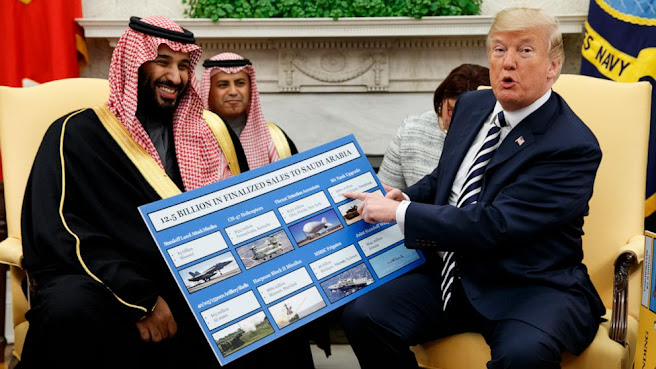
Just as Reagan invited the mujahideen to the White House in the early 80s (photo above), Trump invited the Taliban and Afghan government to Camp David two years ago this week, a secret meeting that was canceled at the last minute after it became public knowledge. Then, Trump and his Secretary of State Mike Pompeo made a deal with the Taliban but did not include the Afghanistan government. Trump announced there would be a U.S. withdrawal by May 2021, but Biden postponed the withdrawal till the end of August.


Future historians likely will not question whether the American war in Afghanistan should have continued after twenty years; rather, they will dissect how the end of the war evacuation was conducted. Some have already asked why the United States stayed so long, left so much infrastructure and equipment behind, and provided (albeit unintentionally) so much combat training to the Taliban and regional terrorists. Why didn’t we leave sooner?

In “The World As It Is” Rhodes takes us back to nearly the mid-point of the twenty-year war in Afghanistan, to Obama’s Afghan Review. Rhodes was in the room where it happened. In fact, he provided a critical role as an advisor to Obama. Other advisors who weighed in as part of the Afghan Review included Vice President Joe Biden, Secretary of State Hillary Clinton, Secretary of Defense Robert Gates, CIA Director John Brennan, General Stanley McChrystal, General David Petraeus, and Chairman of the Joint Chiefs of Staff Admiral Mike Mullen*.


Rhodes writes:

“Gates argued that he wasn’t for a CT (counterterrorism) strategy or a full COIN (counterinsurgency) strategy –– he was for something in between, something that promoted a strong, effective government that delivers services to the people. When the shortcomings of the Afghan government were pointed out, Gates said that we should not give ‘one dollar or soldier’ for a corrupt government –– even though that’s exactly what we were doing. Petraeus said our goal was not to defeat the Taliban but to deny them population centers. Mullen talked about the psychological piece –– the need to create the impression that the Taliban will lose. For the same reason, Clinton said that putting in troops wouldn’t work but you still need to put in troops. It seemed to sum things up perfectly: We had created political pressure on ourselves to send in troops based on a theory of COIN; the review was determining that COIN couldn’t succeed; but all of the arguments still pointed to sending in the same number of troops. We are not going to defeat the Taliban, Obama kept saying. We need to knock them back to give us space to go after al Qaeda.”

Vice President Joe Biden was against any escalation, and CIA Director John Brennan recommended a limited surge just in order to target al Qaeda. When Obama asked Rhodes for his opinion, Rhodes said he agreed with Brennan –– and Obama. “Target, train, transition” became their framework for their strategy and tactics.

“Ultimately, Obama decided to send thirty thousand American troops to Afghanistan, with NATO getting us the rest of the way to forty thousand. We would announce it as a temporary surge –– in eighteen months, the troops would start to draw down. We’d secure Afghanistan’s major population centers, then shift to training and counterterrorism –– essentially endorsing the Petraeus-McChrystal approach for two years, and then shifting to the Biden-Brennan approach sooner than the military wanted. At Biden’s suggestion, Obama had all the principals memorialize their agreement with the plan in writing. It felt like a big much, but his was the lesson from Vietnam: Limit escalation.”


Prior to Biden, three presidents were unable to end the war in Afghanistan. But Obama ended the war in Iraq, ordered the killing of Osama bin Laden, and greatly reduced the cost of lives and cost of war in Afghanistan. Rhodes notes:

“Obama wanted to extricate the United States from the permanent war that had begun on 9/11. On the day he took office, there were roughly 180,000 troops in Iraq and Afghanistan. By late 2014, the number of troops in Afghanistan was down to 15,000. All U.S. troops were out of Iraq. These were meaningful achievements; they saved American lives, as casualty numbers fell from nearly a hundred Americans killed each month to nearly zero, and the cost of war shrank by tens of billions of dollars.”

*Rhodes now cohosts the podcast Pod Save the World. On a recent episode he noted how former CNO and CJCS retired Adm. Mike Mullen (pictured below with then-SECDEF Gates) expressed regret for not ending the American war in Afghanistan sooner.


In an interview with veteran journalist Martha Raddatz on ABC’s This Week, Mullen said, regarding the Afghanistan government and security forces, ” I thought we could build the army and give them a chance to create structures which would run a country in a much more modern fashion. That just is not the case.” Mullen added, “What I thought we could do and I advised President Obama that –– accordingly is I thought we could turn it around. Obviously, I was wrong.”

Mullen said, “I don't think it was possible for us to just abruptly walk away right after we killed bin Laden. But, clearly, we could have gone earlier than we did. As I look back and -- and a lot of people are critical of the president right now, President Biden had it right back then. He was focused singly on counterterrorism. His advice was along those lines. And he certainly said that. And I give him credit for that.”


(Ben Rhodes is President Obama’s former National Security Advisor for Strategic Communication and Speech Writing.)


Top photo: President Barack Obama meets with his national security team on Afghanistan and Pakistan in the Situation Room of the White House, June 23, 2010. Seated at the table are, from left, General David Petraeus, head of US Central Command, Admiral Michael Mullen, Chairman of the Joint Chiefs of Staff, Defense Secretary Robert M. Gates, Vice President Joe Biden, the President, National Security Advisor Gen. James L. Jones, Secretary of State Hillary Rodham Clinton, Chief of Staff Rahm Emanuel, Deputy National Security Advisor Tom Donilon, and John Brennan, Assistant to the President for Homeland Security and Counterterrorism. (Official White House Photo by Pete Souza)

Sunday, September 5, 2021

BJR1: ’After the Fall’

Review by Bill Doughty––

In “After the Fall: Being American in the World We’ve Made” by Ben Rhodes (Random House, 2021) a great thinker “worries about the danger of where the blend of nationalism and authoritarianism can lead.”


This is a must-read about not only “how did we get here?” but also “where are we heading?”


“After the Fall” is divided into four parts –– I, The Authoritarian Playbook; II, The Counterrevolution (mostly Soviet- and Russia-related); III, The Chinese Dream; and IV, Who We Are: Being American, which includes a chapter called “Forever War.”

Rhodes, a deep thinker, considers whether American exceptionalism and supremacy still exist in a world turning away from liberal democracy and more toward authoritarian, even totalitarian, rule:

“Ironically, once they were unbridled, the very forces that enabled this nation’s rise would accelerate its descent. The globalized spread of profit-seeking capitalism accelerated inequality, assaulted people’s sense of traditional identity, and seeded a corruption that allowed those with power to consolidate control. After the attacks of September 11, 2001, this nation’s sense of purpose was channeled into a forever war that hemorrhaged resources, propagated a politics of Us versus Them, and offered a template and justification for autocratic leaders who represented an older form of nationalism. This nation’s new technologies proliferated like an uncontrolled virus before we understood their impact, transforming the way that human beings consume information; at first hopeful, the unifying allure of the Internet and social media segmented people back into lonely tribes where they could be more easily manipulated by propaganda, disinformation, and conspiracy theory. Somehow, after three decades of unchecked American capitalism, military power, and democracy itself, bringing back those older forms of nationalism and social control in new packaging.”

Then-President Bush meets with Orban in 2001
As a prime example, Rhodes takes a deep look into Hungary’s transformation under dictator Viktor Orban. Like many leaders, Orban is a complicated figure who seems to have gravitated to a need for more power, a man who claims grievances in establishing a populist blood-and-soil nationalism.

Rhodes explains “how Viktor Orban had transformed Hungary from an open democracy to a largely authoritarian system in the span of a decade.” Orban shut down a free and open media, and promoted a national religion (Christianity) and national racial identity (white). Orban politicized the nation’s supreme court, gerrymandered voting districts to favor nationalists, and changed voting laws to suppress dissent and political rivals.


Rhodes sees a similar “landscape for nationalism” in the United States, particularly in the past decade. Even since his book was published we see an increase in polarity, extremist-fascist ideology, and even vigilantism, where neighbors are encouraged, even paid, to turn in neighbors.


“In America, as in Hungary, the right wing has embraced a nationalism characterized by Christian identity, national sovereignty, distrust of democratic institutions, opposition to immigration, and contempt for politically correct liberal elites.’


Putin’s Landcape and Xi’s BRI


Navalny
Of course, a modern architect for such a nationalist “landscape” is Russian President Vladimir Putin. Rhodes says that Putin’s view of the world is “a place in which truth and individual human beings are incidental to the raw will to power.”

Putin allegedly ordered the poisoning and imprisonment of one of his nemeses, Alexey Navalny, who had dared to threaten Putin’s power. Navalny, who has been imprisoned more than a dozen times, became politically conscious in the wake of the fall of the Soviet Union after witnessing privatization schemes that consolidated wealth to a handful of oligarchs. He saw corruption schemes in action in Moscow courts. Navalny told Rhodes, “The Soviet Union was an empire based on a lie. And Putin’s Russia is a country based on a lie.”


Attack exercise at a People’s Liberation Army base in Shenyang, China, Aug. 16, 2017. (PO1 Dominique A. Pineiro)
Rhodes then outlines how China embraced American globalization and capitalism while “carefully removing the freedoms” –– Shanghai’d as it were. 

He takes us on a poignant visit to Hong Kong, where young people fight for freedom, democracy, and the right to express themselves without constant surveillance; where booksellers are arrested –– and “The most shocking thing is that it was not shocking.”


Rhodes shows how China is trying to control sea lanes and wrap other Asian nations in their tightening “Belt and Road Initiative.” China, through corruption, exports authoritarianism but expels human rights, he says; the Communist Chinese Party’s treatment of the Uighurs seems based on a version of the U.S. Patriot Act.


Is China’s blend of capitalism, militarism, and stolen technology the future of global power? Is the nationalism/authoritarianism landscape growing and breeding identity-based polarization?


And, how does all of that apply to the United States in the wake of Trump, Russian interference in our elections, the COVID-19 pandemic, the killing of George Floyd, and the January 6 coup attempt at the Capitol? Rhodes says, “You have to look squarely at the darkest aspects of what America is in order to fully, truly love what America is supposed to be.”


“American democracy doesn’t offer us immunity from human fallibility,” Rhodes writes, “but it does offer second chances.”


Afghanistan and Saudis

This book was especially relevant to read during the ending of the nearly 20-year war in Afghanistan –– a war that may actually be almost twice that long. Rhodes reminds us in Chapter 23, “Forever War,” how in 1983 President Reagan “welcomed the mujahideen to the White House as freedom fighters, men of God, comparing them to George Washington.” The United States supported those fighters in their war against the Soviet Union in Afghanistan in the 1980s, but some of those same fighters became part of the Taliban in the 1990s.


According to Rhodes, “Our effort in the 1980s had generated unintended consequences like the birth of al Qaeda just as our post-9/11 wars have generated all manner of unintended consequences, including the creation of al-Qaeda in Iraq, which became ISIS. In this way, the forever war has actually been a forty-year enterprise at war with itself.”


Among unintended consequences over many decades have been the results of America’s relationship with the House of Saud. What was the role of Saudi Arabia on 9/11? What is the U.S. role in Saudi Arabia’s war with Yemen? What kind of legitimacy and support do we give to Saudi Prince Mohamed bin Salman?

“In 2015, Saudi Arabia –– the birthplace of Osama bin Laden and fifteen of the 9/11 hijackers, the source of the oil money that fueled decades of radicalization around the world –– went to war in Yemen. A Houthi sect that had long been a rival to the Saudis had seized control of the capital. The Houthis were aligned with Iran. The new Saudi defense minister and heir apparent to the throne, Mohamed bin Salman, wanted to send a message that he was an assertive character while using the war to consolidate his control over the kingdom’s foreign policy. He was, according to some reports, thirty years old.

“Tentatively at first, America participated, providing logistical and targeting support. The Saudis were, after all, our allies, and the machinery of the government was built to support them. Obama was ambivalent, but he was ultimately persuaded that by participating, we could be a moderating force not the Saudis. It was soon apparent that this wasn’t the case, and this war would escalate when Donald Trump came to office, offering a full embrace of Mohamed bin Salman. Hundreds of thousands of people would be killed, displaced, put at risk of famine. Al-Qaeda in the Arabian Peninsula was fighting the same Houthi enemy as the Saudis were. So the United States, nearly two decades after 9/11, was fighting on the same side as al-Qaeda and Saudi Arabia in Yemen. Such was the logic of the forever war.”


Rhodes reflects on his “list of things we’d done wrong” while Obama was in office: “for instance, supporting the Saudi-led war in Yemen, surging troops in Afghanistan, or failing to more forcefully confront the Republican Party’s efforts to undermine democracy.”

He describes the normalization of a no-longer-surprising-but-still-shocking dynamic over the past decade.

“This whole dynamic was reinforced when Mohamed bin Salman traveled across the United States in early 2018. By that time, it was clear that he was a brutal dictator –– imprisoning his own family at home, waging an increasingly out-of-control war in Yemen, briefly kidnapping the prime minister of Lebanon, lavishly supporting autocrats across the Middle East. Yet he was fully embraced … He may have been a brutal dictator, but he had bottomless cash and supported the War on Terror. Those were America’s preeminent interests. It’s no wonder he felt a sense of impunity. A few months later, Jamal Khashoggi –– an outspoken critic of Mohamed bin Salman and a journalist for The Washington Post –– would be chopped up in the Saudi consulate in Istanbul.”

Threats to our own democracy are reflected in the book’s epigraph, a quote from Turkish journalist and author Ece Temelkuran:

“The final takeover does not happen with one spectacular Reichstag conflagration, but is instead an excruciating, years-long process of many scattered, seemingly insignificant little fires that smolder without flames.”

Where are we heading as threats to democracy smolder?

Monday, February 22, 2021

THE Book: ’A Promised Land’

Review by Bill Doughty

Barack Obama’s “A Promised Land” (Crown, 2020) is THE book to read this month.


Supremely self-aware and filled with empathy, Obama weaves his own life experiences –– as a son, grandson, husband, dad, and friend –– with his career, focusing especially on early 21st century history and the first two years of his presidency.

Obama’s experience growing up in Hawaii, living in Indonesia, having grandparents from Kansas, and working in Chicago helped him develop a wider perspective –– outside looking in. Introspection is part of his very being: “As an African American, I’d experienced what it was like not to be fully seen inside my own country.”


Books captivated him at an early age. Mohandas Gandhi, Abraham Lincoln, Martin Luther King Jr., and James Baldwin informed his world view. Later, Elie Wiesel became a big influence. “Reading his books," Obama writes, "I’d found an impregnable mortal code that both fortified me and challenged me to be better."


Philosophy, humor, and pathos mix with a practical but lyrical narrative in this captivating book, the first in what promises to be two volumes. (I won’t be surprised or disappointed if it becomes three.) It is dedicated "To Michelle –– my love and life's partner and Malia and Sasha –– whose dazzling light makes everything brighter."


CJCS Adm. Mullen and President Obama at 9/11 ceremony at Pentagon, Sept. 11, 2009.
Dozens of characters appear on history’s stage in “A Promised Land,” including Chairman of the Joint Chiefs Gen. Mike Mullen, Gen. Stanley McChrystal, German Chancellor Angela Merkel, Russian President Vladimir Putin, and businessman Donald Trump. Obama writes them into the story with deft pen strokes. He admits in the book's preface that he composes first by hand on yellow legal pads.

Obama’s mindfulness, self-awareness, and critical thinking are the tools he uses to weave together this tapestry of his history. That history includes confronting the economy debacle of the previous administration, dealing with the H1N1 pandemic, facing the BP Deep Water Horizon oil drilling catastrophe, approving Navy SEALS’ mission to rescue Richard Phillips from Somali pirates, and many other crises and achievements.


For Navy Reads readers “A Promised Land” provides invaluable insights into nuclear disarmament efforts, a first-hand perspective on hunting Osama bin Laden, various commander-in-chief challenges, and a deep reverence for military service and sacrifice and about the nature of true patriotism. Obama writes extensively about his visits to meet wounded warriors and their families.

“How those men inspired me! Their courage and determination, their insistence that they’d be back at it in no time, their general lack of fuss. It made so much of what passes for patriotism –– the gaudy rituals at football games, the desultory flag waving at parades, the blather of politicians –– seem empty and trite. The patients I met had nothing but praise for the hospital teams responsible for their treatment –– the doctors, nurses, and orderlies, most of them service members themselves, but some of them civilians, a surprising number of them foreign-born, originally from places like Nigeria, El Salvador, or the Philippines. Indeed, it was heartening to see how well these wounded warriors were cared for, beginning with the seamless, fast-moving chain that allowed a Marine injured in a dusty Afghan village to be medevaced to the closest base, stabilized, then transported to Germany and onward to Bethesda or Walter Reed for state-of-the-art surgery, all in a matter of days.

“Because of that system –– a melding of advanced technology, logistical precision, and highly trained and dedicated people, the kind of thing that the U.S. military does better than any other organization on earth –– many soldiers who would have died from similar wounds during the Vietnam era were now able to sit with me at their bedside, debating the merits of the Bears versus the Packers. Still, no level of precision or care could erase the brutal, life-changing nature of the injuries these men had suffered. Those who lost a single leg, especially if the amputation was below the knee, often described themselves as being lucky. Double or even triple amputees were not uncommon, nor were severe cranial trauma, spinal injuries, disfiguring facial wounds, or the loss of eyesight, hearing, or any number of basic bodily functions. The service members I met were adamant that they had no regrets about sacrificing so much for their country and were understandably offended by anyone who viewed them with even a modicum of pity. Taking their cues from their wounded sons, the parents I met were careful to express only the certainty of their child’s recovery, along with their deep wells of pride.

“And yet each time I entered a room, each time I shook a hand, I could not ignore how incredibly young most of these service members were, many of them barely out of high school. I couldn’t help but notice the rims of anguish around the eyes of the parents, who themselves were often younger than me. I wouldn’t forget the barely suppressed anger in the voice of a father I met at one point, as he explained that his handsome son, who lay before us likely paralyzed for life, was celebrating his twenty-first birthday that day, or the vacant expression on the face of a young mother who sat with a baby cheerfully gurgling in her arms, pondering a life with a husband who was probably going to survive but found no longer be capable of conscious thought.”

President Obama visits a wounded warrior for a Purple Heart presentation at Walter Reed National Military Medical Center in Bethesda, Md., Oct. 10, 2011. (Pete Souza)


Obama’s many visits to Bethesda/Walter Reed, as well as his participation in dignified transfer ceremonies at Dover Air Force Base informed and inspired him about the nature and cost of war.

“I was never more clear-eyed than on the flights back from Walter Reed and Bethesda. Clear about the true costs of war, and who bore those costs. Clear about war’s folly, the sorry tales we humans collectively store in our heads and pass on from generation to generation –– abstractions that fan hate and justify cruelty and force even the righteous among us to participate in carnage. Clear that by virtue of my office, I could not avoid responsibility for lives lost or shattered, even if I somehow justified my decisions by what I perceived to be some larger good.”

Vaclav Havel speaks to U.S. Congress in 1990.
Those visits informed him, as well, of the importance and value of affordable health care on a national scale.

This book is filled with nuggets of wisdom, such as:

  • Hearing this wisdom from Vaclav Havel, former president of the Czech Republic: “‘Today, autocrats are more sophisticated. They stand for election while slowly undermining the institutions that democracy possible. They champion free markets while engaging in the same corruption, cronyism, and exploitation as existed in the past.’”
  • Thinking about the roots of autocracy, whether from communism or religious fundamentalism: “Abstract theories and rigid orthodoxy can curdle into repression.
  • Speaking to WWII Veterans at Normandy: “Our history has always been the sum total of the choices made and the actions taken by each individual man and woman. It has always been up to us.”
  • Questioning political opponents for their fear-filled petty castigation after he bowed to the Japanese emperor, as called for by diplomatic protocol: “I wondered when exactly such a sizable portion of the American Right had become so frightened and insecure that they’d completely lost their mind.”
  • Reflecting about the aftermath of 9/11: “President Bush had done some things right, including swiftly and consistently trying to tamp down anti-Islamic sentiment in the United States –– no small feat, especially given our country’s history with McCarthyism and Japanese internment –– and mobilizing national support for the early Afghan campaign.”
  • Experiencing the joy of coaching his daughter’s basketball team: “Every parent savors such moments, I suppose, when the world slows down, your strivings get pushed to the back of your mind, and all that matters is that you are present, fully, to witness the miracle of your child growing up.”

While accepting the Nobel Peace Prize early in his presidency, Obama spoke to an international audience about the need at times for righteous war, such as when the United States joined with the Allies and confronting and defeating fascism and imperialism in World War II.

Near the end of “A Promised Land’s” 700-plus pages, Obama reflects on war again: “The truth is that war is never tidy and always results in unintended consequences, even when launched against seemingly powerless countries on behalf of a righteous cause.”


This is THE book to read now during Black History Month, in honor of America’s first African American president. It is also a book to read for years to come for anyone interested in understanding the cost of war, the need to preserve peace, and the demand to prevent the rise of autocracy and tyranny –– and achieve greater unity.


Navy Reads looks forward to reading the next volume.


ABOVE: President Barack Obama tours the United States Holocaust Memorial Museum in Washington, D.C., with Sara Bloomfield, museum director, and Elie Wiesel, Nobel Peace Prize laureate and Holocaust survivor, April 23, 2012. (Pete Souza) 
TOP PHOTO: President Barack Obama delivers his remarks to about 3,500 Sailors, Marines and other service members. Obama thanked them for their service during a rally held at Naval Air Station Jacksonville, Oct. 26, 2009. (MCC Anthony Casullo)

Thursday, October 17, 2019

In Post-Imperial World 'Navy Is Like Oxygen'


Review by Bill Doughty

War, anarchy and authoritarianism are children of crumbling empires. That's the gist of Robert D. Kaplan's retrospective collection, "The Return of Marco Polo's World: War, Strategy, and American Interests in the Twenty-First Century" (Random House, 2018). Kaplan sees the importance of a strong navy in a changing world.

Mahan
Noting that the U.S. Navy nearly half the size it was in mid-1980s, Kaplan warns, "A great navy is like oxygen: You notice it only when it is gone."

Decreases and delays in American warship production, coupled with increases in near-peer competitor shipbuilding, threaten U.S. Navy maritime influence.

As the Navy loses supremacy on the seas, according to Kaplan, similarly to what happened to the British Empire a century ago, other nations – including China and India –  are gaining influence and building more ships and ship-fighting technologies.

Kaplan reminds us of the influence of Navy Captain Alfred Thayer Mahan in 1890. Mahan, of course, called for the nation to become a great sea power, recognizing the oceans as the global "commons." Protecting sea lanes meant ensuring peace and prosperity. The Chinese are the Mahanians now," Kaplan contends. As Communist China expands its influence, Kaplan warns of the possibilities of conflict over freedom of maritime trade in Asia.

Such risk of conflict is a daily threat already in the Middle East, where the messy remnants of the Ottoman Empire and Arab Caliphate continue to flare in Turkey, Syria, Iraq and Iran, with the Kurds in the middle. Kaplan explains Turkey President Recep Tayyip Erdogan's "compulsive authoritarianism" and attempts to create "a mono-ethnic state" and a return to Ottoman-like imperialist tendencies. Again, the shadow of empire.

U.S. and Turkish military forces conduct a joint patrol in northeast Syria, Oct. 4, 2019.
(U.S. Army photo by Staff Sgt. Andrew Goedl)
"The map of former Syria and Iraq will continue to resemble a child's messy finger-panting with Sunni and Shi'ite war bands expanding and contracting  their areas of control – the result being flimsy and radical micro-states," Kaplan observes.

Neither continued conflict nor abandonment of partners in the region will win a war on terror: "Remember that right now there are millions of Arab refugees from these wars stuck in the region whose children are not being educated, making the next generation even more prone to radical Islamist propaganda."

Kaplan's map of history is vast and three-dimensional. As always, he shows the importance of geography and culture. And he gives examples from empires as far back as the Mesopotamia, Chinese dynasties, Persian Empire, Arab Caliphate, Greece and Rome.

Kaplan
As for recent events and the post-imperial world, Kaplan contends the vacuum is being filled vitally by a "raft of supranational and multinational groupings such as the North Atlantic Treaty Organization, European Union, International Monetary Fund, International Court of Justice, World Economic Forum," and United Nations.

Kaplan writes about the need for balanced leadership that carefully manages realism with idealism in the new world order. He says the Navy is part of a national leadership in protecting allies and projecting power.
"History moves on. World War II and the Cold War recede. But the United States is the most well-endowed and advantageously located major state on Earth. That good fortune comes with responsibilities that extend beyond our borders. Just look at the size of our three-hundred-warship Navy and the location of our aircraft carriers on any given week. Realism is about utilizing such power to protect allies without precipitating conflict. It is not about abandoning them and precipitating conflict as a consequence."
After World War II, the United States led by example and has silently undergirded a peaceful world, Kaplan contends: "protecting the sea-lanes, the maritime choke points, and access to hydrocarbons, and in general providing some measure of security to the world."
"This is not traditional imperialism, which is no longer an option," he writes about such international cooperation undergirding peace and prosperity, "but it is the best available replacement for it." Indeed, if a great Navy is like oxygen, then the world's economy depends on the U.S. Navy to breathe.

The Independence-variant littoral combat ship USS Gabrielle Giffords (LCS 10) transits the Philippine Sea during Exercise Pacific Griffin 2019, Oct. 1. Pacific Griffin is a biennial exercise conducted in the waters near Guam aimed at enhancing combined proficiency at sea while strengthening relationships between the U.S. and Republic of Singapore navies. (U.S. Navy photo by Mass Communication Specialist 3rd Class Josiah J. Kunkle)
This week, Chief of Naval Operations Adm. Mike Gilday presented the keynote address at the 12th Regional Seapower Symposium in Venice, Italy, noting in echoes of Mahan, "... our global economy floats on seawater.”

“I’m committed to advancing our relationship and our shared values of democracy, free and fair trade, the rule of law,” CNO Gilday said. “Combined with a robust constellation of allies and partners who desire to build and strengthen the international economic order, we are operating towards the same end – continued security and stability that results in a free and open maritime commons.”
CNO Adm. Mike Gilday speaks at the Regional Seapower Symposium in Venice, Italy, Oct. 17, 2019. The symposium goals are to foster open and constructive exchange of views and ideas, enhance a comprehensive approach to many sea-related matters, and boost mutual knowledge and trust among naval partners. (U.S. Navy photo by Cmdr. Nathan Christensen)
The essays in Kaplan's collection, some written more than a decade ago, are still relevant and provocative, particularly 2006's "When North Korea Falls."

This is an engrossing and often prescient book, well worth a Navy read. Among the dozens of people Kaplan acknowledges and thanks are Navy Adm. (Ret.) James Stravidis, Marine Corps Lt. Col. David Mueller, Army Lt. Gen. H. R. McMaster, and Air Force Col. (Ret.) James H. Baker.

Army Gen. David Petraeus calls "Return" a work that "will be regarded as a classic. "These essays constitute a truly path-breaking, brilliant synthesis and analysis of geographic, political, technological, and economic trends with far-reaching consequences."

Tuesday, July 30, 2019

Now More Than Ever: 'Back Channel' Diplomacy!

Review by Bill Doughty

It turns out bagging groceries in a military commissary is a good step in preparing for a career in diplomacy.

Career Ambassador William J. Burns
Such was the beginning of a life of service for military brat William J. Burns, who became a diplomat serving before, during and after 9/11. He held senior U.S. State Department leadership positions during the killing of Osama bin Laden, the rise of Putin, the Arab Spring, growth of China, and the challenges of Iran's nuclear threats.

Burns shows how life as a military dependent can widen the aperture – providing an individual with an understanding of the world and an appreciation of human rights. He recounts people, events and consequences in "The Back Channel: A Memoir of American Diplomacy and the Call for Its Renewal" by William J. Burns (Penguin Random House, 2019).

"Public service was already in my blood. I grew up as an Army brat, the product of an itinerant military childhood that took my family from one end of the United States to the other, with a dozen moves and three high schools by the time I was seventeen," Burns writes.

His father, who served in Vietnam and became a two-star general in the Army, told him, "Nothing can make you prouder than serving your country with honor." Frequent moves at an early age and traveling overseas also helped a young Burns gain insights about his country.

Burns became a diplomat in President Ronald Reagan's and George Shultz's State Department. He served under both Presidents Bush and with Presidents Bill Clinton and Barack Obama. He held key positions in the Middle East, as Ambassador to Russia and as a State Department leader in Washington D.C., retiring in 2014 as Deputy Secretary of State and Career Ambassador. (Today he is president of the Carnegie Endowment for International Peace.)

This book is a must-read for diplomats – including diplomat-sailors/soldiers – who seek to understand "great power rivalry," the Iran nuclear deal, challenges in Asia and eastern Europe, the "frustration seething beneath so many authoritarian Arab societies" and why the U.S.-led war in Iraq was such a mistake.

Burns, who worked directly for Gen. Colin Powell, is clear in his accounting:
"The Iraq invasion was the original sin. It was born of hubris, as well as failures of imagination and process. For neoconservative proponents, it was the key tool in the disruption of the Middle East – the heady, irresponsible, and historically unmoored notion that shaking things up violently would produce better outcomes. In a region where unintended consequences were rarely uplifting, the toppling of Saddam set off a chain reaction of troubles. It laid bare the fragilities and dysfunctions of Iraq as well as the wider Arab state system – proving that Americans could be just as arrogant and haphazard in their impact on Middle East maps as the original British and French mapmakers."
He asks, "What if we had tried to harness the massive outpouring of international goodwill and shared concern for the terrible attacks of September 11 in a different – more constructive – direction?"
"The eighteen months between 9/11 and the invasion of Iraq were one of those hinge points in history, whose contours are easier to see today than they were at that uncertain and emotional time. If we had avoided the debacle in Iraq, and instead projected American power and purpose more wisely, it seems obvious today that American interests and values would have been better served. That would have required a real attempt at coercive diplomacy in Iraq – not the one we employed, which was long on coercion and short on diplomacy. That would also have required patience in our diplomacy and a readiness to share in its design and execution. Instead, we opted for the more immediate satisfactions of unilateral impulses and blunt force, and kept the sharing part to a minimum. It was beyond our power and imagination to remake the Middle East, with our without the overthrow of Saddam, but we could certainly make an already disordered region worse and further erode our leadership and influence. And we did."
Will we do the same in Iran?

Yeoman 2nd Class DeMario Smith places flowers at the Stark Memorial plaque during the guided-missile frigate USS Stark (FFG 31) remembrance ceremony at the Naval Station Mayport. On May 17, 1987, while on a routine patrol in the Persian Gulf, USS Stark was struck by two Iraqi missiles killing 37 Sailors. Despite the damage inflicted, the efforts of the Stark's crew saved the ship. Stark was later decommissioned in 1999. (Photo by MC2 Damian Berg)
Burns recounts the following tragedies while he was in the State Department: the bombing of U.S. Marine Barracks in Lebanon that killed 241 Marines; the Arms for Hostages debacle with Iran; Iraq's attack on USS Stark (FFG-31) that killed 37 Sailors; the USS Samuel B. Roberts (FFG-58) mine incident that wounded ten Sailors, the attack on the American embassy Benghazi, Libya that killed four Americans including Ambassador Chris Stevens; and Russian ongoing meddling in other countries' affairs.

"Putin had a remarkable capacity for storing up grievances and slights ... Putin was an apostle of payback," Burns writes. Putin is described as "cocky, cranky, aggrieved and insecure." He is the "anti-Yeltsin, half a generation younger, sober, ruthlessly competent, hardworking and hard-faced."

Adm. John Poindexter (Photo from NHHC)
Burns offers terse yet deep descriptions of individuals, especially colleagues:

  • Donald Rumsfeld – "Supremely confident but unfettered by much knowledge of the region (Middle East)."
  • George Shultz – "Impressive integrity and intellect ... Shultz was a firm believer in the importance of 'tending the garden' in diplomacy."
  • John Whitehead – (who served in the U.S. Navy during WWII and participated in the D-Day Invasion) "Self-assured and thoroughly decent."
  • Adm. John Poindexter – "Became Reagan's fourth NSC chief in four years at the end of 1985. A decent man with a nuclear engineer's exacting intellect, Poindexter was badly miscast in the role."
  • Lawrence Eagleburger – "A rumpled, blunt-spoken, chain-smoking foreign service veteran, sometimes bursting at the seams of his disproportionally sized pinstriped suits."
  • Richard Holbrooke – "Was a brilliant diplomat, whose talents and drive were matched only by his showmanship and sense of self."
  • Adm. Bill McRaven – "It was impossible not to feel his confidence."

Burns was in the Situation Room Sunday, May 1, 2011, along with his boss, Secretary of State Hillary Clinton, after President Obama approved the raid by McRaven's SEALs on bin Laden's compound in Pakistan.
"At 2:30 p.m., we watched on a small video map as two Black Hawk helicopters took off for Abbottabad from Jalalabad in eastern Afghanistan. The next couple hours seemed like an eternity, and the raid itself began with gut-wrenching drama, when one of the two helicopters made a hard landing in the courtyard of the compound. The SEALs were unhurt, but they had to destroy the helicopter and adapt quickly. McRaven narrated the whole operation with incredible calm from a command post in Afghanistan. As the president and his senior aides sat in rapt attention, there wasn't a hint of second-guessing or backseat commentary. Then McRaven's voice came on the line to confirm 'E-KIA' – the enemy had been killed in action. Bin Laden was dead. Never have I been prouder of the U.S. military, or of a president who had so coolly taken such a big risk. For a diplomat accustomed to long slogs and victories at the margins, this was an incredible moment."
In the Situation Room May 1, 2011 as President Obama and his National Security team observe the SEAL raid on bin Laden's compound. (Pete Souza, WH)
Burns thinks military strikes against Syria should have been ordered after President Bashar Assad deployed chemical weapons in his country's civil war. But President Obama insisted on getting congressional authorization. "Few Republicans wanted to be helpful to Obama, and many Democrats were uneasy, afflicted by 2003 Iraq War déjà vu."

"Hindsight neither diminishes the continuing pain and cost of Syria's civil war," Burns writes, "nor illuminates any easy choices for policymakers."

Burns presents the incredibly nuanced strategies and tactics involved in nuclear arms talks, including especially with Iran. He also describes the Gordian knot of Syria, Israel, Egypt and, to a lesser degree in this book, Saudi Arabia and other Arab states.

In 2013 General Jim Mattis famously advised Congress, "If you don’t fund the State Department fully, then I need to buy more ammunition." Burns notes, "The savaging of American diplomacy as the Trump administration consolidated its grip was not the first such assault in our history, but it was in many ways the worst."

Seated: Former Secretaries of State Henry Kissinger, James Baker, Madeleine Albright, Colin Powell, Hillary Clinton and John Kerry and others participate in the dedication of the George Marshall Conference Center at the Harry S. Truman Building, Sept. 3, 2014. (Photo by Ken Richards, DOS, DVIDS)
Still, Burns is optimistic about America's advantages going forward, with an assessment that might make Mahan, Kaplan and Friedman smile:
"Our assets are substantial. We still spend more every year on defense than the next seven countries combined. Our economy, despite risks of overheating and persistent inequalities, remains the biggest, most adaptable, and most innovative in the world. Energy, once a vulnerability, now offers considerable advantages, with technology unlocking vast natural gas resources, and advances in clean and renewable energy accelerating. Demography is another strength. Compared to our peer competitors, our population is younger and more mobile, and if we could stop doing so much practical and moral damage to ourselves on immigration issues we could lock in that strategic edge for generations. Geography sets us apart, with our two liquid assets – the Pacific and Atlantic oceans – insulating us to some extent from the kinds of security threats that expose other major powers. Diplomacy ought to be another advantage. We have more allies and potential partners than any of our peers or rivals, with greater capacity for coalition-building and problem-solving."
While Burns acknowledges the current problems and challenges of American diplomacy, and recommends a return to core values of judgment, balance and discipline. He recommends adopting U.S. military employment of "systematic case studies and after-action reports." And he calls for making a connection with the American public about the importance and relevance of global diplomacy to citizens' daily lives.

At a fundamental – and relatable – level, diplomacy can prevent war. Burns shows in this book how a study of history and diplomacy can promote cooperation between increasingly connected nations, ensuring a safer and more prosperous world – for everyone, from commissary baggers to presidents.