Showing posts with label Africa. Show all posts

Friday, January 14, 2022

I’ll Vote for That: ‘Race’ as ‘Caste’


Review by Bill Doughty––

Although science says there is no such thing as race, that doesn’t mean there is no “racism.”


Under a guise of racism, a dominant class can subjugate, discriminate, and try to control a subordinate class, including by suppressing or subverting their right to vote –– based on superficial differences.


Isabel Wilkerson
Isabel Wilkerson makes the case for recasting, so to speak, “racism” as “casteism” in her indispensable book for our time: “Caste: The Origins of Our Discontents” (Random House, 2020), an Oprah’s Book Club selection.

As for “no such thing as race…”


Scientists call ‘race’ an artificial construct. Wilkerson writes this, citing a great Navy veteran scientist:

“Two decades ago, analysis of the human genome established that all human beings are 99.9 percent the same. ‘Race is a social concept, not a scientific one,’ said J. Craig Venter, the geneticist who ran Celera Genomics when the mapping was completed in 2000. ‘We all evolved in the last 100,000 years from the small number of tribes that migrated out of Africa and colonized the world.’” (Venter is a former Navy corpsman and Vietnam War veteran; we have featured his work and his autobiography several times here on Navy Reads.)

Now DNA kits ordered by mail show “that race as we have come to know it is not real,” Wilkerson says. “It is a fiction told by modern humans for so long that it has come to be seen as a sacred truth.”


Wilkerson interviews a Nigerian-born playwright, who says, “You know that there are no black people in Africa. Africans are not black. They are Igbo and Yoruba, Ewe, Akan, Ndebele. They are not black. They are just themselves. They are humans on the land. That is how they see themselves, and that is who they are.”

Dr. Martin Luther King Jr., who embraced the nonviolent teachings of Mohandas Gandhi, saw the issue of racism framed as casteism. Sixty-three years ago, in February 1959, he and his wife, Coretta Scott King, traveled to and within India, where MLK self-identified as “an untouchable.” The Kings visited the grave of Gandhi, laid a wreath, and prayed.


In India, people are born into castes that are supposedly divinely dictated. Discrimination against people considered part of the lower classes was acceptable, lawful, institutional. While civil rights laws in India in the 1940s (and in the United States in the 1960s) have made it illegal to discriminate, "both countries still live with the residue of codes that prevailed for far longer than they have not."

Casteism in the U.S. began more than a century before we became a nation.


Actions 


Beginning in 1619, Europeans brought Africans to the English colonies as property and to the very bottom of a social hierarchy. Confronting the morality of the institution led eventually and with great upheaval to the Emancipation Proclamation and American Civil War nearly 250 years later. But like it or not, racism, constructed within a framework of casteism, had been already institutionalized.

“In the decades to follow, colonial laws herded European workers and African workers into separate and unequal queues and set in motion the caste system that would become the cornerstone of the social, political, and economic system in America. This caste system would trigger the deadliest war on U.S. soil, lead to the ritual killings of thousands of subordinate-caste people in lynchings, and become the source of inequalities that becloud and destabilize the country to this day.”

“After the Civil War, Confederates blamed the people they had once owned for the loss of the war,” Wilkerson writes. There was a backlash to “take our country back.” The Lost Cause. The Big Lie.
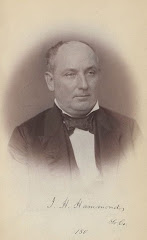

South Carolina's Hammond
Wilkerson contends, “Caste, along with its faithful servant race, is an x-factor in most any American equation, and any answer one might ever come up with to address our current challenge is flawed without it.”

She presents dozens of examples of the horrors inflicted by the dominant class in America over previous centuries, including torture, riots, and lynchings.


We learn of the horrid senator of South Carolina James Henry Hammon, who said, “God created slaves for us.” Hammon raped women, including his own daughter, and sexually assaulted four of his nieces. We also read the crushingly sad story of Willie James Howard, a 15-year-old black boy who made the fatal mistake of having a schoolboy crush on a white girl in 1943 in Grand Gulf, Mississippi. And, we hear of ludicrous practices under endogamy, miscegenation, and eugenics laws and theories.


A eugenics book published in 1916 by an American, Madison Grant, titled “The Passing of the Great Race,” became popular with white supremacists.


Adolf Hitler called it his bible.

The Nazis were inspired by how the American upper class treated blacks and especially indigenous peoples. But, fascist Germans of the 30s and 40s escalated and intensified the evil when they exterminated millions of people based on eugenics and claims of Aryan supremacy.


Hitler and Nazi casteism
A caste system set up by Hitler and the Nazis justified the torture and deaths of millions of Jews, homosexuals, Roma people, and people with disabilities. To the Nazis, it was “obvious Jews were a separate race.”

When Einstein, a Jew, escaped Germany as an immigrant to the United States, he was shocked to discover he had moved from a country of castes to another country where, this time, people of color were considered a subordinate class.


Once we accept the reality of caste systems, it helps us understand the point of view of others.


That includes many people in the privileged dominant class who feel fear and resentment when they start to lose their privileged position. “A caste system builds rivalry and distrust and lack of empathy,” Wilkerson contends.


Will the dominant class –– through fear, anger, and resentment –– do anything, accept anything, to try to retain the power hierarchy? Think: sedition, treason, secession.


This week, the U.S. Department of Justice announced the indictment of members of the Oath Keepers, including the far-right group’s Texas-based founder, on charges of seditious conspiracy related to the January 6, 2021, U.S. Capitol insurrection.

Oathkeepers stack into the U.S. Capitol, along with other Trump supporters, during the insurrection of Jan. 6, 2022.

Reactions


People confronted with scenes of outright violence respond in different ways. Some –– like those who attended lynchings of black people in the American South, or German citizens who swooned when Hitler’s stormtroopers returned from invading Poland –– react with joy. Other people may be outraged at first but later find justification for ignoring or even condoning the violence.


For example, despite being an advocate of slavery Secretary of the Navy James K. Paulding reacted strongly after he witnessed what Wilkerson describes as “barefoot men and women locked together with the weight of an ox-chain in the beating sun, forced to walk the distance to damnation in a state father south and riding behind them, ‘a white man on horse back, carrying pistols in his belt, and who, as we passed him, had the impudence to look us in the face without blushing.’” Paulding said he was outraged to see “such flagrant and indecent outrages upon humanity … a villain, in thus marching half naked women and men, loaded with chains, without being charged with a crime but that of being black…” [Paulding, SECNAV from 1838 to 1841, was a contemporary of David Dixon Porter, Isaac Hull, and John Rodgers, serving with them on the Board of Navy Commissioners. Paulding was an ardent defender of slavery and called abolitionists “satanic.” He is also remembered for being opposed to steamships and engineers in the Navy.]


The armed services have come a long way in promoting equality and dignity, especially since the 1960s; nevertheless, military readers will cringe at some of the lack of empathy and outright prejudice and bigotry in the past.


MA1 Laymoun Ferguson lights a candle on National Holocaust Remembrance Day at Commander, Fleet Activities Sasebo. (MC3 Mackenzie P. Adams)

Wilkerson reminds us that during World War I, black soldiers were segregated not only from their fellow white warfighters but also from their European counterparts in uniform.

“American military command informed the French of how they were to treat the black soldiers, clarified for them that these men were ‘inferior beings,’ no matter how well they performed on the front lines, that it was of the utmost importance’ that they be treated as inferior.

“The fact that military command would take the time in the middle of one of the most vicious wars in human history to instruct foreigners on the necessity of demeaning their own countrymen suggests that they considered adherence to caste protocols to be as important as conducting the war itself.”

Black American heroes like Pvt. Burton Holmes and Cpl. Freddie Stowers, both killed in action, were blocked from receiving the Medal of Honor, despite nominations by their white officers who witnessed their bravery and “broke with caste” to nominate them. [Holmes was awarded the Distinguished Service Cross posthumously in 1919; Stowers’s sisters accepted the MoH on their brother’s behalf in 1991, presented by Navy/WWII veteran President George H.W. Bush.]


Veterans of both world wars came back from the warfront to confront Jim Crow racism and the construction of more monuments to losing leaders of the Civil War.


The 90-foot tall, 17,000-square-foot carving at Stone Mountain, Kennesaw, Georgia, honoring the Confederacy. Carving began in 1964, the year of the Civil Rights Act and a year before the signing of the Voting Rights Act. The carving was dedicated by Vice President Spiro Agnew in 1970. It was completed in 1972.


Retractions


Confederates lost the war but won the peace, according to Wilkerson, especially when thousands of monuments, symbols, and namesakes to traitors who fought to defend slavery were set up throughout the United States.


Local governments removed statues of Robert E. Lee, including in Charlottesville and Richmond, Virginia, last summer, and in New Orleans, Louisiana, in 2017 after public hearings. In New Orleans:

“At one hearing, a Confederate sympathizer had to be escorted out by police after he cursed and gave the middle finger to the audience. A retired lieutenant colonel in the Marine Corps, Richard Westmoreland, came at it from the other side. He stood up and said that Erwin Rommel was a great general, but there are no statues of Rommel in Germany. ‘They are ashamed,’ he said. ‘The question is, why aren’t we?’”

Germany looks at its history “without blinking,” highlighting the shame of what the Nazis did –– and what good people failed to do; but, the Germans are neither ashamed nor too proud to confront their history. They reject the hate of the Nazis and honor the victims of the Third Reich.


Wilkerson notes that U.S. Confederacy monuments on pedestals such as those honoring Robert E. Lee –– as well as Georgia’s Stone Mountain, bigger than Mt. Rushmore, featuring Lee, Jefferson Davis, and Stonewall Jackson –– are up high so everyone has to literally look up at them. But in Germany, where there are numerous monuments to the victims but none to Nazis, people see stolpersteine, stumbling stones embedded in the cobblestones, each denoting a victim of the holocaust or other Nazi horrors. “Leaning over to read the names on the stumbling stones forces you to bow in respect,” Wilkerson observes.


Stolpersteine commemorate the victims of the Nazis, who receive no monuments in Germany for their lost cause. 


Traction


Sailors raise the flag on MLK Day in Yokosuka, Japan, Jan. 17, 2011.  (PO2 Devin Dow)
MLK’s famously said, “We shall overcome because the arc of the moral universe is long but it bends toward justice.” He marched in Selma for voting rights. He realized that voting rights in a full and open democracy were key to ending casteism.

Some of Wilkerson’s own personal first-hand examples of dealing with casteism, particularly in a restaurant, dealing with a plumber, or while flying first class, seem petty and unnecessary in the context of the moral universe presented in the bulk of her book. However, I can understand if others feel differently.


On the other hand, Wilkerson’s conclusions at the end of this great book are as big as an arc can be, and her optimism is inspiring:

“We look to the night sky and see the planets and stars, the distant lights as specks of salt, single grains of sand, and are reminded of how small we are, how insignificant our worries of the moment, how brief our time on this planet, and we wish to be part of something bigger than ourselves, to magnify our significance, to matter somehow as more than the dust that we are.

“Even the longest lived of our species spends but a blink of time in the span of human history. How dare anyone cause harm to another soul, curtail their life or life’s potential, when our lives are so short to begin with?”

                A view of our galaxy. (NASA)

Wilkerson concludes that the answer is in our hands: “We are responsible for our own ignorance or, with time and openhearted enlightenment, our own wisdom. We are responsible for ourselves and our own deeds or misdeeds in our time and in our own space and will be judged accordingly by succeeding generations.” Isn’t the answer truly in our hands when we hold a good book –– or a ballot?


Wilkerson, author of “The Warmth of Other Suns,” is a winner of the Pulitzer Prize. In 2016 President Barack Obama presented Wilkerson with the National Humanities Medal for "championing the stories of an unsung history."

Thursday, October 14, 2021

Filling in Gaps in ‘How the Word Is Passed’

Review by Bill Doughty––

At the beginning of “How the Word Is Passed: A Reckoning with the History of Slavery across America” (Hachette Book Group, 2021) author Clint Smith introduces us to Navy veteran David Thorson.


Thorson serves as a tour guide and teacher at Thomas Jefferson’s plantation home outside Charlottesville, Virginia. Smith learns that “prior to becoming a tour guide at Monticello, David served for more than thirty years in the U.S. Navy.”


Monticello
David Thorson’s “peach face, reddened from all the hours spent standing in the sun, was clean-shaven … He spoke with a calm evenhandedness that invited people into discussion, like a professor.”

According to Smith, Thorson became a docent and tour guide at Monticello after retiring from the Navy because of his love of history and interest in Thomas Jefferson.


While giving a tour focusing on Jefferson’s relationship to slavery, Thorson addresses the visitors:

“Slavery’s an institution. In Jefferson’s lifetime it becomes a system. So what is this slave system? It is a system of exploitation, a system of inequality and exclusion, a system where people are owned as property and held down by physical and psychological force, a system being justified even by people who know slavery is morally wrong. By doing what? Denying the very humanity of those who are enslaved solely on the basis of the color of their skin.”

Smith recounts, “In just a few sentences, David had captured the essence of chattel slavery in a way that few of my own teachers ever had.”


During the tour Smith notices how Thorson chooses to refer to the enslaved black people as “human beings” rather than “slaves.” Smith writes, “What reverberated throughout was the humanity of the enslaved people –– their unceasing desire to live a full life, one that would not be defined simply by their forced labor.”

Frederick Douglass
For his part in “How the Word Is Passed,” Smith brings in luminaries from history such as Frederick Douglass and W.E.B. DuBois, as well as respected historians Eric Foner, Annette Gordon-Reed, and Kenneth M. Stampp, to fill in some of the gaps of enslaved people’s lives. Smith presents information to settle debates about the impact of slavery on African Americans, from the founding of the nation through the Civil War and Emancipation and even through the era of Jim Crow, when many whites in southern states still longed for the Lost Cause of the Confederacy.

When it comes to debates about critical race theory or Big Lie / Lost Cause –– and even anti-vaccination stances –– it’s important to not only present facts and tell the truth but also be understanding and empathetic in how you talk to people. According to Smith:

“David sees it as essential that a guide be able to find the balance of telling the truth and not pushing people so much that they shut down. He told me that when you challenge people, specifically white people’s conception of Jefferson, you’re in fact challenging their conception of themselves. ‘I’ve come to realize that there’s a difference between history and nostalgia, and somewhere between those two is memory,’ he said. ‘I think that history is the story of the past, using all the available facts, and that nostalgia is a fantasy about the past using no facts, and somewhere in between is memory, which is kind of this blend of history and a little bit of emotion … I mean, history is kind of about what you need to know … but nostalgia is what you want to hear.'

“What would it take –– what does it take –– to confront a false history even if it means shattering the stories you have been told throughout your life?” Smith asks. “Even if it means having to fundamentally reexamine who you are and who your family has been?”


Smith says the search for truth is worth the pain. “Just because something is difficult to accept doesn’t mean you should refuse to accept it. Just because someone tells you a story doesn’t make that story true.”

In the 1930s and 40s, black men dressed as slaves conducted tours of Monticello, so hearing about David Thorson is evidence of progress, but Smith is careful about too much celebrating about that progress.


“When I think about the history of slavery and racism in this country, I think about how quick we are to expose notions of progress without accounting for its uncertain and serpentine path,” Smith says, reflecting on a visit with his grandparents to the National African American History and Culture Museum. 

In this thought-provoking book Clint Smith travels from Monticello to the Smithsonian’s NAAHCM in Washington, D.C. And he also visits the Whitney Plantation in Wallace, Louisiana; Angola Prison in Louisiana; Blandford Cemetery in Petersburg, Virginia; Monument Avenue in Richmond, Virginia; Galveston Island, Texas; Wall Street and Ellis Island, New York City; and Gorée Island, Dakar, Senegal, Africa.

His journey backtracks the route black Africans took as chattel slaves brought to the colonies in the Americas to create and maintain an economy based largely on cotton, tobacco, and sugar.


Smith’s goal on his trip is to fill in the blanks of history and gaps that separate people. He fills in those blanks and gaps with information, truth, and understanding.


With a journalist’s ear and poet’s eye, he takes readers to uncomfortable places and truths.

  • We confront the fact that Thomas Jefferson kept hundreds of humans enslaved; he also separated families, removing children even under the age of ten from their mothers and fathers.
  • We go to the Whitney Plantation, site of a slave revolt in 1811 on the heels of the Haitian Revolution of 1803; at Whitney, whites decapitated 55 slaves and displayed their heads on posts.
  • We ride to Galveston, Texas, considered by some as the site of the end of slavery and beginning of celebrations now known as Juneteenth.
  • We take a behind-the-scenes tour of Angola, where Smith reveals how mass incarcerations have roots in slavery.
  • We get a comparison of the now-removed Robert E. Lee statue in Richmond with the Statue of Liberty, designed by a French abolitionist –– and we’re reminded that Lady Liberty stands on broken chains as she stands for truth, justice, and democracy.
  • Finally, Clint invites readers with him for an emotional return to Africa as he examines remnants of colonialism and the role of history in accurately reflecting what was once a “system of plunder,” slavery and colonial rule, where “white sugar [and white cotton] means black misery.”

The Statue of Liberty stands for freedom from slavery and the promises of July 4, 1776. (NPS)

Clint Smith
Along Smith’s remarkable journey, he introduces us to individuals who earned their right to provide perspective and context, people like Angola’s Norris Henderson, NYC’s Damara Obi, Dakar’s Hasan Kane, Smith’s grandparents, and Monticello’s David Thorson.

Near the end of his visit to Jefferson’s plantation, Smith seeks out Thorson to get more insight and fill in more gaps.


Smith is intrigued by Thorson’s wisdom about the reality of human imperfection and Thorson’s view on “an idea worth fighting for.”


Smith writes:

“Before I left, I wanted to understand how much David’s role as a former military officer –– responsible for protecting and promoting this country’s foreign policy agenda at home and abroad –– was something that felt, if at all, in tension with his role now. ’I was born in the United States of America. I served the country for thirty years, so I actually believe in the idea of America,’ he said, straightening up in his chair. ‘Are we exceptional? No. Have we had unique advantages based on geography, based on a whole host of factors? Yes. Did a group of people come together in 1776 and conceive of an idea that was pretty radical in its time and then create a system of government, through the Constitution and its amendments, that was pretty radical and pretty novel? Yeah. Have other countries found their own way? Sure. So I believe in the idea of America. I don’t believe that this country was perfect. I don’t believe it is perfect. I don’t believe it’s going to be perfect. I believe that the journey to make this a better place is worth the effort and that the United States, if you conceive it not so much as a place to be in but an idea to believe in, it is worth fighting for.'

Democracy is safe when it’s protected. Truth, honest reflection, and the pursuit of justice must be at the heart of “how the word is passed.”


President Barack Obama and President François Hollande of France tour Monticello, the home of Thomas Jefferson in Charlottesville, Va., with Leslie Bowman, President of the Thomas Jefferson Foundation, Feb. 10, 2014 (Official White House Photo by Chuck Kennedy)


Monday, April 26, 2021

Reflecting Antiracism: Equity/Accountability


Review by Bill Doughty

People in the Navy should not read “How to Be an Antiracist” by Ibram X. Kendi (One World, Random House; 2019). That’s the contention of some ultraconservatives, including writers at National Review, as well as several representatives in Congress. But –– like it or not, agree with it or not, and despite its many flaws –– this book is a thought-provoking treatise on the causes of inequity in society, possible remedies, and how to find common understanding.


Kendi’s book is one of dozens selected on the newest version of the Navy’s Professional Reading Program list by Chief of Naval Operations Adm. Mike Gilday. Naysayers argue against including this book because of how Kendi reflects anticapitalist views.

In fact, Kendi does call racism and capitalism “conjoined twins.” He narrowly defines words  and concepts, particularly of the nature of capitalism. And he looks at history with a backward telescope, equating capitalism with greed and exploitation only, starting with the original sin: slavery. He cites Prince Henry the Navigator, of Portugal, as the father of for-profit race-based slavery from Africa in the 1400s.


Because everything is seen through the slavery lens and a long legacy of exploitation of people of color, Kendi does not accept nuanced interpretation or social progression. He fails to see the value of an economic system that can be based both on the incentive of competition/success and accountability for ethical behavior/fairness. But he notes that pure socialism and communism are not the answer, noting that Cuba is not capitalist but is persistently racist. “Socialist and communist spaces are not automatically antiracist,” he says.


As Kendi reflects on the history of institutionalized and systemic racism, he leads the reader  to think: Does the past have to be the future? 


Not in Kendi’s case. He candidly shows how he has changed.


This book is part coming-of-age memoir and part opinions and obsessions. He admits to hating white people as a young man, even thinking for a time that white people are extraterrestrials. He shows how his views about feminism and homosexuality evolved to be more tolerant and then fully accepting.


Along his search for truth, Kendi writes in powerful syllogisms and trains of thought. His conclusions are often refreshing in interpreting the nature of racism and meaning of antiracism.


For example:


“To be antiracist is to reject not only the hierarchy of races but of race-genders [i.e., “black women”] To be feminist is to reject not only the hierarchy of genders but of race-genders. To truly be antiracist is to be feminist. To truly be feminist is to be antiracist.”


“We cannot be antiracist if we are homophobic or transphobic.”


“As long as the mind is racist, the mind can never be free … To be antiracist is to deracialize behavior, to remove the tattooed stereotype from every radicalized body. Behavior is something humans do, not races do.”


For Kendi, the point is equality and equity.

“To be antiracist is to champion resource equity by challenging the racist policies that produce resource inequity.” 


“What if economic, political, or cultural self-interest drives racist policymakers, not hateful immorality, not ignorance?”


“To be an antiracist is to never mistake the antiracist hate of white racism for the racist hate of white people. To be an antiracist is to never conflate racist people with white people, knowing there are antiracist whites and racist non-whites.” [While Kendi capitalizes White and Black, we choose to use AP style lower case.]


“In the end, hating white people becomes hating black people. White supremacy hates whites!”

“To be antiracist is to recognize the reality of biological equality, that skin color is as meaningless to our underlying humanity as the clothes we wear over that skin.” 


But Kendi contradicts himself in some of his definitions and conclusions. He says a “biological antiracist” is “one who is expressing that the races are meaningfully the same in their biology and there are no genetic racial differences.” However, he demands people always see race. “The most threatening racist movement is not the alt-right’s unlikely drive for a white ethnostate but the regular Americans’ drive for a ‘race-neutral’ one.”


He condemns discrimination and inequities while justifying discrimination in the name of creating equity. Unfairness in the name of fairness? Two wrongs to make a right?


How can racial divisions, inequalities, and the concept of “race,” itself, survive as the United States and world continues to connect, integrate, and become better educated? 


According to the Pew Research Organization, which estimates that 6.9 percent of Americans are of mixed race, “Multiracial Americans are at the cutting edge of social and demographic change in the U.S.—young, proud, tolerant and growing at a rate three times as fast as the population as a whole.


Barack Obama was the first black president, and Kamala Harris (pictured above at the Pentagon with Secretary of Defense Lloyd Austin, President Biden, and Chairman of the Joint Chiefs of Staff Gen. Mark Milley) is the first black vice president –– but that’s not the whole story about them or our changing demographics.

Kendi calls for courage, approaching the fearlessness of Harriet Tubman, to become antiracist.


He calls for people to protest and demonstrate for equitable treatment –– even as some states, including Florida, put legislation in place to limit the rights of protesters to assemble and, amazingly, offer civil immunity protection to people who ram their cars into protesters.


With reflection: People, in general, support the Constitution and peaceful assembly/protest while condemning riots and violence. People, in general, support law enforcement while condemning abuse by some police officers. People, in general, are receptive to messages of unity and equal opportunity but condemn messages delivered with hate and contempt. People of good will want equitable treatment of all people.


Kendi calls for a refreshing self-reflection on the part of people trying to combat racist laws, systems, and people.

“When we fail to open the closed-minded consumers of racist ideas, we blame their closed-mindedness instead of our foolish decision to waste time reviving closed minds from the dead. When our vicious attacks on open-minded consumers of racist ideas fail to transform them, we blame their hate rather than our impatient and alienating hate of them. When people fail to consumer our convoluted antiracist ideas, we blame their stupidity rather than our stupid lack of clarity. When we transform people and do not show them an avenue of support, we blame their lack of commitment rather than our lack of guidance. When the politician we supported does not change racist policy, we blame the intractability of racism rather than our support of the wrong politician. When we fail to gain support for a protest, we blame the fearful rather than our alienating presentation. When the protest fails, we blame racist power rather than our flawed protest. When our policy does not produce racial equity, we blame the people for not taking advantage of the new opportunity, not our flawed policy solution. The failure doctrine avoids the mirror of self-blame. The failure doctrine begets failure. The failure doctrine begets racism.”

This raw call for self-critique and assessment is matched by the reality of seeing the success of Black Lives Matter protests throughout the United States last year –– of which 97 percent were peaceful –– and then seeing the successful prosecution of a police officer last week for the murder of George Floyd last year.


If Kendi can change (and continue to change), can’t society? In fact, society has changed tremendously in my own lifetime, finding greater equity and accountability with Brown v. Board of Education, the Voting Rights Act, the Civil Rights Act, and the Fair Housing Act. With the right amount of courage by leaders, we will see passing of the John Lewis Voting Rights Advancement Act and George Floyd Justice in Policing Act.

Kendi says, “The antiracist power within is the ability to view my own racism in the mirror of my past and present, view my own antiracism in the mirror of my future, view my own racial groups as equal to other racial groups, view the world of racial inequity as abnormal, view my own power to resist and overtake racist power and policy.”


“To be antiracist is to let me be me, be myself, be my imperfect self,” Kendi proclaims, admitting his own inability to be objective about racism.


Kendi refers to his self-discovery as “my own, still ongoing journey toward becoming an antiracist.” It’s a type of journey everyone can benefit from. Which is why it is relevant and good that “How to Be an Antiracist” was chosen as an offering on the latest Navy Professional Reading Program list.


The CNO responded to critics who complained about including "How to Be an Antiracist" on the NPRP by saying, in part, according to FoxNews, “While I do not endorse every viewpoint of the books on this reading list, I believe exposure to varied ideas improves the critical thinking skills of our sailors. My commitment to them is to continue to listen, make sure their voice is heard, and make the Navy a shining example of an organization centered on respect, inclusive of all." 


Exposure to other points of view, whether we agree with all the opinions or not, can help expand perspectives and –– in this case –– promote antiracism as well as unity and cohesion in the Navy, military, and nation. Read to lead.

Wednesday, March 11, 2020

The Lies of Totalitarianism

Review by Bill Doughty–

"To be sure, totalitarian dictators do not consciously embark upon the road to insanity."

So writes Hannah Arendt, gifted thinker and historian in "The Origins of Totalitarianism" (Schoken Books, Random House, 1948, 1957; renewed 1976). Her work is vital to anyone interested in understanding the Holocaust or the rise of Fascism.

Leo Hymas speaks about his personal experiences to a group of Soldiers about World War II and the Holocaust at French Theater on Joint Base Lewis-McChord, WA., April 29, 2014 to educate the JBLM community of the history and significance of the Holocaust. (Photo by Sgt. Jasmine Higgins/Released)
Totalitarian leaders use fear, existential threats, and targeting of "the other" – people perceived to have no rights. Most of all, dictators or would-be dictators tell lies.

Hitler and Stalin
Profiling the Nazis under Adolf Hitler and Bolsheviks under Josef Stalin, Arendt examines the characteristics, effects and results of dictatorship. She also helps answer how and why people were willing to believe their supreme leaders' lies.
"Mass propaganda discovered that its audience was ready at all times to believe the worst, no matter how absurd, and did not particularly object to being deceived because it held every statement to be a lie anyhow. The totalitarian mass leaders based their propaganda on the correct psychological assumption that, under such conditions, one could make people believe the most fantastic statements one day, and trust that if the next day they were given irrefutable proof of their falsehood, they would take refuge in cynicism; instead of deserting the leaders who had lied to them, they would protest that they had known all along that the statement was a lie and would admire the leaders for their superior tactical cleverness."
Emaciated prisoners at the Ebensee camp.
Regarding the belief in unbelievable lies and falsehoods, Arendt writes, "Totalitarian propaganda can outrageously insult common sense only where common sense has lost its validity." People had to believe lies and dehumanize in order justify murdering millions of other people during the Holocaust.

Arendt explains how narcissistic autocrats are drawn to rituals and symbols. Marches, military parades and self-adulating shows of idolatry reinforce the propaganda.

She compares Nazi and Bolshevik mass propaganda. Both heavily depended on conspiracy theories, either age-old themes (such as "The Protocols of the Elders of Zion" forgery and anti-semitism) or invented fears (countless sinister imperialist or internal conspiracies).
"The effectiveness of this kind of propaganda demonstrates one of the chief characteristics of modern masses. They do not believe in anything visible, in the reality of their own experience; they do not trust their eyes and ears but only their imaginations, which may be caught by anything that is at once universal and consistent in itself. What convinces masses are not facts, and not even invented facts, but only the consistency of the system of which they are presumably part. Repetition, somewhat overrated in importance because of the common belief in the masses' inferior capacity to grasp and remember, is important only because it convinces them of consistency in time."
Bergen-Belsen camp, liberated April 15, 1945.
"Repetition ... is important" in propaganda and mind control. Arendt, of course, writes in a time before the internet, social media and smart phones. In 2020, distorted truths and outright lies can be repeated and shared in ways unthinkable in the 1940s and 50s.

The Leader establishes a "spell of infallibility" and thrives in chaos. "The totalitarian ruler must, at any price, prevent normalization from reaching the point where a new way of life could develop," Arendt writes. Followers must have contempt for the nonbelievers and outsiders. 
"The result of this system is that the gullibility of sympathizers makes lies credible to the outside world, while at the same time the graduated cynicism of membership and elite formations eliminates the danger that the Leader will ever be forced by the weight of his own propaganda to make good his own statements and feigned respectability. It has been one of the chief handicaps of the outside world in dealing with totalitarian systems that it ignored this system and therefore trusted that, on one hand, the very enormity of totalitarian lies would be their undoing and that, on the other, it would be possible to take the Leader at his word and force him, regardless of his original intentions, to make it good. The totalitarian system, unfortunately, is foolproof against such normal consequences; its ingeniousness rests precisely on the elimination of that reality which either unmasks the liar or forces him to live up to his pretense."
Arendt in 1924
"Totalitarianism in power," Arendt writes, "uses the state as its outward façade, to represent the country in the nontotalitarian world." Ignoring or appeasing dictators may not work. They often will find ways to manipulate the system to remain in power.

Imperialism and Role of Racism

"Origins" is presented in three parts: Anti-Semitism, Imperialism and Totalitarianism. Part II, Imperialism, is the longest section and examines the "brutality and megalomania" of the ideology that brought about the World Wars. In words that resonate today in light of Putin's revanchism toward Crimea and Ukraine, we read: "The initiative for continental expansion in close geographic continuity no longer comes from Central and Eastern Europe [i.e. Nazi Germany] but is exclusively located in Russia."

Imperialism, Arendt shows, was supported by the right and the left, often encouraged by the workers who saw economic benefits. "In Germany, the liberals (and not the Conservative Party) were the actual promoters of that famous naval policy which contributed so heavily to the outbreak of the first World War." The Socialist Party also "repeatedly voted" to obligate funds to build the German navy after 1906.
The British trawler Rudyard Kipling, launched in 1920, was sunk by a German U-boat in 1939.

She calls author Rudyard Kipling "the author of imperialist legend" for the British Empire, establishing a "foundation legend" based on the sea, quoting him from "The First Sailor" (Humorous Tales, 1871). Arendt writes:
"The foundation legend, as Kipling tells it, starts from the fundamental reality of the people of the British Isles. Surrounded by the sea, they need and win the help of the three elements of Water, Wind, and Sun through the invention of the Ship. The ship made the always dangerous alliance with the elements possible and made the Englishman master of the world. 'You'll win the world without anyone knowing how you did it: and you'll carry the world on your backs without anyone seeing how you did it. But neither you nor your sons will get anything out of that little job except Four gifts – one for the Sea, one for the Wind, one for the Sun and one for the Ship that carries you ... For, winning the world, and keeping the world, and carrying the world on their backs – on land, or on the sea, or in the air – your sons will always have the Four Gifts. Long-headed and slow-spoken and heavy – damned heavy – in the hand, will they be; and always a little bit to windward of every enemy – that they may be a safeguard to all who pass on the seas on their lawful occasions.'"
This passage sums up, as Arendt recognizes, the so-called "white man's burden" – as well as, it could be argued, "manifest destiny" exceptionalism and white supremacist racism.

Early European colonists in Africa captured slaves, often pitting tribes against each other.
Africa was exploited by colonialists and imperialists in the centuries leading up to the 19th century. Seafaring nations, especially Britain, established "maritime and trade stations" to promote commercial exchange. Commerce included African slaves. Arendt presents an eye-opening discussion about South Africa's Boers, who were descended from Dutch settlers, and how they acted out of fear, exterminated tribes and then accepted another banality of evil: apartheid.

What fuels imperialism? "Racism is the main ideological weapon of imperialistic politics," Arendt contends, Russians who consider themselves Slavs, Germans who think they are superior Aryans.

Diversity in a nation is shown as a bulwark and strength. "Racism may indeed carry out the doom of the Western world and, for that matter, of the whole of human civilization."

Power Lessons for 2020

From its 600 pages, packed with history and philosophy, it would be impossible to summarize all of Arendt's points in this blog. But her points seem as fresh and relevant in 2020 as they did 70 years ago, even as she admits, "No matter how much we may be unable of learning from the past, it will not enable us to know the future."

Hobbes's "Leviathan"
Through Arendt we discover lessons from history that can can apply to current events: Corruption in the Soviet Union but supposedly not in Communist China, the Dreyfus Affair, "Secret Judah" and "Secret Rome," and the roles of some Catholics (Pius XII and "The Deputy") and Protestants (Martin Niemöller) in dealing with the Nazis.

Arendt gives an extended interpretation of mid-17th-century philosopher Thomas Hobbes and his treatise on social contracts in a civil society, "Leviathan." She writes, "Power, according to Hobbes, is the accumulated control that permits the individual to fix prices and regulate supply and demand in such a way that they contribute to his own advantage." A "never-ending accumulation of power necessary for a never-ending accumulation of capital ... foreshadowed the rise of imperialism."

"Origin" lays out how imperialism grew out of colonialism. Arendt explains Soviet goals and seems to predict Russian aggression in Georgia, Crimea and Ukraine, from a perspective more than half a century ago. "The initiative for continental expansion in close geographic continuity no longer comes from Central and Eastern Europe but is exclusively Russian," She writes. "No one justifies expansion any longer by 'the white man's burden ...; instead we hear of 'commitments' to client states, of the responsibilities of power, and of solidarity with revolutionary national liberation movements.'"

A hopeful sign comes in a chapter called "A Classless Society": "Nothing is more characteristic of the totalitarian movements in general and of the quality of fame of their leaders in particular than the startling swiftness with which they are forgotten and the startling ease with which they can be replaced."

Laced throughout this indispensable history of totalitarianism is an unspoken warning, though. Beware the lies, especially the big lies. Demand clear, consistent, trusted messaging and honesty from leaders. Most of all, recognize the insanity.

U.S. Navy Sailors assigned to the guided-missile destroyer USS Jason Dunham (DDG 109) tour the Haifa Holocaust Museum as part of a community relations event during a scheduled port visit to Haifa, Israel, June 22, 2018. (U.S. Navy photo by Mass Communication Specialist 3rd Class Jonathan Clay/Released)