Showing posts with label Navy Reading Program. Show all posts

Monday, April 26, 2021

Reflecting Antiracism: Equity/Accountability


Review by Bill Doughty

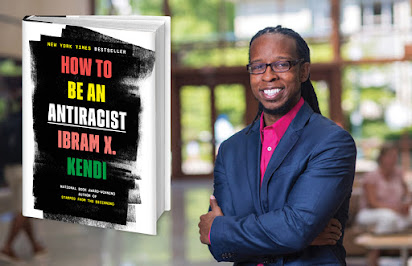
People in the Navy should not read “How to Be an Antiracist” by Ibram X. Kendi (One World, Random House; 2019). That’s the contention of some ultraconservatives, including writers at National Review, as well as several representatives in Congress. But –– like it or not, agree with it or not, and despite its many flaws –– this book is a thought-provoking treatise on the causes of inequity in society, possible remedies, and how to find common understanding.


Kendi’s book is one of dozens selected on the newest version of the Navy’s Professional Reading Program list by Chief of Naval Operations Adm. Mike Gilday. Naysayers argue against including this book because of how Kendi reflects anticapitalist views.

In fact, Kendi does call racism and capitalism “conjoined twins.” He narrowly defines words  and concepts, particularly of the nature of capitalism. And he looks at history with a backward telescope, equating capitalism with greed and exploitation only, starting with the original sin: slavery. He cites Prince Henry the Navigator, of Portugal, as the father of for-profit race-based slavery from Africa in the 1400s.


Because everything is seen through the slavery lens and a long legacy of exploitation of people of color, Kendi does not accept nuanced interpretation or social progression. He fails to see the value of an economic system that can be based both on the incentive of competition/success and accountability for ethical behavior/fairness. But he notes that pure socialism and communism are not the answer, noting that Cuba is not capitalist but is persistently racist. “Socialist and communist spaces are not automatically antiracist,” he says.


As Kendi reflects on the history of institutionalized and systemic racism, he leads the reader  to think: Does the past have to be the future? 


Not in Kendi’s case. He candidly shows how he has changed.


This book is part coming-of-age memoir and part opinions and obsessions. He admits to hating white people as a young man, even thinking for a time that white people are extraterrestrials. He shows how his views about feminism and homosexuality evolved to be more tolerant and then fully accepting.


Along his search for truth, Kendi writes in powerful syllogisms and trains of thought. His conclusions are often refreshing in interpreting the nature of racism and meaning of antiracism.


For example:


“To be antiracist is to reject not only the hierarchy of races but of race-genders [i.e., “black women”] To be feminist is to reject not only the hierarchy of genders but of race-genders. To truly be antiracist is to be feminist. To truly be feminist is to be antiracist.”


“We cannot be antiracist if we are homophobic or transphobic.”


“As long as the mind is racist, the mind can never be free … To be antiracist is to deracialize behavior, to remove the tattooed stereotype from every radicalized body. Behavior is something humans do, not races do.”


For Kendi, the point is equality and equity.

“To be antiracist is to champion resource equity by challenging the racist policies that produce resource inequity.” 


“What if economic, political, or cultural self-interest drives racist policymakers, not hateful immorality, not ignorance?”


“To be an antiracist is to never mistake the antiracist hate of white racism for the racist hate of white people. To be an antiracist is to never conflate racist people with white people, knowing there are antiracist whites and racist non-whites.” [While Kendi capitalizes White and Black, we choose to use AP style lower case.]


“In the end, hating white people becomes hating black people. White supremacy hates whites!”

“To be antiracist is to recognize the reality of biological equality, that skin color is as meaningless to our underlying humanity as the clothes we wear over that skin.” 


But Kendi contradicts himself in some of his definitions and conclusions. He says a “biological antiracist” is “one who is expressing that the races are meaningfully the same in their biology and there are no genetic racial differences.” However, he demands people always see race. “The most threatening racist movement is not the alt-right’s unlikely drive for a white ethnostate but the regular Americans’ drive for a ‘race-neutral’ one.”


He condemns discrimination and inequities while justifying discrimination in the name of creating equity. Unfairness in the name of fairness? Two wrongs to make a right?


How can racial divisions, inequalities, and the concept of “race,” itself, survive as the United States and world continues to connect, integrate, and become better educated? 


According to the Pew Research Organization, which estimates that 6.9 percent of Americans are of mixed race, “Multiracial Americans are at the cutting edge of social and demographic change in the U.S.—young, proud, tolerant and growing at a rate three times as fast as the population as a whole.


Barack Obama was the first black president, and Kamala Harris (pictured above at the Pentagon with Secretary of Defense Lloyd Austin, President Biden, and Chairman of the Joint Chiefs of Staff Gen. Mark Milley) is the first black vice president –– but that’s not the whole story about them or our changing demographics.

Kendi calls for courage, approaching the fearlessness of Harriet Tubman, to become antiracist.


He calls for people to protest and demonstrate for equitable treatment –– even as some states, including Florida, put legislation in place to limit the rights of protesters to assemble and, amazingly, offer civil immunity protection to people who ram their cars into protesters.


With reflection: People, in general, support the Constitution and peaceful assembly/protest while condemning riots and violence. People, in general, support law enforcement while condemning abuse by some police officers. People, in general, are receptive to messages of unity and equal opportunity but condemn messages delivered with hate and contempt. People of good will want equitable treatment of all people.


Kendi calls for a refreshing self-reflection on the part of people trying to combat racist laws, systems, and people.

“When we fail to open the closed-minded consumers of racist ideas, we blame their closed-mindedness instead of our foolish decision to waste time reviving closed minds from the dead. When our vicious attacks on open-minded consumers of racist ideas fail to transform them, we blame their hate rather than our impatient and alienating hate of them. When people fail to consumer our convoluted antiracist ideas, we blame their stupidity rather than our stupid lack of clarity. When we transform people and do not show them an avenue of support, we blame their lack of commitment rather than our lack of guidance. When the politician we supported does not change racist policy, we blame the intractability of racism rather than our support of the wrong politician. When we fail to gain support for a protest, we blame the fearful rather than our alienating presentation. When the protest fails, we blame racist power rather than our flawed protest. When our policy does not produce racial equity, we blame the people for not taking advantage of the new opportunity, not our flawed policy solution. The failure doctrine avoids the mirror of self-blame. The failure doctrine begets failure. The failure doctrine begets racism.”

This raw call for self-critique and assessment is matched by the reality of seeing the success of Black Lives Matter protests throughout the United States last year –– of which 97 percent were peaceful –– and then seeing the successful prosecution of a police officer last week for the murder of George Floyd last year.


If Kendi can change (and continue to change), can’t society? In fact, society has changed tremendously in my own lifetime, finding greater equity and accountability with Brown v. Board of Education, the Voting Rights Act, the Civil Rights Act, and the Fair Housing Act. With the right amount of courage by leaders, we will see passing of the John Lewis Voting Rights Advancement Act and George Floyd Justice in Policing Act.

Kendi says, “The antiracist power within is the ability to view my own racism in the mirror of my past and present, view my own antiracism in the mirror of my future, view my own racial groups as equal to other racial groups, view the world of racial inequity as abnormal, view my own power to resist and overtake racist power and policy.”


“To be antiracist is to let me be me, be myself, be my imperfect self,” Kendi proclaims, admitting his own inability to be objective about racism.


Kendi refers to his self-discovery as “my own, still ongoing journey toward becoming an antiracist.” It’s a type of journey everyone can benefit from. Which is why it is relevant and good that “How to Be an Antiracist” was chosen as an offering on the latest Navy Professional Reading Program list.


The CNO responded to critics who complained about including "How to Be an Antiracist" on the NPRP by saying, in part, according to FoxNews, “While I do not endorse every viewpoint of the books on this reading list, I believe exposure to varied ideas improves the critical thinking skills of our sailors. My commitment to them is to continue to listen, make sure their voice is heard, and make the Navy a shining example of an organization centered on respect, inclusive of all." 


Exposure to other points of view, whether we agree with all the opinions or not, can help expand perspectives and –– in this case –– promote antiracism as well as unity and cohesion in the Navy, military, and nation. Read to lead.

Thursday, March 18, 2021

‘Woke’ or Enlightened


By Bill Doughty

The updated Navy Professional Reading Program is a treasure trove of good books recommended by Chief of Naval Operations Adm. Mike Gilday and Master Chief Petty Officer of the Navy Russell Smith. Some titles are traditional favorites by Hornfischer, Stavridis, and Marlantes, to name a few; others are unexpected and fresh choices.


That’s why it’s a little bit surprising to see National Review take a potshot this week at the list, alleging that some of the titles, including Dr. Ibram X. Kendi’s “How to Be an Antiracist,” are “woke books” that “have no place in U.S. Navy training.” The National Review screed is by someone who writes under the pen name “Roger J. Maxwell.” 


Maxwell complains about the inclusion of Jason Pierceson’s “Sexual Minorities” and Michelle Alexander’s “The New Jim Crow,” drawing more attention and interest in those authors and their views, even if readers don’t agree with everything they say. 

These books, along with several others on the list, reflect a more diverse and inclusive culture.


One of the stated aims of the NPRP is to “Develop a greater appreciation of the views of others and a better understanding of our changing world.” Ironically, National Review published the article with a photo of Kendi in a shirt proclaiming “CHANGE.”


Maxwell recently published another piece in National Review railing against the DoD stand-down to confront extremism, including white supremacism and white nationalism in the aftermath of the 1/6 insurrection at the Capitol. Maxwell concluded, “The only foreseeable outcome of Secretary Austin’s initiative is the creation of distrust in the ranks.”


Accusations of “partisan politics” and “woke ideology” in the military by National Review and Fox News, particularly by Tucker Carlson, remind us of the reaction to the initiatives of Admiral Elmo Zumwalt, who was CNO from 1970 to 1974. [Zumwalt is pictured at the top of this post talking with sailors on the messdecks aboard USS Puget Sound (AD-38) in Newport, RI, circa 1970.]

Sgt. Carrie Falls aboard USS Bataan (LHD 5). (MC2 Magen F. Reed)
Fifty years ago Zumwalt was accused of weakening national defense and creating distrust in the ranks by pushing for equality of opportunity for women and people of color. In reality, he created an enlightened reformation in the U.S. Navy even as fundamentalist conservatives derided him for pushing what they perceived as a left-wing ideology.

Zumwalt was an informed leader who recognized the need for the military to grow, adapt, and change – staying true to core values while protecting our democratic republic.


People who serve in the Department of Defense must reflect the values as well as the demographics of the United States and, above all, fulfill their oath to support and defend the Constitution, a document that was born out of the Enlightenment and Age of Reason. Constitutional Amendments and the Bill of Rights guarantee the right to vote, equality for all, and freedom of speech (including the freedom to read). That may be an ideology, per se, but it’s an ideology reflecting “We the People” and “E Pluribus Unum.”


If there is criticism of the newly updated Navy Professional Reading Program, it is the deletion of the previous version’s “Canon,” which showcased America’s founding documents, especially the Declaration of Independence, Constitution, and Bill of Rights.


Nevertheless, both the CNO and MCPON are commended for publishing titles that hone professional critical thinking skills for a continually evolving Navy, nation, and world. The NPRP motto is “Read well to lead well.”

Navy Reads, which is my personal and unofficial blog, is dedicated to promoting leadership, reading, and critical thinking. We look forward to reviewing some of the NPRP suggestions in the months ahead, including “How to Be and Antiracist.” It sounds enlightening.

Wednesday, September 11, 2019

Mattis on Preventing Leadership Failure

Review by Bill Doughty

General Jim Mattis, former Secretary of Defense, says a commander who hasn't read hundreds of books is functionally illiterate and will be a failure in a position of leadership.

In his new memoir, "Call Sign Chaos: Learning to Lead" (Penguin Random House, 2019), he writes, “If you haven’t read hundreds of books, you are functionally illiterate, and you will be incompetent, because your personal experiences alone aren’t broad enough to sustain you,” Jim Mattis writes in his memoir. 

“Any commander who claims he is ‘too busy to read’ is going to fill body bags with his troops as he learns the hard way,” Mattis says.

On Sunday's Global Public Square with Fareed Zakaria, Mattis explains: "Life is too short and leadership roles are too short ... to learn everything you need to know based on your own experience."

As a leader of Marines and Sailors, Mattis says many of his best "new" ideas came from old books. Reading not only quenched his thirst for knowledge but also sharpened his critical thinking skills and strategic competency.

"Everyone has got to lead in their own way," Mattis told Zakaria. "But I would say you have to have a curiosity about life, you have to have a thirst for learning. You have to be committed to your own development if you're going to be a leader."

Written with Bing West, "Call Sign Chaos" is a fast-paced, no-nonsense jog through Mattis's career, with a long focus on his role as a warrior and leader of warriors in what he calls the War of Terrorism (not Terror).

“Reading sheds light on the dark path ahead,” Mattis says. “By traveling into the past, I enhance my grasp of the present.” The book is meant for leaders in the military as well as in business, sports, politics or other endeavors.

Among the best parts of the Mattis memoir are the appendices, including his resignation letter to President Trump, a memo justifying awards for his troops, and an insightful article in Business Insider about Mattis's book and author suggestions.

Here are Mattis's recommended books when he served as Secretary of Defense:

"With the Old Breed: At Peleliu and Okinawa" by E. B. Sledge (1981)
"One Bullet Away: The Making of a Marine Officer" by Nathaniel Fick (2005)
"Dereliction of Duty: Johnson, Robert McNamara, The Joint Chiefs of Staff, and the Lies that Led to Vietnam" by H.R. McMaster (1997)
"Fighting Talk: Forty Maxims on War, Peace, and Strategy" by Colin Gray (2007)
"The Future of Strategy" by Colin Gray (2015)
"Military Innovation in the Interwar Period" by Williamson Murray (1996)
"Before the First Shot Is Fired: How America Can Win Or Lose Off The Battlefield" by Tony Zinni (2014) 
"Scipio Africanus: Greater Than Napoleon" by Basil H. Liddell Hart (1926)
"My American Journey" by Colin Powell (1995)
"The Forgotten Soldier" by Guy Sajer (1971)
"Long Walk to Freedom" by Nelson Mandela (1994) Gates of Fire by Steven Pressfield (1998)
"Duty: Memoirs of a Secretary at War" by Robert Gates (2014)
"The Lessons of History" by Will and Ariel Durant (1968)
"The Greatest Raid of All" by Lucas Phillips (1958)
"The Personal Memoirs of Ulysses S. Grant" by Ulysses S. Grant (1885) March of Folly: "From Troy to Vietnam" by Barbara Tuchman (1984) The Guns of August by Barbara Tuchman (1962)
"Alexander Hamilton" by Ron Chernow (2004)
"Rise and Fall of the Great Powers" by Paul Kennedy (1987)
"Meditations" by Marcus Aurelius (161-180 AD)
"Diplomacy" by Henry Kissinger (1994)
"World Order" by Henry Kissinger (2014)
"Defeat into Victory" by Viscount Slim (1956)
"Just and Unjust Wars" by Michael Walzer (1977)
"War, Morality, and the Military Profession" by Malham Wakin (1979)
"For Country and Corps: The Life of General Oliver P. Smith" by Gail Shisler (2009) "Sherman: Soldier, Realist, American" by Basil H. Liddell Hart (1929)
"The Rules of the Game" by Andrew Gordon (1996)
"The Far Pavilions" by M. M. Kaye (1978)

Earlier in his career, as a leader of Marines, Mattis recommended or required a variety of books for his warriors. Among the recommendations are these titles:

"Gates of Fire: Epic Novel of the Battle of Thermopylae" – Stephen Pressfield
"A Bell for Adano" – John Hersey
"One Bullet Away: The Making of a Marine Officer" – Nathaniel Fick
"Achilles in Vietnam" – Jonathan Shay
"The Crusades Through Arab Eyes" – Amin Maalouf 
"The Village" – Bing West
"The Utility of Force" – General Rupert Smith
"The Crisis of Islam: Holy War and Unholy Terror" – Bernard Lewis
"Jihad: The Rise of Militant Islam in Central Asia" – Ahmed Rashid
"Taliban" – Ahmed Rashid
"Imperial Grunts" – Robert Kaplan
"What Went Wrong?: The Clash Between Islam and Modernity in the Middle East" – Bernard Lewis
"From Beirut to Jerusalem" – Thomas Friedman
"Bear Went Over the Mountain: Soviet Combat Tactics in Afghanistan" – Lester Grau
"The Other Side of the Mountain: Mujahideen Tactics in the Soviet-Afghan War" – Ali Ahmad Jalali and Lester Grau
"The Savage Wars of Peace: Small Wars and the Rise of American Power" – Max Boot
"Soldiers of God: With Islamic Warriors in Afghanistan and Pakistan" – Robert Kaplan
"Taliban: Militant Islam, Oil and Fundamentalism in Central Asia" – Ahmed Rashid
"The Punishment of Virtue" – Sarah Chayes
"Afghan Guerrilla Warfare" – Ali Ahmad Jalali
"What Everyone Needs to Know About Islam" – John Esposito
"The Battle for God" – Karen Armstrong
"Islamism and its Enemies in the Horn of Africa" – Alex De Waal
"No God but God: The Origins, Evolution and Future of Islam" – Reza Aslan
"The Idea of Pakistan" – Stephen Cohen

This Marines' Marine also reads poetry. “Other Men’s Flowers,” an anthology by Lord Wavell, is one of his personal favorites.


Mattis on 9/11

At last year's 9/11 commemoration ceremony at the Pentagon, then-SecDef Mattis said, "We commit ourselves to remembering and honoring the lives that might have been. They endowed us forever with an enduring sense of purpose," he said, and "in their passing they empowered us."

On Sunday's Face the Nation, Margaret Brennan asked Mattis whether the Taliban can be trusted "to make a clean break with terrorists and honor a diplomatic deal."

Mattis responded, "Well, you're going to the heart of the issue right there: can they be trusted? You remember when we reduced nuclear weapons with Russia we talked about 'trust, but verify.' In this case with this group, I think you want to verify then trust. We've asked them – demanded – that they break with Al-Qaeda since the Bush administration; they've refused to do so," Mattis said. 

"They murdered three thousand innocent people. Citizens of 91 countries on 9/11. We should never forget that."

Wednesday, August 21, 2019

Toni Morrison and War Against Error (and Fascism)

by Bill Doughty

Toni Morrison wrote:
"I think it is time for a modern War Against Error. A deliberately heightened battle against cultivated ignorance, enforced silence, and metastasizing lies. A wider war that is fought daily by human rights organizations in journals, reports, indexes, dangerous visits, and encounters with malign oppressive forces. A hugely funded and intensified battle of rescue from the violence that is swallowing the dispossessed." 
Those are Morrison's words in the essay "The War on Error," presented as a lecture in Edinburgh, Scotland, August 29, 2004, one year after the United States invaded Iraq in response to 9/11 – under the pretense that Saddam Hussein had weapons of mass destruction.

Toni Morrison, 1931-2019 (Photo taken by Timothy Greenfield-Sanders)
Morrison's essay is one of 43 works published in "The Source of Self-Regard: Selected Essays, Speeches, and Meditations," Alfred A. Knopf, 2019.

The book includes both poignant reflections and occasional musings about people, art/literature, nature, history and race from the winner of the Nobel Prize in Literature.

From another essay, "Racism and Fascism," published in The Nation in 1995 – nearly twenty-five years ago! Morrison writes about the warning signs and steps to fascism:
  1. Construct an internal enemy, as both focus and diversion.
  2. Isolate and demonize that enemy by unleashing and protecting the utterance of overt and coded name-calling and verbal abuse. Employ ad hominem attacks as legitimate charges against that enemy.
  3. Enlist and create sources and distributors of information who are willing to reinforce the demonizing process because it is profitable, because it grants power and because it works.
  4. Palisade all art forms; monitor, discredit or expel those that challenge or destabilize processes of demonization and deification.
  5. Subvert and malign all representatives of and sympathizers with this constructed enemy.
  6. Solicit, from among the enemy, collaborators who agree with and can sanitize the dispossession process.
  7. Pathologize the enemy in scholarly and popular mediums; recycle, for example, scientific racism and the myths of racial superiority in order to naturalize the pathology.
  8. Criminalize the enemy. Then prepare, budget for and rationalize the building of holding arenas for the enemy – especially its males and absolutely its children.
  9. Reward mindlessness and apathy with monumentalized entertainments and with little pleasures, tiny seductions: a few minutes on television, a few lines in the press; a little pseudo-success; the illusion of power and influence; a little fun, a little style, a little consequence.
  10. Maintain, at all costs, silence.
Morrison writes, "In 1995 racism may wear a new dress, buy a new pair of boots, but neither it nor its succubus twin fascism is new or can make anything new. It can only reproduce the environment that supports its own health: fear, denial and an atmosphere in which its victims have lost the will to fight."

Fascism can come from the left or right, liberal or conservative. "We must not be blindsided" by different labels for "domination agendas," Morrison writes, "because the genius of fascism is that any political structure can host the virus and virtually any developed country can become a suitable home." It's not about ideology, she contends, it's about power.

Signs of fascism as evidenced by the White Power movement and White Nationalism.
Can it happen here? Are we susceptible to what she calls "the forces interested in fascist solutions to national problems"? Do those forces try to make us see immigrants and nonwhites as the Other, worthy of contempt, fear and hate? Will we counter those forces with greater emphasis on education and critical thinking? That's at the heart of Morrison's works and a reasoned response to a "war on error." 

Here's something she wrote about migration, eight months after the attacks of 9/11 (from "The Foreigner's Home" – presented in the Alexander Lecture Series, University of Toronto, May 27, 2002): 
"The spectacle of mass movement draws attention inevitably to the borders, the porous places, the vulnerable points where the concept of home is seen as being menaced. by foreigners. Much of the alarm hovering at the borders, the gates, is stoked, it seems to me, by 1) both the threat and the promise of globalization; and 2) an uneasy relationship with our own foreignness, our own rapidly disintegrating sense of belonging."
President Obama presents Toni Morrison with the Presidential Medal of Freedom in 2012.
After Morrison's death at 88 earlier this month, former president Barack Obama said, "Toni Morrison was a national treasure. Her writing was not just beautiful but meaningful — a challenge to our conscience and a call to greater empathy." 

He continued: "And so even as Michelle and I mourn her loss and send our warmest sympathies to her family and friends, we know that her stories—that our stories—will always be with us, and with those who come after, and on and on, for all time."

The former commander-in-chief began publishing his reading lists during his presidency and continues the tradition. On Aug. 15, Obama shared a list of recommended summer reading books, beginning with the works of Toni Morrison. 

"To start, you can't go wrong by reading or re-reading the collected works of Toni Morrison," he wrote. "'Beloved,' 'Song of Solomon,' 'The Bluest Eye,' 'Sula,' everything else — they're transcendent, all of them. You'll be glad you read them," Obama said.

Here are other books recommended by Obama this year:
"Lab Girl," by Hope Jahren"The Shallows," by Nicholas Carr"Inland," by Téa Obreht"American Spy," by Lauren Wilkinson"Wolf Hall," by Hilary Mantel"Exhalation," by Ted Chiang"Maid," by Stephanie Land"How to Read the Air" by Dinaw Mengest"Men Without Women" by Haruki Murakami"The Nickel Boys" by Colson Whitehead
CNO Richardson meets with future CNO Gilday in 2017.
Reading promotes critical thinking. And preventing another War on Error requires critical thinking. 

Tomorrow, Aug. 22, Adm. Mike Gilday is scheduled to become the new Chief of Naval Operations, as Adm. John Richardson steps down. During his tenure Richardson has championed reading and thinking. "Remember to never stop striving to expand your mind," he advised on the Navy Professional Reading Program site.

"Warfare is a violent, intellectual contest between thinking and adapting adversaries. The team that can think better and adapt faster will win," Richardson said, adding, "...we must do more to sharpen our thinking, learn the lessons from history, and expand our minds. It is our responsibility as leaders to continue to grow and to always question the status quo."


Sunday, December 3, 2017

David McCullough Now & Then: Time to Take a Stand


Review by Bill Doughty

Rarely does a relatively thin and small book command so much respect. McCullough's "The American Spirit: Who We Are and What We Stand For" (2017, Simon & Schuster) is a collection of a sampling of the great historian's speeches from 1989 through 2016.

Naturally the speeches include topics like history, U.S. presidents, art, education and books. The central theme, however, is captured in the title. This is an inspirational book to read on the eve of the 76th anniversary of the attack on Pearl Harbor to help us reflect on the origins of American freedom and equality, ideals carried by Soldiers, Marines and Sailors who stood up to authoritarian nationalism and fascism in World War II: ideals reflected in the American spirit.

Thomas Jefferson
An essential read in this collection is the speech, "The Spirit of Jefferson," which McCullough gave in a naturalization ceremony at Monticello, Charlottesville, Virginia in 1994.

In 1776, the founders gathered together to stand up to authoritarian imperial control of King George and Great Britain. "To Jefferson," McCullough writes, "the Revolution was more than a struggle for independence; it was a struggle for democracy, and thus what he wrote was truly revolutionary. Why do some men reach for the stars and so many others never look up? Thomas Jefferson reached for the stars:"

"We hold these truths to be self-evident, that all men are created equal, that they are endowed by their Creator with certain unalienable Rights, that among these are Life, Liberty and the pursuit of Happiness. — That to secure these rights, Governments are instituted among Men, deriving their just powers from the consent of the governed..."

The Declaration of Independence, Articles of Confederation and the Constitution are included in the canon of reading published by Chief of Naval Operations Adm. John Richardson in the CNO's Navy Professional Reading Program, considered fundamental. 

These founding documents demand, establish and perpetuate equal dignity of human beings, separation of powers, freedom of the press (among others) and self-government by the people.

"Never, never anywhere, had there been a government instituted on the consent of the people," McCullough reminds us. 
"When he wrote the Declaration of Independence he was speaking to the world then, but speaking to us also across time. The ideas are transcendent, as is so much else that is bedrock to what we believe as a people, what we stand for, so many principles that have their origins here, with the mind and spirit of Thomas Jefferson. Sadly, too many today take for granted public schools, freedom of religion, freedom of speech, equality before the law, forgetting that these were ever novel and daring ideas."
David McCullough
McCullough isn't sure if Jefferson meant to include "women" when he used the term "men," as in "mankind" or "humans." And, could he have meant to include black people? Hopefully yes, but "practically, no," McCullough admits. Like the other founders, Jefferson was a product of his time – the 18th century. Like other humans, the founders were flawed when it came to living up to the ideals they espoused. But those ideas were to be realized later.

Abraham Lincoln, certainly one of our greatest presidents, called on Americans to honor Jefferson on the eve of the Civil War. Lincoln interpreted Jefferson's words in the Declaration to be "an abstract truth, applicable to all men and all times."

McCullough shares a poignant moment standing on the South Portico balcony of the White House, built there on orders of Truman after the Second World War, "in keeping, as he explained to a critical press, with Jefferson's designs for the University of Virginia." 

It should be noted that one of Truman's greatest achievements was issuing an executive order ending segregation and promoting integrating of the military, further realizing Jefferson's and Lincoln's ideals.
"On that evening, beside me, stood the highest ranking officer in the military services, General Colin Powell. We were looking across the Mall, past the Washington Monument to the Jefferson Memorial, which was just catching the last light of the day. It is his favorite of all the memorials in Washington, the general told me. Then, slowly and with feeling he recited the line – 'I have sworn upon the altar of God eternal hostility against every form of tyranny over the mind of man.'"
The Thomas Jefferson Memorial reflects its image on the Potomac River in Washington, D.C. in 2004. The memorial honors the Nation's 3rd President Thomas Jefferson, author of the Declaration of Independence. (U.S. Navy photo by Photographers Mate 2nd Class Daniel J. McLain)

McCullough says, "The Declaration of Independence was not a creation of the gods, but of living men, and, let us never forget, extremely brave men." By signing the Declaration of Independence that Jefferson wrote, the founders pledged "our lives, our fortunes, our sacred honor." They placed their lives and reputations on the line, McCullough notes. "It was their code of integrity, their code of leadership."

Other speeches focus on cities, colleges, historic preservation, the presidency, lessons of history, and books. Lots of books. We'll save that topic for another Navy Reads review, because McCullough offers so much to consider about reading and readers.

As for the American presidency, that topic also deserves its own blogpost. 

Sailors spell out "#USA" standing with the American flag on the flight deck of the aircraft carrier USS Theodore Roosevelt in the Arabian Gulf in 2015.
(U.S. Navy photo by Mass Communication Specialist 3rd Class Jackie Hart/Released)

Several times McCullough highlights the influence of the Navy, directly or indirectly, in how (former assistant Secretary of the Navy) President Theodore Roosevelt and World War II veteran President John F. Kennedy led the nation as commanders in chief. McCullough's speech, originally delivered in Dallas in 2013 on the 50th anniversary of Kennedy's assassination, features a huge amount of JFK's own thoughts and words from his inaugural address. This is another must-read chapter. Here are some of JFK's words:

"The goal of a peaceful world ... is our guide for the present and our vision for the future ... the quest is the greatest adventure of our century. We sometimes chafe at the burden of our obligations, the complexity of our decisions, the agony of our choices. But there is no comfort or security ... in evasion, no solution in abdications, no relief in irresponsibility."
"The problems of the world cannot possibly be solved by skeptics or cynics, whose horizons are limited by the obvious realities. We need men who can dream of things that never were, and ask why not?"

Kennedy "knew words matter," McCullough says. "His words changed lives. His words changed history Rarely has a commander-in-chief addressed the nation with such command of language."

McCullough concludes:
"Again and again John Kennedy's words are fired with his love of life, his love of his country and its history. He read history, he wrote history, and he understood that history is not just about times past, but also about those who populate the present, each new generation as he liked to say, and that we, too, will be judged by history ... He also knew from his reading and from experience that very little of consequence is ever accomplished alone, but by joint effort."
As a companion to this book, I borrowed the audio book from my public library and listened to it while driving to Pearl Harbor. It's uplifting to hear David McCullough's works in his own voice.  

Seventy-six years ago we were about to be drawn into a war against Imperial Japan and fascist Germany. Today both former enemies are free democracies and our strong allies, their governments based on Jeffersonian principles. McCullough reminds us of the spirit that unites Americans – who we are and what we stand for.

PEARL HARBOR (Nov. 29, 2017) A U.S. Navy Sailor aboard the aircraft carrier USS Nimitz (CVN 68), renders honors to the USS Arizona as the ship departs Joint Base Pearl Harbor-Hickam. The Nimitz Carrier Strike Group is on a regularly scheduled deployment to the Western Pacific. The U.S. Navy has patrolled the Indo-Asia-Pacific region routinely for more than 70 years promoting peace and security. (U.S. Navy photo by MC3 Cole Schroeder)

Sunday, June 11, 2017

'Strategy' in Shadow of Hitler and in Light of Star Wars

Review by Bill Doughty

The opening lines of B. H. Liddell Hart's "Strategy" (Faber and Faber, 1954, 1967) is by Sun Tzu, from "The Art of War": "All warfare is based on deception." The quote is one of a baker's dozen from Sun Tzu's "Art of War" that makes up a sort of extended epigraph to "Strategy."

Another is: "In all fighting the direct method may be used for joining battle but indirect methods will be needed in order to secure victory."

Hart, then methodically presents examples of leaders, battles and wars that exemplify those principles, first outlined in China around 500 BCE.

At nearly the same time in history, the Persians drew Athens out to do battle at Marathon, weakening their core. Classic deception. (By the way, the Rebel Alliance did something similar in Star Wars: Rogue One – where indirect warfare, subterfuge and diversion was purposefully part of the strategy and tactics.) Don't force the Force.

Centuries later the Mongols employed "the best example of strategy in the Middle Ages." Hart writes, "In scale and quality, in surprise and mobility, in the strategical and in the tactical indirect approach, their campaign rivals or surpasses any in history."


Mussolini rides with Adolf Hitler in 1940. (Photo from National Archives)
Nationalist authoritarian Adolf Hitler's record before the outbreak of actual war was in 1939 was successful (from a Nazi perspective) when he used indirect methods of engagement. Hitler fomented fear, anger and hate that eventually led to suffering and mass death.

Through lies, false promises and indirect use of force, Hitler succeeded by taking Belgium and other less protected countries before going after France and Great Britain. But France failed under "notorious Plan XVII," using a direct approach against Germany's might.

Hart notes, "Later, (Hitler) gave his opponents ample opportunity to exploit the indirect approach against him."
Sun Tzu

Hitler is one among a Eurocentric Who's Who of leaders Hart examines: Bismarck, Napoleon, Miliades, Alexander, Caesar, William of Normandy, Edward, du Guesclin, Sabutai, Cromwell, Turenne, Marlborough, Frederick, Wellington, Allenby, Lawrence, Pershing, Ludendorff, Guderian, Rommel, and Zhukov, among others.

While Hart touches on the war in the Pacific and Yamamoto's use of indirect tactics, he doesn't mention the decisive Battle of Midway, an exemplar of winning strategy and tactics.

There's a bit of irony there, since the seeds for successful strategy come from the East to the West – Sun Tzu and Genghis Khan and the Mongols being cases in point.

In his multi-trilogy mythology phenomenon "Star Wars," George Lucas explores the impact of Eastern teachings in warfighting. In the attitudes and attributes of Jedi Masters like Yoda we see the mythic wisdom and playful joy of Zhaozhou (Joshu in Japanese), coupled with Eastern martial arts. Lucas speaks through Yoda: "Fear is the path to the dark side. Fear leads to anger. Anger leads to hate. Hate leads to suffering."

Hart focuses more on Britain and Germany and seems to channel Clausewitz. Hart's skill is matching a pedestrian recitation of history with deeply planted insights worth quoting in their own right. For example:

"In war, as in wrestling, the attempt to throw the opponent without loosening his foothold and upsetting his balance results in self-exhaustion, increasing in disproportionate ratio to the effective strain put upon him."

"In most campaigns the dislocation of the enemy's psychological and physical balance has been the vital prelude to a successful attempt at his overthrow."

"Helplessness induces hopelessness, and history attests the loss of hope, not loss of lives, is what decides the issue of war."

"The most effective indirect approach is one that lures or startles the opponent into a false move – so that, as in jyu-jitsu, his own effort is turned into the lever of his overthrow."

"Two historic lessons – that a joint is the most sensitive and profitable point of attack, and that a penetration between two forces or units is more dangerous if they are assembled shoulder to shoulder than if they are widely separated and organically separate."

"Force can always crush force, given sufficient superiority in strength or skill. It cannot crush ideas."

Hart concludes by examining theories of strategy, military strategy, and grand strategy; the relationship of strategy to policy; the difference of strategy, tactics, object, and national aim; and the balance of offense and defense.

Nazis march after successfully invading Poland. (National Archives)
First published just nine years after the end of the Second World War it is understandable that the heart of Hart's examination of warfare pierces the nearly contemporaneous rise and fall of the Third Reich. Hitler's shadow still seemed to loom over the Western world in 1954 even as fear of global communism grew.

Hitler's "flair for offensive strategy was not matched by a corresponding sense of defensive strategy. The immensity of his earlier successes led him, as Napoleon had been led, to believe that the offensive offered a solution of all problems," Hart writes.
"Hitler gave the art of offensive strategy a new development. He also mastered better than any of his opponents, the first stage of grand strategy – that of developing and coordinating all forms of warlike activity and all the possible instruments which may be used to operate against the enemy’s will. But like Napoleon he had an inadequate grasp of the higher level of grand strategy – that of conducting war with a far-sighted regard to the state of the peace that will follow. To do this effectively, a man must be more than a strategist; he must be a leader and a philosopher combined. While strategy is the very opposite of morality, as it is largely concerned with the art of deception, grand strategy tends to coincide with morality: through having always to keep in view the ultimate goal of the efforts it is directing."
Hitler in-Vader
The Nazi empire under Hitler spread "germs of resentment from which resistance to their ideas would develop." Is the Islamic State (ISIL, ISIS, DAESH) or Al Qaeda or other militant extremists any different? Fear+Anger+Hate=Suffering.

How did the Empire create resistance and a rebel alliance in George Lucas's world, and how did the heroes come together to defeat evil villains in the name of hope for a better future? It's explained (or foreshadowed) in "Strategy."

"Strategy" is featured in the "canon" of books recommended by Chief of Naval Operations Adm. John Richardson in the Navy Professional Reading Program.