Showing posts sorted by relevance for query taylor branch. Sort by date Show all posts

Sunday, January 19, 2014

Wiretapping and Freedom and MLK

Review by Bill Doughty

"For students of freedom and teachers of history"

That's the dedication for Taylor Branch's 2013 "The King Years: Historic Moments in the Civil Rights Movement," a book of highlights of his MLK trilogy. 
"The King Years" offers highlights of "Parting the Waters," "Pillars of Fire" and "At Canaan's Edge," in which the Pulitzer Prize-winning Branch presents the definitive history of America's civil rights movement in the 1950s and 60s through the life of its chief architect, Dr. Martin Luther King, Jr.

Branch recognizes the limitations due to brevity in his 18 historical turning points from the 1954-1968 era represented in "The King Years."  Despite the "hybrid framework," as Branch calls it, the book is essential to anyone who wants to understand King's influence but who doesn't have time to read 2,306 pages that took Branch 24 years to write.
"Our goal in this edition is to convey both the spirit and sweep of an extraordinary movement.  Newer generations will find here the gist of a patriotic struggle in which the civil rights pioneers, like modern Founders, moved an inherited world of hierarchy and subjugation toward common citizenship.  Others can recall vivid triumph and tragedy at the heart of national purpose for the United States, whose enduring story is freedom.  The unvarnished history should resist fearful tides to diminish that story.  Above all, the King years should serve as a bracing reminder that citizens and leaders can work miracles together despite every hardship, against all odds."
Dr. King in Birmingham jail, 1967.
King's story begins in 1954, sixty years ago this year, the same year as the Supreme Court's landmark decision in Brown vs. Board of Education against school segregation.

From Montgomery to Nashville, Birmingham to Selma, with a requiem in Memphis, "The King Years" focuses on crossroads largely between Alabama and Tennessee -- with Birmingham at the center. 

"Birmingham had suddenly changed King from a tireless drone on the speaking circuit to the star of a swarming hive," Branch writes.  The author also makes stops in Mississippi, Chicago, Cow Palace, Atlantic City, Oslo and Vietnam.

The book explores the Dr. King's relationships with close advisors, religious leaders, politicians including LBJ, and government officials, notably J. Edgar Hoover who investigated King as a suspected communist.  He shows how FBI wiretapping contributed to "twisting every motive and circumstance ... spreading false information" in order to breed confusion, resentment and mistrust.
Who was listening?
More detail and context are described in the long historical narrative of Branch's trilogy.  For example -- from "Parting the Waters: America in the King Years 1954-1963":
"There was more to Hoover's reaction than either his hostility to communism or his prejudice against Negroes, both of which were strong.  Above all else, the Director was a consummate bureaucrat, sensitive to deep historical tides.  Twenty years earlier, the FBI had mushroomed in size to guard against Nazi espionage.  From a mid-Depression force of fewer than five hundred agents, the Bureau had more than tripled by Pearl Harbor, then tripled again by D-Day.  Hoover never needed further education on the advantages of an intelligence agency over a law enforcement department.  An intelligence agency enjoyed greater prestige, less danger of public failure, greater freedom and power through the mystique of secrecy, and an enhanced role for shaping national values and symbols.  To avoid postwar retrenchment at the FBI, he fought a protracted bureaucratic war to become chief of the new worldwide intelligence apparatus -- even though he spoke no foreign languages and never then or later set foot outside the United States.  On losing out finally to the newly created CIA, a vengeful Hoover had extracted from President Truman a major consolation prize: responsibility for 'background checks' and other loyalty investigations of federal employees.  Such work not only sustained the Bureau's manpower levels through the McCarthy era but vastly increased Hoover's political influence as the defender and oracle of domestic security."
J. Edgar Hoover advises President Richard Nixon.
"The King Years" doesn't include mention of the National Security Agency's Project Minaret, a surveillance initiative in the late 60s against MLK and other nonviolent activists and Vietnam protesters. Secret information about NSA's Project Minaret was revealed by the Church Commission and reported in recent months by PBS Frontline and George Washington University.

Taylor Branch concludes with an ode to the global legacy of nonviolence from "At Canaan's Edge."
"A paradox remains.  Statecraft is still preoccupied with the levers of spies and force, even though two centuries of increasingly lethal 'total war' since Napoleon suggest a diminishing power of violence to sustain governance in the modern world. Military leaders themselves often stress the political limits  Military leaders themselves often stress the political limits of warfare, but politics is slow to recognize the glaring impact of nonviolent power.  In 1987, students spilling into the streets of South Korea compelled a dictator to respect a permanent structure for elections.  In 1989, the Soviet empire suddenly dissolved in a velvet revolution of dockworkers' strikes and choruses of 'We Shall Overcome' at the dismantled Berlin Wall.  There was no warning from experts, nor any hint of the nuclear cataclysm long prepared for and dreaded.  That same year, Chinese students inspired the world from Tiananmen Square with nonviolent demonstrations modeled on the sit-ins, planting seeds of democracy in the authoritarian shell of Communist control.  In 1990, Nelson Mandela emerged from twenty-seven years in prison to a Cape Town Balcony, where he destroyed the iron rule of apartheid not with Armageddon's revenge but a plea for hopeful consent: 'Universal suffrage on a common voters' roll in a united, democratic, and non-racial South Africa is the only way to peace and racial harmony."
Branch's dedication at the beginning of "The King Years" -- "For students of freedom and teachers of history" -- explicitly highlights the importance of education in promoting freedom and democracy, principles the Navy defends around the world.

Sunday, August 28, 2011

Deeply Rooted in the American Dream

Review by Bill Doughty
Peace, justice and equality can be born from tension and conflict.  Love, compassion and understanding can prevail in the face of hatred and violence.  
Taylor Branch’s Pulitzer Prize-winning Parting the Waters - America in the King Years 1954-63 - shows how Constitutional ideals were embodied and emboldened by the civil rights movement, led by Dr. Martin Luther King Jr.
Today marks the 48th anniversary of the March on Washington for Jobs and Freedom. The march culminated with King’s I Have a Dream speech on the steps of the Lincoln Memorial.  
Branch leads us to that watershed moment in history, one that informed a nation and showcased the movement’s strength and determination, much like the expression on the face of the new Martin Luther King, Jr. National Memorial.  Organizers and sponsors note that the King Memorial is aligned visually with the Jefferson and Lincoln memorials on the National Mall and in sight of the Washington Monument.
The Memorial, an expression of determination.
In his life, King aligned with the ideals of Freedom.  Like Thomas Jefferson (and, contemporaneously, like John F. Kennedy, Jr.) he didn’t always live up to the professed moral ideals in his personal life, as Branch shows.  
Like Abraham Lincoln, King championed the Constitution and used reason, diplomacy, courage and compassion to achieve his goals, always trying to understand and make peace with others, especially his rivals.
In his preface, Branch writes: “My purpose is to write a history of the civil rights movement out of the conviction from which it was made, namely that truth requires a maximum effort to see through the eyes of strangers, foreigners and enemies.”
Parting the Waters actually begins at the end of the 19th Century and gives us a fascinating look at the role of black churches and colleges and the effects of a then-new enlightened way of thinking -- a non-fundamentalist, unorthodox liberal theology.
At Crozier Theological Seminary in Pennsylvania King discovered:
There are moral laws of the universe that man can no more violate with impunity than he can violate its physical laws. -- MLK
Branch writes, “At Crozier King expressed the belief that love and reason could bring out in all people a basic goodness that was deeper than racial hatreds or personal animosities.”
Branch shows us the books and authors that inspired Dr. King.  He was influenced by thinkers like Frederick Douglass, Mahatma Gandhi, Reinhold Niebuhr, Baruch Spinoza and W. E. B. DuBois.  Books by DuBois were passed around by Sailors during WWII, according to Branch.
W. E. B. DuBois
Books helped shape his world view as a self-aware young man struggling under a strong patriarch, armed with a good classical education and dealing with discrimination and segregation in a mid-20th Century south.
Out of conflict between competing ideas came compromise and creativity and a universal world view.
Branch delves into many of the personalities of the civil rights movement.  We see Harry Belafonte’s sustained involvement, Rosa Parks’s principled inspiration and John Lewis’s key influence.
Lewis made it clear that the movement would continue until freedom for all citizens was achieved, “until the revolution of 1776 is complete.”
We also see the intransigence and meanness of characters like Bull Connor, Gov. Barnett and Gov. George Wallace.  He writes about the murders of Emmett Till and Medgar Evers and unlikely martyrdom of independent marcher William Moore, murdered in Alabama.
Nonviolent protests met with violence in Birmingham, 1963.
Branch writes about the painful anger, hatred and violence in Birmingham, Montgomery, Albany and elsewhere that seethed in 1963.  In the rising heat of that summer King stood for cool, nonviolent determination despite political in-fighting by other church leaders and a separatist movement by the Black Muslims and others.
Branch shows that the march on Washington was originally planned 70 years ago this year.  In 1941 A. Philip Randolph, president of the Brotherhood of Sleeping Car Porters, threatened publicly to lead a massive march to D.C. unless President Franklin D. Roosevelt issued an order banning racial discrimination in defense industries.  
Randolph was a key planner and leader for the 1963 march, like King, committed to nonviolence.
With his unscripted and inspired "I Have a Dream...rooted in the American dream" remarks, King rose to become “a national spokesman for a significant minority of whites as well as a vast majority of Negroes,” writes Branch.  King speaks to the inalienable human rights outlined in the Declaration of Independence and Constitution of the United States.
In Parting the Waters, the author continually shows the tension and conflict that forged the nonviolent fight for civil rights. 
King persevered in the face of home and church bombings and the jailing or imprisonment of students and civil rights leaders, including himself.  He was stabbed in the chest by a would-be assassin.  
King fought on, despite wiretapping investigations and communist-sympathizer allegations by J. Edgar Hoover and the FBI.  Because of scandals, fear and Machiavellian palace intrigue, Hoover was only temporarily successful in slowing the civil rights movement through his innuendoes and allegations.
Dr. Martin Luther King Jr., 1963: "I have a dream."
According to Branch, “Most unforgivable was that a nation founded on Madisonian principles allowed secret police powers to accrue over forty years, until real and imagined heresies alike could be punished by methods less open to correction than the Salem witch trials.”
Conflict and tension between Dr. King and President Kennedy, called a “mysterious duel” by Branch, is a centerpiece of the latter part of Parting the Waters.
“Where the interpretations of freedom overlapped, they inspired the clear hope of the decade,” Branch writes. “Where incompatible, they produced conflict as gaping as the Vietnam War.”
Parting the Waters concludes shortly after Kennedy’s assassination in 1963 and foretells the tragedy that would befall King in 1968.  In the intervening years he would become a “Pillar of Fire,” the last words of Branch’s epic study, and the title of the second book in his trilogy, Pillar of Fire, America in the King Years 1963-65. The trilogy concludes with At Canaan’s Edge, America in the King Years 1965-68.
This book was recommended by the Navy Professional Reading Program in 2011.

Monday, February 16, 2015

'Pillar of Fire,' FBI Smoke – American Apartheid

Review by Bill Doughty
Shouts of "Allah-u Akbar!" and gunfire on a street in Los Angeles... Peaceful marches in the heart of the south... Violent extremism against white and black civil rights leaders... Police brutality, FBI surveillance and voting suppression...

Taylor Branch's "Pillar of Fire" opens with a fiery confrontation in South-Central LA in 1962 as Nation of Islam followers, police and civilians clash. Threaded throughout this book are themes of race, religion, war, abuse of power and assassination.
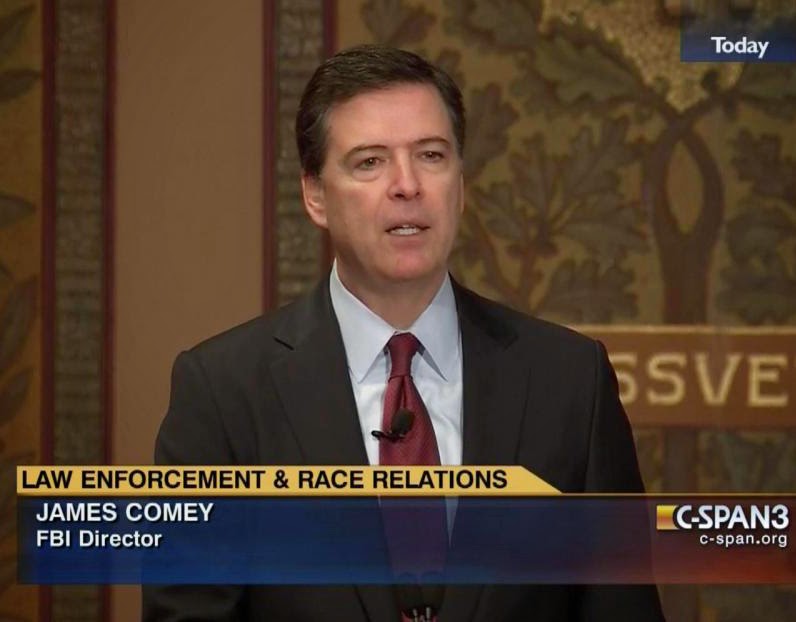
This second book in the trilogy about the history of the Civil Rights Movement continues Martin Luther King Jr.'s struggle and is interwoven with the life and death of Malcolm X. America was at a crossroads in the 1960s; the choice was between violence or nonviolence to bring about social change in the midst of fear of communism, growing conflict leading to war in Vietnam and misguided surveillance by the FBI. The surveillance was condemned by FBI Director James Comey in a very public and nuanced way last week.
Most of Branch's book centers on events in Mississippi, Florida, Georgia and Alabama, including Birmingham and Selma and in other key locations in the Deep South.
In the face of hate, beatings and murder, King, unlike Malcolm X, preached nonviolence:
"King urged his Savannah audience not to panic. 'We are on the move, and the burning of our churches will not deter us,' he cried. 'The bombing of our homes will not dissuade us. The beating and killing of our young people will not divert us ...' He preached a full rhythmic litany on marching that paused near ancient Jericho for a word of caution. There were 'no broad highways' or 'quick solutions' ahead, and 'it would be irresponsible' to say there were. 'Instead, the course we must follow lies through a maze of interrelated demands and counter demands, hopes and aspirations, fears and hatreds,' King said. 'But difficult and painful as it is, such a course must be charted.'"
Nation of Islam leader Elijah Muhammad and then disciple Malcolm X.
Malcolm X ridiculed King and the peaceful course he charted, calling him a "traitor to the Negro people" and mocking King's peaceful demonstrations. Malcolm X celebrated the crash of an Air France jetliner in June 1962 that killed more than 100 prominent white citizens, referring to them as "white devils," a term used by Nation of Islam founder Elijah Muhammad, in what Branch calls his "concocted version of Islam."
Seeking to understand and overcome hate, King said the growing calls for violence fomented by Black Muslims "gives me greater responsibility to help get rid of conditions that created such misguided and bitter individuals." Bitterness, hate and violence would lead to the assassination of Malcolm X by Nation of Islam followers, ironically after Malcolm had turned away from some of his earlier vitriol against King.
Branch works chronologically through the history and personalities of the era concurrent with the Civil Rights Movement: Cuba and the Soviet missile crisis, JFK's assassination, LBJ's "hypersensitive and erratic" behavior, changing politics in the South, and the growing disparity of haves and have-nots as voting rights are curtailed. Speaking in Berlin, Germany, a city then still divided by communism, King said, "We see the giants. We see massive urban societies, dominated by well-entrenched political machines that see new voters as a threat to their power."
King at the FBI after meeting with J. Edgar Hoover in 1964.
Communism was viewed by some as the greatest threat to the United States. Fear of communism (and racism) fueled J. Edgar Hoover and the FBI in their persecution of King. Simultaneously, fear of communists drove international policy in the Cold War that included covert raids in Southeast Asia, coups in South Vietnam and surveillance off the coast of North Vietnam in the mid-60s.

Confrontation in the Gulf of Tonkin involving USS Maddox (DD-731), joined by USS C. Turner Joy (DD-951), led to "police action" overseas. National Security Advisor McGeorge Bundy went to Vietnam and cabled LBJ that the country appeared to be "a civil war within a civil war."
Fifty years ago, at the same time that local actions by police in some southern states actively suppressed voting rights and freedom of assembly, "police action" in Vietnam, ostensibly in the name of freedom, continued to escalate.
A fake letter created by the FBI suggesting King commit suicide.
King, who opposed the Vietnam War, was awarded the Nobel Peace Prize in 1964. Heavyweight boxer Muhammad Ali, a follower of the Nation of Islam, was stripped of his title for his refusal to fight in Vietnam. Ali, originally closely tied with Malcolm X, eventually grew close to MLK. FBI wiretaps against Ali and King were revealed by newspaper columnist Carl Rowan.
On the first anniversary of JFK's assassination, the FBI attempted to kill King's character with a "recording of sex groans and party jokes, together with a contrived anonymous letter calling King 'a great liability for all of us Negroes.'" The fake letter by the FBI urged King to kill himself. Ben Bradlee, editor of Newsweek at the time, became locked in the middle of Hoover's FBI war against King and a burgeoning scandal when he refused to name his sources.
Branch writes, "Not until 1975, three years after Hoover himself was dead, did congressional investigations begin to uncover in retrospect the outlines of the FBI's covert crusade."
Last week, FBI Director James B. Comey spoke "hard truths" involving race and law enforcement. His remarks were delivered at Healy Hall, named after the university's 29th President, Patrick Francis Healy, who was born into slavery, in Georgia, in 1834.
Comey said:

"There is a reason that I require all new agents and analysts to study the FBI’s interaction with Dr. Martin Luther King, Jr., and to visit his memorial in Washington as part of their training. And there is a reason I keep on my desk a copy of Attorney General Robert Kennedy’s approval of J. Edgar Hoover’s request to wiretap Dr. King. It is a single page. The entire application is five sentences long, it is without fact or substance, and is predicated on the naked assertion that there is 'communist influence in the racial situation.' The reason I do those things is to ensure that we remember our mistakes and that we learn from them.

"One reason we cannot forget our law enforcement legacy is that the people we serve and protect cannot forget it, either. So we must talk about our history. It is a hard truth that lives on," Comey said.
Watts riots in Los Angeles, 1965. (Photo from Library of Congress)
"America isn’t easy. America takes work. Today, February 12, is Abraham Lincoln’s birthday. He spoke at Gettysburg about a 'new birth of freedom' because we spent the first four score and seven years of our history with fellow Americans held as slaves—President Healy, his siblings, and his mother among them. We have spent the 150 years since Lincoln spoke making great progress, but along the way treating a whole lot of people of color poorly. And law enforcement was often part of that poor treatment. That’s our inheritance as law enforcement and it is not all in the distant past.
"We must account for that inheritance. And we—especially those of us who enjoy the privilege that comes with being the majority—must confront the biases that are inescapable parts of the human condition. We must speak the truth about our shortcomings as law enforcement, and fight to be better. But as a country, we must also speak the truth to ourselves. Law enforcement is not the root cause of problems in our hardest hit neighborhoods. Police officers—people of enormous courage and integrity, in the main—are in those neighborhoods, risking their lives, to protect folks from offenders who are the product of problems that will not be solved by body cameras.
J. Edgar Hoover (photo art from Jewishcurrents.org)
"We simply must speak to each other honestly about all these hard truths.
"In the words of Dr. King, 'We must learn to live together as brothers or we will all perish together as fools.'
"We all have work to do—hard work, challenging work—and it will take time. We all need to talk and we all need to listen, not just about easy things, but about hard things, too. Relationships are hard. Relationships require work. So let’s begin that work. It is time to start seeing one another for who and what we really are. Peace, security, and understanding are worth the effort."
The full transcript of Comey's historic speech is available at FBI.gov.
As for Taylor Branch's masterful presentation in "Pillar of Fire," this review can only scratch the surface.

The Navy is mentioned several times in Branch's book. President Johnson ordered Secretary of Defense Robert McNamara to deploy military helicopters and Navy Divers – "Navy Frogmen" – to assist in a search for three missing civil rights workers.
Some other revelations and insights within its pages:
  • One of the last books Medgar Evers read before he was assassinated was Harper Lee's "To Kill a Mockingbird."
  • Birmingham, Alabama became known as "Bombingham." Violence there was condemned by Russia and the Vatican, especially after four girls were killed in a church bombing by white supremacists.
  • Author and activist James Baldwin called Selma, Alabama "one of the worst places I ever saw."
  • Alex Haley, U.S. Coast Guard veteran and Malcolm X biographer, developed a bond with Malcom X over a "mutual love of Shakespeare."
  • Malcolm X disparaged baseball great Jackie Robinson for not being more strident; Robinson returned the favor, saying Malcolm X was only interested in revenge and retaliation.
  • Around the same time MLK was named for the Nobel Peace Prize in 1964, Malcolm X was studying Islam at the University of Saudi Arabia, tutored in Sunni Islam.
  • LBJ zealously read "The Rich Nations and the Poor Nations" by Barbara Ward, which inspired his slogan, "Great Society" focusing on poverty, education and environment.
  • Civil rights demonstrators were tortured: hung by handcuffed arms at Parchman Penitentiary; put in concrete sweatboxes, chicken coops and miniature cells in St. Augustine, Florida; and beaten with blackjacks, kicked and shocked with cattle prods by police and sheriffs.

In 2011 Navy Reads featured a review of the first book in Branch's trilogy, "Parting the Waters," entitled "Deeply Rooted in the American Dream."


Sunday, December 9, 2018

New York Says What to Read. Wait, What?


Review by Bill Doughty

The trouble with a book that recommends 1,000 books for your bucket-list is this: What prism is the editor/compiler looking through.

"A Thousand Books to Read Before You Die" (Workman Publishing, 2018, New York, NY) is a beautiful book offering an impressive spectrum of colorful titles and great authors.

You'll find great writers and thinkers like Isaac Asimov, Ulysses S. Grant, Maya Angelou, Stephen J. Gould, George Orwell, Mark Twain, Leo Tolstoy, Oliver Sacks, Homer, Dorothy Parker, D.H. Lawrence, J.K. Rowling, Jon Krakauer and Agatha Christie.

There are a relative handful of selected books that would appeal to Navy readers, including Tim O'Brien's "The Things They Carried," Tom Clancy's "The Hunt for Red October," Erich Maria Remarque's "All Quiet on the Western Front," "The Personal Memoirs of Ulysses S. Grant," Shelby Foote's "The Civil War," Robert Hughes's "The Fatal Shore," William Manchester's "Goodbye Darkness," John Keegan's "The Face of Battle," David McCullough's "Truman," David Halberstam's "The Best and the Brightest," Herman Melville's "Moby Dick," Ernest Hemingway's "The Old Man and the Sea," Kurt Vonnegut's "Slaughterhouse Five," Joseph's Heller's "Catch-22" and Orson Scott Card's "Ender's Game":
"...Just try to put it down. Tracing Ender's path to Battle School – a space center in which the best and the brightest children are trained for high-tech war – and, ultimately, to Command School, on the edge of the interstellar front lines. Orson Scott Card's novel is riveting... Ender's fierce initiation reveals his unparalleled gifts for warfare. As the stakes mount, the simulated battles he dominates are transformed from complex and dangerous games into sinister – and spectacular – realities."
Author James Mustich features his one thousand books, mentions many others and merely names a slew of extras. In other words, there are thousands of books discussed in this readable, interesting and hefty offering: a beautiful book about books.

So, what's the problem?

BM3 Ivan Naranjo reads aboard USS Anchorage (LPD 23), 2018. Photo by MC3 Ryan M. Breeden
As great as this book is, the personal lens of the editor understandably distorts reason, trumps objectivity, and begs questions as to how some of the authors and their works were selected. 

I mean, Anne Rice? Moss Hart's show business autobiography? Richard Ford's adventures in making artisan bread and pizza? "Adventures on the Wine Route: A Wine Buyer's Tour of France"? "When French Women Cook"? "Between Meals: An Appetite for Paris"? "The Auberge of the Flowering Hearth"? 

Mustich, a New York bookseller with an apparent deep love of fashion, fine dining, Broadway, the Big Apple, Provence and France, all but admits his bias and certainly is upfront about his selections not being perfect. "Hot dogs to haute cuisine," as he says. But if comfort foods of literature are allowed, where are Edgar Rice Burroughs, Mario Puzo, Louis L'Amour and Zane Grey?

Stephen King gets "Carrie" and "11/22/1963," but where are "The Stand," "The Shining" and "Cujo"?


William Shakespeare
As one would expect from a polished bookseller, this is like a bookstore readers can hold, complete with a detailed general index and 1,000 book checklist.

Overall, Mustich does a pretty good job of ensuring diversity, including different age groups and interests – both fiction and non-fiction; poetry and philosophy; youth and adult; U.S. and international; escapist and pay-attention-this-is-important.

The Bhagavad Gita, Bible and The Book of Job find themselves co-located, thanks to alphabetical listings, as are Plato, Pliny the Younger and Plutarch. Shakespeare is the overall winner in number of works listed, with 13 titles.

Nice surprises include personal favorites such as Gould's "The Panda's Thumb," Loren Eiseley's "The Immense Journey," Larry McMurtry's "Lonesome Dove," Richard Dawkins's "The Selfish Gene," "Portable Dorothy Parker," Taylor Branch's "Parting the Waters," "Narrative of the Life of Frederick Douglass, an American Slave," Carl Sagan's "Dragons of Eden," Edward O. Wilson's "The Naturalist," and Charles Darwin's "The Voyage of the Beagle."

Thankfully there's a heavy helping of science, including Thomas's wonderful collection of essays, "The Lives of a Cell":
"Every genre has its native charms, and the allure of the essay is its easy way with rumination. In the best examples of the form, the essayist communicates not just learning, but thinking, inviting the reader to share the satisfactions of a mind at play on a field of observation or experience. When an essay's author is as masterful as Lewis Thomas, it can shine like a jewel, glittering with truths small and large."
But where are shining lights by Christopher Hitchens, Steven Covey, Desmond Morris ("The Naked Ape"), John Hersey ("Hiroshima"), Thomas Paine ("The Age of Reason"), Steven Pinker, William Zinsser, Mary Roach, Craig Symonds, Jared Diamond, Nathaniel Philbrick, Erik Larson, James D. Hornfischer, Hector Hugh Munro a.k.a. Saki, Doris Kearns Goodwin, Thomas Friedman, Noah Yuval Harari and Stephen Hawking?

It's a tragedy that Mary Roach and Hope Jahren ("Lab Girl") are missing.

So many great authors are left on forgotten shelves, so many books. It can be difficult to choose any individual one. That's where a book like this can help. Perhaps there will be more versions of "1,000 Books to Read" – even someday "1,000 Navy Books to Read."

Bazelon, Richardson and Plotz of Slate's Political Gabfest.
This book first came to my attention after hearing it recommended by David Plotz, anchor of Slate Magazine's Political Gabfest podcast with Emily Bazelon and John Richardson.

Plotz said this about editor Mustich: "He's a reader of such joy and bouyancy. ... He has a real knack for recognizing what in a book is wonderful ... He's a spirit you'll want to spend time with."

And Plotz said this about the book itself: "Over 948 magnificent pages, well-illustrated. The familiar and the highly unfamiliar ... It's so much fun."

Gabfest's John Dickerson said, "So, does that make it a thousand and one?"

The best endorsement may be through the prism of writer, historian, producer Ken Burns: "If you've ever doubted that books were the greatest invention of all time, and that they carry within them our collective memories and dreams as well as any semblance of intelligence we have as a species, pick up this book and start reading."

Saturday, January 31, 2015

Haiku of Marshawn Lynch, Philosophers

Compiled by Bill Doughty

You can find haiku in the spoken and written words of people, from Marshawn Lynch and Bill Belichick to Lao Tzu and Aristotle. Here are some recent "found haiku" – poetry that says a lot in a few words: Three lines, generally 5-7-5 syllables.
These haiku were found in actual quotes from Seattle Seahawks and New England Patriots along with some thoughts expressed by great thinkers/philosophers.
Marshawn Lynch:
"If you're forced to do
something, it's not as good as
if you choose to do it"

Aristotle:
"Man is a social
animal; either [he is]
a beast or a god"

Bill Belichick:
"As you go forward
... love life, be happy ...
chase your dreams, have fun"

Lao Tzu:
"If you do not change
direction, you may end up
where you are heading"

Russell Wilson:
"I have faith ... I love
trying to visualize
being successful"

Dwight D. Eisenhower:
"In preparing for
battle I have always found
that plans are useless
(but planning is indispensable)"

Psalmist King David (from MLK):
"He that would love life
and see good days, let him keep
his tongue from evil"

Bill Belichick:
"The greatest leaders
I've coached just ... do their job with
a good attitude"

George Orwell:
"A man who gives a
good account of himself is
probably lying"

Rob Gronkowski:
"Being out there with 
your teammates, you win as a 
team, lose as a team"

Richard Dawkins:
"DNA neither
cares nor knows; [it] just is ... we
dance to its music"

Marshawn Lynch:
"Thank you for asking ...
I'm just 'bout that action, boss ...
You know why I'm here"

Martin Luther King Jr. (from Amos)
"Let justice roll down
like waters, and righteousness
like a mighty stream"

Bill Parcells:
"Don't worry about
it; it's just a bunch of guys
with an odd-shaped ball"

I'm posting this on the eve of the 49th Superbowl. It's only the second Navy Reads post this month. (Been doing a lot of reading.)

Coming up soon: a review of the CNO-selected "Leading with the Heart: Coach K's Successful Strategies for Basketball, Business, and Life," another focus on a Pearl Harbor Survivor Navy Veteran, and a review of Taylor Branch's "Pillar of Fire."

For more "found haiku," click and check out these discoveries from the words of Abraham Lincoln.

Saturday, June 2, 2018

To Tell the Truth, Mr. President

Review by Bill Doughty

Autocratic dictators lie.

So said President Harry S. Truman, American everyman leader-philosopher.

"The dictators of the world say that if you tell a lie often enough, why people, will believe it," Truman wrote, as quoted in Jon Meacham's insightful "The Soul of America" (Random House, 2018). "Well, if you tell the truth often enough, they'll believe it and go along with you," Truman wrote.

Our previous Navy Reads post shows some of the ways the Navy was influential in history – an unintended subtext in Meacham's book. This blogpost focuses on Truman's and other leaders' roles, especially during the Cold War, when democracy was threatened by a politician who sought to divide people with fear, hate and intolerance: Wisconsin's Senator Joseph R. McCarthy.

Using fear, religion and his version of patriotism, McCarthy spewed the conspiracy theory of a deep state with communists behind every tree. Meacham reports McCarthy's words: "'Today we are engaged in a final, all-out battle between communistic atheism and Christianity,' McCarthy told the Ohio County Republican Women's Club in Wheeling, West Virginia, on Thursday, February 9, 1950."

McCarthy reveling in headlines about himself.
McCarthy "exploited the privileges of power and prominence without regard to its responsibilities; to him politics was not about the substantive but the sensational," Meacham writes. "A master of false charges, or conspiracy-tinged rhetoric, and of calculated disregard for conventional figures (from Truman and Eisenhower to [Gen. George C.] Marshall), McCarthy could distract the public, play the press, and change the subject – all while keeping himself at center stage."

"McCarthy was an opportunist, uncommitted to much beyond his own fame and influence."
"How he loved the story of himself as a brave warrior, a story that dominated the newspapers of the day. McCarthy needed the press, and the press came to need McCarthy. He was fantastic copy, a real life serial. The twists and turns of the McCarthy saga meant more bylines for the reporters, more exciting headlines for the editors, and, given the subject matter – alleged infiltration of the government of the United States by a fatal foe – more copies sold for the owners. Radio and television amplified McCarthy's impact."
He manipulated the media and news cycles and kept the spotlight on himself. He advocated for banning books by authors such as Dashiell Hammett's "The Maltese Falcon" and "The Thin Man" because of the author's leftist leanings.

McCarthy and Cohn
According to McCarthy's own New York attorney, Roy M. Cohn, who ultimately turned on his boss by reflecting about McCarthy: "He was impatient, overly aggressive, overly dramatic. He acted on impulse. He tended to sensationalize the evidence he had ... He would neglect to do important homework and consequently would, on occasion, make challengeable statements," Cohn said.

"He saw the dramatic political opportunities connected with a fight on Communism. McCarthy was gifted with a sense of political timing," Cohn added. "Sometimes he misjudged, but on balance his sense of what made drama and headlines was uncommonly good."

Sen. Margaret Chase Smith
Allied against McCarthy were Eleanor Roosevelt, who compared McCarthy's tactics to "hitlerism"; Winston Churchill, who called for defending "the Anglo-American tradition of fair play"; Maine's Republican Senator Margaret Chase Smith, who said McCarthy created "a national feeling of fear and frustration that could result in national suicide and everything that we Americans hold dear"; editor Palmer Hoyt, who told his reporters to call out lies when statements were "demonstrably false"; reporter Edward R. Murrow, who said, "We will not be driven by fear into an age of unreason if we dig deep in our history and our doctrine and remember that we are not descended from fearful men"; and (former Army captain) Truman, who believed in telling the truth in plain English.
"On Thursday, March 30, 1950, at a press conference at his Florida retreat in Key West – where Truman could indulge his fondness for Hawaiian shirts, bourbon and poker – the president told the assembled journalists exactly what he believed, 'I think the greatest asset that the Kremlin has is Senator McCarthy,' Truman said ... The net effect of the McCarthyite campaign,Truman said, was to undermine confidence in the country in a time of cold war. 'To try to sabotage the foreign policy of the United States,' he said,'is just as bad in this cold war as it would be to shoot our soldiers in the back in a hot war."
Young Navy war hero Sen. John F. Kennedy and his brother Robert F. Kennedy aligned themselves with McCarthy in the early 1950s and later regretted it. RFK even served as a young lawyer on McCarthy's staff.

McCarthy tried to associate himself with a hero of naval history when his adversaries spoke out against him:
"In the early 1950s legions of people were entranced by McCarthy's Manichaean vision of life. He spoke in the starkest of terms, savoring superlatives. Everything was dramatic, contentious, perilous: So few things, McCarthy implied, stood between American freedom and Communist slavery. But one of those things – perhaps the most important of them – was McCarthy himself, who quoted John Paul Jones: 'I have just begun to fight.'"
Eisenhower failed to take on McCarthy when he became president, but he did address the nation about resisting fear. "His April 1954 speech about fear, which falls about midway between these landmarks (of his speeches about D-Day landings and warning about the 'military-industrial complex') ... described the disposition necessary to survive life in an age of strain and uncertainly.'"

Department of Army attorney Welch and Sen. McCarthy in Senate hearing."Have you no sense of decency?"
McCarthy's downfall came after Eisenhower's speech on fear, Murrow's public denunciation and an event that occurred in Congress involving the U.S. Army and Roy M. Cohn, when McCarthy seemed to slander and call into question the integrity of an army lawyer.
"In an iconic moment, the counsel for the army, Joseph N. Welch, attacked the senator, who had clumsily attempted to impugn the loyalty of a young lawyer on Welch's team. 'Until this moment, Senator, I think I never really gauged your cruelty or your selfishness,' Welch told McCarthy. 'Little did I dream you would be so reckless and cruel to do injury to that lad ... I fear he shall always bear a scar needlessly inflicted by you. If it were in my power to forgive you for your reckless cruelty I would do so. I like to think that I am a gentle man, but your forgiveness will have to come from someone other than me.' McCarthy blundered forward and took up the theme again. Welch was ready and struck with force. 'You have done enough. Have you no sense of decency, sir, at long last? You have done enough. Have you left no sense of decency?'"
President Dwight D. Eisenhower and Sen. Prescott Bush
Meacham points out that even after the wind left McCarthy's sails, he still had a base support within the country, with 34 percent still backing him. It took a Senate censure to finally evaporate his power. Among those senators who spoke in favor of censure was a senior senator from Connecticut, Prescott Bush, father of President George H. W. Bush and grandfather of President George W. Bush.
"When Joe McCarthy died at Bethesda Naval Hospital on Thursday, May 2, 1957, he was once more the center of attention," Meacham writes. "'Years will pass before the results of his work can be objectively evaluated,' Vice President Nixon said, 'but his friends and many of his questions will not question his devotion to what he considered to be the best interests of his country.'"
Meacham's book serves a tray of rich appetizers from history. He reveals how Americans have survived division and dissension, how we've been able to vanquish real threats to our democracy and live up to our ideals set forth by the nation's founders. We're left hungry to learn more, and fortunately we have a list of books and authors from Meacham, both in the chapters and in the extensive bibliography, all of which contributed in some way to the soul.

For example:

Garry Wills's "Inventing America"

The works of Thomas Jefferson, Aristotle, Cicero, Locke, St. Augustine, Shakespeare, Ulysses S. Grant, Frederick Douglass, Emerson and Thoreau

Corey Robin's "Fear: the History of a Political Idea"

Jacob A. Riis's "How the Other Half Live"

Sinclair Lewis's "It Can't Happen Here"

Nathaniel West's "A Cool Million"

Maya Angelou's "I Know Why the Caged Bird Sings"

Robert Penn Warren's "Segregation" and "The Legacy of the Civil War"

John Lewis's "Walking with the Wind"

Authors: Arthur M. Schlesinger, Alexis de Tocqueville, Stephen Ambrose, Taylor Branch, W.E.B. Dubois, Doris Kearns Goodwin, Eric Foner, Chris Matthews, Theodore C. Sorensen, Thomas Aquinas, Barbara Tuchman, David McCullough and Fareed Zakaria, among scores of others.

Meacham dedicates the book to fellow historians Evan Thomas and Michael Beschloss. "They are reassuring, selfless, and kind."

"The Soul of America" is a recent #1 New York Times bestseller, supplanted this week by Navy veteran Senator John McCain's "The Restless Wave" (Simon and Schuster, 2018).

In closing, we share these words from Thomas Paine, quoted early in Meacham's book: "As in absolute governments the king is law, so in free countries the law ought to be king."

Remembering the thoughts of Truman and Paine: Dictators and kings who think they have absolute power lie. The law – based on the Constitution, the support of the American people and the better angels of our nature – stands for truth.