More than a hundred years ago the United States was a divided government: The House of Representatives balance was 168 to 160, with Republicans holding a “wafer thin” lead. In the Senate, Democrats, mostly from the South, obstructed legislation that allowed “Negroes” to participate in politics. President Benjamin Harrison, a Republican, was elected despite losing the popular vote. Ultranationalism was on the rise.
Harrison, according to author Barbara W. Tuchman, “sat on that unstable throne so oddly carpentered by the electoral college system.” Tuchman takes a deep dive into American and European history in her eye-opening book “The Proud Tower: A Portrait of the World Before the War: 1890-1914” (MacMillan, 1966).
We read about a number of fascinating characters, including then-Capt. Alfred Thayer Mahan, Republican Speaker of the House Thomas B. Reed, U.S. Labor Leader Samuel Gompers, British Admiral Sir John Fisher, and French Socialist leader Jean Jaurés. She also touches on the lives, work and impact of other characters, including U.S. Secretary of the Navy John D. Long, who was “friendly and easygoing” but less effective than Assistant Secretary Theodore Roosevelt; Harvard President William Eliot, who, like Reed, opposed expanding the Navy and even opposed a standing army; and irascible British Prime Minister Lord Salisbury, who personified centuries of patriarchy.
Tuchman describes the “cigar and paunch” nobility that ruled Britain as “particularly literate, self-consciously clever and endlessly self-admiring.” Men with land ruled and grew more wealthy; “ladies came down to breakfast in hats and at afternoon tea reigned in elaborate tea gowns.”
The beginning of the 20th century was a time of cataclysmic change as technology helped accelerate imperialist impulses. In the United States, Congress debated westward global expansion and annexation of Hawaii, called for by Mahan.
We get amazing descriptions of the characters involved. For example, Speaker of the House Reed:
“A physical giant, six feet three inches tall, weighing almost three hundred pounds and dressed completely in black, ‘out of whose collar rose an enormous clean-shaven baby face like a Casaba melon flowering from a fat black stalk…’ Speaking in a slow drawl, he delighted to drop cool pearls of sarcasm into the most heated rhetoric and to watch the resulting fizzle with the bland gravity of a New England Buddha.”
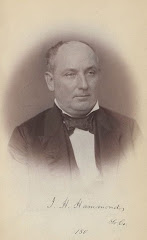
Reed
Speaker Reed, of Maine, a veteran of the Civil War, was personally opposed to expansion in the Pacific, but he eventually allowed a vote in Congress. The vote was 209 to 91, “with practically unanimous Republican support.” Opposition to building up the Navy and expanding into the Pacific was swept away by the Spanish-American War.
Reed dealt with issues familiar to us today such as ensuring a representative government, achieving a quorum, opposing the silent filibuster, combatting tyranny, and confronting contested elections in January. Reed’s friend Mark Twain supposedly said, “History doesn't repeat itself but it often rhymes.”
At the turn of the century, opposition to ruling classes grew stronger. People protested gross inequality, poor working conditions, and politicians who prevented others, including women, from voting. Tuchman shows how Victorianism began to die but how Anarchists, Socialists, and Ultra-nationalists came to life. The “chronic war between the Church and the republic” continued to be fought for control of education, personal freedom, and collective civil rights.
In post-Napoleon, post-revolution France, “the nation was at odds with itself,” exemplified with the Dreyfus Affair, involving a Jewish military man and accusations of espionage. “The sudden and malign bloom of anti-Semitism in France was part of a wider outbreak,” Tuchman writes.
Tuchman’s foreword to “The Proud Tower” is a testament to humility; she admits the limitations of her undertaking in covering a period of history so selectively. The same can be said about this review; for this Navy Reads blog, I try to choose books and themes that would be most interesting to military readers, history buffs, and critical thinkers.
As always, reading the entire book offers greater depth, context, and knowledge.
Whiteman
I rescued this book from a used book store in Hawaii, and –– like every other Barbara Tuchman book, especially her landmark "The Guns of August" published 60 years ago –– it did not disappoint.
The copy I found, by the way, once belonged to an Air Force major (“from the library of …”) who, himself, had salvaged it after it had been discarded by Whiteman Air Force Base library in Missouri.
Somehow the book's origin gives it more relevance. Whiteman AFB’s namesake is 2nd Lt. George Whiteman, who was killed in the attacks on Pearl Harbor and Oahu on Dec. 7, 1941. Of course, Pearl Harbor is now home to the Battleship Missouri Museum.
James D. Hornfischer’s final book, “Who Can Hold the Sea,” opens with a poignant message from Jim’s widow, Sharon Hornfischer.
Sharon includes this advice:
“Jim believed, as I also do, that others of this generation and future generations will carry on telling the stories of our great nation’s history. Share your stories with your children and grandchildren, nieces and nephews, so that they are engaged in our nation’s history and our country’s continued fight for freedom and democracy. Encourage our next generation, take them to air shows, museums, and libraries; ignite the spark of curiosity in our future historians and writers so that they can continue to tell stories for us all to read.”
Hornfischer
It’s both sad and inspiring to read Jim Hornfischer’s final work. As both a gifted writer and historian, he created vivid true stories of Sailors and Marines and their leaders. This book’s preface, introduction, and acknowledgements bookend the story of the Cold War with tender personal messages.
Hornfischer’s “Who Can Hold the Sea” (Bantam Books, 2022) opens in the gray aftermath of World War II.
After confronting and defeating fascism, the United States and most of the Allies moved toward greater democracy, peacekeeping, rule of law, and liberty for all. The Soviet Union, on the other hand, held on to autocracy, aggression, violations of laws, and control of its citizens’ freedoms.
“For Truman,” Hornfischer observes, “the Soviet Union was a treacherous and malignant betrayer.”
Americans adjusted to postwar realities –– not only fear of spreading communism and Soviet expansion, but also budgetary turmoil that reached into the military. Some politicians proposed doing away with the Marine Corps and Navy and merging the service branches.
None other than Adm. William “Bull” Halsey spoke out against the merger in a speech thankfully excerpted by Hornfischer.
Halsey said, in part:
“Merger is not necessary. It is not desirable. It is plainly dangerous. It would destroy the initiative of individual services. It would hamstring their right to advance. It would deprive them of representation before Congress and the people. It would substitute military for civilian control. It might lead to military dictatorship.”
Admirals Chester Nimitz, Ernest J. King, Marc Mitscher, and Edward L. Cochrane –– along with Secretary of the Navy (and first Secretary of Defense) James V. Forrestal –– persuaded President Truman and others that the Navy had a strategic role in the Atomic Age; merger of the services, along with loss of the Marine Corps, would be a bad idea.
President Truman is welcomed aboard USS Franklin D. Roosevelt (CV-42) by SECNAV Forrestal and Adm. Nimitz. Adm. Leahy pictured in background. (NHHC)
Truman visited Norfolk, Virginia, in April 1946 at the invitation of Commander in Chief, U.S. Atlantic Fleet Adm. Mitscher. Truman witnessed the power of naval aviation and capabilities of aircraft carriers USS Franklin D. Roosevelt (CV-42) and the seemingly ubiquitous USS Midway (CV-41). Mitscher’s chief of staff was Capt. Arleigh Burke.
Then-SECNAV Forrestal was one of the principal architects of the post-war modern Navy. His global vision was based on peace through freedom and democracy, not communism or autocracy. Hornfischer writes, “If that world was to become a community, it would be possible, Forrestal thought, only with U.S. leadership, the victorious democracy investing its credibility and standing in the world to promote self-determination and freedom wherever it showed aspiration.” Hornfischer explores the role Forrestal played and delves into Forrestal’s controversial death at Bethesda Naval Hospital.
“Who Can Hold the Sea” vividly covers how Burke, Nimitz and Forrestal shaped the Navy during the Cold War. And strategic thinker and diplomat George Frost Kennan influenced the influencers, as Mahan had done for the first half of the century. Kennan recognized early the “perverse brutality and terror” of Joseph Stalin and Communism’s threat to Capitalism and democracy.
Watercolor of scorched USS Nevada (BB-36) as Nagato and Sakawa sink.. (Arthur Beaumont, 1946)
As a result of those fears, including the real fear that the Soviets were developing nuclear weapons, the United States rushed to conduct atomic bomb tests in the Pacific just a year after the war. In Operation Crossroads, the Navy positioned hundreds of pigs and goats, as well as 4,000 rats, aboard a target ship to test the results of radiation from a nuclear “cauliflower head.” The results were staggering and crippling.
The flagship of Adm. William H. “Spike” Blandy, who headed up Operation Crossroads, was contaminated with radiation, so “hot” it needed to “cool down” before it could be boarded.
After "Able" and "Baker," Blandy had to cancel a third "Charley" stage of the test, Hornfischer notes. “The radioactive mess had become impossible to manage.”
Later, he would celebrate the operation with a bizarre cake-cutting ceremony.
Vice Adm. Blandy and his wife cut into an Operation Crossroads cake shaped to look like a radioactive geyser, as Rear Adm. Frank J. Lowry looks on, Nov. 7, 1946.
The Navy forged forward in developing deployable nuclear weapons, supported by John L. Sullivan, Secretary of the Navy.
“The atomic bomb would shape the entire forty-four-year span of the Cold War. Made even smaller and more easily deployable, with larger and larger payloads, it would place every crook and crevice of the world under threat of ruin. War planners schemed to win atomic exchanges, even as they and every policy maker had no sense of consequences, and prudence demanded keeping the weapon in Pandora’s box. Humility, terror, curiosity, eager innovation, and abject paranoia would be the diverse by-products of the bomb.”
Louis A. Johnson
Sullivan would fight for the Navy but would resign in the face of cutbacks, cancellation of construction of the CVA-58 class aircraft carrier USS United States, and favoritism for the Air Force by SECDEF Louis A. Johnson. “The new defense secretary was an equal opportunity irritant, abrasive and arrogant and making no effort to filter it,” Hornfischer writes. “Johnson’s animus toward the Navy was an open secret.”
Despite obstacles, the Navy forged ahead in developing deployable nuclear weapons and nuclear-powered ships, including submarines.
Hornfischer reveals how close the world came to nuclear war in the decade-and-a-half after bombs were dropped on Hiroshima and Nagasaki.
Leaders contemplated using nuclear weapons after Communist China threatened Formosa (Taiwan), after Communist North Korea invaded the South, and after Communists took power in French Indochina (Vietnam). Eisenhower was a voice of reason in nixing the idea of using the Bomb. Though not covered in this book, the Bay of Pigs incident comes to mind, when President John F. Kennedy, Navy veteran and WWII hero, proved to be the voice of reason in preventing nuclear war after the Soviet Union threatened to position nuclear weapons in Cuba.
Admittedly incomplete and somewhat unfinished, Hornfischer’s history of the Cold War is a compelling book thanks to the author’s distinctive style and grace. His writing shines in descriptions of not only events but also people, such as the great Arleigh Burke, “the son of a humble Colorado farmer,” a leader who embraced an ethos of good leadership.
“[Burke] had taken integrity, self-discipline, and strong principles from his father and mother, a teacher. In 1923, the year he graduated from the U.S. Naval Academy, the faculty had just compiled the first textbook on naval leadership. It listed the ‘essential qualities’ of a naval officer as personal dignity, honor, courage, truthfulness, faith, justice, earnestness, assiduity, judgment, perseverance, tact, self-control, simplicity, and loyalty –– to country and to service, to both one’s seniors and juniors. ‘Loyalty up and down was important because of the natural independence and self-reliance of the American sailor,’ and naval officers had to earn the respect of their men [and women] through their personal merit and example. Burke had been trained as a specialist in ordnance, earning a master’s degree in chemical engineering and becoming a design and production specialist in explosives. This background exposed Burke to the most advanced naval technologies of his time and would prepare him as CNO to promote the development of nuclear weapons, nuclear power, and guided and ballistic missiles.”
Burke helped guide the Navy through rough seas during the Cold War.
CNO Arleigh Burke on the bridge of USS Forrestal (CVA-59) March 12, 1956 as ship's CO Capt. Roy L. Johnson points out distant aircraft. (NHHC)
It’s bittersweet to read this excellent book about the Cold War knowing that Hornfischer is gone. He died last summer after a valiant fight with cancer. As mentioned, his wife Sharon offers a beautiful tribute to him and his legacy in the book’s preface.
Both Jim and Sharon offer acknowledgements at the end of this book. They thank retired Navy Admiral “Fox” Fallon, former commander of both U.S. Pacific Command and Fleet Forces Command and current board chairman of the Naval Historical Foundation. They also acknowledge and thank other graybeards, including retired Rear Admiral Samuel Cox, director of Naval History and Heritage Command and Curator of the Navy. The Hornfischers pay special tribute to the Nimitz Museum in Fredericksburg, Texas, hometown of the great admiral who led the winning strategy in the Pacific War.
The Hornfischers valued libraries, museums, research institutes, and, of course, books. As Jim writes, “Those interested in national and maritime affairs ought to be mindful of the major events of the past.”
Top Photo: Operation Crossroads "Baker Day" A-bomb underwater explosion, seen from shore of Bikini Atoll, 25 July 1946. NHHC
(In Part I of this review, we presented Hornfischer's view of "one global ocean." We also compared Gorbachev and Putin, discussed the rise of NATO, and presented some coincidental milestones that happened in August and September decades ago.)
Former Secretary of Defense Mark Esper’s 752-page tome, “A Sacred Oath” (HarperCollins, 2022), is a book of mea culpa justification and behind-the-scenes candor. There are some shocking revelations.
Esper
But the most shocking thing to come out of the Trump administration, Esper says, was the seditious insurrection attack on the Capitol, January 6, 2021. Readers interested in the military and the Constitution will be rewarded by some of the insights, warnings, and attempts at explanation.
For example: Esper tries to convince readers that he did everything he could to promote and retain Col. Alexander Vindman in the wake of 2019 Ukraine scandal leading to President Trump’s first impeachment. Esper contends that Trump’s support for disgraced former Navy SEAL Eddie Gallagher was “the nadir for the DoD” in politicizing the military. Esper said he shut down a White House request to interview senior officers eligible for promotion, interviews that he and others saw as “loyalty tests.”
Esper reveals that Trump wanted to recall Adm. McRaven and Gen. McChrystal to active duty so he could court-martial them. Trump didn’t like what they'd said about him and his leadership.
Speaking to reporters aboard government aircraft, Dec. 16, 2019. (Ferdinando)
Unfortunately, Esper has a different stance on support for now-retired Capt. Brett Crozier, former CO of USS Theodore Roosevelt. Crozier was railroaded for taking extraordinary steps to get his crew to safety when Coronavirus hit his ship's crew in the early months of the pandemic. Crozier’s efforts to get help were revealed by the media, and Trump wanted him fired. So did Secretary of the Navy Thomas Modly.
Esper doubles down on his support of former SECNAV Modly’s decision to fire Crozier, and he unsurprisingly agrees with the internal investigation that justified Modly's conclusion. Modly, as we remember, traveled to Guam to tell the crew of TR on the 1MC that their captain, who had tried to save their lives, was “stupid.”
There’s more to read here about Esper’s role in the Trump administration and Trump’s failure to end the war in Afghanistan, for example, as he’d promised. There’s also more about how Trump and his team dealt with North and South Korea; Communist China and Democratic Taiwan; Putin’s Russia; and threats to the NATO alliance –– as well as other strategic issues, including the COVID pandemic and immigration issue.
On the home front, Esper closes his book with a lament about the seditious conspiracy that led to the attack on the Capitol.
Esper expounds about the people who came out of the shadows at Trump’s request and incitement on J6:
“The most shocking and troubling event of the Trump presidency was the organization and incitement of a pro-Trump mob that stormed the Capitol on January 6, 2021, and stopped the constitutional process Congress was following to affirm the election and transfer of power to a new president. I never thought I would see what happened on Capitol Hill that day.
“It was the worst attack on the Capitol since the War of 1812, and maybe the worst assault on our democracy since the Civil War. And as someone who worked for many years in Congress, and had an office physically in the Capitol, I was shocked, angry, sad, and hurt by what I saw on TV that day. It was doubly hard to believe our fellow Americans conducted these criminal and seditious acts.”
Readers are left with wanting to know more about what Esper knows, especially after he gives his view about former national security adviser and retired Army Gen. Michael Flynn’s call for martial law and for the military to seize voting machines –– “Scary, and real.”
And monumentally treasonous.
There is much to learn from Esper’s experience as a well-defined guardrail in the careening last year of Trump’s presidency.
Esper says his former boss is not fit for leadership on the national stage. About Trump: “He is an unprincipled person who, given his self-interest, should not be in the position of public service.”
Former U.S. President Donald J. Trump pulls Secretary of Defense Mark T. Esper in for a handshake after hearing remarks from Vice President Michael Pence during a Full Honors Welcome Ceremony for Esper at the Pentagon, Washington, D.C., July 25, 2019. (Army Sgt. Amber I. Smith)
Ironically, Esper’s attempt at a completely honest portrayal is told through his own lens of self-interest and concern about his legacy. Yet, thank goodness, he kept his oath to the Constitution.
Firstly, it helps explain the rise of Russia’s President Putin and the popular support for America’s former President Trump. Secondly, it’s an inspiring account of a woman’s challenge in overcoming obstacles –– perfect for Women’s History Month. And, thirdly, it’s an extremely well-written contemporary history, with practical advice for how to prevent the further rise of authoritarianism and tyranny.
The book is “There Is Nothing for you Here: Finding Opportunity in the 21st Century” by Fiona Hill (Mariner Books, HarperCollins, 2021).
Hill grew up as a coal miner’s daughter in northern England, and she describes her journey “from the coal house to the White House.” Recruited by Fox News’s K.T. McFarland, Hill worked as deputy assistant to the president and senior director for European and Russia affairs on the National Security Council in the Trump administration.
Hill warns of the dangers of populism leading to tyranny. “Russia’s fate and its slide into authoritarianism since 2000 could well be our own.”
“Throughout history, populist have offered compelling narratives for people who feel they have lost their identities and cultural moorings as well as their jobs in an economic downturn and at times of rapid social change and political uncertainty. Populism was a major feature of European and also U.S. politics at pivotal points in the twentieth century: in the 1920s and 1930s during the Great Depression, in the 1960s and again in the 1980s during generational and technological changes. Putin, for example, first came to power in Russia on December 31, 1999, right at the very end of a decade of wrenching economic crisis, political upheaval, and strife, including a war in Chechnya, in Russia’s North Caucasus region. Putin promised to fix this.
“Populists like Putin provide straightforward, plain-speaking explanations for people’s misfortunes. They offer scapegoat, like corrupt bureaucrats and conniving immigrants, or the West trying to keep Russia down, in Putin’s case. They produce memorable catchphrases that encapsulate the ambitious claims that they, and only they, can solve ‘the people’s’ problems and ease their cultural despair. ‘The people’ is also who they say it is –– not everyone, just a specific group that they define. This group of ‘their people” (natshi, or ‘ours’ in Russian) is then divided against the rest of society.”
Hill describes the extreme sexism and discrimination she witnessed in Russia. She also describes how she dealt with numerous incidents of sexual harassment, misogyny, and discrimination –– including wage gaps –– in her career.
Reince Priebus, Trump’s first of several chiefs of staff, nicknamed Hill the “Russia Bitch.”
Hill writes, “I had struggled against sexism throughout my professional life in a seemingly unending effort to realize my potential and do my job effectively” despite the difficulties that somehow seemed intrinsic to being female.” Easily accessible national health care and childcare are seen as essential to promoting education, mobility, and career opportunities, especially for women.
Putin, with Hill to his left
There are several humorous recounts of her direct interactions with Trump, including in the Oval Office. There are also creepy accounts of her sitting next to Putin on several occasions during public meetings. And there is a laugh-out-loud, sad-but-funny reaction as she sat in the audience in Helsinki during a summit between Trump and Putin.
Many people will want to read her account of what it was like testifying to Congress in a hearing for the first impeachment of former President Trump. Hill was a witness to events surrounding Trump's call with the President of Ukraine when Trump withheld defensive arms as leverage for dirt on his political opponent. Hill offers fascinating takes on Ambassador Gordon Sondland, who also testified, and Representative Matt Gaetz, who tried unsuccessfully to stare her down during her appearance at the Capitol.
She praises many women by name who mentored, advised, or otherwise assisted her, including preparing her for her testimony. But she also notes how some women and men treated her unfairly throughout her education and career because of her accent, wardrobe, or humble beginnings in Bishop Aukland, England.
Hill compares the classism she experienced growing up in the UK with the racism she witnessed firsthand after emigrating to the U.S. She shares insights found in author Isabel Wilkerson's landmark book “Caste”(reviewed Jan. 14 on Navy Reads). White supremacy, Wilkerson notes, became memorialized for some after the Civil War and poisoned race relations "for generations.” Hill picks up on the theme:
“This sad history of racial identity being weaponized by the powerful against working people is not limited to the United States. It was also evident in the United Kingdom after both world wars, when race was used as a deliberate tool for divisive policies to benefit the narrow interests of shipyard owners and other big businesses who wanted to hire cheaper and non-unionized immigrant labor to stave off organized British labor demands for Black workers in shipyards and port cities, leading to riots, intercommunal violence, and the deaths of Black seamen and dockworkers who were accused of stealing jobs.”
She make several references to the effects of World War II, especially in post-war England and in the United States, where the G.I. Bill helped not only U.S. warfighters and their family, but also had an indirect influence on people in UK and Europe. The Marshall Plan and other “bold moves” had a direct and positive impact on people yearning for freedom, democracy, and self-determination.
“I mirrored the experience of millions of young Americans after World War II, who found college to be the door to a job and a better life than their parents’.” Her own choice to learn Russian and go into Russian studies hinged on a veteran uncle’s suggestion. The uncle was pained and perplexed to see how former WWII ally Russia had turned to oppressive communism under the Soviet Union and become an enemy to Western ideals.
Books and reading and the help of her community propelled Hill toward a higher education, with the path leading to Harvard’s Kennedy School, named for JFK, a navy hero of WWII. Hill received the Frank Knox scholarship. Knox was Secretary of the Navy during WWII.
Hill notes, “Breaking down racial barriers, as well as other universal or generalized spatial and structural impediments to opportunity, requires large-scale intervention.” The solution continually comes back to education, including the need for post-high school education, either for two-or four years or apprenticeship to learn a technical skill.
“Focusing collective action on education is an important aspect in countering the national security crisis of polarization and fragmentation. Lack of education –– in the sense of acquiring the critical thinking skills that a good K-12 and some form of college education can provide –– breeds suspicion of government, skepticism toward science and expert knowledge, and resistance to the very idea that there are things like basic facts and objective information. Poor educational attainment leaves people vulnerable to populists and political operatives –– a fact underscored by President Trump’s persistently higher ratings among Americans without a college degree.”
Analysts note that Putin’s most fervent supporters come from the rural, more isolated, parts of Russia. In contrast, the brave people who have come out on streets to protest Putin’s unprovoked aggressive invasion of Ukraine are the more educated people of the cities.
We can see the effects of populism leading to autocracy both in the J6 insurrection by Trump supporters at the U.S. Capitol on January 6, 2001 and in Putin’s invasion of Ukraine, a sovereign democracy.
“Russia’s fate over a twenty-year period shows how a country’s political path can turn away from democracy toward autocracy. No state, no matter how advanced, is immune from flawed leadership, the erosion of political checks and balances, and the degradation of its institutions. Democracy is not self-repairing. It requires constant attention and renewal, especially during periods of rapid technological and social change and economic uncertainty.”
I created a short playlist based on song and artists mentions by Hill, primarily from the 80s and early 90s and especially songs big in Britain at the time. High on the list: The Specials’ “Ghost Town,” Nena’s “99 Red Balloons,” and Billy Bragg’s “Waiting for the Great Leap Forward.” Also included, based on mentions by Hill: some acoustic Beatles songs and a group I’d never heard of, Russia’s Nautilus Pompilius. I also included the Scorpions’ “Wind of Change," about the thawing of the Cold War. It was released in 1990, exactly ten years before Putin ascended into power in Russia. Nena's "99 Red Balloons" from 1983 is mentioned several times; it is also considered an anthem protesting the Cold War, and was covered touchingly last week by Kelly Clarkson. It's a tribute to the brave people of Ukraine.
As this review is posted, Putin appears to be trying to lower another Iron Curtain and start another Cold War in his invasion of Ukraine. However, his actions have galvanized the NATO, Europe, and the free world. President Biden’s Department of Defense, led by SECDEF Lloyd Austin, is committing even more defensive support to NATO allies.
Secretary of Defense Lloyd Austin meets with Ukraine's Minister of Foreign Affairs Dmytro Kuleba at the Pentagon, Feb. 22, 2022. (Lisa Ferdinando)
Sanctions are having a devastating effect on Russia, in what amounts to “economic warfare,” according to analysts.
But Fiona Hill, now the director of the Center on the United States and Europe at the Brookings Institution, warns against sending direct military support to Ukraine. It could be falling into a trap laid by Putin, who believes in “escalation dominance” and looks for any excuse (couched as Western threats to Russia) to justify his actions. [On Pod Save the World, Ben Rhodes, former adviser to President Obama, said “Putin is at the vanguard of so much that’s wrong in the world.” But Rhodes also warns against direct military conflict with the Russians, who are threatening to literally “go nuclear.”]
My only complaint with “There Is Nothing for You Here” is minor; I wish it had a photo section. On the other hand, Hill presents a robust notes section, excellent conclusion, and helpful how-to afterword to provide more opportunity and possibilities for people, especially those who are less advantaged.
Hill's style is easy, her approach is humble (one of her favorite words is “impecunious”), and her insights are refreshingly optimistic. This is a highly recommended book, both as biography and history, for Women’s History Month!
Although science says there is no such thing as race, that doesn’t mean there is no “racism.”
Under a guise of racism, a dominant class can subjugate, discriminate, and try to control a subordinate class, including by suppressing or subverting their right to vote –– based on superficial differences.
Isabel Wilkerson
Isabel Wilkerson makes the case for recasting, so to speak, “racism” as “casteism” in her indispensable book for our time: “Caste: The Origins of Our Discontents” (Random House, 2020), an Oprah’s Book Club selection.
As for “no such thing as race…”
Scientists call ‘race’ an artificial construct. Wilkerson writes this, citing a great Navy veteran scientist:
“Two decades ago, analysis of the human genome established that all human beings are 99.9 percent the same. ‘Race is a social concept, not a scientific one,’ said J. Craig Venter, the geneticist who ran Celera Genomics when the mapping was completed in 2000. ‘We all evolved in the last 100,000 years from the small number of tribes that migrated out of Africa and colonized the world.’” (Venter is a former Navy corpsman and Vietnam War veteran; we have featured his work and his autobiography several times here on Navy Reads.)
Now DNA kits ordered by mail show “that race as we have come to know it is not real,” Wilkerson says. “It is a fiction told by modern humans for so long that it has come to be seen as a sacred truth.”
Wilkerson interviews a Nigerian-born playwright, who says, “You know that there are no black people in Africa. Africans are not black. They are Igbo and Yoruba, Ewe, Akan, Ndebele. They are not black. They are just themselves. They are humans on the land. That is how they see themselves, and that is who they are.”
Dr. Martin Luther King Jr., who embraced the nonviolent teachings of Mohandas Gandhi, saw the issue of racism framed as casteism. Sixty-three years ago, in February 1959, he and his wife, Coretta Scott King, traveled to and within India, where MLK self-identified as “an untouchable.” The Kings visited the grave of Gandhi, laid a wreath, and prayed.
In India, people are born into castes that are supposedly divinely dictated. Discrimination against people considered part of the lower classes was acceptable, lawful, institutional. While civil rights laws in India in the 1940s (and in the United States in the 1960s) have made it illegal to discriminate, "both countries still live with the residue of codes that prevailed for far longer than they have not."
Casteism in the U.S. began more than a century before we became a nation.
Actions
Beginning in 1619, Europeans brought Africans to the English colonies as property and to the very bottom of a social hierarchy. Confronting the morality of the institution led eventually and with great upheaval to the Emancipation Proclamation and American Civil War nearly 250 years later. But like it or not, racism, constructed within a framework of casteism, had been already institutionalized.
“In the decades to follow, colonial laws herded European workers and African workers into separate and unequal queues and set in motion the caste system that would become the cornerstone of the social, political, and economic system in America. This caste system would trigger the deadliest war on U.S. soil, lead to the ritual killings of thousands of subordinate-caste people in lynchings, and become the source of inequalities that becloud and destabilize the country to this day.”
“After the Civil War, Confederates blamed the people they had once owned for the loss of the war,” Wilkerson writes. There was a backlash to “take our country back.” The Lost Cause. The Big Lie.
South Carolina's Hammond
Wilkerson contends, “Caste, along with its faithful servant race, is an x-factor in most any American equation, and any answer one might ever come up with to address our current challenge is flawed without it.”
She presents dozens of examples of the horrors inflicted by the dominant class in America over previous centuries, including torture, riots, and lynchings.
We learn of the horrid senator of South Carolina James Henry Hammon, who said, “God created slaves for us.” Hammon raped women, including his own daughter, and sexually assaulted four of his nieces. We also read the crushingly sad story of Willie James Howard, a 15-year-old black boy who made the fatal mistake of having a schoolboy crush on a white girl in 1943 in Grand Gulf, Mississippi. And, we hear of ludicrous practices under endogamy, miscegenation, and eugenics laws and theories.
A eugenics book published in 1916 by an American, Madison Grant, titled “The Passing of the Great Race,” became popular with white supremacists.
Adolf Hitler called it his bible.
The Nazis were inspired by how the American upper class treated blacks and especially indigenous peoples. But, fascist Germans of the 30s and 40s escalated and intensified the evil when they exterminated millions of people based on eugenics and claims of Aryan supremacy.
Hitler and Nazi casteism
A caste system set up by Hitler and the Nazis justified the torture and deaths of millions of Jews, homosexuals, Roma people, and people with disabilities. To the Nazis, it was “obvious Jews were a separate race.”
When Einstein, a Jew, escaped Germany as an immigrant to the United States, he was shocked to discover he had moved from a country of castes to another country where, this time, people of color were considered a subordinate class.
Once we accept the reality of caste systems, it helps us understand the point of view of others.
That includes many people in the privileged dominant class who feel fear and resentment when they start to lose their privileged position. “A caste system builds rivalry and distrust and lack of empathy,” Wilkerson contends.
Will the dominant class –– through fear, anger, and resentment –– do anything, accept anything, to try to retain the power hierarchy? Think: sedition, treason, secession.
This week, the U.S. Department of Justice announced the indictment of members of the Oath Keepers, including the far-right group’s Texas-based founder, on charges of seditious conspiracy related to the January 6, 2021, U.S. Capitol insurrection.
Oathkeepers stack into the U.S. Capitol, along with other Trump supporters, during the insurrection of Jan. 6, 2022.
Reactions
People confronted with scenes of outright violence respond in different ways. Some –– like those who attended lynchings of black people in the American South, or German citizens who swooned when Hitler’s stormtroopers returned from invading Poland –– react with joy. Other people may be outraged at first but later find justification for ignoring or even condoning the violence.
For example, despite being an advocate of slavery Secretary of the Navy James K. Paulding reacted strongly after he witnessed what Wilkerson describes as “barefoot men and women locked together with the weight of an ox-chain in the beating sun, forced to walk the distance to damnation in a state father south and riding behind them, ‘a white man on horse back, carrying pistols in his belt, and who, as we passed him, had the impudence to look us in the face without blushing.’” Paulding said he was outraged to see “such flagrant and indecent outrages upon humanity … a villain, in thus marching half naked women and men, loaded with chains, without being charged with a crime but that of being black…” [Paulding, SECNAV from 1838 to 1841, was a contemporary of David Dixon Porter, Isaac Hull, and John Rodgers, serving with them on the Board of Navy Commissioners. Paulding was an ardent defender of slavery and called abolitionists “satanic.” He is also remembered for being opposed to steamships and engineers in the Navy.]
The armed services have come a long way in promoting equality and dignity, especially since the 1960s; nevertheless, military readers will cringe at some of the lack of empathy and outright prejudice and bigotry in the past.
MA1 Laymoun Ferguson lights a candle on National Holocaust Remembrance Day at Commander, Fleet Activities Sasebo. (MC3 Mackenzie P. Adams)
Wilkerson reminds us that during World War I, black soldiers were segregated not only from their fellow white warfighters but also from their European counterparts in uniform.
“American military command informed the French of how they were to treat the black soldiers, clarified for them that these men were ‘inferior beings,’ no matter how well they performed on the front lines, that it was of the utmost importance’ that they be treated as inferior.
“The fact that military command would take the time in the middle of one of the most vicious wars in human history to instruct foreigners on the necessity of demeaning their own countrymen suggests that they considered adherence to caste protocols to be as important as conducting the war itself.”
Black American heroes like Pvt. Burton Holmes and Cpl. Freddie Stowers, both killed in action, were blocked from receiving the Medal of Honor, despite nominations by their white officers who witnessed their bravery and “broke with caste” to nominate them. [Holmes was awarded the Distinguished Service Cross posthumously in 1919; Stowers’s sisters accepted the MoH on their brother’s behalf in 1991, presented by Navy/WWII veteran President George H.W. Bush.]
Veterans of both world wars came back from the warfront to confront Jim Crow racism and the construction of more monuments to losing leaders of the Civil War.
The 90-foot tall, 17,000-square-foot carving at Stone Mountain, Kennesaw, Georgia, honoring the Confederacy. Carving began in 1964, the year of the Civil Rights Act and a year before the signing of the Voting Rights Act. The carving was dedicated by Vice President Spiro Agnew in 1970. It was completed in 1972.
Retractions
Confederates lost the war but won the peace, according to Wilkerson, especially when thousands of monuments, symbols, and namesakes to traitors who fought to defend slavery were set up throughout the United States.
Local governments removed statues of Robert E. Lee, including in Charlottesville and Richmond, Virginia, last summer, and in New Orleans, Louisiana, in 2017 after public hearings. In New Orleans:
“At one hearing, a Confederate sympathizer had to be escorted out by police after he cursed and gave the middle finger to the audience. A retired lieutenant colonel in the Marine Corps, Richard Westmoreland, came at it from the other side. He stood up and said that Erwin Rommel was a great general, but there are no statues of Rommel in Germany. ‘They are ashamed,’ he said. ‘The question is, why aren’t we?’”
Germany looks at its history “without blinking,” highlighting the shame of what the Nazis did –– and what good people failed to do; but, the Germans are neither ashamed nor too proud to confront their history. They reject the hate of the Nazis and honor the victims of the Third Reich.
Wilkerson notes that U.S. Confederacy monuments on pedestals such as those honoring Robert E. Lee –– as well as Georgia’s Stone Mountain, bigger than Mt. Rushmore, featuring Lee, Jefferson Davis, and Stonewall Jackson –– are up high so everyone has to literally look up at them. But in Germany, where there are numerous monuments to the victims but none to Nazis, people see stolpersteine, stumbling stones embedded in the cobblestones, each denoting a victim of the holocaust or other Nazi horrors. “Leaning over to read the names on the stumbling stones forces you to bow in respect,” Wilkerson observes.
Stolpersteine commemorate the victims of the Nazis, who receive no monuments in Germany for their lost cause.
Traction
Sailors raise the flag on MLK Day in Yokosuka, Japan, Jan. 17, 2011. (PO2 Devin Dow)
MLK’s famously said, “We shall overcome because the arc of the moral universe is long but it bends toward justice.” He marched in Selma for voting rights. He realized that voting rights in a full and open democracy were key to ending casteism.
Some of Wilkerson’s own personal first-hand examples of dealing with casteism, particularly in a restaurant, dealing with a plumber, or while flying first class, seem petty and unnecessary in the context of the moral universe presented in the bulk of her book. However, I can understand if others feel differently.
On the other hand, Wilkerson’s conclusions at the end of this great book are as big as an arc can be, and her optimism is inspiring:
“We look to the night sky and see the planets and stars, the distant lights as specks of salt, single grains of sand, and are reminded of how small we are, how insignificant our worries of the moment, how brief our time on this planet, and we wish to be part of something bigger than ourselves, to magnify our significance, to matter somehow as more than the dust that we are.
“Even the longest lived of our species spends but a blink of time in the span of human history. How dare anyone cause harm to another soul, curtail their life or life’s potential, when our lives are so short to begin with?”
A view of our galaxy. (NASA)
Wilkerson concludes that the answer is in our hands: “We are responsible for our own ignorance or, with time and openhearted enlightenment, our own wisdom. We are responsible for ourselves and our own deeds or misdeeds in our time and in our own space and will be judged accordingly by succeeding generations.” Isn’t the answer truly in our hands when we hold a good book –– or a ballot?
Wilkerson, author of “The Warmth of Other Suns,” is a winner of the Pulitzer Prize. In 2016 President Barack Obama presented Wilkerson with the National Humanities Medal for "championing the stories of an unsung history."