Showing posts with label Biden. Show all posts

Tuesday, July 16, 2024

Interesting Situation…

Review by Bill Doughty––

George Stephanopoulos pulls back the curtains of secrecy surrounding one of the most important rooms in the world: The White House Situation Room is his momentous and relevant book for the “interesting times” in which we live.


Through vignettes, descriptions, and photos, we get to look into the room where key decisions are made and history is forged.


In “The Situation Room” (Hachette Books, 2024), author and pundit Stephanopoulos shows its creation by JFK during the Cold War, its role in the infamous Iran-Contra affair under Reagan and Bush Sr., and its iconic place in history during killing of Osama bin Laden under leadership of Obama, Biden, Gates and McRaven.
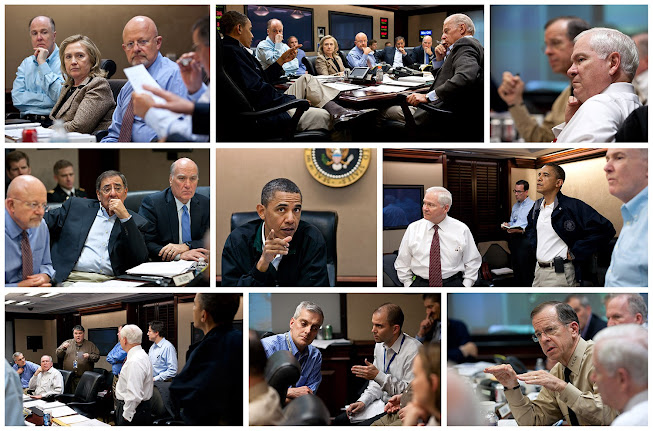

The book weaves together the importance of an integrated military-civilian team as part of the federal government, especially in intelligence. Stephanopoulos describes the importance of open and honest discussion in which every voice is heard, and no one is afraid to speak truth to power.

“This is the Situation Room at its best: a place of sober discussion, informed thinking, apolitical attitudes and an absence of grandstanding,” he writes. There is no place for loyalty tests or fear of retribution. The room was critical in the wake of 9/11 and dozens of other crises. In recent years the Situation Room was used by Vice President Pence and Drs. Fauci and Birx during the Covid pandemic under President Trump.


Repeatedly, we see the important tenet of good leadership: surround yourself with good people who can help shape good decision-making, especially in a crisis situation. We also see the opposite.


“This book examines crisis management in the modern presidency. During the Trump administration, the president was the crisis to be managed.

It took a toll on those who had to do it. Trump tore through and wore out his national security team: Four secretaries of defense. Four directors of national intelligence. Four White House chiefs of staff and five secretaries of homeland security. The most damning judgments of his competence and character come from those he appointed to these most sensitive positions. His first secretary of state, Rex Tillerson, famously told colleagues that Trump was a ‘moron.’ James Mattis, the former Marine Corps general who served as Trump’s first secretary of defense, described him as a threat to the Constitution ‘who does not try to unite the American people –– does not even pretend to try.’ Fellow Marine general and White House chief of staff John Kelly called Trump ‘the most flawed person I have ever met in my life.’”


Tillerson, Mattis and Kelly

Now, in the wake of the tragic attempted assassination of the former president, the situation may have changed, according to some pundits who hope for more understanding, unity, and comity. Yet, this week’s Republican National Convention showcases the rise of Christian Nationalism as many of Trump’s loyal associates and January 6 insurrectionists are in prison or under a cloud of indictments and accountability. That includes Trump himself. It’s a strong contrast to Biden, most of his associates, and particularly his national security team.


Stephanopoulos and Lester Holt recently interviewed President Biden in the wake of Biden’s abysmal debate performance. The interviews have apparently not allayed concerns about Biden’s ability to communicate effectively, fight threats to the Constitution, or defend his record of achievements on behalf of the middle class, women’s rights, bipartisan infrastructure, environmental issues, CHIPS and Science Act, reduced unemployment, and gun safety. This reality magnifies the importance of Biden's ability to surround himself with good people of honor, compassion, integrity, and dedication.

That is the current situation and the curse we are under: living in “interesting times.”

Wednesday, April 19, 2023

Jimmy Carter Paradox Part 3: Fundamentalism

Review by Bill Doughty––

In a bipolar and increasingly monochrome America, Jimmy Carter paints colorful bridges to attempt to bring people together, including people of different religious beliefs.

Carter is the most devout life-long religious person elected to the presidency in modern U.S. history. His father was a deacon at his Plains Baptist Church in Georgia, and Carter has attended or led weekly Sunday school Bible lessons his whole life.


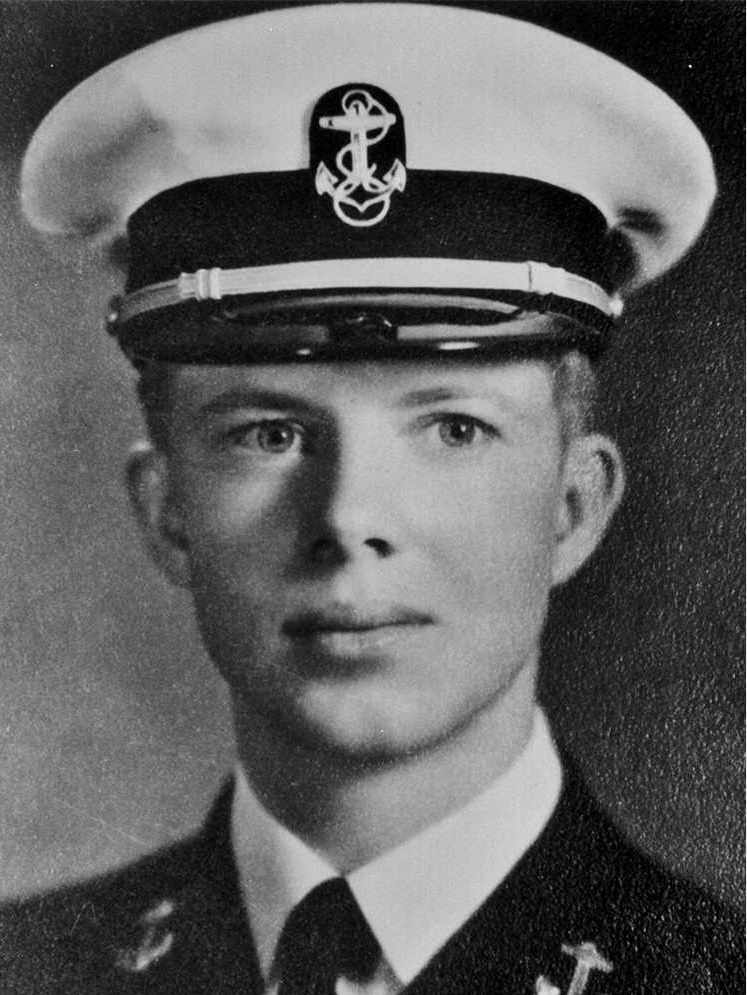
He led Bible study at Annapolis, for example, while he was a midshipman at the U.S. Naval Academy during World War II.


Paradoxically…

  • Carter studies both the Old and New Testaments as a former missionary and self-described “evangelical Christian and a Baptist.” Yet, he decries the rise of religious fundamentalism and is strongly in favor of the wall of separation between State and Church.
  • Despite his reliance on the comfort of his faith and daily prayer, he is not in favor of mandatory prayer in school, government displays of the Ten Commandments, or legislative decisions based on interpretations of the Bible over the Constitution.

This is the third in a series of reviews of “Our Endangered Values: America’s Moral Crisis” (Simon & Schuster, 2005).


Carter sat down to write the book several years after fundamentalist Islamist extremists attacked the United States on September 11, 2001. It was published in the aftermath of the U.S. invasion of Iraq ordered by President George W. Bush twenty years ago. This book is still relevant and timely –– explaining why the United States has become so fractured and why fundamentalism is so dangerous.

“The most important factor is that fundamentalists have become increasingly influential in both religion and government, and have managed to change the nuances and subtleties of history debate into black-and-white rigidities and the personal derogation of those who dare to disagree. At the same time, these religious and political conservatives have melded their efforts, bridging the formerly respected separation of church and state. This has empowered a group of influential ‘neoconservatives,’ who have been able to implement their long-frustrated philosophy in both domestic and foreign policy.”

Carter notes, “Narrowly defined theological beliefs have been adopted as the rigid agenda of a political party.” He adds,”The irresolvable differences of opinion on abortion, homosexuality, and other sensitive social issues have been exacerbated by the insistence of intensely committed hardliners on imposing their minority views on a more moderate majority.”
 

Compared to his time in the White House in the mid-to-late 70s, Carter concludes, “Stronger and sharper partisan differences have evolved among Americans in recent years.”


As president, he was able to work with both Republicans and Democrats who put country and people above party and personal interests. What was still growing in 2005, when this book was published, has metastasized in 2023. Here's how Carter saw it nearly twenty years ago:

“Nowadays, the Washington scene is completely different, with almost every issue decided on a strictly partisan basis. Probing public debate on key legislative decision is almost a thing of the past. Basic agreements are made between lobbyists and legislative leaders, often within closed party caucuses where rigid discipline is paramount. Even personal courtesies, which had been especially cherished in the U.S. Senate, are no longer considered to be sacrosanct. This deterioration in harmony, cooperation, and collegiality in the Congress is, at least in part, a result of the rise of fundamentalist tendencies and their religious and political impact.”

Carter blames not only the rise of fundamentalism but also the impact of dark money in politics thanks to some large corporations and billionaires. One could argue that the differences have only grown even sharper and stronger in 2023, with help from social media algorithms, right wing media caught telling lies, and a more partisan judiciary.


Early in “Our Endangered Values” Carter identifies “prevailing characteristics” of intense fundamentalism. These characteristics can apply to Middle East ayatollahs or to homegrown “prophets” like Waco’s David Koresh:

  1. Almost always, they are groups led by authoritarian males who want to subjugate women.
  2. They believe the past is better than the present. [And they try to whitewash history.]
  3. Self-righteousness: “Fundamentalists draw clear distinctions between themselves, as true believers, and others, convinced that they are right and that anyone who contradicts them is ignorant and possibly evil."
  4. Anger: They are quick to threaten or even initiate physical attacks on others who don’t share their beliefs.
  5. Fundamentalists define themselves in an “increasingly narrow and restricted” way.

The bottom line, according to Carter, is that fundamentalists [including Islamists, Christian nationalists, white supremacists, Opus Dei, etc.] believe in an ideology that is based on rigidity, domination, and exclusion. They abandon the rule of order, social justice, and environmental stewardship in favor of selfishness, greed, power, and control of others.

While reading and ruminating about “Our Endangered Values” over the past several weeks I also finished reading Daniel Byman’s “Spreading Hate: The Global Rise of White Supremacist Terrorism” (Oxford University Press, 2022). It’s a terrific companion that overlaps nicely with Carter’s observations.


Byman presents a history of extremism, militancy, and terrorism by white supremacists, antigovernment activists, Christian nationalists, and authoritarian anarchists. Like other authors and historians, such as Michelle Goldberg and Kathleen Belew (who is cited several times), Byman shows how often military veterans –– such as Oklahoma City bomber Timothy McVeigh, who was also associated with the Christian Identity movement –– have been involved in anti-government violence.


More than ten percent of the people arrested for participating in the insurrection of the Capitol on January 6, 2001, are military veterans. It’s no wonder DOD is trying to root out domestic extremists in its ranks.


But it's not all doom and gloom.


In “Spreading Hate” Byman gives a hopeful view of curbing White Power power. The FBI demolished the Ku Klux Klan. Informants regularly turn on violence-prone militia extremists. The federal government learned lessons from Waco (thirty years ago today) and Ruby Ridge, so does not respond with overwhelming violence when provoked. Perhaps most importantly, public sentiment turns against mass shooters and other terrorists who try to bring about anarchy and civil war.


Charlottesville rally, August 2017.
I doubt even Jimmy Carter back in 2005 could have imagined the white supremacy rally in Charlottesville in 2017, the J6 Capitol insurrection in 2021, or the continuing rise of influential Republican representative Marjorie Taylor Greene, from his own state of Georgia.

Speaking of civil war –– Antithetical to Carter, Greene calls for a “national divorce” of red and blue states. Greene has also come out against support for the defense of Ukraine against the Russian invasion, which is supported by the Russian Orthodox Church.


Greene recently expressed support for the Air Force national guardsman who leaked top secret Pentagon documents. (The documents came to light because of their appearance on a pro-Russian site helmed by former Navy petty officer Sarah Bils, according to USNI News.)


Greene tweeted: "Jake Teixeira is white, male, christian, and antiwar. That makes him an enemy to the Biden regime.”


Paradoxically, Biden, like Jimmy Carter, is a deeply religious president who sees the world through moderate, and some would now say progressive, eyes. In 1976 Biden was the first senator to endorse Carter for the presidency.

As for Carter, he is genuinely and deeply religious, and his interpretation of Christian values is based on caring for and about others, not alienating them. As a farmer, teacher, and builder, he tries to create bridges between people and away from blind fundamentalism.


Carters and Reagans at the Carter Center opening in 1986.
“There is obviously a widespread, carefully planned, and unapologetic crusade under way from both sides to merge fundamentalist Christians with the right wing of the Republican Party,” Carter writes. “Although considered to be desirable by some Americans, this melding of church and state is of deep concern to those who have always relished their separation as one of our moral values.”

Carter reflects, “Despite what I consider to be a constitutional and biblical requirement for the separation of church and state, I must acknowledge that my own religious beliefs have been inextricably entwined with the political principles I have adopted.” Much is left up to interpretation and selective understanding of religious texts, he says.


Carter’s nuanced views in “Our Endangered Values” includes further discussion of the treatment of women, the rights of homosexuals, and stewardship of the environment, among other controversial issues.


He also explores issues of gun control and abortion –– parts 1 and 2 of this series.


His commitment to compassion and his consideration of the views of others is welcome and especially relevant in a divided America in 2023. Today, his Carter Presidential Center in Atlanta, which includes the Carter Presidential Library and Museum, welcomes people from all over the world who want to learn, live in peace, and work together in support of human rights.


The Carter Presidential Library and Museum

Monday, January 2, 2023

Power of a Woman in Power

Review by Bill Doughty––

She was born March 26, 1940, nine months before Imperial Japan attacked Oahu and Pearl Harbor. The Second World War had already been waging for years in Europe and Asia. Like millions of Americans, she came from a family with deep roots in Europe.


Nancy D’Alesandro’s father was U.S. Representative Thomas D’Alesandro Jr., of Baltimore, Maryland., a second-generation American whose own father had immigrated to the United States from Italy. He was a vocal activist on behalf of Jews in Europe who were targeted by the Nazis, and his advocacy had a profound influence on his daughter, the future Nancy Pelosi.

Susan Page writes in “Madam Speaker: Nancy Pelosi and the Lessons of Power –– a Biography” (Hachette Book Group, 2021) about Pelosi’s father’s strong defense of European jews, including in a speech on the House floor in 1943:

“‘Daily, hourly, the greatest crime of all time is being committed.’ D’Alesandro had declared. ‘A defenseless and innocent people is being slaughtered in a wholesale massacre of millions.’

Years later, Nancy Pelosi would cite the influence that her father’s support of the Bergson Group had on her. It was a factor when she decided to break with another Democratic president, Bill Clinton, on the issue of China and human rights. She was Clinton’s ally on most issues but a thorn in his side on this one. She had been a little girl when World War II ended, but she remembered with pride the example her father had set. ‘His enthusiasm came from doing what he believed was right,’ she said.”

Page’s biography of Pelosi is a fully satisfying examination of her beliefs, ethics, strategies, and embrace of power. “Madam Speaker” covers Pelosi’s early years growing up in Baltimore’s Little Italy, her ties to politics from an early age, her devout Catholic faith, and her legacy as the first woman Speaker of the House.


One of the many great and unexpected photos in this book is one from 1957 of 16-year-old Nancy with then-Senator from Massachusetts John F. Kennedy, Navy hero of WWII, whose “Profiles in Courage” had recently been published.


Pelosi came of age during the Cold War and in the Civil Rights era. She would meet JFK again in 1961 when then-President Kennedy appointed her father as a member of the Renegotiation Board.

Though she was always close to politics, her first priority was to her own immediate family in San Francisco. She and Paul Pelosi have five children. In her autobiography (which could serve as an inspiration for military servicewomen and spouses), “Know Your Power: A Message to America’s Daughters” (Doubleday 2008), Pelosi writes, “Raising a family is challenging. I want women to know that the skills I acquired as a mother and homemaker have been invaluable to me. These same skills –– so often undervalued –– are transferable to many other arenas in life, including the United States Congress.”

Pelosi says her leadership skills were forged by her children, even more than by her parents. She had five kids in six years, which forced her to develop her modus operandi: “efficiency, teamwork, and organization.”


Among her favorite axioms are:

  • “Let’s have some cooperation.”
  • “Proper preparation prevents poor performance.”
  • “Seize the moment when you can; play the long game when you can’t.”
  • “Our diversity is our strength; our unity is our power.”
  • “Be ready to seize power.”
  • And, of course, “Know your power.”

With five young children, she says she had good practice dealing with temper tantrums, a skill that helped her deal with some members of Congress and with other senior elected leaders.


Pelosi, who arrived in the U.S. House of Representatives at the age of 47, credits mentors –– women and men –– for contributing to her success and ability to gain power and influence. Susan Page writes about one of those mentors:

“Representative John Murtha, Democrat of Pennsylvania, was a general in the Old Guard. The blunt-spoken former Marine, the recipient of two Purple Hearts and the first Vietnam veteran elected to Congress, had been serving in the House for a quarter of a century. He was a powerhouse on the Appropriations Committee, especially on military issues. In more ways than one, his district in south-central Pennsylvania, dependent on steel and coal, was as distant from San Francisco as it could be.

Yet Murtha and Pelosi somehow hit it off.”

Pelosi had opposed the Vietnam War. And, while she supported the war in Afghanistan, she became a powerful voice against Bush’s war in Iraq, calling it “one of the biggest mistakes in American history.” Page writes, “They were at war over the war in Iraq.”


Reps. Jack Murtha and Nancy Pelosi
At first, Pelosi’s position was also at odds with that of Rep. Murtha, “a leading voice on defense policy” who had voted to go to war after being contacted by then-Vice President Dick Cheney. But eventually Murtha came around to Pelosi’s position and regretted his vote. “He called the war ‘a flawed policy wrapped in illusion,’” Page writes. (Murtha was a recipient of the John F. Kennedy Profile in Courage Award in 2006.)

Pelosi stepped up her campaign against the war after Bush’s “Mission Accomplished” landing on USS Abraham Lincoln, May 1, 2003, suggesting to Bush that he change course, reach out to the Islamic world, and work with Allies instead of deploying a preemptive “go-it-alone foreign policy.” Page writes, “Pelosi said he impatiently dismissed the idea.”


Throughout her two terms as Speaker, Pelosi championed Veterans issues, especially those related to health care. Six months ago (a year after publication of Page’s book), Pelosi oversaw House passage of the PACT act, to help Veterans exposed to toxic substances during military service. She made many visits to military bases over the years, both in Asia and Europe. She visited Camp Leatherneck on Mother's Day in 2012 (top photo by Spc. Chelsea Russell).

(PO1 Jonathan Carmichael)

Murtha retired in 2008, two years before he passed away at 77. He wrote in notes for an intended memoir that Pelosi had as “good a political mind as anyone I have ever seen,” and once remarked that she was “one of the premier leaders in America today.” Other leaders, including U.S. presidents, world leaders, and colleagues have had similar praise for her skills and achievements. According to Page:

“Through the first two decades of the twenty-first century, Nancy Pelosi would stand at center stage during an era of domestic and global disruption.

She was the senior Democrat on the House Intelligence Committee in the aftermath of the 9/11 terror attacks that started the century, in 2001. She was the senior member of Congress to oppose the Iraq War from its beginning. She was the most persistent congressional critic of China on human rights, challenging both Democratic and Republican presidents on the issue. She was the irresistible force pushing through controversial pieces of major legislation, most notably the Wall Street bailout and the Affordable Care Act. She was the top fund-raiser and strategist who twice led Democrats to wrest back control of the House, in 2006 and 2018. She took the lead in negotiating massive relief packages in response to the coronavirus pandemic in 2020.”

Pelosi initiated several congressional efforts to hold ex-President Trump accountable for his actions while in office –– including two impeachments and creation of the bipartisan House select committee inquiry into the January 6, 2021 insurrection. Since publication of Page’s “Madam Secretary,” Pelosi led House efforts to pass landmark bills such as the American Rescue Plan Act of 2021, the Infrastructure Investment and Jobs Act, the CHIPS and Science Act, the Inflation Reduction Act of 2022, and the Respect for Marriage Act. She moved gun safety legislation successfully through the House, but was blocked by the Senate. She made a trip to Taiwan and Ukraine to demonstrate support for those democracies. Pelosi has been a steadfast champion of military defense aid and humanitarian assistance to Ukraine in the wake of Putin’s invasion and Russia’s war.


Congresswoman Nancy Pelosi, Speaker of the United States House of Representatives, addresses the audience during the Congressional Gold Medal Ceremony held to honor Merchant Mariners of WWII at the U.S. Capital, May 18, 2022. During WWII Merchant Mariners put their lives on the line for their country, braving German and Japanese submarines, in their Liberty Ships, as they delivered critical supplies for service members serving in the European and Pacific theaters. (U.S. Navy photo by Bill Mesta)


“Not everyone sees her legacy in a positive light, of course,” Page observes. “Republicans have demonized her as a rigid ideologue and deployed her as a weapon to raise funds.”


Speaker Pelosi steps down officially from House leadership when the 118th Congress begins its term this week. She has already handed the reins of her caucus’s power to a new generation, led by her successor, incoming Minority leader Hakeem Jeffries, whom Pelosi mentored. She stands out in history for her courage, conviction, and conscientious use of her power.


Both “Madam Secretary” and “Know Your Power” are inspirational reads for women and men in the 21st century.


Speaker of the House Nancy Pelosi meets with military service members during her visit to Yokota Air Base, Japan, Aug. 5, 2022. During her visit to Japan, Speaker Pelosi met with Japanese Prime Minister Fumio Kishida to discuss strengthening the U.S.-Japan alliance and a free and open Indo-Pacific. (U.S. Air Force photo by Senior Airman Hannah Bean)

Saturday, October 8, 2022

Zelensky the Artist

Review by Bill Doughty––

There are some obvious signs this book was rushed into print to meet the moment in trying to answer key questions. Would Zelensky be able to stay alive to lead his brave country in the fight against Putin’s invasion? Would Ukraine be overrun? Could Russia be stopped?


Rushed as it is, nonetheless this book is an important tool to examine how Zelensky became “Churchill in a T-shirt.” Also, it encapsulates history, context, and personalities to provide context for Putin’s invasion and war against Ukraine.


The book is “Zelensky: The Unlikely Ukranian Hero Who Defied Putin and United the World” by Andrew L. Urban and Chris McLeod, with a foreword by Rebekah Koffler (Regency Publishing, 2022). Urban and McLeod look into the Ukranian President Zelensky’s early life, rise to the presidency, and use of his art as a communicator and performer to become an inspirational leader.

U.S. military readers would benefit from the book’s concise presentation of the history of Ukraine and the demise of the USSR, presented in timelines, statistics, and data.


Readers can appreciate the inclusion of some extras in this book that make it more than just a biography or compilation of statistics and news reports. The authors include historical timelines about Ukraine and the “demise” of the Soviet Union. They present a short chapter on the alliances of Europe, including NATO, the Warsaw Pact, European Union, the Baltic States, and the Commonwealth of Independent States.


Urban and McLeod examine NATO and other strategic alliances and show clearly how Putin and Russia have violated the rule of law, spelled out in the Budapest Memorandum, which calls for nations “to respect the independence and sovereignty and the existing borders of Ukraine.”


Using more statistics, the authors examine the disparity between Russian and Ukrainian forces. They show how and perhaps why the Russians paint the “Z” symbol on their tanks and trucks. They explain the make-up of the Wagner Group, a Russian mercenary paramilitary group, named for the German composer as a nod to one of its organizer’s “passion for the Third Reich.”


President Zelensky aboard USS Ross (DDG-71)
The authors shoot down Putin’s excuses for his invasion of Ukraine, especially the pretext of the need to attack Nazi forces in control of Russia’s neighbor. We are reminded several times in this book that Zelensky is of Jewish heritage. His great grandfather and other family members were murdered in World War II in the Holocaust.

Readers are told of some uncomfortable ties between Putin’s aggression in Ukraine and some Americans of influence; some who have spoken out against U.S. support and involvement include (now former) Representative Madison Cawthorn, Senate Candidate J.D. Vance, and Fox TV anchor Tucker Carlson. 


Urban and McLeod report how in 2020 former Navy SEAL Erik Prince, founder of the Blackwater paramilitary group, “sought to provide military services to the Wagner Group in its operations in Libya and Mozambique.” (Prince is the brother of President Trump’s former U.S. Secretary of Education Betsy DeVos.) In one of the book’s timelines we are reminded of Trump’s call with Zelensky three years ago this month in which he tried to leveraged military support to Ukraine in an attempt to get political dirt on his opponent, leading to Trump’s first impeachment by the U.S. House of Representatives.


Such indirect support to Putin’s regime and against Ukraine is counterbalanced by the heavy direct support by Western Allies, especially by President Biden and the United States Congress, in providing weapons and ammunition to Zelensky and Ukraine. As of this book’s publication, the United States had provided $1.38 billion in military aid. But, according to Secretary of State Tony Blinken, as of Oct. 4, 2022 the United States has provided $17.5 billion in U.S. military assistance to Ukraine.


This relatively small book is a snapshot from the opening months of the war. Who knows how history will unfold in the weeks and months to come? What seems clear now is Putin is backed into a corner, and the shadow of nuclear escalation and even Armageddon seems bigger and darker. But, Ukraine is showing much of the world that freedom-loving democracy is worth fighting for.


A map in the opening pages purports to show contested areas in eastern Ukraine overrun by Russia; of course, any map older than a week would be inaccurate. 


With no index, no notes, and plenty of repetition and lack of coherence, this book was obviously rushed into print. Still, the good content outweighs the shortcomings.


The book concludes with a transcription of Zelensky’s inspiring address to the U.S. Congress on March 16, 2022, for which he received standing ovations.

His art as a communicator and motivating leader, reminiscent of Churchill, shines through.


In his remarks, Zelensky spoke passionately about need to protect the people in his country who want to live free and under the rule of law. “Americans,” he said, “in your great history, you have patriots that would allow you to understand Ukranians, understand us now when we need you right now. Remember Pearl Harbor…”


Top photo: Ukraine President Volodymyr Zelensky is welcomed aboard USS Ross (DDG-71) by Vice Adm. Gene Black, commander, U.S. Sixth Fleet, and Ross commanding officer Cmdr. John D. John in Odessa, Ukraine, during Exercise Sea Breeze 2021, July 4, 2021. Exercise Sea Breeze is a multinational maritime exercise cohosted by U.S. Sixth Fleet and the Ukrainian Navy in the Black Sea since 1997. Sea Breeze 2021 is designed to enhance interoperability of participating nations and strengthen maritime security and peace within the region. (MC2 Trey Fowler)

Tuesday, May 17, 2022

‘American Buffalo’ by Steven Rinella

Review by Bill Doughty––

America’s most famous living hunter-conservationist is Steven Rinella. He is the brain and heart of the MeatEater Netflix show, podcast, and franchise. Rinella believes in respect for nature, conservation, and the environment. And he sees a deep connection between us and our food.


On one of his shows Rinella takes former Navy SEAL and Navy Reservist Cmdr. Rorke Denver, for a hunt in Alaska for black bear.* Denver is a fellow author who starred in “Act of Valor.” They eventually find a bear, and when he looks through the rifle’s scope at the bear now coming closer, Denver pauses to appreciate the beauty and power of the life he is about to take.


Rinella has a similar moment when he sights a buffalo, as described in gripping detail in “American Buffalo: In Search of a Lost Icon” (Spiegel & Grau, Doubleday, Random House; 2008).


A North American buffalo.
Lucky to have won a lottery for a hunting permit for wild buffalo, Rinella is luckier still to be one of a few who actually finds and shoots one. His journey in Alaska, eluding bears and other predators, battling the elements, and navigating dangerous waterways, is compelling. So is his moment of truth as he prepares to shoot. His careful butchering of the animal is presented in precise detail. Though written fourteen years ago –– before Rinella became a world-renowned figure –– this book reveals the talents of a gifted writer and outdoorsman.

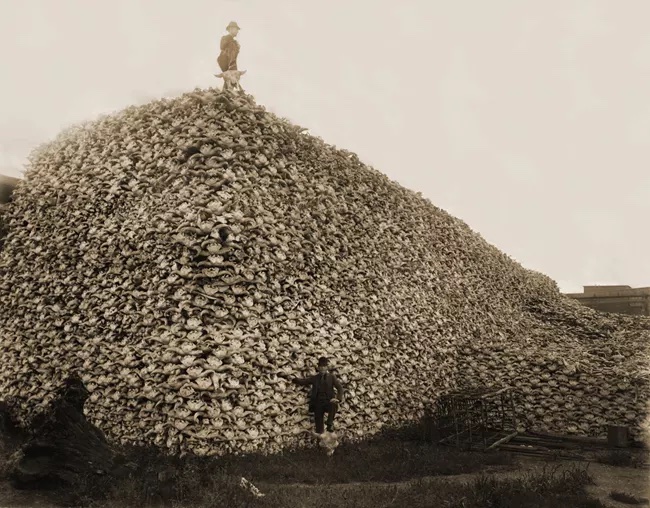
But what makes “American Buffalo” truly great and lasting is the author’s panoramic view of time and a philosophical connection to nature and life. He looks unblinkingly at the devastating destruction and near extinction of bison and other species in North America, lamenting the wanton greed and shortsightedness of people who killed only for profit and trophy. Rinella eats what he kills.


In this photo from 1892, men stand next to and atop a pile of American bison skulls waiting to be ground up for fertilizer.

Like other hunters, he sees the animal’s skull as a kind of connection to life’s mysteries.

“Buffalo skulls were put to various uses by Indians, most of a spiritual or metaphysical nature. The buffalo skull was an especially potent symbol to many Plains Indians tribes, but not because it equaled death. Rather, a skull represented a form of rebirth to many tribes. To reduce a buffalo to its skeleton was like ushering the animal back to a sort of primordial starting line, or beginning. The clean skull allowed for continuity, like a blank canvas upon which future buffalo could be created…

“I’m not a particularly religious person, though I do sense an inkling of the spiritual when I look at this buffalo skull. Many people have tried to explain to me what they feel when they look at a crucifix of Torah scroll; it’s an emotion often described as a mixture of gratitude, devotion, continuity, and awe. Looking at a buffalo skull is probably the closest I’ll ever come to experiencing those feelings, however faintly, and I’m glad to have a taste of that…”

Rinella describes how he embraces the privilege of being alive for the relatively short time we have.


Alaska's Copper River Valley
He searches for meaning and symbols. He calls the landscape he hunts in a "trophy."

And he questions the connection between his reverence for the animal he hunts and his commitment to killing and eating it.

“In a historical sense, I suppose that my confused and convoluted relationship to the buffalo is nothing new. For the entirety of man’s existence in North America, we’ve struggled with the meaning of this animal, with the ways in which its life is intertwined with our own. I think of the first hunters who walked through some long-ago gap between glaciers and stumbled onto a landscape populated with strange and massive creatures. The buffalo was just one of many then, a giant among a host of other giants, but over time these many animals were whittled away by the forces of man and nature. Eventually the buffalo stood alone, like the winning contestant in a game show.

“The prize was humanity’s never-ending attention, which was ultimately a bittersweet award. For thousands of years, the first people of North America fed on the buffalo’s meat and wore the buffalo’s skin, and then made a deity of the animal as a way of reconciling their need to slaughter the thing that granted them life. My own European ancestors came to the New World and scoffed at the heathen nature of the Indians’ ideas, then stood by as the buffalo nearly vanished from the earth beneath their notion that the animal was an expendable gift of their own God, a commodity meant to get them started before stepping aside and letting ‘civilization’ bloom in the wilderness.”

Throughout this book, Rinella blends spirituality with superstition, history with mystery, and his own life’s experiences within the context of our shared science and reality.


“American Buffalo” opens with an extended soliloquy about Neil Young and his early band Buffalo Springfield.

In a fun and mind-bending “association game,” he links “For What It’s Worth," a song against the Vietnam War ; Dances with Wolves, filmed in Canada; Hernando Cortéz of Spain; Crazy Horse of the Oglala Sioux; Springfield rifles; the Civil War; Black Diamond, the buffalo on the American nickel coin; President Theodore Roosevelt, hunter and conservationist; and the city of Buffalo, New York.

"Buffalo," is the name of cities in eighteen states. But, Rinella notes, no wild buffalo lived near Buffalo, New York.


On Saturday, Buffalo was the site of another race-based mass shooting by a white supremacist with an AR-15 "assault-style" rifle. Today, President Biden and First Lady Jill Biden visited Buffalo. Biden, a lifelong supporter of the Second Amendment, has asked Congress to pass legislation to require new background checks for gun buyers, and ban military-style "weapons of war" and large-capacity ammunition magazines.


Steven Rinella
Rinella does not hunt with AR-15s. He uses bolt-action rifles, pump shotguns, and bows and arrows for hunting. Rinella is an ethical hunter who calls himself “an evironmentalist with a gun.”

He became interested in environmental issues, according to a profile earlier this year in The New York Times by Malia Wollan, when one of his big brothers gave him a paperback of Aldo Leopold’s “A Sand County Almanac.”According to Wollan, “Most people read Leopold as belonging to the pantheon of American environmental writers, with the likes of Henry David Thoreau, Rachel Carson and John Muir. Rinella reads Leopold as a fellow hunter.” (Marjory Stoneman Douglas is another great environmentalist in that pantheon.)


On his latest podcast, Rinella discusses hunting, fishing, and books. He talks to Cameron Hanes about Hanes’s new book, “Endure: How to Work Hard, Outlast, and Keep Hammering,” with a foreword by Joe Rogan and afterword by David Goggins. Hanes says, “If you wish you could run farther and shoot straighter, this book is for you.”


Rinella, himself, is the author of a half-dozen books, with more planned for release in coming months and years, including books for children, outdoor cooking, and an “atlas for the outdoors.”


Steven Rinella, the “environmentalist with a gun,” is also a philosopher with a pen and a voice.

Some people, especially vegans and those who prefer not to think about where their super market food comes from, will be turned off by the whole MeatEater oeuvre. But that’s the beauty of American freedom, diversity, and the right to choose.


In the MeatEater episode with former Navy SEAL Rorke Denver, after Denver bags his bear, and just before he and Rinella skin and butcher it, Rinella expresses his appreciation for the service and sacrifice of Denver and other veterans who serve in the nation’s defense.


In “American Buffalo: In Search of a Lost Icon” readers can discover an ethos of honor, courage, and commitment.


*(Top photo: Denver and Rinella trek their bear meat and fur out of the Alaskan wilderness in a scene from MeatEater, YouTube.)