Showing posts sorted by relevance for query ptsd. Sort by date Show all posts

Saturday, June 27, 2020

TBI and PTSD: Not Just Headaches

(USMC Photo by Tyler L. Main)
Review by Bill Doughty–

In "Military Mental Health Care: A Guide for Service Members, Veterans, Families, and Community" (Rowman & Littlefield Publishers, Inc., 2013), authors Cheryl Lawhorne-Scott and Don Philpott offer no-nonsense, clear-eyed information as well as advice and resources.

This book tackles serious issues, both physical and mental, beginning with the first chapter: "Traumatic Brain Injury." Starting on page one: "Blasts are a leading cause of TBI for active duty military personnel in war zones."
"One of the most common observations reported by families of service members originally not diagnosed with mTBI (concussion) is that upon return from deployment, they 'have changed.' Classic neurological and cognitive symptoms of mTBI that should be recognized and discussed with medical professionals include: reduced reaction time, decision-making difficulties, decreased memory and forgetfulness, attention and concentration difficulties, ... personality changes, impulsiveness, anger, sadness, depression..."
Art created by a service member recovering from PTSD, from the Southwestern University art gallery.

The authors offer the full "who, what, when, where and why" about TBI and mTBI and also the "how": How it develops, how it manifests and how to deal with it, including any anxiety, panic, flashbacks, rage, sleep interruption and difficulty concentrating; also, how it is treated.

Chapters include various stress-related mental health issues, sexual trauma and hazing, and suicide and homelessness. Chapter 15, "Resilience," and Chapter 16, "Health and Wellness" offer holistic help for individuals and families, with practical tips to get and remain healthy and fit. Several pages are dedicated to influenza and vaccinations.

BASETRACK Live is a two-person, multimedia documentary that tells the story of Marine Cpl. AJ Czubai’s 2010 deployment with the 1st Battalion, 8th Marines, to Afghanistan’s Helmand Province. The story centers on Czubai and his wife, Melissa, as they both try to readjust and cope to post-deployment challenges, including Post-Traumatic Stress Disorder (PTSD), marriage difficulties, alcohol abuse and suicide. Serving as a backdrop, but integral to the story, is journalistic footage and interviews with other members of his unit, as well as with Family members. Photographs of the Marines and the Afghanistan people are also projected on stage accompanied by a haunting, but electrify musical score. The production has toured in 40 cities across the United States since its 2014 debut. (Photo by Gloria Montgomery)

Lawhorne-Scott and Philpott include special mention of Post-traumatic Stress Disorder and recognizing/confronting stigma in order to get help:
"Mental health problems are not a sign of weakness. The reality is that injuries, including psychological injuries, affect the strong and brave just like everyone else. Some of the most successful officers and enlisted personnel have experienced these problems. But stigma about mental health issues can be a huge barrier for people who need help. Finding the solution to your problem is a sign of strength and maturity. Getting assistance from others is sometimes the only way to solve something. For example, if you cannot scale a wall on you own and need comrades to do so, you use them! Knowing when and how to get help is actually part of military training."
At the end of each chapter and at the back of the book, they offer reputable online resources for more information. They acknowledge especially VA and DOD resources. The VA offers a bundle of resources through a PTSD website.

"Military Mental Health Care" is an excellent Navy Reads selection for June –– PTSD Month.

The authors intend for their book to fit in with each service branch's Total Force Fitness concept of health, resilience and human performance. "TFF is not a 'How To' manual," they write in the foreword, "but rather a user-friendly, equal opportunity framework to building a behavior, discipline and level of fitness that sustains a lifestyle of resiliency."

TBI and PTSD can be more than just headaches, and there is help for survivors.

Friday, May 28, 2021

For Memorial Day: ‘Service Before Self’


By Bill Doughty

The first-person stories in “Walk In My Combat Boots” haunt this Memorial Day. This is the second of a two-part Navy Reads review of this important book filled with the voices of combat warriors, medics, and defenders of freedom. Part one was posted May 21.


"Walk In My Combat Boots" by James Patterson reveals “the courage, the sense of duty, [and] the patriotism of this young generation,” according to Adm. William H. McRaven (U.S. Navy, ret.).


This weekend the nation is commemorating and honoring those who have fallen in combat. We should also reflect on the service and sacrifice of young men and women who served in recent war zones and saw death first-hand, up close, heartbreakingly personal.


Lt. Col. Sherry Hemby, 455th Expeditionary Aeromedical Evacuation Flight commander, ensures the brackets are in working order on a C-130 Hercules for an aeromedical evacuation flight to Bagram Air Field, Afghanistan, June 28, 2011. (Senior Airman Krista Rose)


Many of the patriots in this book are children of military veterans. Such is the case of Sherry Hemby, an Air Force flight nurse who remembers her dad: He taught me about patriotism –– to think of others. Service before self.”


Andy Prososky, a United States Marine veteran, is the son of a Navy Corpsman who served in Vietnam.

While serving in Iraq nearly two decades ago, he mastered the ability to compartmentalize, to not think of family and home, especially when out on a mission. “I don’t care about me, only my Marines,” he says.

Prososky encapsulates the tragedy of war in one episode involving RPGs, IEDs, a JAG, and a Marine killed in action. “Back home people ask me what death is like. You can’t explain it. It’s not dramatic, there’s no music, it’s sudden, it’s violent, it’s reality.”


Marine Cpl. Rory Hamill

The final section of this book is titled “Coda: Memorial Day.” And the final featured interview and story is by former Marine Corporal Rory Patric Hamill, son of two Navy parents. An extended excerpt follows:

“The amazing thing our brains do for us is compartmentalize any kind of trauma.

And therein lies the problem: people don’t address PTSD or what psychologists call a moral injury –– the feeling of overwhelming shame and guilt, even rage, anger, or betrayal over compromising your moral conscience. If you don’t address these actions and reactions, they come back to haunt you down the road.

I learn all this stuff later. Much, much later …

…The demons from all my deployments start eating away at me day and night. I can’t sleep, and I’m drinking too much. I’m smoking like a chimney. I’m not seeing my kids, and I’m shirking my responsibilities –– and it’s all because I’ve been ripped out from the familial structure of the military. And I miss the camaraderie.

From day one in the military, your entire day is regimented. It’s scheduled and structured down to the minute. You have a mission. You go out and get it done. Now I don’t have anyone telling me to do anything. I don’t have anyone keeping me in check.

My second marriage ends.

I find myself sitting outside a marsh by my dad’s house in Atlantic City. I’m sitting in the driver’s seat, holding a pistol.

I raise it to my head, about to end my life, when for maybe a half second my kids flash through my mind.

What the fuck am I doing?

I start crying.

I disassemble my weapon, take all the bullets out of the magazine, and throw everything out of the car.

I need to address this. I need to get some help.

I get diagnosed with PTSD. I start seeing a therapist full-time and get my head out of my ass. I quit binge drinking and stop smoking, which I’ve been doing since I was thirteen. I learn the importance of exercise and nutrition and taking care of myself. I begin to claw and scrape my way out of my self-loathing. I stop hating myself for everything. I stop blaming myself for my friends dying and every other shitty thing that’s ever happened to me.

I start speaking to other people about my experiences.

Over time, I start to learn to love my fate. Instead of letting it control me, send me into a deep, spiraling depression. I discover a way to turn it around for good –– to help others. If I can help one person every day, regardless of how I do it, then that’s a win for me. If I can use my experiences, my story, to help a person every single day, then everything I’ve gone through in my life is worth it.”

Hamill writes with appreciation about the honor of receiving the Purple Heart from President Barrack Obama at Walter Reed Hospital.


Cpl. Rory Hamill, a combat-wounded Marine, pauses to look at the Navy Sailor's Creed on the wall of the base gym on Joint Base McGuire-Dix-Lakehurst, N.J., Dec. 4, 2017. (U.S. Air National Guard photo by Master Sgt. Matt Hecht)


James Patterson, Matt Eversmann, and Chris Mooney help people tell their stories in “Walk In My Combat Boots” –– tragedies and victories, comedy and pathos. Mostly pathos, considering the sacrifices required in war.


We honor the men and women lost in war on Memorial Day. And we also remember those who gave so much in service to their country. True heroes live the values of honor, courage and commitment. They confront demons and find the truth. True patriots ensure we think of others and ask why we go to war. “Service before self.”

Saturday, November 13, 2021

A True Patriot and Statesman: Max Cleland

By Bill Doughty––

When Joseph Maxwell "Max" Cleland spoke at the 72nd Pearl Harbor Day commemoration ceremony, Dec. 7, 2013, with Pearl Harbor itself as a backdrop, he was nearly overcome with emotion. He saw the dozens of World War II veterans seated in the front rows of the audience, and he thought of his father. Cleland spoke without notes, from the heart, about the sacrifice of military service and the joy of homecomings.


Army CPT Max Cleland in Vietnam
Hugh Cleland, Max’s dad, joined the Navy after the attack on Oahu in 1941. In 1965, Max volunteered for the Army to serve in combat in Vietnam, where he earned the Silver Star and Bronze Star.

Cleland was severely wounded and nearly killed. Yet, he personified resilience to become head of the Veterans Administration and a U.S. Senator.

Cleland died earlier this week. He was a great statesman, military veteran, and advocate for veterans, especially those with lasting physical and mental wounds.


President Joe Biden issued a statement November 9 on Cleland’s passing:

“Max Cleland was an American hero whose fearless service to our nation, and to the people of his beloved home state of Georgia, never wavered.

As a 25-year-old serving in the 1st Cavalry Division of the U.S. Army during the Vietnam War, Max lost both of his legs and his right arm in a grenade explosion at Khe Sanh. After grueling months in the hospital, enduring multiple surgeries and a long road back to recovery, Max turned his pain into purpose. He continued his distinguished public service, becoming a lifelong champion of the dignity and rights of working people and America’s wounded veterans. His leadership was the essential driving force behind the creation of the modern VA health system, where so many of his fellow heroes have found lifesaving support and renewed purpose of their own thanks in no small part to Max’s lasting impact... He was a man of unflinching patriotism, boundless courage, and rare character... He will be remembered as one of Georgia’s and America’s great leaders.”

I was fortunate to help plan the Navy’s Pearl Harbor Day commemoration ceremony in 2013 and to hear Max Cleland speak about honor, courage, and commitment –– as well as true family values and patriotism.


In 2013 I posted a Navy Reads review featuring Cleland’s autobiography, “Heart of a Patriot.”

Cleland, who chaired the armed services subcommittee on personnel in the Senate, was known for working closely with both Democratic and Republican colleagues.


Cleland reads about JFK.
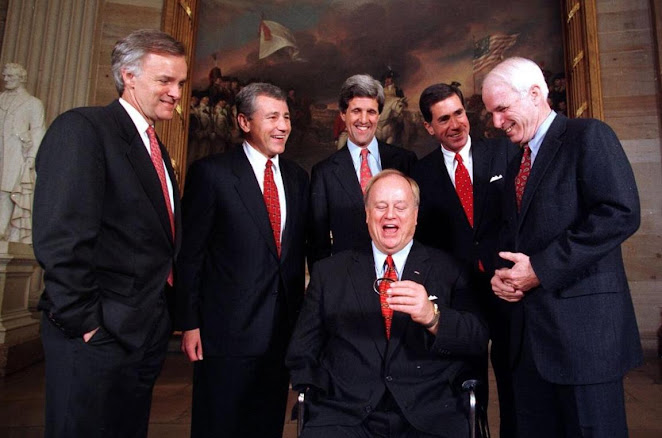
From Navy Reads: “His colleagues, mentors and friends in the Senate included fellow combat veterans Chuck Hagel, Dan Inouye, John Kerry and ‘my Vietnam veteran brother’ John McCain. Cleland describes the pride of wearing his dad's WWII Navy peacoat as a U.S. Senator during a presidential inauguration.”


Prior to serving in the Navy for three years during WWII, Max Cleland’s father, Hugh, had served in the Civilian Conservation Corps, an environmental infrastructure program created by President Franklin D. Roosevelt during the Great Depression. FDR was an inspiration to a young Max Cleland. Cleland loved books and reading. He authored several books.


Like Biden, Secretary of Defense Lloyd Austin issued a statement about Senator Cleland’s passing; fittingly, Austin includes references to literature.


In part, SECDEF Austin says:

“The Department of Defense stands united in mourning the loss of Senator Max Cleland, an extraordinary public servant and a great patriot…He served his country and his community from a wheelchair, following in the gallant tradition of his hero President Franklin Roosevelt.”


SECDEF Austin notes that as head of the Veterans Administration, Cleland “fought fiercely for his fellow veterans, made PTSD an official VA diagnosis, and helped create the groundbreaking Vet Centers program. Later, after being elected a U.S. senator from Georgia, he continued his passionate focus on defense and veterans' issues, serving with distinction on the Senate Armed Services Committee and leading on such issues as health care, bioterrorism preparedness, and homeland security. He also served on the 9/11 Commission before being nominated for the board of the Export-Import Bank. His final act of public service was leading the American Battlefield Monuments Commission. When battle maps of Vietnam were added to the National Memorial Cemetery of the Pacific in Hawaii, he asked to add an inscription from the poet Archibald MacLeish: ‘We leave you our deaths: give them their meaning.’

With courage and grit, Senator Cleland struggled with PTSD and depression—seeking help through counseling, medication, and attendance at a recovery group. He said that he drew strength from being around his fellow veterans and wounded warriors, including those from Iraq and Afghanistan. As the head of the VA, he made psychological counseling available to his fellow veterans. And I hope that his example will encourage others carrying unseen wounds to seek out the help they need and deserve. 

Senator Cleland liked to quote Hemingway, who wrote, ‘The world breaks everyone and afterward many are strong at the broken places.’ He surely was. Max Cleland's civic-minded spirit, optimism, and resilience will stand as an inspiration to every American.”

Funeral services are planned for early next week.


Senator Max Cleland, RIP.


Vietnam War veteran Max Cleland, a triple amputee, holds a photograph of himself as a child with his father, Hugh, and mother, Juanita, at the National Memorial Cemetery of the Pacific at Punchbowl in 2013. (Jamm Aquino, Honolulu Star-Advertiser)


The Senate had six Vietnam combat veterans in January 1997. Sen. Max Cleland, D-Ga., is in the front. Behind him, from left: Bob Kerrey, D-Neb., Chuck Hagel, R-Neb., John Kerry, D-Mass., Chuck Robb, D-Va., and John McCain, R-Ariz. This photo was taken by The World-Herald during Senate orientation the previous month. (Kiley Cruse, The World-Herald)

Top photo: Secretary Max Cleland, American Battle Monuments Commission, delivers keynote remarks during the 72nd anniversary commemoration of the Dec. 7, 1941, attack on Oahu. This year’s commemoration theme, “Sound the Alarm,” examines how thousands of Americans answered the call to duty in the wake of the attack. More than 2,500 people attended the Pearl Harbor commemoration. (MC2 Nardel Gervacio)


Sunday, April 5, 2009

The 7 Habits of Highly Effective People 

By Stephen R. Covey 


Review by Bill Doughty


This is more than a book review. That’s because the ‘7 Habits’ is more than a book...


Covey calls his groundbreaking work a “companion in the continual process of change and growth.” He challenges readers to take his “companion” with them on life’s journey, integrating his seven habits at home and at work to build relationships, strengthen leadership and chart a course.


No wonder The 7 Habits of Highly Effective People was selected for the CNO’s recommended reading list. Covey’s insights about character often dovetail with senior leaders’ strategic guidance; the Navy’s core values of honor, courage, and commitment; and Navy Ethos. In fact, he spends a lot of time talking about courage. “High courage and consideration (of others) are both essential to win/win,” Covey says. 


Think of the best leaders you’ve known, the most respected colleagues and co-workers. Chances are, they have a win/win approach to leadership (more about that later). . . 


Using diagrams and models Covey takes us through the interlocking pieces of his 7 habits. 


Habit 1, “Be Proactive,” is all about empowerment, the ability to control your environment – making good choices and determining the course you will navigate. 


Habit 2, “Begin with the End in Mind,” gets deeper into character and values, recognizing that people who have a sense of purpose are indeed highly effective. For Sailors, Marines and civilians serving in the Department of the Navy, the CNO’s Guidance for 2009 reinforces the Maritime Strategy as the Navy’s purpose – “sustaining combat readiness, building a fleet for the future and developing 21st Century leaders.” The Maritime Strategy, “A Cooperative Strategy for 21st Century Seapower,” puts the ‘operative’ in ‘cooperative’ for “Security, Stability, Seapower.”


Habit 3, “Put First Things First,” discusses organization and implementation or, as CNOs and Fleet Commanders have put it, “focus on execution.” Covey says that principle-centered leadership comes from practicing the principles of personal management, and draws this distinction: “Management, remember, is clearly different from leadership. Leadership is primarily a high-powered, right brain activity. It’s more of an art; it’s kind of a philosophy.” He shows us that we have to manage our lives and our selves before we can lead others. 


Habit 4, “Think Win-Win,” begins the evolution to independence and eventually to the ultimate goal, interdependence. Here it’s all about cooperation, teamwork, and consideration for others – creating a paradigm of high trust and a vision that is positive and proactive. 


Habit 5, “Seek First to Understand, Then to Be Understood,” is Covey’s very powerful communication message about the importance of listening, summed up in the popular maxim: “People need to know how much you care before they care how much you know.” 


Habit 6, “Synergize,” talks about the creativity that comes from bringing all the habits together to open new possibilities for us, our parents and children, and our leaders and coworkers. Covey thinks this can change people and society itself. “Could synergy not create a new script for the next generation – one that is more geared to services and contribution, and is less protective, less adversarial, less selfish; one that is more open, more trusting, more giving, and is less defensive, protective and political; one that is more loving, more caring and is less possessive and judgmental?”


Habit 7, “Sharpen the Saw,” is the habit of balanced self-renewal, completely in line with the Navy’s emphasis on continually training, maintaining, educating, and learning. These are the basics of the seven habits in what Covey calls his “companion.” For many readers, this is not new information, but it can reinforce and strengthen already good habits. 


Personally, I re-read one or two chapters from time to time, once after a 2007 podcast of “Talk of the Nation – Science Friday” with Ira Flatow on National Public Radio.  The show’s topic was “Can Thoughts and Actions Change Our Brains” – a fascinating discussion of some pioneering work in neuroscience called neuroplasticity (changeability of the brain).


In essence, science is showing how our brain can change in response to our life experiences and even the very thoughts we think. 


Behavior can change the way our brain works – even structurally. Whether it’s called “mind over matter,” “the power of positive thinking,” “the power of prayer and meditation” or “cognitive behavior therapy (CBT),” it is thinking about thinking in a different way for a better outcome. CBT might as well be called “Covey’s Better Thinking.” 


Neuroscientists are proving that cognitive behavior therapy can help people suffering from depression, obsessive-compulsive behavior and post-traumatic stress disorder. (Check out the great discussion about PTSD and traumatic brain injury, mentioning neuroplasticity, in a Bloggers Roundtable discussion on PTSD from Jan. 2009.)


CBT can even help with brain motor cortex functions in stroke victims. Interestingly, the development of neurons occurs in patients who are self-motivated, not forced . . .  which brings us back to managing ourselves and leading others. 


Nearly everyone can benefit from knowing we can have a lot of control over our own destiny. New discoveries in neuroplasticity reinforce the importance of a positive worldview and the value of education and reading . . . which brings us back to the Covey “book.” 


Covey’s philosophy really is more than a book. It has become synonymous for open and trusting management systems and with how individuals can make good choices about behavior and lifestyle, based on a win-win model of leadership and a positive view of the world . . . which brings us to Covey's blog, a good 7th habit tool.


Stephen R. Covey’s The 7 Habits of Highly Effective People is in the “Management and Strategic Planning” section of the Navy Professional Reading Program Guide. 

Wednesday, December 15, 2021

‘Wildland: The Making of America’s Fury’

Review by Bill Doughty––

“Wildland” by Evan Osnos (Farrar, Straus, and Giraux, 2021) is a deceptively easy-to-read roadmap of a book, a journalist’s journey to three hometowns to discover the reasons for the rifts that rend American culture today.


Osnos takes readers with him to Clarksburg, West Virginia; Chicago; and Greenwich, Connecticut. We meet people in poor and rich neighborhoods, and we learn about the history of discontent and division that has been driving our politics. Sounds simple, but this is a powerful and necessary book.


Clearly, the most poignant story in this book is about former U.S. Marine Sidney Muller and his fellow West Virginian battle buddy Herman Lubbe. They served together in Sangin, Afghanistan, and their ordeals and near-death experiences are vividly portrayed in Chapter eight, “Getting Loaded.”


U.S. Marines with 1st Squad, 3rd Platoon, Bravo Company, 1st Battalion, 7th Marine Regiment, Regimental Combat Team 6, conduct a security patrol in Sangin, Helmand province, Afghanistan, Sept. 9, 2012. (DVIDS)


For Lubbe, life changed forever in the spring of 2011, midway through the 20-year war in Afghanistan.

“Lubbe was on patrol when a marine near him stepped on a bomb the tore off his legs from the thigh down. In the chaos after the explosion, Lubbe crouched over the stricken marine and started to light a smoke grenade that might be able to guide an incoming helicopter. That’s when another marine stepped on another IED. This second blast blew Lubbe into the air. When he landed, he felt a wave of pain and heat settle, like a blanket, across his face. The explosion had torn open his chin and nearly amputated his right ear. Down below, his legs were a tangle of broken bones and flesh. A lieutenant crouched over him. Lubbe pleaded for morphine, and then blacked out. He spent the next two years at Walter Reed Medical Center. Doctors repaired his face and ear, and mended his legs. He learned to walk again. He felt lucky; most of his fellow patients had no legs.”

For Muller, life changed forever after he left the Marine Corps, when he suffered PTSD –– anxiety, insomnia, and anger-control issues.


Muller abused alcohol and pills. He took opioids, such as Percocet, and drank bottles of prescription cough syrup. He lost his driver’s license and opportunities for jobs. “He had come to believe his mistake was not joining the Marines, but leaving them,” Osnos writes.

Osnos reports the horrific details –– as only a journalist can, of what came next in Muller’s life, including four murders. And he adds context in a heartbreaking wake of destruction: “It turned it over in my mind for a long time, considering the sheer waste of it all…”


“When Muller unraveled, nobody caught him –– not his family, his hometown, or his country. It was a conspiracy of failures.”


Osnos explores other failures, too, in “Wildland”: the failure of the coal industry in West Virginia to protect the environment and provide a sustainable economy; the failure of Chicago to deal with guns and violent crime on its streets; and the failure of Greenwich, like a lot of communities, to deal with inequality, corruption, and housing problems. Failures of unfulfilled promises.


Out of the failures arose a feeling of fear, suspicion, and even persecution that connects some areas of the country. “Black Chicagoans and white Appalachians had come to share a sensation that was calcifying in America’s political culture –– a feeling of being trapped by an undertow of economics and history of being ill-served by institutions, of being estranged from a political machinery that was refined, above all, to serve itself.”


Self-serving politicians are then attracted to any means to stay in power, which is alarming to anyone committed to supporting and protecting the Constitution. “Compromise” and “cooperation” become dirty words. Norms and ethics are thrown out. Democracy is subverted, and tyranny is embraced.


Osnos’s journey is bookended primarily by two attacks: September 11, 2001 and January 6, 2021. But he also takes a winding road through history to examine potholes that slow progress and grow division, including: Barry Goldwater, Tea Party, Pat Buchanan, Rodney King riots, NRA, Confederate monuments, Birtherism, police shootings, Kanye West, and the Covid pandemic.

The pandemic caused people to choose sides: science, masks, and vaccines on one side –– conspiracies, misinformation, and disinformation on the other side. “The fault lines in America’s political coherence, which had been expanded for years, broke wide open,” Osnos says. Compared to 9/11, “American unity had given way to bitter rivalries …”


Violent rhetoric by politicians, including President Trump, became normalized.


The election of President Joe Biden in 2020 was verified by election officials, certified by the states, recognized by the courts, and confirmed by Attorney General Bill Barr and other Republican and Democratic leaders. But not by Trump, who called his supporters from across the nation to Washington D.C. and directed them toward the Capitol, saying, “If you don’t fight like hell, you’re not going to have a country at all.” Osnos notes that Trump used the word “fight” twenty times in his remarks on the morning of Jan. 6.


Thousands of Trump supporters, some carrying Confederate flags, assaulted the Capitol and attempted a coup. They erected a gallows and hanging rope. They called for Speaker of the House Nancy Pelosi’s head and trashed her office. And they searched for Vice President Pence, shouting “Hang Mike Pence!” They injured and killed Capitol Police officers.

Osnos was there.


In his superb reporter’s voice, he speaks with some of the rioters and then explains in “Wildland” both their actions and their motives, using their own words. He asks them where they get their information. He asked them about their die-hard support for Trump. One person he spoke with was Stacie Dunbar of Seneca Missouri, who said, “I did this for my kids. I have a son in the Navy, and Trump’s done more for the military than any president ever has.”

Babbitt
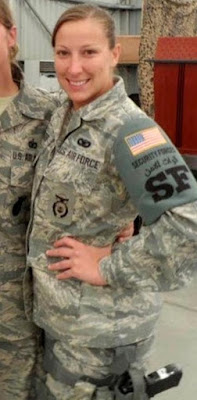
Osnos briefly examines the life and death of Ashlii Babbitt, who was shot while trying to enter a window of the Capitol. He sees similarities with former Marine and Afghanistan War veteran Sidney Muller.

“Babbitt’s fortunes had followed the course of the country’s. In 2002, after graduating from high school, she had been drawn to the military, much as Sidney Muller had, in pursuit of a purpose larger than herself. Babbitt enlisted in the Air Force and was assigned to guard the gates at air bases around the world. She served in Afghanistan, Iraq, and the United Arab Emirates. She was discharged in 2016… her debts piled up.

“As her financial life deteriorated, she poured more of her energy into politics. She filled her social-media channels with paeans to QAnon and Trump, and rants against immigration, drugs, and Democrats…

“In its particulars, Ashlii Babbitt’s life was an uncanny reflection of the population that stormed the Capitol the day. After police had arrested more than a hundred of them, patterns emerged. Nearly 20 percent had served in the military, according to an analysis by NPR. And nearly 60 percent had a history of financial trouble…”

(A more recent study by George Washington University shows that the number of active duty service members and veterans is closer to 12 percent, but the study shows other troubling information related to the U.S. military and extremist groups, as reported by Military Times.)


Lincoln and Seward
Osnos reflects on why “Donald Trump’s insurrection failed” and how close it came to succeeding.

The preservation of democracy depends on enough good people willing to put country ahead of self.

“When I paused to consider just how far the coup progressed,” Osnos says, “it often put me in mind of an observation from the Civil War by Abraham Lincoln’s Secretary of State, William Seward: ‘There was always just enough virtue in this republic to save it; sometimes none to spare.’”


People who love good books will be pleased with some of Osnos’s references, many touching on the rise of autocracy and threat of tyranny –– works by: Hannah Arendt, Anne Applebaum, Phil Klay, Susan Jacoby, Rick Perlstein, Norman Mailer, Martha Nussbaum, Joanne B. Freeman, and Wendell Berry.


U.S. Marine Corps veteran 2nd Lt. Phil Klay, signs his book 'Redeployment' as fans bring the book to him at the Marine Corps Exchange aboard Marine Corps Base Quantico, Va., March 11, 2015. Klay’s book offers a dozen short stories based on the perspectives and views of Iraq veterans. (LCpl. Nathaniel S. McAllister)


These authors will help anyone have the widest possible rear-view mirror to see the road we’ve been on toward division in our country, up to and including the attempted coup of 1/6. They also give hope and inspiration to patriots dedicated to defending the Constitution.


Evan Osnos has written a compelling work of contemporary and contextual history in “Wildland: The Making of America’s Fury” to help us get to a final destination of understanding –– and accountability.


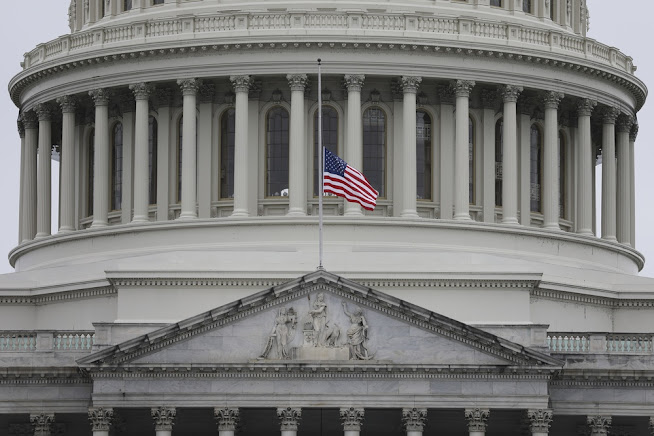
Top photo: The U.S. Flag at the Capitol building flies at half-staff for fallen Capitol Police officer Brian Sicknick, Jan. 11, 2021. Sicknick sacrificed his life to protect members of Congress during the insurrection at the Capitol on Jan. 6, 2021. (U.S. Air National Guard photo by Staff Sgt. Devlin Drew)

Thursday, June 30, 2022

QAnon, Jan. 6th, & Putin’s Real Motive

Review by Bill Doughty––

Jewish elders supposedly gathered in a cemetery in Prague at the beginning of the last century to discuss their plan to rule the world. The cabal of Jewish elders reportedly wrote down their plan in a document that would become known as “The Protocols of the Elders of Zion,” published as “Anti-Christ” in Russia. The book injected an idea that would spread fear of replacement of white Christians through various extremist groups.


The trouble is, the document was not real. Russian secret police forged it under the reign of Czar Nicholas II. Nicholas needed to distract the public from his failures as a leader. Mia Bloom and Sophia Moskalenko call “The Protocols” “the original fake news” in “Pastels and Pedophiles: Inside the Mind of QAnon” (Stanford University Press, 2021).


The authors take readers along a poisonous vein leading from “The Protocols” to replacement theory, apocalyptic terrorism, the J6 Capitol insurrection coup attempt, and various overlapping COVID conspiracies, including conspiracies involving Navy hospital ships USNS Mercy and USNS Comfort.

“In April 2020, Eduardo Moreno, a train engineer from San Pedro, California, derailed a train because he believed the USNS Mercy hospital ship was part of suspicious plot to spread (and not cure) the coronavirus.

“On April 30, 2020, Jessica Prim, a 37-year-old QAnon supporter from Illinois, was arrested after live streaming on Facebook her journey to New York City to ‘take out’ Joe Biden and Hillary Clinton … Prim, a stripper, was traveling with a dozen knives. She said she was driving to the USNS Comfort, a hospital ship docked in New York harbor, but accidentally ended up at the USS Intrepid aircraft carrier museum … She claimed to have been inspired by President Trump. ‘I was watching the press conference with Donald Trump on TV and felt like he was talking to me.’”

It wouldn't be the last time Trump followers were incited to attempt violence.


Hospital ship USNS Comfort (T-AH 20) returns to Norfolk, May 2, 2020, after treating COVID-19 patients in New York and New Jersey (MC1 Joshua D. Sheppard)

A Woman's Place: In QAnon?


Bloom and Moskalenko make an eyebrow-raising assertion: That women were a “driving force” of the failed insurrection of January 6, 2001, and that they play a “pivotal role in bringing together an ad hoc network of far-right militants, Christian conservatives, and adherents of the QAnon conspiracy theory.”


Women have a protective instinct about children (who are supposedly threatened by vampirish pedophiles), according to the authors, and many white women have a vested interest in maintaining a white patriarchy. “Women have been at the forefront of white racist movements for the past 100 years."


It's hard to agree completely with the authors’ contention about a prominent role of women in domestic extremism when considering the male-dominated so-called “militias.”

And it should be noted that strong, patriotic women have stood up for democracy, as personified this week by Cassidy Hutchinson (pictured above). Hutchinson testified to the U.S. House Select Committee investigating the January 6 Attack on the U.S. Capitol.

Another patriot, Representative Liz Cheney (pictured at top),  places the Constitution and the truth above political power.

The ranks of the Proud Boys, Oath Keepers, Three Percenters, Patriot Front, and other militia groups are apparently overwhelmingly male.


Many of these white supremacists, Aryan Nation believers and Christian nationalist extremists have embraced global conspiracies and targeted the federal government as the enemy. They focus on prominent Jews like George Soros, and they justify their beliefs, in part on the antisemitic “The Protocols of the Elders of Zion.”


Although “The Protocols” isn’t real, it hasn’t stopped true believers from thinking otherwise –– and acting on their beliefs. QAnon promotes theories that Democrats drink the blood of babies and that lizard people are in positions of power in various countries. QAnon believers, led by people such as retired Army Lt. Gen. Michael Flynn (disgraced former National Security Advisor  to President Trump) think they must “save the children” from evil nonbelievers.


Then-National Security Advisor Michael Flynn returns a salute upon his arrival at MacDill, AFB, FL, Feb. 6, 2017, with President Trump. (D. Myles Cullen)

Bloom and Moskalenko take a compassionate approach in understanding and explaining how QAnon believers like Ashli Babbitt and Roseanne Boylan (both killed in the January 6, 2021 attack on the Capitol) came under the spell of QAnon after their own personal setbacks and trauma. The authors show there is a tie to PTSD as they offer help in mindfulness therapies. In fact, the authors devote the last part of their book, in a section called FAQs, to strategies and tactics to help friends and family members.


Russia Connection, Putin's Motive


Russia figures prominently in the origins of the conspiracies on which QAnon is based –– and promoted. 


Russia has been using QAnon to advance its interests,” Bloom and Moskalenko write. Russia promoted Pizzagate, Michael Flynn, Trump, and online misinformation related to Q, including COVID disinformation.

"With ample evidence of Russia supporting and amplifying QAnon social media conflict, it is important to identify the man behind the curtain. Q may not have been directly controlled by Russia, but Russia has been using QAnon to advance its interests. Vladimir Putin has ruled Russia for over 20 years…

“Putin’s reign has become famous for the way he constructed a ‘vertical of power,’ with him at the top, and anyone below either heeding his command or suffering the consequences. Twenty years into this effort, it is safe to assume that Russian foreign policy efforts are Putin’s foreign policy efforts. In this sense, QAnon’s speed is a well-executed psyop –– a psychological operation to influence ‘hearts and minds’ –– a specialty of Putin’s KGB training.”

Just as Czar Nicholas had tried to distract the Russian people, Putin did the same with bogeymen creations 120 years later, according to the authors. He targeted the United States, Ukraine, the World Health Organization, and NATO with stories of victimization and conspiracy theories. Putin embraced fascism and Orwellian schemes to justify his revanchism and ethno-nationalism.

“Russia’s efforts in amplifying QAnon have promoted Vladimir Putin’s primary interest in ‘Making Russia Great Again,’” the authors write, “as well as his master plan of undermining democracy in the United States and abroad.”


Often Russia’s efforts targeted elections, both in the United States and Europe, with Putin and Q followers targeting progressive democracies, supporting authoritarians, and stoking anti-vaccine conspiracies.There are parallels with what QAnon did during the COVID pandemic.

“Thus, the ‘manufactured virus’ –– that in the American QAnon version originated in a Chinese bio lab in Wuhan –– in the Russian version originated in a U.S. lab and was brought to China by NATO soldiers. The NATO soldiers were carrying the virus around the world, the narrative explains, because it serves the deep state’s purpose to get rich off the mandated masks and the lockdowns, This story was followed up in the Russian-controlled informational space by fear-mongering stories about the dangers of collaborating with the United States in the area of biochemistry. These follow-up stories supplied a list of ‘dangerous’ laboratories in Ukraine, Georgia, and Kazakhstan –– post-Soviet countries that Russia has attempted to bring back under its influence. The nature of the folQlore is the same: Use the real threat of the virus, add to it a sinister component of plotting governments, and point the finger at potential targets of public anger. Only the main characters are recast to better fit the audience’s mindset. The Russian version of QAnon folQlore blames NATO, an organization Putin detests, and directs public fear and outrage at countries that reject Russian control.”

The authors note, “Both narratives fan public distrust in science and fear of vaccines.” And, with Putin’s devotion to Russian Orthodox Christianity, there are strong parallels related to religion. QAnon is popular among American evangelicals.


“What made evangelicals especially vulnerable to QAnon was that the language and terminology that QAnon used sounded explicit Christian, debating the existence of good and evil,” Bloom and Moskalenko say.


Can it be that Putin’s purported reasons for invading Ukraine –– to rid the former Soviet territory of Nazis –– is actually an Orwellian Big Lie? Like QAnon, is it fake News?


Remember QAnon’s roots in “The Protocols of the Elders of Zion,” replacement theory, and especially antisemitism and Christian nationalism. Is it possible that Putin’s hatred of Ukraine and his unprovoked attack on innocent civilians is fueled by the fact that President Volodymyr Zelensky is a Jew?


Ukraine President Volodymyr Zelenskyy participates in an Armed Forces Full Honors Wreath-Laying Ceremony at the Tomb of the Unknown Soldier at Arlington National Cemetery, Arlington, Virginia, September 1, 2021. (Elizabeth Fraser)