Showing posts sorted by date for query Leahy. Sort by relevance Show all posts

Sunday, September 18, 2022

Not Forgotten: Adm. Joseph M. Reeves

Review by Bill Doughty––

“Saratoga’s bow cut through the black water, her stern leaving a luminescent trail in her wake as she moved through the darkness in the early hours of 26 January 1929 … On her flag bridge, standing in the cool night air, stood Rear Adm. Joseph Mason Reeves, the commander of the Aircraft Squadrons, Battle Fleet.”

That’s from the opening paragraph of a book that takes readers back nearly a hundred years to the nascent development of aircraft carrier warfare tactics and strategies: “All the Factors of Victory: Adm. Joseph Mason Reeves and the Origins of Carrier Airpower” by Thomas Wildenberg (Naval Institute Press, 2003).


This not-to-be-overlooked book covers more than a half-century of Admiral Reeves’s service in a Navy uniform and beyond.


Aboard Saratoga, as described in the book’s prologue, Reeves demonstrated the power of a carrier task force. It was “a stunning success of the aerial operations” under his command, according to Wildenberg, who presents an indispensable biography and history of Reeves and his achievements.


The author takes us into the U.S. Naval Academy with Reeves, who became a star on the Navy’s football team, especially against Army. Wildenberg describes how Reeves developed his own football headgear –– made of moleskin –– the first helmet used in collegiate football.


As a junior officer, Reeves saw action in the Spanish-American War at the Battle of Santiago. His career was “intertwined” with that of his colleague and fellow junior officer aboard USS Oregon (BB-3), William D. Leahy. Leahy would later become Reeves’s chief of staff in the spring of 1946.


Reeves and Leahy (NHHC)
This book shows Reeves’s connections with cryptanalyst Joseph Rochefort, well-before the intelligence officer reported to Station Hypo, Pearl Harbor, and cracked the code to help the Navy win at the Battle of Midway. We see the admiral's influence on Adm. "Bull" Halsey, Adm. Marc Mitscher, and Adm. Ernest J. King, among others.

In an unadorned style, Wildenberg introduces us to the people, places, and events that shaped the early days of naval air power and the man considered “the father of carrier warfare” and a stickler for training and preparedness. “[H]e was a major, if not the leading, proponent of readiness in the entire prewar Navy.”


Reeves's aggressive style was a double-edged sword, winning praise from some but alienating others, especially those who were stuck to the past or worried only about making rank. One of the best Reeves quotes is: “A commander who stops to appraise the impact of a military decision upon his personal fortunes has no right to be entrusted with command.”


Prior to USS Saratoga becoming his flag ship, Reeves commanded the U.S. Fleet aboard USS Pennsylvania (BB-38).


Admirals assemble aboard USS Pennsylvania, which would become flagship of Adm. Reeves (front, second from left). The full caption is at the bottom of this post.
Reeves, Wildenberg notes, was the first U.S. naval officer qualified in aviation promoted to flag rank; the first officer in the Navy to carry the title of Carrier Commander, U.S. Fleet; and the first flying officer to be selected as Commander in Chief, U.S. Fleet.

President Franklin D. Roosevelt appointed Reeves to lead “lend-lease” efforts to supply Navy ships to Great Britain.


Lend-lease was FDR’s way to legally equip Churchill’s Royal Navy in the early months of World War II, prior to United States’ entry into the war after the attack by Imperial Japan on Hawaii on Dec. 7, 1941.


Reeves also played a pivotal role for the Navy and the nation in the aftermath of the attack on Pearl Harbor and other targets on Oahu.


SECNAV Frank W. Knox and Secretary of War Henry L. Stimson selected Reeves, along with Admiral William H. Standley, as Navy representatives on a commission directed by FDR to investigate readiness failures at Pearl Harbor. The Army appointed two senior general officers. Supreme Court Associate Justice Owen J. Roberts led the commission.


At Fort Shafter, an Army base near Pearl Harbor, the commission members interviewed their first witness, Lt. Gen. Walter C. Short, commander of all Army forces in Hawaii.

“It was obvious from his responses to the commission’s questions that Short, veteran infantry officer, did not have a good grasp of the Army’s mission to protect the fleet while it was anchored in Pearl Harbor. When Reeves’s turn came, he ‘raked the general over the coals’ with his probing questions about the status of Hawaii’s air defense system, the Army’s inability to detect the threat of a carrier attack, and its communication procedures with the Navy. Short, who had been obsessed with sabotage and training, freely admitted that he had made a serious mistake by not placing his forces on alert against the threat of an all-out attack.”

Adm. Joseph M. Reeves
The commission also heard from Adm. Husband E. Kimmel, the Navy commander of Pearl Harbor who was faulted for lack of preparedness, even though the Navy had held simulated air attacks on Pearl Harbor, led by Reeves himself. Kimmel was faulted for not protecting the harbor against torpedo attacks and his failure to order 360-degree air patrols.

Reeves insisted on the need for accountability for the military’s lack of readiness at Pearl Harbor. Wildenberg writes, “Reeves regarded the debacle at Pearl Harbor as a disgrace to the United States Navy.”


You’ll find captivating vignettes, photos, leadership examples, and a sweep of history in this excellent and timeless book.


In All the Factors of Victory's: epilogue, Wildenberg discusses the leadership qualities that made Reeves a great admiral:

“...knowing the job thoroughly, setting examples, and taking care of one’s personnel, gaining their confidence, and then making them feel stronger than they actually are.” Reeves, he said, could both take initiative and delegate authority, always thinking about new, innovative ways to achieve goals. Wildenberg lists a number of other key qualities Reeves possessed, “well-versed in all aspects of naval science … a teacher and a tactician who had a lifelong commitment to learning.”

“Perhaps Reeves’s greatest legacy to the Navy, however, lay in the contribution he made to carrier warfare. As historian William F. Trimble was quick to note, ‘Reeves more than any other single figure, pointed the way to making carrier aviation an indispensable part of the fleet.’ He was a farsighted man who did more to shape the future role of carrier aviation than any other officer in the Navy. His ‘Thousand and One Questions’ fostered the development of a host of innovative doctrines and tactics that laid the foundations for all of the major tenets of modern carrier doctrine. He was the first flag officer to employ the aircraft carrier as an offensive weapon that could be used to mount long-range attacks on an enemy’s coast. Under his leadership, carrier commanders began to exercise the freedom of movement that later [would] become the hallmark of U.S. naval operations in the Pacific during World War II. Most important of all, Reeves deftly fashioned an offensive role for carrier aviation that did not threaten the supremacy of the battleship, thereby assuring that the resources needed to further the development of carrier-borne air power would continue to be allocated during the lean years of the Depression.”

In other words, Reeves’s insistence in readiness and training, coupled with his commitment to innovation in carrier aviation, would lead to the U.S. Navy’s success in the Pacific War, especially in the Battle of Midway. That success would be carried forward into the Cold War by USS Midway (CV-41), among other great aircraft carriers.


USS Reeves (CG-24) underway in the Indian Ocean, Aug. 20, 1975. (PH1/AC R. H. Green, NHHC)
I was working for the Navy when USS Reeves (CG-24), namesake of the great admiral, transferred from Pearl Harbor, Hawaii, to Yokosuka, Japan, arriving Aug. 14, 1980. Reeves swapped with USS Worden (CG-18), to become “the Only Cruiser in Town” of the Forward-Deployed Naval Forces.

Reeves was the anti-aircraft warfare (AAW) picket for Battle Group Alpha for Midway.


USS Pennsylvania photo caption: Aboard USS PENNSYLVANIA, flagship of the U.S. fleet. Quoted from the Long Beach Press-Telegram: The largest gathering of flag officers of the United States Fleet was recorded aboard the USS PENNSYLVANIA. Twenty Rear Admirals, Vice Admirals, and Admirals assembled at the request of Admiral David Foote Sellers, Commander in Chief of the Unites States Fleet, to discuss final details of the Atlantic Cruise which begins Monday morning. L to R (seated): Vice Admiral Harris Laning, COM Cruisers, Scouting Force; Admiral Joseph M. Reeves, COM Battle Force; Admiral Sellers; Vice Admiral Frank H. Brumby, COM Scouting Force; Vice Admiral Walton R. Sexton, COM Battleships, Battle Force. (Standing): Rear Admiral Manley H. Simons, Chief of Staff to Vice Admiral Laning; Rear Admiral Sinclair Gannon, Ordered AS COM Minecraft, Battle Force; Rear Admiral A.E. Watson, COM Destroyers, Scouting Force; Rear Admiral H.E. Lackey, COM CRUDIV 4, Scouting Force; Rear Admiral Edward B. Fenner, COM CRU Battle Force; Rear Admiral John Halligan, COM Aircraft, Battle Force; Rear Admiral Henry V. Butler, COM Battleship DIV 3; Rear Admiral Charles P. Snyder, Chief of Staff to Admiral Sellers; Rear Admiral Thomas T. Craven, COM Battleship DIV 1; Rear Admiral W.T. Tarrant, COM 11th N.D; Rear Admiral E.C. Kalbfus, COM DES, Battle Force; Rear Admiral C.E. Courtney, Ordered as COM CRU, Battle Force; Rear Admiral Frederick J. Horne, COM Base Force; Rear Admiral Adolphus Andrews, Chief of Staff to Admiral Reeves; Rear Admiral W.S. Pye, Chief of Staff to Vice Admiral Brumby. Photo taken April 6, 1934. (NHHC)

Tuesday, September 6, 2022

Part II: Hornfischer’s One Ocean…

Review by Bill Doughty––

James D. Hornfischer’s final book, “Who Can Hold the Sea,” opens with a poignant message from Jim’s widow, Sharon Hornfischer.


Sharon includes this advice:

“Jim believed, as I also do, that others of this generation and future generations will carry on telling the stories of our great nation’s history. Share your stories with your children and grandchildren, nieces and nephews, so that they are engaged in our nation’s history and our country’s continued fight for freedom and democracy. Encourage our next generation, take them to air shows, museums, and libraries; ignite the spark of curiosity in our future historians and writers so that they can continue to tell stories for us all to read.”

Hornfischer
It’s both sad and inspiring to read Jim Hornfischer’s final work. As both a gifted writer and historian, he created vivid true stories of Sailors and Marines and their leaders. This book’s preface, introduction, and acknowledgements bookend the story of the Cold War with tender personal messages.

Hornfischer’s “Who Can Hold the Sea” (Bantam Books, 2022) opens in the gray aftermath of World War II.


After confronting and defeating fascism, the United States and most of the Allies moved toward greater democracy, peacekeeping, rule of law, and liberty for all. The Soviet Union, on the other hand, held on to autocracy, aggression, violations of laws, and control of its citizens’ freedoms.


“For Truman,” Hornfischer observes, “the Soviet Union was a treacherous and malignant betrayer.”


Americans adjusted to postwar realities –– not only fear of spreading communism and Soviet expansion, but also budgetary turmoil that reached into the military. Some politicians proposed doing away with the Marine Corps and Navy and merging the service branches.


None other than Adm. William “Bull” Halsey spoke out against the merger in a speech thankfully excerpted by Hornfischer.


Halsey said, in part:

“Merger is not necessary. It is not desirable. It is plainly dangerous. It would destroy the initiative of individual services. It would hamstring their right to advance. It would deprive them of representation before Congress and the people. It would substitute military for civilian control. It might lead to military dictatorship.”

Admirals Chester Nimitz, Ernest J. King, Marc Mitscher, and Edward L. Cochrane –– along with Secretary of the Navy (and first Secretary of Defense) James V. Forrestal –– persuaded President Truman and others that the Navy had a strategic role in the Atomic Age; merger of the services, along with loss of the Marine Corps, would be a bad idea.


President Truman is welcomed aboard USS Franklin D. Roosevelt (CV-42) by SECNAV Forrestal and Adm. Nimitz. Adm. Leahy pictured in background. (NHHC)
Truman visited Norfolk, Virginia, in April 1946 at the invitation of Commander in Chief, U.S. Atlantic Fleet Adm. Mitscher. Truman witnessed the power of naval aviation and capabilities of aircraft carriers USS Franklin D. Roosevelt (CV-42) and the seemingly ubiquitous USS Midway (CV-41). Mitscher’s chief of staff was Capt. Arleigh Burke.

Then-SECNAV Forrestal was one of the principal architects of the post-war modern Navy. His global vision was based on peace through freedom and democracy, not communism or autocracy. Hornfischer writes, “If that world was to become a community, it would be possible, Forrestal thought, only with U.S. leadership, the victorious democracy investing its credibility and standing in the world to promote self-determination and freedom wherever it showed aspiration.” Hornfischer explores the role Forrestal played and delves into Forrestal’s controversial death at Bethesda Naval Hospital.


“Who Can Hold the Sea” vividly covers how Burke, Nimitz and Forrestal shaped the Navy during the Cold War. And strategic thinker and diplomat George Frost Kennan influenced the influencers, as Mahan had done for the first half of the century. Kennan recognized early the “perverse brutality and terror” of Joseph Stalin and Communism’s threat to Capitalism and democracy.


Watercolor of scorched USS Nevada (BB-36) as Nagato and Sakawa sink.. (Arthur Beaumont, 1946)
As a result of those fears, including the real fear that the Soviets were developing nuclear weapons, the United States rushed to conduct atomic bomb tests in the Pacific just a year after the war. In Operation Crossroads, the Navy positioned hundreds of pigs and goats, as well as 4,000 rats, aboard a target ship to test the results of radiation from a nuclear “cauliflower head.” The results were staggering and crippling.

The flagship of Adm. William H. “Spike” Blandy, who headed up Operation Crossroads, was contaminated with radiation, so “hot” it needed to “cool down” before it could be boarded.


After "Able" and "Baker," Blandy had to cancel a third "Charley" stage of the test, Hornfischer notes. “The radioactive mess had become impossible to manage.”


Later, he would celebrate the operation with a bizarre cake-cutting ceremony.


Vice Adm. Blandy and his wife cut into an Operation Crossroads cake shaped to look like a radioactive geyser, as Rear Adm. Frank J. Lowry looks on, Nov. 7, 1946.

The Navy forged forward in developing deployable nuclear weapons, supported by John L. Sullivan, Secretary of the Navy.

“The atomic bomb would shape the entire forty-four-year span of the Cold War. Made even smaller and more easily deployable, with larger and larger payloads, it would place every crook and crevice of the world under threat of ruin. War planners schemed to win atomic exchanges, even as they and every policy maker had no sense of consequences, and prudence demanded keeping the weapon in Pandora’s box. Humility, terror, curiosity, eager innovation, and abject paranoia would be the diverse by-products of the bomb.”

Louis A. Johnson
Sullivan would fight for the Navy but would resign in the face of cutbacks, cancellation of construction of the CVA-58 class aircraft carrier USS United States, and favoritism for the Air Force by SECDEF Louis A. Johnson. “The new defense secretary was an equal opportunity irritant, abrasive and arrogant and making no effort to filter it,” Hornfischer writes. “Johnson’s animus toward the Navy was an open secret.”

Despite obstacles, the Navy forged ahead in developing deployable nuclear weapons and nuclear-powered ships, including submarines. 


Hornfischer reveals how close the world came to nuclear war in the decade-and-a-half after bombs were dropped on Hiroshima and Nagasaki.


Leaders contemplated using nuclear weapons after Communist China threatened Formosa (Taiwan), after Communist North Korea invaded the South, and after Communists took power in French Indochina (Vietnam). Eisenhower was a voice of reason in nixing the idea of using the Bomb. Though not covered in this book, the Bay of Pigs incident comes to mind, when President John F. Kennedy, Navy veteran and WWII hero, proved to be the voice of reason in preventing nuclear war after the Soviet Union threatened to position nuclear weapons in Cuba.


Admittedly incomplete and somewhat unfinished, Hornfischer’s history of the Cold War is a compelling book thanks to the author’s distinctive style and grace. His writing shines in descriptions of not only events but also people, such as the great Arleigh Burke, “the son of a humble Colorado farmer,” a leader who embraced an ethos of good leadership.

“[Burke] had taken integrity, self-discipline, and strong principles from his father and mother, a teacher. In 1923, the year he graduated from the U.S. Naval Academy, the faculty had just compiled the first textbook on naval leadership. It listed the ‘essential qualities’ of a naval officer as personal dignity, honor, courage, truthfulness, faith, justice, earnestness, assiduity, judgment, perseverance, tact, self-control, simplicity, and loyalty –– to country and to service, to both one’s seniors and juniors. ‘Loyalty up and down was important because of the natural independence and self-reliance of the American sailor,’ and naval officers had to earn the respect of their men [and women] through their personal merit and example. Burke had been trained as a specialist in ordnance, earning a master’s degree in chemical engineering and becoming a design and production specialist in explosives. This background exposed Burke to the most advanced naval technologies of his time and would prepare him as CNO to promote the development of nuclear weapons, nuclear power, and guided and ballistic missiles.”

Burke helped guide the Navy through rough seas during the Cold War.


CNO Arleigh Burke on the bridge of USS Forrestal (CVA-59) March 12, 1956 as ship's CO Capt. Roy L. Johnson points out distant aircraft. (NHHC)

It’s bittersweet to read this excellent book about the Cold War knowing that Hornfischer is gone. He died last summer after a valiant fight with cancer. As mentioned, his wife Sharon offers a beautiful tribute to him and his legacy in the book’s preface.

Both Jim and Sharon offer acknowledgements at the end of this book. They thank retired Navy Admiral “Fox” Fallon, former commander of both U.S. Pacific Command and Fleet Forces Command and current board chairman of the Naval Historical Foundation. They also acknowledge and thank other graybeards, including retired Rear Admiral Samuel Cox, director of Naval History and Heritage Command and Curator of the Navy. The Hornfischers pay special tribute to the Nimitz Museum in Fredericksburg, Texas, hometown of the great admiral who led the winning strategy in the Pacific War.


This terrific book brought other books to mind that would make good companion reading: “Atlantic” and “Pacific” by Simon Winchester; "The Second Most Powerful Man in the World: The Life of Admiral William D. Leahy, Roosevelt's Chief of Staff" by Phillips Payson O'Brien; “Revolt of the Admirals: The Fight for Naval Aviation, 1945-1950” by Jeffrey G. Barlow; "The Silent War: The Cold War Battle Beneath the Sea” by John Piña Craven; “This Kind of War: The Classic Korean War History” by T. R. Fehrenbach; “Gangsters of Capitalism: Smedley Butler, the Marines, and the Making and Breaking of America’s Empire” by Jonathan M. Katz; “Opening the Great Depths: The Bathyscaph Trieste and Pioneers of Undersea Exploration” by Norman Polmar and Lee J. Mathers; and “The Blue Age: How the US Navy created Global Prosperity –– and Why We’re in Danger of Losing It” by Gregg Easterbrook. It goes without saying that every book by Hornfischer should be on the reading list for anyone interested in American maritime history.


The Hornfischers valued libraries, museums, research institutes, and, of course, books. As Jim writes, “Those interested in national and maritime affairs ought to be mindful of the major events of the past.”


Top Photo: Operation Crossroads "Baker Day" A-bomb underwater explosion, seen from shore of Bikini Atoll, 25 July 1946. NHHC


(In Part I of this review, we presented Hornfischer's view of "one global ocean." We also compared Gorbachev and Putin, discussed the rise of NATO, and presented some coincidental milestones that happened in August and September decades ago.)

Monday, July 19, 2021

Declaring War on Culture

Review by Bill Doughty

U.S. Army General Mark Milley, Chairman of the Joint Chiefs of Staff, defended reading, education and critical thinking in testimony to Congress last month when some members of Congress seemed to question his and his military’s intellectual curiosity.


Milley said,"I've read Mao Zedong. I've read Karl Marx. I've read Lenin. That doesn't make me a communist. So what is wrong with understanding — having some situational understanding about the country for which we are here to defend?" Milley said.


Like former Secretary of Defense Marine Gen. Jim Mattis, Milley realizes that great leaders need to be well-read and open to understanding competing ideas. Milley defended the military’s efforts to understand white nationalism and extremism in the context of critical race theory and other theories.


Hundreds of white insurrectionists who waged war on the Capitol Jan. 6 in an attempted coup are part of a long line of culture warriors who feel impelled –– and were compelled –– to fight to overturn an election and subvert the Constitution.


Milley said, ”I want to understand white rage, and I'm white, and I want to understand it.”


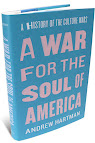
“A War for the Soul of America” by Andrew Hartman (University of Chicago Press), published in 2015 on the eve of the Trump presidency, seeks to explain the rise of white rage in modern history.

The book’s title comes from neoconservative iconoclast Patrick Buchanan, who called for “a war for the soul of America” at the 1992 Republican National Convention in Houston. But when people declare war on the Constitution, there may be no common ground.

"Leave it to Beaver"
While the 80s and 90s were pivotal to the rise of white nationalism, the first shots in the modern culture wars were heard in the 1960s, according to Hartman, as backlash to the civil rights movement, and as nonwhites, especially blacks, gained equality and political power.

“Normative American” families of the simple 1950s, as depicted in “Leave It to Beaver,” gave way to Archie Bunker’s complex 1960s “All in the Family” liberation and confrontation. Battle lines were drawn between the right and left: neoconservative vs. new leftist, traditional vs. progressive, color-blindness vs. color-consciousness, states’ rights vs. federal assistance, punishment vs. prevention, self-sufficiency vs. social safety net, etc.

The civil rights movement, first supported at the presidential level by Harry S Truman, accelerated under Navy WWII veterans John F. Kennedy and Lyndon B. Johnson with pressure led by Dr. Martin Luther King, Jr. Then, with LBJ’s signing of the Civil Rights Act and Voting Rights Act in the mid-60s, black Americans could finally participate fully in American democracy.


"All in the Family"
But as public schools became desegregated, many white Americans turned to segregated private schools, Christian day schools, and homeschooling. “The drama of white Americans resisting desegregation was played out again in the 1970s in struggles over busing across the nation,” Hartman says.

Thus began a “holy war” against secular schools as self-described “fundamentalists” “successfully enacted laws that mandated reading the King James Bible in schools and outlawed the teaching of evolution. Such activism sprang from a desire to reassert religious control over a society that was becoming increasingly modern and secular.”

“By the 1970s, conservative white evangelicals were confronted with a perfect storm of secular power that they deemed a threat to their way of life and to the Christian nation they believed the United States once was and ought to be again. This realization, more than anything else, led religious conservatives to take up arms in the culture wars. Worldly activism became more imperative, so much so that conservative evangelicals formed an uneasy political alliance with conservative Americans from different theological backgrounds. Even fundamentalists, whose insistence upon correct doctrine meant that minor differences in biblical interpretation often led to major schisms, reluctantly joined forces with conservative Catholics, Jews, and Mormons. This was all the more remarkable given that many fundamentalists viewed the 1960 election of John F. Kennedy, a Catholic, as a sign that the end times were fast approaching.”

The so-called Moral Majority was led by right-wing Christians like Buchanan, Phyllis Schlafly, Jerry Falwell, Pat Robertson, Tim LaHaye, and James Dobson. The Moral Majority declared war on cultural relativism, secular humanism, feminism, and the teaching of evolution.


Andrew Hartman
Hartman show how and why black studies evolved on college campuses. “A variety of theories emerged in the 1980s and 1990s to explain why the civil rights revolution had failed to relegate racial inequality to the dustbin of history.”

Harvard University law professor Derrick Bell developed Critical Race Theory to explain how resistance to power-sharing, true equality, and even identity as an “American” acted as a plexiglass ceiling. Do cracks in that ceiling over time threaten a historically predominant white hierarchy (and patriarchy)? Is that the cause of the white rage that General Milley seeks to understand?


As painful as it may be, there is great value in confronting the realities of the past to prevent future problems. 


W. E. B. DuBois
In “The Souls of Black Folks,” W. E. B. DuBois writes, “The United States, after all, was founded on the dispossession of indigenous nonwhites and made rich by the enslavement of African blacks.”

Author Toni Morrison writes, “The people who invented the hierarchy of ‘race’ when it was convenient for them ought not to be the ones who explain it away, now that it does not suit their purposes for it to exist.”


And speaking of a glass ceiling, the culture wars also include fights over gender. “For conservatives, gender differences were sacred,” Hartman writes. “Working women threatened the traditional family model …” and “conservatives were threatened by female economic autonomy.” Some state legislatures attempt to restrict women’s rights, including the right to terminate an early pregnancy, even in the case of rape or incest.


Critical Gender Theory now considers the role of socialization in determining sexual orientation. As for homosexuality, where did nature end and nurture begin? How can being gay be a sin, as Moral Majority fundamentalists (as well as ISIS and Al Qaeda) insist?


Culture wars continue to be fought six years after Hartman’s book: abortion restrictions, transgender discrimination, voter suppression, election interference, anti-vaccination conspiracies, and battles over school curriculum regarding “the contested American past.”


The result is a continual bipolar chasm in schools: divisive ethnocentrism vs. egalitarian cultural pluralism. Hartman explains the history of division as well as attempts at finding compromise.


“The History-Social Science Framework” put into effect in California in 1988, came close to closing the chasm, at least in schools. Historian Arthur Schlesinger Jr. called for a “vital center” bridge that included the California Framework. Hartman writes:

“Although the new California history curriculum recognized the legitimacy of multiculturalism as one factor among many that shaped the nation’s historical narrative, some conservatives supported the Framework because it also accentuated that which bound Americans together in common cause. Students were to ‘realize that true patriotism celebrates the moral force of the American idea as a nation that unites as one people the descendants of many cultures, races, religions, and ethnic groups.’ Due to such language, Schlesinger believed the California approach, unlike the later New York plan, resolved ‘the conflicting commands of our national motto, E Pluribus Unum. Out of many, one.’”

Schlesinger had been critical of any ideology that “belittles unum and glorifies pluribus.”


Navy readers may be interested in certain people and issues highlighted by Hartman in “A War for the Soul of America.” For example: 

  • how then-circuit court judge Robert Bork rejected a case brought by an enlisted sailor in Dronenburg v Zech in 1984, 
  • what Adm. William Leahy said were “ethical standards common to barbarians in the dark ages,” and 
  • how veterans groups and Lynne Cheney teamed to prevent a display of Enola Gay at the Smithsonian Air and Space Museum (a display that was planned to present a contextualized explanation of Hiroshima that helped bring an end to WWII).
Enola Gay at Smithsonian
I was particularly interested in Hartman’s insightful discussion of Murray and Herrnstein’s “The Bell Curve,” a book that fostered racist theories, slammed by evolutionary biologist Stephen J. Gould in his fascinating “The Mismeasure of Man.” Gould republished his “Mismeasure” with a devastating critique of “The Bell Curve.” Nurture AND nature!

It is critically important to understand how people are led to believe falsehoods in the wake of the insurrection and attempted coup of Jan. 6.


In last month’s testimony to Congress at the Capitol last month Milley asked: “So what is it that caused thousands of people to assault this building and try to overturn the Constitution of the United States of America? What caused that? I want to find that out.”


Gen. Milley’s role –– not only preventing an actual coup but also blocking Trump’s authoritarian attempt to deploy the military against U.S. citizens during Black Lives Matter protests in the summer of 2020 –– is revealed in a new book, “I Alone Can Fix It: Donald J. Trump's Catastrophic Final Year” by Philip Rucker and Carol Leonnig.


Hodgkins
We are reminded of Milley’s mea culpa following Trump’s march against protesters in Lafayette Square June 1, 2020, and of Milley’s frequent refrain that military service members take an oath to the Constitution, not to an individual or party. We are also reminded of a great communicator from the last century, Edward R. Murrow, who said, "I simply cannot accept that there are, on every story, two equal and logical sides to an argument."

As this Navy Reads blog is posted, Paul Allard Hodgkins, 38, of Tampa, Florida, has become the first Trump-supporting rioter to be sentenced for his role the Jan. 6 insurrection. Hodgkins pleaded guilty and expressed shame and remorse. He was sentenced to eight months in prison.


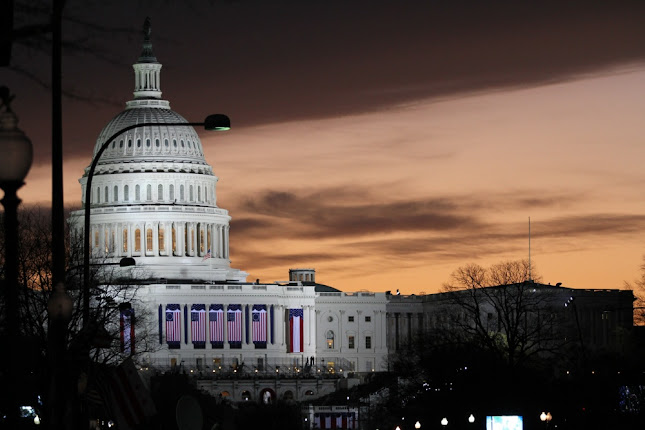
A view of the U.S. Capitol before the 57th presidential inauguration in Washington Jan. 21, 2013. President Barack H. Obama was elected to a second four-year term in office Nov. 6, 2012. More than 5,000 U.S. service members participated in or supported the inauguration. (U.S. Army photo by SSgt. Christopher Klutts)

TOP PHOTO:

NORFOLK, Va. (July 15, 2021) – Gen. Mark Milley, Chairman of the Joint Chiefs of Staff, gives remarks during the ceremony to declare Joint Force Command (JFC) Norfolk’s Full Operational Capability aboard amphibious assault ship USS Kearsarge (LHD 3) on July 15. (U.S. Navy Photo by MC2 Kris R. Lindstrom)


Friday, May 21, 2021

Why ‘Walk In My Combat Boots’?


Review by Bill Doughty

“These are the stories America needs to hear about the remarkable young men and women who serve.” –– Adm. William H. McRaven, US Navy (Ret.)


“Walk in My Combat Boots” by James Patterson, Matt Eversmann, and with Chris Mooney (Little, Brown and Company, 2021) focuses on military service members from each key service. Each warfighter tells their individual stories –– often about how and why they joined, what combat is like, and how war impacts the people who deploy. Most of the combat scenes are in Iraq or Afghanistan. Many of the stories ask, sometimes in screaming prose: Why? Collectively, these recollections give the reader a better appreciation of the service and sacrifice of these young men and women.

The authors present the stories in crisp first-person voice and in honest brutal detail –– what Gen. Stanley A. McChrystal, US Army (Ret.), calls “painfully raw, improbably funny, and completely human.” The individual stories are short, the language is conversational, and the font-type is large, but the content is sometimes hard to read; the authors pull no punches. This book is not for kids.


President George W. Bush presents the Purple Heart medal to US Army PFC Jeddah DeLoria of Chosen, Colo., Thursday, Dec. 20, 2007 at the Walter Reed Army Medical Center in Washington, D.C. DeLoria was recovering from injuries sustained in Operation Enduring Freedom in Afghanistan. (Joyce N. Boghosian)


Some of the most interesting stories include those by Miguel Ferrer, a Navy corpsman who had challenges working with the Afghan military; Jeddah Deloria (pictured above), born in the Philippines, who received a Purple Heart from President George W. Bush; Navy Chief Petty Officer Ryan Leahy, whose great grandfather was one of naval history’s most influential leaders, Adm. William Leahy; Staff Sgt. Lisa Marie Bodenburg (pictured below), a Marine door gunner, who says, “I would do it all over again in a heartbeat, because I love the Marine Corps. I love leading Marines. There is nothing greater, no greater feeling, no greater responsibility or achievement.”

Then-Cpl. Lisa M. Bodenburg, a UH-1N crew chief with Marine Light Attack Helicopter Squadron 367, 3rd Marine Aircraft Wing (LCpl. Frederick J. Coleman)

The service members, like Army intelligence collector “Red,” whose father served in the Navy, describes what it was like every day in Iraq. For example:

“When you’re in Iraq, you don’t have any days off. If you’re here for a year, it’s 365 days, every day. You never get a break, and it takes years off your life. Big years. There’s the physical demand –– always being on patrol or being stuck doing time-sensitive target (TST) missions and not sleeping for forty-eight hours –– and then there’s the mental aspect of seeing all the shit you see, doing the shit you do. Sometimes you do things that don’t feel right. You question your own morality. It’s mentally and emotionally and spiritually draining.

Every. Single. Day.”

Election Day in Baghdad, Iraq, 2010. (Spc. Edward Siguenza)
Dozens of stories ask "why?" –– why did I join, why did I step on an IED, why did I have to face life-or-death decisions, why can’t I go back to be with my troops, and why can’t the locals reject the violence in their culture?

Patrick Kern attended West Point and joined the Army. His brother chose the Marines. Patrick expresses the frustration of serving in Iraq, where the local population was not just generally thankless for attempts to ensure fair elections but also often dangerous to the service members trying to help them.

“When the Iraqis are not attacking us, they’re attacking the elections that are going on. A chief of police from one tribe gets elected, and the other tribe assassinates him. We have another election. Another guy wins, and then he gets assassinated. The Sunnis go after any Shiites who go out and vote. Suicide car bombs go off and kill anywhere from seventy to eighty people.

It’s a daily occurrence.

When they’re not killing each other, they’re mortaring our forward operating base and using IEDs to try to take us out on the roads…

… What people have a hard time understanding is the Iraqi culture isn’t wired for democracy … Their culture values death.”

Jason Burke
Jason Burke, who retired as a Navy captain, laments the corruption he confronted in counterinsurgency missions in Afghanistan against the Taliban. “Trying to reduce corruption –– it’s a difficult and, at times, impossible task.” He describes Afghanistan in 2008 as "like the Wild West."
"The level of poverty here –– people can't imagine it. In some of these area, you see groups of kids running around without shoes in forty-degree weather, dirty from head to toe, hair in dreadlocks, snot in their noses. But as a whole, they smiled and played like children anywhere else on the planet. They had hope."
Burke tells with teeth-clenching tension about his role in the capture of Aafia Siddiqui, “Lady al Qaeda,” a Pakistani terrorist who studied in the United States at the University of Houston, MIT, and Brandeis, before returning to the region to try to kill Americans in Afghanistan.

Ron Silverman, an Army MEDCOM major general, performed dental work on Saddam Hussein. He shares some of Hussein’s last thoughts before the former Iraqi leader was put to death by hanging. And, he speaks about being back home in the United States and taking long walks on the beach, even in the middle of the night.

“Tonight, as I’m walking along the beach, the sky is beautiful and clear, the moon glistening over the calm, still waters. It’s serene. I think about how, for over a year, I couldn’t go anywhere alone –– I certainly couldn’t walk anywhere by myself at night.

And here I am outside, walking along this beach in freedom, and it brings tears to my eyes. Most people don’t recognize or understand what we have here, in the United States.”

Providing security during an assault on an air assault near Tikrit, Iraq, 2008. (Rick Rzepka)
That’s the reason why this book is a must-read. It’s why we cherish freedom and those who fight to preserve freedom and defend elections.

Consider the idiomatic adage, “unable to see the forest for the trees.” This book is an up-close examination of the individual “trees,” with less consideration of the forest –– and the concept of how it grew there. But war is more than a concept, and these necessary stories show the realities and effects of combat up close and personal.


President Bill Clinton writes, “This book will take your breath away, break your heart, and leave you in awe of the hard work, raw courage, ingenuity, and resilience of the men and women who wear the boots. You’ll hear them say why they do it and how they deal with triumph, tragedy, and living with the legacy of their service. Every American should read it.”


(This is part one of a two-part review of this remarkable book for Navy Reads, with the second to be published in time for Memorial Day.)