Showing posts sorted by relevance for query milley. Sort by date Show all posts

Monday, September 25, 2023

You CAN Handle the Truth

Review by Bill Doughty––

You can taste the tension in the courtroom. Before the Navy lieutenant (j.g.) JAG prosecutor, played by Tom Cruise, uses verbal jiu jitsu and gets his witness (Jack Nicholson) to blurt out a confession, the Marine captain defense attorney (Kevin Bacon) attempts to psychologically inoculate the jury.


The scene is from the gripping Rob Reiner movie A Few Good Men, which also stars Demi Moore and Kiefer Sutherland as well as  numerous other actors portraying Marines and Sailors. The scene, written by Aaron Sorkin, is presented in the final chapter of “Foolproof: Why Misinformation Infects Our Minds and How to Build Immunity” by Sander van der Linden (W.W. Norton, 2023).

And it’s perfect.


Kevin Bacon as Capt Jack Ross primes the jury with what they will hear from the prosecution. He spins the narrative and attempts to trump the argument with “alternative facts.”


The scene illustrates some of the science-based conclusions presented in this important book about critical thinking and the dangers of misinformation, disinformation, and manipulation. Van der Linden shows how thinking people anywhere can identify conspiracies and manipulation and inoculate themselves.


While reading this book I thought of outgoing Chairman of the Joint Chiefs of Staff General Milley, who took seriously his oath to defend the Constitution and who also swore to tell the truth [the whole truth and nothing but the truth] many times in testimony to Congress (top photo).


When confronted by Republicans about Marxist “wokeness” in the military and his wanting to learn more about the risk of extremism in the ranks and the effects of conspiracy-mongers such as QAnon, Milley explained his position with rational clarity.


Milley, in effect, wanted to be inoculated by reading and understanding the issues. “I’ve read Mao Zedong. I’ve read Karl Marx. I’ve read Lenin. That doesn’t make me a communist,” he said. “So what is wrong with understanding, having some situational understanding, about the country for which we are here to defend?”


Challenged by a Republican representative about preventing white nationalists from joining the military, Milley said it was important to be well-read and open-minded and to try to understand why people attacked the Capitol in the January 6, 2021 insurrection. “I want to understand white rage – and I’m white,” Milley told the committee.


Milley famously communicated with his military counterpart in China after the J6 attack to allay fears and reassure a near-peer competitor that the United States had no desire for war. Milley is set to retire this Friday after 43 years of service in uniform. Milley’s dad, by the way, was a Navy Corpsman in World War II, and his mom served as a nurse with the Navy’s WAVES.


Trump
Last Friday, former President Donald Trump wrote about Milley’s retirement on his social media platform, suggesting Milley perhaps should be executed.

Regarding Milley's coming retirement, Trump wrote: “This will be a time for all citizens of the USA to celebrate! This guy turned out to be a Woke train wreck who, if the Fake News reporting is correct, was actually dealing with China to give them a heads up on the thinking of the President of the United States. This is an act so egregious that, in times gone by, the punishment would have been DEATH!” Trump wrote. At least one Republican representative, Paul Gosar of Arizona, agrees with Trump, calling Milley a "traitor," and also suggesting death by hanging.

Since pre-internet days, the misinformation stakes have become higher and the dangers of misinformation, manipulation, and outright threats have become greater. “The perverse incentives of social media” rely on promoting fear and profiting from extremism and division within society.


In “Foolproof,” van der Linden presents his findings in a convincing style. Throughout the book, he uses the metaphor of disease: viruses, contagions, and inoculation. And he presents actual experiments, examples, and incidents.


For example, “The lawyer defending the Capitol rioter Anthony Antonio was not wrong when he suggested the people can catch misinformation much like a disease,” van der Linden writes.


He describes his book this way in the prologue:

“In an era increasingly filled with half-truths, fake news and misinformation, I am not here to tell you what to believe. Regardless of where you fall on the political spectrum, perhaps you can think of this book as a humble servant in your own search for truth. Andy Norman, a philosopher at Carnegie Mellon University, refers to me as a ‘cognitive immunologist.’ I quite like this description of my field of research: I study mental defenses of the mind. I want to provide you with a guide to how your brain grapples with the onslaught of fact and fiction, a toolbox to help sniff out attempts to influence your opinion amidst the ‘dark arts of manipulation.’ A vaccine, if you will, against misinformation. Just as antigens produce an immune response in the body, psychological antigens can help build resistance to fake news. I offer eleven such antigens in this book to boost our immunity.”

van der Linden
But, he admits, “There is no psychological cure (that I know of) that unravels or counteracts the fully developed conspiratorial worldview. And it’s highly contagious.” Fully one-third of the population, he says, supports conspiracies.

People can easily fall into “rabbit holes” that have become deeper and darker thanks to Twitter (X), WhatsApp, Facebook, and YouTube, where “millions of people can be exposed to viral misinformation in a matter of days if not minutes.”


Examples of conspiracy theories cited in “Foolproof”: Covid-19 (various related to origins, spread, and cures), Princess Diana’s death, JFK’s assassination, flat-earthers, Holocaust-related, NASA’s moon landing, Osama bin Laden, Pizzagate, 5G phone masts, Sandy Hook as fake, Shakespeare’s sonnets as a code, Malaysian Airlines, reptilian conspiracy theory, governments hiding aliens, vaccinations linked to autism, Trump’s “stolen election claim,” and climate change as still debatable.


An interesting example of the use of misinformation comes in the climate change debate, ignited by GOP analyst Frank Luntz. Eight years before Luntz performed as guest speaker at the Navy’s 2010 public affairs conference in Baltimore he was a political consultant for Republican George W. Bush.


In 2002 Luntz wrote a confidential memorandum advising Bush on how to cast doubt on the findings on climate change. Despite the fact that 97 percent of scientists believed in the link between human-produced carbon and climate change, Luntz advised focusing on the 3 percent and highlighting the wedge. Luntz wrote: “Should the public come to believe that the scientific issues are settled, their views about global warming will change accordingly Therefore, you need to continue to make the lack of scientific certainty a primary issue in the debate.”


Van der Linden compare’s Luntz’s success on behalf of the fossil fuel industry to some of the same misinformation and science-denial techniques used by the tobacco companies decades earlier: obfuscate, confuse, cast doubt on the scientific evidence because it matters more what people feel (or want to believe) than what they think.


“Foolproof”
also delves into communist North Korea’s “brainwashing” attempts of Korean War POWs, nearly two dozen of whom chose to remain in North Korea.

Van der Linden explores the origins and continuation of anti vaccination conspiracy theory involving Robert F. Kennedy Jr. And he discusses how the weapons of mass destruction conspiracy led to a tragic war in Iraq under George W. Bush.

Van der Linden offers easily understood acronyms anyone can employ to inject skepticism and critical thinking when they are confronted with a conspiracy.


CONSPIRE translates to being aware of:

    Contradictory logic

    Overriding suspicion

    Nefarious intentions

    “Something must be wrong”

    Persecuted victims

    Immune to evidence

    RE-interpreting random events into a connected story


DEPICT shows the six degrees of manipulation:

    Discrediting (“fake news,” “fake election”)

    Emotion (get people agitated and promote fear)

    Polarization (false amplification to drive people apart)

    Impersonation (fake credentials or sources)

    Conspiracy (secret cabals or government groups)

    Trolling (such as by the Russian Internet Research agency, a full-time round-the-clock BS machine)


Van der Linden and his researchers developed a free online game — www.getbadnews.com ––to act as a “vaccine” to help people who wish to psychologically inoculate themselves. Reading “Foolproof” itself serves as a good vaccination.

With his diagrams and references to “A Few Good Men,” Mark Twain, and Harry Potter, van der Linden presents an entertaining but serious argument for getting inoculated against misinformation, disinformation, and manipulation in 2023 and moving forward.


This is an especially important book as we face more nefarious techniques ahead involving artificial intelligence, deep-fakes, conspiracies, and polarized media platforms –– designed and deployed to control our perception of what is happening now and what is yet to come in government, elections, and courtrooms.


Sander van der Linden, Ph.D., is Professor of Social Psychology in Society and Director of the Cambridge Social Decision-Making Lab in the Department of Psychology at the University of Cambridge.

Thursday, June 11, 2020

The Right to Protest & the Courage to Admit Mistakes

by Bill Doughty
CJCS Gen. Milley, Dec. 14, 2019 (Photo by Sgt. Dana Clarke)

In a pre-recorded speech to a group of graduates of the National Defense University today, Chairman of the Joint Chiefs of Staff Gen. Mark Milley spoke of "dynamic and uncertain times." He outlined global threats and challenges before focusing on an "especially intense and trying time for America" over the past several weeks.

"I am outraged by the senseless and brutal killing of George Floyd. His death amplified the pain, the frustration, and the fear that so many of our fellow Americans live with day in, day out," Milley said. "The protests that have ensued not only speak to his killing, but also to the centuries of injustice toward African Americans. 

Milley recognized the context marches in the streets. “The protests that have ensued not only speak to his killing, but also to the centuries of injustice toward African-Americans. What we are seeing is the long shadow of our original sin in Jamestown 401 years ago, liberated by the Civil War, but not equal in the eyes of the law until 100 years later in 1965."

"We are still struggling with racism and we have much work to do. Racism and discrimination, structural preferences, patterns of mistreatment, [and] unspoken and unconscious bias have no place in America and they have no place in our Armed Forces. We must, we can, and we will do better."

The military has led the nation's efforts toward greater equality and integration throughout American History, especially in the aftermath of wars and during the height of the civil rights movement in the 60s and early 70s. Demands for social justice, good law enforcement and equal rights under the law have been reignited in 2020. This can be a force for unity or division.


Milley called for unity and said, "And we should all be proud that the vast majority of protests have been peaceful. Peaceful protest means that American freedom is working." He recognized the good work of the National Guard, working with governors and local officials, and he reiterated DoD's commitment to diversity and improving representation, especially at the highest ranks.

Milley recommitted to improving diversity through active mentorship, teamwork and leadership. "Equality and opportunity is a matter of readiness. It's the basis of cohesion."

True strength comes from admitting an error. Milley said he was wrong to participate in the June 1 photo-op with President Trump, in which peaceful protesters were assaulted. And he reminded graduates –– and military personnel –– of their oath to support and defend the Constitution.

Then Army Chief of Staff Gen. Milley addresses troops at Joint Base Lewis-McCord, July 23, 2018. (Photo by Staff Sgt. Michael Armstrong)

"Let me conclude with two simple pieces of advice based on 40 years in uniform that you may find useful as many of you will surely go on to become flag officers.

"First, always maintain a keen sense of situational awareness. As senior leaders, everything you do will be closely watched, and I am not immune. As many of you saw the result of the photograph of me at Lafayette Square last week, that sparked a national debate about the role of the military in civil society. I should not have been there. My presence in that moment and in that environment created a perception of the military involved in domestic politics.

"As a commissioned uniformed officer, it was a mistake that I have learned from, and I sincerely hope we all can learn from it."

Milley said, "My second piece of advice is very simple: Embrace the Constitution. Keep it close to your heart. It is our North Star. It is our map to a better future." The U.S. Constitution is in the Canon section of the Navy Professional Reading Program.

Milley told the National Defense University graduates, "All of us in uniform are willing to die for that idea, the idea that is America. And so we must also be willing to live for that idea, for freedom of speech, freedom of the press, freedom to peacefully assemble. And freedom to vote and freedom to believe as you wish in your religion.

"These are essential freedoms that are the cornerstone of our country. Americans have spilled their blood to protect them in the past and they continue to be worth fighting for. This we will defend."

Chief Petty Officer selectees (sailors who have been selected for promotion to E-7) work together Aug. 29, 2019 during chief heritage weeks aboard USS Constitution, the “oldest commissioned warship afloat in the world." (Photo by Casey Scoular/Released)

Monday, July 19, 2021

Declaring War on Culture

Review by Bill Doughty

U.S. Army General Mark Milley, Chairman of the Joint Chiefs of Staff, defended reading, education and critical thinking in testimony to Congress last month when some members of Congress seemed to question his and his military’s intellectual curiosity.


Milley said,"I've read Mao Zedong. I've read Karl Marx. I've read Lenin. That doesn't make me a communist. So what is wrong with understanding — having some situational understanding about the country for which we are here to defend?" Milley said.


Like former Secretary of Defense Marine Gen. Jim Mattis, Milley realizes that great leaders need to be well-read and open to understanding competing ideas. Milley defended the military’s efforts to understand white nationalism and extremism in the context of critical race theory and other theories.


Hundreds of white insurrectionists who waged war on the Capitol Jan. 6 in an attempted coup are part of a long line of culture warriors who feel impelled –– and were compelled –– to fight to overturn an election and subvert the Constitution.


Milley said, ”I want to understand white rage, and I'm white, and I want to understand it.”


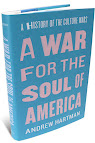
“A War for the Soul of America” by Andrew Hartman (University of Chicago Press), published in 2015 on the eve of the Trump presidency, seeks to explain the rise of white rage in modern history.

The book’s title comes from neoconservative iconoclast Patrick Buchanan, who called for “a war for the soul of America” at the 1992 Republican National Convention in Houston. But when people declare war on the Constitution, there may be no common ground.

"Leave it to Beaver"
While the 80s and 90s were pivotal to the rise of white nationalism, the first shots in the modern culture wars were heard in the 1960s, according to Hartman, as backlash to the civil rights movement, and as nonwhites, especially blacks, gained equality and political power.

“Normative American” families of the simple 1950s, as depicted in “Leave It to Beaver,” gave way to Archie Bunker’s complex 1960s “All in the Family” liberation and confrontation. Battle lines were drawn between the right and left: neoconservative vs. new leftist, traditional vs. progressive, color-blindness vs. color-consciousness, states’ rights vs. federal assistance, punishment vs. prevention, self-sufficiency vs. social safety net, etc.

The civil rights movement, first supported at the presidential level by Harry S Truman, accelerated under Navy WWII veterans John F. Kennedy and Lyndon B. Johnson with pressure led by Dr. Martin Luther King, Jr. Then, with LBJ’s signing of the Civil Rights Act and Voting Rights Act in the mid-60s, black Americans could finally participate fully in American democracy.


"All in the Family"
But as public schools became desegregated, many white Americans turned to segregated private schools, Christian day schools, and homeschooling. “The drama of white Americans resisting desegregation was played out again in the 1970s in struggles over busing across the nation,” Hartman says.

Thus began a “holy war” against secular schools as self-described “fundamentalists” “successfully enacted laws that mandated reading the King James Bible in schools and outlawed the teaching of evolution. Such activism sprang from a desire to reassert religious control over a society that was becoming increasingly modern and secular.”

“By the 1970s, conservative white evangelicals were confronted with a perfect storm of secular power that they deemed a threat to their way of life and to the Christian nation they believed the United States once was and ought to be again. This realization, more than anything else, led religious conservatives to take up arms in the culture wars. Worldly activism became more imperative, so much so that conservative evangelicals formed an uneasy political alliance with conservative Americans from different theological backgrounds. Even fundamentalists, whose insistence upon correct doctrine meant that minor differences in biblical interpretation often led to major schisms, reluctantly joined forces with conservative Catholics, Jews, and Mormons. This was all the more remarkable given that many fundamentalists viewed the 1960 election of John F. Kennedy, a Catholic, as a sign that the end times were fast approaching.”

The so-called Moral Majority was led by right-wing Christians like Buchanan, Phyllis Schlafly, Jerry Falwell, Pat Robertson, Tim LaHaye, and James Dobson. The Moral Majority declared war on cultural relativism, secular humanism, feminism, and the teaching of evolution.


Andrew Hartman
Hartman show how and why black studies evolved on college campuses. “A variety of theories emerged in the 1980s and 1990s to explain why the civil rights revolution had failed to relegate racial inequality to the dustbin of history.”

Harvard University law professor Derrick Bell developed Critical Race Theory to explain how resistance to power-sharing, true equality, and even identity as an “American” acted as a plexiglass ceiling. Do cracks in that ceiling over time threaten a historically predominant white hierarchy (and patriarchy)? Is that the cause of the white rage that General Milley seeks to understand?


As painful as it may be, there is great value in confronting the realities of the past to prevent future problems. 


W. E. B. DuBois
In “The Souls of Black Folks,” W. E. B. DuBois writes, “The United States, after all, was founded on the dispossession of indigenous nonwhites and made rich by the enslavement of African blacks.”

Author Toni Morrison writes, “The people who invented the hierarchy of ‘race’ when it was convenient for them ought not to be the ones who explain it away, now that it does not suit their purposes for it to exist.”


And speaking of a glass ceiling, the culture wars also include fights over gender. “For conservatives, gender differences were sacred,” Hartman writes. “Working women threatened the traditional family model …” and “conservatives were threatened by female economic autonomy.” Some state legislatures attempt to restrict women’s rights, including the right to terminate an early pregnancy, even in the case of rape or incest.


Critical Gender Theory now considers the role of socialization in determining sexual orientation. As for homosexuality, where did nature end and nurture begin? How can being gay be a sin, as Moral Majority fundamentalists (as well as ISIS and Al Qaeda) insist?


Culture wars continue to be fought six years after Hartman’s book: abortion restrictions, transgender discrimination, voter suppression, election interference, anti-vaccination conspiracies, and battles over school curriculum regarding “the contested American past.”


The result is a continual bipolar chasm in schools: divisive ethnocentrism vs. egalitarian cultural pluralism. Hartman explains the history of division as well as attempts at finding compromise.


“The History-Social Science Framework” put into effect in California in 1988, came close to closing the chasm, at least in schools. Historian Arthur Schlesinger Jr. called for a “vital center” bridge that included the California Framework. Hartman writes:

“Although the new California history curriculum recognized the legitimacy of multiculturalism as one factor among many that shaped the nation’s historical narrative, some conservatives supported the Framework because it also accentuated that which bound Americans together in common cause. Students were to ‘realize that true patriotism celebrates the moral force of the American idea as a nation that unites as one people the descendants of many cultures, races, religions, and ethnic groups.’ Due to such language, Schlesinger believed the California approach, unlike the later New York plan, resolved ‘the conflicting commands of our national motto, E Pluribus Unum. Out of many, one.’”

Schlesinger had been critical of any ideology that “belittles unum and glorifies pluribus.


Navy readers may be interested in certain people and issues highlighted by Hartman in “A War for the Soul of America.” For example: 

  • how then-circuit court judge Robert Bork rejected a case brought by an enlisted sailor in Dronenburg v Zech in 1984, 
  • what Adm. William Leahy said were “ethical standards common to barbarians in the dark ages,” and 
  • how veterans groups and Lynne Cheney teamed to prevent a display of Enola Gay at the Smithsonian Air and Space Museum (a display that was planned to present a contextualized explanation of Hiroshima that helped bring an end to WWII).
Enola Gay at Smithsonian
I was particularly interested in Hartman’s insightful discussion of Murray and Herrnstein’s “The Bell Curve,” a book that fostered racist theories, slammed by evolutionary biologist Stephen J. Gould in his fascinating “The Mismeasure of Man.” Gould republished his “Mismeasure” with a devastating critique of “The Bell Curve.” Nurture AND nature!

It is critically important to understand how people are led to believe falsehoods in the wake of the insurrection and attempted coup of Jan. 6.


In last month’s testimony to Congress at the Capitol last month Milley asked: “So what is it that caused thousands of people to assault this building and try to overturn the Constitution of the United States of America? What caused that? I want to find that out.”


Gen. Milley’s role –– not only preventing an actual coup but also blocking Trump’s authoritarian attempt to deploy the military against U.S. citizens during Black Lives Matter protests in the summer of 2020 –– is revealed in a new book, “I Alone Can Fix It: Donald J. Trump's Catastrophic Final Year” by Philip Rucker and Carol Leonnig.


Hodgkins
We are reminded of Milley’s mea culpa following Trump’s march against protesters in Lafayette Square June 1, 2020, and of Milley’s frequent refrain that military service members take an oath to the Constitution, not to an individual or party. We are also reminded of a great communicator from the last century, Edward R. Murrow, who said, "I simply cannot accept that there are, on every story, two equal and logical sides to an argument."

As this Navy Reads blog is posted, Paul Allard Hodgkins, 38, of Tampa, Florida, has become the first Trump-supporting rioter to be sentenced for his role the Jan. 6 insurrection. Hodgkins pleaded guilty and expressed shame and remorse. He was sentenced to eight months in prison.


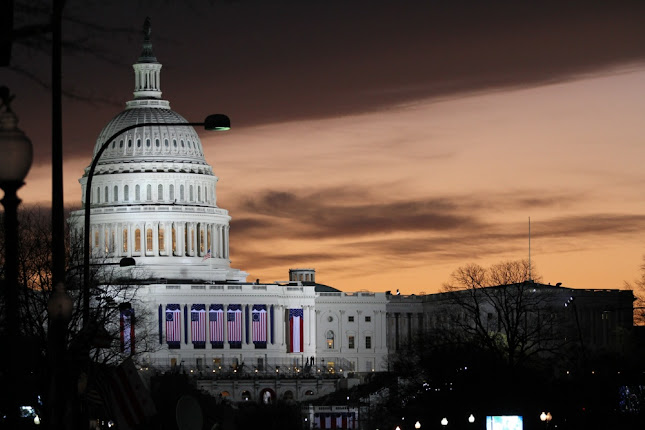
A view of the U.S. Capitol before the 57th presidential inauguration in Washington Jan. 21, 2013. President Barack H. Obama was elected to a second four-year term in office Nov. 6, 2012. More than 5,000 U.S. service members participated in or supported the inauguration. (U.S. Army photo by SSgt. Christopher Klutts)

TOP PHOTO:

NORFOLK, Va. (July 15, 2021) – Gen. Mark Milley, Chairman of the Joint Chiefs of Staff, gives remarks during the ceremony to declare Joint Force Command (JFC) Norfolk’s Full Operational Capability aboard amphibious assault ship USS Kearsarge (LHD 3) on July 15. (U.S. Navy Photo by MC2 Kris R. Lindstrom)


Saturday, April 16, 2022

Putin’s Big Mistake – ‘Weak Strongman’

Review by Bill Doughty––

“Weak Strongman: The Limits of Power in Putin’s Russia” by Timothy Frye (Princeton University Press, 2021) opens with the exit of Ukrainian President Viktor Yanukovych, Feb. 21, 2014. The corrupt puppet of Vladimir Putin fled to Russia after being ousted by free and fair elections in Ukraine in which pro-European politicians were subsequently elected.


In Response, Putin invaded Ukraine and occupied Crimea and eastern areas of the country.


It was a big mistake.


Hoping to have more influence and control over his neighbor in 2014, Putin instead strengthened Ukrainian nationalism, European influence, and NATO unity (just has he has –– ten-fold –– since his all-out unprovoked war on the people of Ukraine in 2022).

“The annexation of Crimea brought a four-year surge in support for the Kremlin in Russia, but also removed the largest and most pro-Russian voting bloc –– the roughly 1.5 million Russians in Crimea –– from Ukrainian politics. In past elections, parties openly sympathetic to Moscow regularly received around 40 percent of the vote, but advocating for close relations with Russia is a tougher sell with the Ukrainian electorate after the annexation of Crimea. The landslide victory of the thirty-eight-year-old Volodymyr Zelensky, a Russian speaker from Eastern Ukraine, in the presidential elections in Ukraine in April 2019 suggests that the polarization between eastern and western Ukraine that served Russia so well is less important today than prior to 2014. Moreover, Ukraine’s largest trading partner by far is the European Union ($40 billion per year) rather than Russia ($11 billion), and China is soon to replace Russia as its second-biggest trading partner.

“Moscow’s policies toward Ukraine have bolstered NATO. By the end of 2020, NATO members are expected to have increased spending on defense by $100 billion. NATO has moved roughly four thousand advanced troops to the Baltic states and a smaller number to Poland as a token force to deter Russia. Given the centripetal forces at work in Europe today, weakening of the European Union, and election of a NATO skeptic as US president [Trump], one would have expected NATO to be in grave danger, but it has held up better than anticipated. And that is largely due to Russia’s moves in Crimea, eastern Ukraine, and elsewhere.”

Strong sanctions in the wake of Putin’s war in 2022 are hurting the country, especially leaders and oligarchs. Sanctions also slowed the Russian economy after Putin’s revanchist annexation of Crimea in 2014, according to Frye.

Oligarchs like Oleg Deripaska and Viktor Vekselberg reportedly lost billions after the US government sanctioned them in April 2018 for “malign activity around the globe.”


Frye says Putin is, in effect, a candle with a low-burning wick. (Which may explain why he invaded Ukraine again in 2022.)


“Reelected for another six-year term in 2018, Putin has struggled to find a new narrative to lead Russia. With enthusiasm for the Crimean annexation fading and the economy stagnating, his popularity has faltered.”


Speaking of mistakes or consequences of war…


Frye notes, “The best available evidence indicates that Russian-backed rebels in eastern Ukraine shot down a Malaysian commercial airliner by mistake in July 2014, killing almost 300 passengers and crew.” Will a mistake –– or an intentional act made to look like a mistake –– against NATO ignite a larger war in Europe?


It was no mistake this week when Ukraine hit Russia’s Black Sea flagship, the cruiser Moskva, pictured above, with at least one Neptune anti-ship missile, according to U.S. analysts, sinking the ship and moving the Russian fleet away from Ukraine’s coast. At first Russia lied and said the ship was not attacked but had suffered a fire of unknown origin.

Using data and statistics, Frye illuminates that “autocracies have long struggled to elicit honest information from subordinates and monitor implementation of policies.


Frye is a self-described “information warrior” associated with the Levada Center. He is immersed in Russian culture, economics, and statistics.

“Russia has been fertile ground for studying authoritarian rule. Public opinion polls have been far more credible than in other autocracies, and Russia provides more detailed administrative data, including election results, economic information, and social indicators, than do many other authoritarian governments…

“Although less so than in the Soviet period, views of Russia in the West are still highly politicized. Some on the nationalist Right depict Russia as a defender of the traditional family, white race, and Christian faith, but as Anne Applebaum notes, Russian reality if far from these American dreams. Abortion rates in Russia are twice as high as in the United States, few Russians attend church regularly or read the Bible, and a third of Russian families are headed by single mothers with children. And Russia regularly accepts more immigrants than just about any country but the United States.”

Pro-Ukraine protest (Pixabay)
Citing statistics from carefully conducted polls and surveys within Russia, Frye makes some surprising conclusions: At one point prior to Putin’s annexation of Crimea and resultant sanctions, 85 percent of Russians wanted closer ties with the West.

People in Russia would prefer a good home economy than status as a top-five great power. They say they are in favor of freedom of speech and freedom of assembly. 


And, while historically Russians admire, rather than fear, the brutal imposition of order, Putin’s popularity has been waning in recent years.


“Putin fatigue appears to be setting in; in summer 2020, his presidential approval ratings sagged to their lowest levels since he took office,” Frye notes. The public rewards politicians during a good economy and punishes them in economic downturns.


Perhaps most interesting is this finding: “Despite the broad popularity of the annexation of Crimea, a majority of Russians in 2015 were willing to tell pollsters that they opposed sending Russian troops to Ukraine, and 80 percent of Russians were willing to express opposition to incorporating Ukraine into Russia. The public uses public opinion polls to rail against corruption, inequality, and Russia’s notoriously bad roads as well.”


Although national pride swelled after Crimea was annexed, “the public greatly appreciated that the annexation occurred with little cost in Russian lives.” We continue to see public nationalistic support for Putin now because of Kremlin propaganda and disinformation. But how will the Russian people react when they eventually learn about the cost to their country in blood and treasure?


From his foundation of statistics and data, Frye analyzes the type of autocracy in Russia –– personalist [aka “strongman”] as opposed to party (as in Communist China) or military (as in Thailand).

Frye notes, “The Putin team will cling to power for the same reason that all personalist autocrats do: the fear of what comes next.” He notes, 80 percent of personal autocracies who lost power ended up in jail or exile, or dead…”


The cult-of-personality style of populist authoritarianism seen in Kim’s North Korea, Orban’s Hungary, and Putin’s Russia seems to attract fundamentalist followers who want a return to traditional “values,” “law and order,” less freedom in the media, and more xenophobic nationalism, willing to tell lies to stay in power or achieve political aims.

“Rather than treating Russia’s most recent autocratic turn as rooted in Putin’s KGB past or a return to Russia’s thousand years of dictatorship, we can trace it to a more familiar and recent pattern of modern autocratic rule. As long-standing democracies become increasingly dysfunctional and less attractive as a model, an outsider comes to power in a highly unequal middle-income country. Facing a disorganized opposition, the ruler rides an economic boom to popularity, which he then uses to dismantle courts and legislatures, intimidate the free press, and discredit political opponents as foreign agents. With some nuances for local context, this story would be familiar to observers of Turkey, Venezuela, and Hungary, to name just a few.”

Frye quotes Russian political scientist Vladimir Gel’man, who described Putin’s first half of time in office as “vegetarian” autocracy, fueled by a good economy due to energy resources which helped him avoid the heavy-handed repression, coercion, and criminal violence we now see. Now he is a carnivorous, even cannibalistic, autocrat, considering what he’s doing to Ukraine and Russia itself.

Frye notes, “In 2008, the Bush administration led efforts to bring Ukraine and Georgia into NATO. The stakes were high given Ukraine’s size, complicated history with Moscow, and strategic significance.” Russia ferociously voiced its opposition, and Germany and France criticized the United States position.


“After much internal debate, NATO pledged that Ukraine and Georgia ‘will become NATO members,’ but did not offer a Membership Action Plan with any details or start date.,” Frye writes. “The open-ended commitment was the worst of all worlds.” In 2014 and again in 2022, Putin filled the vacuum with missiles, bombs, and bullets.


Putin’s pretext for annexation of Crimea (and recent invasion) –– feeling threatened by the United States and NATO –– is belied by the facts and statistics Frye presents, in part quoting Professor Stephen Sestanovich: “The number of US troops in Europe in 2014 was one-sixth as large as in 1990, the number aircraft in Europe was down 75 percent, and the United States had removed all of its tank divisions from the continent.”


CJCS Gen. Mark Milley testifies April 7, 2022. (Lisa Ferdinando)
Chairman of the Joint Chiefs Gen. Mark Milley testified again recently to the House Armed Services Committee, He said the world is getting more unstable, "and the potential for significant international conflict between great powers is increasing, not decreasing.”

Milley called Russia's invasion of Ukraine "the greatest threat to peace and security of Europe and perhaps the world in my 42 years of service in uniform."


He said Putin's unnecessary war threatens not only European peace and stability, but global peace and stability, noting the war could be protracted over months or even years.


Milley brought up memories of World War II.


"The islands of the Pacific and the beaches of Normandy bore witness to the incredible tragedy that befalls humanity when nations seek power through military aggression across sovereign borders," Milley said. "Despite the horrific assault on the institutions of freedom, it is heartening to see the world rally and say 'never again' to the specter of war in Europe.”


Imperial Japan and Nazi Germany made fatal errors in the 1930s and 40s, ending in the creation of two thriving democracies dedicated to a more peaceful world. Putin’s miscalculations and war crimes have strengthened NATO, united most Americans and Europeans, hardened the resolve of brave Ukrainians, and wreaked havoc on his own country. Big mistake.