Showing posts with label Gerald Ford. Show all posts

Thursday, May 26, 2022

Enough: Justice takes on Gun Safety


By Bill Doughty––

What did a former Supreme Court justice –– a Navy veteran of World War II –– have to say about gun safety regulations and mass shootings? In “The Making of a Justice,” published in 2019, just before he died at age 99, Justice John Paul Stevens noted that “Throughout most of our history there was no federal objection to laws regulating the civilian use of firearms.”


Ens. Stevens, circa 1942-1945.
Stevens was not a stranger to guns. He served in the Navy and as an ensign was stationed in Washington D.C. (on Constitution Avenue), where he carried a .45 caliber handgun and guarded intelligence traffic in the aftermath of Imperial Japan's attack on Pearl Harbor, Oahu, Dec. 7. He was later stationed in Pearl Harbor, near Adm. Nimitz's Makalapa headquarters, and he was serving as an intelligence officer during the Battle of Midway and when Adm. Yamamoto was killed. Navy Reads reviewed Stevens's memoir three years ago: “Justice: Battle of Midway and the Constitution.”

After the Navy, Justice Stevens served in various positions in the private sector and in government service. President Gerald Ford, another World War II Navy veteran, nominated Stevens to the Supreme Court when Justice William O. Douglas stepped down in November, 1975.


Stevens said that when he joined the Court, “both state and federal judges accepted the Court’s unanimous decision in United States v. Miller as having established that the Second Amendment’s protection of the right to bear arms was possessed only by members of the militia and applied only to weapons used by the militia.” In the Miller case, the Court upheld an indictment restricting a man from owning a short-barreled shotgun.


The common sense of Miller, was replaced with a Supreme Court decision in District of Columbia v. Heller in 2007.


Heller opened the floodgates for the proliferation of firearms, including weapons of war with large-capacity magazines. These weapons can be sold to people in many states with few or no background checks or other regulations.


“Heller is unquestionably the most clearly incorrect decision that the Court announced during my tenure on the bench,” Stevens wrote. “The text of the Second Amendment unambiguously explains its purpose: ‘A well regulated Militia being necessary to the security of a free State, the right of the people to keep and bear Arms, shall not be infringed.’”

Stevens examined original context and founders’ intent, including Madison’s draft, as well as an established history of some gun control in the United States.


After presenting colleague Justice Breyer’s dissent in Heller –– in which Breyer discusses early colonial history of firearms regulations in the three largest cities at the time: Boston, Philadelphia, and New York –– Stevens expounded on the history of gun safety laws in the past hundred years.

“For most of our history, the invalidity of Second Amendment-based objections to firearms regulations had been well settled and uncontroversial. The first two federal laws directly restricting the civilian use and possession of firearms –– the 1927 act prohibiting mail delivery of handguns and the 1934 act prohibiting the possession of sawed-iff shotguns and machine guns –– were enacted over minor Second Amendment objections that were dismissed by the vast majority of legislators participating in the debates. After reviewing many of the same sources that are discussed at greater length by [Justice] Nino Scalia in his majority opinion in Heller, the Miller Court unanimously concluded that the Second Amendment did not apply to the possession of a firearm that did not have ‘some relationship to the preservation or efficiency a well regulated militia.’ ‘ So well settled was the issue that, speaking on the PBS NewsHour in 1991, the retired Chief Justice Warren Burger described the National Rifle Association’s lobbying in support of an interpretation of the Second Amendment as a limitation regulation of the civilian uses of firearms in these terms: ‘One of the greatest pieces of fraud, I repeat the word ‘fraud,’ on the American public by special interest groups that I have ever seen in my lifetime.’”

Stevens SCOTUS portrait, 2006
Stevens called for an amendment to the Constitution to overrule Heller “to prevent tragedies such as the massacre of twenty grammar schoolchildren at Sandy Hook Elementary School on December 14, 2012, from ever happening again." Stevens added, "Yet, in the course of writing this chapter, on October 1, 2017, a gunman fired from the thirty-second floor of a hotel in Las Vegas, killing at least fifty-eight people and injuring over five hundred more who were attending an outdoor concert.”

In “Making” Stevens recounted the NRA’s seeming concession in the wake of the Las Vegas massacre, agreeing to a prohibition of bump stocks, which allowed shooters to convert semi-automatic rifles into machine guns.


However, the NRA’s Institute for Legislative Action denied their support for a prohibition of bump stocks: “Some have used our October 2017 statement to claim that NRA supports ATF’s final rule, but as NRA-ILA’s Executive Director Chris Cox noted only days after our statement was issued, “‘We don’t believe that bans have ever worked on anything.’” Against any “bans … on anything,” the NRA, like many gun manufacturers and some politicians, wants more guns in people’s hands, including in schools.


But In the United States there are already 120 guns for every 100 citizens, more guns than automobiles. And, New England Journal of Medicine notes that the leading cause of death of American children is no longer car accidents –– it is death by firearms.

While seatbelts, airbags, carseats, and many other features and regulations save countless children’s lives, some politicians won’t pass laws to restrict weapons of war, huge magazines, or the proliferation of handguns. Some don’t want background checks,“red flag” laws, age restrictions until 21, storage requirement laws, or similar common sense safety protections.


Stevens lamented the lack of progress in making schools, concerts, churches, and even guns themselves safer, especially semiautomatic military-style weapons, such as those used in Las Vegas (and last week in Buffalo, NY, and this week in Uvalde, TX). In “Making” he wrote:

“Devices that make such deadly weapons even deadlier should be banned. But prohibiting bump stocks alone will do little to curtail the scourge of gun violence plaguing this country. (Indeed, I could not even finish writing this chapter before another mass shooting occurred, this one involving the the death of twenty-six people –– including three generations of a single family –– at a church on November 5, 2017.)”

Stevens saw the Heller case’s negative consequences arising from what he considered “a radical change in the law that would greatly tie the hands of state and national lawmakers endeavoring to find solutions to the gun problem in America."


He said it was a twin failure: first, the misreading of the Second Amendment and, second, the failure to respect settled precedent (stare decisis) in Miller, relaxing in “the worst self-inflicted wound in the Court’s history.”

The Supreme Court’s handling of the right to an abortion is another contentious issue that might be a significant self-inflicted wound.


But both explosive issues of gun safety and abortion can be framed in the right to “life, liberty, and the pursuit of happiness.”


Whose liberty and freedom takes precedent: The angry young man with an AR-15 or dozens of school children? The self-righteous individual or the family of a raped pregnant teenager? The self-serving politician or voters in a rules-based society?


With some similarity to the gun safety controversy, Stevens saw the issue of abortion as one framed in “liberty” rather than “privacy.” He looked at Roe v. Wade and related cases, including Griswold v. Connecticut (which protects the right of married couples to use contraceptives) beginning on page 149 of “The Making of a Justice.” Highly recommended reading.


By the way, here’s a relevant Found Haiku, from a twitter post this week by actor George Takei, Star Trek’s Mr. Sulu:


“Ban assault rifles,

not books. Regulate firearms,

not women’s bodies.”


“The Making of a Justice” continues to be a source of wisdom and historical context for some of the most controversial issues of our time.


Stevens closes his memoir by sharing a personal letter from 2014 on White House stationery from President Barack Obama, sending warm wishes for Stevens’s 94th birthday. Obama wrote: “With unwavering integrity, you have stood as an impartial guardian of the law and protected the principles enshrined in our founding documents. Your steadfast commitment to justice and your understanding of how the law affects the lives of ordinary Americans have set a proud example and built a legacy worthy of celebration.”

Pres.-elect Barack Obama and VP-elect Joe Biden with Justices during a visit to the U.S. Supreme Court, Jan. 14, 2009: Obama, Chief Justice John Roberts, John Paul Stevens, Ruth Bader Ginsburg, Clarence Thomas, David Souter, and Biden. (Pete Souza) 

Tuesday, October 19, 2021

The Will of an ‘Unruly Torrent’

Review by Bill Doughty––

Venerable thinker George Will unleashes a storm of opinions in “American Happiness and Discontents: The Unruly Torrent, 2008-2020" (Hachette Books, 2021), proving he is still sharp in his observations while cemented in his positions of right and wrong.


This is a book of nearly two hundred essays about everything from military history and life-and-death issues to Will’s thoughts about the Beach Boys, Baptists, baseball, and blue jeans. (Regarding the latter, he claims to have only one pair, worn only once. He believes men should dress like Fred Astaire, women like Grace Kelly.)

While Will shares some acerbic humor, mostly he offers a ribbon of melancholy that ties these essays together. So many in this collection are devoted to past wars and their aftermath. Others lament culture wars still happening. And a final section, “Farewells, Mostly Fond,” features obituaries, including to fellow conservatives William F. Buckley, Charles Krauthammer, Gerald Ford, and George H.W. Bush, as well as, surprisingly, liberal-of-liberals George McGovern.


The most poignant remembrance is the final essay in the book, written July 6, 2008. Will honors the memory of Army Lieutenant Colonel Jim Walton, killed in Afghanistan. The essay is also a tribute to casualty assistance calls officers, CACOs, including LtCol Walton’s spouse, Sarah, herself a CACO who had to receive the terrible news of her husband’s death.


An epigraph by CACO Maj. Steve Beck, United States Marine Corps, at the beginning of the Walton essay contains a “found haiku”:


...curtains pull away.

They come to the door. And they

know. They always know


George Will concludes his Walton essay –– and his book –– with this:

“When the Army CACOs came to the Arlington door or Sara Walton, my assistant, she was not there. She rarely forgot the rule that a spouse of a soldier in a combat zone is supposed to inform the Army when he or she will be away from home. This time Sarah forgot, so it took the Army awhile to locate her at her parents’ home in Richmond.

“Her husband, Lieutenant Colonel Jim Walton, West Point Class of 1989, was killed in Afghanistan on June 21. This week he will be back in Arlington, among the remains of the more than 300,000 men and women who rest in the more than 600 acres where it is always Memorial Day. This is written in homage to him, and to Sarah, full sharer of his sacrifices.”*

George Will
Sacrifice on behalf of the nation is tied to the ribbon of sadness in the nearly 500 pages of this collection.

Will writes in “A Nation Not Made by Flimsy People” of the grit required to win the Revolutionary War. Readers will be reminded of the great historian David McCullough’s “1776,” one of the first books we featured on Navy Reads.


In “The Somme: The Hinge of World War I, and Hence of Modern History” he contextualizes the “reverberations” of that war. The First World War influences Will’s thinking and inspiration for topics, including in the penultimate essay, “The Last Doughboy.”


In “Haunted by Hue” and “Vietnam: Squandered Valor” he properly acknowledges the sacrifices of brave young Americans, while castigating the mendacity of the power structure that sent them to a war that was ultimately a “tragedy,” including for the people of Vietnam.


Color guard of 442nd in 1944

In “The 442nd,” written in 2010, he pays tribute to the most decorated unit for its size in American history, the Japanese-American soldiers who fought against Fascism and Nazism in Europe in WWII while many of their families were imprisoned in internment camps back in the States. George Will met some of these patriotic veterans.

“Such cheerful men, who helped to lop 988 years off the Thousand Year Reich, are serene reproaches to a nation now simmering with grievance groups that nurse their cherished resentments. The culture of complaint gets no nourishment from men like these who served their country so well while it was treating their families so ignobly. Yet it is a high tribute to this country that it is so loved by men such as these.”

Will has no time for political correctness and what’s now called “cancel culture.” He takes on some of the debates about political and social topics dominating college campuses. On the other hand, he also has no tolerance for racism, terrorism in the name of religion, and attacks on democracy.


He shows how the values of Frederick Douglass won out over Woodrow Wilson's bigotry. But he has little compassion or understanding for renaming professional sports teams such as the former Washington Redskins or for “coercing” bakers who refuse, for religious reasons, to provide a cake for a same-sex wedding. 


He celebrates books and “binge reading” while condemning new technologies and platforms that rewire the brains of young people, shorten attention spans and erode the ability to think critically and independently.

To say George Will is sometimes like the grouchy old man yelling at youngsters to get off his lawn is to state the obvious. But he cares about what he believes in, and he communicates with passion and conviction. His ribbon leads through a pursuit of happiness that ends ultimately to a reward for readers.


*(Lost at first reading is George Will’s epigraph to the entire book: “For Sarah Walton –– To whom I am indebted for her many years of indispensable assistance. And to whom the nation is indebted.”)


Grieving and Honoring


Colin Powell
I finished this book as I heard the news of an icon of conservative leadership passed away: former Secretary of State and Chairman of the Joint Chiefs of Staff Gen. Colin Powell. Flags fly at half staff for the great principled patriot and warrior-diplomat. But General Powell would want us to pay tribute to the person he most looked up to and respected in his life, his wife Alma. Powell told author Bob Woodward that Alma was his moral compass and inspiration.

Alma Powell is sponsor of USS Kearsarge (LHD-3). She is also the namesake of Kearsarge's airfield. 


According to the Navy, "Throughout her life of civic leadership [Alma] Powell has helped young people in need of educational resources for more than four decades. While serving as Chair of the Board of Directors for America’s Promise Alliance, a non-profit organization dedicated to improving the education opportunities of disadvantaged children, Ms. Powell helped to lead more than 450 partner network’s efforts to help tens of thousands of young people by connecting them with resources essential for academic success."


Capt. Neil Koprowski, commanding officer of the Wasp-class amphibious assault ship USS Kearsarge (LHD 3), delivers remarks during an airfield dedication ceremony in honor of Alma J. Powell, May 28, 2021. Alma Powell, Kearsarge’s ship sponsor, is a military spouse, a civic leader and civil rights activist who has advocated for women, children, and minorities for more than four decades, and has helped tens of thousands of disadvantaged people around the world. (MCSN Gwyneth Vandevender)

TOP PHOTO:
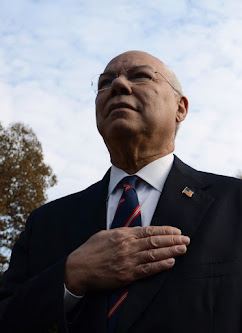
Gen. Colin L. Powell speaks at the 26th National Memorial Day Concert on the West Lawn of the U.S. Capitol in Washington, D.C., May 24, 2015.to help unite the country in remembrance and appreciation of the fallen and to serve those who are grieving. (MC1 Daniel Hinton)

Friday, January 15, 2021

The Long Arc: ’What Unites US’


Review by Bill Doughty

The long arc of history bends toward justice, as Martin Luther King observed, but the arc is jagged –– two steps forward, one step backward. Yet with age, education, and knowledge, often comes wisdom and a clear perspective of the way forward to a “more perfect union.”


Dan Rather acknowledges this in his heartwarming book, written with Elliot Kirschner, “What Unites Us: Reflections on Patriotism” (Algonquin Books of Chapel Hill: 2017). Rereading this quietly powerful book is a way to see clearly how we can heal and unite through truth, understanding, and accountability, especially after the attack on the Capitol by domestic terrorists and misguided believers.

Some key insights Rather shares: We can find strength through kindness and diversity. We can be patriotic through empathy and inclusion. We can be responsible citizens by caring for the environment, getting an education, and finding ways to serve. (At right: Service – Sailors aboard USNS Comfort (T-AH 20) evaluate a Guatemalan infant, June 27, 2007, during a humanitarian deployment, DVIDS).


And we can achieve greatness as individuals and as a nation by repairing our faults, to paraphrase de Tocqueville (who the author quotes in his epigraph). Another quote Rather shares is from George Washington, who “in his famous Farewell Address, warned future generations ‘to guard against the impostures of pretended patriotism.’”


What does it mean to love America and to be committed to moving forward along the arc toward justice? “It is important not to confuse patriotism with nationalism,” he writes. “Patriotism –– active, constructive patriotism –– takes work. It takes knowledge, engagement with those who are different from you, and fairness in law and opportunity. It takes coming together for good causes.”


Here’s a found haiku in “What Unites Us”:


We are a nation

not only of dreamers, but

also of fixers


“We have looked at our land and people, and said, time and again, this is not good enough; we can do better,” he writes.


Houston, circa 1935
Rather takes us back to his childhood in 1930s/40s Houston, Texas in “What Unites Us.” He weaves together themes of freedom, community, exploration, responsibility, and character –– in other words, cherished American values and ideals. 

As a child, Rather was an eyewitness to the Second World War on the Homefront. As a young man he enlisted in the Marine Corps. But he regretted having to be forced to leave boot camp after suffering health issues from having contracted rheumatic fever in childhood

Rather found another way to serve in war zones; he became a renowned reporter, following in the footsteps of his hero Edward R. Murrow. Now, at 89 years old, Rather reflects on the American history he has seen and experienced.


Rather shares anecdotes about people he knew on the Homefront after the traumas of the Great Depression in the 1930s and World War II in the early-to-mid 40s, and he explains how the war mobilized and united the nation, especially after Pearl Harbor.

“It is perhaps not surprising that Nazi Germany and Imperial Japan looked at a nation so traumatized and felt they could defeat us. Of course, history turned out differently. The same generation that had been driven to such depths in the 1930s rose up to push back the forces of totalitarianism in a two-ocean global war in the 1940s. Perhaps those authoritarians, who felt no empathy for their own people or those they conquered, underestimated the strength of our empathy. Empathy builds community. Communities strengthen a country and its resolve and will to fight back. We were never as unified in national purpose as we were in those days. What had weakened us had also made us stronger.”

WWII and Korea (“the forgotten war”), he says, were turning points for our nation.

“We have never fully regained the confidence we felt at the end of World War II, or the unity. Korea led to a long and arduous path of questioning our place in the world. We did not always win wars, as we would soon have to relearn in Vietnam. We could not take our destiny for granted, as we began to realize under the shadow of the Cold War. There were deep ruptures and injustices within our nation, as we would see when the national spotlight shifted from the fissures of McCarthyism to the difficult struggle for civil rights.”

Truman integrated the military in 1948
Peaceful demonstrations and street marches against poverty, racism, voter suppression, and the Vietnam War were part of the jagged arc toward justice in the 60s, but courageous decisions made decades earlier paved the way. “In 1948, President Harry Truman would desegregate the armed forces, six years before Brown v. Board of Education ended segregation in our public schools.”

“Indeed, this sweep of empathy continued after the war. One of the best foreign policy efforts in American history was to help rebuild Europe and Japan. Our enemies became our friends through acknowledgment of the common bonds of humanity. The postwar world order was built on that foundation. And when the GIs returned home, we treated them empathetically as well. The Servicemen’s Readjustment Act of 1944, more commonly known as the GI Bill, was one of the greatest pieces of social legislation in our nation’s history. Among other benefits, the GI Bill ensured that servicemen’s tuitions to college or technical school were fully paid. Empathy makes for wise foreign and domestic policy.”

Nixon is interviewed by Rather in the White House, Jan. 2, 1972.
Rather showcases the steady, courageous, and audacious leadership of Presidents Abraham Lincoln, Teddy Roosevelt, Truman, FDR, JFK, and LBJ. Those leaders stand in sharp contrast to any president who lies, cheats, threatens, and incites violence in order to get elected or try to stay in power.

Reflecting on the situation in the early 70s, after Nixon resigned in the face of impeachment and Navy veteran Vice President Gerald Ford assumed office, Rather writes, “The steadiness of the nation contrasted sharply with the increasing unsteadiness of President Nixon –– the full measure of which we would not comprehend until after he’d left office.”


“We would do well to study our history,” Rather observes. “For in it lies not only evidence of American greatness, but also the need for humility.”


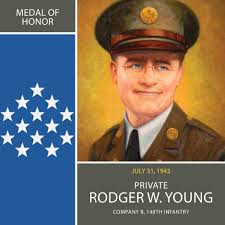
He reminds us of humble American hero Rodger Young, an Army soldier of the Ohio National Guard who fought and died in the Pacific War during the Battle of Munda Point in the Solomon Islands. 


In the Battle of Munda Point, Private Young, shot twice by machine gun fire, continued to move forward, firing his rifle and throwing hand grenades to take out an enemy pillbox and save his team. Young was posthumously awarded the Medal of Honor. 


Rather speaks with reverence about visiting cemeteries in Normandy and Honolulu. Rather's/Kirschner’s prose is crisp and unsentimental, but there are still glimmers of poetic insight.


Here is another found haiku in “What Unites Us”:


We live in debt to

those who have served and died, a

debt tallied in blood


Rather reveals truly patriotic American values –– perfect for this challenging time in the wake of a failed coup attempt, in the middle of a deadly pandemic, and as we confront an ongoing threat to our Constitution and democratic republic. Dan Rather provides a strong and hopeful commitment to truth, justice, and accountability in 2021 in this uplifting book. He helps smooth the jagged edges of the long arc of history.


National Memorial Cemetery of the Pacific, "Punchbowl Crater," Oahu, Hawaii, with Diamond Head in the background.

Panoramic view of the "National Memorial Cemetery of the Pacific" at Punchbowl Crater, Oahu, Hawaii, 2 September 1949, four years after the end of World War II. Fleet Admiral Chester W. Nimitz, USN, made a speech at the dedication ceremony.


Saturday, September 28, 2019

To Tell the Truth, Mr. President – II

by Bill Doughty

A young U.S. Naval Academy submarine officer sat in front of then-Capt. Hyman Rickover, head of the Navy's highly secret nuclear program. Near the end of the interview the young man faced a question that could hurt this chance of promotion to a key position. Rickover asked, "Did you always do your best?"

Jimmy Carter writes in his memoir "A Full Life: Reflections at Ninety" (Simon & Schuster, 2015) that he responded honestly: "No sir, I didn't always do my best." He knew he could have studied more, participated in more class activities and tried harder for advancement. Carter was sure he had failed the interview, but his truthful response earned him a position developing the first nuclear reactors for the Navy's submarines.

Later, as Governor of Georgia and while campaigning for president, Carter would remember the Rickover interview.
"One of the earliest and most persistent questions when I began campaigning was 'If elected, will you tell us the truth?' Having served as a legislator and governor, I knew how difficult it was to keep this promise, especially when facing influential constituents who held opposing opinions on subjects important to them. Nevertheless, I decided to make the commitment, and would tell my small audiences that I would make the same declarations to them and to all my other listeners. Often I would close by saying, 'If I ever lie or even make a misleading statement, don't vote for me.'"
Carter and Rickover. (NHHC)
Carter remembers how he and Rickover "established a close friendship from the beginning of my presidency." He remembers a visit aboard what was then the Navy's newest nuclear submarine:
"In May 1977 Rosalynn and I flew down to Cape Canaveral and spent the day with Rickover on the nuclear submarine USS Los Angeles. He and the captain put the new ship through extreme maneuvers, and he pointed out that the U.S. atomic-powered ships would stretch for more than ten miles if lined up stem to stern and that there had never been a nuclear incident that caused any damage or injured a person. I was surprised when I asked him how he would react to a total elimination of nuclear weapons – and nuclear power production – from the earth. He said it would be one of the greatest things that could happen."
First Lady Roaalynn Carter and President Jimmy Carter, along with Admiral Hyman G. Rickover (far right), visit USS Los Angeles in 1977. (Public Domain)
Rickover helped Carter plan and institute safety measures at American nuclear power plants in the wake of the Two Mile Island accident in March 1979. The measures were "patterned after those he maintained in navy ships." With Congress, Carter also successfully navigated the nation away from implementing breeder reactor nuclear power plants.

Yet, Carter says, "I remain convinced of the efficacy of nuclear power generation, especially as an alternative to the extremely threatening prospect of global warming caused by excessive consumption of coal, oil, and other fossil fuels." He adds, "There will have to be an emphasis on simplicity and safety of design and highly trained personnel to operate the reactors."
President G.H.W. Bush with former presidents Reagan, Carter, Ford and Nixon. (Navy)

Like other presidents, Carter eschewed nuclear weapons and worked toward nonproliferation. "I wanted to maintain peace and to reduce the world's nuclear weaponry as near to zero as possible."

Carter writes clearly and honestly about this relations with former presidents, including a deep friendship with Gerald Ford and strained relationship with Ronald Reagan. He says that, as the first president to install solar panels atop the White House, he was disappointed Reagan removed them after coming into office. In a conservationist initiative, Carter also championed protection of Alaska lands from commercial development.

"A Full Life" includes Carter's views on controversial issues like national intelligence, racial discrimination, abortion, drugs, poverty, peace in the Middle East and relations with Iran, China, Soviet Union and North Korea.

"Progress on the Korean Peninsula (toward reunification) was frustrated by reluctance among both the Koreans and some of my own military leaders," Carter notes. "As a submariner during the Korean War, I had felt frustrated when it ended with an arbitrary line drawn between North and South Korea plus merely a cease-fire and not a permanent peace treaty."

Lieutenant James Earl (Jimmy Carter) in the main control room of USS K-1. (NHHC)
He offers a fascinating and in some cases harrowing description of life aboard the submarines USS Pomfret and USS K-1 during the Cold War – and earlier aboard the battleships USS Wyoming and USS Mississippi. He considers the experience satisfying, rewarding and character-building.

"In "A Full Life" Carter also includes personal reflections on religion, charity work, painting, woodworking and writing post-presidency. 

He is the author of more than thirty books, including "Why Not the Best" (1975), "Keeping Faith: Memoirs of a President" (1982), "Always a Reckoning, and Other Poems" (1995), and "Call to Action: Women, Religion, Violence, and Power" (2014).

Remembering his interview as a young naval officer with taciturn Rickover, Carter reveals that some of the surprising questions during the interview involved his taste in music (jazz, country and classical) as well as books. Carter and Rickover discussed novels by William Faulkner and Ernest Hemingway, plays by Shakespeare and especially the naval novel "The Caine Mutiny" by Herman Wouk.

While president, Carter would read founding documents and continue to strive to always tell the truth.

"I tried to honor my campaign pledges, to make our government 'as good and honest and competent as the American people,' and to understand this challenge I paused on occasion to read the U.S. Constitution, and also the Universal Declaration of Human Rights, a simpler but more complete description of the goals to which we were committed."

This memoir ends with a hopeful note in "restoring the trust, admiration and friendship formerly enjoyed among other peoples."
"Our government should be known to be opposed to war, dedicated to the resolution of disputes by peaceful means, and, whenever possible, eager to accomplish this goal. We should be seen as the unswerving champion of human rights, both among our citizens and within the global community. America should be the focal point around which other nations can rally against threats to the quality of our common environment. We should be willing to lead by example in sharing our great wealth with those in need. Our own society should provide equal opportunity for all citizens and assure that they are provided the basic necessities of life."
He says the United States still has the capability of being a "sterling example" for others.

(Note: The first "To Tell the Truth, Mr. President" essay on Navy Reads is a review of Jon Meacham's "The Soul of America" and focuses on President Truman's contention that autocratic dictators lie in order to stay in power.)

BANGOR, Wash. (May 29, 2015) Former President Jimmy Carter is piped aboard during his arrival at the change of command ceremony for USS Jimmy Carter (SSN 23) at Naval Base Kitsap - Bangor. (U.S. Navy photo by MC1 Kenneth G. Takada/Released)


Friday, August 9, 2019

CNO Gilday / 'Love Your Enemies'

Review by Bill Doughty
Then-VADM Mike Gilday listens to Sailors at NIOC in 2017. Photo by MC2 Robert A. Hartland.

I happened to be reading "Love Your Enemies" by Arthur C. Brooks on July 31, the day Navy's new Chief of Naval Operations, Adm. Michael Gilday, had his hearing before the Senate Armed Services Committee. There's an unintended connection.

Brooks focuses on leadership and offers practical, heartfelt leadership advice.

For example: A good leader is "a greater force for good." "There is no inconsistency between kindness and effective winning leadership."

Brooks notes that authoritative leadership is not the same as authoritarian leadership. "Authoritative leaders ... are visionaries who set a course for an institution and inspire each member to take responsibility for getting to the final destination." 

That's Gilday's reputation – a visionary who employs kindness and strength, as revealed in a great Navy Times profile of the new CNO, the first to be so deep-selected for the position since Adm. Elmo Zumwalt.

In "Love Your Enemies: How Decent People Can Save America from the Culture of Contempt" (Broadside Books, HarperCollins, 2019) Brooks elaborates about a winning leadership style, as exemplified by Martin Luther King Jr., noting "prideful anger is the opposite of strength." 
"While coercive leaders drive people away by belittling and blaming, authoritative leaders garner their support by offering their encouragement and trust. They foster a culture that affirms each team member's importance to the work being done, and in doing so, convince individuals to invest deeply in the long-term prosperity of the organization. The aspirational approach of authoritative leaders produces the kind of success that builds on itself over time. While authoritative leaders promote their own overarching vision, they are not authoritarian. They do not suppress dissent, instead granting employees the freedom to disagree and solve problems on their own. The operational freedom granted by authoritative leaders promotes the individual creativity, accountability, and initiative that is essential to the success of any business. Authoritative leaders inspire a can-do spirit and enthusiasm for an organization's work because they ensure that no one feels muzzled or left behind. By letting every person know how her role helps accomplish the organization's mission, an authoritative leader empowers and motivates employees to become creative problem solvers."
FORT GEORGE G. MEADE, Md. (December 12, 2017) – Vice Adm. Mike Gilday, commander U.S. Fleet Cyber Command/U.S. 10th Fleet (FCC/C10F), meets with meets with Command Master Chief Dee Allen and assistant chiefs of staff during a regularly scheduled morning brief. U.S. Fleet Cyber Command serves as the Navy component command to U.S. Strategic Command and U.S. Cyber Command.(U.S. Navy photo by MC1 Samuel Souvannason)
CNO Gilday's empathy, commitment and character comes through in his testimony to Congress. Here are some examples of his words, as relates to people and ethos:
"Most Americans associate the strength of the Navy with gray-hulled ships at sea. But the true sources of our naval power are the people and loved ones who support them ... Like countless military families around the world, my family's love, their resourcefulness, and their support have made my naval service possible. I owe everything to them..." "I am committed to the fact that we need to treat people with dignity and respect, that behavior like, whether it's physical violence or whether it's sexual assault, has no place in the Navy, that racism has no place in the Navy, that domestic violence has no place in the Navy, that we have to be an organization that recognizes people's gender and treats them fairly as well as their sexual preference. So, my commitment to this committee is that I will try to set the best example that I can at the top, and I will lean on our flag officers, our commanders and in particular our chief petty officers to ensure that this ethos is something we bring to work every day and something that we live on and off the job..." "Ethics is a particularly important point for me and that begins at the top with my leadership and extends through all the flag officers as well as our commanders and right down through the chief petty officers who I consider a critical link to ensure that every day we go to work, we bring our values with us to work. It's especially important in combat that those values be maintained for all of the reasons that we understand so well. I commit to getting a better understanding of the issues, to holding people accountable, if an where they need to be held accountable, to getting after the root causes and ensure that if there is a problem with the culture of the community that that's addressed very quickly and very firmly."


Watch Gilday's testimony to see how he addresses issues like near-peer competitors, particularly China and Russia; emerging technology; Navy SEALs; Persian Gulf tensions; PCU Gerald R. Ford (CVN-78) and PCU Columbia (SSBN-826); shipyard maintenance and capacity; and the USS Fitzgerald (DDG-62) and USS John S. McCain (DDG-56) tragedies at sea.

Gilday's humility and qualities as a strong, authoritative leader shine through. By the way, his late father enlisted in the Navy right out of high school. Gilday grew up in a Navy family.

In "Love your Enemies," Brooks writes, "The ideal leaders today – whom we need more urgently than at any time in my life – are 'bridgers,' men and women dedicated to a radical embrace of diversity."


Brooks, author of "The Conservative Heart," defines contempt (anger mixed with disgust) and shows how contempt on both sides of the political spectrum poisons dialog and understanding. Key signs of authoritarian leadership are lack of empathy and seeing others as less than human.

Nazi Germany, the Soviet Union, and Rwanda provide examples: Nazi propaganda minister Joseph Goebbels compared Jews to rats. Joseph Stalin dehumanized Kulaks, calling them "vermin" before taking their land, separating their families, rounding them up and systematically exterminating them. Hutus referred to Tutsis as cockroaches before killing children, women and men in the Rwandan genocide and carnage.

Surrounded by "yes-people," authoritarian leaders foster complacency and mediocrity as they cause hurt and pain through their contempt.

Brooks's solution to countering and defeating contempt comes from teachings in the Bible, Bhagavad Gita and especially Buddhism, as in the advice of the Dalai Lama: "practice warmheartedness." By listening and NOT showing contempt for the other, "people can become not just warriors for their point of view but healers in their communities." 

From the Dhammapada teaching of the Buddha, "the master says":

Conquer anger through gentleness,
unkindness through kindness,
greed through generosity,
and falsehoods by truth

Contempt, Brooks says, is no match for love.


NEWPORT NEWS, Va. (June 6, 2019) Senior Chief Logistics Specialist Chiwanna Rogers, from Jacksonville, Florida, assigned to USS Gerald R. Ford’s (CVN 78) supply department, receives her senior chief cover from Master Chief Avionics Technician Tinesha Troupe during a frocking ceremony.( U.S. Navy photo by Mass Communication Specialist 3rd Class Brett Walker/Released)

Read this book and "you will see why the current model of contemptuous leadership is a losing proposition in the long run, as well as why better, not less, disagreement holds the key to greater harmony." Celebrate and surround yourself with different opinions and points of view while maintaining core values in order to succeed as a leader.
"Disagreement is good because competition is good. Competition lies behind democracy in politics, and markets in the economy. Markets and democracy are the two things that have made the United States into the most successful country in history, attracting the world's strivers, giving most readers of this book a good life, and creating a model for people all over the world. In politics and economics, competition – bounded by rule of law and morality – brings excellence."
Brooks uses examples including debates on gun safety, abortion and capitalism. He advises breaking out of "confirmation bias" silos and taking a leave of absence from social media. He also asks everyone to swear off anonymous behavior on the internet. And he calls for "harmonious cooperation" over contemptuous competition.
During the prospective CNO's testimony to the Senate Armed Services Committee, Gilday said:
"Both Sailors and Navy Civilians remain our competitive advantage. We owe them principled leadership, transparent and accountable processes, and efficient resources to do their jobs effectively ... I am truly honored to be part of the greatest navy in the world and, if confirmed, I will work closely with this committee and this Congress as we prepare to meet the challenges ahead."
The United States Senate unanimously (and harmoniously) confirmed Gilday's promotion to his fourth star and appointment as Chief of Naval Operations.