Review by Bill Doughty "For students of freedom and teachers of history" That's the dedication for Taylor Branch's 2013 "The King Years: Historic Moments in the Civil Rights Movement," a book of highlights of his MLK trilogy.
"The King Years" offers highlights of "Parting the Waters," "Pillars of Fire" and "At Canaan's Edge," in which the Pulitzer Prize-winning Branch presents the definitive history of America's civil rights movement in the 1950s and 60s through the life of its chief architect, Dr. Martin Luther King, Jr. Branch recognizes the limitations due to brevity in his 18 historical turning points from the 1954-1968 era represented in "The King Years." Despite the "hybrid framework," as Branch calls it, the book is essential to anyone who wants to understand King's influence but who doesn't have time to read 2,306 pages that took Branch 24 years to write.
"Our goal in this edition is to convey both the spirit and sweep of an extraordinary movement. Newer generations will find here the gist of a patriotic struggle in which the civil rights pioneers, like modern Founders, moved an inherited world of hierarchy and subjugation toward common citizenship. Others can recall vivid triumph and tragedy at the heart of national purpose for the United States, whose enduring story is freedom. The unvarnished history should resist fearful tides to diminish that story. Above all, the King years should serve as a bracing reminder that citizens and leaders can work miracles together despite every hardship, against all odds."
Dr. King in Birmingham jail, 1967.
King's story begins in 1954, sixty years ago this year, the same year as the Supreme Court's landmark decision in Brown vs. Board of Education against school segregation.
From Montgomery to Nashville, Birmingham to Selma, with a requiem in Memphis, "The King Years" focuses on crossroads largely between Alabama and Tennessee -- with Birmingham at the center.
"Birmingham had suddenly changed King from a tireless drone on the speaking circuit to the star of a swarming hive," Branch writes. The author also makes stops in Mississippi, Chicago, Cow Palace, Atlantic City, Oslo and Vietnam. The book explores the Dr. King's relationships with close advisors, religious leaders, politicians including LBJ, and government officials, notably J. Edgar Hoover who investigated King as a suspected communist. He shows how FBI wiretapping contributed to "twisting every motive and circumstance ... spreading false information" in order to breed confusion, resentment and mistrust.
"There was more to Hoover's reaction than either his hostility to communism or his prejudice against Negroes, both of which were strong. Above all else, the Director was a consummate bureaucrat, sensitive to deep historical tides. Twenty years earlier, the FBI had mushroomed in size to guard against Nazi espionage. From a mid-Depression force of fewer than five hundred agents, the Bureau had more than tripled by Pearl Harbor, then tripled again by D-Day. Hoover never needed further education on the advantages of an intelligence agency over a law enforcement department. An intelligence agency enjoyed greater prestige, less danger of public failure, greater freedom and power through the mystique of secrecy, and an enhanced role for shaping national values and symbols. To avoid postwar retrenchment at the FBI, he fought a protracted bureaucratic war to become chief of the new worldwide intelligence apparatus -- even though he spoke no foreign languages and never then or later set foot outside the United States. On losing out finally to the newly created CIA, a vengeful Hoover had extracted from President Truman a major consolation prize: responsibility for 'background checks' and other loyalty investigations of federal employees. Such work not only sustained the Bureau's manpower levels through the McCarthy era but vastly increased Hoover's political influence as the defender and oracle of domestic security."
J. Edgar Hoover advises President Richard Nixon.
"The King Years" doesn't include mention of the National Security Agency's Project Minaret, a surveillance initiative in the late 60s against MLK and other nonviolent activists and Vietnam protesters. Secret information about NSA's Project Minaret was revealed by the Church Commission and reported in recent months by PBS Frontline and George Washington University. Taylor Branch concludes with an ode to the global legacy of nonviolence from "At Canaan's Edge."
"A paradox remains. Statecraft is still preoccupied with the levers of spies and force, even though two centuries of increasingly lethal 'total war' since Napoleon suggest a diminishing power of violence to sustain governance in the modern world. Military leaders themselves often stress the political limits Military leaders themselves often stress the political limits of warfare, but politics is slow to recognize the glaring impact of nonviolent power. In 1987, students spilling into the streets of South Korea compelled a dictator to respect a permanent structure for elections. In 1989, the Soviet empire suddenly dissolved in a velvet revolution of dockworkers' strikes and choruses of 'We Shall Overcome' at the dismantled Berlin Wall. There was no warning from experts, nor any hint of the nuclear cataclysm long prepared for and dreaded. That same year, Chinese students inspired the world from Tiananmen Square with nonviolent demonstrations modeled on the sit-ins, planting seeds of democracy in the authoritarian shell of Communist control. In 1990, Nelson Mandela emerged from twenty-seven years in prison to a Cape Town Balcony, where he destroyed the iron rule of apartheid not with Armageddon's revenge but a plea for hopeful consent: 'Universal suffrage on a common voters' roll in a united, democratic, and non-racial South Africa is the only way to peace and racial harmony."
Branch's dedication at the beginning of "The King Years" -- "For students of freedom and teachers of history" -- explicitly highlights the importance of education in promoting freedom and democracy, principles the Navy defends around the world.
Although science says there is no such thing as race, that doesn’t mean there is no “racism.”
Under a guise of racism, a dominant class can subjugate, discriminate, and try to control a subordinate class, including by suppressing or subverting their right to vote –– based on superficial differences.
Isabel Wilkerson
Isabel Wilkerson makes the case for recasting, so to speak, “racism” as “casteism” in her indispensable book for our time: “Caste: The Origins of Our Discontents” (Random House, 2020), an Oprah’s Book Club selection.
As for “no such thing as race…”
Scientists call ‘race’ an artificial construct. Wilkerson writes this, citing a great Navy veteran scientist:
“Two decades ago, analysis of the human genome established that all human beings are 99.9 percent the same. ‘Race is a social concept, not a scientific one,’ said J. Craig Venter, the geneticist who ran Celera Genomics when the mapping was completed in 2000. ‘We all evolved in the last 100,000 years from the small number of tribes that migrated out of Africa and colonized the world.’” (Venter is a former Navy corpsman and Vietnam War veteran; we have featured his work and his autobiography several times here on Navy Reads.)
Now DNA kits ordered by mail show “that race as we have come to know it is not real,” Wilkerson says. “It is a fiction told by modern humans for so long that it has come to be seen as a sacred truth.”
Wilkerson interviews a Nigerian-born playwright, who says, “You know that there are no black people in Africa. Africans are not black. They are Igbo and Yoruba, Ewe, Akan, Ndebele. They are not black. They are just themselves. They are humans on the land. That is how they see themselves, and that is who they are.”
Dr. Martin Luther King Jr., who embraced the nonviolent teachings of Mohandas Gandhi, saw the issue of racism framed as casteism. Sixty-three years ago, in February 1959, he and his wife, Coretta Scott King, traveled to and within India, where MLK self-identified as “an untouchable.” The Kings visited the grave of Gandhi, laid a wreath, and prayed.
In India, people are born into castes that are supposedly divinely dictated. Discrimination against people considered part of the lower classes was acceptable, lawful, institutional. While civil rights laws in India in the 1940s (and in the United States in the 1960s) have made it illegal to discriminate, "both countries still live with the residue of codes that prevailed for far longer than they have not."
Casteism in the U.S. began more than a century before we became a nation.
Actions
Beginning in 1619, Europeans brought Africans to the English colonies as property and to the very bottom of a social hierarchy. Confronting the morality of the institution led eventually and with great upheaval to the Emancipation Proclamation and American Civil War nearly 250 years later. But like it or not, racism, constructed within a framework of casteism, had been already institutionalized.
“In the decades to follow, colonial laws herded European workers and African workers into separate and unequal queues and set in motion the caste system that would become the cornerstone of the social, political, and economic system in America. This caste system would trigger the deadliest war on U.S. soil, lead to the ritual killings of thousands of subordinate-caste people in lynchings, and become the source of inequalities that becloud and destabilize the country to this day.”
“After the Civil War, Confederates blamed the people they had once owned for the loss of the war,” Wilkerson writes. There was a backlash to “take our country back.” The Lost Cause. The Big Lie.
South Carolina's Hammond
Wilkerson contends, “Caste, along with its faithful servant race, is an x-factor in most any American equation, and any answer one might ever come up with to address our current challenge is flawed without it.”
She presents dozens of examples of the horrors inflicted by the dominant class in America over previous centuries, including torture, riots, and lynchings.
We learn of the horrid senator of South Carolina James Henry Hammon, who said, “God created slaves for us.” Hammon raped women, including his own daughter, and sexually assaulted four of his nieces. We also read the crushingly sad story of Willie James Howard, a 15-year-old black boy who made the fatal mistake of having a schoolboy crush on a white girl in 1943 in Grand Gulf, Mississippi. And, we hear of ludicrous practices under endogamy, miscegenation, and eugenics laws and theories.
A eugenics book published in 1916 by an American, Madison Grant, titled “The Passing of the Great Race,” became popular with white supremacists.
Adolf Hitler called it his bible.
The Nazis were inspired by how the American upper class treated blacks and especially indigenous peoples. But, fascist Germans of the 30s and 40s escalated and intensified the evil when they exterminated millions of people based on eugenics and claims of Aryan supremacy.
Hitler and Nazi casteism
A caste system set up by Hitler and the Nazis justified the torture and deaths of millions of Jews, homosexuals, Roma people, and people with disabilities. To the Nazis, it was “obvious Jews were a separate race.”
When Einstein, a Jew, escaped Germany as an immigrant to the United States, he was shocked to discover he had moved from a country of castes to another country where, this time, people of color were considered a subordinate class.
Once we accept the reality of caste systems, it helps us understand the point of view of others.
That includes many people in the privileged dominant class who feel fear and resentment when they start to lose their privileged position. “A caste system builds rivalry and distrust and lack of empathy,” Wilkerson contends.
Will the dominant class –– through fear, anger, and resentment –– do anything, accept anything, to try to retain the power hierarchy? Think: sedition, treason, secession.
This week, the U.S. Department of Justice announced the indictment of members of the Oath Keepers, including the far-right group’s Texas-based founder, on charges of seditious conspiracy related to the January 6, 2021, U.S. Capitol insurrection.
Oathkeepers stack into the U.S. Capitol, along with other Trump supporters, during the insurrection of Jan. 6, 2022.
Reactions
People confronted with scenes of outright violence respond in different ways. Some –– like those who attended lynchings of black people in the American South, or German citizens who swooned when Hitler’s stormtroopers returned from invading Poland –– react with joy. Other people may be outraged at first but later find justification for ignoring or even condoning the violence.
For example, despite being an advocate of slavery Secretary of the Navy James K. Paulding reacted strongly after he witnessed what Wilkerson describes as “barefoot men and women locked together with the weight of an ox-chain in the beating sun, forced to walk the distance to damnation in a state father south and riding behind them, ‘a white man on horse back, carrying pistols in his belt, and who, as we passed him, had the impudence to look us in the face without blushing.’” Paulding said he was outraged to see “such flagrant and indecent outrages upon humanity … a villain, in thus marching half naked women and men, loaded with chains, without being charged with a crime but that of being black…” [Paulding, SECNAV from 1838 to 1841, was a contemporary of David Dixon Porter, Isaac Hull, and John Rodgers, serving with them on the Board of Navy Commissioners. Paulding was an ardent defender of slavery and called abolitionists “satanic.” He is also remembered for being opposed to steamships and engineers in the Navy.]
The armed services have come a long way in promoting equality and dignity, especially since the 1960s; nevertheless, military readers will cringe at some of the lack of empathy and outright prejudice and bigotry in the past.
MA1 Laymoun Ferguson lights a candle on National Holocaust Remembrance Day at Commander, Fleet Activities Sasebo. (MC3 Mackenzie P. Adams)
Wilkerson reminds us that during World War I, black soldiers were segregated not only from their fellow white warfighters but also from their European counterparts in uniform.
“American military command informed the French of how they were to treat the black soldiers, clarified for them that these men were ‘inferior beings,’ no matter how well they performed on the front lines, that it was of the utmost importance’ that they be treated as inferior.
“The fact that military command would take the time in the middle of one of the most vicious wars in human history to instruct foreigners on the necessity of demeaning their own countrymen suggests that they considered adherence to caste protocols to be as important as conducting the war itself.”
Black American heroes like Pvt. Burton Holmes and Cpl. Freddie Stowers, both killed in action, were blocked from receiving the Medal of Honor, despite nominations by their white officers who witnessed their bravery and “broke with caste” to nominate them. [Holmes was awarded the Distinguished Service Cross posthumously in 1919; Stowers’s sisters accepted the MoH on their brother’s behalf in 1991, presented by Navy/WWII veteran President George H.W. Bush.]
Veterans of both world wars came back from the warfront to confront Jim Crow racism and the construction of more monuments to losing leaders of the Civil War.
The 90-foot tall, 17,000-square-foot carving at Stone Mountain, Kennesaw, Georgia, honoring the Confederacy. Carving began in 1964, the year of the Civil Rights Act and a year before the signing of the Voting Rights Act. The carving was dedicated by Vice President Spiro Agnew in 1970. It was completed in 1972.
Retractions
Confederates lost the war but won the peace, according to Wilkerson, especially when thousands of monuments, symbols, and namesakes to traitors who fought to defend slavery were set up throughout the United States.
Local governments removed statues of Robert E. Lee, including in Charlottesville and Richmond, Virginia, last summer, and in New Orleans, Louisiana, in 2017 after public hearings. In New Orleans:
“At one hearing, a Confederate sympathizer had to be escorted out by police after he cursed and gave the middle finger to the audience. A retired lieutenant colonel in the Marine Corps, Richard Westmoreland, came at it from the other side. He stood up and said that Erwin Rommel was a great general, but there are no statues of Rommel in Germany. ‘They are ashamed,’ he said. ‘The question is, why aren’t we?’”
Germany looks at its history “without blinking,” highlighting the shame of what the Nazis did –– and what good people failed to do; but, the Germans are neither ashamed nor too proud to confront their history. They reject the hate of the Nazis and honor the victims of the Third Reich.
Wilkerson notes that U.S. Confederacy monuments on pedestals such as those honoring Robert E. Lee –– as well as Georgia’s Stone Mountain, bigger than Mt. Rushmore, featuring Lee, Jefferson Davis, and Stonewall Jackson –– are up high so everyone has to literally look up at them. But in Germany, where there are numerous monuments to the victims but none to Nazis, people see stolpersteine, stumbling stones embedded in the cobblestones, each denoting a victim of the holocaust or other Nazi horrors. “Leaning over to read the names on the stumbling stones forces you to bow in respect,” Wilkerson observes.
Stolpersteine commemorate the victims of the Nazis, who receive no monuments in Germany for their lost cause.
Traction
Sailors raise the flag on MLK Day in Yokosuka, Japan, Jan. 17, 2011. (PO2 Devin Dow)
MLK’s famously said, “We shall overcome because the arc of the moral universe is long but it bends toward justice.” He marched in Selma for voting rights. He realized that voting rights in a full and open democracy were key to ending casteism.
Some of Wilkerson’s own personal first-hand examples of dealing with casteism, particularly in a restaurant, dealing with a plumber, or while flying first class, seem petty and unnecessary in the context of the moral universe presented in the bulk of her book. However, I can understand if others feel differently.
On the other hand, Wilkerson’s conclusions at the end of this great book are as big as an arc can be, and her optimism is inspiring:
“We look to the night sky and see the planets and stars, the distant lights as specks of salt, single grains of sand, and are reminded of how small we are, how insignificant our worries of the moment, how brief our time on this planet, and we wish to be part of something bigger than ourselves, to magnify our significance, to matter somehow as more than the dust that we are.
“Even the longest lived of our species spends but a blink of time in the span of human history. How dare anyone cause harm to another soul, curtail their life or life’s potential, when our lives are so short to begin with?”
A view of our galaxy. (NASA)
Wilkerson concludes that the answer is in our hands: “We are responsible for our own ignorance or, with time and openhearted enlightenment, our own wisdom. We are responsible for ourselves and our own deeds or misdeeds in our time and in our own space and will be judged accordingly by succeeding generations.” Isn’t the answer truly in our hands when we hold a good book –– or a ballot?
Wilkerson, author of “The Warmth of Other Suns,” is a winner of the Pulitzer Prize. In 2016 President Barack Obama presented Wilkerson with the National Humanities Medal for "championing the stories of an unsung history."
Washington and Lafayette with the militia at Valley Forge. (Lib. of Congress)
Review by Bill Doughty
Fear of a standing army and navy prompted the Framers to draft the stilted wording and punctuation of the Second Amendment to the Constitution that called for citizens to arm themselves as part of civilian "well regulated militia." But after the Revolutionary War, when members of the militia were not compensated for their service, officers threatened to mutiny and march on Washington D.C. The mutiny was put down by George Washington himself. That was in March 1783 – 285 years ago this month. Michael Waldman recounts the story in "The Second Amendment: A Biography" (Simon & Schuster, 2014), a good primer for anyone interested in how fear and paranoia of tyranny brought on a passion for firearms in the United States. Waldman explores the meanings of "the right of the people," "the security of a free state," and "militia" in what it means to keep and bear arms and not infringing on that right. Fear and paranoia have been potent weapons for decades in preventing legislation for sensible gun laws, according to Gabrielle Giffords and Mark Kelly, authors of "Enough: Our Fight to Keep America Safe from Gun Violence" (Scribner, 2014), a personal but clear-eyed look at the issue. Senator John McCain and General Stanley McChrystal both endorsed their book, with McChrystal calling the authors, "inspiring voices for responsibility. We need to listen." Giffords and Kelly show how "wannabe military" militia try to look the part, speak in acronyms to sound cool, and align themselves with fundamentalist, white supremacist survivalists who, like the National Rifle Association, pose a real threat to society. The NRA is dangerous to citizens when they attack background checks, prohibit research into gun violence, and prevent voting on restrictions on armor-piercing bullets, ultra-capacity magazines, and assault-style military grade weapons, according to the authors. Astronaut Capt. Kelly recounts his time in the Navy and having to lock his handgun in the Yokosuka base armory while he was stationed aboard USS Midway in 1990. "We tried to handle the deadly weapons of war with the utmost respect," he writes. Kelly lived off base, where firearms (and gun incidents) are unheard of. He fought – and dodged incoming fire as an F-14 fighter pilot in the Gulf War, Operation Desert Storm. Both authors are gun owners who, even after Giffords was nearly assassinated by a gunman in 2011, shoot at ranges. Kelly is an avid hunter. Neither wants to do away with the Second Amendment. But they don't understand why the United States, which has only around one percent of the world's population of children, has 85 percent of the world's children deaths by guns. "Enough" was one of the first words Giffords said after the senseless massacre of twenty young children and six adults at Sandy Hook Elementary School in Newtown, Connecticut just before Christmas, 2012. This powerful book walks us through the preventable tragedies of Tucson, Virginia Tech, Columbine, Aurora and Newtown. The book was written before mass shootings and killings in Orlando, Las Vegas and, of course, at Marjory Stoneman Douglas High School in Lakeland, Florida last month. Gun control was part of society in the 1800s, including in Tombstone and Dodge City. Laws have come and gone, depending on the fear-inducing power and intimidation of the NRA: The National Fire Arms Act of 1934 after an assassination attempt on FDR; The Gun Control Act of 1968 in the wake of assassinations of JFK, RFK and MLK; the Brady Bill of 1993 after an attempted assassination of President Reagan; and the Assault Weapons Ban of 1994 after a spike of violence. In the mid-90s white identity fundamentalists at Waco, Ruby Ridge and Oklahoma City (Timothy McVeigh) fomented hate, fear and violence. McVeigh had been a member of the NRA and shared NRA leader Wayne LaPierre's "demonization of the ATF" (Bureau of Alcohol, Tobacco, Firearms and Explosives). In the wake of McVeigh's bombing of the Murrah federal building that killed 168 people, including children in the day-care center, and wounded more than 680 others, George H. W. Bush resigned his life membership in the NRA. Domestic terrorism can still explode in our society. Witness the bombings this month in Austin, Texas. But the number of bombing incidents pales in comparison to mass shootings. Those who fear tyranny are causing a tyranny of violence. Navy Veteran Kelly rejects their paranoia, promoted by the NRA:
"The NRA has, in essence, turned the tables on the Declaration of Independence. Forget about a government designed to protect 'life, liberty and the pursuit of happiness.' Most of us trust our government: even if, sure, the average ninth grader can build a better website, we believe the men and women we elect to represent us have our best interest at heart. But to hear the NRA tell it, once federal or state governments start to pass laws to reduce gun violence in any way, shape, or form, it's a 'slippery slope' or 'jackbooted' federal agents banging on a gun owner's door to demand he turn over his firearm. As a Navy pilot who risked his life during bombing missions over Iraq and Kuwait, I find that preposterous and offensive. I was fighting to protect the ideals of a country and a government that I believed in. I blasted into space for my country, in a government-financed spaceship. The NRA'S slippery slope is a fantasy, and a dangerous one. If the NRA gets its way, we'll be left with a country where everyone is armed but no one is safe."
When Gabby Giffords was shot, the shooter was tackled while trying to reload. When a bystander grabbed the shooter's gun, the bystander was nearly shot by someone responding with a concealed weapon. In the chaos of a shooting, more guns may not be the answer. And in a peaceful society, more guns indiscriminately in hands of more people is not the answer, according to the authors. As long as there are lax laws for background checks, mentally ill people, including paranoid conspiracy theorists, Islamist terrorists and other end-times believers, have relatively easy access to firearms in the United States. The irony is that crazed assassins who want to become famous for killing a public figure can instead become famous for spurring responsible gun control regulations and legislation. "March for Our Lives": Yesterday, an estimated 800,000 students, survivors and supporters marched in Washington D.C. and thousands more marched in more hundreds of cities across the United States in a call for positive change for safer schools and streets and sensible gun laws, including restrictions on offensive military style weapons designed to kill people rather than for hunting or defense.
Yolanda Renee King stands with Jackie Corin.
Marjory Stoneman Douglas student Jackie Corin said last week, "The people of America care," adding, "The love outweighs the hate, no matter what." Corin said she and other students are following the inspiration of "students during the Vietnam War era" as well as the nonviolent philosophy of Dr. Martin Luther King, Jr. Corin stood with MLK's nine-year-old granddaughter Yolanda Renee King yesterday. King said, "My grandfather had a dream that his four little children will not be judged by the color of their skin, but by the content of their character," adding, "I have a dream that enough is enough."
David Hogg at March for Our Lives March 24, 2018.
Fellow student David Hogg, hoping for common ground in the debate, said, "People get afraid and then misunderstand people. We're not trying to take your guns; we're trying to save the future of America." In Michael Waldman's Second Amendment "biography," which calls for focusing on the phrase "the right of the people," the author concludes this about gun violence:
"This is a remarkably dense and thorny issue. The controversy is thick with symbolic politics. It pits rural culture against urban norms. It asks us to avoid emotionalism, to rely more on research, to find policies that actually work. Efforts to enact sensible regulations of guns face many obstacles: powerful organizations, inflamed opponents, cowardly politicians, a media culture that (when not suffused with violence itself) quickly loses interest. To surmount these will require grit and wisdom. It should not have to require overcoming a hostile judiciary, misreading history, over-interpreting text, and imposing political views in the guise of judicial philosophy."
The burning of Washington D.C. in 1814 proved the weakness of relying on the states' militia.
After Waldman recounts venerated George Washington's role in preventing a march by a mutinous militia on Philadelphia, the nation's capital at the time, he tells how the militia service itself "withered." In the War of 1812, the British overran state militias and they marched on Philadelphia, burning the White House. It was clear that a well-regulated and equipped military was needed more than a "well-regulated militia." Fear of a standing army and navy gradually gave way to a sense of confidence in the strength of a free democracy, relying on the people and their right to vote, being able to withstand a rise of tyranny, even from within. Waldman reminds us of this quote from Abraham Lincoln while debating slavery and an earlier Supreme Court decision: "Public sentiment is everything. With public sentiment, nothing can fail; without it, nothing can succeed. Consequently he who molds public sentiment goes deeper than he who enacts statutes or pronounces decisions."
Review by Bill Doughty Shouts of "Allah-u Akbar!" and gunfire on a street in Los Angeles... Peaceful marches in the heart of the south... Violent extremism against white and black civil rights leaders... Police brutality, FBI surveillance and voting suppression...
Taylor Branch's "Pillar of Fire" opens with a fiery confrontation in South-Central LA in 1962 as Nation of Islam followers, police and civilians clash. Threaded throughout this book are themes of race, religion, war, abuse of power and assassination. This second book in the trilogy about the history of the Civil Rights Movement continues Martin Luther King Jr.'s struggle and is interwoven with the life and death of Malcolm X. America was at a crossroads in the 1960s; the choice was between violence or nonviolence to bring about social change in the midst of fear of communism, growing conflict leading to war in Vietnam and misguided surveillance by the FBI. The surveillance was condemned by FBI Director James Comey in a very public and nuanced way last week. Most of Branch's book centers on events in Mississippi, Florida, Georgia and Alabama, including Birmingham and Selma and in other key locations in the Deep South. In the face of hate, beatings and murder, King, unlike Malcolm X, preached nonviolence:
"King urged his Savannah audience not to panic. 'We are on the move, and the burning of our churches will not deter us,' he cried. 'The bombing of our homes will not dissuade us. The beating and killing of our young people will not divert us ...' He preached a full rhythmic litany on marching that paused near ancient Jericho for a word of caution. There were 'no broad highways' or 'quick solutions' ahead, and 'it would be irresponsible' to say there were. 'Instead, the course we must follow lies through a maze of interrelated demands and counter demands, hopes and aspirations, fears and hatreds,' King said. 'But difficult and painful as it is, such a course must be charted.'"
Nation of Islam leader Elijah Muhammad and then disciple Malcolm X.
Malcolm X ridiculed King and the peaceful course he charted, calling him a "traitor to the Negro people" and mocking King's peaceful demonstrations. Malcolm X celebrated the crash of an Air France jetliner in June 1962 that killed more than 100 prominent white citizens, referring to them as "white devils," a term used by Nation of Islam founder Elijah Muhammad, in what Branch calls his "concocted version of Islam." Seeking to understand and overcome hate, King said the growing calls for violence fomented by Black Muslims "gives me greater responsibility to help get rid of conditions that created such misguided and bitter individuals." Bitterness, hate and violence would lead to the assassination of Malcolm X by Nation of Islam followers, ironically after Malcolm had turned away from some of his earlier vitriol against King. Branch works chronologically through the history and personalities of the era concurrent with the Civil Rights Movement: Cuba and the Soviet missile crisis, JFK's assassination, LBJ's "hypersensitive and erratic" behavior, changing politics in the South, and the growing disparity of haves and have-nots as voting rights are curtailed. Speaking in Berlin, Germany, a city then still divided by communism, King said, "We see the giants. We see massive urban societies, dominated by well-entrenched political machines that see new voters as a threat to their power."
King at the FBI after meeting with J. Edgar Hoover in 1964.
Communism was viewed by some as the greatest threat to the United States. Fear of communism (and racism) fueled J. Edgar Hoover and the FBI in their persecution of King. Simultaneously, fear of communists drove international policy in the Cold War that included covert raids in Southeast Asia, coups in South Vietnam and surveillance off the coast of North Vietnam in the mid-60s. Confrontation in the Gulf of Tonkin involving USS Maddox (DD-731), joined by USS C. Turner Joy (DD-951), led to "police action" overseas. National Security Advisor McGeorge Bundy went to Vietnam and cabled LBJ that the country appeared to be "a civil war within a civil war." Fifty years ago, at the same time that local actions by police in some southern states actively suppressed voting rights and freedom of assembly, "police action" in Vietnam, ostensibly in the name of freedom, continued to escalate.
A fake letter created by the FBI suggesting King commit suicide.
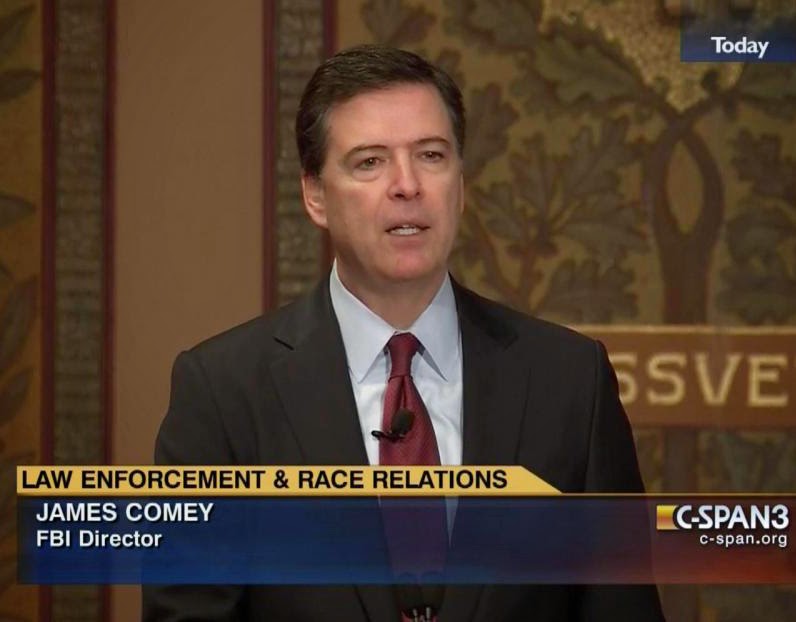
King, who opposed the Vietnam War, was awarded the Nobel Peace Prize in 1964. Heavyweight boxer Muhammad Ali, a follower of the Nation of Islam, was stripped of his title for his refusal to fight in Vietnam. Ali, originally closely tied with Malcolm X, eventually grew close to MLK. FBI wiretaps against Ali and King were revealed by newspaper columnist Carl Rowan. On the first anniversary of JFK's assassination, the FBI attempted to kill King's character with a "recording of sex groans and party jokes, together with a contrived anonymous letter calling King 'a great liability for all of us Negroes.'" The fake letter by the FBI urged King to kill himself. Ben Bradlee, editor of Newsweek at the time, became locked in the middle of Hoover's FBI war against King and a burgeoning scandal when he refused to name his sources. Branch writes, "Not until 1975, three years after Hoover himself was dead, did congressional investigations begin to uncover in retrospect the outlines of the FBI's covert crusade." Last week, FBI Director James B. Comey spoke "hard truths" involving race and law enforcement. His remarks were delivered at Healy Hall, named after the university's 29th President, Patrick Francis Healy, who was born into slavery, in Georgia, in 1834. Comey said:
"There is a reason that I require all new agents and analysts to study the FBI’s interaction with Dr. Martin Luther King, Jr., and to visit his memorial in Washington as part of their training. And there is a reason I keep on my desk a copy of Attorney General Robert Kennedy’s approval of J. Edgar Hoover’s request to wiretap Dr. King. It is a single page. The entire application is five sentences long, it is without fact or substance, and is predicated on the naked assertion that there is 'communist influence in the racial situation.' The reason I do those things is to ensure that we remember our mistakes and that we learn from them. "One reason we cannot forget our law enforcement legacy is that the people we serve and protect cannot forget it, either. So we must talk about our history. It is a hard truth that lives on," Comey said.
Watts riots in Los Angeles, 1965. (Photo from Library of Congress)
"America isn’t easy. America takes work. Today, February 12, is Abraham Lincoln’s birthday. He spoke at Gettysburg about a 'new birth of freedom' because we spent the first four score and seven years of our history with fellow Americans held as slaves—President Healy, his siblings, and his mother among them. We have spent the 150 years since Lincoln spoke making great progress, but along the way treating a whole lot of people of color poorly. And law enforcement was often part of that poor treatment. That’s our inheritance as law enforcement and it is not all in the distant past. "We must account for that inheritance. And we—especially those of us who enjoy the privilege that comes with being the majority—must confront the biases that are inescapable parts of the human condition. We must speak the truth about our shortcomings as law enforcement, and fight to be better. But as a country, we must also speak the truth to ourselves. Law enforcement is not the root cause of problems in our hardest hit neighborhoods. Police officers—people of enormous courage and integrity, in the main—are in those neighborhoods, risking their lives, to protect folks from offenders who are the product of problems that will not be solved by body cameras.
J. Edgar Hoover (photo art from Jewishcurrents.org)
"We simply must speak to each other honestly about all these hard truths. "In the words of Dr. King, 'We must learn to live together as brothers or we will all perish together as fools.' "We all have work to do—hard work, challenging work—and it will take time. We all need to talk and we all need to listen, not just about easy things, but about hard things, too. Relationships are hard. Relationships require work. So let’s begin that work. It is time to start seeing one another for who and what we really are. Peace, security, and understanding are worth the effort." The full transcript of Comey's historic speech is available at FBI.gov. As for Taylor Branch's masterful presentation in "Pillar of Fire," this review can only scratch the surface. The Navy is mentioned several times in Branch's book. President Johnson ordered Secretary of Defense Robert McNamara to deploy military helicopters and Navy Divers – "Navy Frogmen" – to assist in a search for three missing civil rights workers. Some other revelations and insights within its pages:
One of the last books Medgar Evers read before he was assassinated was Harper Lee's "To Kill a Mockingbird."
Birmingham, Alabama became known as "Bombingham." Violence there was condemned by Russia and the Vatican, especially after four girls were killed in a church bombing by white supremacists.
Author and activist James Baldwin called Selma, Alabama "one of the worst places I ever saw."
Alex Haley, U.S. Coast Guard veteran and Malcolm X biographer, developed a bond with Malcom X over a "mutual love of Shakespeare."
Malcolm X disparaged baseball great Jackie Robinson for not being more strident; Robinson returned the favor, saying Malcolm X was only interested in revenge and retaliation.
Around the same time MLK was named for the Nobel Peace Prize in 1964, Malcolm X was studying Islam at the University of Saudi Arabia, tutored in Sunni Islam.
LBJ zealously read "The Rich Nations and the Poor Nations" by Barbara Ward, which inspired his slogan, "Great Society" focusing on poverty, education and environment.
Civil rights demonstrators were tortured: hung by handcuffed arms at Parchman Penitentiary; put in concrete sweatboxes, chicken coops and miniature cells in St. Augustine, Florida; and beaten with blackjacks, kicked and shocked with cattle prods by police and sheriffs.
In 2011 Navy Reads featured a review of the first book in Branch's trilogy, "Parting the Waters," entitled "Deeply Rooted in the American Dream."
The soundtrack to Joshua Wong's account of the trials and tribulations in Hong Kong can be found in Lin Manuel Miranda's "Hamilton."
"Unfree Speech: The Threat to Global Democracy and Why We Must Act, Now" by Joshua Wong (Penguin Books, 2020) is written by a young man who is "young, scrappy and hungry" and ready to "rise up." He seems to echo Hamilton: "I'm not going to waste my shot."
Wong's is the voice of a boy becoming a man –– a self-described "diehard fanboy" of Gundam, OnePiece, Marvel and DC comics, as well as a student of Gandhi and MLK. He and his close friends Agnes Chow and Ivan Lam (top photo) were sentenced to prison this week by a court in Hong Kong for a pro-democracy protest they held last year.*
Wong offers a brief history of the situation in Hong Kong since the time of the transfer of sovereignty from Great Britain to China, July 1, 1997: The recession in '97, the SARS outbreak in 2002, "misguided housing policies," the National Security Bill, the barring of political organizations, growing demands for more democracy, and the rise of the Umbrella Revolution/Movement.
"The movement didn't happen in a social vacuum. The broken promise of electoral reform and subsequent police crackdown catalysed the unrest, but they didn't cause it. It took decades of pent-up frustration over income inequality, social immobility and other injustices for public anger to finally boil over. Martin Luther King Jr famously said that freedom is never voluntarily given by the oppressor and that it must be demanded by the oppressed. The Umbrella Movement was our way of making our demands heard."
"The movement's symbol, the yellow umbrella, captured both the humility and humanity of the non-violent protesters," Wong writes. From Hamilton: "I was aiming for the sky," "Forgiveness, can you imagine it?" and "Tomorrow there'll be more of us."
As important as the history is Wong's explanation of structure of Hong Kong's government: The Executive is chosen by Communist Party loyalists and controlled by Beijing. The Legislature is not truly representative (two 35-member chambers: GC-geographical, chosen by region, and FC-functional, chosen by Beijing-friendly business and industry. The Judiciary, supposedly independent, is becoming more deferential to the executive, where "the criminal justice system is increasingly used as a political tool to silence dissent."
Voter suppression, election interference and punishment of free speech are hallmarks of Communist China's war on democracy. "Hong Kong is gradually becoming an autocracy," Wong writes. He calls it ominously like Star Wars's "The Empire Strikes Back."
Much of this book, disjointed and rough at times, comes from his diary from prison, both at the Stanley Prison for adults and earlier while at the Pik Uk Correctional Institution for juveniles. He gives a commentary on friends, prison food, entertainment, and hunkering down during a hurricane. Again from Hamilton: "In the eye of a hurricane, there is quiet" ... "Blow us all away" ... "Look around, look around" ... "I'll write my way out, overwhelm them with honesty."
Wong describes a "perfect storm" building, and even though this book was published this year, it was before COVID-19 was part of that storm.
Agnes Chow
Wong and many of his fellow protesters, including Lam and Chow, began their activism at a tender age. They venerate earlier freedom advocates such as Ai Weiwei, who writes this book's introduction, and they commemorate the young students killed in the Tiananmen protests and massacre of June 4, 1989.
The cover of the book features a quote from Greta Thunberg: "Together we are one loud voice that cannot be silenced." Young people are at the heart of global calls for freedom and equality. Wong was inspired by Malala's memoir. We're reminded of the young people of Parkland, Florida who sparked a movement for gun safety in the wake of the killing of 17 people at Marjory Stoneman Douglas High School.
The subtitle of this book is "The Threat to Global Democracy and Why We Must Act, Now."
"From Turkey and Ukraine to India, Myanmar and the Philippines, citizens are pushing back oppressive regimes in defence of their diminishing rights. But nowhere else in the world is the struggle between free will and authoritarianism more clearly demonstrated than here. In the new trans-Pacific cold war, Hong Kong is the first line of defence to stop or at least slow down the dangerous rise of a totalitarian superpower. Like the canary in the coal mine or the early warning system on a tsunami-prone coastline, we are sending out a distress signal to the rest of the world so that countermeasures can be taken before it is too late. As much as Hong Kong needs the international community, the international community needs Hong Kong. Because today's Hong Kong is the rest of the world's tomorrow."
Wong points out Russia's aggression and annexation of Crimea, India's invasion of semi-autonomous Kashmir, and Turkey's military regime's imprisonment of journalists and displacement of millions of Kurds. "Their motivation is singular: self-perpetuation. To consolidate and maintain power," he writes.
Military power is flexed, Wong writes, to impress and intimidate –– and so leaders can remain in power. "Oceans rise; empires fall" ... "The world was wide enough for both."
Ensign Ashley Welker, a Los Angeles native, along with other Sailors, speaks to a tour group visiting Arleigh Burke-class guided-missile destroyer USS Sterett (DDG 104) during the ship’s port visit to Hong Kong, May 2, 2017. (MC1 Byron C. Linder)
In a call to action, Wong offers a 10-point action plan for civil action. He expresses appreciation to and for the United States and speaks glowingly of the support he received in Washington D.C. In September of 2019 he testified to the U.S. Congressional-Executive Commission on China (CECC).
U.S. Speaker of the House Nancy Pelosi and Wong
He received support directly from Speaker Nancy Pelosi, Sen. Marco Rubio, Rep. Jim McGovern, and Rep. Eliot Engle. Rubio sponsored the "Hong Kong Human Rights and Democracy Act." Pelosi told Wong, "You are an inspiration to young people everywhere. Thank you for your courage and resolve."
As "Hamilton" says, "It must be nice to have Washington on your side."
"Who lives, who dies, who tells your story,” in the words of Lin-Miranda.
Wong and U.S. Senator Marco Rubio
The late U.S. Representative John Lewis personified democracy and called for the "good trouble" as practiced by Wong and friends. Lewis, of course, played a pivotal role in passage of the Voting Rights Act signed into law by President Lyndon B. Johnson in 1965. And he advocated strongly for each reauthorization of the Voting Rights Act in 1970, 1975, 1982, and 2006.
In the face of voter suppression in some states, the House of Representatives passed Bill HR 1 –– The "For the People Act" in 2019. But "wait for it," as Hamilton intones: HR 1 is still awaiting a vote by the U.S. Senate.
*(Wong was sentenced to 13.5 months in prison; Chow, called the “Goddess of Democracy,” was sentenced to ten months in prison; and Lam received a sentence of seven months for inciting the pro-democracy protest.)