Showing posts with label Asia. Show all posts

Saturday, June 17, 2023

Navy Good, Future Unraveling

Review by Bill Doughty––

Geopolitical strategist Peter Zeihan expresses high regard for the United States Navy as a global force for good. He says the U.S. is “primarily a naval power,” and it is America’s Navy that has protected sea lanes and global commons, allowing what could be the greatest period of peace and prosperity in the history of the world.


That peace was guaranteed after the Second World War and the defeat of Japanese and German imperialism and fascism, when the Americans “offered their wartime allies a deal.”

“The Americans would use their navy –– the only navy of size to survive the war –– to patrol the global ocean and protect the commerce of all. The Americans would open their market –– the only market of size to survive the war –– to allied experts so that all could export their way back to wealth. The Americans would extend a strategic blanket over all, so that no friend of America need ever fear invasion again.”

But in Zeihan’s now-dystopian view of the future, that era of peace and prosperity is over.

In “The End of the World Is Just the Beginning: Mapping the Collapse of Globalization” (HarperCollins, 2022) Zeihan presents extensive data, charts, and demographic analysis showing evidence of de-globalization, less world trade, and aging populations in many countries:

  • This is the “best it will ever be in our lifetime.”
  • “The world –– our world –– is breaking apart.”
  • China is aging “into demographic obsolescence.”
  • “We are entering a period of extreme transformation, with our strategic, political, economic, technological, demographic, and critical norms all in flux at the same time.”
  • “Everything is going to change” and “the process will be the definition of traumatic.”
  • “Living through history is messy.”

“De-globalization,” Zeihan writes, “doesn’t simply mean a darker, poorer world; it means something far worse. An unraveling.”


If he’s right, the United States will be able to weather the storm that will overcome other nations and territories, especially in Asia and Europe. Unlike those countries, America has the resources, relatively younger population, protective geography (including rivers and protected deep-water ports), and friendly next-door neighbors.


Justin Taschek, the Senior Maritime Projects Administrator for the Port of Oakland, California, gives a tour of the port to Chief of Navy Air Training Rear Adm. Daniel Dwyer, Feb. 12, 2020. Dwyer visited Oakland as part of a Navy Executive Engagement Visit designed to help educate the American public about the capability, importance and value of today's Navy to national security, global communication and trade. Oakland is a deep-water port. (MC1 Aaron Chase)

In “The End of the World…” Zeihan predicts countries are “likely to brawl over the shattered remnants of a collapsed economic system.” Just months after he wrote those lines and after the final manuscript of his book went to the publisher, Putin’s Russia launched a full invasion of  Ukraine. Zeihan and HarperCollins added a one-page note at the end of a chapter about the invasion. Perhaps his predictions –– although imperfect –– are already coming true.


He examines transportation, finance and currencies, energy, industrial materials, manufacturing, and agriculture, showing how each pillar of civilization has evolved over time and predicting the future based on current trends.


For example, he shows how Admiral (Commodore) Matthew C. Perry ignited the start of a global capital financial system when he opened Japan to trade, redefining the role of debt and unleashing “the Asian Financial Model.” In a section called “A Credit Compendium,” Zeihan gives diverse examples of “extravagances and exaggerations” and “excesses and eruptions” comparing Greece, Germany, UK, Hungary, Australia, Colombia, Indonesia, Brazil, Saudi Arabia, India, Turkey, Russia, and China.


In the final, and one of the longest sections in the book, he examines agriculture and “the geopolitics of vulnerability,” including the challenges of feeding the world amid climate change, water shortages, and his prediction of reduced global trade. The thing that keeps him up at night the most, he says, is the threat of coming famine in the world.


Service members hold the national flags of participating nations during the opening ceremony for Exercise Saber Strike at the Pabrade Training Area, Lithuania, June 8, 2015. The exercise provides an opportunity for a multilateral force to conduct operations side by side. (USMC Sgt. Paul Peterson)

As the world changes and globalization ends, what is the role of the military, especially the Navy, with its power projection capabilities?

“Expect the Navy and Marines both to be assigned a set of secondary tasks that include aggressive sanctions enforcement. Perhaps the most jarring issue all countries and companies must adapt to is the Americans not simply giving up their role as the global guarantor of order, but transforming into active agents of disorder.”

Zeihen predicts more future disorder on the seas, including the return of piracy and militarized merchant marines.


Will the nations of the world be forced to become inward looking turtles? Head-in-the-sand ostriches? Will self-interest, self-aggrandizement, greed and authoritarianism win the day? Whether he is completely correct or not, Zeihan deserves to be read and heard in what could be an unraveling world. Perhaps the U.S. Navy, “forged by the sea,” will be even more relevant and necessary as a global force for good.
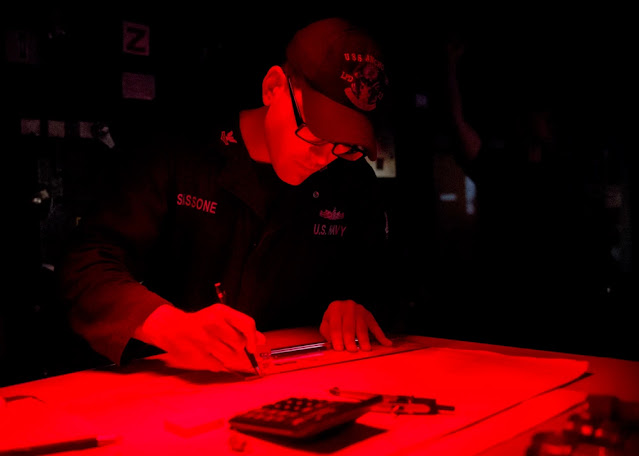


Above: Quartermaster 2nd Class Brandon Sassone, from Plainview, N.Y., plots ship position in the pilot house aboard the San Antonio-class amphibious transport dock ship USS Anchorage (LPD 23) during a scheduled deployment of the Essex Amphibious Ready Group (ARG) and the 13th Marine Expeditionary Unit (MEU), Sept. 2, 2018. They were deployed to the 5th Fleet area of operations in support of naval operations to ensure maritime stability and security in the Central Region, connecting the Mediterranean and the Pacific through the western Indian Ocean and three strategic choke points. (MC3 Ryan M. Breeden)


Top photo: The Arleigh-Burke class guided-missile destroyer USS Michael Murphy (DDG 112) participated in Australia’s Kakadu exercise in August 2018 in Darwin to enhance maritime security skills with participating nations, which highlighted information sharing and multilateral coordination. (MC3 Morgan K. Nall)

Wednesday, January 25, 2023

Does Taiwan Rhyme with Ukraine?

Review by Bill Doughty––

In “War and Peace in the Taiwan Strait” (Columbia University Press, 2022), Scott L. Kastner examines the likelihood of conflict in Asia. However, readers may find themselves thinking about the actual war in Europe. More about that in a moment…


Kastner’s well-researched book considers the possibility that the People’s Republic of China will take military action –– in the form of a military blockade or outright invasion –– against the democratic citizens of Taiwan (a country which has has been, in reality, an independent nation since 1949).

Kastner presents a brief history of the formation of Republic of China after the civil war of 1949, including Taiwan's flirtation with autocracy and martial law and eventual full embrace of democracy. Then he gets to the heart of his thesis: that there is a balance between sovereignty and reunification, with “status quo” as the fulcrum keeping peace, and with ambiguous options clouding an uncertain future.


The power balance in the region, he notes, has changed in recent years as China’s economy and military have grown –– along with nationalism. “Although the balance of power has clearly shifted in Beijing’s favor, attempting to seize and occupy Taiwan would still represent a highly risky and costly undertaking that might fail spectacularly.”


A key to preventing war, many analysts believe, is deterrence, predicated on the strength of the economy and military of the United States, which is committed to maintaining peace and cooperation on the global commons.


U.S. Chairman of the Joint Chiefs of Staff Gen. Mark Milley said recently, “As long as we remain number one, then we will deter the war that people worry about, a great power war between China and the United States.”

Kastner writes:

“The U.S. Navy has announced numerous transits through the Taiwan Strait over the past few years, including several by guided missile destroyers; these high-profile transits could also indicate some strengthening of U.S.-Taiwan security ties. The frequency of transits has varied considerably over time, however, and long-term trends (at least over the past decade and a half) are ambiguous. Transits occurred on average 5.5. times per year from 2007 to 2010, increased to nearly 10 per year from 2011 to 2016 on average, and dropped to 4 per year from 2017 to 2018, before increasing sharply in 2019 and 2020. On the other hand, the recent uptick in transits is notable, and it is worth highlighting as well that U.S. officials have begun to announce these transits on a regular basis –– whereas in the past they typically went unannounced.”

Kastner also examines the commitment by the U.S. Congress and American presidents to supporting Taiwan's security. (This book was apparently published just before former Speaker of the House Nancy Pelosi’s notable visit to Taipei last year.)

Kastner notes, “U.S. Secretary of State Anthony Blinken warned in April 2021 that it would be ‘a serious mistake for anyone to try to change the existing status quo by force.’”


Still, XI and Communist China threatens invasion by force if the One-China policy is not realized. While Kastner contends “war is not inevitable,” he has an ominous observation:

“Were armed conflict to occur in the Taiwan Strait, at its root would be an intractable sovereignty dispute that has persisted since the end of the Chinese Civil War. In its current manifestation, the dispute centers on Taiwan’s status: whether Taiwan should be considered part of China now, and whether it should be formally unified with mainland China in the future. The PRC views itself as the sole legal government of China, Taiwan as part of China in principle, and formal unification as an important national goal. While Beijing has embraced a policy of ‘peaceful unification,’ it has refused to renounce the use of force and has explicitly threatened to go to war if Taiwan were to formally declare its independence from China, be occupied by foreign forces, or delay –– indefinitely –– negotiations over formal unification. In Taiwan, even though individuals have widely divergent views on cross-Strait policy, and even though the two major parties differ considerably in their approach to China, there nevertheless exists wide agreement that Taiwan (or the ROC) is a sovereign state, and there is very little support for near-term unification with the PRC.”

Kastner concludes ominously, “Absent a dramatic change in circumstances, then, there is little prospect for the two sides peacefully resolving the underlying dispute.”


Does Taiwan rhyme with Hong Kong?

The citizens of Taiwan see what is unfolding in Hong Kong –– as China cracks down on democracy and independence there. They want no part of the loss of freedom they see there and in Tibet, another formerly autonomous region, as a result of China's political system, management, and control.


In Hong Kong, new PRC laws allow interference in the judicial system and schools. Independent newspapers and voices are shut down. Security officers patrol the streets. "The undercutting of autonomy in Hong Kong sends an especially troubling signal to Taiwan given that Beijing also calls its proposed formula for Taiwan "one China, two systems."


Does Taiwan rhyme with Korea?

In North Korea, “Supreme Leader” Kim Jong-un threatens ethnically identical South Koreans. Kastner compares the U.S. promise to support Taiwan with the “iron-clad” commitment to defend the Republic of Korea if attacked by autocratic Communist North Korea, as happened in 1950.


[Recently, the world learned that North Korea, which is still supported by China, is providing weapons to Russia’s Wagner Group in support of Putin’s war of terrorism in Ukraine.]


Does Taiwan rhyme with Ukraine?

In Europe, Putin kills and terrorizes the people of Ukraine despite their same ethnicity.


Just as the PRC sees Taiwan as critical to its expansion throughout Asia, Putin sees Ukraine as a strategic bulwark against the West and his revanchist goals in Eastern Europe.


Meanwhile, the Communist Party observes Ukraine and sees how Putin’s war continues to backfire: instead of an easy takeover, he has lost tens of thousands of soldiers; instead of weakening NATO and the West, he has strengthened the free world’s resolve; and instead of reunification, he is causing deep rifts within his own country.


One year ago, the world was still hopeful that Putin’s threats, maneuvers, and calls for “unification” would not lead to war despite his previous invasions of Georgia and Crimea. Today, we see Russia’s campaign of terrorism and violence continue as the war nears its one year anniversary.


China must be as surprised as Putin in seeing Ukraine's resolve and the free world’s coalition led by President Biden with the support of the U.S. Congress. So far.


Just this week, the Biden administration authorized sending 30 Abrams tanks to Ukraine; Germany announced it is sending dozens of Leopard 2 tanks.


Does Taiwan rhyme with Finland?

Seeing the parallels between Taiwan and Ukraine becomes clearer through the lens of the history of the Soviet Union, including what happened in the Winter War between the USSR and Finland in 1939 (ten years before Chinese nationalists fled to Taiwan). The Soviets invaded ethnically similar Finland, at the same time that Germany did the same to its neighbors in Central Europe.


Citing the conclusions of Stanford’s James D. Fearon, Kastner writes about the dangers of accommodation and appeasement and why a country may choose to “roll the dice” and accept war over loss of territory or independence.

“Fearon suggests the Winter War between the Soviet Union and Finland can be explained in part by this dynamic, where Finland preferred to fight rather than yield to Soviet demands to cede some small islands in the Gulf of Finland that Moscow viewed as strategically important: here, Helsinki feared that ceding the islands would give the USSR more leverage to demand further concessions in the future, and Stalin presumably couldn’t be trusted to honor a promise not to do so. Leaders in Taiwan will likewise be reluctant to accommodate the PRC by yielding ground on the island’s sovereign status, unless they can be confident that Beijing could be trusted to honor commitments not to take advantage of the increased bargaining power such accommodation would provide. Unfortunately, there are a number of reasons to doubt the credibility of PRC promises in this regard…”

As for the possibility of actual war between China and Taiwan, Kastner admits pessimism but says conflict is not inevitable. He notes the precariousness of Taiwan’s position: unable to declare total independence as a sovereign nation but also unable to appease China, which would risk losing freedom and democracy for its people.


USS Antietam (CG-54) and USS Chancellorsville (CG-62) transit the Taiwan Strait in August 2022. (MC2 Justin Stack)
Prevention of conflict, Kastner says, depends on good communication and information, as well as continued credible commitment to deterrence in the name of peace [to echo Gen. Milley].

“If the United States were to abandon Taiwan,” Kastner writes, “the risk of cross-strait war would likely increase.” There may be no evidence that Mark Twain ever said, “History never repeats itself, but it does often rhyme.” But in an unpublished manuscript, “Mark Twain in Eruption,” he did write that “It is not worthwhile to try to keep history from repeating itself, for man’s character will always make the preventing of the repetitions impossible.”


In “War and Peace in the Taiwan Strait” Kastner includes a huge section of historical and analytical notes and another lengthy set of references, including Shelley Rigger, Michael Beckley, Jessica Chen Weiss, Qiang Xin, Robert Sutter, Alan Romberg, Russell Hsiao, Richard C. Bush, Thomas J. Christensen, T. Y. Wang, and James D. Fearon, among dozens of other experts.


Unfortunately, there is a dearth of analysis in this book of the role and importance of Japan, not to mention other nations such as the Australia, New Zealand, and the Republic of the Philippines and as part of the strategic balance in the region. Kastner admits early in his introduction that his work is an overall analysis, not an evaluation of military strategy, weapons systems, or potential PRC planning. Still, for Navy readers this book presents a worthwhile examination of ambiguity and precariousness in the Taiwan Strait.


Secretary of Defense Lloyd J. Austin III and Chairman of the Joint Chiefs of Staff Gen. Mark Milley speak at the eighth Ukraine Defense Contact Group meeting at Ramstein Air Base, Germany, Jan. 20, 2023. The meeting brought together representatives from more than 50 nations and organizations to determine the best way to get the military capabilities that Ukraine needs to repel Russian forces from their sovereign territory. (DoD photo by U.S. Air Force Tech. Sgt. Jack Sanders)

Friday, January 31, 2020

A Search for the Truth

by Bill Doughty

Who or what is the North Star, the Pole Star, of leadership?

Those who are educated in the West often rely on philosophers from ancient Greece, Judeo-Christian faith, Renaissance, and modern science to provide ethical, moral and practical principles on leadership.

A depiction of Master Kung - Confucius
What can the East, particularly Confucius ("Master Kung") – who influenced much of Asian thought and culture – say about leadership? Getting past the chauvinism and arguable misogyny of ancient times, there may be great value in learning advice from Asia's Pole Star on what it means to be a good leader.

In "Confucius: The Analects" translated by Arthur Waley (Alfred Knopf, 2000, first published 1938), "Master" refers to Confucius, and "gentleman" can be interpreted for our purposes as "leader" or "commander" or "CO."

From Book II:

1 The Master said, He who rules by moral force is like the pole-star, which remains in its place while all the lesser stars do homage to it.

2 The Master said, If out of the three hundred 'Songs' I had to take one phrase to cover all my teaching, I would say, 'Let there be no evil in your thoughts.'

3 The Master said, Govern the people by regulations, keep order among them by chastisements, and they will flee from you, and lose all self-respect. Govern them by moral force, keep order among them by ritual and they will keep their self-respect and come to you of their own accord.

Book IV:

2 The Master said, Without Goodness a man
Cannot for long endure adversity,
Cannot for long enjoy prosperity.

16 The Master said, A gentleman takes as much trouble to discover what is right as lesser men take to discover what will pay.

17 The Master said, In the presence of a good man, think all the time how you may learn to equal him. In the presence of a bad man, turn your gaze within!

Book XII:

16 The Master said, The gentleman calls attention to the good points in others; he does not call attention to their defects. The small man does just the reverse of this.

Book XIII:

1 ... Lead them; encourage them! ... Untiringly.

2 ... Get as much as possible done by your subordinates. Pardon small offenses. Promote men of superior capacity ...

Statue of Confucius at Yushima Seido, Tokyo
6 The Master said, If the ruler himself is upright, all will go well even though he does not give orders. But if he himself is not upright, even though he gives orders, they will not be obeyed.

Book XV:

17 The Master said, The gentleman who takes the right as his material to work upon and ritual as the guide in putting what is right into practice, who is modest in setting out his projects and faithful in carrying them to their conclusion, he indeed is a true gentleman.

18 The Master said, A gentleman is distressed by his own lack of capacity; he is never distressed at the failure of others to recognize his merits.

19 The Master said, A gentleman has reason to be distressed if he ends his days without make a reputation for himself.

20 The Master said, 'The demands that a gentleman makes are upon himself; those that a small man makes are upon others.'

22 The Master said, A gentleman does not
Accept men because of what they say,
Nor reject sayings, because the speaker is what he is.

23 Tzu-kung asked, saying, Is there any single saying that one can act upon all day and every day? The Master said, Perhaps the saying about consideration: 'Never do to others what you would not like them to do to you.'

Book XVI:

10 Master K'ung said, The gentleman has nine cares.

  • In seeing he is careful to see clearly,
  • in hearing he is careful to hear distinctly,
  • in his looks he is careful to be kindly;
  • in his manner to be respectful,
  • in his words to be loyal,
  • in his work to be diligent.
  • When in doubt he is careful to ask for information;
  • when angry he has a care for the consequences,
  • and when he sees a chance of gain, he thinks carefully whether the pursuit of it would be consonant with the Right.


Right Matters

How do we know what "the Master" taught? Like Jesus and Mohammed and Buddha, Confucius had disciples who carried on, interpreted and reinterpreted his teachings about what is right.

Evidence of those teachings are found on ancient manuscripts on bamboo strips once buried in history, according to Yale lecturer and author Annping Chin.

In 1993 archeologists and scholars came into possession of two batches of "manuscripts" written on bamboo strips, some "pilfered by grave robbers and then sold on the Hong Kong antiques market before the manuscripts were bought, a few bundles at a time, by the Shanghai Museum," Chin writes.

"The texts were written around Mencius and Xunzi's time, 300 BC or earlier, before China was unified in the period known as 'the Warring States.'" What can the words on these bamboo strips tell us about life, moral cultivation and political thought in China before the Imperial Age?

From "The Authentic Confucius: A Life of Thought and Politics" by Annping Chin (Scribner, 2007):
"One Chinese paleographer I got to know told me about the risks of removing the ancient mud from the bamboo. As the strips lie in their cleaning solution, he said, and the words begin to emerge, some of the words literally rise from their bamboo surfaces, seeking flight or freedom in their demise. This is the closest I have come to thinking of words as alive. Sometime after, I made a wish. Even as I accept the impermanence of life, I said, I want words to be the exception – not all words, but surely words in the classics and histories, words of the early poems, philosopher's words, and the words of Confucius. I want them to stick around so that we can taste them again and again and play with their flavors in our head."
Anchored in Tradition

Author Michael Schuman – "Confucius: And the World He Created" (Perseus, 2015) – finds relevance for Confucianism for the world in general and China in particular – not to mention for leaders in the United States.
"The Confucius I have come to know over the course of researching this book ... was not a pawn of autocrats or a tool of suppression. That Confucius, though far from perfect, was a voice of boundless humanity and unswerving determination. He was a man who refused to compromise his principles for fame, wealth, or status. He would not submit to the will of immoral men or abusive regimes. He told the most powerful people of his day that they were wrong, directly to their faces. He judged men not by their riches or birth, but on their sincerity and benevolence. He could laugh at himself. He envisioned a society in which everyone fulfilled their responsibilities and placed the welfare of their families and communities over their own. He strove to transform a world convulsed by selfishness and war into one of selflessness and peace. He thought our society could be perfected if we first improved ourselves. Most of all, he thought that any one of us who took the time and made the effort to become a better person held the power to change the world."
Like the traditions of the U.S. Navy, the traditions of Confucianism promote rituals, manners, duty and "love of learning."

Schuman interprets "the Master's" position on authority and power: "No one, not even a person in a position of great power, is permitted to abuse that power," he writes. "The Confucian idea that people ought to blindly submit to anyone in a position of authority is beyond the Western mentality."

According to Confucius's Analects anchored in Schuman's book, "Let the superior man never fail reverentially to order his own conduct, and let him be respectful to others and observant of propriety – then all within the four seas will be his brothers." Just as the Pole Star guides good leadership, an anchor can secure it.

Saturday, December 28, 2019

Asian Perspective

Review by Bill Doughty

East or West? Free for all or a free-for-all? Who's up and what's down in evolving global relationships?

"Those who are looking for either rigid lines of alliance or moral clarity among Asia's shifting partnerships will find themselves in an Escher painting."

What's needed is a new perspective.

In "The Future Is Asian" (Simon & Schuster, 2019) author Parac Khanna notes that civilization was born in West Asia. "Asia dominated the Old World, while the West led the New World – and now we are coming to a truly global world. There is no turning back from today's multipolar, multicivilizational order."

While China plays a central role in the future global order, those "shifting partnerships" and tenuous loyalties are especially evident in the maritime commons, where "each littoral state has a different name for its portion of the South China Sea."

Gunner’s Mate 2nd Class Blake Rodenas uses the “big eyes” on the starboard bridge wing of the Independence-variant littoral combat ship USS Gabrielle Giffords (LCS 10) while in the South China Sea, Dec. 23, 2019. (U.S. Navy photo by Mass Communication Specialist 2nd Class Damon Grosvenor)
As Capitalism becomes a common link even in China and Russia, the waterways throughout Asia, including in and around the Arab states, become even more strategically important. This week China, Russia and Iran are conducting an anti-piracy/anti-terrorism maritime exercise in the Indian Ocean and Gulf of Oman. 
"The more South and East Asians engage with the Gulf region, the more they will want to protect their investments. China, India, Japan, and numerous other Asian powers have all stepped up their freedom of navigation, counterpiracy, and other naval drills in the western Indian Ocean. India, seeking to recover the Chola Dynasty's maritime might, has increased its naval acquisition to more than a quarter of its defense spending with the aim of becoming the gatekeeper of the eponymous Indian Ocean. In the name of maintaining a 'free and open Indo-Pacific,' India and Japan cooperate in the annual Malabar Exercise with the United States, which has renamed its Pacific forces to Indo-Pacific Command. China is also seeking to recover its Ming Dynasty glory, sending flotillas to the Indian Ocean led by modern-day Zheng Hes. China alone has four times as many destroyers, frigates, and other surface warships as India (though still fewer than the United States and Japan). In the coming years, it may anchor more of them in Sri Lanka's Hambantota Port – which the government leased to China in 2017 for ninety-nine years after being unable to repay the loans for the port's construction – or even the Maldives, which was agreed to become a maritime hub of the Belt and Road Initiative (BRI). China's more active presence in India's maritime theater has the country on high alert."
Quartermaster 2nd Class Ziolan Bondoc, from Riverside, California, assists with navigation in the bridge of the Ticonderoga-class guided-missile cruiser USS Antietam (CG 54) in the Philippine Sea, June 13, 2018, during exercise Malabar between U.S., Japan and Indian maritime forces. (MC2 William McCann)
Khanna presents in detail the nuances of Asian relationships. For example: Turkey's Erdogan who has "lurched toward Asia;" Israel "ever more a part of the Asian system;" Pakistan's rumored Chinese naval base on the Jiwani peninsula "to challenge the U.S. Navy's 5th Fleet;" Myanmar as a strategic investment for China, India and Japan; and Vietnam's "pugnacious" approach toward China – "Vietnam is not afraid to send its navy to collide with Chinese vessels and oil rigs trespassing in its water."

Vietnam People’s Navy Lt. Cmdr. Le Thanh Binh, July 16, at RIMPAC 2018. (MC2 Kory Alsberry)
He notes that in 2018 the United States invited Vietnam to participate in the Rim of the Pacific exercise in Hawaii, while excluding China.

Meanwhile, "China's enormous investments in antiship ballistic missiles, stealth submarines, robotic warships, electromagnetic railguns, swarming drones, and militarized reclaimed islands and shoals in the South China Sea (are) all intended to push U.S. forces east of the international date line."
"At the same time, China knows it is not omnipotent. Though it has enormous leverage over most of its neighbors, even military triumph in outstanding disputes may generate such adverse political and economic backlash that it is not worth the price. China cannot assure itself that seizing the multitude of disputed islands and mountains on its periphery would not lead to a blockage of its BRI projects or large-scale diversion of foreign financial and industrial activity. China has learned from Japan's hyperaggression and the United States' overstretch to show restraint and caution, not pursue invasion and occupation."
Khanna shows how Russia and China are getting closer. "Asian states are forging new geometries of cooperation," Khanna writes, including "budding military cooperation among Japan, Vietnam and India; between Australia and Japan; between India and Indonesia; among China, Malaysia and Sri Lanka; and among China, Thailand and Cambodia." Asian nations, including especially China, are investing in and trading with African countries.


"The Future is Asian" presents a scholarly history, a present state of affairs, and predictions for what may unfold in countries throughout the region, including Russia, Iran, India, Pakistan and North Korea.
"North Korea will be the true test of whether Northeast Asia can move from strategic suspicion to tactical adjustments. North Korea has been thought of as an isolated failed state, but the fact that its covert nuclear program has had links as far as Pakistan's A.Q. Khan nuclear smuggling network, its chemical weapons program to Syria's Bashar al-Assad, its ballistic missile program to Iran, and its cyber-surveillance tools to Russia, are all evidence of the seedier side of the Asian system. Asian states can conspire to form an 'axis of resistance' to perceived U.S. hegemony."
Khanna notes that claims by the United States of domination and exceptionalism ("America First") ring hollow and sanctimonious to Asian ears. Harmony and humility are valued over power and pride.

Asians in general, Khanna argues, prefer "cooperation over anger" and "action over argument" – including when dealing with common issues like water shortages, agricultural challenges, inequality and poverty, immigration, pollution and climate change. "China, Japan and India are all major exporters of solar, wind, nuclear and other energy technologies that reduce our global carbon footprint."

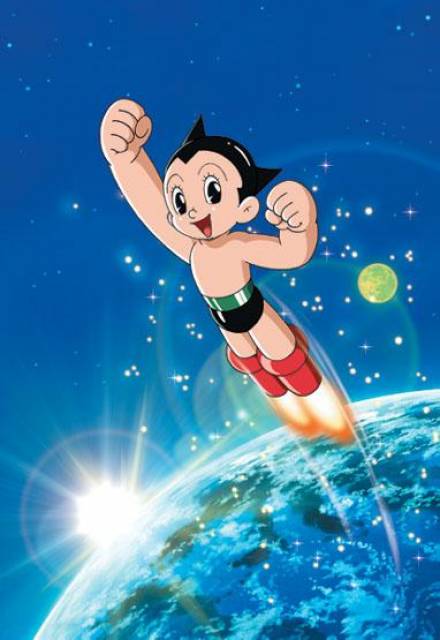
Robot Astro Boy
Keys for future success are in education and technology, Khanna asserts. Asians' views of AI and robots are closer to Astroboy (called "Atom" in Japan) rather than Terminator, he asserts.

Along with education and technology, technocracy is embraced. Freedom and democracy do not work without an educated citizenry led by experienced and thoughtful representatives and leaders. Khanna holds up Singapore and itsstatesman Lee Kuan Yew as models of excellence.

Still, he warns of technocracy leading to authoritarian governments that can practice corruption and trample civil rights. "Always beware the oligarch in disguise ... The essence of technocracy is improving governance, not preserving one's own rule."
"After observing Russia's manipulation of Facebook in the 2016 U.S. election – and viral videos sparking riots in India and Myanmar – Asians have recruited Facebook and WhatsApp to actively screen and counter viral hoaxes to ensure that 'fake news' does not destabilize communal harmony. As the economist Danny Quah puts it, free-for-all populist cultures resemble the comments section of online newspapers: they get hijacked by ranting trolls. A better model might be liberal societies in which officials act more like Wikipedia editors who ensure veracity and a sense of order."
Thefts of intellectual properties, tariffs, greed, revanchism and destruction of the environment are challenges for a peaceful future.

Khanna contends that Americanization is giving way to Asianization, even in Europe, and that "Asia is the most powerful force reshaping the world order today." He writes, "To appreciate just how rapidly global order can realign, consider the arc of the post-WWII era."

Whether or not readers agree with all of the author's conclusions and recommendations, especially his views on democracy, he compels us to consider other perspectives and how we approach the future – with less self-centeredness and arrogance and instead with greater humility, honesty and reflection.

Parag Khanna has served as an advisor to the U.S. National Intelligence Council and U.S. Special Operations Forces.

Saturday, December 27, 2014

Climate Change as Serial Killer

by Bill Doughty

Climate change has been a killer for millennia, according to Eugene Linden, author of "The Winds of Change" (Simon & Shuster, 2006).

"Earthrise" in 1968. Photo courtesy of NASA.
His examination of the history of climate-as-assassin – and key questions in the debate – shows what may be in store with a warming earth, melting ice and the effect on in the invisible "ocean conveyor" on what Bill McKibben described in "Eaarth": "a blue-and-white marble floating."

Seen clearly from space for the first time in the early days of space exploration, earth is revealed as an ecosystem of sea, land and sky – "vast ocean, air currents and weather systems" – a home world alone in the vastness of space. Balanced. Interconnected.

Over time earth has experienced the extremes of heat, cold, floods and droughts. But thanks to a rare synergy of offsets – the position of large land masses, contours of the ocean floor, the reflective power of ice and snow, and tilting of earth's spin axis, among others – the period over the past 10,000 years has been relatively calm for our planet.

In other words, "This is about as good as it gets," according to Linden.

But the serial killer waits to strike again. Climate change has killed entire species, disrupted humanity and changed cultures.

Akkadian victory stele of Ram-Sin
"It's not climate, but climate change that throws civilizations into a tailspin," Linden writes.

Africa and Mesoamerica experienced drought that collapsed cultures including the Mayans. Ancient civilizations thought they had displeased the gods. The Anasazi disappeared. The Akkadian civilization disintegrated as warming climate dried the lands and hot winds blew away topsoil.

Linden cites the works of Barbara Tuchman ("A Distant Mirror"), Jared Diamond ("Guns, Germs and Steel") and, interestingly, Adam Smith ("The Wealth of Nations") as well as David Keys, author of "Catastrophe: An Investigation Into the Origins of the Modern World."
"Keys does not shy away from big ideas. In 'Catastrophe' he argues that by unleashing the plague from the south and causing barbarians to move westward from Asia, the climate upheavals of 536 played a key role in the end of the Roman Empire, the rise of Islam, and other events that marked the end of ancient times and set the stage for the emergence of the modern world. It's a sweeping claim, so bold that it almost begs contradiction, even from those willing to posit the consequential role of climate in human affairs. When a civilization is in decline, after all, the agent of its end might be entirely different from the cause of its decline. When pneumonia kills an aged patient in failing health, is pneumonia the killer, or merely the final nudge? As Keys exhaustively documents, by the sixth century, the Roman Empire was senescent, with little sense of purpose, kept together principally by the fear of the gathering barbarians at the gates who were constantly probing for opportunities and signs of weakness."
Bruegel's Triumph of Death
Climate warming unleashes invasive species and diseases – bark beetles, rats, hantavirus, mosquitoes, fleas and ticks. The result is millions of deaths, including from plagues. The Black Death started in China, came down the Silk Road to Crimea, and then in 1346 moved westward to Europe.

Climate change may be a killer, but it also opens the way for ecological opportunity. Just as Kaplan does in "Monsoon," Linden sees synergy in climate, weather and geography: "Climate does not control geography, of course, but climate can override the advantage that geography might otherwise confer."

Preparing a gravity core for deployment.
(Photo by Mary Carman, Woods Hole)
Researchers, including Navy veteran Lloyd Keigwin of Woods Hole's McLean Laboratory, are studying the effects of and on the ocean as a result of abrupt climate change. Are oceans stable? How will currents and civilization change in a warmer climate? What can we learn by studying paleoclimate in the Holocene, including the "Little Ice Age"?

Ice, caves, lake sediment, tree rings and dirt blown over ice are witnesses to the serial killing, the silent witnesses or proxies that help scientists examine the past.

A clear and present danger comes periodically in the form of El Niño, "the killer next door."

"In the rogue's gallery of climate killers, El Niño may be a mere foot soldier, but because we are repeatedly reminded of its depredations, it looms large in the minds of those who study the impact of climate on history," Linden writes.


El Niños in India and China over the past century and a half killed substantially more than the 60 million people who perished during World War II, according to Linden and his source, Cesar Caviedes ("El Niño in History: Storming Through the Ages"). Is it possible that a warmer world will invite more severe storms?

Earth's system for achieving balance on the blue-and-white marble (with an El Niño pictured in red) is interconnected and not completely understood, but Linden shows in research, timeline and graphs how science is searching for answers to questions in his final chapter, "Going Forward":
"Where are we headed? Is climate changing? If so, are we causing these changes? What changes lie in the future? Are we better prepared to deal with climate change? Can we do anything to halt climate change or ameliorate its effects?"
Navy leaders recognize that climate change can accelerate instability and conflict, degrade the environment and cause food and water scarcity, disruption and migration – requiring significant humanitarian assistance.

In 2009 the Secretary of the Navy outlined goals for reducing use of fossil fuels and embracing new sustainable, renewable and nonpolluting forms of energy. Also in 2009 the Chief of Naval Operations created Task Force Climate Change (TFCC) to address the naval implications of a changing Arctic and global environment. 


The Navy participates with the U.S. Coast Guard and National Oceanic and Atmospheric Administration in the National Ice Center, whose mission is to "provide the highest quality, timely, accurate, and relevant snow and ice products and services to meet the strategic, operations, and tactical requirements of the United States interests across the global area of responsibility."

Last month the U.S. and China, the world's biggest polluters, signed a climate agreement to significantly reduce emissions over the next decade and beyond. A United Nations climate summit in Lima, Peru shows hope for the world in reducing greenhouse gas emissions and making significant progress in next December's global climate treaty meeting in Paris, France. 

Is cooperation in fighting a serial killer among the New Year's resolutions through 2015 and 2016?

140318-N-RB579-607 ICE CAMP NAUTILUS (March 18, 2014) Chief Machinist's Mate (Nuclear) Aaron Cook braves the cold while supervising a work party at Ice Camp Nautilus, located on a sheet of ice adrift on the Arctic Ocean, during Ice Exercise (ICEX) 2014. ICEX 2014 is a U.S. Navy exercise highlighting submarine capabilities in an arctic environment. (U.S. Navy photo courtesy of Lockheed Martin by Dr. Amy Sun/Released)