Saturday, September 29, 2012

Warfighting and ‘Origins of War’

Review by Bill Doughty

“Pacifism, isolationism and other forms of wishful thinking” allow for the conditions of war, according to Donald Kagan in his insightful “On the Origins of War: And the Preservation of Peace,” a key title on the Navy Professional Reading Program’s original and newly revamped recommended list.

Peace comes from a position of strength and confidence, not from fear.

“Policies guided and dominated by fear” are the foundations for conditions of war, Kagan shows.  “Power is neutral,” he writes, but when there is a struggle for power, quoting Greek historian Thucydides, “people go to war out of ‘honor, fear and interest.’”

Kagan applies his and Thucydides’s insights from an almost entirely western perspective as he examines the Peloponnesian War, World War I, Hannibal’s War (The Second Punic War), World War II, and -- seemingly out of place, at first -- the Cuban Missile Crisis.

Sparta’s fear and resentment of Athens as a great maritime power led to war at a time when conflict was considered a normal part of life, 2,000 years before the enlightenment.

Kagan carefully unravels history’s knots, showing how nations become entangled in one war after another.

The War of 1812 led to what Europeans at the time thought was impossible -- World War I.

“The old European order, resting on a balance among the five great powers of Austria, France, Great Britain, Prussia, and Russia, had been established at Vienna in 1815 as a way of preventing the domination of a single state over all of Europe, such as had almost been achieved by Napoleon Bonaparte... The main threat to the new order was the powerful force of nationalism...”

Kagan shows how fear, resentment and irrational belief systems can feed what he calls “nationalism and superpatriotism” and “social imperialism.”

“Like the Hannibalic War, the Second World War emerged from flaws in the previous peace and the failure of the victors to alter or vigilantly and vigorously to defend the settlement they imposed.  The story of its origins, therefore, begins with with way in which the first World War Came to an end.”

The flames of WWI left glowing embers of resentment in Germany during a severe economic depression.  That resentment flared again under Hitler and the Nazis, who capitalized on fear, resentment and a loss of honor.  Dissolution of the Ottoman Empire after WWI led to the creation of Palestine and Iraq under British control and Syria and Lebanon under French control.

Kukryniksy, The Big Three will tie the enemy in knots (1942)
Demands for reparation, combined with false hopes for peace by other western nations, including attempts at appeasement, led to an imbalance of power and ultimately to World War II.

WWII then brought about more balkanization and creation of Bosnia-Herzegovina and Israel, as discussed in a recent review of Friedman’s “From Beirut to Jerusalem.”

Resentment and fear grew again, and WWII brought about the Cold War, Kagan contends.  The United States and Russia ended the Second World War as allies who achieved victory over the Axis powers, but we quickly became rivals for power with the Soviet Union. National honor was at stake and once again fear ruled the day.

President John F. Kennedy
War was averted, but only nearly so, thanks to what Kagan calls Kennedy’s restraint.  “Just how close that catastrophe really was we shall never know,” Kagan writes about the nearly-triggered launch/retaliation that ended with “tense bargaining” instead.

Today, the Soviet Union no longer exists.  American diplomacy is stronger, backed by a combat-ready, forward-poised and capable military.  

Our former enemies in the War of 1812, Canada and Britain, are among our best friends.  Germany and Japan, fascist imperialists in WWII, stand as models of hope and democracy and peace. World powers more economically interdependent and connected than they've ever been, giving peace a chance.

Is that more wishful thinking, or the realities of globalization tied to Maritime Strategy and the preservation of peace?

Kagan reminds us of Thomas Paine’s prediction that reason, democracy and capitalism could light the way to a peaceful world.  In “The Rights of Man,” Paine wrote, “If commerce were permitted to act to the universal extent it is capable, it would extirpate the system of war.”

Kagan also quotes Sun-Tzu: “No less vital is the art of avoiding war.”

Kagan concludes, “The secret of the success of our species has been its ability to learn from experience and to adapt its behavior accordingly.”

American troops leap forward to storm a North African beach during final amphibious maneuvers in 1944.

Saturday, September 15, 2012

Neil Armstrong’s Journey


Review by Bill Doughty

“One Giant Leap: Neil Armstrong’s Stellar American Journey” is a full-sweep look at the life of the first American to walk on the moon.
Neil Armstrong, whose life was memorialized this week, is presented as a naval aviator/astronaut, scientist/teacher and humble lifetime civil servant.  He was a fighter ace in Korea, helping to win the Cold War in the 1950s and 60s, demonstrating the free world’s ultimate victory in 1969 when he stepped on the Moon as part of Apollo 11. 
Written by Leon Wagener, “One Giant Leap” shows Armstrong’s life from his birth in a farmhouse in Ohio in the midst of the Depression; through his journey of adventure via Purdue and Pensacola as a student, pilot and astronaut; then to life as a professor who championed innovation, melding space science with medicine; and finally to his life back to a farm in Ohio.
Wagener describes a man of ideas and wide interests who loved Japanese culture and enjoyed visiting and camping at Mt. Fuji.  He loved to fly, and after leaving the Navy became a test pilot for NASA.  Shunning the limelight of fame and the intrusion of politics, he chose to live quietly and promote science and critical thinking.
Neil Armstrong tried to inspire people to see the earth with from another perspective and to consider the need for protecting global ecology.  Wagener writes about Armstrong’s address to the World Wildlife Fund’s second international congress in 1970, just one year after he walked on the moon, in which he campaigned for environmental conservation.
Earthrise in lunar orbit, July 20, 1969.
Armstrong told the group, “The earth today is an oasis of life in space.  It is the only island we know is a suitable home for man.  I have a deep sense of the finite significance of our fragility. We are a fragile planet, physically so interdependent...We must find ways to protect it.  The importance of protecting and saving that home has never been felt more strongly.  Protection seems most required, however, not from foreign aggressors or natural calamity, but from its own population.”
Dr. Henry J. Heimlich, developer of the Heimlich Manuever and medical inventions, partnered with Armstrong for innovations in engineering and medicine.  “What Neil had brought to us represented precisely the new concepts I was after: miniaturization, low energy consumption, and simplicity,” Heimlich recalled with the author.
Here’s an excerpt from the book’s dust cover:
“In this, the first-ever biography of Neil Armstrong, Leon Wagner explores the man whose walk is still compared to humankind’s progenitor’s crawl out of the primordial ooze -- and whose retreat to a farm in his native Ohio soon after the last ticker tape confetti fell has caused him to be looked upon as a reclusive hermit ever since.
“This is the true story of a national hero whose lifelong quest to walk on the moon truly mirrors our best selves.  He’s an American who daily braved incredible danger over a long career and finally broke free of Earth’s bonds, achieving what seemed impossible and proving forever that man can reach for the stars and succeed.
“Relying on hundreds of interviews with family and friends of the astronaut, plus generous access to NASA files, Leon Wagener explores the life of one of America’s true heroes...”
Wagener’s book on Armstrong, which, by the way, is rich with photos, including one of Armstrong and VF-51 of USS Essex (CV 9), was one of the few I could find written for adults. For obvious reasons, there are many more books about Armstrong and space exploration written for young people.  Continuing with our Navy Reads “back to school” theme this month, parents may wish to look for Neil Armstrong biographies and books about astronauts as they choose to inspire their children with dreams of the moon and stars and a life anchored in science, technology, engineering and math.


NORTH ARABIAN GULF (March 10, 2010) Capt. Roy J. Kelley, commander of Carrier Air Wing (CVW) 7, and Capt. Dee L. Mewbourne, commanding officer of the aircraft carrier USS Dwight D. Eisenhower (CVN 69) present Neil Armstrong, the first man to walk on the moon, with his Navy Astronaut wings in a ceremony aboard the ship as fellow astronaut Jim Lovell, commander of Apollo 13, looks on. (U.S. Navy photo by Mass Communication Specialist 2nd Class Jon Dasbach)

The Navy paid tribute to American hero Neil Armstrong with a burial at sea Sept. 14 aboard USS Philippine Sea (CG 58).

Sunday, September 9, 2012

‘You’re Not Special’ - The Pursuit of Extraordinary


(Last June, Wellesley High School English teacher David McCullough attracted national attention for his commencement address delivered to graduates, in which he told them, “none of you is special.”   Some pundits took his comments out of context, failed to read to the end and missed his point.  His speech seeks to inspire young people, challenges them to continue a lifetime of reading, and puts life itself in full context, where the journey is the reward. Last week he provided a list of top ten reads to Navy Reads; his list appears at the end of the excerpts from his commencement address below. The full text of his address is posted at The Swellesley Report and is on YouTube. --Bill Doughty)

Excerpts from David McCullough’s remarks at Wellesley High School commencement, Wellesley, Mass. June 9, 2012:
David McCullough
You are not special.  You are not exceptional ...
Yes, you’ve been pampered, cosseted, doted upon, helmeted, bubble-wrapped.  Yes, capable adults with other things to do have held you, kissed you, fed you, wiped your mouth, wiped your bottom, trained you, taught you, tutored you, coached you, listened to you, counseled you, encouraged you, consoled you and encouraged you again.  You’ve been nudged, cajoled, wheedled and implored.  You’ve been feted and fawned over and called sweetie pie.  Yes, you have.  And, certainly, we’ve been to your games, your plays, your recitals, your science fairs.  Absolutely, smiles ignite when you walk into a room, and hundreds gasp with delight at your every tweet.
But do not get the idea you’re anything special.  Because you’re not.
Across the country no fewer than 3.2 million seniors are graduating about now from more than 37,000 high schools.  That’s 37,000 valedictorians… 37,000 class presidents… 92,000 harmonizing altos… 340,000 swaggering jocks… 2,185,967 pairs of Uggs.  But why limit ourselves to high school?  After all, you’re leaving it.  So think about this: even if you’re one in a million, on a planet of 6.8 billion that means there are nearly 7,000 people just like you.  Imagine standing somewhere over there on Washington Street on Marathon Monday and watching sixty-eight hundred yous go running by.  And consider for a moment the bigger picture: your planet, I’ll remind you, is not the center of its solar system, your solar system is not the center of its galaxy, your galaxy is not the center of the universe.  In fact, astrophysicists assure us the universe has no center; therefore, you cannot be it ...
“But, Dave,” you cry, “Walt Whitman tells me I’m my own version of perfection!  Epictetus tells me I have the spark of Zeus!”  And I don’t disagree.  So that makes 6.8 billion examples of perfection, 6.8 billion sparks of Zeus.  You see, if everyone is special, then no one is.  If everyone gets a trophy, trophies become meaningless.  In our unspoken but not so subtle Darwinian competition with one another–which springs, I think, from our fear of our own insignificance, a subset of our dread of mortality — we have of late, we Americans, to our detriment, come to love accolades more than genuine achievement.  We have come to see them as the point — and we’re happy to compromise standards, or ignore reality, if we suspect that’s the quickest way, or only way, to have something to put on the mantelpiece, something to pose with, crow about, something with which to leverage ourselves into a better spot on the social totem pole.  No longer is it how you play the game, no longer is it even whether you win or lose, or learn or grow, or enjoy yourself doing it…
If you’ve learned anything in your years here I hope it’s that education should be for, rather than material advantage, the exhilaration of learning.  You’ve learned, too, I hope, as Sophocles assured us, that wisdom is the chief element of happiness...  I also hope you’ve learned enough to recognize how little you know… how little you know now… at the moment… for today is just the beginning.  It’s where you go from here that matters.
As you commence, then, and before you scatter to the winds, I urge you to do whatever you do for no reason other than you love it and believe in its importance...  Resist the easy comforts of complacency, the specious glitter of materialism, the narcotic paralysis of self-satisfaction.  Be worthy of your advantages.  And read… read all the time… read as a matter of principle, as a matter of self-respect.  Read as a nourishing staple of life.  Develop and protect a moral sensibility and demonstrate the character to apply it.  Dream big.  Work hard.  Think for yourself.  Love everything you love, everyone you love, with all your might.  And do so, please, with a sense of urgency, for every tick of the clock subtracts from fewer and fewer; and as surely as there are commencements there are cessations, and you’ll be in no condition to enjoy the ceremony attendant to that eventuality no matter how delightful the afternoon.
Theodore Roosevelt in 1897, then Asst. Secretary of Navy.
The fulfilling life, the distinctive life, the relevant life, is an achievement, not something that will fall into your lap because you’re a nice person or mommy ordered it from the caterer.  You’ll note the founding fathers took pains to secure your inalienable right to life, liberty and the pursuit of happiness — quite an active verb, “pursuit” — which leaves, I should think, little time for lying around watching parrots rollerskate on YouTube.  The first President Roosevelt, the old rough rider, advocated the strenuous life.  Mr. Thoreau wanted to drive life into a corner, to live deep and suck out all the marrow.  The poet Mary Oliver tells us to row, row into the swirl and roil...
Like accolades ought to be, the fulfilled life is a consequence, a gratifying byproduct.  It’s what happens when you’re thinking about more important things.  Climb the mountain not to plant your flag, but to embrace the challenge, enjoy the air and behold the view.  Climb it so you can see the world, not so the world can see you.  Go to Paris to be in Paris, not to cross it off your list and congratulate yourself for being worldly.  Exercise free will and creative, independent thought not for the satisfactions they will bring you, but for the good they will do others, the rest of the 6.8 billion — and those who will follow them.  And then you too will discover the great and curious truth of the human experience is that selflessness is the best thing you can do for yourself.  The sweetest joys of life, then, come only with the recognition that you’re not special.
Because everyone is.
Congratulations.  Good luck.  Make for yourselves, please, for your sake and for ours, extraordinary lives.
-- David McCullough
To Navy Reads from David McCullough: “Here's a list... it's not the list, but a list.  Never, I think, should there be the list.”

1.   “The Odyssey” by Homer
2.   “Hamlet” by William Shakespeare
3.   “The Great Gatsby” by F. Scott Fitzgerald
4.   “Adventures of Huckleberry Finn” by Mark Twain
5.   “Zorba the Greek” by Nikos Kazantzakis
6.   “Great Expectations” by Charles Dickens
7.   “The House of Mirth” by Edith Wharton
8.   “In Our Time” by Ernest Hemingway
9.   “Moby Dick” by Herman Melville
10.  And, for fun, anything by PG Wodehouse

(Thank you to David McCullough for a list of top ten reads for high school students. A full text of the commencement address is posted at The Swellesley Report. McCullough is now writing a book based on his provocative insights.  His father is Pulitzer Prize winning author David McCullough, author of “1776.” --Bill Doughty)

Sunday, September 2, 2012

Reading with Young People


(Thanks to technology, service members on deployment may be able to read to sisters, brothers, nieces and nephews, and sons and daughters.  Reading to children at bedtime -- or instead of computer games and TV time -- can have a lifetime of benefits: expanding imagination, improving vocabulary and strengthening bonds.  Reader, writer and thinker Becky Hommon offers her recommendations of books to read to young people (or vice versa) in this guest post to Navy Reads.)

By Rebecca Hommon

One would presume that adults who read appreciate the value of reading to children or encouraging children to read for themselves.  One of my favorite experiences is to switch roles and listen as a young person reads to me.  The following provides a few of my favorites, all oldies but goodies, for either an adult to read to a child or for a child to read to an attentive adult.  it's a great illustration of succeeding just by showing up and paying attention.  Many of the books involve geography and could help a child dealing with yet another family relocation drill.

“Make Way for Ducklings” by Robert McCloskey tells of a Boston police officer who protects a family of mallards as they experience life in the Public Garden in downtown Boston.  The book's popularity resulted in the duck family being honored with a statue of them in their beloved garden.   A matching statue of the ducks can be found in the park at Novodevichy Convent in Moscow as a gift from First Lady Barbara Bush to First Lady Raisa Gorbachev.  Imagine the joy of a well-traveled family recording their visits to both sites.

Heading across the globe to Japan, “Basho and the Fox” by Tim Myers introduces young readers to the Japanese poem form of haiku and the effort involved in writing those seventeen syllables.  A surprise ending teaches a bit about ego and  how the taste of the judge can affect the determination of the victor.  Japanese attire, shoji doors and cherry blossoms shine in the soft illustrations.  Outside of Kyoto is a public park with statues of foxes scattered along the trail.  Putting the book together with a visit to the park seems to have some potential for fun.

Kathryn Lasky's “She's Wearing a Dead Bird on Her Head!” is a humorous picture-book version of those orange-covered biographies that baby boomers recall from their early reading days.  This is the tale of Harriet Hemenway and Minna Hall  who in 1896 could not vote but knew the steps needed to generate legal change.  Their efforts yielded our nation's earliest bird protection laws.  A field guide to the birds could enhance a repeated reading as the illustrations contain many species.

Jack Prelutsky writes funny short poems that in “The Frogs Wore Red Suspenders” mention a variety of places including Minneapolis, St. Paul, the Grand Canyon, the Great Lakes, Fort Myers, San Jose, Seattle and Minot, North Dakota.  Reading his books with a good map of the USA sitting nearby increases the silly pleasure.  “Ride a Purple Pelican” extends the range to Canada.  His Hawaii poem is my favorite:  "Parrot with a pomegranate, pigeon with a peach flew to Honolulu to dance upon the beach.  They danced a pair of polkas, they danced a polonaise, then ended with a hula and slept for seven days."  The books are big format  with eye-popping laugh-generating illustrations that can probably be seen over a computer camera connection.

Shel Silverstein's “A Giraffe and a Half” is one long, silly illustrated poem with black and white drawings.  A child has a lead role which pleases kids and the poem uses the word "toot" often, which for some reason causes most kids to giggle and if in the company of other children often leads to joyous screams.

My favorite book for generating sleep in others is “Sam and the Firefly” by P.D. Eastman.  Everyone's asleep except Sam, the owl, until he meets Gus, the firefly.  There's a bit of tension when Gus gets caught and put in a jar but not for long as the two cause something good to happen.  They head to their respective homes until they meet again -- the next night.  It's a calming sweet story worthy of repetition.

I hope these find a way into your adult/child reading time and give both generations some special memories and joy.

(Rebecca Hommon is the environmental counsel for Navy Region Hawaii, who has personally seen both Make Way for Ducklings statues in Boston and in Moscow and the fox shrine outside of Kyoto.  For more information about reading to young people while on deployment, visit: United Through Reading. -- Bill Doughty)

Lt. Laura M. Morgan reads a book to her brother using the United Through Reading program in the library aboard the aircraft carrier USS George H.W. Bush (CVN 77). (U.S. Navy photo by MCSN K. Cecelia Engrums)


Sailors who read to young people can make a lifelong impression.

Sunday, August 19, 2012

Every Sailor a Leader, Each a Communicator


Review by Bill Doughty

Just as every Sailor is empowered and expected to be a leader, each is also a communicator, especially now in the Information Age, where the world is flatter and getting smaller and more connected.  Whether on Kindle, iPad or Nook or between hard covers and on paper, reading is a key to being better at both leading and communicating. 

In 2012 Navy Reads has offered lists of suggested reading by such notable authors and thinkers as James Hornfischer, Mary Roach, Eric Foner and Rear Adm. Kate Gregory, among others.  Today’s list comes from professors who facilitate and coach at the Center for Executive Education at the Naval Postgraduate School in Monterey, California.

Here’s a suggested top ten reading list for leaders and communicators from Professors Gail Fann Thomas, Rebecca Weintraub, Patricia Riley and Thomas Hollihan and NPS research associate Anita Salem:

“Leading Up” by Michael Useem is a “call to action” toward macrothinking and good communication, where giving courageous advice from the bottom up can prevent problems.  This book opens with a compelling discussion of Lincoln and his generals.  It is a natural fit with “The Courageous Follower” by Ira Chaleff.


“Leading Change” by John P. Cotter, who encourages a sense of urgency, a promotion of good ideas, and a need for lifelong learning in individuals and organizations, where ideas and teams who build together as a coalition are more important than egos and uncooperative “snakes.” 
“Moneyball” by Michael Lewis, the baseball book brought to film starring Brad Pitt as Oakland Athletics general manager Billy Beane, with Jonah Hill and Philip Seymour Hoffman, shows the importance of statistics and metrics used in rational thinking, communicating and decision making. 

“Talk, Inc.” by Boris Groysberg and Michael Slind shows the importance for a boss to be a good listener as she or he communicates and to be willing to engage face-to-face and via social media to align the organization.

“Speed of Trust” by Stephen M. R. Covey was brought up in discussion and is on the reading lists of several top Navy commanders.  From the Speed of Trust website: “We believe that a powerful, global renaissance of trust has begun. Sparked by recent world events, business ethics, and the transparency of conversations enabled by the worldwide web, this call for a renaissance of high trust leadership is reverberating around the globe.”

“The Third Wave” by Alvin Toffler, a futurist who literally spans generations, from “Future Shock” published in 1970 to world changes he predicted in the past four decades.  Toffler reveals the value of innovation and integration.  According to the Associated Press, "Toffler has imagination and an ability to think of various future possibilities by transcending prevailing values, assumptions and myths."  

“If Mayors Ruled the World” by Benjamin R. Barber, also author of the prescient 1995 book “Jihad vs. McWorld” (another pre-2001 must-read to explain how and why we arrived at 9/11 and experienced the Arab Spring ten years later). “If Mayors Ruled the World” recognizes the importance of cities as a new paradigm in leadership, moderation and cooperation.

“Intrinsic Motivation at Work” by Kenneth W. Thomas, a book that fits in well with Covey’s “Seven Habits” and  Levitt and Dubner’s “Freakonomics,” proving that the best motivation comes from within.

“Made to Stick” by Chip Heath and Dan Heath, is all about memes, urban legend and truth “stickiness.”  With so much information flowing and so little time to ingest and analyze, how can leaders get to the core of a message, ensure credibility and verify their message was successfully communicated and remembered?

“Digital Strategies for Powerful Corporate Communications” by Paul A. Argenti and Courtney M. Barnes is promoted as “a corporate survival guide for the Web 2.0 world.” It’s written for leaders who want to understand and engage in a rapidly networking flattened world of blogs, wikis and transparency.

The Naval Postgraduate School’s Dudley Knox library is rich with books about strategy, history, technology, science and engineering, as one would expect.   Also in the stacks, three copies of Carl Sagan’s “Cosmos,” several copies of Thomas Friedman’s “The World Is Flat,” Hosseini’s “The Kite Runner,” and books by Steinbeck and Eudora Welty. Students from dozens of countries, in a wide diversity of uniforms, come to read and learn and think.

Adm. (ret.) Mullen at NPS's Center for Executive Education.
According to former CNO and Chairman of the Joint Chiefs of Staff Adm. (ret.) Mike Mullen:

"The Naval Postgraduate School is a national - and international - treasure. With its rigorous curriculum, talented faculty and a diverse student body that includes students from all the U.S. armed forces, other federal agencies and more than 60 nations, NPS contributes greatly to enhanced joint, coalition and interagency effectiveness. Knowledge and imagination are the keys to dealing with the challenges of this new era, and here at NPS those keys are forged."

Sunday, August 12, 2012

The Admirals... Who Won the War at Sea

Review by Bill Doughty

Through the lives of the Navy’s four five-star admirals, author Walter R. Borneman explains not just the history of World War II in the Pacific but also the fascinating role of personality -- good traits and bad -- in leadership.

Adm. King
“The Admirals: Nimitz, Halsey, Leahy, and King: The Five-Star Admirals Who Won the War at Sea” shows how these leaders’ lives were interconnected: Chester W. Nimitz, William F. Halsey Jr., William D. Leahy and Ernest J. King.  Born to a generation who served in the Civil War, as young men they witnessed the Spanish-American War, Russo-Japanese War and World War I.

“...their diverse personalities and methods would transform Theodore Roosevelt’s Great White Fleet of their youth into his cousin Franklin’s ultimate weapon of global supremacy,” writes Borneman.

Adm. Leahy
Leahy the ambassador, King the strategist, Halsey the fighter, and Nimitz the consummate leader embraced the changes to warfare in varying degrees as the era of battleships waned and submarines and aviation became vital in naval armament.

Borneman explores the lives and careers of each leader.

“It is remarkable that out of the military names readily associated with World War II, two of the men who did the most to advance grand strategy are largely unknown to the general public -- King and William D. Leahy.  Nimitz and Halsey would come to overshadow them in the public’s eye because they held more glamorous, media-rich battlefield commands.  But Leahy and King participated in the major strategic decisions that ultimately directed Nimitz and Halsey’s tactical roles.”

The book is a sweep of history from early 1900s to the Dec. 7, 1941 attack on Pearl Harbor, Battles of Coral Sea and Midway, Guadalcanal and Leyte Gulf and post-war into the admirals’ retirements.

Adm. Halsey
Leahy’s father, like MacArthur’s father, fought for the Union from Wisconsin in the Civil War.  Leahy championed battleships throughout his career, even after they were proved by the Army Air Corps and by naval air forces to be nearly obsolete.  He served as a diplomat and ambassador, loyal to both Presidents Franklin D. Roosevelt and Harry Truman.

As a boy, King “borrowed book after book about the men and battles of that recent conflict (Civil War).”  He had a strong tie to Congressman Carl Vinson and should be remembered for establishing Junior and Senior War Colleges, General Line School, Naval Reserve Officers Training Corps (NROTC) and accreditation for the Naval Academy’s Naval Postgraduate School.

When the Great White Fleet of 16 battleships returned from its around-the-world cruise to be greeted by President Theodore Roosevelt in 1909, Halsey was an ensign on the battleship Kansas.  (Spruance was a midshipman aboard Minnesota, and Halsey’s close friend Kimmel was an ensign aboard Georgia.)  Halsey was a consummate destroyerman.  According to Borneman, “Like him, destroyers were small, tough, nimble yet hard-hitting.”

Adm. Nimitz
Described as an always-positive and patient leader with the style of a coach, willing to listen to and empower subordinates, Nimitz was the submariner who built the submarine base at Pearl Harbor twenty years before Imperial Japan attacked.  He was an early leader of integrated strategies in fleet operations at sea.  

Nimitz understood projected power on a grand scale and human nature at the deckplates.  

About Nimitz, Borneman writes: “His manner was not to bark orders and intimidate with ultimatums, as Ernie King might have done, but rather to convey his expectations quietly yet firmly from top to bottom.”

Borneman, whose other books include “1812: The War that Forged a Nation” and “Alaska: Saga of a Bold Land,” writes with a flowing, engaging and clear style.  

He pieces together the lives and legacies of Nimitz, Halsey, King and Leahy -- from birth to death -- like pieces of a jigsaw puzzle, showing a panoramic picture of the past century of naval history and the difference a leader can make on that history.

Sunday, August 5, 2012

Mars Rocks!


By Bill Doughty

“Long live American curiosity.”
Tonight a science advisor called “Curiosity” a “one-ton automobile-size piece of American ingenuity ... sitting on the surface of Mars” that recognizes science, technology, engineering, mathematics -- and innovation.
An artist's conception of Curiosity on Mars.
Scientists, like explorers and sailors of other ages, navigated their ship and it's landing craft to the surface of the red planet, sending the largest and most complex probe rocketing at 13,000 mph to drop its cargo onto the surface of the planet with a gentle touch down.
Some of the world’s attention turned from triumphs like the London Olympics and tragedies like another shooting in the heartland.  Fascinating was the human dimension -- the hugs, handshakes and other heartfelt shows of affection.
Another administrator called it a great adventure and quoted Teddy Roosevelt, father of the U.S. Navy’s Great White Fleet:
“Far better is it to dare mighty things, to win glorious triumphs, even though checkered by failure… than to rank with those poor spirits who neither enjoy nor suffer much, because they live in a gray twilight that knows not victory nor defeat.” – Theodore Roosevelt
Recognizing the London Olympics occurring simultaneously, a scientist said, “You came back with the gold.”
“This feat you’ve seen tonight is something only the United States could do, and the Rover is made in the USA,” said a panel participant.
“I am forever humbled by the experience,” said another on the panel.  Panelists are unnamed to demonstrate the humility, cooperation and teamwork exemplified by the mission.
The first image from Curiosity on Mars.
"That great things take many people working together is one of the greatest aspects of human existence," said another.
Finally, right before the panel opened up to news media, an administrator said:  “There is no greater inspiration for Middle School students learning science, technology, engineering and mathematics than a mission to Mars.” 

Curiosity is an MUV, if you'll allow the term -- a Mars Utility Vehicle, capable of ranging far and wide.  Follow the Mars Science Laboratory mission at: NASA MSL.

Sunday, July 29, 2012

Worth a Read: Antrim, Forrestal, Olympics


By Bill Doughty

Some quick-takes this week on Navy Reads:
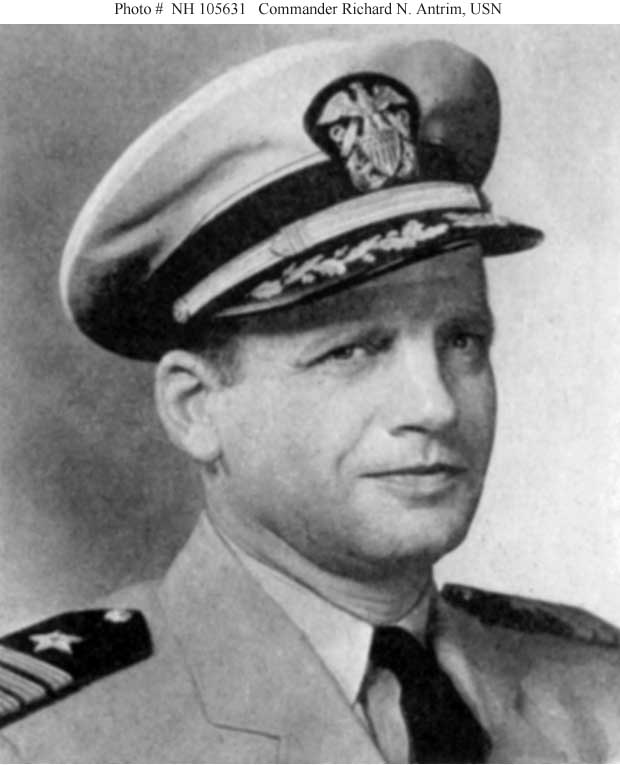
Rear Adm. Richard Antrim in 1942
Suggested by U.S. Naval Institute Press: an essay by Michael Mink of Investor’s Business Daily, on Navy Reads by permission of the author.  Read about the courageous life of a Medal of Honor recipient, Prisoner of War, warrior leader and admiral:
“Richard Antrim always put the welfare of his men above his own.
“That commitment in World War II earned him the Medal of Honor among other decorations for self-sacrifice and courage.
“In April 1942, at a Japanese prisoner of war camp in the Dutch East Indies, U.S. Navy Lt. Antrim (1907-69) and his fellow prisoners were routinely subjected to sadistic cruelty from the guards...”
Mink’s essay, which includes liberal excerpts from Antrim’s MOH, Navy Cross and Bronze Star citations, reads like a short movie synopsis.  Antrim’s story, courage and humility are inspiring.
USS Forrestal in 1967
The Navy remembers the tragedy and heroic response aboard USS Forrestal 45 years ago during the Vietnam War, in which 134 crew members were killed.  A video on Navy.mil provides rare photos and images of the explosions that occurred when a Zuni 5-inch rocket accidentally fired.  “We remember our shipmates.”  
Navy History and Heritage Command provides a comprehensive history of Forrestal and a detailed account of the tragedy that occurred on July 25, 1967.
“Within five seconds, the fire, fed by a ruptured 400-gallon fuel tank, rapidly enveloped the Skyhawks on either side of the wounded aircraft. Barely two minutes into the unfolding holocaust the first of many high and low level detonations erupted as the heat started to cook-off bombs, rockets and 20 mm rounds. An explosion shattered the windows of Primary Flight Control...
“Seven major explosions shook the ship during the first four minutes of the horrific crisis, and some 40,000-gallons of JP-5 jet fuel from aircraft on deck spread the inferno. Huge clouds of black smoke billowed upward, blinding crewmembers racing to battle the flames, which engulfed the fantail and spread to below deck on the 01, 02 and 03 levels, touching off ordnance, trapping some men and wreaking havoc with the crew and ship...” (read more) 
London Olympics in 2012
“..but strong in will, To strive, to seek, to find, and not to yield” from Tennyson’s “Ulysses” is one of the inscriptions of poetry on sculptures in the Olympic Park.  The Athenians and Spartans of ancient Greece are remembered for their military bearing, love of learning, warrior spirit and poetry.
Poetry was part of the Olympics up until 1948, and literature seems to be back in fashion.  Oxford-educated London Mayor Boris Johnson commissioned and recited an Olympic ode in ancient Greek and English.
National Public Radio, New York Times and Huffington Post, among others explore the history of the Olympics and poetry.  The Wall Street Journal is publishing poetry about the Games.
Books, reading and readers were a big part of this weekend’s London Olympics opening ceremony -- with Harry Potter author J. K. Rowling’s Lord Voldemort, J.M. Barrie’s “Peter Pan” and Lewis Carroll’s “Alice in Wonderland” taking center stage. 
To read about Olympics achievements of U.S. naval olympians, visit the Naval History and Heritage Command site.