Showing posts with label Spartans. Show all posts

Friday, May 31, 2013

Stavridis’s Novel Approach to Summer


(With permission, Navy Reads offers this repost of a list of 20  titles suggested by former Supreme Allied Commander of NATO, Adm. (ret.) James Stavridis.  The list of novels was published in May, 2012 but the titles are timeless. -- Bill Doughty)

by Adm. (ret.) James Stavridis

We learn so much from reading. In a sense, every novel we pick up and read allows us to live another life entirely.
As we head into the summer, I went back to some of the great reads of the last century in fiction.  Some are famous and well known to generations of high school and college students -- but might deserve a re-read. Others are less well known to broad audiences.
I'm interested in hearing from others with recommendations -- and here are my 20 novels for summer reading:
"Flashman" by George MacDonald Fraser. A rollicking (and secretly flawed) soldier from Victorian England finds himself in the middle of a disastrous retreat from Kabul in 1847.
"The Sun Also Rises" by Ernest Hemingway. A timeless study of the lost American post-WWI generation in Europe in the 1920s.
"The Great Gatsby," by F. Scott Fitzgerald. The American dream spun out as tragedy in the roaring 20s.
"Gates of Fire," by Stephen Pressfield. Lessons learned from the Greek's heroic stand against the Persians at Themopylae.
"Dune," by Frank Herbert. An imagined world of jihad, drugs, court intrigue, and love set on a mythical dry planet.
"Never Let Me Go," by Kazuo Ishiguro. An atmospheric tale of the near-future, in which the protagonists struggle to learn why they exist. To say more would spoil the story.
"The Last Picture Show," by Larry McMurtry. Coming of age in a small west Texas town, by one of the best and most prolific writers of the American West.
Cormac McCarthy speaks with Oprah Winfrey.
"As I Lay Dying," by William Faulkner. Gothic southern journey, by the best chronicler of the American south.
"All the Pretty Horses," by Cormac McCarthy. Two young men and the adventure they discover across the Mexican border, by one of the best pure writers in American literature.
"Master and Commander," by Patrick O'Brian. First volume of 20 in an incredible series about a 19th century British naval Captain and his embarked surgeon.
"The White Tiger," by Aravind Adiga. Modern India depicted in all its corruption, energy, and beauty.
Ian Fleming, creator of 007.
"Casino Royale," by Ian Fleming. First and best of the James Bond books.
"Bonfire of the Vanities," by Tom Wolfe. The mega-wealth of the New York city blue bloods, before it all comes crashing down.
"Sophie's Choice," by William Styron. Tragic and moving, the tale of a holocaust survivor and her broken life.
"Atonement," by Ian McEwan. A British family confronts the nightmare of the first World War, and their internal drama unfolds alongside global tragedy.
"I Claudius," by Robert Graves.  Augustus and his times, seen through the eyes of the often under-estimated and eventual emperor Claudius.
Stephen King stands for imagination.
"The Stand" by Stephen King. A dystopic future, and among the best works of one of the most prolific writers of our time.
"The Catcher in the Rye," by J.D. Salinger. Re-read it and discover a completely different and vastly better book than you will remember from 10th grade.
"Wolf Hall," by Hilary Mantel. The story of Sir Thomas More and Thomas Cromwell brilliant re-imagined with a different hero altogether.
"Heart of Darkness," by Joseph Conrad. A long, dark, and tragic journey up a river in Africa; but really about so much more.
Good reading -- and let me hear from you!

Saturday, September 29, 2012

Warfighting and ‘Origins of War’

Review by Bill Doughty

“Pacifism, isolationism and other forms of wishful thinking” allow for the conditions of war, according to Donald Kagan in his insightful “On the Origins of War: And the Preservation of Peace,” a key title on the Navy Professional Reading Program’s original and newly revamped recommended list.

Peace comes from a position of strength and confidence, not from fear.

“Policies guided and dominated by fear” are the foundations for conditions of war, Kagan shows.  “Power is neutral,” he writes, but when there is a struggle for power, quoting Greek historian Thucydides, “people go to war out of ‘honor, fear and interest.’”

Kagan applies his and Thucydides’s insights from an almost entirely western perspective as he examines the Peloponnesian War, World War I, Hannibal’s War (The Second Punic War), World War II, and -- seemingly out of place, at first -- the Cuban Missile Crisis.

Sparta’s fear and resentment of Athens as a great maritime power led to war at a time when conflict was considered a normal part of life, 2,000 years before the enlightenment.

Kagan carefully unravels history’s knots, showing how nations become entangled in one war after another.

The War of 1812 led to what Europeans at the time thought was impossible -- World War I.

“The old European order, resting on a balance among the five great powers of Austria, France, Great Britain, Prussia, and Russia, had been established at Vienna in 1815 as a way of preventing the domination of a single state over all of Europe, such as had almost been achieved by Napoleon Bonaparte... The main threat to the new order was the powerful force of nationalism...”

Kagan shows how fear, resentment and irrational belief systems can feed what he calls “nationalism and superpatriotism” and “social imperialism.”

“Like the Hannibalic War, the Second World War emerged from flaws in the previous peace and the failure of the victors to alter or vigilantly and vigorously to defend the settlement they imposed.  The story of its origins, therefore, begins with with way in which the first World War Came to an end.”

The flames of WWI left glowing embers of resentment in Germany during a severe economic depression.  That resentment flared again under Hitler and the Nazis, who capitalized on fear, resentment and a loss of honor.  Dissolution of the Ottoman Empire after WWI led to the creation of Palestine and Iraq under British control and Syria and Lebanon under French control.

Kukryniksy, The Big Three will tie the enemy in knots (1942)
Demands for reparation, combined with false hopes for peace by other western nations, including attempts at appeasement, led to an imbalance of power and ultimately to World War II.

WWII then brought about more balkanization and creation of Bosnia-Herzegovina and Israel, as discussed in a recent review of Friedman’s “From Beirut to Jerusalem.”

Resentment and fear grew again, and WWII brought about the Cold War, Kagan contends.  The United States and Russia ended the Second World War as allies who achieved victory over the Axis powers, but we quickly became rivals for power with the Soviet Union. National honor was at stake and once again fear ruled the day.

President John F. Kennedy
War was averted, but only nearly so, thanks to what Kagan calls Kennedy’s restraint.  “Just how close that catastrophe really was we shall never know,” Kagan writes about the nearly-triggered launch/retaliation that ended with “tense bargaining” instead.

Today, the Soviet Union no longer exists.  American diplomacy is stronger, backed by a combat-ready, forward-poised and capable military.  

Our former enemies in the War of 1812, Canada and Britain, are among our best friends.  Germany and Japan, fascist imperialists in WWII, stand as models of hope and democracy and peace. World powers more economically interdependent and connected than they've ever been, giving peace a chance.

Is that more wishful thinking, or the realities of globalization tied to Maritime Strategy and the preservation of peace?

Kagan reminds us of Thomas Paine’s prediction that reason, democracy and capitalism could light the way to a peaceful world.  In “The Rights of Man,” Paine wrote, “If commerce were permitted to act to the universal extent it is capable, it would extirpate the system of war.”

Kagan also quotes Sun-Tzu: “No less vital is the art of avoiding war.”

Kagan concludes, “The secret of the success of our species has been its ability to learn from experience and to adapt its behavior accordingly.”

American troops leap forward to storm a North African beach during final amphibious maneuvers in 1944.

Sunday, July 29, 2012

Worth a Read: Antrim, Forrestal, Olympics


By Bill Doughty

Some quick-takes this week on Navy Reads:
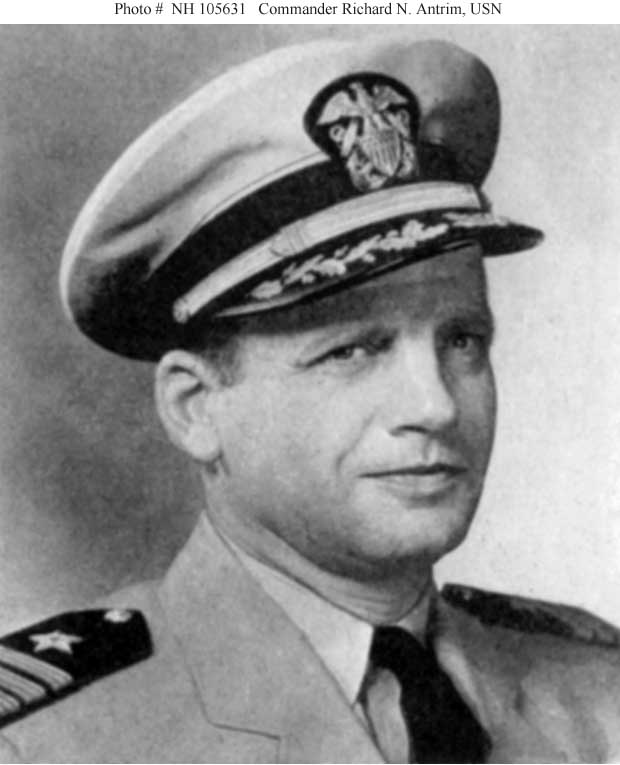
Rear Adm. Richard Antrim in 1942
Suggested by U.S. Naval Institute Press: an essay by Michael Mink of Investor’s Business Daily, on Navy Reads by permission of the author.  Read about the courageous life of a Medal of Honor recipient, Prisoner of War, warrior leader and admiral:
“Richard Antrim always put the welfare of his men above his own.
“That commitment in World War II earned him the Medal of Honor among other decorations for self-sacrifice and courage.
“In April 1942, at a Japanese prisoner of war camp in the Dutch East Indies, U.S. Navy Lt. Antrim (1907-69) and his fellow prisoners were routinely subjected to sadistic cruelty from the guards...”
Mink’s essay, which includes liberal excerpts from Antrim’s MOH, Navy Cross and Bronze Star citations, reads like a short movie synopsis.  Antrim’s story, courage and humility are inspiring.
USS Forrestal in 1967
The Navy remembers the tragedy and heroic response aboard USS Forrestal 45 years ago during the Vietnam War, in which 134 crew members were killed.  A video on Navy.mil provides rare photos and images of the explosions that occurred when a Zuni 5-inch rocket accidentally fired.  “We remember our shipmates.”  
Navy History and Heritage Command provides a comprehensive history of Forrestal and a detailed account of the tragedy that occurred on July 25, 1967.
“Within five seconds, the fire, fed by a ruptured 400-gallon fuel tank, rapidly enveloped the Skyhawks on either side of the wounded aircraft. Barely two minutes into the unfolding holocaust the first of many high and low level detonations erupted as the heat started to cook-off bombs, rockets and 20 mm rounds. An explosion shattered the windows of Primary Flight Control...
“Seven major explosions shook the ship during the first four minutes of the horrific crisis, and some 40,000-gallons of JP-5 jet fuel from aircraft on deck spread the inferno. Huge clouds of black smoke billowed upward, blinding crewmembers racing to battle the flames, which engulfed the fantail and spread to below deck on the 01, 02 and 03 levels, touching off ordnance, trapping some men and wreaking havoc with the crew and ship...” (read more) 
London Olympics in 2012
“..but strong in will, To strive, to seek, to find, and not to yield” from Tennyson’s “Ulysses” is one of the inscriptions of poetry on sculptures in the Olympic Park.  The Athenians and Spartans of ancient Greece are remembered for their military bearing, love of learning, warrior spirit and poetry.
Poetry was part of the Olympics up until 1948, and literature seems to be back in fashion.  Oxford-educated London Mayor Boris Johnson commissioned and recited an Olympic ode in ancient Greek and English.
National Public Radio, New York Times and Huffington Post, among others explore the history of the Olympics and poetry.  The Wall Street Journal is publishing poetry about the Games.
Books, reading and readers were a big part of this weekend’s London Olympics opening ceremony -- with Harry Potter author J. K. Rowling’s Lord Voldemort, J.M. Barrie’s “Peter Pan” and Lewis Carroll’s “Alice in Wonderland” taking center stage. 
To read about Olympics achievements of U.S. naval olympians, visit the Naval History and Heritage Command site.

Saturday, September 10, 2011

Confidence, Commitment, Character

Review by Bill Doughty
On Sept. 11, 2001 Michael P. Murphy was an ensign in Basic Underwater Demolition/SEAL training.
Michael Murphy, a graduate of Penn State University, who grew up in Patchogue, Long Island, New York, internalized and personalized what happened on 9/11, according to colleagues, mentors and writer Gary Williams, author of SEAL of Honor: Operation Red Wings and the Life of Michael P. Murphy, USN.
Murphy led a SEAL team into Afghanistan in 2005 where he faced a profound ethical dilemma after capturing some civilian non-combatants.  His dilemma and moral decision is examined in detail in another book about Operation Red Wings, Lone Survivor by Marcus Luttrell.
The team then endured a prolonged firefight against a larger Taliban force.  At the end of the terrifying and deadly fight, Murphy faced a second, more personal moral choice.  At great personal risk, he put himself directly in the path of enemy fire in order to call in help for his team.
In SEAL of Honor Williams introduces us to Murphy’s family, shows in detail his training regimen as a Navy SEAL, describes the mission Murphy led in Afghanistan during Operation Red Wings, and describes the honors paid to Murphy and his family after he was killed.  SEAL of Honor  preserves history and offers a well-documented biography of an American hero.  
Murphy’s bond with first responders from his home state is legendary.  He had his unit wear the bright orange patch of FDNY Engine Co. 54, Ladder Co. 43 -- “El Barrio’s Bravest” -- on their uniforms as a team symbol and constant reminder of 9/11 and why the SEALs were in Afghanistan, according to Williams.
Marcus Luttrell refers to the patch several times in Lone Survivor.
Luttrell’s book is understandably an autobiographical account.  Before describing Operation Red Wings, Lone Survivor explores Luttrell’s upbringing in Texas, his SEAL training in San Diego and a mission in Iraq desperately searching in vain for weapons of mass destruction: “chasing shadows out there in that burning hot, sandy wilderness.”
Luttrell’s telling of the firefight with the Taliban in Operation Red Wings is gripping and graphic, but at the end of Luttrell’s book the reader is left with a hunger to know more about the hero of the tale, leading protagonist Michael P. Murphy.
Spartan warrior culture depicted in the movie 300.
Seal of Honor shows us how Murphy’s qualifications as a leader developed starting in early childhood.  As a toddler, Michael’s favorite book was Wally Piper’s The Little Engine that Could.  He was a voracious reader at Canaan Elementary School.  
According to Williams, Murphy’s favorite book was Gates of Fire by Steven Pressfield, a historical fiction novel about the 480 B.C. Battle of Thermopylae, in which 300 brave Spartans protected their homeland and democracy from an invading Persian Army.
Greek warrior culture is part of the SEAL tradition.
The never-give-up attitude, willingness to sacrifice for a cause and strong personal ethos all contribute to what makes a Navy SEAL, provided the individual can tough it through BUD/S training, described in detail by Williams.
Despite the brutal training, Michael soon realized that almost anyone could meet the physical requirements of the SEALs, but the unending challenge from day one would be the mental toughness, that never-ending inner drive that pushes you forward when every nerve and muscle fiber in your body tells you to stop -- to quit.  That warrior mind-set -- the mental toughness -- is what separates a Navy SEAL...
SEAL of Honor includes inspiring SEAL Creed excerpts or, in some cases, complete remarks from SEAL leaders like Adm. Eric T. Olson, Chief Warrant Officer Mike Loo and Commodore Pete Van Hooser.  All focus on leadership expectations and maintaining high standards.
Williams describes the tragic rescue attempt in which Lt. Cmdr. Erik S. Kristensen and 15 other would-be rescuers were killed when their MH-47E Chinook helo, call sign Turbine 33, was shot down by the Taliban.
Both Lone Survivor and SEAL of Honor showcase the importance of the concept: “no one left behind.” 
Near the end of SEAL of Honor, Williams lists each of the warriors who died trying to rescue Murphy and his team.
Lt. Michael P. Murphy.  U.S. Navy photo.
He describes the many tributes to Lt. Michael P. Murphy, including the awarding of the Medal of Honor by President George W. Bush.  One of the most significant tributes, especially as far as Sailors are concerned, is the naming of an Arleigh Burke-class guided-missile destroyer for him, dedicated May 7, 2008.  
During his remarks, Secretary Donald C. Winter predicted, “Every Sailor who crosses the bow, every Sailor who hears the officer of the deck announce the arrival of the commanding officer, and every Sailor who enters a foreign land representing our great nation will do so as an honored member of the USS Michael Murphy,” writes Williams.
Osama bin Laden haunts both books, written prior to President Barack Obama’s authorization to kill or capture the terrorist leader of al-Qaida, the group responsible for the attacks of Sept. 11, 2001.  After a Muslim ceremony, bin Laden was buried at sea from USS Carl Vinson (CVN 70) just days before the USS Michael Murphy christening.
USS Michael Murphy (DDG 112) was christened at Bath Iron Works, Maine on May 7, 2011 (after publication of Williams’s book), on what would have been Murphy’s 35th birthday.
“It is my sincere belief that this ship will build on the momentum gained by our special operations forces in the fight against extremism and sail the seas in a world made more peaceful by sustained American vigilance, power and dignity,” said Chief of Naval Operations Adm. Gary Roughead. “This ship will carry Michael’s legacy and values to Sailors several decades from now and to a new generation of Americans...”