Showing posts sorted by date for query statue of liberty. Sort by relevance Show all posts

Tuesday, February 21, 2023

Frederick Douglass Speaks to Us in 2023: Part 3, Accountability

By Bill Doughty––

The “Big Lie” of Frederick Douglass’s time on earth was slavery. Generally, white people in the South (and many in the North) not only accepted enslavement of people with dark skin, they embraced the idea, justifying it with Bible passages such as Genesis 9, 18–27, Leviticus 25:44–46, and Paul’s Epistles to the Ephesians and Colossians.

Douglass wrote about his experience as a slave, free man, and abolitionist in “Narrative of a Slave.” In “Narrative” and decades later in “My Escape from Slavery,” Douglass recounted how the sea called to him, how he was helped to learn to read in a shipyard, and how he escaped enslavement in a sailor’s uniform. We presented excerpts in our Navy Reads, “The Naval Inspiration of Frederick Douglass,” in June 2020.


The Library of America offers more of Douglass’s brilliant writing in “Douglass: Speeches & Writings” (2022, edited by David W. Blight).


Douglass confronted the Big Lie of his time with frustrated passion, a strong moral compass, and a call to arms on behalf of the truth, justice, and the ideals of the American Dream. He called for responsibility, accountability, and (as inspired by Thomas Paine) “common sense.”


His often acerbic insights reached new heights during the Civil War, during Reconstruction, and as African Americans gained more power and influence in the face of voting suppression, discrimination, and hate crimes, including lynchings. Douglass called for responsibility and accountability of the nation's leaders.


On Accountability –– For the President; For the Union; By Government of the People:

  • “The President of the United States seems to possess an ever increasing passion for making himself appear silly and ridiculous, if nothing worse. Since the publication of our last number he has been unusually garrulous, characteristically foggy, remarkably illogical and untimely in his utterances, often saying that which nobody wanted to hear, and studiously leaving unsaid about the only things which the country and the times imperatively demand of him.” (09/1862)
  • “Experience demonstrates that our safety as a nation depends upon our holding every officer of the nation strictly responsible to the people for the faithful performance of duty. This war has developed among other bad tendencies, a tendency to shut our eyes to the mistakes and blunders of those in power … Our rulers are the agents of the people. They are fallible men. They need instruction from the people, and it is no evidence of a factions disposition that any man presumes to condemn a public measure if in his judgment that measure is opposed to the public good.” (07/04/1862)
  • “The structure of the American Constitution and Government imply the existence among the whole people of a fraternal good will, an earnest spirit of co-operation for the common good, a mutual dependence of all upon each and of each upon all. The Government is not enthroned above the people but is of, by and through the people. A despotic form of Government with its standing armies, holds its existence in large measure independently of the people and in some sort against the people, looking at them very much as a slave-holder regards his slaves, to be worked and fed when obedient, and to be flogged and otherwise punished when they disobey. When such people raise an insurrection and are put down, the path before them is plain and simple: It is submission. To obey is the fulfillment of the whole law of despotism.—But our form of Government contemplates in such a case something more than mere cold obedience. It not only requires this, but a cordial co-operation. Its whole machinery is deranged when one of its parts fail to perform its functions. The rebellion has paralyzed the Federal Government in all the rebel States, but putting down the rebels in arms does not necessarily cure this paralysis. The benumbed or dead state must be called into life, and for this the highest wisdom must be employed. The State Senate, the State Legislature, the State Courts, the State Governors, and officers generally have to be gathered in under the fold of the Constitution and Union, and brought to co-operate in good faith with the National Government. How all this shall be done, is one of the great questions of the future.” (11/1862)
  • “A man sets out in life with honest principles and with high purposes inspired at the family hearthstone, and for a time steadily and scrupulously keeps them in view. But at last under the influence of some powerful temptation he is induced to violate his principles and push aside his sense of right. The water from the first moment is smooth about him, but soon he finds himself in the rapids. He has lost his footing. The broad flood, resistless as the power of fate, sweeps him onward, from bad to worse, he becomes more hardened, blind and shameless in his crimes till he is overtaken by dire calamity, and at last sinks to ruin. Precisely this has been the case with the American people. No people ever entered upon the pathway of nations, with higher and grader ideas of justice, liberty and humanity than ourselves. There are principles in the Declaration of Independence which would release every slave in the world and prepare the earth for a millennium of righteousness and peace. But alas! We have seen that declaration intended to be viewed like some colossal statue at the loftiest altitude, by the broad eye of the whole world, meanly subjected to a microscopic examination and its glorious universal truths craftily perverted into seeming falsehoods. Instead of treating it, as it was intended to be treated, as a full and comprehensive declaration of the equal and sacred rights of mankind, our contemptible negro-hating and slaveholding critics, have endeavored to turn it into absurdity by treating it as a declaration of the equality of man in his physical proportions and mental endowments. This gross and scandalous perversion of the true intents of meaning of the declaration did not long stand alone. It was soon followed by the heartless dogma, that the rights declared in that instrument did not apply to any but white men. The slave power at last succeeded, in getting this doctrine proclaimed from the bench of the Supreme Court of the United States.” (07/04/1862)
  • “Do not ask me what will be the final result of the so-called negro problem. I cannot tell you. I have sometimes thought that the American people are too great to be small, too just and magnanimous to oppress the weak, too brave to yield up the right to the strong, and too grateful for public services ever to forget them or fail to reward them. I have fondly hoped that this estimate of American character would soon cease to be contradicted or put in doubt. But the favor with which this cowardly proposition of disfranchisement has been received by public men, white and black, by Republicans as well as Democrats, has shaken my faith in the nobility of the nation. I hope and trust all will come out right in the end, but the immediate future looks dark and troubled. I cannot shut my eyes to the ugly facts before me. Strange things have happened of late and are still happening. Some of these tend to dim the lustre of the American name, and chill the hopes once entertained for the cause of American liberty. He is a wiser man than I am, who can tell how low the moral sentiment of this republic may yet fall. When the moral sense of a nation begins to decline and the wheel of progress to roll backward, there is no telling how low the one will fall or hear the other may stop. The downward tendency already manifest has swept away some of the most important safeguards. The Supreme Court has surrendered. State sovereignty is restored. It has destroyed the civil rights Bill, and converted the Republican party into a party of money rather than a party of morals, a party of things rather than a party of humanity and justice. We may well ask what next? The pit of hell is said to be bottomless. Principles which we all thought to have been firmly and permanently settled by the late war, have been boldly assaulted and overthrown by the defeated party.” (01/09/1894)

Douglass recognized the corrosive aspects of fear. He called for hope and optimism in an era of negativity and hypocrisy, personified in the Big Lie of slavery. He called for integration of the military, expanded rights for women, respect for the rule of law, and diversity in society. And he demanded a government of the people, by the people, for the people.

We hope this series of Navy Reads reviews of Douglass’s “Speeches & Writings” will pique readers’ interest in the full works of the great abolitionist. Some leaders who seek power would prefer to ban books about African American history, including the Big Lie of slavery and the ongoing struggle for civil rights. The words of Frederick Douglass remain alive and relevant more than a century later. His words inspired great American presidents, including Abraham Lincoln, Barack Obama, Harry S. Truman John F. Kennedy, Lyndon B. Johnson –– and Jimmy Carter.

Saturday, July 30, 2022

Smedley Butler: Remember 'Making and Breaking'

Review by Bill Doughty––

“Gangsters of Capitalism: Smedley Butler, the Marines, and the Making and Breaking of America’s Empire” by Jonathan M. Katz (St. Martin’s, 2021) shows why we need to study history as it was, not as we want it to be.

This book toggles between the past and present as award-winning journalist Jonathan M. Katz follows the path of Smedley Butler, United States Marine, a twice-awarded recipient of the Medal of Honor. He fought in China, Cuba, Haiti, Nicaragua, and Philippines; spied for the Navy in Mexico; and he served in World War I in France. 


Along the way, he helped oversee building and protecting the Panama Canal, which was envisioned by Alfred Thayer Mahan and Theodore Roosevelt. As a young Marine officer, Butler had been ordered to dig a much smaller canal across a tiny isthmus on the island of Culebra in the Caribbean.

“On a sweltering day in December 1902, Smedley Butler was standing waist-deep in a watery ditch. He dunked his shovel into the mud. Mosquitoes darted across the rust-colored ripples. Their bites itched like poison. He couldn’t decide what he hated more: this marshy hell, the solid rock his unit had to ship through he day before, or the admiral whose idea it had been to build this stupid canal in the first place.”

Katz’s superb writing is illuminated by the author’s access to Butler family letters and by his extensive travels in the footsteps of Smedley Butler.


Katz provides relevance and context in his visits to battlefields in Cuba with Public Affairs Officer MCC Barbara Meeks, to war-torn regions in China and the Philippines, and to the Marine Corps museum at Quantico, Virginia, as just a few examples.

We get some of the richest reporting and historical connections when Katz returns to Haiti. He lived there for several years and was there for the devastating earthquake of 2010. (Katz is also author of “The Big Truck That Went By” about the earthquake and humanitarian response.)


“Gangsters of Capitalism” opens with a Haitian proverb as the book’s epigraph, which also happens to be a found haiku:


...one who deals the blow

forgets. The one who carries

the scar remembers


Butler developed trust and confidence with local people in Haiti, those who would “remember.”


While he and his Marines could be ruthless in combat, their power could be tempered with diplomacy and paternalistic compassion. 

“Butler’s insights became the key to securing America’s imperial foothold in Haiti. Though Butler did not realize it at the time, he was helping invent a new approach to warfare. It would eventually be dubbed counterinsurgency: the combination of military, political, and psychological method employed by an occupying power with the goal of holistically defeating an armed resistance.”

The method would be fine-tuned as counterinsurgency doctrine: COIN.

Smedley Butler
Butler also served as commandant at Quantico and San Diego, and he took a leave of absence from the Marines to become Chief of Police in Philadelphia during the nation’s failed experiment with Prohibition. Katz shows how the militarization of policing got its start in the name of “law and order.”

The book reads like a Netflix series, each chapter an episode leaving readers hungry for the next. China might take more than one episode. Same for the Philippines. Central America could be a whole season itself.


If read chronologically, “Gangsters” shows Butler’s evolution from warrior for corporations to warrior for peace. He came to see imperialism and fascism overseas return to American shores as authoritarianism and nationalism at home. He foresaw the coming of another World War in a final eruption of colonialism and revanchist expansionism.

“Butler could not see the irony: that the imperialism he had helped foster was a direct catalyst of the World War. The conflict erupted in 1914 as a fight between empires: Germany and Austria-Hungary on one side; Britain, France, and Russia on the other. All had spent decades in a complex global struggle for colonies, resources, and prestige –– a struggle that the Americans (and Butler personally) had been parties to. The older empires, especially the British, were filled with anxiety over new competitors to their global supremacy. The Germans, as the United States’ fellow latecomers to global expansion, were reading Alfred Thayer Mahan’s tracts on sea power and empire when they declared: ‘We demand a place for ourselves in the sun.’…

Butler foresaw another war coming out of the Great War and out of the era of great empire (an era Putin's Russia seems to aspire to in 2022).

“…It was not a fight over a particular colony or sea lane that sparked the cataclysm into which millions of American families were now sending their sons, but imperial arrogance, mistrust, and the accelerating war machines that made those empires run.”

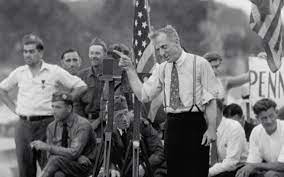
In the last ten years of his life, Butler fought against imperialism and tyranny, according to Katz, where the primary beneficiaries of authoritarianism and tyranny were banks, businesses, big oil, and bought-and-paid for politicians. His support for Bonus Marchers in Washington is recounted in a previous Navy Reads review.


Because he was loved and trusted by Veterans, an attempt was made to recruit Butler in 1934 to help set up a Fascist dictatorship in the United States, subverting the will of voters. The proposal was allegedly funded by a shadowy group backed by big business and the American Liberty League. Butler reported the coup proposal to Congress. But –– unlike the current Select Committee’s hearings into the January 6, 2021 insurrection –– a full investigation was not conducted.


A YouTube interview with Katz by “Democracy Now!” (below) features a clip of retired Major General Smedley Butler, who talks about why he reported the coup attempt: “My main interest in all this is to preserve our democratic institution. I want to retain the right to vote, the right to speak freely, and the right to write,” Butler proclaims.


YouTubers can find a longer conversation with the author on the Marines Memorial Club.

Katz writes to help readers understand history “as it was” and accept the reality of past mistakes in order to prevent history from repeating.


Butler speaks to Veterans July 19, 1939 –– ninety years ago this month.
Noting that Smedley Butler has no huge statue in his name, Katz asks a question that can apply to monuments honoring leaders of the Confederacy.  “… Why does America celebrate the generals who oversaw death and destruction on a massive scale, while forgetting the exceptional few who spent their later years trying to stop them?”

Interestingly, after retiring from the Marine Corps, Butler campaigned unsuccessfully for the Senate as a Republican from Pennsylvania.


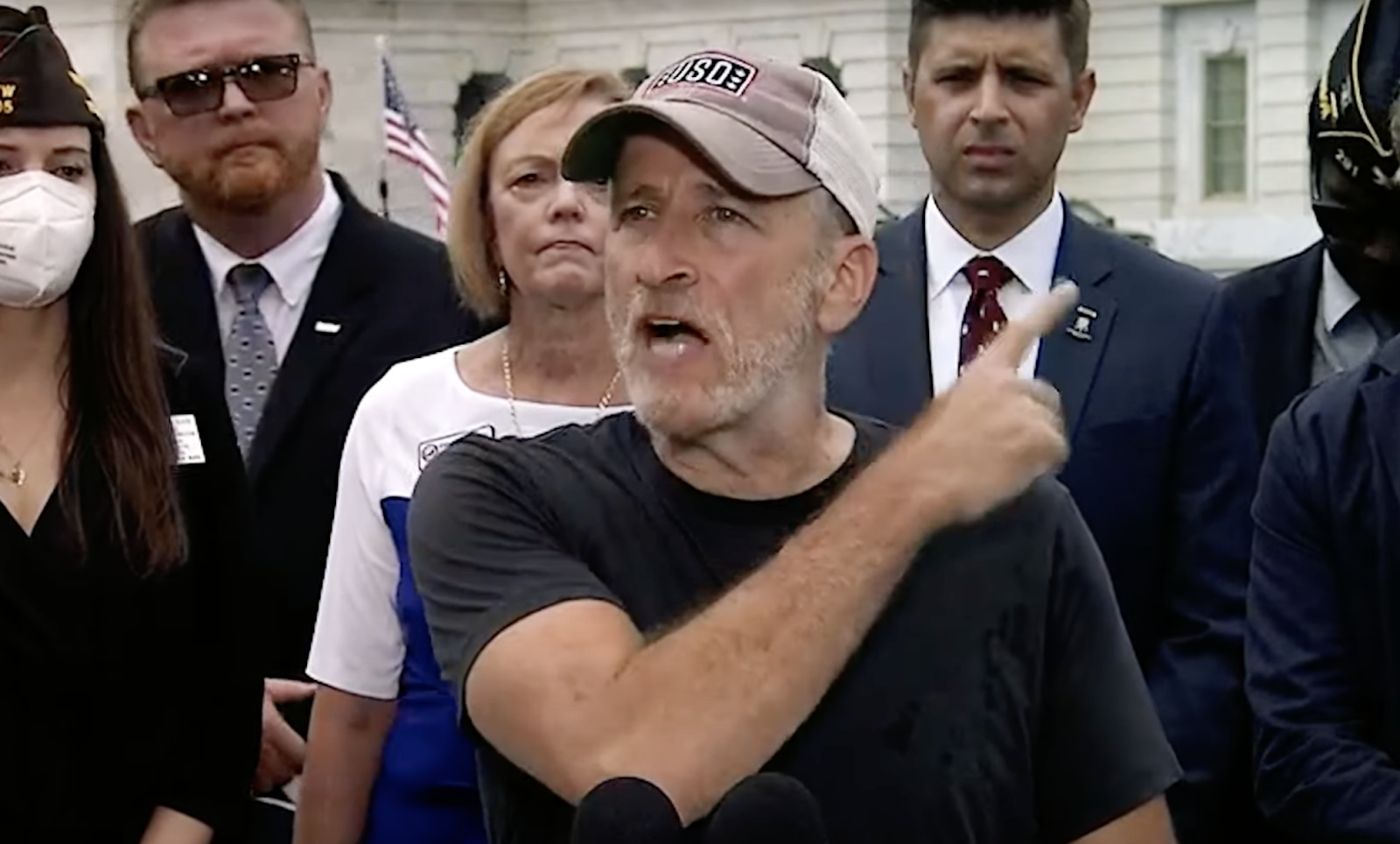
This week, Pennsylvania Republican Senator Patrick Toomey led 40 other Republicans in voting down PACT burn pit legislation that would help wounded Veterans. The Promise to Address Comprehensive Toxics Act includes the "Camp Lejeune Justice Act" to help Marines and families.


John Stewart speaks for Veterans July 28, 2022.
Jon Stewart, sounding every bit like Maj. Gen. Smedley Butler, stepped up to a microphone alongside Veterans and their loved ones to condemn the vote.

In reading this sweeping book of history, it’s amazing how many times the Navy is mentioned.


Navy readers will also be fascinated by Katz’s take on Mahan; Secretary of the Navy Josephus Daniels; Gen. Joseph H. Pendleton; Roger Leslie Farnum; Jose “Pepe” Azueta; Chiang Kai-shek; Gen. John Lejeune; and Commanders in Chief William McKinley, Theodore Roosevelt, William Howard Taft, Woodrow Wilson, Herbert Hoover,Franklin Delano Roosevelt, George H. W. Bush, and Donald J. Trump.

Monday, July 18, 2022

Smashing Ideas About Monuments

Review by Bill Doughty––

More than 250 years ago the federal government hired sculptor Clark Mills to cast a statue called Freedom, pictured above, that would be placed atop the U.S. Capitol Building in Washington D.C.


The first plaster model of Freedom, created in 1854, was rejected by then-U.S. Secretary of War (SECDEF) Jefferson Davis (future president of the Confederacy) because it wore a “liberty cap,”as Erin L. Thompson explains in “Smashing Statues: The Rise and Fall of America’s Public Monuments” (W.W. Norton, 2022).


Davis insisted the cap, which represented emancipation, be replaced with a helmet. But the new design looked “more suited to a Vegas showgirl than a warrior, with a starry headband topped with feathers sprouting from a popeyed eagle.” Eventually the symbol of liberty created by Clark Mills and his team of workers moved forward and upward, headgear and all:

“When Freedom was finally hoisted into place in December 1863, it was hailed as a symbol of the universal liberty the Emancipation Proclamation had declared in January of that year. More than 150 years later, many avowed white supremacists undertook a deadly invasion of the Capitol building to dispute the results of the presidential election. You might think that a symbol of the liberty America is supposed to offer to all would have dissuaded or at least shamed them. Looking more deeply into Freedom’s history reveals why the monument instead inspired them. It is a white supremacists vision of freedom.”

To help create the cast and melt bronze for Freedom, Mills depended on his workmen, including Philip Reed, a man born into slavery in South Carolina, who was paid $1.25 per day by Mills, but was considered his property. As Mills gained fame and made more money he purchased more enslaved people.


The symbol of Freedom was, in actuality, a symbol of slavery. “Slavery shaped everything about her,” Thompson writes.


Despite an attempt to promote emancipation and liberty, seditionists in the South staged the ultimate insurrection, led by Jefferson Davis. Construction of the Capitol Building stopped for a while, but was restarted under orders from President Abraham Lincoln, who said, “If people see the Capitol going on, it is a sign we intend the Union shall go on.”


The supreme irony of the statue atop the Capitol –– symbolizing liberty but built by enslaved people –– is matched in the story of Horatio Greenough, eugenic “father of our monuments,” whose “blatant racism” is found in his work.


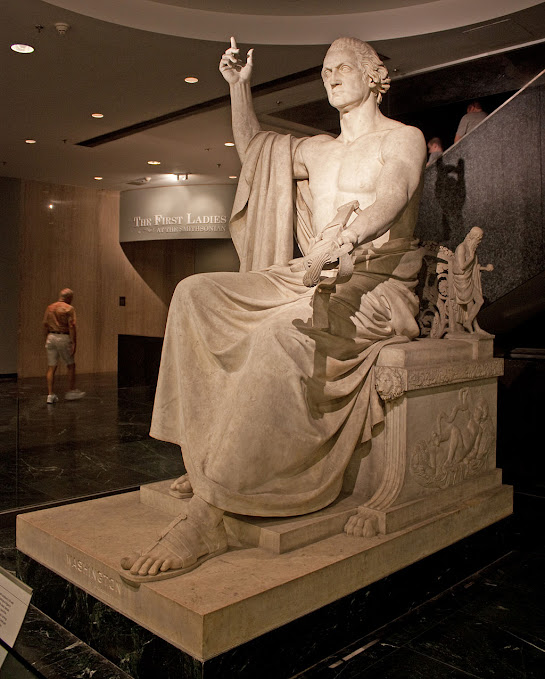
Greenough's George Washington (Wikimedia)
Greenough created a bizarre god-like statue of George Washington that includes a subjugated indigenous “Indian chief” in the design, under Washington’s hips, as the first president holds a sword and points to the sky. Greenough had planned to include “a negro” along with the indigenous figure, but abolitionist Charles Sumner convinced him not create a tie to slavery. The sculptor included a depiction of Christopher Columbus instead.

The public and press mocked the semi-nude statue of the first president. “American audiences paid less attention to deciphering the meaning of Washington’s symbolic sword and more to his nipples.” The statue, Thompson notes, "is on display at the Smithsonian’s National Museum of American History, awkwardly wedged next to an escalator. Today, the sculptures upraised hand looks as though it points the way up to the next floor."


Greenough's "Rescue." (LOC)
Greenough’s next work was received more favorably, at least by white Americans. In many ways it was even more bizarre and offensive. Like other monuments to follow, Rescue celebrated the genocide of Native Americans, particularly after President Andrew Jackson’s “Indian Removal Act” of 1830.

Rescue is in effect a monument to Manifest Destiny –– the idea of a god-given right of white people to subjugate indigenous people –– and for men to have an ordained role as dominant protectors of women. Thompson explains the scene of a white settler holding a dying indigenous warrior he'd just shot; his wife and child hover beneath him, and a dog watches balefully. The symbolism is clear and cringe-inducing.


At Abraham Lincoln’s inauguration in 1861, Rescue was prominently on display. It was removed from the eastern front of the Capitol Building in 1958 after decades of complaints. Thompson writes, “The removal of Rescue is another example of what happens when enough people decide that the messages encoded in a monument are unacceptable to them.”

“Greenough’s sculptures, the first thoroughly American national monuments, were also the first in a long line of public artworks to address questions of how much Black and Indigenous lives matter in America. He and his monuments claimed these lives didn’t matter at all. Greenough’s monuments assert that only people of a certain gender, class, and race deserve honor.

“Greenough’s beliefs informed not only his own sculpture but all the subsequent American public monuments based on his influential examples.”

A natural progression to other monuments highlighting white supremacy extended in the wake of the Civil War, even in Thomas Ball’s controversial Freedmen’s Memorial, dedicated in 1876.


Also known as Emancipation Memorial, it depicts a fully clothed Lincoln standing over a nearly naked kneeling black man. One interpretation is of a gracious leader bestowing freedom, but another view is of ongoing patriarchal and racial inequality.

Freedmen’s Memorial was unveiled on the eleventh anniversary of Lincoln’s assassination. President Ulysses S. Grant, members of Congress, and Supreme Court justices all attended and listened to Frederick Douglass’s speech. Several days later, Douglass wrote a letter to the editor of the National Republican in which he said, “What I want to see before I die is a monument representing the negro, not couchant on his knees like a four-footed animal, but erect on his feet like a man.”


Douglass’s descendants would live to see many hundreds of monuments erected to honor the seditionists of the Confederacy.


The rise of many of those monuments coincided with the rise of the rights and equality of African Americans as guaranteed under the Constitution.


An example is the statue of Robert E. Lee erected in Charlottesville, Virginia, in 1924, shortly after Virginia’s Racial Integrity Act made segregation lawful and outlawed in interracial marriage (not overturned by the Supreme Court until 1967 in Loving v. Virginia).


“The conflict at the heart of America,” Thompson writes, is “the conflict between the freedom for all and freedom for some.”


Thompson enlightens readers with the psychology, politics, and intent of Civil War monument creators. She delves into the meaning of statues’ poses, shows the influence of donations in creating profit motives for monuments, and explains the role of the Ku Klux Klan and other white supremacists.


Then there's Christopher Columbus.


Columbus Fountain in Washington D.C. (NPS)
Thompson reminds readers about Columbus’s contemporary, the priest Bartolemé de las Casas, who wrote about the real Christopher Columbus during his cruel reign as governor of Hispaniola (now Dominican Republic and Haiti). Columbus is condemned for overseeing torture, rape, slavery and genocide. Columbus shipped young girls back to Spain to be sold into slavery.

In recent years more people have assembled, protested, and demanded statues honoring Columbus, like monuments to the Confederacy, be taken down.


Thompson explores how, despite widespread opposition to their presence, some monuments remained in place for years. “We think our monuments celebrate our democracy, but really, they are held in place by some of America’s least democratic uses of power.”

Complacency and willful ignorance kept monuments up until catalysts of violence created a backlash: “Unite the Right” white supremacists' march (and killing of Heather Heyer) in Charlottesville; the horrific mass murder at a church in Charleston, South Carolina; and the senseless murder of George Floyd in Minneapolis, Minnesota, as examples.


Acts of civil disobedience are often the result of willful acts of bureaucratic lethargy, intransigence, and not listening to peaceful protesters. Thompson writes, "Talking about monuments is not easy. But we need to do it. We need to come together as communities to make sure our monuments leave room for everyone's life, liberty, and pursuit of happiness."


Towering over all the monuments to the Confederacy is the incomparable Stone Mountain in Georgia. Cut into the face of the mountain, it is the world’s largest bas-relief sculpture: images of Confederate President Jefferson Davis, along with Civil War generals Stonewall Jackson and Robert E. Lee on horseback. The sculpture inspires white racists and believers in the Lost Cause Big Lie, including the KKK.

Thompson writes about eccentric anti-semitic sculptor and con artist Gutzon Borglum, who was involved in creating the Stone Mountain monument. Borglum would go on to create the monument at Mount Rushmore, South Dakota, on land that was sacred to indigenous people.

There’s a lot more in this book about Borglum and Stone Mountain –– stories “to startle us out of our assumptions,” as Thompson writes.


[While reading this book I came across a new Americana CD by Bill Edwards, “61356,” with a great song from the perspective of a statue of a Union soldier on a Civil War monument in Illinois: “We Don’t See It Yet.” Edwards sings: “Since nineteen hundred and thirteen/I’ve stood in my place on this stone/In the middle of my Bureau County/But I haven’t stood here alone/Above me, a guardian angel/To my right, left and back, over Vets/We watch the horizon for justice/Alas, we don’t see it yet.” It’s a terrific song and album, highly recommended. Read more about "61356" on The Stratton Setlist.]


In “Smashing Statues” Thompson laments the lack of monuments to African Americans who fought for the Union in the Civil War.


There are also a relatively small number of monuments to women in the United States, but last week Speaker of the House of Representatives Nancy Pelosi unveiled a statue of Mary McLeod Bethune in the Capitol Building. Behune was “an unyielding force for racial justice, a pioneering voice for gender equity” from Florida, who was also “a devoted advocate for education,” Pelosi said in her remarks.


Bethune statue unveiled at Capitol Building July 13, 2022. (CNN)
The statue of Bethune joins statues of Rosa Parks, Sojourner Truth, Frederick Douglass and Martin Luther King, Jr. in the Capitol’s Statuary Hall. Bethune’s statue replaces that of a Confederate general.

On January 6, 2021, Trump-supporting insurrectionists, many wearing helmets or other headgear, walked through Statuary Hall during the coup attempt. Some rioters carried Confederate flags into the Capitol. High above them, on top of the building stood the statue in plumed helmet with an American eagle, mouth agape, eyes bulging –– Freedom.


This is an indispensable book for military readers interested in the reasons for the initiative to rename installations, facilities, and ships named for Confederate white supremacists or Confederate battle victories.

Thursday, October 14, 2021

Filling in Gaps in ‘How the Word Is Passed’

Review by Bill Doughty––

At the beginning of “How the Word Is Passed: A Reckoning with the History of Slavery across America” (Hachette Book Group, 2021) author Clint Smith introduces us to Navy veteran David Thorson.


Thorson serves as a tour guide and teacher at Thomas Jefferson’s plantation home outside Charlottesville, Virginia. Smith learns that “prior to becoming a tour guide at Monticello, David served for more than thirty years in the U.S. Navy.”


Monticello
David Thorson’s “peach face, reddened from all the hours spent standing in the sun, was clean-shaven … He spoke with a calm evenhandedness that invited people into discussion, like a professor.”

According to Smith, Thorson became a docent and tour guide at Monticello after retiring from the Navy because of his love of history and interest in Thomas Jefferson.


While giving a tour focusing on Jefferson’s relationship to slavery, Thorson addresses the visitors:

“Slavery’s an institution. In Jefferson’s lifetime it becomes a system. So what is this slave system? It is a system of exploitation, a system of inequality and exclusion, a system where people are owned as property and held down by physical and psychological force, a system being justified even by people who know slavery is morally wrong. By doing what? Denying the very humanity of those who are enslaved solely on the basis of the color of their skin.”

Smith recounts, “In just a few sentences, David had captured the essence of chattel slavery in a way that few of my own teachers ever had.”


During the tour Smith notices how Thorson chooses to refer to the enslaved black people as “human beings” rather than “slaves.” Smith writes, “What reverberated throughout was the humanity of the enslaved people –– their unceasing desire to live a full life, one that would not be defined simply by their forced labor.”

Frederick Douglass
For his part in “How the Word Is Passed,” Smith brings in luminaries from history such as Frederick Douglass and W.E.B. DuBois, as well as respected historians Eric Foner, Annette Gordon-Reed, and Kenneth M. Stampp, to fill in some of the gaps of enslaved people’s lives. Smith presents information to settle debates about the impact of slavery on African Americans, from the founding of the nation through the Civil War and Emancipation and even through the era of Jim Crow, when many whites in southern states still longed for the Lost Cause of the Confederacy.

When it comes to debates about critical race theory or Big Lie / Lost Cause –– and even anti-vaccination stances –– it’s important to not only present facts and tell the truth but also be understanding and empathetic in how you talk to people. According to Smith:

“David sees it as essential that a guide be able to find the balance of telling the truth and not pushing people so much that they shut down. He told me that when you challenge people, specifically white people’s conception of Jefferson, you’re in fact challenging their conception of themselves. ‘I’ve come to realize that there’s a difference between history and nostalgia, and somewhere between those two is memory,’ he said. ‘I think that history is the story of the past, using all the available facts, and that nostalgia is a fantasy about the past using no facts, and somewhere in between is memory, which is kind of this blend of history and a little bit of emotion … I mean, history is kind of about what you need to know … but nostalgia is what you want to hear.'

“What would it take –– what does it take –– to confront a false history even if it means shattering the stories you have been told throughout your life?” Smith asks. “Even if it means having to fundamentally reexamine who you are and who your family has been?”


Smith says the search for truth is worth the pain. “Just because something is difficult to accept doesn’t mean you should refuse to accept it. Just because someone tells you a story doesn’t make that story true.”

In the 1930s and 40s, black men dressed as slaves conducted tours of Monticello, so hearing about David Thorson is evidence of progress, but Smith is careful about too much celebrating about that progress.


“When I think about the history of slavery and racism in this country, I think about how quick we are to expose notions of progress without accounting for its uncertain and serpentine path,” Smith says, reflecting on a visit with his grandparents to the National African American History and Culture Museum. 

In this thought-provoking book Clint Smith travels from Monticello to the Smithsonian’s NAAHCM in Washington, D.C. And he also visits the Whitney Plantation in Wallace, Louisiana; Angola Prison in Louisiana; Blandford Cemetery in Petersburg, Virginia; Monument Avenue in Richmond, Virginia; Galveston Island, Texas; Wall Street and Ellis Island, New York City; and Gorée Island, Dakar, Senegal, Africa.

His journey backtracks the route black Africans took as chattel slaves brought to the colonies in the Americas to create and maintain an economy based largely on cotton, tobacco, and sugar.


Smith’s goal on his trip is to fill in the blanks of history and gaps that separate people. He fills in those blanks and gaps with information, truth, and understanding.


With a journalist’s ear and poet’s eye, he takes readers to uncomfortable places and truths.

  • We confront the fact that Thomas Jefferson kept hundreds of humans enslaved; he also separated families, removing children even under the age of ten from their mothers and fathers.
  • We go to the Whitney Plantation, site of a slave revolt in 1811 on the heels of the Haitian Revolution of 1803; at Whitney, whites decapitated 55 slaves and displayed their heads on posts.
  • We ride to Galveston, Texas, considered by some as the site of the end of slavery and beginning of celebrations now known as Juneteenth.
  • We take a behind-the-scenes tour of Angola, where Smith reveals how mass incarcerations have roots in slavery.
  • We get a comparison of the now-removed Robert E. Lee statue in Richmond with the Statue of Liberty, designed by a French abolitionist –– and we’re reminded that Lady Liberty stands on broken chains as she stands for truth, justice, and democracy.
  • Finally, Clint invites readers with him for an emotional return to Africa as he examines remnants of colonialism and the role of history in accurately reflecting what was once a “system of plunder,” slavery and colonial rule, where “white sugar [and white cotton] means black misery.”

The Statue of Liberty stands for freedom from slavery and the promises of July 4, 1776. (NPS)

Clint Smith
Along Smith’s remarkable journey, he introduces us to individuals who earned their right to provide perspective and context, people like Angola’s Norris Henderson, NYC’s Damara Obi, Dakar’s Hasan Kane, Smith’s grandparents, and Monticello’s David Thorson.

Near the end of his visit to Jefferson’s plantation, Smith seeks out Thorson to get more insight and fill in more gaps.


Smith is intrigued by Thorson’s wisdom about the reality of human imperfection and Thorson’s view on “an idea worth fighting for.”


Smith writes:

“Before I left, I wanted to understand how much David’s role as a former military officer –– responsible for protecting and promoting this country’s foreign policy agenda at home and abroad –– was something that felt, if at all, in tension with his role now. ’I was born in the United States of America. I served the country for thirty years, so I actually believe in the idea of America,’ he said, straightening up in his chair. ‘Are we exceptional? No. Have we had unique advantages based on geography, based on a whole host of factors? Yes. Did a group of people come together in 1776 and conceive of an idea that was pretty radical in its time and then create a system of government, through the Constitution and its amendments, that was pretty radical and pretty novel? Yeah. Have other countries found their own way? Sure. So I believe in the idea of America. I don’t believe that this country was perfect. I don’t believe it is perfect. I don’t believe it’s going to be perfect. I believe that the journey to make this a better place is worth the effort and that the United States, if you conceive it not so much as a place to be in but an idea to believe in, it is worth fighting for.'

Democracy is safe when it’s protected. Truth, honest reflection, and the pursuit of justice must be at the heart of “how the word is passed.”


President Barack Obama and President François Hollande of France tour Monticello, the home of Thomas Jefferson in Charlottesville, Va., with Leslie Bowman, President of the Thomas Jefferson Foundation, Feb. 10, 2014 (Official White House Photo by Chuck Kennedy)


Sunday, September 24, 2017

Invisible Shipkillers, Winning the Great War

Review by Bill Doughty

Germany's unrestricted submarine warfare brought the United States into a war many Americans strongly opposed. Exactly one hundred years ago, in 1917, the United States Navy converted ocean liners to serve as troop transports, often rushing to move Soldiers and Marines to England and France. Invisible dangers threatened the ships: U-boats, saboteurs, lack of training, icebergs and a virus that would devastate the ranks of the military.

Those are some of the themes in this remarkable, well-paced book by Peter Hernon: "The Great Rescue: American Heroes, An Iconic Ship, and the Race to Save Europe in WWI" (HarperCollins 2017). Events and people intersect aboard USS Leviathan, a converted German liner.

Hernon follows some now-forgotten characters such as Corporal Freddie Stowers, Army Nurse Corps officer Emma Elizabeth Weaver, several Navy ship captains, and American journalist Irvin Cobb. One character, Congressman Royal Johnson of South Dakota, voted against entering the war out of loyalty to his constituents, but then he enlisted and distinguished himself in combat.

Sailor Humphrey Bogart
Other more well-known names with ties to USS Leviathan get some limelight too, including Navy Seaman Humphrey Bogart (who had a sketchy service record as a teenager); then-Col. Douglas MacArthur (who was flamboyant, vain but brilliant); General John Pershing (who had a tender love relationship with a French artist) and then-Assistant Secretary of the Navy Franklin Delano Roosevelt (who showed diplomatic skills during a trip to Europe).

FDR
FDR suffered a life-threatening bout of influenza aboard Leviathan in a return to the States from France.
"The Leviathan was waiting for him out in the harbor, a gray monster with black coal smoke trailing from her tall stacks. By the time Roosevelt boarded her, he could barely stand. He'd been showing signs of illness for days. A week earlier, he'd run a 102-degree fever during a hair-raising all-night drive to Paris without headlights over crowded roads. He ignored the symptoms and refused to rest, pushing himself without letup. According to Roosevelt biographer Kenneth Davis, 'For weeks on end he had been driving his body beyond its capacity for self-renewal, using up every reserve of its strength in reckless disregard of the protests it made.' He was knotted up in pain when he was piped aboard the Leviathan and met Captain Bryan."
One hundred years ago, a killer version of the flu swept through the world and hit the U.S. Navy. "The illness spread fast, and within the tight confines of a ship at sea it could explode like a bomb."

Desperate to bring reinforcements to Europe, the Leviathan knowingly brought aboard hundreds of already-sick troops aboard. Hernon's characters see the "sickness of war" either at sea or in the trenches, where Soldiers and Marines experienced hand-to-hand combat, grenade and machine gun attacks and chemical weapon horrors. And there were other challenges:
"Johnson had to get used to the chronic lack of sleep, especially at night, when staying awake was a matter of life and death for anyone on duty. This was true even in the rear shelters, which regularly came under shell fire. The trenches and dugouts were infested with rats, the big black variety the soldiers had to club to death, and no matter how much the men tried to stay clean and keep their hair cut short, the lice, or 'cooties,' were always with them, burrowing deep into their uniforms and blankets until they were scratching or picking nits nearly every waking moment. In the morning, tormented soldiers angrily ripped off their shirts, looking for the vermin that abounded in the collars and sleeves."
Scenes aboard USS Leviathan
Hernon makes us care about the people he profiles, including African American Cpl. Freddie Stowers, who along with his regiment, overcame racial barriers and showed valor on the battlefield despite entrenched Germans at Verdun.
"The Germans had had four years to add a devilish array of defenses to the already challenging landscape of hills, ravines, and woods – seemingly countless numbers of machine gun pillboxes, a network of trenches, and barbed wire in lines four and five deep and concealed over the years with lush vines and brush. Artillery was positioned to provide flanking fire on infantry trying to move between the Meuse and the Argonne.This masterpiece of interlocking, mutually supportive firepower was designed to defend a critical railroad in the rear, the Sedan-Mezieres line, the only escape route to Germany. If it were broken, the German army would be trapped, unable to be resupplied or reinforced. The war would end."
The war did end, thanks to American presence and power. Hernon uses the battlefield and the sea as a stage for his characters, with USS Leviathan as a centerpiece, all to show an intimate history of World War I, thought to be a war to end all wars but which ended in a treaty described by MacArthur as "drastic ... more like a treaty of perpetual war than of perpetual peace."

USS Leviathan's work was not over after the treaty was signed. The ship joined other converted liners, commercial ships and war ships as part of a "massive logistical undertaking" to bring two million troops home from Europe.


We featured USS Leviathan in a Navy Reads post honoring the Statue of Liberty: According to the Naval Historical Center, "Leviathan (was) an appropriate name considering that she was then the largest ship in the U.S. Navy, and in the World. The Navy would not operate a bigger ship until 1945, when the slightly longer and heavier aircraft carrier Midway entered service."

Sunday, September 18, 2016

The Underground Railroad – to DC

Review by Bill Doughty

(Art courtesy National Park Service)
It's on the Commander-in-Chief's summer reading list, was chosen by Oprah for her book club, and gives insights to our nation's original sin in the lead-up to the opening later this week of the Smithsonian Institution's National Museum of African American History and Culture.

All good reasons to read this fantasy fiction by a gifted writer.

Colson Whitehead's "The Underground Railroad" (2016 Doubleday, Penguin Random House) takes liberty in his storytelling of the sacrifices of slaves and abolitionists in the decades before the Civil War. Fantasy comes into play when he envisions an extended, actual, literal underground railroad.

Reading this novel, one can imagine a movie version produced by directors who blend the real with the unreal: Spike Lee, Oliver Stone and, especially because of the graphic violence the jumps out unexpectedly, Quentin Tarantino.

Strong characters include both resilient and resigned slaves, sadistic plantation owners, a patronizing widow, conflicted and committed railroad operators, and weird slave-catchers. Settings involve slave quarters, saloons, various hiding places, an "anatomy house," the Museum of Natural Wonders and a barn filled with shackles.
"She saw the chains first. Thousands of them dangled off the wall on nails in a morbid inventory of manacles and fetters, of shackles for ankles and wrists and necks in all variety and combinations. Shackles to prevent a person from absconding, from moving their hands, or to suspend a body in the air for a beating. One row was devoted to children's chains and the tiny manacles and links connecting them. Another row showcased iron cuffs so thin that only the thought of punishment prevented their wearer from splitting them. A line of ornate muzzles commanded their own section, and there was a pile of ball and chains in the corner. The balls were arranged in a pyramid, the chains trailing off in S-shapes. Some of the shackles were rusted, some were broken, and others seemed as if they had been forged that very morning. Cora moved to one part of the collection and touched a metal loop with spikes radiating toward its center. She decided it was intended for wear around the neck."


A display of slave shackles will be featured in the Smithsonian's new museum. For his part, Whitehead in "Underground" imagines a Museum of Natural Wonders with live-action scenes of American History acted out by people. One scene involves a sanitized look at life on a slave ship:
"The soothing blue walls of Life on the The Slave Ship evoked the Atlantic sky. Here Cora stalked a section of a frigate deck, around the mast, various small barrels, and coils of rope. Her African costume was a colorful wrap; her sailor outfit made her look like a street rascal, with a tunic, trousers, and leather boots. The story of the African boy went that after he came aboard, he helped out on deck with various small tasks, a kind of apprentice. Cora tucked her hair under the red cap. A statue of a sailor leaned against the gunwale, spyglass pointed. The eyes, mouth, and skin color were painted on its wax head in disturbing hues."
Slavery is described by the slave catchers and by the antebellum South, in general, as an "American Imperative," part of the economy, the normal way of life, based on an authoritarian patriarchal attitude where intolerance, hatred and violence were acceptable, especially when directed to "the other." Through the hundreds of years of slavery in North America we can perhaps come to grips with its legacy––segregation, racism, bigotry and Civil Rights––in the decades since it ended.

In the deep South nearly two centuries ago, Cotton is king, and cotton becomes a symbol, both in the first time our hero Cora wears soft cotton clothes and in the pivotal role a cottonmouth snake plays deep in the narrative.

And aboard slave ships, atop auction blocks (such as the one pictured at left above, courtesy of Smithsonian Institution)  and on plantations people are "cargo":
"List upon list crowded the ledger of slavery. The names gathered first on the African coast in tens of thousands of manifests. That human cargo. The names of the dead were as important as the names of the living, as every loss from disease and suicide––and the other mishaps labeled as such for accounting purposes––needed to be justified to employers. At the auction block they tallied the souls purchased at each auction, and on the plantations the overseers preserved the names of workers in rows of tight cursive. Every name an asset, breathing capital, profit made flesh."
From Frederick Douglass's autobiography.
But freedom is the "ultimate currency" in life. 

This book is both an indictment and an inspiration.

Whitehead gives us a poetically worded insight from a slave's perspective: "Men start off good and the world makes them mean. The world is mean from the start."

As good as this book is, could it have been better story without the fantasy of an actual railroad underground? What is blurred in strong metaphor and mythology? What is considered reality and historical truth?

For strong, passionate and contemporaneous nonfiction on this important topic, I recommend reading the works of Frederick Douglass, whose writing is strong and whose stories are powerful but true.

And, beginning Sept. 24, we can visit the Smithsonian's new wing to see why some of our national polity is still shackled to sins of the past.

World War II Sailors. 
The Second World War began just 76 years after the official end of slavery. And this year marks the 75th anniversary of the beginning of WWII in the Pacific. (Photo courtesy of Smithsonian Institution.)