Tuesday, August 24, 2021

McCains’ ‘Stronger’ Legacy

Review by Bill Doughty––

Afghanistan played a role in keeping Senator John McCain’s family from being together at the time of his passing, three years ago this week.


In “Stronger: Courage, Hope & Humor in My Life with John McCain” (Crown Forum, Penguin Random House, 2021) Cindy McCain recounts:

“As much as I wanted our children close, I understood the demands of their lives made that tough. Jack was on active duty in the Navy in Afghanistan and couldn’t get home much. He was deployed teaching Afghan pilots to fly helicopters. As a Navy helicopter pilot himself, he had been based on an aircraft carrier in the region before, but he was always on a ship and never on the ground. He wanted the challenge of working closely with the Afghanis and helping them succeed on their own. He spoke fluent Farsi, Dari, and some other dialects, so he was a great choice –– but the danger of the mission terrified me. His wife, Renee, an officer in the Air Force, was based at Andrews Air Force Base and later at the Pentagon. We all connected on FaceTime as much as we could to see and talk with one another from afar.”

Cindy McCain writes from the perspective of partner, mom, humanitarian, and confidante. She shares what it was like meeting John McCain in Hawaii, becoming a Navy spouse, supporting his life in politics, and eventually setting up the McCain Institute with Arizona State University.


Along the way, Cindy recovered from depression, addiction and a life-threatening stroke. She championed humanitarian causes including human trafficking. And she dealt with the disrespectful and dreadful verbal attacks on her husband from Donald Trump –– even after John’s death. “Trump flounders in a fog of bitterness and pettiness,” she writes.


In “Stronger” Cindy shines as a philosopher as she reflects, contextualizes, and prescribes a healing away from hate.

  • “Bombast can never replace courage, and flailing and nastiness can never overwhelm valor.”
  • “Our world has enough divisions. We create goodness for ourselves and others when we see beyond differences and celebrate the power of compassion and hope.”
  • “Getting older can shave off some of the rough edges and help you see other viewpoints.”
  • “If you fill each day with meaning, purpose, service, family, and love, you never have cause to mourn.”
  • “Joy and sadness mix more easily than most of us realize.”
  • “Whether the past is clouded with addiction, depression, or some other problem, forward is the only direction we can head.”

She says, "Yes, John was right about healthcare," recounting his historic vote to save the Affordable Care Act.


She also reflects on McCain’s runs for the presidency and his campaign’s fateful selection of Sarah Palin as vice presidential candidate. She believes Sen. Joe Lieberman should have been the choice. As regards Palin, “Do I think John might have been president if not for her? Yes I do.”


Chief Electronics Technician Victor Grandados carries a folded flag to present to family members during the USS John S. McCain (DDG 56) Memorial Service at Fleet Activities Yokosuka Fleet Theater, Oct. 4. Family, shipmates, and other Yokosuka community members attended the memorial to honor the 10 McCain Sailors who perished following the destroyer's Aug. 21 collision at sea. (U.S. Navy photo by Chief Mass Communication Specialist Elijah G. Leinaar)

Deeply moving stories in “Stronger” include several related to USS John S. McCain (DDG-56), forward-deployed in Yokosuka, Japan.

“In August 2017, the ship collided with a civilian tanker near Singapore, and there were many casualties. John had just gotten his terminal cancer diagnosis, and he and I were both overwhelmed trying to understand what was ahead. It was hard to think or talk about anything else. But the night of the collision, John put aside his personal sorrows to focus on giving comfort and condolences to others. He sat at our kitchen table and called the families of the ten sailors who lost their lives on the ship. I stayed with him at the table, listening in awe. It remains one of my most poignant memories. The families were surprised to hear from John, and most expressed gratitude for his call. The conversations couldn’t have been easy, but in offering strength to other is the best way to help yourself, too.”

Cindy McCain writes about the “complete dishonor” of the Trump administration’s direction to the Navy to cover up the name of USS John S. McCain with a tarp –– and prevent JSM sailors from attending a speech by Trump –– during a visit by the then-president in May 2019, less than a year after Senator McCain’s passing.


Cindy McCain, the ship’s sponsor of USS John S. McCain (DDG 56) and wife of late Sen. John S. McCain III, is presented with a painting of her husband during the 25th anniversary of the ship’s commissioning, July 2, 2019 at Commander, Fleet Activities Yokosuka, Japan. McCain was commissioned on July 2, 1994 in Bath, Maine and was originally named in honor of Admirals John S. McCain Sr. and Jr. In a rededication ceremony on July 12, 2018 the late Sen. John S. McCain III was officially added to the namesake. (U.S. Navy photo by Mass Communication Specialist 1st Class Torrey W. Lee)


But she also writes of a healing visit she made to Yokosuka and to USS John S. McCain that same summer, one year after the ship was rededicated to include Senator McCain as a namesake along with his father and grandfather –– both four-star admirals who served in World War II.


Cindy McCain addresses grief, overcoming fear, and the power of forgiveness. About women, she observes, “When we stop being scared, when we care more about being powerful than being nice, there is so much we can do.”


Of her late husband, who survived as a POW in Vietnam, she writes, “My husband, John McCain, never viewed himself as larger than life –– but he was. He believed in fighting for the good and never quitting, and he had more tenacity and resolve than anybody I ever knew.”


John McCain’s love for and service to the Navy and his country are constant themes in this book. So are the ideals of honor, resilience, and courage.

Cindy describes the support she received from Marine General Jim Mattis and Marine General John Kelly at McCain’s funeral.

“I was impressed all over again by the way people like Generals Kelly and Mattis, who have been imbued with a military code, invariably display admirable honor when needed. I have learned to rely on such decency and rectitude. Both generals believe in service to higher principles, so I wasn’t surprised when they soon left the Trump White House.

“John is buried in the Naval Academy right next to his best friend, U.S. Navy admiral Chuck Larson, in a wonderful spot overlooking the Severn River. There’s a field at the edge of the river where midshipmen play sports most afternoons and on the weekends. John must be so happy with all the laughter and cheering in the air. Crowds of people regularly swarm up the hill to visit him –– so he is forever surrounded by the energy and spirit and pride of the Navy. I feel great comfort knowing that he is in a place filled with joy and purpose. Because, for John, that’s heaven.”

“Stronger” is one of two books in the past year about McCain’s life, death, and legacy, written as warm and personal remembrances. Mark Salter’s fulsome memoir, “The Luckiest Man: Life with John McCain” dives even deeper into McCain’s political battles, philosophy, and legacy.

Sunday, August 22, 2021

20 Years or McCain’s forever Afghanistan?


By Bill Doughty––

In 2008, while running for President, Senator John McCain was asked if he could envision the United States staying in Iraq for 100 years. "Maybe 100," McCain responded. "As long as Americans are not being injured or harmed or wounded or killed, it's fine with me and I hope it would be fine with you if we maintain a presence in a very volatile part of the world where al Qaeda is training, recruiting, equipping and motivating people every single day.”


As for Afghanistan, when challenged in 2015 on National Public Radio if he believed the United States was headed to a permanent presence there, McCain replied, “Oh, I think we are, just as we have a permanent presence in South Korea and in Japan and in Germany and other places where we've fought conflicts.”


Of course, South Korea, Japan, and Germany are nations with democratically elected governments that, unlike Afghanistan and many other Middle East countries, don’t defer to a fundamentalist religious ideology. They are self-governing nations, not a collection of despotic tribes rife with corruption.


Nevertheless, McCain believed, “You can have a certain level of involvement and engagement which, frankly, does not include a lot of American casualties because of the roles that they would play –– advise, train special forces, others and have plans that will stabilize the situation.”


Clearly, the service, sacrifice, and commitment by U.S. military servicemembers in Afghanistan over 20 years contributed to a safer United States. Now our military continues heroic service under challenging and often heartbreaking conditions in Kabul.


A U.S. Marine assigned to 24th Marine Expeditionary Unit (MEU) comforts an infant while they wait for the mother during an evacuation at Hamid Karzai International Airport, Kabul, Afghanistan, Aug. 21. U.S. service members are assisting the Department of State with a Non-combatant Evacuation Operation (NEO) in Afghanistan. (U.S. Marine Corps photo by Lance Cpl. Nicholas Guevara)


Questions


What would McCain think about the strategic decisions by the Trump and Biden administrations to leave Afghanistan this year? What would he say about the tactical operation that was rushed to evacuate Americans and Afghan citizens who helped Americans?


Would McCain be appalled? Would he be shocked at how quickly Afghanistan’s government crumbled and most of its military failed to effectively fight the Taliban, despite our 20-year investment –– and perhaps because of the sudden pullout of the U.S. military and in-country air support?


Should former President Trump and his Secretary of State Mike Pompeo have arranged the Doha agreement with the Taliban to leave Afghanistan by May 2021? Could we be sure the civil war in Afghanistan wouldn’t escalate if President Biden had abrogated the Trump administration’s treaty with the Taliban instead of delaying its implementation till the end of this month?


Fundamentally, should we tolerate the deaths of more American sons and daughters as the Taliban continued to gain ascendance? Should we have remained there for continued nation-building permanently in a forever war? Finally, can we prevent another 9/11-like terrorist attack on our homeland without a forever presence in Afghanistan?


Marines with Special Purpose Marine Air-Ground Task Force-Crisis Response-Central Command (SPMAGTF-CR-CC) guide evacuees on to a U.S. Air Force Boeing C-17 Globemaster III during an evacuation at Hamid Karzai International Airport, Kabul, Afghanistan, Aug. 21. U.S. service members are assisting the Department of State with an orderly drawdown of designated personnel in Afghanistan. (U.S. Marine Corps photo by Sgt. Samuel Ruiz).


Ethos


As to how McCain might feel at this moment in history, we have an insight from his strategic communicator, speechwriter, and collaborator, Mark Salter, whose latest book is “The Luckiest Man: Life with John McCain” (Simon & Schuster, 2020).


While Salter says he does not speak for McCain, he offers a deep insight into McCain’s ethos: “He was drawn to the idea of national-greatness” conservatism articulated by Bill Kristol and David Brooks,” a break from Reagan’s “anti-government ideology.”


Salter notes, “National-greatness conservatism took its inspiration from one of McCain’s favorite historical figures, Teddy Roosevelt.” McCain thought, “restoring the public’s faith in the credibility and capabilities of government … a ‘new patriotic challenge.’”

“The international corollary of national greatness was a muscular foreign policy that championed American values as purposefully as it defended American interests … McCain’s empathy with oppressed people moved him to publicly champion their cause, and to urge whichever administration was in office to use diplomacy and economic influence to do likewise. Sometimes, in situations of extreme inhumanity, as in Srebrenica, he would support military intervention to stop or prevent slaughter.

“McCain’s rogue-state-rollback proposal was not an argument for the use of force to ‘liberate’ subject populations from regimes that threatened the world’s peace and stability and were the world’s worst human rights offenders. Rather, it was a call for the U.S. to use soft power, public diplomacy, and economic sanctions to support popular resistance to ‘odious regimes’ and, where possible, by supplying them with arms and material support. McCain cited North Korea and Iraq as examples, but he had other regimes in mind as well, including Iran, Libya, and Afghanistan. It was a reformation of the Reagan Doctrine … McCain warned against using military force as a substitute for diplomacy.”

Salter explains further that McCain’s view about government and public service was more a “guiding principle” not a “governing philosophy,” per se:

“It was more of an ethos, a commitment to probity in government from a man who was raised to obey a code of conduct. To the extent that it was some kind of philosophy, it could be summarized this: America isn’t merely a tribe or collection of tribes or a geographic entity. It is an idea that forms the greatest cause in human history, the idea that self-government is the only moral government, and that all people everywhere possess equal dignity and a natural right to their freedom and to equal justice under the law. The American people distrusted their government because they had less influence on its behavior than did wealthy special interests. The public’s cynicism about government was hardening into alienation, which threatened America’s cause at home and abroad. To address that threat, patriots should act to improve government, ethically and operationally, to restore the public’s faith in America’s system of government and the cause of freedom.”

Salter notes that McCain’s sense of honor, courage, and commitment was rooted in his experience at the U.S. Naval Academy. “Annapolis … included him in the traditions of honor it represented and that he respected, just as he respected famous men the school had produced. Navy and Marine Corps legends Dewey, Nimitz, Halsey, Spruance, Lejeune, Burke, his commanding officer in prison, Jim Stockdale, his father and grandfather.”


Like most of those great naval leaders, McCain had the will to fight when necessary, and he was clearly in favor of diplomacy, self-determination, and defending the Constitution as well as the homeland.


US Secretary of State Mike Pompeo and Zalmay Khalilzad meet with Taliban delegates Abdul Ghani Baradar, Abdul Hakim Ishaqzai, and Suhail Shaheen in Doha, Qatar, September 12, 2020. (State Department)

Top photo:

Arizona Sen. John McCain addresses members of the U.S. military in the Clamshell gym on Bagram Air Field, July 4, 2012. McCain spent the afternoon on the airfield meeting with constituents, conducting a promotion and re-enlistment ceremony, and visiting the Craig Joint Theater Hospital. (Sgt. Ken Scar)

Wednesday, August 4, 2021

Monuments: Human Values or States’ Rights


Review by Bill Doughty

Last summer some of the statues of heroes of the Confederacy were removed from Monument Avenue in Richmond, Virginia. Gone are JEB Stuart and Stonewall Jackson. The removal of Robert E. Lee and his horse, Traveler, seems just a matter of time.


Lee and the horse, like other monuments to the insurrection of the 1860s, will likely travel to a cemetery, museum, or warehouse. How those monuments came to be on display in the first place is revealed in “No Common Ground: Confederate Monuments and the Ongoing Fight for Racial Justice” by Karen L. Cox (University of North Carolina Press, 2021). Cox dedicated her book: “For everyone who speaks truth to power.”

A photo of General Lee and horse –– and a Black Lives Matter projection –– are featured prominently on the cover of “No Common Ground.”


Cox explains why monuments were erected and why some military bases were named (or renamed) for leaders of the Confederacy. She shows how believers and supporters of the “Lost Cause” wanted desperately to hold onto their positions of privilege and power in the face of a changing culture of inclusion, integration, and equal rights.


Above all, United Daughters of the Confederacy (UDC) and white supremacists said they believed in vindication and “states’ rights,” even if those rights included the right to own other people as property.

“Through a broad-based agenda to perpetuate Confederate memory, the Daughters gave inspiration to southern white men intent on dominating black Southerners at every step, and by violence if necessary. Two generations removed from the Civil War, these women saw their efforts as part of an overall program of vindicating the Confederacy and those who sought to preserve it. Their battle to maintain Confederate culture –– by perpetuating pro-southern history, educating white children, and yes, building monuments –– required that the men of their generation be victorious in creating a southern power structure that their forefathers had failed to achieve. And they were. Those men established a political foundation based on white supremacy, disenfranchised black men, compelled entire black communities into submission through racial violence, and wielded states’ rights like a saber to thwart racial progress, while the federal government turned a blind eye and the Supreme Court upheld segregation. While states’ rights for the Confederate generation meant maintaining the racial status quo through laws and customs that gutted African Americans’ rights as citizens, underfunded their schools, re-enslaved them through mass incarceration, and made it nearly impossible for black southerners to break free from systems of inequality that limited where they could live and work.”

Robert E. Lee statue is unveiled in Richmond, Virginia, in summer of 1890.

Monuments to the Confederacy, especially at court houses and state capitols, were polarizing symbols inspiring either continued white supremacy or greater civil rights. 

“To understand their history is to understand how white southerners memorialized men who fought in a war to preserve slavery and created a ‘new’ South that sought to limit the freedom of black southerners whose ancestors were enslaved. Yet at the same time, to fully understand their history is also to understand how generations of black southerners have demonstrated their scorn for monuments they have always believed were symbols of slavery and oppression.”

Forrest
Despite initial institutional racism, the United States military has been on the leading edge of gradual integration and equality throughout American history. In fact, the UDC, KKK, and other white supremacists built more monuments as they witnessed that greater post-war integration in the United States after World War I, World War II, and the Korean War. The building of Lost Cause monuments saw an uptick in the mid-60s during the civil rights movement and the centennial of the Civil War in 1965.

Cox presents some history pertinent to military readers:

  • How the Army renamed Camp Peay in Tennessee, as Camp Nathan Bedford Forrest, the founder of the Ku Klux Klan, Dec. 7, 1940.
  • How Air Force Sgt. James Meredith, an African American, tried to get an education at the University of Mississippi in 1961 but was blocked by a crowd led by retired Air Force Gen. Edwin Walker, a white supremacist, at the pedestal of a Confederate monument.
  • How 21-year-old Sammy Younge Jr., a black U.S. Navy veteran and student at Tuskegee University, was murdered in 1966 and how his white murderer was acquitted by an all-white jury. Protesters gathered at the town’s Confederate monument.
  • How middle-aged WWII veteran James Holley –– Portsmouth, Virginia’s first African American elected to the city council –– fought the UDC to decorate the town’s Confederate monument on Memorial Day with American flags instead of the traditional Confederate flags, “primarily battle flags.”

Marines of Range Company, Weapons and Field Training Battalion, walk through a museum on Fort Sumter during an educational trip Feb. 21, 2014, to Charleston, S.C. The Marines visited Battery Park, the Fort Sumter National Monument and rode a ferry to Fort Sumter itself, which is the site of the first shots of the Civil War. The trip was part of the company’s professional military education program, which helps Marines expand their knowledge outside their primary occupational specialties. The Marines of Range Company train recruits and Marines in marksmanship on Parris Island, S.C. (Photo by Cpl. Octavia Davis)


Cox considers monuments to be weapons of the culture wars, erected ostensibly to teach history but in reality teaching or perpetuating something else.

“Confederate monuments are not innocuous symbols,” she writes. “They are weapons in the larger arsenal of white supremacy, artifacts of Jim Crow not unlike the ‘whites only’ signs that declared black southerners to be second-class citizens. Removing a monument from the public square is no more an act of erasing history than removing those signs from public accommodations.”

The war over secessionist monuments to the Civil War includes marches and battles for voter registration and against gerrymandering as well as fights over flying the Confederate flag or keeping it as part of several southern states. The Lost Cause is losing this war too, with symbols falling and statues being removed. Selma, Alabama became the first city in the nation to remove a Confederate monument and relocate it to a cemetery. New Orleans removed several monuments exactly six months after nine people were murdered at the Emanuel African Methodist Episcopal Church by a white nationalist June 17, 2015.


Karen L. Cox
Yet, state laws about monuments remain an obstacle to change, Cox notes, where “states rights” overrule local communities’ votes. Legislatures that came into power thanks to redistricting and gerrymandering through voter suppression are passing laws to keep the Lost Cause monuments in their states. “Voter suppression, in fact, is key to understanding not only the current state of Confederate monuments but also the battle over their construction in the nineteenth century,” Cox writes.

While some southern leaders, notably in Texas, Alabama, and Tennessee, have resisted removal of Confederate monuments, the trend to reject and remove the memorials, especially from public land, continues to grow. Monuments came down this summer in Charlottesville, Virginia –– site of a deadly riot at a white nationalist rally centered around a monument to Robert E. Lee. A statue of Confederate General Alfred Mouton was removed July 17 in Lafayette, Louisiana. Even officials in Tennessee voted to remove a bust of KKK leader Nathan Bedford Forrest this summer from the Tennessee Capitol.


But removal of statues, like the monuments themselves, is just symbolic unless people consider human values and American ideals of equality and justice.

“Removing a monument does not remove the systemic racism with which it has long been associated. It is a symbolic act only, although it may also serve as an important first step. The hard work of dismantling racism and honestly confronting racial inequality within that community must come next. After all, it was a movement against white supremacy that initially brought public concerns about Confederate monuments into the open. Today’s protests against Confederate monuments, therefore, are but one stage in a much longer fight for racial justice.”

Truth to power.


DOD will likely rename hundreds of names of bases, buildings, and streets, etc. in coming years. The “Commission on the Naming of Items of the Department of Defense that Commemorate the Confederate States of America or Any Person Who Served Voluntarily with the Confederate States of America” –– commonly called the “Naming Commission –– is chaired by retired Navy Adm. Michelle Howard, former VCNO. The commission, which includes retired Gen. Robert Neller, former Marine Corps commandant, is visiting Army bases this summer. The Naming Commission is mandated to update Congress by Oct. 11 and continue its work through FY22.

Aviation Ordnanceman 2nd Class Teven Reed (left), from Cottonport, La., and Aviation Maintenance Administrationman 3rd Class Makayla Cabel, from Smithville, Mo., shift colors on the flight deck of the aircraft carrier USS Abraham Lincoln (CVN 72) April 5, 2021, in San Diego. Abraham Lincoln is underway conducting routine operations in the U.S. 3rd Fleet area of operations. (MC3 Michael Singley)

TOP PHOTO:

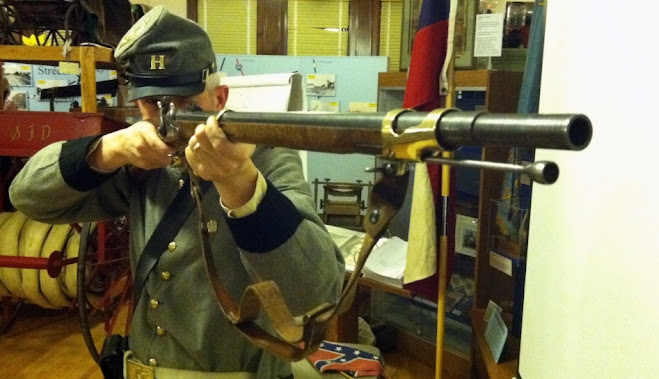
Ward Zischke, a native of Cedar Falls, Iowa, and historian for the Army Reserve 88th Regional Support Command, explains the Confederacy mind-set to an audience, April 19, 2012, during a Civil War lecture series at the Deke Slayton Memorial Space Museum in Sparta, Wis. Zischke is also an Army Reserve lieutenant colonel with 3rd Brigade of the 75th Battle Command Training Division. (Sgt. 1st Class Osvaldo Sanchez)


Saturday, July 24, 2021

USNS John Lewis

By Bill Doughty

Last week the United States Navy honored late Congressman John Lewis with the christening of USNS John Lewis (T-AO 205), the Military Sealift Command’s newest fleet replenishment oiler. Former Secretary of the Navy Ray Mabus was among the dignitaries present. Speaker of the House of Representatives Nancy Pelosi was the keynote speaker. “John was a man of great courage and a fighter. He was always about nonviolence,” Pelosi said. “Non-violence and insistence on the truth. John always insisted on the truth.” In her remarks Pelosi recalled that one year ago Lewis, a hero of the civil rights movement, lay in state in the Capitol Rotunda on the same catafalque built for Abraham Lincoln, Lewis’s hero. A new book of John Lewis wisdom by his former chief of staff, Michael Collins, is out now: “Carry On: Reflections for a New Generation.” Chapters include "On Courage" and "On Voting." in an interview on Good Morning America, Collins notes that Lewis fought against racism and hatred, and he stood for optimism, joy, and a new generation of hope.


Monday, July 19, 2021

Declaring War on Culture

Review by Bill Doughty

U.S. Army General Mark Milley, Chairman of the Joint Chiefs of Staff, defended reading, education and critical thinking in testimony to Congress last month when some members of Congress seemed to question his and his military’s intellectual curiosity.


Milley said,"I've read Mao Zedong. I've read Karl Marx. I've read Lenin. That doesn't make me a communist. So what is wrong with understanding — having some situational understanding about the country for which we are here to defend?" Milley said.


Like former Secretary of Defense Marine Gen. Jim Mattis, Milley realizes that great leaders need to be well-read and open to understanding competing ideas. Milley defended the military’s efforts to understand white nationalism and extremism in the context of critical race theory and other theories.


Hundreds of white insurrectionists who waged war on the Capitol Jan. 6 in an attempted coup are part of a long line of culture warriors who feel impelled –– and were compelled –– to fight to overturn an election and subvert the Constitution.


Milley said, ”I want to understand white rage, and I'm white, and I want to understand it.”


“A War for the Soul of America” by Andrew Hartman (University of Chicago Press), published in 2015 on the eve of the Trump presidency, seeks to explain the rise of white rage in modern history.

The book’s title comes from neoconservative iconoclast Patrick Buchanan, who called for “a war for the soul of America” at the 1992 Republican National Convention in Houston. But when people declare war on the Constitution, there may be no common ground.

"Leave it to Beaver"
While the 80s and 90s were pivotal to the rise of white nationalism, the first shots in the modern culture wars were heard in the 1960s, according to Hartman, as backlash to the civil rights movement, and as nonwhites, especially blacks, gained equality and political power.

“Normative American” families of the simple 1950s, as depicted in “Leave It to Beaver,” gave way to Archie Bunker’s complex 1960s “All in the Family” liberation and confrontation. Battle lines were drawn between the right and left: neoconservative vs. new leftist, traditional vs. progressive, color-blindness vs. color-consciousness, states’ rights vs. federal assistance, punishment vs. prevention, self-sufficiency vs. social safety net, etc.

The civil rights movement, first supported at the presidential level by Harry S Truman, accelerated under Navy WWII veterans John F. Kennedy and Lyndon B. Johnson with pressure led by Dr. Martin Luther King, Jr. Then, with LBJ’s signing of the Civil Rights Act and Voting Rights Act in the mid-60s, black Americans could finally participate fully in American democracy.


"All in the Family"
But as public schools became desegregated, many white Americans turned to segregated private schools, Christian day schools, and homeschooling. “The drama of white Americans resisting desegregation was played out again in the 1970s in struggles over busing across the nation,” Hartman says.

Thus began a “holy war” against secular schools as self-described “fundamentalists” “successfully enacted laws that mandated reading the King James Bible in schools and outlawed the teaching of evolution. Such activism sprang from a desire to reassert religious control over a society that was becoming increasingly modern and secular.”

“By the 1970s, conservative white evangelicals were confronted with a perfect storm of secular power that they deemed a threat to their way of life and to the Christian nation they believed the United States once was and ought to be again. This realization, more than anything else, led religious conservatives to take up arms in the culture wars. Worldly activism became more imperative, so much so that conservative evangelicals formed an uneasy political alliance with conservative Americans from different theological backgrounds. Even fundamentalists, whose insistence upon correct doctrine meant that minor differences in biblical interpretation often led to major schisms, reluctantly joined forces with conservative Catholics, Jews, and Mormons. This was all the more remarkable given that many fundamentalists viewed the 1960 election of John F. Kennedy, a Catholic, as a sign that the end times were fast approaching.”

The so-called Moral Majority was led by right-wing Christians like Buchanan, Phyllis Schlafly, Jerry Falwell, Pat Robertson, Tim LaHaye, and James Dobson. The Moral Majority declared war on cultural relativism, secular humanism, feminism, and the teaching of evolution.


Andrew Hartman
Hartman show how and why black studies evolved on college campuses. “A variety of theories emerged in the 1980s and 1990s to explain why the civil rights revolution had failed to relegate racial inequality to the dustbin of history.”

Harvard University law professor Derrick Bell developed Critical Race Theory to explain how resistance to power-sharing, true equality, and even identity as an “American” acted as a plexiglass ceiling. Do cracks in that ceiling over time threaten a historically predominant white hierarchy (and patriarchy)? Is that the cause of the white rage that General Milley seeks to understand?


As painful as it may be, there is great value in confronting the realities of the past to prevent future problems. 


W. E. B. DuBois
In “The Souls of Black Folks,” W. E. B. DuBois writes, “The United States, after all, was founded on the dispossession of indigenous nonwhites and made rich by the enslavement of African blacks.”

Author Toni Morrison writes, “The people who invented the hierarchy of ‘race’ when it was convenient for them ought not to be the ones who explain it away, now that it does not suit their purposes for it to exist.”


And speaking of a glass ceiling, the culture wars also include fights over gender. “For conservatives, gender differences were sacred,” Hartman writes. “Working women threatened the traditional family model …” and “conservatives were threatened by female economic autonomy.” Some state legislatures attempt to restrict women’s rights, including the right to terminate an early pregnancy, even in the case of rape or incest.


Critical Gender Theory now considers the role of socialization in determining sexual orientation. As for homosexuality, where did nature end and nurture begin? How can being gay be a sin, as Moral Majority fundamentalists (as well as ISIS and Al Qaeda) insist?


Culture wars continue to be fought six years after Hartman’s book: abortion restrictions, transgender discrimination, voter suppression, election interference, anti-vaccination conspiracies, and battles over school curriculum regarding “the contested American past.”


The result is a continual bipolar chasm in schools: divisive ethnocentrism vs. egalitarian cultural pluralism. Hartman explains the history of division as well as attempts at finding compromise.


“The History-Social Science Framework” put into effect in California in 1988, came close to closing the chasm, at least in schools. Historian Arthur Schlesinger Jr. called for a “vital center” bridge that included the California Framework. Hartman writes:

“Although the new California history curriculum recognized the legitimacy of multiculturalism as one factor among many that shaped the nation’s historical narrative, some conservatives supported the Framework because it also accentuated that which bound Americans together in common cause. Students were to ‘realize that true patriotism celebrates the moral force of the American idea as a nation that unites as one people the descendants of many cultures, races, religions, and ethnic groups.’ Due to such language, Schlesinger believed the California approach, unlike the later New York plan, resolved ‘the conflicting commands of our national motto, E Pluribus Unum. Out of many, one.’”

Schlesinger had been critical of any ideology that “belittles unum and glorifies pluribus.”


Navy readers may be interested in certain people and issues highlighted by Hartman in “A War for the Soul of America.” For example: 

  • how then-circuit court judge Robert Bork rejected a case brought by an enlisted sailor in Dronenburg v Zech in 1984, 
  • what Adm. William Leahy said were “ethical standards common to barbarians in the dark ages,” and 
  • how veterans groups and Lynne Cheney teamed to prevent a display of Enola Gay at the Smithsonian Air and Space Museum (a display that was planned to present a contextualized explanation of Hiroshima that helped bring an end to WWII).
Enola Gay at Smithsonian
I was particularly interested in Hartman’s insightful discussion of Murray and Herrnstein’s “The Bell Curve,” a book that fostered racist theories, slammed by evolutionary biologist Stephen J. Gould in his fascinating “The Mismeasure of Man.” Gould republished his “Mismeasure” with a devastating critique of “The Bell Curve.” Nurture AND nature!

It is critically important to understand how people are led to believe falsehoods in the wake of the insurrection and attempted coup of Jan. 6.


In last month’s testimony to Congress at the Capitol last month Milley asked: “So what is it that caused thousands of people to assault this building and try to overturn the Constitution of the United States of America? What caused that? I want to find that out.”


Gen. Milley’s role –– not only preventing an actual coup but also blocking Trump’s authoritarian attempt to deploy the military against U.S. citizens during Black Lives Matter protests in the summer of 2020 –– is revealed in a new book, “I Alone Can Fix It: Donald J. Trump's Catastrophic Final Year” by Philip Rucker and Carol Leonnig.


Hodgkins
We are reminded of Milley’s mea culpa following Trump’s march against protesters in Lafayette Square June 1, 2020, and of Milley’s frequent refrain that military service members take an oath to the Constitution, not to an individual or party. We are also reminded of a great communicator from the last century, Edward R. Murrow, who said, "I simply cannot accept that there are, on every story, two equal and logical sides to an argument."

As this Navy Reads blog is posted, Paul Allard Hodgkins, 38, of Tampa, Florida, has become the first Trump-supporting rioter to be sentenced for his role the Jan. 6 insurrection. Hodgkins pleaded guilty and expressed shame and remorse. He was sentenced to eight months in prison.


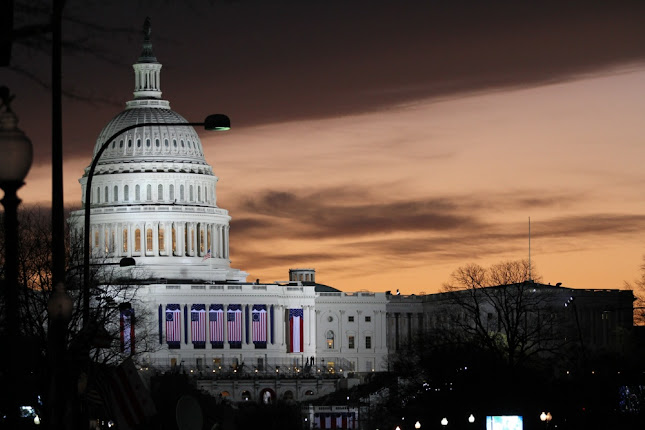
A view of the U.S. Capitol before the 57th presidential inauguration in Washington Jan. 21, 2013. President Barack H. Obama was elected to a second four-year term in office Nov. 6, 2012. More than 5,000 U.S. service members participated in or supported the inauguration. (U.S. Army photo by SSgt. Christopher Klutts)

TOP PHOTO:

NORFOLK, Va. (July 15, 2021) – Gen. Mark Milley, Chairman of the Joint Chiefs of Staff, gives remarks during the ceremony to declare Joint Force Command (JFC) Norfolk’s Full Operational Capability aboard amphibious assault ship USS Kearsarge (LHD 3) on July 15. (U.S. Navy Photo by MC2 Kris R. Lindstrom)