Showing posts sorted by relevance for query toni morrison. Sort by date Show all posts

Wednesday, August 21, 2019

Toni Morrison and War Against Error (and Fascism)

by Bill Doughty

Toni Morrison wrote:
"I think it is time for a modern War Against Error. A deliberately heightened battle against cultivated ignorance, enforced silence, and metastasizing lies. A wider war that is fought daily by human rights organizations in journals, reports, indexes, dangerous visits, and encounters with malign oppressive forces. A hugely funded and intensified battle of rescue from the violence that is swallowing the dispossessed." 
Those are Morrison's words in the essay "The War on Error," presented as a lecture in Edinburgh, Scotland, August 29, 2004, one year after the United States invaded Iraq in response to 9/11 – under the pretense that Saddam Hussein had weapons of mass destruction.

Toni Morrison, 1931-2019 (Photo taken by Timothy Greenfield-Sanders)
Morrison's essay is one of 43 works published in "The Source of Self-Regard: Selected Essays, Speeches, and Meditations," Alfred A. Knopf, 2019.

The book includes both poignant reflections and occasional musings about people, art/literature, nature, history and race from the winner of the Nobel Prize in Literature.

From another essay, "Racism and Fascism," published in The Nation in 1995 – nearly twenty-five years ago! Morrison writes about the warning signs and steps to fascism:
  1. Construct an internal enemy, as both focus and diversion.
  2. Isolate and demonize that enemy by unleashing and protecting the utterance of overt and coded name-calling and verbal abuse. Employ ad hominem attacks as legitimate charges against that enemy.
  3. Enlist and create sources and distributors of information who are willing to reinforce the demonizing process because it is profitable, because it grants power and because it works.
  4. Palisade all art forms; monitor, discredit or expel those that challenge or destabilize processes of demonization and deification.
  5. Subvert and malign all representatives of and sympathizers with this constructed enemy.
  6. Solicit, from among the enemy, collaborators who agree with and can sanitize the dispossession process.
  7. Pathologize the enemy in scholarly and popular mediums; recycle, for example, scientific racism and the myths of racial superiority in order to naturalize the pathology.
  8. Criminalize the enemy. Then prepare, budget for and rationalize the building of holding arenas for the enemy – especially its males and absolutely its children.
  9. Reward mindlessness and apathy with monumentalized entertainments and with little pleasures, tiny seductions: a few minutes on television, a few lines in the press; a little pseudo-success; the illusion of power and influence; a little fun, a little style, a little consequence.
  10. Maintain, at all costs, silence.
Morrison writes, "In 1995 racism may wear a new dress, buy a new pair of boots, but neither it nor its succubus twin fascism is new or can make anything new. It can only reproduce the environment that supports its own health: fear, denial and an atmosphere in which its victims have lost the will to fight."

Fascism can come from the left or right, liberal or conservative. "We must not be blindsided" by different labels for "domination agendas," Morrison writes, "because the genius of fascism is that any political structure can host the virus and virtually any developed country can become a suitable home." It's not about ideology, she contends, it's about power.

Signs of fascism as evidenced by the White Power movement and White Nationalism.
Can it happen here? Are we susceptible to what she calls "the forces interested in fascist solutions to national problems"? Do those forces try to make us see immigrants and nonwhites as the Other, worthy of contempt, fear and hate? Will we counter those forces with greater emphasis on education and critical thinking? That's at the heart of Morrison's works and a reasoned response to a "war on error." 

Here's something she wrote about migration, eight months after the attacks of 9/11 (from "The Foreigner's Home" – presented in the Alexander Lecture Series, University of Toronto, May 27, 2002): 
"The spectacle of mass movement draws attention inevitably to the borders, the porous places, the vulnerable points where the concept of home is seen as being menaced. by foreigners. Much of the alarm hovering at the borders, the gates, is stoked, it seems to me, by 1) both the threat and the promise of globalization; and 2) an uneasy relationship with our own foreignness, our own rapidly disintegrating sense of belonging."
President Obama presents Toni Morrison with the Presidential Medal of Freedom in 2012.
After Morrison's death at 88 earlier this month, former president Barack Obama said, "Toni Morrison was a national treasure. Her writing was not just beautiful but meaningful — a challenge to our conscience and a call to greater empathy." 

He continued: "And so even as Michelle and I mourn her loss and send our warmest sympathies to her family and friends, we know that her stories—that our stories—will always be with us, and with those who come after, and on and on, for all time."

The former commander-in-chief began publishing his reading lists during his presidency and continues the tradition. On Aug. 15, Obama shared a list of recommended summer reading books, beginning with the works of Toni Morrison. 

"To start, you can't go wrong by reading or re-reading the collected works of Toni Morrison," he wrote. "'Beloved,' 'Song of Solomon,' 'The Bluest Eye,' 'Sula,' everything else — they're transcendent, all of them. You'll be glad you read them," Obama said.

Here are other books recommended by Obama this year:
"Lab Girl," by Hope Jahren"The Shallows," by Nicholas Carr"Inland," by Téa Obreht"American Spy," by Lauren Wilkinson"Wolf Hall," by Hilary Mantel"Exhalation," by Ted Chiang"Maid," by Stephanie Land"How to Read the Air" by Dinaw Mengest"Men Without Women" by Haruki Murakami"The Nickel Boys" by Colson Whitehead
CNO Richardson meets with future CNO Gilday in 2017.
Reading promotes critical thinking. And preventing another War on Error requires critical thinking. 

Tomorrow, Aug. 22, Adm. Mike Gilday is scheduled to become the new Chief of Naval Operations, as Adm. John Richardson steps down. During his tenure Richardson has championed reading and thinking. "Remember to never stop striving to expand your mind," he advised on the Navy Professional Reading Program site.

"Warfare is a violent, intellectual contest between thinking and adapting adversaries. The team that can think better and adapt faster will win," Richardson said, adding, "...we must do more to sharpen our thinking, learn the lessons from history, and expand our minds. It is our responsibility as leaders to continue to grow and to always question the status quo."


Tuesday, February 8, 2022

Book Ban or Legitimate Political Discourse?

Review by Bill Doughty––

When some parents and politicians moved to ban Toni Morrison’s “Beloved” from school curricula and libraries, it moved me to read her award-winning novel about an escaped slave family and the nearly unimaginable horrors they endured.


“Beloved” contains references to explicit sex, violent rape, child murder, and bestiality. It’s definitely not a book for very young and immature readers. Some call it a “dirty” book. Others consider it a masterpiece of American literature by a Nobel Laureate and Pulitzer Prize winning author. 


The book is based loosely on a true story. According to essayist Walter Johnson, it is set in “the moment when the Indians were removed, the woodlands stripped of trees, and the Lower South put under the dominion of a single plant –– king cotton.” 


Johnson adds, “Morrison presents her readers with the terrifying excesses of violence imposed upon enslaved people.”


Essayist Tiya Miles writes, “‘Beloved’ is a spiritual and psychological drama about the lasting wounds of cruelty and the wrenching difficulty of holding together damaged selves and human relationships in the aftermath of unspeakable tragedy.”

The book depicts the depravity of slavery: “White wardens treated these black men worse than chattel, locking them up nights in wooden pens dug into a trench, forcing them to perform unwanted sex acts, humiliating them with caustic words of defilement, and working them in an unrelenting grind,” according to Miles.


In “Beloved,” Morrison describes how one chained man, Paul D, felt locked in one of those pens in a trench, along with 45 other slaves:

“A flutter of a kind, in the chest, then the shoulder blades. It felt like rippling –– gentle at first and then wild. As though the further south they led him the more his blood, frozen like an ice-on for twenty years, began thawing, breaking into pieces that, once melted, had no choice but to swirl and eddy.”

“All forty-six men woke to rifle shot. All forty-six. Three whitemen walked along the trench unlocking the doors one by one. No one stepped through. When the last lock was opened, the three returned and lifted the bars, one by one. And one by one the blackmen emerged –– promptly and without the poke of a rifle butt if they had been there more than a day; promptly with the butt if, like Paul D, they had just arrived. When all forty-six were standing in a line in the trench, another rifle shot signaled the climb out and up to the ground above, where one thousand feet of the best hand-forged chain in Georgia stretched. Each man bent and waited.  The first man picked up the end and threaded it through the loop on his leg iron. He stood up then, and, shuffling a little, brought the chain tip to the next prisoner, who did likewise. As the chain was passed on and each man stood in the other’s place, the line of men turned around, facing the boxes the had come out of. Not one spoke to the other. At least not with words.”

Morrison further paints the scene, within nature but unnatural: “Chain-up completed, they knelt down. The dew, more likely than not, was mist by then. Heavy sometimes and if the dogs were quiet and just breathing you could hear doves.”

Those who seek to ban Morrison’s book(s) and other works of art base their opinions on alleged "sexually explicit language,” "LGBTQIA+ content," "anti-police messages,” "divisive language,” and themes of race, according to the American Library Association. 


Another of Morrison’s books, “The Bluest Eye” is on the ALA’s top ten list of challenged books. So are Harper Lee’s “To Kill a Mockingbird” and John Steinbeck’s “Of Mice and Men.” Mark Twain’s works have long been “canceled” before “cancel culture” was part of the vernacular.


Last month Art Spiegelman’s “Maus,” a graphic novel about the Holocaust, came under attack. And last week, a Christian pastor led a book burning in Tennessee. Books thrown into a bonfire included young adult fantasy fiction including from J.K. Rowling’s “Harry Potter” series.


Book burnings: Germany 1933 and Tennessee 2022.

‘Beloved’ Found Haiku


On my Navy Reads blog I've featured unintentional "found" haiku from Senator John McCain, President Abraham Lincoln, Coach Mike Krzyzewski, and others. I found this Toni Morrison haiku from “Beloved”:


Who would have thought that

a little old baby could

harbor so much rage


That quote is used as an epigraph to a chapter about Morrison’s novel in the funny and rewarding “25 Great Sentences: And How They Got That Way” by Geraldine Woods (Norton, 2020): Woods picks apart the words and focuses understandably on the phrase “little old baby.” The baby and its spirit is at the heart of Morrison’s magical and “impossible” realism.

After reading “Beloved,” I turned to a relatively recent book of essays edited by Davîd Carrasco, Stephanie Paulsell, and Mara Willard titled “Toni Morrison: Goodness and the Literary Imagination” (University of Virginia Press, 2019). The collection contains the Walter Johnson and Tiya Miles quotes at the beginning of this review.


Another “found haiku” by Toni Morrison comes from the "Goodness" collection. It is from Morrison herself, captured in her Ingersoll address of 2012, and it happens to be a pivotal point arguing against book banning and for teaching about slavery, racism, and other evils of America’s past:

Thinking about good-

ness implies, indeed requires, a view

of its opposite


The argument for studying the past while not wearing rose-colored glasses is this: confront what was wrong in order to do what is right. Reject racism, misogyny, and imperialism; embrace equality, respect, and freedom. Repel hate; stick with love.

A slave cabin in Barbour County, Alabama (LOC)

On Feeling Uncomfortable


Book-banning groups want to protect children’s self-esteem and not make them uncomfortable: White children should not be made to feel bad that their ancestors may have been oppressors, and children of color should not be made to feel like victims. Children (even, apparently college advanced-placement literature students) should be protected from what they consider obscene “dirty” books.


But, isn’t it necessary to know where the real dirt is in order to become clean?


Jonathan L. Walton explores the Morrison concept of "dirty" in his essay “Luminous Darkness.”

“…Morrison refers to the dirtying process of slavery in her novel 'Beloved.' Black Folk are dirtied, first by the racial imagination of white supremacy. Racial visions are then transformed into laws, statues, and cultural practices that dehumanize and dirty their targets. These are the conditions from which those on the underside of freedom and autonomy, and power seek to break free. These are the conditions from which Morrison seeks to reconsider goodness by reframing who and what we deem as inherently evil.”

The institution of slavery, itself, was a dirty shame. Some could argue that we didn’t start to live up to the ideals in the Constitution until the mid-1960s with the passing of the Civil Rights Act and Voting Rights Act, which were brought about by President John F. Kennedy and President Lyndon B. Johnson (both U.S. Navy veterans).


      From Civil War to Civil Rights (NPS)
Parents and politicians who want to ban books say teaching about slavery will divide people along racial lines. But studying the truth of the past can show how much progress we’ve made in the past hundred years –– which can be a uniting force.

Tenured Professor of Women and Gender Studies Brittney Cooper appeared on Ari Melber’s “The Beat” on MSNBC on January 28 and spoke about slavery, book banning, and what makes people uncomfortable. She notes that black people were kidnapped and brought to America to make white  people “more comfortable.”


Brittney Cooper
Cooper says, “Sure, racism –– learning about racism –– is perhaps uncomfortable. But you know what`s more uncomfortable? Racism. Learning about slavery might be a bit uncomfortable. But you know what was more uncomfortable? Slavery.”

Fighting the Civil War to end slavery was more than uncomfortable. Marching for civil rights and voting rights was uncomfortable.

Cooper adds, “Learning that one is ignorant might be a bit uncomfortable. But you know what`s more uncomfortable, ultimately? Remaining ignorant, even as these problems continue to encroach upon our lives.” Legislating against books and learning, she says, “is nothing but a return to the very history we fought to get out of.”


Shouldn’t the freedom to read and discuss literature be protected as truly “legitimate political discourse?” Choosing to learn more about Toni Morrison and her books is especially legitimate during Black History Month.


Monday, July 19, 2021

Declaring War on Culture

Review by Bill Doughty

U.S. Army General Mark Milley, Chairman of the Joint Chiefs of Staff, defended reading, education and critical thinking in testimony to Congress last month when some members of Congress seemed to question his and his military’s intellectual curiosity.


Milley said,"I've read Mao Zedong. I've read Karl Marx. I've read Lenin. That doesn't make me a communist. So what is wrong with understanding — having some situational understanding about the country for which we are here to defend?" Milley said.


Like former Secretary of Defense Marine Gen. Jim Mattis, Milley realizes that great leaders need to be well-read and open to understanding competing ideas. Milley defended the military’s efforts to understand white nationalism and extremism in the context of critical race theory and other theories.


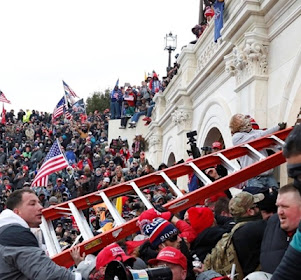
Hundreds of white insurrectionists who waged war on the Capitol Jan. 6 in an attempted coup are part of a long line of culture warriors who feel impelled –– and were compelled –– to fight to overturn an election and subvert the Constitution.


Milley said, ”I want to understand white rage, and I'm white, and I want to understand it.”


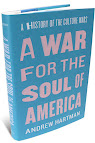
“A War for the Soul of America” by Andrew Hartman (University of Chicago Press), published in 2015 on the eve of the Trump presidency, seeks to explain the rise of white rage in modern history.

The book’s title comes from neoconservative iconoclast Patrick Buchanan, who called for “a war for the soul of America” at the 1992 Republican National Convention in Houston. But when people declare war on the Constitution, there may be no common ground.

"Leave it to Beaver"
While the 80s and 90s were pivotal to the rise of white nationalism, the first shots in the modern culture wars were heard in the 1960s, according to Hartman, as backlash to the civil rights movement, and as nonwhites, especially blacks, gained equality and political power.

“Normative American” families of the simple 1950s, as depicted in “Leave It to Beaver,” gave way to Archie Bunker’s complex 1960s “All in the Family” liberation and confrontation. Battle lines were drawn between the right and left: neoconservative vs. new leftist, traditional vs. progressive, color-blindness vs. color-consciousness, states’ rights vs. federal assistance, punishment vs. prevention, self-sufficiency vs. social safety net, etc.

The civil rights movement, first supported at the presidential level by Harry S Truman, accelerated under Navy WWII veterans John F. Kennedy and Lyndon B. Johnson with pressure led by Dr. Martin Luther King, Jr. Then, with LBJ’s signing of the Civil Rights Act and Voting Rights Act in the mid-60s, black Americans could finally participate fully in American democracy.


"All in the Family"
But as public schools became desegregated, many white Americans turned to segregated private schools, Christian day schools, and homeschooling. “The drama of white Americans resisting desegregation was played out again in the 1970s in struggles over busing across the nation,” Hartman says.

Thus began a “holy war” against secular schools as self-described “fundamentalists” “successfully enacted laws that mandated reading the King James Bible in schools and outlawed the teaching of evolution. Such activism sprang from a desire to reassert religious control over a society that was becoming increasingly modern and secular.”

“By the 1970s, conservative white evangelicals were confronted with a perfect storm of secular power that they deemed a threat to their way of life and to the Christian nation they believed the United States once was and ought to be again. This realization, more than anything else, led religious conservatives to take up arms in the culture wars. Worldly activism became more imperative, so much so that conservative evangelicals formed an uneasy political alliance with conservative Americans from different theological backgrounds. Even fundamentalists, whose insistence upon correct doctrine meant that minor differences in biblical interpretation often led to major schisms, reluctantly joined forces with conservative Catholics, Jews, and Mormons. This was all the more remarkable given that many fundamentalists viewed the 1960 election of John F. Kennedy, a Catholic, as a sign that the end times were fast approaching.”

The so-called Moral Majority was led by right-wing Christians like Buchanan, Phyllis Schlafly, Jerry Falwell, Pat Robertson, Tim LaHaye, and James Dobson. The Moral Majority declared war on cultural relativism, secular humanism, feminism, and the teaching of evolution.


Andrew Hartman
Hartman show how and why black studies evolved on college campuses. “A variety of theories emerged in the 1980s and 1990s to explain why the civil rights revolution had failed to relegate racial inequality to the dustbin of history.”

Harvard University law professor Derrick Bell developed Critical Race Theory to explain how resistance to power-sharing, true equality, and even identity as an “American” acted as a plexiglass ceiling. Do cracks in that ceiling over time threaten a historically predominant white hierarchy (and patriarchy)? Is that the cause of the white rage that General Milley seeks to understand?


As painful as it may be, there is great value in confronting the realities of the past to prevent future problems. 


W. E. B. DuBois
In “The Souls of Black Folks,” W. E. B. DuBois writes, “The United States, after all, was founded on the dispossession of indigenous nonwhites and made rich by the enslavement of African blacks.”

Author Toni Morrison writes, “The people who invented the hierarchy of ‘race’ when it was convenient for them ought not to be the ones who explain it away, now that it does not suit their purposes for it to exist.”


And speaking of a glass ceiling, the culture wars also include fights over gender. “For conservatives, gender differences were sacred,” Hartman writes. “Working women threatened the traditional family model …” and “conservatives were threatened by female economic autonomy.” Some state legislatures attempt to restrict women’s rights, including the right to terminate an early pregnancy, even in the case of rape or incest.


Critical Gender Theory now considers the role of socialization in determining sexual orientation. As for homosexuality, where did nature end and nurture begin? How can being gay be a sin, as Moral Majority fundamentalists (as well as ISIS and Al Qaeda) insist?


Culture wars continue to be fought six years after Hartman’s book: abortion restrictions, transgender discrimination, voter suppression, election interference, anti-vaccination conspiracies, and battles over school curriculum regarding “the contested American past.”


The result is a continual bipolar chasm in schools: divisive ethnocentrism vs. egalitarian cultural pluralism. Hartman explains the history of division as well as attempts at finding compromise.


“The History-Social Science Framework” put into effect in California in 1988, came close to closing the chasm, at least in schools. Historian Arthur Schlesinger Jr. called for a “vital center” bridge that included the California Framework. Hartman writes:

“Although the new California history curriculum recognized the legitimacy of multiculturalism as one factor among many that shaped the nation’s historical narrative, some conservatives supported the Framework because it also accentuated that which bound Americans together in common cause. Students were to ‘realize that true patriotism celebrates the moral force of the American idea as a nation that unites as one people the descendants of many cultures, races, religions, and ethnic groups.’ Due to such language, Schlesinger believed the California approach, unlike the later New York plan, resolved ‘the conflicting commands of our national motto, E Pluribus Unum. Out of many, one.’”

Schlesinger had been critical of any ideology that “belittles unum and glorifies pluribus.”


Navy readers may be interested in certain people and issues highlighted by Hartman in “A War for the Soul of America.” For example: 

  • how then-circuit court judge Robert Bork rejected a case brought by an enlisted sailor in Dronenburg v Zech in 1984, 
  • what Adm. William Leahy said were “ethical standards common to barbarians in the dark ages,” and 
  • how veterans groups and Lynne Cheney teamed to prevent a display of Enola Gay at the Smithsonian Air and Space Museum (a display that was planned to present a contextualized explanation of Hiroshima that helped bring an end to WWII).
Enola Gay at Smithsonian
I was particularly interested in Hartman’s insightful discussion of Murray and Herrnstein’s “The Bell Curve,” a book that fostered racist theories, slammed by evolutionary biologist Stephen J. Gould in his fascinating “The Mismeasure of Man.” Gould republished his “Mismeasure” with a devastating critique of “The Bell Curve.” Nurture AND nature!

It is critically important to understand how people are led to believe falsehoods in the wake of the insurrection and attempted coup of Jan. 6.


In last month’s testimony to Congress at the Capitol last month Milley asked: “So what is it that caused thousands of people to assault this building and try to overturn the Constitution of the United States of America? What caused that? I want to find that out.”


Gen. Milley’s role –– not only preventing an actual coup but also blocking Trump’s authoritarian attempt to deploy the military against U.S. citizens during Black Lives Matter protests in the summer of 2020 –– is revealed in a new book, “I Alone Can Fix It: Donald J. Trump's Catastrophic Final Year” by Philip Rucker and Carol Leonnig.


Hodgkins
We are reminded of Milley’s mea culpa following Trump’s march against protesters in Lafayette Square June 1, 2020, and of Milley’s frequent refrain that military service members take an oath to the Constitution, not to an individual or party. We are also reminded of a great communicator from the last century, Edward R. Murrow, who said, "I simply cannot accept that there are, on every story, two equal and logical sides to an argument."

As this Navy Reads blog is posted, Paul Allard Hodgkins, 38, of Tampa, Florida, has become the first Trump-supporting rioter to be sentenced for his role the Jan. 6 insurrection. Hodgkins pleaded guilty and expressed shame and remorse. He was sentenced to eight months in prison.


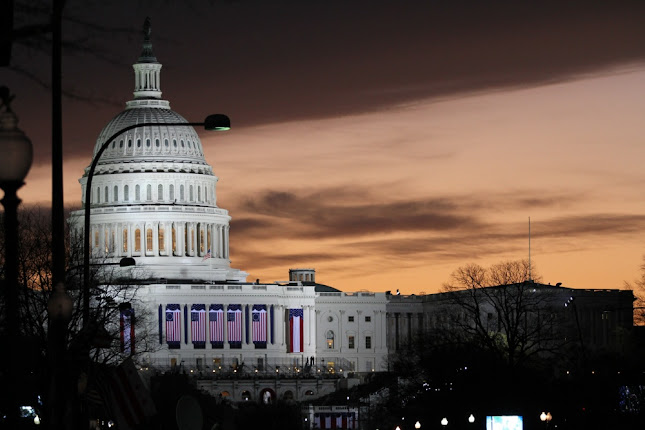
A view of the U.S. Capitol before the 57th presidential inauguration in Washington Jan. 21, 2013. President Barack H. Obama was elected to a second four-year term in office Nov. 6, 2012. More than 5,000 U.S. service members participated in or supported the inauguration. (U.S. Army photo by SSgt. Christopher Klutts)

TOP PHOTO:

NORFOLK, Va. (July 15, 2021) – Gen. Mark Milley, Chairman of the Joint Chiefs of Staff, gives remarks during the ceremony to declare Joint Force Command (JFC) Norfolk’s Full Operational Capability aboard amphibious assault ship USS Kearsarge (LHD 3) on July 15. (U.S. Navy Photo by MC2 Kris R. Lindstrom)


Thursday, March 31, 2022

‘Insurrection’ (& Creation of Military)

Review by Bill Doughty––

When Chairman of the Joint Chiefs of Staff Gen. Mark Milley testified to Congress and defended the study of racism, hatred, and rage, he could have been speaking about the people involved in key incidents depicted in “Insurrection: Rebellion, Civil Rights, and the Paradoxical State of Black Citizenship” by Hawa Allan (W.W. Norton & Company, 2022).


This timely book examines the history of insurrections in the America. Insurrections and riots began in the 1600s, continued through the Civil War, and kept occurring in a plague of lynchings and riots, often after KKK political rallies. “Insurrection” also briefly contextualizes the J6 insurrection of the Capitol. And some of its insights even apply, unintentionally, to the current catastrophe of Putin’s invasion and war in Ukraine.

The U.S. Insurrection Act got is start even before there was a United States. Variations of early insurrection acts were instituted to repress rebellions against slavery. But there have been other reasons to call up responses to restore “order.”


The Founders created the military, in part, to respond to insurrections, without relying solely on state militias and federalism (power dispersed primarily within the states), yet state militias were still needed as part of a balance-of-power equation. Allan explains:

“As elaborated in The Federalist Papers, Alexander Hamilton advocated for ‘a force constituted differently from the militia to preserve the peace of the community and to maintain the just authority of the laws against those violent invasions of them which amount to insurrections and rebellions.’ In other words, framers advocated for the establishment of a federal military force, which was eventually enumerated in Article 1, referring to the power of Congress to 'raise and support Armies’ and ‘provide and maintain a Navy.’ The concerns raised at the time about establishing federal military forces –– the modern-day equivalent to the federal military corps that includes the Army, Navy, and Coast Guard –– had less to do with the enslaved and seemed to generally arise from that threat that such an armed body could pose to white citizens themselves.

“To dispel concerns about any abuse of federal military power, James Madison surmised in The Federalist Papers that the state militia together with armed civilians would be sufficiently numerous to repel a federal army. In other words, federal military forces could be easily repelled by the ‘people.’ Hamilton, however, also sought to quell fears about the federal military by assuring doubters that the federal military would, in fact, be constituted by the ‘people.’ ‘Where in the name of common sense are our fears to end if we may not trust our sons, our brothers, our neighbors, our fellow-citizens?’ Hamilton rhetorically asked in The Federalist Papers. ‘What shadow of danger can there be from men who are daily mingling with the rest of their countrymen and who participate with them in the same feelings, sentiments, habits, and interests?’”

The military and/or militias have been on both ends of insurrection acts, both as responders and as perpetrators. In 1786-7, veterans of the Revolutionary War, stormed court houses and attempted to take over a federal arsenal in what’s known as Shay’s Rebellion.


A sea change occurred during the Civil War and especially after the Emancipation Proclamation and during the years of Reconstruction. No longer was there a federal effort to repress slave rebellions; instead, riots arose from racism, hatred, and rage of white supremacists against fellow free black citizens.


A "KKK Services" 1929 rally. National Photo Company Collection (Library of Congress)

President Ulysses S. Grant, top former Union General during the Civil War, initiated actions to quell uprisings by groups, including especially the Ku Klux Klan. Insurrection acts and riot acts have been called up most often in former Confederate states, including Mississippi, Alabama, and Virginia.


The U.S. military has always had a role in suppressing insurrection, but Congress put guard rails on that role under the Posse Comitatus Act of 1878, which “heralded the end of the Reconstruction era by formally prohibiting the deployment of federal troops to enforce the law –– that is unless otherwise authorized by the Constitution or Congress.”


[Of note, this week President Biden signed the Emmitt Till anti-lynching bill in belated response to the killing of an African American teenager by a white mob in 1955.]


Gov. Orval Faubus calls for rejecting integration at Little Rock State Capitol, Arkansas, in 1959. (John T. Bledsoe; LOC)
President Eisenhower deployed the 101st Airborne Division and federalized the entire Arkansas National Guard in the face of Gov. Faubus's blockade of schools. Faubus fomented a white supremacist crowd against school integration.

Many white citizens in the South were rallied to oppose integration and "race mixing" in the name of Christianity and anti-Communism. Faubus contended that Arkansas had sovereignty, and that the federal government was "occupying Arkansas." Parents should have rights over schools and the government, including the right to segregation.


White segregationists demonstrate, calling race mixing "Communism" and "march of the Anti-Christ." (John T. Bledsoe; LOC)
The Insurrection Act was invoked many times in U.S. history, including during the Civil Rights era. Navy veteran Presidents John F. Kennedy and Lyndon B. Johnson used it to help continue desegregating schools after the Supreme Court’s “Brown v. Board of Education” ruling.

Throughout her presentation of the history of U.S. insurrections, Allan scatters anecdotes of personal experience dealing with issues of race. She contemplates the meaning of dreams, silence, rage, and peace as she explores concepts from psychology, sociology, and philosophy..


Frederick Douglass
Among the philosophers, writers, and historians quoted are Georg Hegel, Gustave Le Bon, Toni Morrison, Abraham Lincoln, Hanna Arendt, and Frederick Douglass. We’ve spotlighted Douglass in several posts here on Navy Reads. He was “a vocal proponent of the enlistment of Negroes into the Union Army, and agitated for an end to the formal exclusion of Negro soldiers from service.”

Douglass, “a fugitive slave turned grand orator and editor,” said, “No man can put a chain around the ankle of his fellow man without at last finding the other end fastened around his own neck.”


That particular Douglass quote brings to mind the tragedy of Putin’s terror campaign in Ukraine and how it’s also affecting the people of Russia. Putin’s expanded kinetic war in Ukraine began three weeks ago. Brave Russians are risking their lives stand up and speak out against the war.


Citing the findings of Le Bon, Allan talks about the psychology of crowds –– and dangers of being a bystander who acquiesces or, worse, supports a deranged leader of their country or party.


These insights apply to the Lost Cause of the Civil War, lies by Hitler and Nazi Germany, and falsehoods and pretexts by Putin to justify invading Ukraine. Unfortunately, albeit on a smaller scale, the insights also apply to the Big Lie of a “stolen” 2020 U.S. election and resultant coup attempt at the U.S. Capitol, January 6, 2021.

“If the crowd is vulnerable to suggestion –– to having its collective unconscious tapped into and its drives channeled into unified action –– then who, exactly, is doing the hypnotizing? Le Bon puts forth a charismatic leader who, through his projection of strength and confidence, can transform a mere group of individuals into a crowd at his command. Such a charismatic leader can, perhaps, also transfer a government of laws into a government of men. Yet, as Le Bon suggests, this charismatic leader alone may not have the influence to muster a crowd. Though largely parroting the repetitive slogans of a strongman, the crowd also tends to be formed by members primed to defend their long-standing beliefs …

“The crowd, as Le Bon says, is inherently conservative, and seeks to either preserve the present or reinstate the conditions of the past. Only the crowd’s erratic violence might cause its members to be mischaracterized as revolutionary instead of what they actually are, which is reactionary. ‘It is precisely crowds that cling most tenaciously to traditional ideas and oppose their being changed with the most obstinacy,’ Le Bon writes. ‘The crowd does not usher in the new, but, instead, clears the way for the reinstatement of the old, and such beliefs, once finally implanted in the crowd, are difficult to uproot, and can only ‘be changed at the cost of violent revolutions.’ As Le Bon also writes, ‘The beginning of a revolution is in reality the end of a belief.’”

Allan assesses how populations are impacted by disasters, including in the aftermaths of hurricanes Hugo, Andrew, and Katrina. But the storm of war also applies, and our thoughts turn to Ukraine, especially as the toll of war dehumanizes people.


Hawa Allan
Allan admits to feeling uncomfortable and embarrassed in high school learning about the ultimate dehumanization of slavery –– people owning other people. But, even though it made her and other students feel uncomfortable, she notes the importance of learning history that is not selectively imparted and fearfully sanitized, the need to learn the “why,” not just the who, what, when, where, and what.

How the Insurrection Act and related acts were used in history is told in black and white by Hawa Allan, who takes into account the motives of those who called for the Act and those who were impacted by it –– as well as the anger and rage they lived through.


Allan’s writing is well-paced and balanced, although some readers may find her style to be a bit scattered and off-point. I would have liked to see discussion of Milley’s rejection (along with other military leaders) of former President Trump’s threats and attempts to deploy the military against civilian protests, especially in the summer of 2020.

In the name of "law and order," Trump often threatened to enact the Insurrection Act during riots and protests after the murder of George Floyd and various police shootings of African Americans.


Yet, on January 6, 2021, “As commander in chief of the D.C. National Guard, it is clear that Trump and his administration could have authorized its deployment –– that is, if they actually interpreted the riot to be a threat to law and order.”


[Public hearings of the U.S. Congress’s J6 Select Committee could begin in April or May 2022, and the committee announced it intends to release an interim report in June.]

This is another worthwhile book by a gifted woman writer and yet another recommended read for Women’s History Month. General Milley would no doubt appreciate the wisdom Allan shares.


Top Photo: Army Gen. Mark A. Milley (chairman of the Joint Chiefs of Staff), then-Army Chief of Staff in 2016. (Sgt. 1st Class Jim Greenhill)