Thursday, September 9, 2021

BJR2: ’The World As It Is’ post-9/11

Review by Bill Doughty––

A "found haiku" while reading Ben Rhodes:


the tension between

the world as it is and … the

world that ought to be


“After the Fall” (reviewed in the previous Navy Reads post) drops onto book shelves three years after writer Benjamin J. Rhodes’s other reflections, similarly profound and just as achingly personal: “The World As It Is: A Memoir of the Obama White House” (Random House, 2018), where Rhodes dissects, among other things, the “forever war.” This is a sweeping look back at the United States after September 11, 2001.

In announcing the beginning of bombing of Afghanistan twenty years ago, just weeks after 9/11, then-President George W. Bush told military service members: “Your mission is defined; your objectives are clear; your goal is just. You have my full confidence, and you will have every tool you need to carry out your duty.” Then, in 2003, Bush and neoconservatives invaded Iraq under false pretenses.


Unfortunately, the original mission to fight terrorists in Afghanistan morphed into a long-term counterinsurgency initiative and a doomed nation-building effort in the middle of a perpetual virtual civil war, with no end in sight.

While some progress was made in Afghanistan over two decades, especially for women and girls, the changes were neither deep nor long-lasting, as evidenced by the immediate fall of the government and Afghan military and ascension of the Taliban.

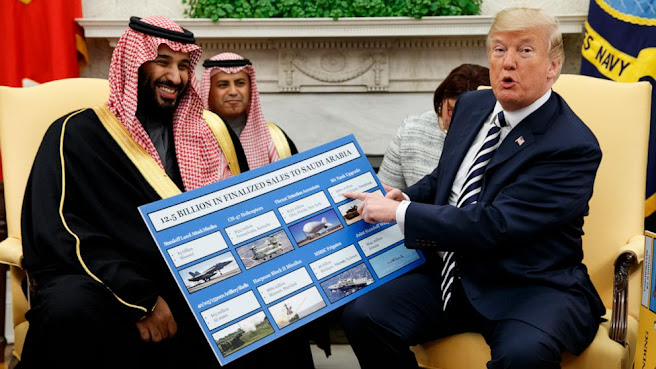
Just as Reagan invited the mujahideen to the White House in the early 80s (photo above), Trump invited the Taliban and Afghan government to Camp David two years ago this week, a secret meeting that was canceled at the last minute after it became public knowledge. Then, Trump and his Secretary of State Mike Pompeo made a deal with the Taliban but did not include the Afghanistan government. Trump announced there would be a U.S. withdrawal by May 2021, but Biden postponed the withdrawal till the end of August.


Future historians likely will not question whether the American war in Afghanistan should have continued after twenty years; rather, they will dissect how the end of the war evacuation was conducted. Some have already asked why the United States stayed so long, left so much infrastructure and equipment behind, and provided (albeit unintentionally) so much combat training to the Taliban and regional terrorists. Why didn’t we leave sooner?

In “The World As It Is” Rhodes takes us back to nearly the mid-point of the twenty-year war in Afghanistan, to Obama’s Afghan Review. Rhodes was in the room where it happened. In fact, he provided a critical role as an advisor to Obama. Other advisors who weighed in as part of the Afghan Review included Vice President Joe Biden, Secretary of State Hillary Clinton, Secretary of Defense Robert Gates, CIA Director John Brennan, General Stanley McChrystal, General David Petraeus, and Chairman of the Joint Chiefs of Staff Admiral Mike Mullen*.


Rhodes writes:

“Gates argued that he wasn’t for a CT (counterterrorism) strategy or a full COIN (counterinsurgency) strategy –– he was for something in between, something that promoted a strong, effective government that delivers services to the people. When the shortcomings of the Afghan government were pointed out, Gates said that we should not give ‘one dollar or soldier’ for a corrupt government –– even though that’s exactly what we were doing. Petraeus said our goal was not to defeat the Taliban but to deny them population centers. Mullen talked about the psychological piece –– the need to create the impression that the Taliban will lose. For the same reason, Clinton said that putting in troops wouldn’t work but you still need to put in troops. It seemed to sum things up perfectly: We had created political pressure on ourselves to send in troops based on a theory of COIN; the review was determining that COIN couldn’t succeed; but all of the arguments still pointed to sending in the same number of troops. We are not going to defeat the Taliban, Obama kept saying. We need to knock them back to give us space to go after al Qaeda.”

Vice President Joe Biden was against any escalation, and CIA Director John Brennan recommended a limited surge just in order to target al Qaeda. When Obama asked Rhodes for his opinion, Rhodes said he agreed with Brennan –– and Obama. “Target, train, transition” became their framework for their strategy and tactics.

“Ultimately, Obama decided to send thirty thousand American troops to Afghanistan, with NATO getting us the rest of the way to forty thousand. We would announce it as a temporary surge –– in eighteen months, the troops would start to draw down. We’d secure Afghanistan’s major population centers, then shift to training and counterterrorism –– essentially endorsing the Petraeus-McChrystal approach for two years, and then shifting to the Biden-Brennan approach sooner than the military wanted. At Biden’s suggestion, Obama had all the principals memorialize their agreement with the plan in writing. It felt like a big much, but his was the lesson from Vietnam: Limit escalation.”


Prior to Biden, three presidents were unable to end the war in Afghanistan. But Obama ended the war in Iraq, ordered the killing of Osama bin Laden, and greatly reduced the cost of lives and cost of war in Afghanistan. Rhodes notes:

“Obama wanted to extricate the United States from the permanent war that had begun on 9/11. On the day he took office, there were roughly 180,000 troops in Iraq and Afghanistan. By late 2014, the number of troops in Afghanistan was down to 15,000. All U.S. troops were out of Iraq. These were meaningful achievements; they saved American lives, as casualty numbers fell from nearly a hundred Americans killed each month to nearly zero, and the cost of war shrank by tens of billions of dollars.”

*Rhodes now cohosts the podcast Pod Save the World. On a recent episode he noted how former CNO and CJCS retired Adm. Mike Mullen (pictured below with then-SECDEF Gates) expressed regret for not ending the American war in Afghanistan sooner.


In an interview with veteran journalist Martha Raddatz on ABC’s This Week, Mullen said, regarding the Afghanistan government and security forces, ” I thought we could build the army and give them a chance to create structures which would run a country in a much more modern fashion. That just is not the case.” Mullen added, “What I thought we could do and I advised President Obama that –– accordingly is I thought we could turn it around. Obviously, I was wrong.”

Mullen said, “I don't think it was possible for us to just abruptly walk away right after we killed bin Laden. But, clearly, we could have gone earlier than we did. As I look back and -- and a lot of people are critical of the president right now, President Biden had it right back then. He was focused singly on counterterrorism. His advice was along those lines. And he certainly said that. And I give him credit for that.”


(Ben Rhodes is President Obama’s former National Security Advisor for Strategic Communication and Speech Writing.)


Top photo: President Barack Obama meets with his national security team on Afghanistan and Pakistan in the Situation Room of the White House, June 23, 2010. Seated at the table are, from left, General David Petraeus, head of US Central Command, Admiral Michael Mullen, Chairman of the Joint Chiefs of Staff, Defense Secretary Robert M. Gates, Vice President Joe Biden, the President, National Security Advisor Gen. James L. Jones, Secretary of State Hillary Rodham Clinton, Chief of Staff Rahm Emanuel, Deputy National Security Advisor Tom Donilon, and John Brennan, Assistant to the President for Homeland Security and Counterterrorism. (Official White House Photo by Pete Souza)

Sunday, September 5, 2021

BJR1: ’After the Fall’

Review by Bill Doughty––

In “After the Fall: Being American in the World We’ve Made” by Ben Rhodes (Random House, 2021) a great thinker “worries about the danger of where the blend of nationalism and authoritarianism can lead.”


This is a must-read about not only “how did we get here?” but also “where are we heading?”


“After the Fall” is divided into four parts –– I, The Authoritarian Playbook; II, The Counterrevolution (mostly Soviet- and Russia-related); III, The Chinese Dream; and IV, Who We Are: Being American, which includes a chapter called “Forever War.”

Rhodes, a deep thinker, considers whether American exceptionalism and supremacy still exist in a world turning away from liberal democracy and more toward authoritarian, even totalitarian, rule:

“Ironically, once they were unbridled, the very forces that enabled this nation’s rise would accelerate its descent. The globalized spread of profit-seeking capitalism accelerated inequality, assaulted people’s sense of traditional identity, and seeded a corruption that allowed those with power to consolidate control. After the attacks of September 11, 2001, this nation’s sense of purpose was channeled into a forever war that hemorrhaged resources, propagated a politics of Us versus Them, and offered a template and justification for autocratic leaders who represented an older form of nationalism. This nation’s new technologies proliferated like an uncontrolled virus before we understood their impact, transforming the way that human beings consume information; at first hopeful, the unifying allure of the Internet and social media segmented people back into lonely tribes where they could be more easily manipulated by propaganda, disinformation, and conspiracy theory. Somehow, after three decades of unchecked American capitalism, military power, and democracy itself, bringing back those older forms of nationalism and social control in new packaging.”

Then-President Bush meets with Orban in 2001
As a prime example, Rhodes takes a deep look into Hungary’s transformation under dictator Viktor Orban. Like many leaders, Orban is a complicated figure who seems to have gravitated to a need for more power, a man who claims grievances in establishing a populist blood-and-soil nationalism.

Rhodes explains “how Viktor Orban had transformed Hungary from an open democracy to a largely authoritarian system in the span of a decade.” Orban shut down a free and open media, and promoted a national religion (Christianity) and national racial identity (white). Orban politicized the nation’s supreme court, gerrymandered voting districts to favor nationalists, and changed voting laws to suppress dissent and political rivals.


Rhodes sees a similar “landscape for nationalism” in the United States, particularly in the past decade. Even since his book was published we see an increase in polarity, extremist-fascist ideology, and even vigilantism, where neighbors are encouraged, even paid, to turn in neighbors.


“In America, as in Hungary, the right wing has embraced a nationalism characterized by Christian identity, national sovereignty, distrust of democratic institutions, opposition to immigration, and contempt for politically correct liberal elites.’


Putin’s Landcape and Xi’s BRI


Navalny
Of course, a modern architect for such a nationalist “landscape” is Russian President Vladimir Putin. Rhodes says that Putin’s view of the world is “a place in which truth and individual human beings are incidental to the raw will to power.”

Putin allegedly ordered the poisoning and imprisonment of one of his nemeses, Alexey Navalny, who had dared to threaten Putin’s power. Navalny, who has been imprisoned more than a dozen times, became politically conscious in the wake of the fall of the Soviet Union after witnessing privatization schemes that consolidated wealth to a handful of oligarchs. He saw corruption schemes in action in Moscow courts. Navalny told Rhodes, “The Soviet Union was an empire based on a lie. And Putin’s Russia is a country based on a lie.”


Attack exercise at a People’s Liberation Army base in Shenyang, China, Aug. 16, 2017. (PO1 Dominique A. Pineiro)
Rhodes then outlines how China embraced American globalization and capitalism while “carefully removing the freedoms” –– Shanghai’d as it were. 

He takes us on a poignant visit to Hong Kong, where young people fight for freedom, democracy, and the right to express themselves without constant surveillance; where booksellers are arrested –– and “The most shocking thing is that it was not shocking.”


Rhodes shows how China is trying to control sea lanes and wrap other Asian nations in their tightening “Belt and Road Initiative.” China, through corruption, exports authoritarianism but expels human rights, he says; the Communist Chinese Party’s treatment of the Uighurs seems based on a version of the U.S. Patriot Act.


Is China’s blend of capitalism, militarism, and stolen technology the future of global power? Is the nationalism/authoritarianism landscape growing and breeding identity-based polarization?


And, how does all of that apply to the United States in the wake of Trump, Russian interference in our elections, the COVID-19 pandemic, the killing of George Floyd, and the January 6 coup attempt at the Capitol? Rhodes says, “You have to look squarely at the darkest aspects of what America is in order to fully, truly love what America is supposed to be.”


“American democracy doesn’t offer us immunity from human fallibility,” Rhodes writes, “but it does offer second chances.”


Afghanistan and Saudis

This book was especially relevant to read during the ending of the nearly 20-year war in Afghanistan –– a war that may actually be almost twice that long. Rhodes reminds us in Chapter 23, “Forever War,” how in 1983 President Reagan “welcomed the mujahideen to the White House as freedom fighters, men of God, comparing them to George Washington.” The United States supported those fighters in their war against the Soviet Union in Afghanistan in the 1980s, but some of those same fighters became part of the Taliban in the 1990s.


According to Rhodes, “Our effort in the 1980s had generated unintended consequences like the birth of al Qaeda just as our post-9/11 wars have generated all manner of unintended consequences, including the creation of al-Qaeda in Iraq, which became ISIS. In this way, the forever war has actually been a forty-year enterprise at war with itself.”


Among unintended consequences over many decades have been the results of America’s relationship with the House of Saud. What was the role of Saudi Arabia on 9/11? What is the U.S. role in Saudi Arabia’s war with Yemen? What kind of legitimacy and support do we give to Saudi Prince Mohamed bin Salman?

“In 2015, Saudi Arabia –– the birthplace of Osama bin Laden and fifteen of the 9/11 hijackers, the source of the oil money that fueled decades of radicalization around the world –– went to war in Yemen. A Houthi sect that had long been a rival to the Saudis had seized control of the capital. The Houthis were aligned with Iran. The new Saudi defense minister and heir apparent to the throne, Mohamed bin Salman, wanted to send a message that he was an assertive character while using the war to consolidate his control over the kingdom’s foreign policy. He was, according to some reports, thirty years old.

“Tentatively at first, America participated, providing logistical and targeting support. The Saudis were, after all, our allies, and the machinery of the government was built to support them. Obama was ambivalent, but he was ultimately persuaded that by participating, we could be a moderating force not the Saudis. It was soon apparent that this wasn’t the case, and this war would escalate when Donald Trump came to office, offering a full embrace of Mohamed bin Salman. Hundreds of thousands of people would be killed, displaced, put at risk of famine. Al-Qaeda in the Arabian Peninsula was fighting the same Houthi enemy as the Saudis were. So the United States, nearly two decades after 9/11, was fighting on the same side as al-Qaeda and Saudi Arabia in Yemen. Such was the logic of the forever war.”


Rhodes reflects on his “list of things we’d done wrong” while Obama was in office: “for instance, supporting the Saudi-led war in Yemen, surging troops in Afghanistan, or failing to more forcefully confront the Republican Party’s efforts to undermine democracy.”

He describes the normalization of a no-longer-surprising-but-still-shocking dynamic over the past decade.

“This whole dynamic was reinforced when Mohamed bin Salman traveled across the United States in early 2018. By that time, it was clear that he was a brutal dictator –– imprisoning his own family at home, waging an increasingly out-of-control war in Yemen, briefly kidnapping the prime minister of Lebanon, lavishly supporting autocrats across the Middle East. Yet he was fully embraced … He may have been a brutal dictator, but he had bottomless cash and supported the War on Terror. Those were America’s preeminent interests. It’s no wonder he felt a sense of impunity. A few months later, Jamal Khashoggi –– an outspoken critic of Mohamed bin Salman and a journalist for The Washington Post –– would be chopped up in the Saudi consulate in Istanbul.”

Threats to our own democracy are reflected in the book’s epigraph, a quote from Turkish journalist and author Ece Temelkuran:

“The final takeover does not happen with one spectacular Reichstag conflagration, but is instead an excruciating, years-long process of many scattered, seemingly insignificant little fires that smolder without flames.”

Where are we heading as threats to democracy smolder?

Tuesday, August 24, 2021

McCains’ ‘Stronger’ Legacy

Review by Bill Doughty––

Afghanistan played a role in keeping Senator John McCain’s family from being together at the time of his passing, three years ago this week.


In “Stronger: Courage, Hope & Humor in My Life with John McCain” (Crown Forum, Penguin Random House, 2021) Cindy McCain recounts:

“As much as I wanted our children close, I understood the demands of their lives made that tough. Jack was on active duty in the Navy in Afghanistan and couldn’t get home much. He was deployed teaching Afghan pilots to fly helicopters. As a Navy helicopter pilot himself, he had been based on an aircraft carrier in the region before, but he was always on a ship and never on the ground. He wanted the challenge of working closely with the Afghanis and helping them succeed on their own. He spoke fluent Farsi, Dari, and some other dialects, so he was a great choice –– but the danger of the mission terrified me. His wife, Renee, an officer in the Air Force, was based at Andrews Air Force Base and later at the Pentagon. We all connected on FaceTime as much as we could to see and talk with one another from afar.”

Cindy McCain writes from the perspective of partner, mom, humanitarian, and confidante. She shares what it was like meeting John McCain in Hawaii, becoming a Navy spouse, supporting his life in politics, and eventually setting up the McCain Institute with Arizona State University.


Along the way, Cindy recovered from depression, addiction and a life-threatening stroke. She championed humanitarian causes including human trafficking. And she dealt with the disrespectful and dreadful verbal attacks on her husband from Donald Trump –– even after John’s death. “Trump flounders in a fog of bitterness and pettiness,” she writes.


In “Stronger” Cindy shines as a philosopher as she reflects, contextualizes, and prescribes a healing away from hate.

  • “Bombast can never replace courage, and flailing and nastiness can never overwhelm valor.”
  • “Our world has enough divisions. We create goodness for ourselves and others when we see beyond differences and celebrate the power of compassion and hope.”
  • “Getting older can shave off some of the rough edges and help you see other viewpoints.”
  • “If you fill each day with meaning, purpose, service, family, and love, you never have cause to mourn.”
  • “Joy and sadness mix more easily than most of us realize.”
  • “Whether the past is clouded with addiction, depression, or some other problem, forward is the only direction we can head.”

She says, "Yes, John was right about healthcare," recounting his historic vote to save the Affordable Care Act.


She also reflects on McCain’s runs for the presidency and his campaign’s fateful selection of Sarah Palin as vice presidential candidate. She believes Sen. Joe Lieberman should have been the choice. As regards Palin, “Do I think John might have been president if not for her? Yes I do.”


Chief Electronics Technician Victor Grandados carries a folded flag to present to family members during the USS John S. McCain (DDG 56) Memorial Service at Fleet Activities Yokosuka Fleet Theater, Oct. 4. Family, shipmates, and other Yokosuka community members attended the memorial to honor the 10 McCain Sailors who perished following the destroyer's Aug. 21 collision at sea. (U.S. Navy photo by Chief Mass Communication Specialist Elijah G. Leinaar)

Deeply moving stories in “Stronger” include several related to USS John S. McCain (DDG-56), forward-deployed in Yokosuka, Japan.

“In August 2017, the ship collided with a civilian tanker near Singapore, and there were many casualties. John had just gotten his terminal cancer diagnosis, and he and I were both overwhelmed trying to understand what was ahead. It was hard to think or talk about anything else. But the night of the collision, John put aside his personal sorrows to focus on giving comfort and condolences to others. He sat at our kitchen table and called the families of the ten sailors who lost their lives on the ship. I stayed with him at the table, listening in awe. It remains one of my most poignant memories. The families were surprised to hear from John, and most expressed gratitude for his call. The conversations couldn’t have been easy, but in offering strength to other is the best way to help yourself, too.”

Cindy McCain writes about the “complete dishonor” of the Trump administration’s direction to the Navy to cover up the name of USS John S. McCain with a tarp –– and prevent JSM sailors from attending a speech by Trump –– during a visit by the then-president in May 2019, less than a year after Senator McCain’s passing.


Cindy McCain, the ship’s sponsor of USS John S. McCain (DDG 56) and wife of late Sen. John S. McCain III, is presented with a painting of her husband during the 25th anniversary of the ship’s commissioning, July 2, 2019 at Commander, Fleet Activities Yokosuka, Japan. McCain was commissioned on July 2, 1994 in Bath, Maine and was originally named in honor of Admirals John S. McCain Sr. and Jr. In a rededication ceremony on July 12, 2018 the late Sen. John S. McCain III was officially added to the namesake. (U.S. Navy photo by Mass Communication Specialist 1st Class Torrey W. Lee)


But she also writes of a healing visit she made to Yokosuka and to USS John S. McCain that same summer, one year after the ship was rededicated to include Senator McCain as a namesake along with his father and grandfather –– both four-star admirals who served in World War II.


Cindy McCain addresses grief, overcoming fear, and the power of forgiveness. About women, she observes, “When we stop being scared, when we care more about being powerful than being nice, there is so much we can do.”


Of her late husband, who survived as a POW in Vietnam, she writes, “My husband, John McCain, never viewed himself as larger than life –– but he was. He believed in fighting for the good and never quitting, and he had more tenacity and resolve than anybody I ever knew.”


John McCain’s love for and service to the Navy and his country are constant themes in this book. So are the ideals of honor, resilience, and courage.

Cindy describes the support she received from Marine General Jim Mattis and Marine General John Kelly at McCain’s funeral.

“I was impressed all over again by the way people like Generals Kelly and Mattis, who have been imbued with a military code, invariably display admirable honor when needed. I have learned to rely on such decency and rectitude. Both generals believe in service to higher principles, so I wasn’t surprised when they soon left the Trump White House.

“John is buried in the Naval Academy right next to his best friend, U.S. Navy admiral Chuck Larson, in a wonderful spot overlooking the Severn River. There’s a field at the edge of the river where midshipmen play sports most afternoons and on the weekends. John must be so happy with all the laughter and cheering in the air. Crowds of people regularly swarm up the hill to visit him –– so he is forever surrounded by the energy and spirit and pride of the Navy. I feel great comfort knowing that he is in a place filled with joy and purpose. Because, for John, that’s heaven.”

“Stronger” is one of two books in the past year about McCain’s life, death, and legacy, written as warm and personal remembrances. Mark Salter’s fulsome memoir, “The Luckiest Man: Life with John McCain” dives even deeper into McCain’s political battles, philosophy, and legacy.

Sunday, August 22, 2021

20 Years or McCain’s forever Afghanistan?


By Bill Doughty––

In 2008, while running for President, Senator John McCain was asked if he could envision the United States staying in Iraq for 100 years. "Maybe 100," McCain responded. "As long as Americans are not being injured or harmed or wounded or killed, it's fine with me and I hope it would be fine with you if we maintain a presence in a very volatile part of the world where al Qaeda is training, recruiting, equipping and motivating people every single day.”


As for Afghanistan, when challenged in 2015 on National Public Radio if he believed the United States was headed to a permanent presence there, McCain replied, “Oh, I think we are, just as we have a permanent presence in South Korea and in Japan and in Germany and other places where we've fought conflicts.”


Of course, South Korea, Japan, and Germany are nations with democratically elected governments that, unlike Afghanistan and many other Middle East countries, don’t defer to a fundamentalist religious ideology. They are self-governing nations, not a collection of despotic tribes rife with corruption.


Nevertheless, McCain believed, “You can have a certain level of involvement and engagement which, frankly, does not include a lot of American casualties because of the roles that they would play –– advise, train special forces, others and have plans that will stabilize the situation.”


Clearly, the service, sacrifice, and commitment by U.S. military servicemembers in Afghanistan over 20 years contributed to a safer United States. Now our military continues heroic service under challenging and often heartbreaking conditions in Kabul.


A U.S. Marine assigned to 24th Marine Expeditionary Unit (MEU) comforts an infant while they wait for the mother during an evacuation at Hamid Karzai International Airport, Kabul, Afghanistan, Aug. 21. U.S. service members are assisting the Department of State with a Non-combatant Evacuation Operation (NEO) in Afghanistan. (U.S. Marine Corps photo by Lance Cpl. Nicholas Guevara)


Questions


What would McCain think about the strategic decisions by the Trump and Biden administrations to leave Afghanistan this year? What would he say about the tactical operation that was rushed to evacuate Americans and Afghan citizens who helped Americans?


Would McCain be appalled? Would he be shocked at how quickly Afghanistan’s government crumbled and most of its military failed to effectively fight the Taliban, despite our 20-year investment –– and perhaps because of the sudden pullout of the U.S. military and in-country air support?


Should former President Trump and his Secretary of State Mike Pompeo have arranged the Doha agreement with the Taliban to leave Afghanistan by May 2021? Could we be sure the civil war in Afghanistan wouldn’t escalate if President Biden had abrogated the Trump administration’s treaty with the Taliban instead of delaying its implementation till the end of this month?


Fundamentally, should we tolerate the deaths of more American sons and daughters as the Taliban continued to gain ascendance? Should we have remained there for continued nation-building permanently in a forever war? Finally, can we prevent another 9/11-like terrorist attack on our homeland without a forever presence in Afghanistan?


Marines with Special Purpose Marine Air-Ground Task Force-Crisis Response-Central Command (SPMAGTF-CR-CC) guide evacuees on to a U.S. Air Force Boeing C-17 Globemaster III during an evacuation at Hamid Karzai International Airport, Kabul, Afghanistan, Aug. 21. U.S. service members are assisting the Department of State with an orderly drawdown of designated personnel in Afghanistan. (U.S. Marine Corps photo by Sgt. Samuel Ruiz).


Ethos


As to how McCain might feel at this moment in history, we have an insight from his strategic communicator, speechwriter, and collaborator, Mark Salter, whose latest book is “The Luckiest Man: Life with John McCain” (Simon & Schuster, 2020).


While Salter says he does not speak for McCain, he offers a deep insight into McCain’s ethos: “He was drawn to the idea of national-greatness” conservatism articulated by Bill Kristol and David Brooks,” a break from Reagan’s “anti-government ideology.”


Salter notes, “National-greatness conservatism took its inspiration from one of McCain’s favorite historical figures, Teddy Roosevelt.” McCain thought, “restoring the public’s faith in the credibility and capabilities of government … a ‘new patriotic challenge.’”

“The international corollary of national greatness was a muscular foreign policy that championed American values as purposefully as it defended American interests … McCain’s empathy with oppressed people moved him to publicly champion their cause, and to urge whichever administration was in office to use diplomacy and economic influence to do likewise. Sometimes, in situations of extreme inhumanity, as in Srebrenica, he would support military intervention to stop or prevent slaughter.

“McCain’s rogue-state-rollback proposal was not an argument for the use of force to ‘liberate’ subject populations from regimes that threatened the world’s peace and stability and were the world’s worst human rights offenders. Rather, it was a call for the U.S. to use soft power, public diplomacy, and economic sanctions to support popular resistance to ‘odious regimes’ and, where possible, by supplying them with arms and material support. McCain cited North Korea and Iraq as examples, but he had other regimes in mind as well, including Iran, Libya, and Afghanistan. It was a reformation of the Reagan Doctrine … McCain warned against using military force as a substitute for diplomacy.”

Salter explains further that McCain’s view about government and public service was more a “guiding principle” not a “governing philosophy,” per se:

“It was more of an ethos, a commitment to probity in government from a man who was raised to obey a code of conduct. To the extent that it was some kind of philosophy, it could be summarized this: America isn’t merely a tribe or collection of tribes or a geographic entity. It is an idea that forms the greatest cause in human history, the idea that self-government is the only moral government, and that all people everywhere possess equal dignity and a natural right to their freedom and to equal justice under the law. The American people distrusted their government because they had less influence on its behavior than did wealthy special interests. The public’s cynicism about government was hardening into alienation, which threatened America’s cause at home and abroad. To address that threat, patriots should act to improve government, ethically and operationally, to restore the public’s faith in America’s system of government and the cause of freedom.”

Salter notes that McCain’s sense of honor, courage, and commitment was rooted in his experience at the U.S. Naval Academy. “Annapolis … included him in the traditions of honor it represented and that he respected, just as he respected famous men the school had produced. Navy and Marine Corps legends Dewey, Nimitz, Halsey, Spruance, Lejeune, Burke, his commanding officer in prison, Jim Stockdale, his father and grandfather.”


Like most of those great naval leaders, McCain had the will to fight when necessary, and he was clearly in favor of diplomacy, self-determination, and defending the Constitution as well as the homeland.


US Secretary of State Mike Pompeo and Zalmay Khalilzad meet with Taliban delegates Abdul Ghani Baradar, Abdul Hakim Ishaqzai, and Suhail Shaheen in Doha, Qatar, September 12, 2020. (State Department)

Top photo:

Arizona Sen. John McCain addresses members of the U.S. military in the Clamshell gym on Bagram Air Field, July 4, 2012. McCain spent the afternoon on the airfield meeting with constituents, conducting a promotion and re-enlistment ceremony, and visiting the Craig Joint Theater Hospital. (Sgt. Ken Scar)

Wednesday, August 4, 2021

Monuments: Human Values or States’ Rights


Review by Bill Doughty

Last summer some of the statues of heroes of the Confederacy were removed from Monument Avenue in Richmond, Virginia. Gone are JEB Stuart and Stonewall Jackson. The removal of Robert E. Lee and his horse, Traveler, seems just a matter of time.


Lee and the horse, like other monuments to the insurrection of the 1860s, will likely travel to a cemetery, museum, or warehouse. How those monuments came to be on display in the first place is revealed in “No Common Ground: Confederate Monuments and the Ongoing Fight for Racial Justice” by Karen L. Cox (University of North Carolina Press, 2021). Cox dedicated her book: “For everyone who speaks truth to power.”

A photo of General Lee and horse –– and a Black Lives Matter projection –– are featured prominently on the cover of “No Common Ground.”


Cox explains why monuments were erected and why some military bases were named (or renamed) for leaders of the Confederacy. She shows how believers and supporters of the “Lost Cause” wanted desperately to hold onto their positions of privilege and power in the face of a changing culture of inclusion, integration, and equal rights.


Above all, United Daughters of the Confederacy (UDC) and white supremacists said they believed in vindication and “states’ rights,” even if those rights included the right to own other people as property.

“Through a broad-based agenda to perpetuate Confederate memory, the Daughters gave inspiration to southern white men intent on dominating black Southerners at every step, and by violence if necessary. Two generations removed from the Civil War, these women saw their efforts as part of an overall program of vindicating the Confederacy and those who sought to preserve it. Their battle to maintain Confederate culture –– by perpetuating pro-southern history, educating white children, and yes, building monuments –– required that the men of their generation be victorious in creating a southern power structure that their forefathers had failed to achieve. And they were. Those men established a political foundation based on white supremacy, disenfranchised black men, compelled entire black communities into submission through racial violence, and wielded states’ rights like a saber to thwart racial progress, while the federal government turned a blind eye and the Supreme Court upheld segregation. While states’ rights for the Confederate generation meant maintaining the racial status quo through laws and customs that gutted African Americans’ rights as citizens, underfunded their schools, re-enslaved them through mass incarceration, and made it nearly impossible for black southerners to break free from systems of inequality that limited where they could live and work.”

Robert E. Lee statue is unveiled in Richmond, Virginia, in summer of 1890.

Monuments to the Confederacy, especially at court houses and state capitols, were polarizing symbols inspiring either continued white supremacy or greater civil rights. 

“To understand their history is to understand how white southerners memorialized men who fought in a war to preserve slavery and created a ‘new’ South that sought to limit the freedom of black southerners whose ancestors were enslaved. Yet at the same time, to fully understand their history is also to understand how generations of black southerners have demonstrated their scorn for monuments they have always believed were symbols of slavery and oppression.”

Forrest
Despite initial institutional racism, the United States military has been on the leading edge of gradual integration and equality throughout American history. In fact, the UDC, KKK, and other white supremacists built more monuments as they witnessed that greater post-war integration in the United States after World War I, World War II, and the Korean War. The building of Lost Cause monuments saw an uptick in the mid-60s during the civil rights movement and the centennial of the Civil War in 1965.

Cox presents some history pertinent to military readers:

  • How the Army renamed Camp Peay in Tennessee, as Camp Nathan Bedford Forrest, the founder of the Ku Klux Klan, Dec. 7, 1940.
  • How Air Force Sgt. James Meredith, an African American, tried to get an education at the University of Mississippi in 1961 but was blocked by a crowd led by retired Air Force Gen. Edwin Walker, a white supremacist, at the pedestal of a Confederate monument.
  • How 21-year-old Sammy Younge Jr., a black U.S. Navy veteran and student at Tuskegee University, was murdered in 1966 and how his white murderer was acquitted by an all-white jury. Protesters gathered at the town’s Confederate monument.
  • How middle-aged WWII veteran James Holley –– Portsmouth, Virginia’s first African American elected to the city council –– fought the UDC to decorate the town’s Confederate monument on Memorial Day with American flags instead of the traditional Confederate flags, “primarily battle flags.”

Marines of Range Company, Weapons and Field Training Battalion, walk through a museum on Fort Sumter during an educational trip Feb. 21, 2014, to Charleston, S.C. The Marines visited Battery Park, the Fort Sumter National Monument and rode a ferry to Fort Sumter itself, which is the site of the first shots of the Civil War. The trip was part of the company’s professional military education program, which helps Marines expand their knowledge outside their primary occupational specialties. The Marines of Range Company train recruits and Marines in marksmanship on Parris Island, S.C. (Photo by Cpl. Octavia Davis)


Cox considers monuments to be weapons of the culture wars, erected ostensibly to teach history but in reality teaching or perpetuating something else.

“Confederate monuments are not innocuous symbols,” she writes. “They are weapons in the larger arsenal of white supremacy, artifacts of Jim Crow not unlike the ‘whites only’ signs that declared black southerners to be second-class citizens. Removing a monument from the public square is no more an act of erasing history than removing those signs from public accommodations.”

The war over secessionist monuments to the Civil War includes marches and battles for voter registration and against gerrymandering as well as fights over flying the Confederate flag or keeping it as part of several southern states. The Lost Cause is losing this war too, with symbols falling and statues being removed. Selma, Alabama became the first city in the nation to remove a Confederate monument and relocate it to a cemetery. New Orleans removed several monuments exactly six months after nine people were murdered at the Emanuel African Methodist Episcopal Church by a white nationalist June 17, 2015.


Karen L. Cox
Yet, state laws about monuments remain an obstacle to change, Cox notes, where “states rights” overrule local communities’ votes. Legislatures that came into power thanks to redistricting and gerrymandering through voter suppression are passing laws to keep the Lost Cause monuments in their states. “Voter suppression, in fact, is key to understanding not only the current state of Confederate monuments but also the battle over their construction in the nineteenth century,” Cox writes.

While some southern leaders, notably in Texas, Alabama, and Tennessee, have resisted removal of Confederate monuments, the trend to reject and remove the memorials, especially from public land, continues to grow. Monuments came down this summer in Charlottesville, Virginia –– site of a deadly riot at a white nationalist rally centered around a monument to Robert E. Lee. A statue of Confederate General Alfred Mouton was removed July 17 in Lafayette, Louisiana. Even officials in Tennessee voted to remove a bust of KKK leader Nathan Bedford Forrest this summer from the Tennessee Capitol.


But removal of statues, like the monuments themselves, is just symbolic unless people consider human values and American ideals of equality and justice.

“Removing a monument does not remove the systemic racism with which it has long been associated. It is a symbolic act only, although it may also serve as an important first step. The hard work of dismantling racism and honestly confronting racial inequality within that community must come next. After all, it was a movement against white supremacy that initially brought public concerns about Confederate monuments into the open. Today’s protests against Confederate monuments, therefore, are but one stage in a much longer fight for racial justice.”

Truth to power.


DOD will likely rename hundreds of names of bases, buildings, and streets, etc. in coming years. The “Commission on the Naming of Items of the Department of Defense that Commemorate the Confederate States of America or Any Person Who Served Voluntarily with the Confederate States of America” –– commonly called the “Naming Commission –– is chaired by retired Navy Adm. Michelle Howard, former VCNO. The commission, which includes retired Gen. Robert Neller, former Marine Corps commandant, is visiting Army bases this summer. The Naming Commission is mandated to update Congress by Oct. 11 and continue its work through FY22.

Aviation Ordnanceman 2nd Class Teven Reed (left), from Cottonport, La., and Aviation Maintenance Administrationman 3rd Class Makayla Cabel, from Smithville, Mo., shift colors on the flight deck of the aircraft carrier USS Abraham Lincoln (CVN 72) April 5, 2021, in San Diego. Abraham Lincoln is underway conducting routine operations in the U.S. 3rd Fleet area of operations. (MC3 Michael Singley)

TOP PHOTO:

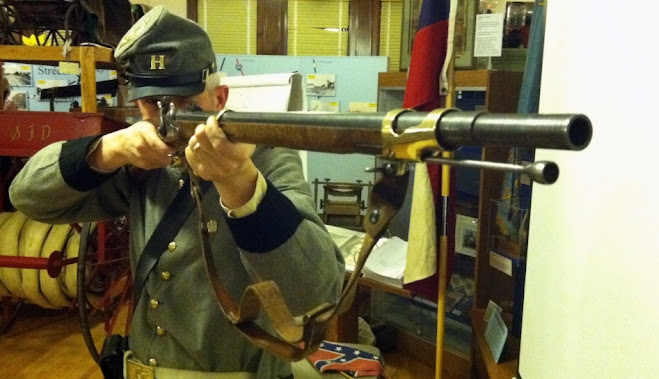
Ward Zischke, a native of Cedar Falls, Iowa, and historian for the Army Reserve 88th Regional Support Command, explains the Confederacy mind-set to an audience, April 19, 2012, during a Civil War lecture series at the Deke Slayton Memorial Space Museum in Sparta, Wis. Zischke is also an Army Reserve lieutenant colonel with 3rd Brigade of the 75th Battle Command Training Division. (Sgt. 1st Class Osvaldo Sanchez)