Showing posts sorted by date for query Lincoln found haiku. Sort by relevance Show all posts

Thursday, August 13, 2026

Hertling’s Found Haiku, ‘Polished Diamonds’

Review by Bill Doughty––


Retired U.S. Army Lt. Gen. Mark Hertling concludes his vital book “If I Don’t Return” with deep reflection and a hope that the advice he offer is received as intended: as a gift to help others.


Much of his advice is reflected in a prayer by General Douglas MacArthur, “Build Me a Son, O Lord.” 


Citing elements of the prayer, Hertling writes,

“Be strong enough to admit weakness. Be brave enough to face yourself. Hold you head up in honest defeat and lower it in victory. Be selfless, kind, and fair. Seek the truth and laugh often. Choose service over self. Draw out the myriad motivations that live in others. Polish diamonds –– gently, patiently, precisely –– until their brilliance helps others see. Our world needs all of that, from each of us.”

The following “found haiku” (unintended poetic prose revealed in 5-7-5 syllables) are polished diamonds quoted from Hertling’s book:


In his introduction:


In these pages, strength

In values. In character.

In purpose. In love


From a key section, “Make it Matter”:


Don’t delay. Don’t wait.

Don’t count the days. Instead, make

every day count


Regarding the value of the military family’s support back home (from a saying by Martha Summerhayes written in 1866):


I had cast my lot

with a soldier, and where he 

was, was home to me


On the importance of civilian communities’ expressions of appreciation and kindness to deployed service members:


We should all take that

lesson to heart. Make someone

feel better today


After appreciating the “permanence” of death and environmental destruction in the aftermath of combat:


The awareness that

long after war’s end, it is

the loss that endures


On the biggest “diamond” in his book –– finding and embracing humility:


Victory is a

terrible teacher if you

let it flatter you

Humility is a core value for Hertling, especially important for good leaders. “Take your job, but never yourself, seriously,” he advises.


In a very personal insight, Hertling discusses his Christian faith and how prayer helped him early in his life, especially when deployed to Desert Shield and in Desert Storm.


“Over time, my faith has become less about answers and more about the courage to ask better questions,” he writes. “To walk into uncertainty with conviction, not arrogance.”


Curiosity led him to explore other religious scriptures and beliefs.


“My faith now includes mystery –– and mystery requires humility.” [And THAT is a near found haiku.]


Hertling says, “It’s good to be humble enough to learn. To be bold enough to explore. And to be wise enough to know that culture isn’t about comparison. It’s about connections,” he writes. Hertling made lifelong connections wherever he was stationed, including in Germany (right).

Humility. Connections. Honor, Courage and Commitment…


It is impossible to read “If I Don’t Return” without thinking about current chaos in 2026: the War with Iran and suffering of Sailors aboard USS Abraham Lincoln (CVN-72).; the cruelty by ICE “shock troops” on American streets; ongoing efforts at election interference and other attacks on constitutional democracy; and corruption of the Justice Department, Department of Defense, and the greedy president and his family.


“Humility prevents power from becoming arrogance, wisdom from becoming pride, and strength from becoming cruelty,” Hertling writes. “Humility is not the absence of strength –– it is strength under control.”


Throughout this great book, Hertling not surprisingly quotes a lot of Lao Tzu and Clausewitz, philosophers who have long inspired military leaders. But he also works in some Mark Twain, Epictetus, and even Michael Jordan, Mike Tyson, and Yogi Berra.

And, a quote from an episode of the popular show Ted Lasso stands out.


Hertling writes,

“Lasso explains that people often judge too quickly because they think they know enough about someone or something. He mentions a quote he once saw on a wall: ‘Be curious, not judgmental.’ The rest of the episode doesn't matter, because that's the best advice for leaders. Curiosity keeps you learning. Curiosity keeps you humble. And curiosity keeps you open to the possibility that the next great lesson may come from the most unexpected source.”

This book is a must-read for any military leader, and in Hertling’s mind that means anyone in uniform. But it also written as a guide for anyone in business, medicine, sports, or other fields.


American hero and Hertling’s friend, retired Admiral William H. McRaven, agrees. His extended blurb reads:

“‘If I Don't Return’ is the story every soldier wants to tell but struggles to put into words. Deeply personal, incredibly moving, and storytelling at its finest! Mark Hertling has written a timeless tale of life as a soldier, a father, and a wartime leader, but this book is about more than combat— it is about how we face life's greatest challenges with faith, wisdom, and gratitude. Everyone who is searching will find something of value in this beautifully written narrative.”

McRaven is, of course, former commander of U.S. Special Operations Command, who under orders from Commander in Chief President Barack Obama found and killed Osama bin Laden.


Filled with polished diamonds of wisdom, “If I Don’t Return: A Father’s Wartime Journal” by Mark Hertling, Lieutenant General, U.S. Army (Retired) is published by Ballast Books, 2026.

Wednesday, September 13, 2023

McRaven’s ‘Simple’ Bullfrog Advice

Review by Bill Doughty––

Seventy-three years ago, September 15, 1950, Gen. Douglas MacArthur landed at Inchon, Korea. In the following weeks, U.S. forces began to rout the communist North Korean army and push them almost to the Yalu River near China. Then, in November the Americans encountered well-armed Chinese interventionists supporting the North Koreans.


“Hill 205 seemed an unlikely place for an Army legend to be born,” writes Admiral William H. McRaven (U.S. Navy, Ret.) at the beginning of chapter 7 of “The Wisdom of the Bullfrog: Leadership Made Simple (But Not Easy). McRaven recounts the actions of Army Ranger First Lieutenant Ralph Puckett, who in 2021 received the Medal of Honor, presented by President Joe Biden for actions in Korea. At great personal risk, Puckett helped his Rangers locate and attack camouflaged Chinese machine gun nests and mortar teams that pinned them down.

“Puckett, who had positioned himself at the front of the advancing Rangers, knew there was only one thing he could do. With complete disregard for his own life, Ralph Puckett rose from his foxhole and dashed out into the open field, forcing the Chinese to take aim at the young lieutenant. As the machine gunners began to fire a the sprinting Puckett, the Rangers spotted their positions and engaged them. Puckett returned to his foxhole only to catch his breath, and then leaped out and ran into the open again. With each dash by Puckett into the exposed terrain, the Rangers were able to isolate and destroy more enemy machine gunners.

“Having suppressed the small arms fire, the Rangers proceeded to take Hill 205. History would show that over the next two days, the Rangers under the command of Ralph Puckett would fight off wave after wave of Chinese assaults that took the lives of ten Rangers and left thirty-one wounded, including Puckett.”

Puckett would again serve with honor in Vietnam, where he earned the Distinguished Service Cross and two Silver Stars and was personally recognized by President Lyndon B. Johnson.


McRaven uses the story of Puckett’s heroism at Hill 205 to illustrate the Ranger motto “Sua Sponte” (“Of Your Own Accord”).  “In other words, doing what needs to be done without being told to do so,” McRaven explains.

“There is often the misguided belief that soldiers only follow orders, but the strength of the American military is that the great soldiers, the truly great leaders, do what is right without being told. They do what is right to protect their men and women.”


Senior military leaders expect even young and relatively junior service members to take the initiative when necessary. Such integrated empowerment is a cornerstone of leadership, and can be effective not only in the military but also in business, sports, medicine, citizenship, and developing a healthy family.


A simple, powerful concept. Which is also a good descriptor for this small but excellent book.


Memorial statue of Basilone in New Jersey
“Sua Ponte” is just one of the ideas presented here by the author of “Make Your Bed,” “The Hero Code,” and “Sea Stories.”

McRaven opens his latest book with a discussion with the most important aspects of being a good leader: Honor and integrity, captured in legendary United States Marine hero Sgt. John Basilone’s motto: “Death before Dishonor.” Honor and integrity are the foundation of a trustworthy leader.


Another motto explored in “Bullfrog” is the British Special Air Service’s Qui Audet adipiscitur: "Who dares, wins."


An honorable leader who demonstrates commitment, hard work, and initiative, will earn the trust of their followers, according to McRaven. Stamina, a willingness to sacrifice, and confidence, along with humility and the ability to make hard choices, are also important leadership qualities. Commanders “must have perseverance and, above all, confidence in ourselves.”


All the above qualities and more were personified by Adm. Chester W. Nimitz in World War II, particularly in the Battle of Midway: The great admiral faced a difficult choice about whether to ambush the Imperial Japanese Navy at Midway. “The fate of the entire Navy, and perhaps our nation, rested on this decision,” McRaven writes. “But history would show that the Battle of Midway was the single most decisive naval battle of the war and turned the tide in the Pacific.


Other legendary leaders highlighted in this outstanding book include father of the Navy SEALs, Adm. Chuck LeMoyne; WWII British officer and father of the SAS, Col. David Stirling; U.S. Special Operations leader Gen. Stanley McChrystal; Air Force visionary Billy Michell; Vietnam War hero Col. Elliot “Bud” Sydney; and former president Barack Obama, who, like Nimitz and Midway, faced a difficult decision, with uncertain information, about launching the mission to capture Osama bin Laden.


“It was an enormous risk, but one the president knew he had to take. I admired his guts –– Who Dares Wins –– but more importantly,” McRaven reflects about Obama, “I admired his intellect for understanding the nature of the risks he was assuming.”

Good leaders attack problems aggressively. “Mistakes of action are far less consequential than mistakes of inaction,” he notes. Hope, luck, and desire are important, but they are not a strategy. “Be a risk-taker, but manage the risk through extensive planning, preparation, and proper execution.”

All Hands: McRaven speaks to service members at Bagram Air Field, Afghanistan, Thanksgiving Day, 2013. (Army Staff Sgt. Osvaldo Equite)
Each chapter features an insightful epigram quotation by well-known and sometimes surprising people: Abraham Lincoln, Marie Curie, Alvin Toffler, Oprah Winfrey, Michael Jordan, William Shakespeare, Tacitus, Booker T. Washington, Coach Mike Krzyzewski, and Taylor Swift.

Yes, Taylor Swift.


In fact, her epigram quote for chapter ten, titled “No Plan Survives First Contact with the Enemy,” is a found haiku:


Just because you made

a good plan doesn’t mean that’s

what’s gonna happen


McRaven discusses the importance of planning, inspecting, and always having a plan B.

When one of their helicopters became damaged in the bin Laden raid, the well-trained and ready SEALs adjusted, overcame, and accomplished their mission. Training mitigates risk and saves lives.

Importantly, McRaven notes that even the best leaders will have setbacks and seemingly insurmountable challenges. But how they deal with failures and obstacles makes all the difference.

This is a great book for any new leader, would-be commander, and anyone interested in the importance of character, competence, and ethical behavior –– integrity –– in military and national leadership.


There are many references in “Bullfrog” to Basic Underwater Demolition/SEAL training, Coronado, and San Clemente. But there is an unexpected thread throughout the book leading through Hawaii, which help illustrate key leadership principles.


“The Wisdom of the Bullfrog” concludes with a spotlight on Navy SEAL Lt. Michael Murphy’s favorite book, “Gates of Fire” by Steven Pressfield. "Gates of Fire" is also a favorite of Gen. James Mattis (USMC, Ret.) and is a recommendation by Adm. James Stavridis (USN, Ret.). The novel is or has been on the reading lists of many military leaders, including the Commandant of the Marine Corps (currently a vacant position).


Pressfield speaks to Marines and fellow veterans at Camp Pendleton in 2011. (Sgt. Skyler Tooker)
“Gates of Fire” imagines the 300 Spartans who fought valiantly in the Battle of Thermopylae in 480 BCE. In the fictionalized account, Pressfield, a former Marine, channels what the last Spartan may have said about his king, King Leonidas, and what made his king such a great leader: “A king does not abide within his tent while his men bleed and die upon the field. A king does not dine while his men go hungry, nor sleep when they stand at watch upon the wall, A king does not command his men’s loyalty through fear nor purchase it with gold; he earns their love by the sweat of his own back and the pains he endures for their sake. That which comprises the harshest burden, a king lifts first and sets down last. A king does not require service of those he leads but provides it to them…”

While not always easy –– and often extremely hard to live by –– McRaven’s leadership principles are actually “simple” he says. He offers a list of sayings taken from his chapter headings and a QR code at the end of the book for readers to obtain a printable version of the “Wisdom of the Bullfrog.” (The term Bullfrog refers to the the longest serving Navy SEAL on active duty, which McRaven once was for nearly 40 years.)


Sometimes advanced age has its leadership advantages.

Friday, August 11, 2023

Found Haiku in 'Believer'

Review by Bill Doughty––

Did the pilot encounter a UFO before losing contact with air traffic control? What do people, including his fiancé, believe happened to Frederick Valentich on Saturday, October 21, 1978, over Bass Strait, Australia? And what did Valentich report he saw and experienced just before his transmission cut off, the pilot never to be heard from alive again?


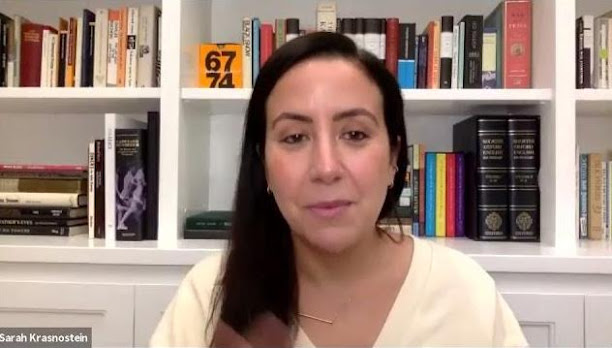
It’s one of the true stories explored by master writer Sarah Krasnostein in “The Believer: Encounters with the Beginning, the End, and Our Place in the Middle” (Tin House, 2022).

In “The Believer” we meet UFOlogists, an abuse survivor who hired a hitman, members of a Mennonite choir who perform in a New York subway, a “death doula” who helps individuals and families, ghost hunters who search for evidence in haunted places, a geologist who wants to believe the earth is 6,000 years old, and others following and sharing their beliefs. Throughout, Krasnostein presents characters in ways that make us care about them. The sometimes floating, sometimes strobe-like stories are often deeply painful but always thought-provoking, poetic and profound.


Her writing unfolds the biggest of issues: life, death, hope, reality, existentialism.


“From the absurdity of our deepest paranoias to the radical coherency of our highest art, we are compulsive converters of fact into meaning.”


UAP screen shot by a naval aviator (U.S. Navy)
She visits the Creation Museum in California, discusses the cantina scene in Star Wars, shares the beauty of Wynton Marsalis’s “Canon for Three Trumpets and Strings,” and considers the science of oneness and shared atoms with religious fundamentalists, noting, “…they believe I am going to Hell, and I believe they may already be living in one…”

This is a book of fascinating encounters and deeply personal contemplation.


As if taking a book from a library shelf, Krasnostein quotes works by great minds such as Hanna Arendt and her “warning against mistaking knowledge for thought, and truth for meaning;” Haruki Murakami who contemplates “existential reality of nonexistence;” and Martin Rees’s observation that “absence of evidence is not evidence of absence” (now pertinent to discussion of Unidentified Aerial Phenomena, including recent revelations by U.S. military pilots and former naval aviators).


She spotlights Alvin Toffler, author of “Future Shock,” who in 1970 identified “the dizzying disorientation brought on by the premature arrival of the future.”Midway in the last century telephones were just for calling people. Computers were the size of large rooms. TVs had three channels –– all black-and-white, mostly white. 


Krasnostein writes about some of the people in their early sixties and late fifties who experienced Toffler's future shock: “Over the span of their lives to date, LP records disappeared and then cassettes. Reel-to-reel, Beta, VHS. Carbon copies, typewriter ribbons. The black tongue of film inside a camera, every frame precious.”


Ahhh, an unexpected “found haiku” –– a five-seven-five-syllable stanza of words. Poignant. Exquisite. Unintentionally a poem:


…ribbons. The black tongue

of film inside a camera,

every frame precious


Other found haiku emerge as we read Krasnostein’s investigation of religion, alien abductions, and other beliefs.


She investigates UFO sightings, events, and conspiracies in Australia, including the Westall event of 1966. She visits with a sect of fundamentalist Christians in their homes and at their services, including in the dead of winter. She befriends a dying woman and her family, who allow her to share in the process of saying goodbye. And she follows the life of a convicted repentant murderer who helps homeless people stay alive.


Some found haiku in "The Believer":


Green-white flash moving

extremely quickly across

the sky. Metallic…


Over long winters

of short days when nothing thawed

or melted away


The railing is iced

with a thin line of fresh snow

as I climb the stairs


Through which a chill wind

blew: grief frustration closer

to strangulation


Inside, I add my

wet Nikes to the dozens

of similar pairs


On the sofa where

they lean towards each other like

a pair of old boots


Air is cold through the

clean pane as he looks up at 

the blackness he knows


Of the clock face laid

bare as each hour came once, and

vanished forever


Salting of stars so

thick it reminded me we

are floating in space


How close the remote

past is: we live inside it

the light is the same


Self … rumination

carving neurological

tracks deep as canyons


Krasnostein examines the choices we make in our noble but vain attempt to find answers to every question. She sees how some believers accept certain inevitabilities. Reaching for more books, she cites other authors and thinkers, including Elizabeth Kübler Ross, Stephen J. Gould, George Orwell, Charles Darwin, James Baldwin, Ralph Waldo Emerson, and Jorge Luis Borges. Borges imagined Paradise “as a kind of library,” one that Krasnostein contemplates visiting.


“...I always imagined that library as an Eden where all the operating instructions are filed. Not only all the books ever written, but also each of our stories: the past meeting the future, everything indexed and logically related, a return to when the world was as seamless and whole as an apple. I suppose this reflected a belief in the world as a certain kind of text; a faith that, if I could only ask the right questions, I could finally understand.

“To believe in the world as this type of text is to believe that all lives –– regardless of whether they resolve happily –– make sense. To have faith in context and causation. To insist that people for the most part are intelligibly coherent in the sense of being predictably inconsistent and that they are capable, within reasonable bounds, of incredible insight and meaningful growth as they learn, painfully, to bend themselves around reality instead of expecting reality to miraculously bend itself around them.”


To have such an exquisite belief about people, she says, is just wrong. But adds, “what other choice do we have?”

Hannah Arendt is a touchstone in "Believer." Especially Arendt's "The Life of the Mind" "in which she explored the powers and limitations of our cognitive function. Arendt believed that every civilization is founded on the capacity to ask unanswerable questions. Krasnostein says, "In other words, our social survival –– even our physical survival –– is bound up with our spiritual survival and it might rely, as a matter of first principles, more on the aspirations underlying our questions and our ability to tolerate uncertainty than on our proficiency at defending solutions just for the sake of having them."

Could it be that commonality in our very atoms and shared place in space and time here "in the middle" is more profound than superficial differences –– despite indoctrination, amygdala influence, and ego issues?

I couldn’t help but notice that the subtitle of this wonderful book is, itself, a found haiku:


Encounters with the

beginning, the end, and our

place in the middle


(We have featured Navy Reads posts with other found haiku over the years, including from President Abraham Lincoln and Senator John S. McCain.)