Showing posts sorted by relevance for query tubman. Sort by date Show all posts

Saturday, March 30, 2019

McChrysal: Reality of Sailor Harriet Tubman

Review by Bill Doughty

A standout essay in General Stanley McChrystal's latest book, "Leaders: Myth and Reality" (Portfolio/Penguin, 2018) begins on a Union Navy vessel in the littorals of the Deep South during the heart of the Civil War.
"As she boarded the USS John Adams that evening, the white officers tipped their caps to the black woman they knew as 'Moses.' Apart from this polite gesture, she was paid no special attention. The 300 troops had business to take care of, and Harriet Tubman was a part of that team, with duties of her own."
Colonel James Montgomery, who commanded the 2nd South Carolina Volunteer Regiment, relied on Tubman – who had been serving as a nurse and spy for the Union Army – to guide him, his officers and 300 mostly black troops twenty-five miles up the Combahee River. They left from Beaufort, South Carolina to destroy Confederate communication and supplies and free slaves if possible.
USS John Adams depicted (in 1846)
"When the boats set off upriver, Tubman, as head scout, assumed her place next to Colonel Montgomery. It's an incongruous scene: a five-foot-tall, forty-one-year-old black woman going on a raid to free slaves in the middle of the Civil War. Heading to a battle, the officers and soldiers of the 2nd South Carolina didn't show concern with the symbolism of a middle-aged, formerly enslaved woman wearing a dress amid all the men in blue uniforms. All they cared about was her competence as a scout."
In terse prose that attempts to separate fact from myth, McChrystal and his co-authors Jeff Eggers and Jason Mangone show the difficulties Tubman faced as a slave before she escaped to become a matriarch and leader of the abolitionist movement.

She suffered separations, beatings and brain damage that left her with stupors, seizures and religious visions.
"According to a journalist who wrote about Tubman in 1863, her head injury made her 'subject to a sort of stupor or lethargy at times; coming upon her in the midst of conversation, or whatever she may be doing, and throwing her into a deep slumber, from which she will presently rouse herself, and go on with her conversation or work.' Though Tubman and her family were deeply religious well before her head injury, her skull fracture marks the time when Tubman began having religious visions, which would stay with her for the remaining eighty years of her life and contributed to what she felt was her calling."
Despite her challenges, Tubman made 13 trips into the Deep South during the 1850s as part of the Underground Railroad, a support network of black and white ministers, freethinkers and others opposed to the sin of slavery. Each trip was 450 miles both ways, and the slaves had to travel to Canada or risk being caught and returned.

Tubman is recognized for her leadership qualities of "modesty, duty, perfect truthfulness and integrity." She built relationships and valued cooperation, but she could also be fearless and demanding.

Congressman John Lewis
McChrystal's dedication of this book is: "To John Lewis and John McCain, who remind us that it's possible to keep our humanity while leading with courage and commitment."

The eclectic leaders profiled by the authors include geniuses like Albert Einstein, zealots like Maximilien Robespierre, and reformers like Dr. Martin Luther King Jr., among others.

McChrystal and his co-authors offer no clear and simple formulas on being a leader. "It is our hope that by helping to dismantle some common myths we will create space for you and other leaders to interact with reality and respond to your challenges with clear thinking and humility."

In the book's prologue, McChrystal writes, "Finally, by itself, 'Leaders' will not make you into a great leader. It won't overcome weak values, a lack of self-discipline, or personal stupidity. Instead of simplifying the challenges of leading, 'Leaders' will outline and underscore the complexities."

McChrystal and his team offer no paint-by-numbers formulas for being a good leader. They recommend dismantling common myths in order to "interact with reality and respond to your challenges with clear thinking and humility."


Frederick Douglass
To highlight the Tubman essay, McChrystal and his co-authors choose a quote from former slave and abolitionist Frederick Douglass. Part of Douglass's quote becomes a "found" haiku:


what you have done would
seem improbable to those
who do not know you

In the book's prologue, McChrystal concludes, "Finally, by itself, 'Leaders' will not make you into a great leader. It won't overcome weak values, a lack of self-discipline, or personal stupidity. Instead of simplifying the challenge of leading, 'Leaders' will outline and underscore the complexities."


Union Sailor George Commodore, 
"Leaders" recommends reading Joseph Campbell, Churchill, Plutarch and tales of Greek and Roman heroes. In fact, the book starts with McChrystal's love of reading.  For the Tubman essay, he recommends Kate Clifford Larson's "Bound for the Promised Land: Harriet Tubman, Portrait of an American Hero" (One World, 2003).

The best leaders are good readers.

Postscript: Interest in this topic and how African Americans served in the Navy in the Civil War led me to this essay by Joseph P. Reidy in Prologue Magazine, online at the National Archives: "Black Men in Navy Blue During the Civil War." 

Sunday, March 20, 2022

‘The Agitators’

Review by Bill Doughty––

Just three lifetimes ago in America, black people throughout the South were kept in chains. And, according to the law throughout the states, women of all ethnicities were considered the property of men.


A controversial bill put forth in the New York State legislature in 1841 was the Married Women’s Property Act.

“Under American law, when a woman married, she turned over to her husband any money, land, or goods she had inherited. The proposed bill, if passed, would grant married women the right to their own property, and it would have a stunning ramification: women who owned property would pay taxes; if they paid taxes, they deserved the right to representation –– and thus the right to representation –– and thus to vote. As one legislator said, the measure raised ‘the whole question of woman’s proper place in society, in the family and everywhere.’”

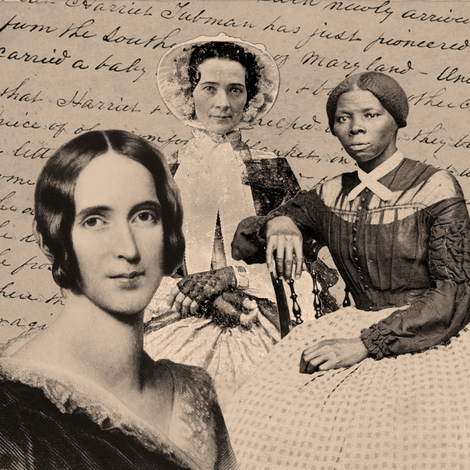
In “The Agitators: Three Friends Who Fought for Abolition and Women’s Rights” (Scribner, 2021), author Dorothy Wickenden takes readers back to the 1800s to meet brave women: Martha Coffin Wright, Harriet Tubman, and Frances A. Seward, united by their abhorrence to slavery and desire for equality for all. "Martha and Frances became Harriet's collaborators and two of her most devoted friends."

Wright and Tubman worked together on the Underground Railroad, helping escaped slaves from the South find freedom in the North, often having to go as far as Canada to avoid recapture. Frances Seward worked behind the scenes to support abolitionists and women’s rights groups. She was the wife of William Henry Seward, who served as governor of New York and later as Secretary of State under President Abraham Lincoln, and Frances played an important role in pushing for the Emancipation Proclamation. She was an early proponent of equal pay for women, and she provided financial support so Harriet could continue humanitarian work.


The story told by Wickenden is not just the friendship and work of three women, but also the wide network of women and men that included Frederick Douglass, Lucretia Mott, John Brown, Elizabeth Cady Stanton, Charles Sumner, Ernestine Rose, William Lloyd Garrison, Susan B. Anthony, and Lucy Stone –– all connected and, though not always united in their priorities and beliefs, totally committed to the cause of freedom.


It's a story of perseverance.


Dorothy Wickenden
Wickenden is a wickedly good writer; these people come alive as feeling, thinking, breathing characters.

Here’s her description of Republican Representative Charles Sumner, who spoke passionately on the floor of the House of Representatives about the sin of slavery:

“Sumner was a six-foot-two, barrel-chested bachelor with blue eyes and wavy brown hair that resisted the taming influence of a brush. He antagonized enemies and sometimes friends, with his vanity and sanctimony … Seward advised him to tone down his speech but Sumner did not follow Seward’s advice.”

Sumner suffered a horrific physical beating in Congress by Representative Preston Brooks, a pro-slavery Democrat from South Carolina. Sumner was scarred for life. Like most of the characters in this book, he had a complicated relationship with others, including his close friends, the Sewards.


Harriet Tubman, despite being unable to read or write, and in the face of her own debilitating scars, demonstrated tireless courage and commitment to freeing enslaved people, including going into battle after the start of the Civil War. We featured "General Moses" Tubman several times on this blog, including revealing how she served as a sailor and nurse for the Union in the Battle of Port Royal and other occasions. [See former Gen. Stanley McChrystal’s tribute to Tubman, featured on Navy Reads three years ago.]


Frances Seward reads in her garden.
Military readers will be interested in Wickenden’s coverage of attempts to prevent secession, the lead-up to war, and then actual battles of the Civil War under the leadership by Lincoln, generalship of Ulysses S. Grant, and advisory role of William Henry Seward, whose own indispensable adviser was Frances Seward.

Although her husband was defeated by Lincoln for the Republican nomination for president, Frances was secretly pleased to not become First Lady, content in her role fighting for abolition and women’s equality, and satisfied to support her husband as Secretary of State during time of war. For his part, on a “team of rivals” that included Secretary of the Navy Gideon Welles, Henry pledged allegiance to Lincoln, using maritime imagery: “I have brought the ship off the sands, and am ready to resign the helm into the hands of the captain whom the people have chosen.”


Seward’s strategic diplomacy kept the British neutral during the war, despite the Confederacy’s efforts to get foreign support for their Lost Cause. Seward successfully argued for a naval siege of southern ports. And he was the only other signer of President Lincoln’s Emancipation Proclamation.


The Seward’s son William “Willy” Seward served at the Battle of Gettysburg, where his infantry battery played a key role in turning the tide against General Robert E. Lee’s forces. He also led with distinction at the Battle of Moncacy, smaller than Gettysburg but also vital. That battle stopped the Confederates under General Jubal Early as the Rebels marched to take over the capital and Capitol prior to Lincoln’s reelection. The Confederates were set on “seizing the U.S. Treasury and White House, perhaps taking President Lincoln and his cabinet as prisoners of war.”


Martha C. Wright
Wickenden describes abolitionist Martha Wright, Lucretia Mott’s sister, as a Quaker woman who did not attend church and did not “properly” discipline her children. “She rarely encountered an institution she didn’t question,” according to Wickenden. Martha’s husband was a veteran of the War of 1812, and she married an open-minded son of a farmer from Bucks County, Pennsylvania, who supported her desire to be part of Harriet Tubman’s underground railroad.

Wright, who had first married just before her eighteenth birthday, “compensated for her abbreviated education by borrowing books from Frances’s [Seward’s] library. She read Mary Wollstonecraft’s “A Vindication of the Rights of Woman,” written in 1792 –– a book which was a bible for the early women’s equality movement. [See Navy Reads review, March 2020, of Wollstonecraft’s iconic work.] Wright also read Sir Walter Scott’s “Kenilworth,” Pope’s “Essays on Man,” and Edward Bulwer-Lytton’s “Last of the Barons.”


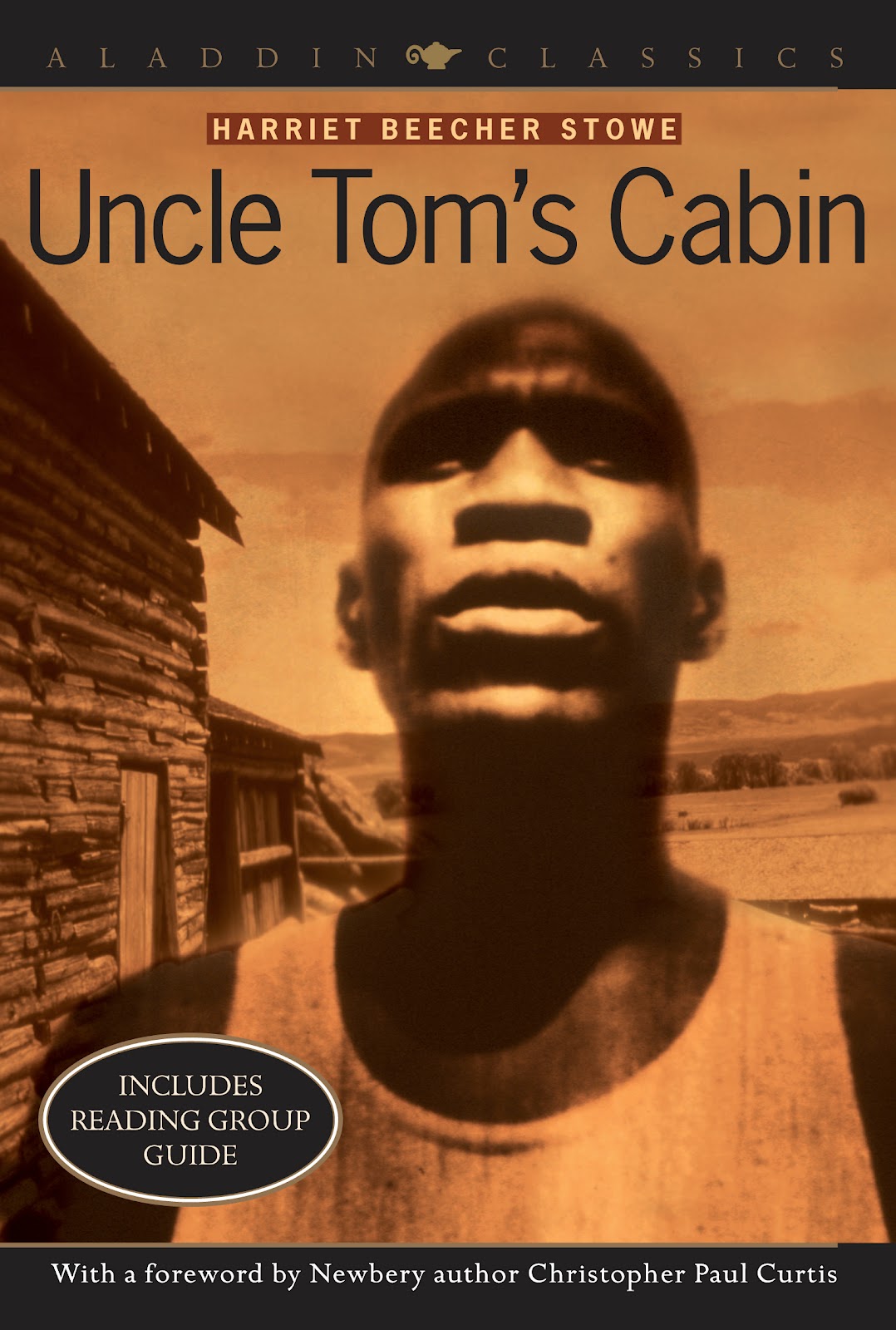
The leaders in the abolitionist movement were inspired by another book, Harriet Beecher Stowe’s “Uncle Tom’s Cabin,” described by Wickenden as “a novel not distinguished by subtlety or fine writing, but it was a powerful polemic at a moment of national reckoning.” Naturally, the book was banned by rightwing media and panned in the South. But Stowe’s influential book, along with the Missouri Compromise, helped ignite a powder keg of anti-slavery and pro-slavery violence in Lawrence, Kansas, triggering violent riots, lynchings, and massacres in the states, directly leading to war.

Wickenden describes draft riots in response the America’s first conscription to fill the military’s ranks. Riots originated among poor Irish and German immigrants who did not want to fight in a war to free black men who could then come north and take their jobs.


The families of all three principals in this book –– Martha Wright, Harriet Tubman, and Frances Seward –– were deeply affected by the Civil War, losing family members or experiencing life-altering injuries to relatives. Today, all three women are buried near each other in Fort Hill Cemetery, high above Auburn, New York.


Today, Frances and Henry Seward are remembered at the Seward House Museum, where their collection of more than 5,000 books are on display. Martha is honored, along with her sister Lucretia Mott, at the Visitor’s Center at Seneca Falls. Harriet Tubman is beloved and remembered at the National Park Service’s Harriet Tubman National Historical Park. Her image will reportedly be featured on the $20 bill in 2030, replacing that of Andrew Jackson.


(courtesy Treasury Dept.)
Back in 1852 –– 170 years ago, or three lifetimes ago –– the network of forward-thinking women held the Third National Woman’s Rights Convention in Syracuse, New York. They were abolitionists and agitators for equality. Some, like Lucy Stone, daringly wore their hair short. Women started to wear bloomer trousers and short jackets, considered inappropriate by conservative clerics, who “always made an appearance at women’s rights conventions” and advised the women to “stick to the domestic sphere, lest they become masculine.” Martha Wright, told him politely, paraphrasing, to mind his own business.

“Rev. Junius Hatch tried to win over the convention with a metaphor about female loveliness. Women should show a ‘shrinking delicacy, which, like the modest violet, hid itself until sought’ –– the same quality that led them to wear long skirts, instead of imitating the sunflower, which lifted its head, ‘seeming to say, come and admire me.’” He was shouted down by the audience who told him to “Sit down! Sit down! Shut up!

Women found their voice just a decade before the Civil War, but it would be another lifetime till they won the right to vote throughout the United States in the 19th Amendment, ratified by Congress in 1920.


“The Agitators” is another great selection for Women’s History Month.


By the way, New York's Married Women’s Property Act, mentioned at the beginning of this post, wasn't passed till 1848, but, once passed, it became the template for other states to follow. And to do the right thing.

Monday, February 17, 2020

'Stolen' Toward Civil War

Review by Bill Doughty

Kidnapped and taken aboard a boat in the Philadelphia Navy Yard nearly 200 years ago, a small boy was about to be taken on a harrowing trip with other free African Americans into the Deep South. They were to be sold as slaves. "They would have to fight like hell to try to escape."

Arch Street ferry, Philadelphia. Drawn, Engraved & Published by W. Birch Springland near Bristol Pennsylvania 1800. (Library Company of Philadelphia)
Richard Bell's "Stolen" (37 INK, Simon & Schuster; 2019) opens with this scene from August 1825:
"Cornelius Sinclair was ten years old and he was trapped. He was stuck in the belly of a small ship bobbing in the middle of the Delaware River, a mile south of Philadelphia. A man had grabbed him from a spot near that city's market an hour ago, shoved a black gag across his mouth, tossed him into a wagon, and hauled him here.It was dark below the waterline, but Cornelius could see enough to know that he was not alone. Four pairs of eyes stared back at him – four other black boys.Yesterday they had all been free. Today they were slaves, prisoners of a gang of child snatchers who planned to sell their lives and labor, most likely to plantation owners in the Deep South. If the boys' abductors got away with this, Cornelius would spend the rest of his life as someone else's property somewhere very far away. He would never see his family again."
"Stolen" is a heart-rending true tale of the ordeal of these young men. And it is also a story of the courage of civil servants, public officials, journalists and ordinary citizens to stand up against evil – and for justice. The story starts in the "sanctuary city" of Philadelphia, birthplace of the nation.

An 1840 painting of ships and boats on the Delaware River including large schooners, naval warships and rowboats as well as a paddle steamer. Twin ship sheds of the old Philadelphia Navy Yard are visible. Oil on canvas painting by Thomas Birch.
We follow the trail the kidnappers took with their "coffle" – chained or guarded caravan – as part of the Reverse Underground Railroad. We meet thieves, torturers, liars and murderers. And we confront the awful truth of how slavery was practiced, condoned and protected, not just in the South. The banal cruelty is almost unimaginable.

Although slavery was dying out in the North by 1825 (fewer than 20,000), just shy of fifty years after the signing of the Declaration of Independence in Philadelphia, it was still going on in rural parts of New Jersey and New York. Yet it was still sanctioned in the states below the Mason-Dixon Line, including in Maryland and Delaware and especially farther south in Alabama, Mississippi and Louisiana (1.7 million souls).

Abolitionists and former slaves Harriet Tubman and Frederick Douglass
Bell recounts that some of the events in this narrative unfold in Dorchester County, Maryland, where slavery still flourished. "More than five thousand enslaved people lived in Dorchester County, Maryland, in 1825, and two thousand more labored in fields and workshops just across the sate line in Sussex County, Delaware. Frederick Douglass (b. 1818) and Harriet Tubman (b. 1822) were among the many enslaved people to grow up around here..."

In the Deep South, some cotton farmers and sugarcane growers would gladly buy slaves from the North, few questions asked. As the United States expanded westward, the nation had to confront an expansion of slavery, including thousands who were kidnapped even as free Americans.

The book's subtitle is "Five Free Boys Kidnapped Into Slavery and Their Astonishing Odyssey Home." The true story provides irony as slaveholders attempted to justify their inhumane practice. Some fought against the Reverse Underground Railroad from the North in order to protect the institution of "owning" other humans in the South and, they hoped, the West.

Pivotal moments in the destruction of the industry of slavery were of course the 1776 Declaration of Independence and the 1789 Constitution, blueprints for liberty and equality. Other milestones were reached when President Jefferson and Congress abolished international slave trade in 1808; when Pennsylvania passed a new Personal Liberty Law in 1826; when the Supreme Court struck down in 1842 "states rights" opposition to civil rights; and when Congress passed the Fugitive Slave Act in 1850.

"Stolen" unfolds in the middle of this cascading series of events that would soon lead to Civil War in 1861.

Bell makes a convincing case that the boys' ordeal was a spark that "advanced the cause of racial justice in America." He presents the story of the kidnapping and odyssey using court records, letters and newspaper sources. And he acknowledges his use of conjecture where there are blanks, couching his narrative with adverbs such as "likely," "probably," "surely" and "certainly."

Andrew Jackson
This book offers great maps, photos, art and artifacts to illustrate the story. Though not part of the "Stolen" story, Bell includes an engraving of slave owner Andrew Jackson: "A slave owner and speculator [who] traded enslaved adults and children across state lines for decades prior to his presidency, a fact that several of his opponents tried to exploit."

We come face to face with some of the morally bankrupt misanthropes involved in the kidnapping, torture and sale of thousands of human beings for profit.

But we also meet some heroic people, including lawyer John Henderson, Attorney General of Delaware James Rogers, civil servant Samuel Garrigues, and Mayor of Philadelphia Joseph Watson.

Watson was a man of earnest integrity: "He loathed con men who made their living bearing false witness," and "He had a loathing for liars and charlatans."

Mayor of Philadelphia Joseph Watson. (Unknown artist)
It was men and women like Watson and other abolitionist heroes – including Frederick Douglass, William Wells Brown, Henry Highland Garnet – profiled in this book who took a stand and fought to end slavery.

When Congress passed the Fugitive Slave Act in 1850 it outraged southern states. It was "so inflammatory that many historians record it as the single most significant cause of the Civil War."

At the end of the story we read about one of the boys who survived the ordeal for a time becoming a seaman for a time, heading out to sea in 1837, just before his 18th birthday. Missing in this book but included in other retellings of the history of the era is the role of the U.S. Navy, part of the Union military, in fighting and overcoming slavery.

While justice was not perfect in this or in many other cases, while reading this book, I kept thinking of Martin Luther King Jr.'s quote: "We shall overcome because the arc of the moral universe is long but it bends toward justice."

Saturday, February 15, 2014

Antislavery Writings in Resolving Hypocrisy

Review by Bill Doughty
George Washington ensured his slaves were freed but not till after his death.

By the time George Washington died he had resolved the greatest hypocrisy of his life. 

Much of the "Last Will and Testament" of the first American president, a man who fought the Revolutionary War for liberty and equality, is dedicated to freeing his slaves and funding their care and education. In many parts of the young country at the time it was illegal to teach slaves how to read.
Jefferson did not resolve the same hypocrisy and, in fact, compounded it through his actions.

Lincoln confronted and resolved the issue on behalf of the nation five decades after Washington's death.

"American Antislavery Writings: Colonial Beginnings to Emancipation," edited by James G. Basker and published by the Library of America, offers hundreds of stories, narratives, poems, letters and songs. The book includes Washington's will related to his slaves.

Among the several passages written by Abraham Lincoln in this book is Lincoln's "Peoria" speech on the Kansas-Nebraska Act of 1854, which permitted slavery in the new territories leading to the West. Lincoln argued for the blessings of freedom and against those who found legal and biblical justification for slavery as morally justified.
"Let us turn slavery from its claims of 'moral right,' back upon its existing legal rights, and its arguments of 'necessity.' Let us return it to the position our fathers gave it; and there let it rest in peace. Let us re-adopt the Declaration of Independence, and with it, the practices, and policy, which harmonize with it. Let north and south -- let all Americans -- let all lovers of liberty everywhere -- join in the great and good work. If we do this, we shall not only have saved the Union; but we shall have so saved it, as to make, and to keep it, forever worthy of the saving. We shall have so saved it, that the succeeding millions of free happy people, the world over, shall rise up, and call us blessed, to the latest generations."
One of the highlights in this exceptional compilation is an excerpt from "Twelve Years a Slave," the 1853 narrative of Solomon Northrup.  "Northrup presents a detailed sketch of the sadistic slave master Edwin Epps that is almost mesmerizing in its graphic horror," Basker writes. (Northrup's memoir was depicted in a top movie of 2013 directed by Steve McQueen and starring Chiwetel Ejiofor, Lupita Nyong'o, Michael K. Williams, Michael Fassbender and Brad Pitt.)
From the book "Uncle Tom's Cabin" by Harriet Beecher Stowe.

Another highly recommended gem in "American Antislavery Writings" is the poem by John Greenleaf Whittier, "The Slave Ships."

Of course, this book includes abolitionist writings of Harriet Beecher Stowe, Frederick Douglass, Sojourner Truth, Harriet Tubman and John Brown.  It also includes words of patriots and poets such as Patrick Henry, Benjamin Franklin, Noah Webster, Edmund Quincy, Emily Dickinson, William Cullen Bryant, Elizabeth Margaret Chandler, Louisa May Alcott, Henry David Thoreau and Ralph Waldo Emerson.

Former president John Quincy Adams represented Joseph Cinqué and other African captives who had freed themselves from captivity while aboard a Spanish schooner slave ship. Amistad was discovered off Long Island by the U.S. Navy brig Washington. 

President Martin Van Buren ordered the Amistad's slaves be returned to Spain, but Adams argued before the Supreme Court, "the right of personal liberty is individual." He said, "The moment you come, to the Declaration of Independence, that every man has a right to life and liberty, an inalienable right, this case is decided."

One of the strongest condemnations of slavery in America comes at the end of the book in Charles Sumner's "Eulogy on Abraham Lincoln."
"Traitorous assassination struck him down. But do not be too vindictive in heart towards the poor atom that held the weapon. Reserve your rage for the responsible Power, which not content with assailing the life of the Republic by atrocious Rebellion, has outraged all laws human and divine; has organized Barbarism as a principle of conduct; has taken the lives of faithful Unionists at home; has prepared robbery and murder on the northern borders; has fired hotels, filled with women and children; has plotted to scatter pestilence and poison; has perpetrated piracy and ship-burning at sea; has starved American citizens, held as prisoners; has inflicted the slow torture of Andersonville and Libby; has menaced assassination always; and now at last, true to itself, has assassinated our President; and this responsible Power is none other than Slavery. It is Slavery that has taken the life of our beloved Chief Magistrate, and here is another triumph of its Barbarism. On Slavery let vengeance fall."
This book also includes a chronology of the slave trade in the colonies and efforts to abolish it in the new nation under the 16th president and 13th Amendment.

This week my generation remembered the 50th anniversary of the arrival of the Beatles from Britain to the United States. In 1964, the Beatles, like Elvis before them, skyrocketed to fame playing music inspired by African-American Rhythm & Blues. (Recommended: timeline  in Dr. Portia K. Maultsby's "History of African American Music.")

The 50 year marker back to 1964 can be used as a yardstick back in time.
Muddy Waters helped plant seeds of rock & roll.

Subtract another 50 years. What were people listening to in 1914, the year World War I began?  The great blues artist Muddy Waters (McKinley Morganfield) was born the year before. Big Bill Broonzy, who would be a key influence to John Lennon years later, was already playing music and getting ready to move to Chicago. It was the very early beginning of commercial jazz and blues, but the hot group was the American Quartet, who performed top hits, "It's a Long, Long Way to Tipperary," "Rebecca of Sunny-Brook Farm" and "Do You Take This Woman for Your Lawful Wife."  Sobering to think that, in 1914, women did not yet have the right to vote.  

Back another 50 years -- 1864, popular forms of music were "parlor" and "minstrel."  That was the year songwriter Stephen Foster died.  Foster's complicated and evolving views about slavery are discussed in an online essay by Matthew Shaftel in University of California at Santa Barbara's "Music and Politics" journal.
Frederick Douglass and Abraham Lincoln fought for emancipation.

Another 50 years -- from 1864 to 1814 -- puts us in the midst of the War of 1812 and four years before the birth of free-thinking philosopher Frederick Douglass. Beethoven and Schubert produced music of the time and Francis Scott Key wrote the Star-Spangled Banner ("O'er the land of the free...").  Key was a slaveowner who helped found the American Colonization Society, which strove to send free African Americans back to Africa and led to the establishment of Liberia.

Back another 50 years: Fifty years prior to 1814 takes us to 1764, when Bach and Mozart were producing music 12 years before 1776. 


Phillis Wheatley, 1753-1784
Those few 50-year yardsticks take us back quickly to the beginning of our nation when slavery was the norm but when the voices of abolition were already building. 

"American Antislavery Writings" includes a number of songs and poems starting with the brilliant Phillis Wheatley, America's first African American woman writer.

Wheatley addressed the hypocrisy of slavery in a letter to the Rev. Samson Occum just two years before the Declaration of Independence, addressing her thoughts to "those whose avarice impels them" to support slavery.  "This I desire ... to convince them of the strange Absurdity of their Conduct whose Words and Actions are so diametrically opposite. How well the Cry for Liberty, and the reverse Disposition for the Exercise of oppressive Power over others agree, -- I humbly think it does not require the Penetration of the Philosopher to determine."

Basker's compilation includes uncredited Anonymous authors, with many voices rising to a crescendo in the 1840s. Women used verse to illuminate the plight of mothers separated from children and vice versa.

Margaret Lucy Shands Bailey of Virginia wrote for anti-slavery periodicals including "National Era," in which Harriet Beecher Stowe first serialized "Uncle Tom's Cabin."  Bailey's "The Blind Slave Boy" was put to music and published in 1844.
"Come back to me mother! Why linger away from thy poor little blind boy, the long weary day!I mark every footstep, I list(en) to each tone, And wonder my mother should leave me alone! There are voices of sorrow, and voices of glee, But there's no one to joy or to sorrow with me; For each hath of pleasure and trouble his share, And none for the poor little blind boy will care."

The case against slavery was won with a combination of cold logic, warm emotion and hot passion that led to a necessary war to preserve the United States.

This book shows how the nation lived up to the ideals expressed by Jefferson, fought for by Washington and realized by Lincoln.

This is a recommended read for this Presidents Day and during Black History Month.

Saturday, March 1, 2014

Women Who Don't Wait / dot Complicated

Review by Bill Doughty

It's complicated (but doesn't have to be) according to authors Randi Zuckerberg and Reshma Saujani in their books from 2013.  Be authentic to "untangle our wired lives" and "break the mold, lead the way."

Zuckerberg's "dot Complicated" is filled with ideas for achieving tech-life balance in the brave new world of super-smart phones, instant communication, hyper connectivity and changing definitions of privacy.

Like a lot of business books, "dot Complicated" has personal anecdotes and easy-to-find highlighted lists. You'll see tips for achieving tech-life balance with self, friends, love, family, career, community and future.

"Strive to find personal peace, friendship, love, fulfillment at work, and good in your community, and use the Internet to improve your life, not control it," she advises. And, "don't be a jerk."

Think of that when you're having a face-to-face conversation with someone and they turn to check their tweets; or you look in the rearview mirror while stopped in traffic and notice the driver behind you is obviously texting; or you read hate-filled troll droppings in anonymous online comments. Again, "don't be a jerk."

Among Zuckerberg's simple and common sense advice: know how to break digital addiction, learn how to achieve balance, and think about how/what/when/where/why to post or repost information. She applies the Golden Rule of life to social media: "Repost unto others as you would have them repost..."

This book is easy and fun to read. As the sister of Mark Zuckerberg, creator of Facebook, the author has the bonafides to describe social media and the do's and don'ts of navigating the new millennial landscape where "technology seems to make things both easier and harder at the same time."

Reshma Saujani mentions Randi Zuckerberg in her groundbreaking work, "Women Who Don't Wait" published last year, praising Zuckerberg's work-life balance and willingness to be herself.

"Randi is right. The more open women are about the richness and multidimensional aspects of their lives, the more acceptable it will become to simply act like ourselves -- and the more effective we will be as leaders."

Saujani's book is filled with provocative chapter/subchapter titles: Fail Fast, Fail First, Fail Hard; Unapologetically Ambitious; Don't Worry If They Don't Like You; Jump the Line (Wear What You Want); and Building a Sisterhood for the Twenty-First Century.

Her biggest advice, like Zuckerberg's, is: "be authentic." She discusses her transformation and encourages the reader to "free yourself from believing that you have to behave like anyone other than yourself."
YN1c Marjorie Daw Adams (right) with Mailman 2nd Class Harrison, 1945.

While her insights are relevant for everyone, her target audience is, of course, women.  She calls for a strong community of support, or sisterhood, but writes, "And guys? We aren't hating on them; we are looking to men to be our allies. We no longer see them as a barrier to our success."
"I have worked with and been inspired by others, every day, to help create the world I want the next generation to live in. As women we must have the humility to see the world as it is, but the audacity to envision it as it could be. To apply a new lens of female leadership and reinvent, reshape, and retool the traditional system. To realize that we can learn from the poorest of women and the richest of women. We can and should be talking to one another about what this new model should look like -- and about how we can build it together."
Saujani dedicates her book "For all the women in my life whose shoulders I stand on, and for all the women who will stand on mine."

Since the 1980s March has been National Women's History Month, a time to recognize the women who didn't wait and who shouldered the struggle for freedom and equality, including the right to vote.
Future President Jimmy Carter readies to graduate from Naval Academy, 1947.

The first National Women's History Week was proclaimed by President and Commander in Chief Jimmy Carter, a former naval officer.

Here is Carter's Message to the nation designating March 2-8, 1980 (sixty years after women won the ability to vote) as National Women’s History Week:
   "From the first settlers who came to our shores, from the first American Indian families who befriended them, men and women have worked together to build this nation. Too often the women were unsung and sometimes their contributions went unnoticed. But the achievements, leadership, courage, strength and love of the women who built America was as vital as that of the men whose names we know so well.
   As Dr. Gerda Lerner has noted, 'Women’s History is Women’s Right.' – It is an essential and indispensable heritage from which we can draw pride, comfort, courage, and long-range vision.
   I ask my fellow Americans to recognize this heritage with appropriate activities during National Women’s History Week, March 2-8, 1980.
   I urge libraries, schools, and community organizations to focus their observances on the leaders who struggled for equality -- Susan B. Anthony, Sojourner Truth, Lucy Stone, Lucretia Mott, Elizabeth Cady Stanton, Harriet Tubman, and Alice Paul.
   Understanding the true history of our country will help us to comprehend the need for full equality under the law for all our people.
   This goal can be achieved by ratifying the 27th Amendment to the United States Constitution, which states that 'Equality of Rights under the Law shall not be denied or abridged by the United States or by any state on account of sex.'"
Congress passed a joint resolution proclaiming a Women's History Week in 1981.

The National Women's History Project and Department of Defense theme for this year's commemoration is, "celebrating women of character, courage and commitment," clearly mirroring Navy core values.

The books by Zuckerberg and Saujani in this review build on the gains of women in the past with a focus on the future, whether achieving tech-life balance or workplace gender balance -- with equal pay for equal work. It's not complicated.

Monday, April 26, 2021

Reflecting Antiracism: Equity/Accountability


Review by Bill Doughty

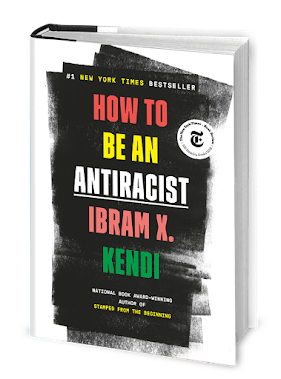
People in the Navy should not read “How to Be an Antiracist” by Ibram X. Kendi (One World, Random House; 2019). That’s the contention of some ultraconservatives, including writers at National Review, as well as several representatives in Congress. But –– like it or not, agree with it or not, and despite its many flaws –– this book is a thought-provoking treatise on the causes of inequity in society, possible remedies, and how to find common understanding.


Kendi’s book is one of dozens selected on the newest version of the Navy’s Professional Reading Program list by Chief of Naval Operations Adm. Mike Gilday. Naysayers argue against including this book because of how Kendi reflects anticapitalist views.

In fact, Kendi does call racism and capitalism “conjoined twins.” He narrowly defines words  and concepts, particularly of the nature of capitalism. And he looks at history with a backward telescope, equating capitalism with greed and exploitation only, starting with the original sin: slavery. He cites Prince Henry the Navigator, of Portugal, as the father of for-profit race-based slavery from Africa in the 1400s.


Because everything is seen through the slavery lens and a long legacy of exploitation of people of color, Kendi does not accept nuanced interpretation or social progression. He fails to see the value of an economic system that can be based both on the incentive of competition/success and accountability for ethical behavior/fairness. But he notes that pure socialism and communism are not the answer, noting that Cuba is not capitalist but is persistently racist. “Socialist and communist spaces are not automatically antiracist,” he says.


As Kendi reflects on the history of institutionalized and systemic racism, he leads the reader  to think: Does the past have to be the future? 


Not in Kendi’s case. He candidly shows how he has changed.


This book is part coming-of-age memoir and part opinions and obsessions. He admits to hating white people as a young man, even thinking for a time that white people are extraterrestrials. He shows how his views about feminism and homosexuality evolved to be more tolerant and then fully accepting.


Along his search for truth, Kendi writes in powerful syllogisms and trains of thought. His conclusions are often refreshing in interpreting the nature of racism and meaning of antiracism.


For example:


“To be antiracist is to reject not only the hierarchy of races but of race-genders [i.e., “black women”] To be feminist is to reject not only the hierarchy of genders but of race-genders. To truly be antiracist is to be feminist. To truly be feminist is to be antiracist.”


“We cannot be antiracist if we are homophobic or transphobic.”


“As long as the mind is racist, the mind can never be free … To be antiracist is to deracialize behavior, to remove the tattooed stereotype from every radicalized body. Behavior is something humans do, not races do.”


For Kendi, the point is equality and equity.

“To be antiracist is to champion resource equity by challenging the racist policies that produce resource inequity.” 


“What if economic, political, or cultural self-interest drives racist policymakers, not hateful immorality, not ignorance?”


“To be an antiracist is to never mistake the antiracist hate of white racism for the racist hate of white people. To be an antiracist is to never conflate racist people with white people, knowing there are antiracist whites and racist non-whites.” [While Kendi capitalizes White and Black, we choose to use AP style lower case.]


“In the end, hating white people becomes hating black people. White supremacy hates whites!”

“To be antiracist is to recognize the reality of biological equality, that skin color is as meaningless to our underlying humanity as the clothes we wear over that skin.” 


But Kendi contradicts himself in some of his definitions and conclusions. He says a “biological antiracist” is “one who is expressing that the races are meaningfully the same in their biology and there are no genetic racial differences.” However, he demands people always see race. “The most threatening racist movement is not the alt-right’s unlikely drive for a white ethnostate but the regular Americans’ drive for a ‘race-neutral’ one.”


He condemns discrimination and inequities while justifying discrimination in the name of creating equity. Unfairness in the name of fairness? Two wrongs to make a right?


How can racial divisions, inequalities, and the concept of “race,” itself, survive as the United States and world continues to connect, integrate, and become better educated? 


According to the Pew Research Organization, which estimates that 6.9 percent of Americans are of mixed race, “Multiracial Americans are at the cutting edge of social and demographic change in the U.S.—young, proud, tolerant and growing at a rate three times as fast as the population as a whole.


Barack Obama was the first black president, and Kamala Harris (pictured above at the Pentagon with Secretary of Defense Lloyd Austin, President Biden, and Chairman of the Joint Chiefs of Staff Gen. Mark Milley) is the first black vice president –– but that’s not the whole story about them or our changing demographics.

Kendi calls for courage, approaching the fearlessness of Harriet Tubman, to become antiracist.


He calls for people to protest and demonstrate for equitable treatment –– even as some states, including Florida, put legislation in place to limit the rights of protesters to assemble and, amazingly, offer civil immunity protection to people who ram their cars into protesters.


With reflection: People, in general, support the Constitution and peaceful assembly/protest while condemning riots and violence. People, in general, support law enforcement while condemning abuse by some police officers. People, in general, are receptive to messages of unity and equal opportunity but condemn messages delivered with hate and contempt. People of good will want equitable treatment of all people.


Kendi calls for a refreshing self-reflection on the part of people trying to combat racist laws, systems, and people.

“When we fail to open the closed-minded consumers of racist ideas, we blame their closed-mindedness instead of our foolish decision to waste time reviving closed minds from the dead. When our vicious attacks on open-minded consumers of racist ideas fail to transform them, we blame their hate rather than our impatient and alienating hate of them. When people fail to consumer our convoluted antiracist ideas, we blame their stupidity rather than our stupid lack of clarity. When we transform people and do not show them an avenue of support, we blame their lack of commitment rather than our lack of guidance. When the politician we supported does not change racist policy, we blame the intractability of racism rather than our support of the wrong politician. When we fail to gain support for a protest, we blame the fearful rather than our alienating presentation. When the protest fails, we blame racist power rather than our flawed protest. When our policy does not produce racial equity, we blame the people for not taking advantage of the new opportunity, not our flawed policy solution. The failure doctrine avoids the mirror of self-blame. The failure doctrine begets failure. The failure doctrine begets racism.”

This raw call for self-critique and assessment is matched by the reality of seeing the success of Black Lives Matter protests throughout the United States last year –– of which 97 percent were peaceful –– and then seeing the successful prosecution of a police officer last week for the murder of George Floyd last year.


If Kendi can change (and continue to change), can’t society? In fact, society has changed tremendously in my own lifetime, finding greater equity and accountability with Brown v. Board of Education, the Voting Rights Act, the Civil Rights Act, and the Fair Housing Act. With the right amount of courage by leaders, we will see passing of the John Lewis Voting Rights Advancement Act and George Floyd Justice in Policing Act.

Kendi says, “The antiracist power within is the ability to view my own racism in the mirror of my past and present, view my own antiracism in the mirror of my future, view my own racial groups as equal to other racial groups, view the world of racial inequity as abnormal, view my own power to resist and overtake racist power and policy.”


“To be antiracist is to let me be me, be myself, be my imperfect self,” Kendi proclaims, admitting his own inability to be objective about racism.


Kendi refers to his self-discovery as “my own, still ongoing journey toward becoming an antiracist.” It’s a type of journey everyone can benefit from. Which is why it is relevant and good that “How to Be an Antiracist” was chosen as an offering on the latest Navy Professional Reading Program list.


The CNO responded to critics who complained about including "How to Be an Antiracist" on the NPRP by saying, in part, according to FoxNews, “While I do not endorse every viewpoint of the books on this reading list, I believe exposure to varied ideas improves the critical thinking skills of our sailors. My commitment to them is to continue to listen, make sure their voice is heard, and make the Navy a shining example of an organization centered on respect, inclusive of all." 


Exposure to other points of view, whether we agree with all the opinions or not, can help expand perspectives and –– in this case –– promote antiracism as well as unity and cohesion in the Navy, military, and nation. Read to lead.