Showing posts sorted by relevance for query charleston. Sort by date Show all posts

Sunday, June 21, 2015

Charleston Shows a Better Way

by Bill Doughty

The Emanuel African Methodist Episcopal Church in Charleston is about six miles down the same peninsula as the former Charleston Navy Yard.

The church is site of the vicious murder of nine African Americans by self-proclaimed white supremacist Dylann Roof.


John C. Calhoun, 1849 (photo by M. Brady)
Mother Emanuel African Methodist Episcopal Church is located on a street bearing the name of former Vice President and Secretary of War (Defense) John C. Calhoun. Calhoun was a powerful voice promoting the United States military in the War of 1812. 

Unfortunately, John C. Calhoun was also an avowed segregationist who was pro-slavery to the point of threatening civil war.

Early in James McPherson's "Battle Cry of Freedom: The Civil War Era" (Oxford University Press, 1988) the author shows how Calhoun fanned glowing embers of the growing secessionist movement, leading to the war between North and South – over states' rights to own slaves.
"In February 1847, Senator John C. Calhoun introduced resolutions denying the right of Congress to exclude slave property from the territories. 'Tall, careworn, with fevered brow, haggard cheek and eye, intensely gazing,' as Henry Clay described him, Calhoun insisted that territories were the 'common property' of sovereign states. Acting as the 'joint agents' of these states, Congress could no more prevent a slaveowner from taking his human property to the territories than it could prevent him from taking his horses or hogs there. If the North insisted on ramming through Wilmot Proviso, warned Calhoun in sepulchral tones, the result would be 'political revolution, anarchy, civil war."
Northern congressmen voted for the Wilmot Proviso calling for prohibiting slavery or "involuntary servitude" in new territories – including in the expanding West. They passed a resolution calling for abolition of the slave trade in the nation's capital. "These actions enraged southerners, who used their power in the Senate to quash them all." McPherson writes.
"A southern caucus asked Calhoun to draft an 'Address' setting forth the section's position on these iniquities. The South Carolinian readily complied, sensing a renewed opportunity to create the Southern Rights party he had long hoped for. Rehearsing a long list of northern 'aggressions' – including the Northwest Ordinance, the Missouri Compromise, state personal liberty laws that blocked recovery of fugitive slaves, and the Wilmot Proviso – the Address reiterated Calhoun's doctrine of the constitutional right to take slaves into all territories, reminded southerners that their 'property, prosperity, equality, liberty, and safety' were at stake, and warned that the South might secede if her rights were not protected."
SECNAV Gideon Welles
McPherson shows how the north fought to keep slavery from expanding into Texas, New Mexico and California 160 years ago in the aftermath of the Mexican-American War. One of the northern congressmen who took a stand was Connecticut's Gideon Welles:
"'The time has come,' agreed ... Welles, 'when the Northern democracy should make a stand. Every thing has taken a Southern shape and been controlled by Southern caprice for years.' We must, Welles concluded 'satisfy the northern people ... that we are not to extend the institution of slavery as a result of this war.'"
Welles would become President Lincoln's Secretary of the Navy 15 years later.

In 1858 the Charleston Mercury newspaper published this: "On the subject of slavery, the North and South ... are not only two Peoples, but they are rival, hostile Peoples."

The editor and founder of the Charleston Mercury was South Carolina Representative Henry L. Pinckney. 

Pinckney, served as Mayor of Charleston and was son of Charles Pinckney, a signer of the Constitution and a slaveowner who introduced the Fugitive Slave Clause. Charles Pinckney owned slaves in Beaufort in what is now the Pinckney Island National Wildlife Refuge, where once the Pinckney plantation stood.


South Carolina State Representative Clementa Pinckney's empty desk last Friday.
South Carolina State Senator Clementa Pinckney, whose family on his father's side originated in Beaufort, South Carolina is likely a descendent of slaves owned by Charles Pinckney. Rev. Clementa Pinckney was among those murdered last week. He was senior pastor at Mother Emanuel AME church. 

Emanuel AME church was founded in 1816 by African Americans at a time when black literacy was prohibited. The church on Calhoun Street was the target of intolerance, segregation and hate for decades. But today it is also a place of Christian faith, hope and the power of love.
Left to right top: Cynthia Hurd, Clementa Pinckney, Sharonda Coleman-Singleton, Tywanza Sanders.
Left to right bottom: Ethel Lance, Depayne Middleton-Doctor, Susie Jackson, Daniel Simmons Sr
In the face of gun violence and in a state that flies the Confederate battle flag and where the streets are named for heroes of the Confederacy (as John Stewart* points out), the families of the victims of homegrown terrorism showed remarkable grace, mercy and forgiveness.

Instead of cynicism and calls for revenge and more violence, loved ones in Charleston are calling for "understanding," "unity" and "love." Church services today demonstrated an infinite capacity for human resilience.

Compared with a history of intolerance, racism and violence against people of African ancestry, Charleston shows us a better way today.


*Stewart provided a powerful monologue in the immediate aftermath of the assassination in Charleston before introducing his interview guest, Nobel Peace Prize recipient and gun violence victim Malala Yousafzai.

Thursday, June 29, 2023

McVeigh/Constitution/Jan. 6 –– Part 1

Review by Bill Doughty––

“Homegrown: Timothy McVeigh and the Rise of Right-Wing Extremism” by Jeffrey Toobin (Simon & Schuster, 2023) is a relevant and necessary account of the bombing of the Murrah federal building in Oklahoma City in 1995 during President Bill Clinton's administration. 


The bombing was sparked by anger and hatred in the wake of “woke,” even before that term became popular. Timothy McVeigh, the Army-veteran-turned-right-wing-extremist was an avid supporter of states’ rights, white separatism, and unobstructed Second Amendment access to military-style assault weapons.


He wanted to spawn a militia army to start a civil war against the federal government. He hoped his bomb –– which killed or maimed hundreds of men, women, and children –– would inspire others.

And McVeigh may have been right about his expectation about gaining support for the causes he espoused.


White supremacist Dylann Roof left a McVeigh-like manifesto trying to justify his murder of nine parishioners in Charleston, South Carolina. Brandon Russell, the leader of a neo-Nazi group was arrested in Tampa, Florida, in possession of explosives; “there was a framed photo of McVeigh on his nightstand.” Richard Tobin, of Brooklawn, New Jersey, wanted to see bombings of synagogues around the country quoting the method used by McVeigh. Timothy Wilson planned to blow up non-Christian worship centers and an elementary school in the Kansas City area; he quoted Timothy McVeigh in a text to an associate.


Toobin presents dozens of other examples of homegrown terrorism by white supremacists, vigilante militia members, Christian nationalists and anti-abortionists. He says the “Unite the Right” rally in Charleston, Virginia, in August 2017 showed that “the ‘army’ that McVeigh told his lawyers he was seeking had finally assembled.” Neo-Nazis, militia members, and other extremists gathered there and violently clashed with left-wing protesters who were demanding the removal of a statue of Confederate General Robert E. Lee.


Toobin also notes how “terrorism associated with radical Islam and left-wing extremists never disappeared from the United States.” He cites the 2009 shooting of 13 unarmed soldiers by a psychiatrist at Fort Hood, Texas; the 2015 mass shooting by an Islamist couple in San Bernardino, California; the 2017 shooting by a leftist political activist at a congressional baseball game; and the stalking and threatening by a mentally ill protester of Supreme Court Justice Brett Kavanaugh.


“Still, the record is clear that there were far fewer of these attacks than those by right-wing extremists,” Toobin writes. Indeed, according to one study, right-wing extremism was responsible for 76 percent of all extremist murders in the United States from 2009 to 2019.”


Toobin shows how white nationalism increased after the election of President Barack Obama. “Days after the 2008 election, a Marine corporal at Camp Lejeune in North Carolina was arrested and charged with planning to kill Obama as a ‘domestic enemy’ in ‘Operation Patriot.’”


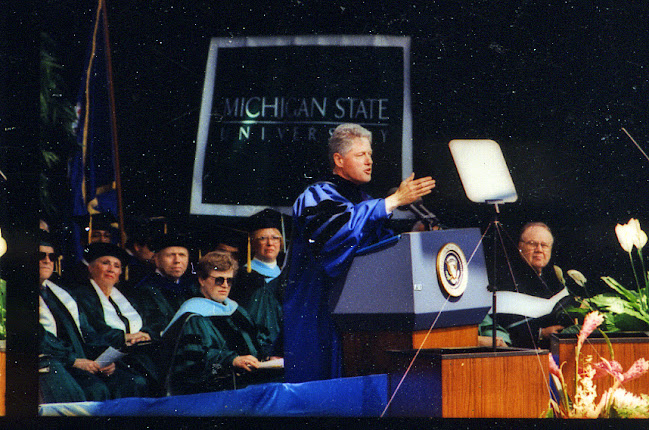
The question of patriotism and issues such as the First and Second Amendment were addressed head-on in the aftermath of the Oklahoma City bombing when then-President Bill Clinton gave a memorable commencement address at Michigan State University, May 5, 1995, in East Lansing. (McVeigh’s accomplice, Terry Nichols, was associated with the Michigan Militia.) Toobin excerpts a big chunk of Clinton's speech, and it’s worth reading in its entirety for its thoughtful and nuanced message.

Here is the part of that speech that Toobin included in “Homegrown.” Clinton offers comments not only to the graduates, but also to right-wing militia members:

“I want to say this to the militias … I am well aware that most of you have never violated the law of the land. I welcome the comments that some of you have made recently condemning the bombing in Oklahoma City. I believe you have every right, indeed you have the responsibility, to question our government when you disagree with its policies. And I will do everything in my power to protect your right to do so. But I also know there have been lawbreakers among those who espouse your philosophy. I know from painful personal experience as a governor of a state who lived through the coldblooded killing of a young sheriff and a young African American state trooper who were friends of mine by people who espoused the view that the government was the biggest problem in America and that people had a right to take violence into their own hands.

“So I say this to the militias and all others who believe that the greatest threat to freedom comes from the government instead of from those who would take away our freedom: If you say violence is an acceptable way to make change, you are wrong. If you say that government is in a conspiracy to take your freedom away, you are just plain wrong. If you treat law enforcement officers who put their lives on the line for your safety every day like some kind of enemy army to be suspected, derided, and if they should enforce the law against you, to be shot, you are wrong. If you appropriate our sacred symbols for paranoid purposes and compare yourselves to colonial militias who fought for the democracy you now rail against, you are wrong. How dare you suggest that we in the freest nation on Earth live in tyranny! How dare you call yourselves patriots and heroes! I say to you, all of you, the members of the Class of 1995, there is nothing patriotic about hating your country or pretending that you can love your country but despise your government.”

Victims' families attend a memorial service as President Clinton gives remarks, April 23, 1995. 
Clinton, who also spoke at the memorial service in Oklahoma City in April 1995, took the opportunity in at Michigan State University to condemn violence by both the Left and Right. He noted, “Freedom of political speech will never justify violence--never. Our Founding Fathers created a system of laws in which reason could prevail over fear. Without respect for this law, there is no freedom.”

Prosecutors in the McVeigh trial used the bomber’s own words against him: how he wanted to start a new revolution in order to protect the Second Amendment, states’ rights, and a white male hierarchy. He hoped to provoke another civil war.


“The McVeigh prosecutors put the ‘civil war’ issue in front of the jury to show how extreme and exotic the defendant’s views were," Toobin writes. "But a quarter century later, McVeigh’s view was close to the conservative movement norm. This view –– about the possibility of civil war –– became mainstream as the passions underlying the January 6 insurrection roiled conservatives during the Biden presidency.”


According to Toobin, “The events of January 6, 2021, saw the full flowering of McVeigh’s legacy in contemporary politics. McVeigh was obsessed with gun rights; he saw the bombing as akin to the revolutionary struggle of the Founding Fathers; and he believed that violence was justified to achieve his goals. So did the rioters on January 6.”


(In Part 2, we examine the Oklahoma City bombing and rise of right-wing extremism through the lens of the U.S. military.)

Sunday, February 12, 2012

Fiery Trial - Lincoln and Slavery

by Bill Doughty
The Fiery Trial: Abraham Lincoln and American Slavery earned Eric Foner the 2011 Pulitzer Prize in History.  His book is a remarkable dissection of a complicated man, issue and time in American history 50 years after the War of 1812, in the heat of the War Between the States.
As much as some people, including Lincoln, himself, wished to separate the issue of slavery as a cause of the Civil War, Foner shows us how aligned and combined they were.  He shows how unresolved issues from 1812 and unfulfilled promises of 1776 continued to broil as the nation expanded.  
Although the book begins with his birth and ends shortly after Lincoln’s assassination, much of the text focuses on the pivotal war year of 1862.  Several significant events for naval historians occurred that year, starting in February.
Eight days after Lincoln’s birthday, on Feb. 20, 1862, his young son Willie died after a long illness.  Lincoln contemplated the meaning of life and his place in history, according to Foner, cementing his desire to place slavery “on the road to extinction.”
That month, Samuel F. DuPont led a naval expedition to capture Port Royal in the Sea Islands, where he witnessed the inhumanity of slavery.  DuPont “accounted himself a conservative until he had seen the institution in all its horrors,” but he now considered himself an abolitionist, Foner writes.
Also in February, Lincoln met with Edmund L. Pierce, who traveled to the Sea Islands.  Lincoln would later take steps to assist former slaves in Port Royal, South Carolina so they could buy farm land at $1.25 per acre.
Foner writes about a key decision Lincoln made 150 years ago:
"In February 1862, ignoring numerous pleas for clemency, including one from the Republican governor of New York, Lincoln refused to intervene to prevent the execution of Captain Nathaniel Gordon, an illicit slave trader whose ship carrying 900 slaves had been captured off the coast of West Africa by a U.S. naval vessel.  A week after Lincoln’s election, a New York jury had convicted Gordon of international slave trading, a crime legally equivalent to piracy and punishable by death.  Gordon became the first and only American to be hanged as a slave trade.”
The Fiery Trial shows how cooperation with the British had grown in the 50 years from the War of 1812 to the American Civil War.  Secretary of State William H. Seward signed a treaty in 1862 allowing the British to board American-flagged vessels and search for slaves.
"Contraband" slaves escaping the Confederacy.
Foner writes about an incident in May 1862, a small Union flotilla sailed up the Stono River in South Carolina and witnessed Confederate troops pursuing a “stampede of slaves” who were trying to flee forced relocation.
"After opening fire on the Confederate forces and dispersing them, the naval commander took more than seventy slaves on board.  He settled them in a safe location near the coast.  That same month, in one of the war’s most celebrated acts of individual daring, Robert Smalls, the slave pilot of the Confederate naval vessel “Planter,” brought on board his wife, child, and a dozen other slaves, guided the ship out of the Charleston harbor and surrendered it to the Union navy."
On July 17, 1862 President Lincoln signed the Militia Act to recruit black soldiers, though black service members had served with George Washington in the Revolutionary War and later at the Battle of New Orleans in the War of 1812.
His Second Confiscation Act, which allowed for confiscation of Confederates’ property, including slaves, was a precursor to the Emancipation Proclamation.  How could a nation committed to the Constitution, democratic principles and liberty tolerate the idea of people as “property”?  Lincoln’s draft order reads: “All persons held as slaves with any state or states shall then, henceforth, and forever, be free.”
Freed slaves in South Carolina 1862.
The Fiery Trial describes the institutional racism of the Dred Scott decision and colonization (a proposal to deport blacks to Central America).  Emancipation, itself, is revealed as being for strategic military advantage, rather than for social or ethical reasons of equality.
Foner shows how our 16th president “grew into greatness” with “a willingness to listen to criticism, to seek out new ideas.”  Through careful research, Foner explains how Lincoln’s antipathy toward slavery deepened as the institution grew, poised to expand westward.
"By the eve of the Civil War, the slave population in the United States had reached nearly four million.  The economic value of these men, women and children were considered as property exceeded the combined worth of all the banks, railroads and factories in the United States.  In geographic extent, population, and the institution’s economic importance, the South was home to the most powerful slave system the modern world has known." 
Lincoln’s conviction evolved from expediency to passion.  “If slavery is not wrong, nothing is wrong,” Lincoln wrote. 
Lincoln considered the views of thinkers and activists, supporters and rivals, like Frederick Douglass, John Stuart Mill, Salmon P. Chase, Susan B. Anthony, Charles Sumner, and many others.  We see the intense pressures and strong statesmanship of Lincoln and his affinity for Thomas Paine, Thomas Jefferson and Henry Clay.  Like Paine, Madison and Jefferson, Lincoln penned some of the greatest passages in American history.  It was President Lincoln who said, “A house divided against itself cannot stand.”  “(Let us) unite as one people throughout this land, until we shall once more stand up declaring that all men are created equal... I leave you, hoping that the lamp of liberty will burn in your bosom until there shall be no doubt that all men are created free and equal.”
(Photos and art, Library of Congress)
At this moment Sailors aboard USS Abraham Lincoln (CVN 72) are promoting those ideals in support of Operation Enduring Freedom.

Sunday, March 10, 2019

Stone Cold Killer: 'One of Us'

Review by Bill Doughty

Former Marine, Army National Guardsman and now Coast Guardsman Hasson w/ weapons cache.
Captured U.S. Coast Guardsman Lt. Christopher Hasson said he was inspired to plan mass murder and mayhem after reading the manifesto of Anders Breivik. Hasson was arrested last month for allegedly plotting mass murder as well as targeted killings of elected officials and members of the U.S. media who had done critical reporting about President Trump.

Hasson is one of the most recent terrorists or would-be terrorists to be inspired by Breivik, a self-declared Norwegian white nationalist who killed or injured hundreds of men, women and especially children nearly eight years ago in the bombing of a government building and shootings at a youth camp on Utoya Island.

Breivik also apparently influenced Newtown shooter Adam Lanza before Lanza shot and killed twenty children and six educators at Sandy Hook Elementary School. We see similarities in the terrorist actions and/or plans of Dylann Roof in Charleston, South Carolina; Robert Bowers in Pittsburgh; and Nikolas Cruz in Parkland, Florida, with some direct ties to white supremacism and anti-semitism.

Who was Breivik, why did he shoot dozens of helpless young people, and how could people choose to follow in his footsteps.

Breivik's life, behavior and crime are thoroughly documented in "One of Us: The Story of Anders Breivik and the Massacre in Norway" by Asne Seierstad (Farrar, Straus and Giroux, 2013).

This is a true crime account of an evil act by an author who is experienced reporting from war zones, especially Iraq and Afghanistan. 

It's nearly inconceivable how Breivik could influence others, especially a career U.S. Coast Guard officer. Reading it may help show how this kind of violent philosophy and hate-filled mindset can take root.

Seierstad's book also presents a history of cultural change in Norway beginning in the 1970s, including the impact and consequences of immigration, rise of women's equality and backlash by right-wing extremists. We get deeply affecting portrayals of the lives of some of the victims and their families.
"I offer heartfelt thanks to those who shared the most," Seierstad writes. "Bayan, Ali, Mustafa and Lara Rashid. Gerd, Viggo and Stian Kristiansen. Tone, Gunnar and Havard Saebo. And Viljar Hanssen and his family. They have told me about the worst thing of all: losing someone they loved."
Remembering the victims of Utoya shooting.
At the center of the story, of course, is the killer Breivik. We learn of his bullying, ostracism, cruelty to animals, lack of parental discipline and the effects of being virtually abandoned and then disowned by his father.

Seierstad documents Anders Breivik's "career" as a graffiti tagger (under the moniker of Marvel Comics's executioner, the Morg). She reveals details about his quasi-legal and failed business providing fake diplomas, his debt to financial institutions and tax evasion, and his obsession with violent video games such as "World of Warcraft."

Anders Behring Breivik, in uniforms, from his manifesto.
In WoW, he was "awarded the title of Justitiarius. It was a title that took a long time and a lot of killing to achieve." In the real world he became obsessed with guns, uniforms and how he was perceived by others.

He was inducted into the Freemasons, and he considered himself a Christian "crusader" against Muslims and Marxists. He believed Christianity should be taught in school.

Breivik he saw the news media as enemies of the people. In Breivik's words, "The media dehumanizes the conservatives. They've been doing that ever since the Second World War: continuous abuse of the cultural conservatives," Breivik said.

From his addiction to violent video games, he fell into the world of "white pride, world wide" supremacy and right-wing extremism. He was anti-political-correctness, anti-feminism, anti-immigration and anti-socialism. For Breivik, it was "us against them."

Breivik said he was inspired by Timothy McVeigh, the Oklahoma City bomber, who deployed a fertilizer bomb to kill 168 men, women and children in 1995.

Petty Officer Timothy McVeigh?

According to "American Terrorist," Timothy McVeigh, who served in the U.S. Army, nearly joined the Navy to become "one of us." He impressed recruiters, as reported in "American Terrorist: Timothy McVeigh & the Oklahoma CIty Bombing" by Lou Michel and Dan Herbeck (HarperCollins, 2001):  
"In May 1988, McVeigh decided to join the military ... On the math exam in business school, he missed only one question on the military vocational aptitude test that recruiters use to screen walk-in candidates. Recruiters from the Navy, Air Force, Marines and Army all showed interest in him. With that kind of test score, the Navy man told him, he could become a nuclear-propulsion specialist, working on a nuclear submarine or a carrier. That offer interested him, but McVeigh chose the Army."
McVeigh
Coast Guardsman Hasson previously served in the U.S. Marine Corps and on active duty in the Army National Guard.

So, is there a legitimate concern that members of the military, including veterans like McVeigh and Hasson, are prone to kill civilians and conduct mass murder because of their military training? Are we right to be concerned there are other many white nationalists or "crusaders" in uniform committed to bringing about civil war or armageddon?

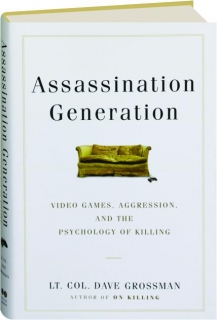
Not according to Lt. Col. Grossman, author of "Assassination Generation: Video Games, Aggression, and the Psychology of Killing" (Hachette Book Group; Little, Brown and Company, 2016). Grossman, a former West Point psychology professor, references the Norway killings and speaks directly about Army veteran Timothy McVeigh's military experience and its relevance to his heinous crime:

Grossman says, "The retiring veteran is less likely to use his skills inappropriately than a member of the same age and sex."
"Bureau of Justice Statistics' data demonstrating that our returning veterans from World War I, World War II, Korea, Vietnam, and the Gulf War were less likely to be incarcerated than nonveterans ... The same is true of our veterans of the wars in Iraq and Afghanistan. These soldiers put the leadership, logistics and maintenance skills they learned in the military to good use in the civilian world, and they give up their deadlier skills as soon as they return home."
According to Grossman, "The finest killers who ever walked the face of this earth were the soldiers who came home from these major wars, and yet they were less likely to use those skills than nonveterans. The reason is clear: combined with learning to kill, they acquired a warrior discipline – and that is the safeguard in a soldier's life."

Breivik taunts with his white power salute.
Breivik never served in Norway's military. He obtained an exemption.

Modern history shows: Those who are quick to send men and women to war have never been there, while combat veterans cooperate to defend peace.

It's worth studying how Coast Guardsman Hasson could apparently lose his core values and turn from protector of peace to projector of hate and violence.

Asne Seierstad, shows us how a person without honor can become enthralled with a belief system that dehumanizes others and promotes killing.

"One of Us" starts at a pace exceeding the speed limit and barely slows down. We get the heartbreaking perspective of the victims. The violence is told in excruciating forensic detail.

"For me," Seierstad writes, "it was important to describe for posterity exactly how that day was."

Deliver Us from Evil

In "One of Us" there is room for beautiful prose, too, as Seierstad paints a scene at the remote farm in Osterdalen where Breivik processed ingredients for his fertilizer bomb and prepared weapons for the attack in the summer of 2011.
"Below the farm, the cold waters of the Glomma rushed onward. The river had a powerful force to it, swollen by the meltwater it was carrying down from the mountains. Wherever you were on the farm, you could hear it roar. When he took over the place at the start of May there were still a few chunks of ice sailing by, having broken off from the ice fields north of Glombrua. The spring flood usually lasted far into June. It would be July before the river calmed. Then it grew idle and drowsy, scarcely bothering to flow at all in the summer heat.But it was still a long time until July."
Gloma River, Norway

Also, in the midst of the horror of Breivik's killing we get this unexpected and beautiful "found" haiku – a verse from an unnamed bedtime story. The words came to a young victim as she was about to be shot by Breivik.

Our dear little moon
shines down on those who have no
bed and have no home

Stoltenberg
Another unintended haiku is from Norway Prime Minister Jens Stoltenberg, who called for more democracy, freedom and national unity in the aftermath of unrepentant Breivik's attack:

Evil can kill a
human being but never
conquer a people

On many levels, "One of Us" reveals the power of books and words.

Lessons Considered

Some of the themes explored in this book: the effects of World War II on Europe and Asia; the impact of al-Qaida, both to immigrants and nationalists; the cost of family separations to the psyche of children; the impact of the media; and the connection between extreme violence in video games and real life. We read and wonder how Breivik's strange and suspicious behavior leading up to July 22, 2011 wasn't reported to authorities.

Journalist/writer Seierstad
Seierstad shows the failures by officials in the minutes and hours after Breivik's attacks began – errors in communicating, responding and conducting command-and-control in an emergency. In part, the poor response contributed to the huge number of casualties that day: 77 killed and at least 209 wounded.

Breivik believed white Europeans were victims, threatened by socialist/Marxist immigrants. He comes across as a narcissist who confounded psychiatrists and psychologists at his trial, where "flattery was the style he adopted," according to Seierstad.

Stone-cold killer Breivik, who referred to himself as "Commander of the Norwegian anti-Communist Resistance Movement," demanded martyrdom in the hope he would inspire others.

Sunday, April 23, 2017

Accelerating Change: How to Survive and Thrive

Review by Bill Doughty

The Navy operates in an age of acceleration in a "post-post-Cold War" era. Scientists show we're moving headlong from the Holocene into the Anthropocene, where human population growth, globalization, climate change, and loss or biodiversity are forcing change at exponential speed, and where the United States, China and Russia continue to compete for influence and resources. Meanwhile, Islamist extremists like ISIS coalesce and threaten thanks to social networking and cell phone technology.

That's some of the scene Thomas L. Friedman sets in his latest, "Thank You for Being Late: An Optimist's Guide to Thriving in the Age of Accelerations" (Farrar, Straus and Giroux, 2016). Friedman is author of "From Beirut to Jerusalem," "The World Is Flat," "Hot, Flat, and Crowded," and "That Used to Be Us."
Globalization affects the interconnected economies of the world. Carbon (now above 400 ppm) causes changes in the atmosphere and biosphere. And Moore's law explains how technology grows exponentially. Combined, these forces bring us to either a precipice or a new beginning – a chance for the United States and the world to "reimagine how we stabilize geopolitics," according to Friedman.
Three-time Pulitzer Prize winning journalist/author Thomas Friedman speaks to a packed auditorium
 in Ingersoll Hall, Naval Postgraduate School, June 24, 2016. (Photo by Michael Ehrlich)
"It's important to remember that America is such an important player on the world stage that even small shifts in how we project power can have decisive impacts. And it's this combination of shrinking American power in one part of the world plus the reshaping of the world more broadly by the accelerations in the Market, Mother Nature, and Moore's law that defines the era we are in today, which I call the post-post-Cold War world. It is a world characterized by some very old and some very new forms of geopolitical competition all swirling together at the same time. That is, the traditional great-power competition, primarily among the United States, Russia, and China, is back again (if it really went away) as strong as ever, with the three major powers again jockeying over spheres of influence, along golden-oldie fault lines such as the NATO-Russia frontier or the South China Sea. This competition is propelled by history, geography, and the traditional imperatives of great-power geopolitics, and is reinforced today by the rise of nationalism in Russia and China. It's contours will be determined by the balance of power between these three big nation-states."
As evidence of exponential acceleration of change, Friedman presents the work of Will Steffen published in Anthropocene Review, March 2, 2015, that concludes, "We are now in a no-analogue world." The danger is in how we've (1) breached, (2) almost breached or (3) are about to breach "nine key planetary boundaries": climate change, biodiversity, deforestation, geochemical flows, ocean acidification, freshwater use, atmospheric aerosol loading, introduction of novel entities, and stratospheric ozone layer.


The latter boundary – ensuring the ozone layer is appropriately thick enough to reduce the threat of harmful UV radiation – is a success story and a sign of hope, according to Friedman. "After scientists discovered an ever-widening ozone hole caused by man-made chemicals – chlorofluorocarbons – the world got together and implemented the Montreal Protocol in 1989, banning CFCs, and, as a result, the ozone layer remains safely inside its planetary boundary of losses not greater than 5 percent from preindustrial levels."


Both Mother Nature and humankind can innovate and be highly adaptive, Friedman contends. Nature evolves through natural selection. Humans have the capability to learn, control and adapt their behavior if they have the knowledge, wisdom and will.

In growing acceleration within societies, we see examples of rapid changes. Typewriters are antiques (to be collected by Tom Hanks). Cassette players are now used as a quaint plot devices in movies like "Guardians of the Galaxy." The Confederate Flag came down in South Carolina after the shooting in Charleston in 2015. In recent years the U.S. military changed its attitude about lesbians, gays, bisexuals, and transgender people and their rights to equality. The future will reward resiliency and entrepreneurial adaptability.

Those who will survive and thrive during and after the great acceleration are those who embrace innovation, science and education, based on a bedrock of truth and trust, says Friedman. The future belongs to lifelong learners willing to constantly better themselves and unwilling to accept the average or mediocre.
"We have to make our newfound power of one, the power of machines, the power of many, and the power of flows our friends – and our tools to create abundance within the planetary boundaries – not just our enemies. But organizing ourselves to use them that way will require a level of will, of stewardship, and of collective action the likes of which we have never seen humanity display as a whole. Every day there are new breakthroughs in solar energy, wind power, batteries, and energy efficiency that hold out the hope that we can have clean energy at a scale and price that billions can afford – provided we have the will to put a price on carbon so these technologies can rapidly scale and move down the cost-volume curve. As environmentalists have often noted, we have been great at rising to the occasion after big geopolitical upheavals – after Hitler invaded his neighbors, after Pearl Harbor, after 9/11. But this is the first time in human history that we have to act on a threat we have collectively made to ourselves, to act on it at scale, to act before the full consequences are felt, and to act on behalf of a generation that has not yet been born – and to do it before all the planetary boundaries have been breached."
While Friedman is optimistic, he's also realistic. Rapid acceleration and globalization is a double-edged sword.
"Globalization has always been everything and its opposite – it can be incredibly democratizing and it can concentrate incredible power in giant multinationals; it can be incredibly particularizing – the smallest voices can now be heard everywhere – and incredibly homogenizing, with big brands now able to swamp everything anywhere. It can be incredibly empowering, as small companies and individuals can start global companies overnight, with global customers, suppliers, and collaborators, and it can be incredibly disempowering – big forces can come out of nowhere and crush your business when you never even thought they were in your business. Which way it tips depends on the values and tolls that we bring to these flows."
Recent headlines and scandals about online misbehavior show the challenge to leaders in the accelerating world Friedman describes.
"It turns out that social networks, cheap cell phones, and messaging apps are really good at both enabling and impeding collective action. They enable people to get connected horizontally much more easily and efficiently but they also enable individuals at the bottom to pull down those at the top more easily and efficiently – whether they are allies or enemies. Military strategists will tell you that the network is the most empowered organizational form in this period of technological change; classical hierarchies do not optimize in the flat world, but the network does. Networks undermine command-and-control systems – no matter who is on top – while strengthening the voices of whoever is on the bottom to talk back. Social media is good for collective sharing, but not always so great for collective building; good for collective destruction, but maybe not so good for collective construction; fantastic for generating a flash mob, but not so good at generating a flash consensus on a party platform or a constitution."
A U.S. Navy EA-6B Prowler refuels in Operation Inherent Resolve mission March 20, 2017,
an extended fight against ISIS. (Photo by Senior Airman Joshua A. Hoskins)
Speaking of double-edged swords and "collective destruction"... Misplaced values in the name of what some call a deranged interpretation of Islam and the Koran is at the heart of radical extremists like Daesh/ISIS/ISIL and similar groups that form a "diffuse movement," one that can best be defeated by other Muslims standing up to the death cults, Friedman shows. Till then, the rise of the terrorists has created a "new balance of power."
"During the Cold War, if you wanted to assess the global balance of power you would likely look at the annual survey "The Military Balance," published by the London-based International institute for Strategic Studies, and self-described as the most 'trusted military data on 171 countries: size of armed forces, defense budgets, equipment.' That book would tell you the relative strengths of their armies, navies, and air forces (their hard power), and their 'soft power': the relative strengths of their economies, their societal appeal, and the degree of entrepreneurship in their culture. And if you added up all those numbers, you would have a rough measure of the balance of power between different nation-states. Not anymore. Assessing today's balance of power requires a much wider lens."
Trees grow tall in suburbs in Minnesota, anchoring Friedman's optimism.
Getting to that wider lens requires us to not act like the proverbial frog being slowly boiled and lulled into unconsciousness (put a frog in boiling water and it jumps out; put it in cool water and gradually raise the temperature, and the frog might not act till it's too late). "We are hardwired to consider nature limitless because for so many years nature seemed so limitless – and we were so relatively few and so relatively light a force upon it; how could it be that we cannot devour as much as we want." 

Friedman tells a great story about his encounter with a parking lot attendant (and blogger) at the beginning of "Thank You for Being Late." Throughout the  book he enlightens us with topics as diverse as in Syria, artificial intelligence, Madagascar, Hadoop, generative design, and Brandi Carlile, among dozens of others.

He concludes this book with a personal and heartfelt story about his "anchoring" roots, symbolized in the trees he remembers in his hometown of St. Louis Park, Minnesota.
"Those trees and I had both grown up and out from the same topsoil, and the most important personal, political, and philosophical lesson I took from the journey that is this book is that the more the world demands that we branch out, the more we each need to be anchored in a topsoil of trust that is the foundation of all healthy communities. We must be enriched by that topsoil, and we must enrich it in turn."
During a recent visit to Joint Base Pearl Harbor-Hickam, geobiologist and author Hope Jaren ("Lab Girl") invited us to think about how plants – seeds, roots, trees, etc. – are depicted and reflected in books. Of course that came to mind in reading the last few pages of Friedman's latest must-read. Highly recommended.

For more on how the Navy must operate in a rapidly accelerating world, branch out and read the CNO's "Design for Maritime Superiority."