Showing posts sorted by relevance for query grandfather. Sort by date Show all posts

Saturday, June 20, 2009

Father’s Day Perspective

By Bill Doughty

My grandfather fought in “The Great War,” World War I – the one that was supposed to end all wars... He fought for Germany, and had a jagged scar from a French bayonet that went through his arm, shrapnel in his neck and scars on various other parts of his body.

He remembered the horrors of the trenches – the gas, the terror, the gangrene and the rats. A quiet, creative and spiritual man who before and after the war made a living as a chef in Europe and in the States, my grandfather was also physically very strong and powerful.
He and my grandmother escaped Germany after the war, just as the German economy imploded but, thankfully, before the Third Reich’s talons clawed out of the ashes.
So that they could start a family in the United States, free and safe, my grandparents had to say goodbye to their loved ones in Germany. In most cases it was a forever goodbye.
I was about 10 when my grandfather and I looked at his old black-and-white coffee-table-sized book about WWI. Now, you can find similar types of books, but with better photography, printed on better paper. They’re easy to find in the bargain section at Borders or Barnes and Noble, but in 1964 there were no such mega book franchises, and books were more valued and valuable, or so it seems.
Like today, in 1964 war raged in remote areas of the world, including in a place whose name we were all learning: Vietnam. It was the year the Beatles and the Ford Mustang made their debut in the U.S., plans were announced to build the New York World Trade Center, and Dr. Martin Luther King, Jr. was awarded the Nobel Peace prize.
But, this post isn’t about war and peace, per se, or about that big old picture book, or even about my beloved grandfather.
It’s about perspective.
In a way, it’s about our understanding of history, too.
I was born in 1954, the year the Supreme Court ruled in Brown v. Board of Education that segregation of schools was unconstitutional. It was also the year Tolkien published two of his Rings books, William Golding published Lord of the Flies, and Hemingway won the Nobel Prize for Literature.
If I subtract my current age, 55, from the year I was born, we go back to 1899, the 19th Century! It was the year the Spanish-American War ended (our Senate ratified the Paris Peace Treaty by only one vote on Feb. 6, 1899), the Philippine-American War, also known as the Philippine Insurrection, started and Ernest Hemingway was born. Old Man and the... See?
Back another 55 years – 1844, the year the first telegram was sent, James Polk defeated Henry Clay and the Mexican-American War, though not officially proclaimed, was in full effect. One year later, 1845, the U.S. Naval Academy would be established, the U.S. would annex Texas and Frederick Douglass would ignite the anti-slavery abolitionist movement with his writings, fueled a few years later with the publication of Harriet Beecher Stowe’s Uncle Tom’s Cabin, a book Abraham Lincoln said helped start the Civil War.
Go back one more chunk of 55 years, and it’s 1789, the year of our first presidential election, in which George Washington was elected to the first of his two terms and John Adams became the first vice president – just 13 years after Thomas Paine’s Common Sense and the signing of the Declaration of Independence.
The point is not that I’m old (that’s besides the point)... Getting older gives you perspective.
So, now I imagine the perspective my grandfather had, his understanding of the world and history and the love he had for his adopted country. Like most American families, we enjoy our gifts of freedom because of generations who sacrificed so much.
It’s intriguing to consider some of the great thinkers in literature and science, using my own lifespan so far of (only) 55 years as a yardstick. Those authors’ voices don’t seem so far away. They seem more relevant and alive than ever.
Think how many advances there have been since 1789, 1844, 1899, 1954 – not just in technology but also in our understanding of the mysteries of the universe and the mind. These mysteries can sometimes be revealed in books, now with an even greater diversity of voices from which to learn.
As a nation we are still riding the wave of the Enlightenment and its direct effect: the beginning of the United States of America.
What will we say about 2009? Who can even imagine our world in 2064, 55 years from now?
Will we learn the lessons of the past? Or, as we read from Santayana and Huxley, are we condemned to repeat our history?
I wonder what my late grandfather would say. He and my grandmother certainly applied the lessons of history and, in doing so, provided a better world for their descendants.
Happy Father’s Day, Pop-pop.
Coming soon, an updated review of David McCullough’s 1776.

Friday, October 24, 2014

Vietnam, Suicide and Choosing Life

Review by Bill Doughty

My preteen grandkids know who Thomas Edison is. Their grandkids will know, in the same way, about J. Craig Venter.

Venter is a Navy Vietnam Veteran who faced challenges in life, made mistakes in and out of uniform, turned his life around, and eventually became one of the foremost experts in genetics. He mapped the human genome, created synthetic life in this century and is now working on ways to support life on Mars.
I read a passage to my grandsons from a chapter in Venter's autobiography, "A Life Decoded - My Genome: My Life" called "University of Death." The boys were fascinated by his capture of a deadly poisonous snake while Venter swam in the warm waters off China Beach. Two species of poisonous snakes in the South China Sea, Venter says, "travel in large herds measuring miles long and up to a half-mile wide."

Venter, a former Navy Corpsman who spent a lot of his off time swimming in the sea, felt the snake bump into his leg and reached down to grab it, fortunately getting it near the head and not the flattened tail:
"I knew I could not let go. Its jaws were wide open, and it was trying to bite. Sea snakes are strong swimmers, and it was all I could do to hang on. Swimming with one arm while being tumbled by ten to twelve-foot waves and holding on to a writhing snake is not something I would recommend. Finally I was able to stand and started to run but was knocked down by a wave once more. Stumbling breathlessly toward the beach I saw some driftwood and used it to hit the snake on the head until it stopped moving. A friend took a photo of me holding my trophy, recording one of those crossroads in life that, with the wrong luck, could easily have led to death. I did not want to forget what had just happened. I took my knife, skinned my attacker, and back at the hospital, pinned it with hypodermic needles to a board to dry in the sun. I still have the snake skin hanging in my office as a reminder of the encounter."
Venter, who says he always felt a need to race – bicycles, boats, people – and take chances, describes his childhood and early adulthood in "A Life Decoded" through a deep understanding of the mind and effects of the Y chromosome, now that he's literally in touch with his genes.

I didn't read to the grandkids about his suicide attempt (which also involved the sea) or the time his girlfriend's dad held a gun to his head or some of his other risk-taking behaviors.

A turning point came from an English teacher in high school who introduced him to "The Catcher in the Rye" by J.D. Salinger, but Venter admits to being a lousy student overall. A major turning point came in the mid-60s when he was drafted.
"I was very conflicted. I was personally against the war but had a long family history of military service. One ancestor was a fifer and medic during the Revolutionary War. My great-great-great-grandfather served in the cavalry during the War of 1812. My great-grandfather was a sharpshooter in the Confederate Army during the Civil War. My grandfather was a private in World War I, serving in France, where he was badly wounded and had to crawl for miles to safety. And, of course, both my parents had been Marines."  (Venter's parents were in the Marine Corps in World War II, serving on "different shores of the Pacific." They met at Camp Pendleton, California.)
Venter, front row, fourth from left, on his high school swim team.
Venter chose the Navy rather than be drafted into the Army. He hoped to be named to the Navy Swim Team, but those hopes were dashed when President Johnson amped up American involvement in Vietnam and Venter got his orders.

As a skilled corpsman he faced war and devastation in Da Nang, caring for injured Marines, civilians, enemy soldiers and other casualties of the war in a Quonset hut intensive ward. He helped at an orphanage, and he provided triage during the TET offensive of 1968.

"Vietnam would teach me more than I ever wanted to know about the fragility of life," he writes. "Death is a powerful teacher." No doubt the snake skin reminds him of overcoming fear, facing death, choosing to live and dealing with snakes along the way.

Venter is lauded by Clinton in 2000.
In "A Life Decoded" Venter lays bare the science, politics, setbacks and glorious achievements in his life and the various human egos he encounters as a scientist. He tracks in detail his race to understand the building blocks of life and his pursuit of the human genome. But the narrative returns to the biggest turning point and moment of insight: Vietnam.

After Venter mapped the human genome, he was invited to the White House June 26, 2000 by President Bill Clinton. Clinton compared the human genome map to the Thomas Jefferson-commissioned map by the Lewis and Clark expedition that "forever expanded the frontiers of our continent and our imagination." Clinton called Venter's and others' work "the most important, most wondrous map ever produced by humankind."

"Decoded" includes Venter's remarks from that day, as well as the deep emotion he felt as his watershed discovery was explained to the world.
"... in Vietnam I learned firsthand how tenuous our hold on life can be. That experience inspired my interest in learning how the trillions of cells in our bodies interact to create and sustain life. When I witnessed firsthand that some men lived through devastating trauma to their bodies, while others died after giving up from seemingly small wounds, I realized that the human spirit was at least as important as our physiology. We're clearly much, much more than the sum total of each of us. Our physiology is based on complex and seemingly infinite interactions among all our genes and the environment, just as our civilization is based on all the interactions among all of us. One of the wonderful discoveries that my colleagues and I have made while decoding the DNA of over two dozen species, from viruses to bacteria to plants to insects, and now human beings, is that we're all connected to the commonality of the genetic code in evolution. When life is reduced to its very essence, we find that we have many genes in common with every species on Earth and that we're not so different from one another."
Venter transcended and redeemed himself after his near-death experiences. "Life was my gift," he writes. He chose to understand life at the most fundamental levels. Today, he chooses to make a profound difference to help others. "We're all connected." A good lesson for everyone's grandkids.

(This is part I of essentially a two-and-a-half-part series of posts related to the life and work of Dr. Venter, the Thomas Edison of our time.)

Sunday, August 6, 2017

Fighting Fundamentalism, Fanaticism and Tyranny

Reviews by Bill Doughty


Adm. John Sylvester "Slew" McCain.
One hundred years ago, in August 1917, Lt. John S. "Slew" McCain (grandfather of Sen. John S. McCain) served aboard USS San Diego (Armored Cruiser No. 6). 

The USS San Diego joined the Atlantic Fleet to perform vital escort duties, protecting American ships from German attack in the First World War.

Out of the ashes of World War I, nationalism and Nazism arose in Germany. Tyranny grew and spread in Imperial Japan, leading to World War II. 

Sen. McCain's grandfather, Adm. John S. "Slew" McCain took a stand as Pacific Carrier Commander, alongside other heroes like Nimitz, Spruance, King, Mitscher and Halsey, to fight fundamentalism, tyranny and fanaticism nearly 75 years ago.

Three books explore those three concepts – fundamentalism, tyranny and fanaticism. One book also asks the question, "Can it happen here?"

From "A Little History of Religion" by Richard Holloway (Yale University Press, 2016):
"Fundamentalism is a tantrum. It's a screaming fit, a refusal to accept new realities" such as equality for women, gays and people of other races. "But if scientific change and the new knowledge it brings is hard for the fundamentalist mind to accept, even harder is change in the way we run society. In our era, religious fundamentalism became more agitated by social change than by the pressures of science. And in some of its forms not only did it get angry. It got violent."
Radical extremist fundamentalists such as ISIS claim their interpretation of reality is factual, even if it is not verified by a critical objective review of the facts.
"Fundamentalists don't debate. They don't try the evidence. They deliver a sentence. And it's always 'guilty' because their holy book has already decided the issue. This means that the crisis of fundamentalism in our time, including its violent versions, poses a question that goes to the heart of religions that claim to be based on a revelation that came directly from God. Surely, if it is used to justify not only the love of ignorance but the love of violence then there is something fundamentally wrong with it, to borrow their own language."
A contemporary of Adm. John S. McCain in both world wars, Sir Winston Churchill, believed that leaders must first and foremost have strong principles and then rely on objective facts upon which to base decisions.

The first targets of fascists and tyrants are reason, truth and free speech.

In Brian E. Fogarty's "Fascism: Why Not Here?" (Potomac Books, 2009) we see how authoritarianism arose in Germany in the 1930s, during the same years that Sen. McCain's grandfather was studying air warfare, on his way to earning his wings (at the age of 52) and becoming commander of USS Ranger (CV-4).

Fogarty defines fascism as "totalitarianism that enlists citizens against themselves."

Benjamin Franklin warned centuries earlier, "Those who would give up essential liberty, to purchase a little temporary safety, deserve neither liberty nor safety."


Sir Winston Churchill speaks at Harvard, Sept. 6, 1943.
On Sept. 6, 1943, speaking at Harvard University, Winston Churchill said, "Tyranny is our foe, whatever trappings or disguise it wears, whatever language it speaks, be it external or internal, we must forever be on our guard, ever mobilized, ever vigilant, always ready to spring at its throat. In all this, we march together."

At the same time, in the late summer of 1943, Vice Adm. "Slew" McCain was the new Deputy Chief of Naval Operations (Air), about to head back to Pearl Harbor to take command of "huge task forces, spearheaded by carrier-based aircraft" against Imperial Japan.

Fogarty, like Holloway, spotlights the importance of objective facts and reason. He notes how in the 1930s the Nazis sponsored public book burnings, abolished the free press and dissent, and began to ostracize Jews and other non-Aryans as members of the public went along.


Brian Fogarty
"More than anything else, the rise of Nazism was fueled by the negation of reason as a basis for government and for social and political discourse," Fogarty writes.

"Without universal or at least agreed-upon standards of knowledge, the truth of a statement comes to depend on the speaker's identity, persuasiveness or charisma." That can lead to blindly following, as happened in Nazi Germany and Imperial Japan in the early part of the last century.

"People commit evil, or acquiesce as others do it in their name, when it is sanctioned and legitimated by the community in which they belong." He warns us to beware of a "vortex of fear that drown(s) out debate and reason."

So, "why not here?" or put another way in the book's final chapter, "Can It Happen Here?" Fogarty answers with "fundamental ambiguity":
"On the one hand, Americans have a history since the nation's beginning of fierce individualism and of resistance to authority. The national mythology is replete with challenges to every social institution – state, family, church, school – and Americans tell and retell the stories of dissidents and rebels. One of the abiding national myths is the revolution against the English mother country – the most powerful empire of its day – which gave birth to the nation itself. And viewed from this perspective, we have been a nation of rebels ever since, from the Shays and Whiskey rebellions, to slave revolts and the Underground Railroad, to the abolition movement and John Brown's insurrection, and to the Civil War itself. More recent social and cultural movements have also challenged popular convention if not the authority of the state ... It is true that Americans have not hesitated to defy authority when they found it necessary, but they also have been astonishingly conformist and willing to acquiesce in their own oppression when faced with uncertainty and threats. Even the most revered acts of resistance to authority – women's suffrage, civil rights, (the counterculture movement of the Vietnam era, gay pride), and many other movements – usually brought negative reactions from fellow citizens who viewed the causes as un-American, immoral, sinful, or just weird."
Germany and Japan suffered greatly after the worldwide depression. Both had a chip-on-their-shoulder nationalist attitude as victims who wanted to participate in global imperialism. That's why most of their citizenry supported race-based fascism leading to the Second World War.

As an immigrant nation, however, the United States may not be as susceptible. Here, "racism has been more divisive than unifying," for most Americans. Diversity may be our biggest strength in being able to resist fundamentalism, tyranny and fascism.

Fogarty writes, "American society includes too many ethnic and racial groups to form a credible 'them' from which 'we' can protect ourselves." But he says, we may not have faced a major enough threat to our security, and we may, when really tested, have the propensity collectively to choose safety over liberty.

"Our history demonstrates that Americans have the capacity to react to adversity in a general director toward fascism," he concludes.

"On Tyranny: Twenty Lessons from the Twentieth Century" by Timothy Snyder (Tim Duggan Books, Penguin Random House, 2017) explores how leaders embrace fundamentalism, reject facts and rely on arguments of victimization:
"Both fascism and communism were responses to globalization: to the real and perceived inequalities it created, and the apparent helplessness of the democracies in addressing them. Fascists rejected reason in the name of will, denying objective truth in favor of a glorious myth articulated by leaders who declined to give voice to the people. They put a face on globalization, arguing that is complex challenges were the result of a conspiracy against the nation. Fascists ruled for a decade or two [Hitler and his ilk], leaving behind an intact intellectual legacy that grows more relevant by the day. Communists ruled for longer, for nearly seven decades in the Soviet Union, and more than four decades in much of eastern Europe [and to this day in North Korea]. They proposed rule by a disciplined party elite with a monopoly on reason that would guide society toward a certain future according to supposedly fixed laws of history."
As a champion for freedom and democracy – and an intense study of history – Churchill stood strong against Hitler. He was a lynchpin in opposing tyranny and fascism. "Had Churchill not kept Britain in the war in 1940, there would have been no such war to fight."

The late Christopher Hitchens warned of tyrants who are unpredictable and who don't believe in facts. 

Reading is inoculation to protect us from fascism and tyranny. Otherwise we're at risk of a society as painted by Ray Bradbury in "Fahrenheit 451" and George Orwell in "1984."

Bradbury's "firefighters" were authoritarian book burners. In "1984" Orwell describes not only the pollution of ideals and objective facts but also the dissolution of meaning and disappearance of words.

In his "The Principles of Newspeak" appendix to "1984," Orwell writes: "Quite apart from the suppression of definitely heretical words, reduction of vocabulary was regarded as an end in itself, and no word that could be dispensed with was allowed to survive. Newspeak was designed not to extend but to diminish the range of thought, and this purpose was indirectly assisted by cutting the choice of words to a minimum."

Among Snyder's recommended list of books and authors packed into this slim collection of how-to advice:
  • "The Brothers Karamazov" by Fyodor Dostoevsky
  • "The Unbearable Lightness of Being" by Milan Kundera
  • "It Can't Happen Here" by Sinclair Lewis
  • "The Plot Against America" by Philip Roth
  • "Harry Potter and the Deathly Hallows" by J. K. Rowling
  • "Politics and the English Language" by George Orwell
  • "The Language of the Third Reich" by Victor Klemperer
  • "The Origins of Totalitarianism" by Hannah Arendt
  • "The Rebel" by Albert Camus
  • "The Captive Mind" by Czeslaw Milsosz
  • "The Power of the Powerless" by Vaclav Haval
  • "Nothing is True and Everything is Possible" by Peter Pomerantsev
Timothy Snyder
Snyder asks us to examine the difference between nationalism and patriotism.
"A nationalist encourages us to be our worst, and then tells us that we are the best. A nationalist, 'although endlessly brooding on power, victory, defeat, revenge,' wrote Orwell, tends to be 'uninterested in what happens in the real world.' Nationalism is relativist, since the only truth is the resentment we feel when we contemplate others."
Chapter 10 is called "Believe in truth": "To abandon facts is to abandon freedom. If nothing is true, then no one can criticize power, because there is no basis upon which to do so. If nothing is true, then all is spectacle. The biggest wallet pays for the most blinding lights."


Three generations of John S. McCains.
Chapter 10 is titled "Be a patriot": "Set a good example of what America means for the generations to come. They will need it."

Adm. John S. "Slew" McCain demonstrated his patriotism fighting for his country in both World Wars, eventually standing aboard USS Missouri (BB-63) for the surrender of Imperial Japan. Militarists in Japan were purveyors of a spreading nationalism and fascist tyranny in Asia in the 1930s and 40s.

Adm. McCain's son was another four-star flag officer, Adm. John S. "Jack" McCain Jr., a submariner who also fought in WWII. Jack McCain also fought during the Cold War and, of course, during the Vietnam War, where his son, Lt. Cmdr. John S. McCain III, the future senior senator of Arizona, was imprisoned as a POW for five-and-half years.

The McCains' story is one of service and sacrifice. Adm. "Slew" McCain, who saw so many naval aviators go to their deaths, died four days after Japan's surrender. Adm. Jack McCain had to carry out President Nixon's orders to bomb Hanoi, where he knew his son was a POW. Sen. John McCain has been serving his country throughout his life.

The legacy of another WWII naval hero, President John F. Kennedy, recognized Sen. McCain's patriotism. Sen. John McCain received the JFK Profile in Courage award from the Kennedy family for his commitment toward campaign finance reform. In his acceptance speech of May 24, 1999, McCain said: 


JFK's brother, Sen. Ted Kennedy, and daughter, Caroline, present Sen. McCain the courage award. 
"Most Americans believe that we all conspire to hold on to every political advantage we have, lest we jeopardize our incumbency by a single lost vote. Most Americans believe we would let this nation pay any price, bear any burden to ensure the success of our personal ambitions – no matter how injurious the effect might be to the national interest. And who can blame them. As long as the wealthiest Americans and the richest organized interests can make six figure donations to political parties and gain the special access to power such generosity confers on the donor, most Americans will dismiss the most virtuous politician’s claim of patriotism ... In John Kennedy’s memorable phrase, 'without belittling the courage with which men have died, we should not forget the courage with which men have lived.' I’ve seen more than my fair share of both kinds. And I could not forget them if I wanted to." – Sen. John S. McCain.

According to Fogarty in "Fascism: Why Not Here," again from 2009, citing the work of Nancy Bermeo, "The mutual demonization of opposing parties locks up the machinery of government":
"The single best predictor of success for fascist movements is political polarization ... Such movements tend to be antidemocratic because they blame the democratic process itself as the cause of the gridlock. When parties have become so polarized that all anyone – voters included – can think of is vanquishing opponents, then a sort of political disillusionment sets in, and political principles give way to an empty contentiousness. A second useful generalization about the rise of such movements is that they tend to occur when existing democratic regimes are incompetent. Government is not just a theater for ideological or political drama; it is also an essential institution to human life. People get hurt when it doesn't work ... These two generalizations offer a warning to Americans: beware those who seek always to discredit government, to blame it for the nation's ills, and to alienate citizens from its workings ... Their game is to alienate citizens from their government, to trivialize the vote, and to make the democratic process look ineffective and foolish. The best way to prevent fascism is to avoid alienation, to resist extreme polarization, and to remain connected to the political process."
Looking toward the future back in 2009, in the face of crises, when the Great Recession and Iraq and Afghanistan wars were deepening, Fogarty asked, "How will Americans react ... Will we still value our individualism and love of liberty? Or will we find a leader with a bold plan that requires new conquests, new enemies, or a new world order. Will Americans reject the cool rationalism of the Obama presidency and rush to a bold outsider with a simple explanation and audacious plans?"


CAM RANH, Vietnam (June 2, 2017) Sen. John S. McCain III is piped aboard during a visit to the Arleigh Burke-class guided-missile destroyer USS John S. McCain (DDG 56) in Cam Ranh, Vietnam. The U.S. Navy has patrolled the Indo-Asia-Pacific routinely for more than 70 years promoting regional peace and security. (U.S. Navy photo by Mass Communication Specialist 3rd Class Joshua Mortensen/Released)

Monday, July 11, 2022

Washington’s Navy, Privateering & ’Rebels at Sea’

Review by Bill Doughty––

George Washington wasn’t just “father of our country.” He was also father of our Navy, according to “Rebels at Sea: Privateering in the American Revolution” by Eric Jay Dolin (W.W. Norton, 2022).

Washington first dismissed the idea of deploying a seagoing force, especially to face the great Royal Navy. But during a stalemate on land and after listening to advice from his officers, he saw a need for American vessels to capture munitions and other supplies from British ships. So Washington armed and commissioned the schooner Hannah and soon followed up with orders for two more vessels. His ships were not privately operated since sailors were paid from his army’s funds.


While there was a question whether he had authority from Congress, nevertheless Washington moved forward, according to Dolin. “On September 7 (1775), the Hannah set sail. Washington had launched his own navy.” His minuscule naval force joined hundreds of “privateers” operating outside of government control along the Atlantic Coast and beyond.


Early in “Rebels at Sea,” Dolin tells the story of the Machias Affair in Maine/Massachusetts, in which colonists clashed with British autocracy over trade, authoritarian rule, and even voting rights!


The Machias Affair, called by James Fenimore Cooper the “Lexington of the Sea,” was “a clarion signal that Massachusetts men and, more broadly, Americans were ready and able to fight at sea.”

“Privateers were armed vessels owned and outfitted by private individuals who had government permission to capture enemy ships in times of war. That permission came in the form of a letter of marque, a formal legal document issued by the government that gave the bearer the right to seize vessels belonging to belligerent nations and to claim those vessels and their cargoes, or prizes, as spoils of war. The proceeds from the auction of these prizes were in turn split between the men who crewed the privateers and the owners of the ship. Typically, governments used privateers to amplify their power on the seas, most notably when their navies were not large enough to effectively wage war. More specifically, by attacking the enemy’s maritime commerce and, when possible, its naval forces, privateers could inflict significant economic and military pain at no expense to the government that commissioned them. Privateers were like a cost-free navy. One late nineteenth-century historian dubbed them ‘the militia of the sea.’”

There’s no question the maritime militia and other sea fighters made a difference.

“By early 1776, the upstart Americans had made considerable progress in taking the fight to sea. Between state navies, Washington’s navy, privateers from the individual colonies, and the nascent Continental navy, the colonies were demonstrating their maritime creativity and potency. But one major feature of their maritime strategy was conspicuous in its absence: privateers commissioned by Congress.”

And as Britain cracked down further on the Colonies, it only made the Americans’ resolve stronger.


The British Parliament drove the Colonies to codifying privateering when Britain passed the Prohibitory Act in February 1776. Also known as the Act of Independency, Parliament’s act cut off trade, permitted British ships to seize colonial vessels, and allowed American sailors to be impressed –– kidnapped, conscripted, and forced into serving in the Royal Navy.

Within weeks, Congress was ready to order authorization and letters of marque to privateers. It did so April 3, 1776. Privateering, therefore, pushed the Colonies more in the direction of independency. “It was another tear in the gossamer fabric holding the colonies and Britain together,” Dolin writes.

“Congress had no alternative but to provide for the defense and security by authorizing the colonies to fit out privateers to cruise against the enemy,” Dolin writes. He provides a number of surprising anecdotes about people, unknown and well-known, who were involved in privateering.


We learn about black patriot James Forten, whose great-grandfather was brought to the Colonies as a slave and whose grandfather obtained freedom. Forten was one of only a few black families in Philadelphia, where some historians argue the U.S. Navy was born. (A drive to the Philadelphia airport today and a glance toward the East shows the evidence of Philadelphia as a big Navy port.)


Forten served aboard the 450-ton Pennsylvania privateer Royal Louis captained by Stephen Decatur Sr., father of Steven Decatur Jr., hero in the first Barbary War at the turn of the century and later in the War of 1812. Forten went on to become a successful business leader in Philadelphia as the city’s leading sailmaker, according to Dolin.


This book is packed with photos, vignettes, and colorful characters. Thomas Paine, author of the earthshaking “Common Sense,” had a near-death brush with privateering. For a short time Paine was a crew member of the Terrible, a British privateer captained by William Death. Great names.


Check out these names of the privateer ships mentioned in this book: Rattlesnake, Hibernia, Tyrannicide, Black Sloven, Active, Thorn, Revenge, Enterprize, Eaglet, Impromptu, and Grand Turk; sweet names like Betsey, Nancy, Diana, Patty, and Sally, and inspiring names like General Washington, Marquis de Lafayettes, Liberty, Union, Hope, Yankee Hero, Retaliation, and Independence.


Hundreds of privateers and their captains and crews risked a great deal to fight for liberty. “When the United States was only a tenuous idea, they stepped forward and risked their lives to help make it a reality,” Dolin says.


Portrait of John Barry by Gilbert Stuart, circa 1801. (White House, NHHC)
“For many young men, joining a privateer represented an opportunity for adventure and fortune and also, perhaps, a chance to escape stultifying manual labor.” Privateering proved a training ground for the new United States Navy. Consider the names of some crew members, backers, and captains of privateers: John Barry, Thomas Truxton, Silas Talbot, Henry Knox, David Porter (father of Commodore David Porter, of the War of 1812, and grandfather of Adm. David Dixon Porter, hero of the Civil War.)

In 1781, the Privateer Pilgrim captured the Duke of Gloucester with an impressive science library aboard. The great mathematician Nathaniel Bowditch then gained access to the resources to write “The New American Practical Navigator” (1802), known to sailors as “the Bowditch,” a landmark work explaining accurate nautical and navigational information for mariners.


Some powerful leaders backed the concept of privateers. They included John Adams, Thomas Jefferson, Benjamin Franklin (for a time), and, notoriously Benedict Arnold, who helped the British spearhead “the deadliest raid of all,” targeting American patriots at New London.


Some privateers became intertwined with the slave trade. Dolin calls it the “greatest blemish” of privateering.


HMS Jersey, used as a prison ship during the Revolutionary War. Painting by R.B. Skerrett from drawing by one of the prisoners held in captivity there. (NHHC)
Americans captured by the British for privateering usually found themselves in fetid and septic prison ships. Dolin calls the use of the floating prisons, especially the Jersey, “one of the most horrific and shameful chapters in the history of the Revolution.” Dolin's account of the foul and disgusting depravity in the prison ships rivals that of many historians’ descriptions of POW camps. Jersey, nicknamed “Hell Afloat,” held up to 1,200 prisoners, many of whom were mariners who'd served aboard privateers.

Eric Jay Dolin
Privateering, Dolin says, was not the same as piracy since it was federally endorsed. Nevertheless, opposition to the practice grew. “Part of the reason privateering was scorned was that many believed the practice undermined the republican ideals of the Revolution, which called for the sacrifice of private interests in the pursuit of liberty.”

Benjamin Franklin, who supported privateering early on, did an about-face after he saw rampant greed and lawlessness. Another strong opponent was William Whipple Jr., a “fervent patriot devote to the republican ideals of the Revolution, signer of the Declaration, and hero of the Battle of Saratoga.”


Whipple called privateering “the most baneful to society of any that ever a civilized people were engaged in.” Dolin writes about Whipple: “His main concern was that privateers were draining the Continental Navy of men, because so many chose privateering over naval service for financial reasons.”


Navy hero John Paul Jones agreed.


There was much less effectiveness in individual states’ navies or privateers compared with he power of a United naval force. Resources, including sailors, needed to be directed to the Continental Navy, according to Jones, Whipple, and others; the fledgling American navy struggled to survive, some frigates never making it to sea.


Dolin writes: “The American Revolution was the Navy’s first hour, but not its finest.”

“The Continental navy’s record in battle is not an enviable one. Twenty-eight vessels were captured or destroyed, and many others were out at sea, sold, returned to France, or burned to keep them from being taken but he enemy (as in the Penobscot Expedition). Only seven of the original thirteen frigates authorized by Congress actually made it to sea, and one of those survived long enough to witness the victory at Yorktown in 1781, a year in which the entire naval fleet was comprised of only nine vessels, with a total of 164 cannons. The Navy’s only truly large ship, the 74-gun America, took six years to build, and by the time it was ready to sail, in November 1782, the war was essentially over. Instead of fighting for the American cause, America was given to the French as gift. At war’s end just a few navy ships were left. These were sold, and the navy disbanded.”

Carving of Franklin at U.S. Naval Academy, circa early 1900s. (NHHC)
The (non-Navy) privateers, as the “militia of the sea,” were similar to the colonial concept of a non-Army armed citizenry: “A well regulated Militia, being necessary to the security of a free State…” per the Second Amendment. Whipple, Jones, and Franklin saw privateering as more harmful that good. Franklin called it an “abomination.”

Eventually, the new nation would evolve to see the need for unity in the maritime domain. This was especially true as platforms, armaments, logistics, strategies, training, and capabilities modernized.


But in the War of 1812 the Navy was still “puny,” in Dolin’s words. “Just a handful of frigates, sloops, and gunboats.”


So President Jefferson returned to privateering.


“Despite Jefferson’s dream of a privately waged war on the seas,” Dolin writes, “the U.S. Navy, small though it was, had some notable and heroic engagements that burnished its reputation, contributed much to America’s success, and won the respect of the British.”


Privateers proved successful again in those days of wooden boats, but their days were numbered.


Model of privateer Rattlesnake.Scale: 3/16”=1’, built by Raymond W. Stone of the Washington Ship Model Society. (NHHC)

A generation later, the concept of privateering became part of a seditious conspiracy as the Confederacy embraced the strategy. The Confederates’ attempts at privateering were ill-fated, however, as the United States Navy and Union itself in Washington, D.C., grew stronger. Washington's navy became Washington's Navy.


Individual states’ navies were not as strong as the centralized U.S. Navy. Dolin closes his book with this bottom line: “America now has the most powerful navy in the world.”


This review barely scrapes the surface of a book that puts the reader on blood-stained wooden decks, running with the wind, cutlass in hand. Accessible history. Highly recommended.


“Rebels at Sea” dedication: “To librarians everywhere who, through hard work and dedication, support writers, researchers, learners, and book lovers alike. This writer couldn’t have done it without you.”


Adm. James Stavridis (ret.) offers wholehearted endorsement: “Yet another maritime masterpiece by one of the top historians of the oceans! Rebels at Sea is a brilliant exposition of a little-understood and under-appreciated part of the American Revolution underway. Like his earlier works, it is full of fresh thinking and sharply observed anecdotes that both inform and delight. Eric Jay Dolin's books deserve a prominent place on every sailor's bookshelf.” Stavridis is author of "The Sailor's Bookshelf: Fifty Books to Know the Sea," reviewed earlier this year on Navy Reads.

Wednesday, May 31, 2023

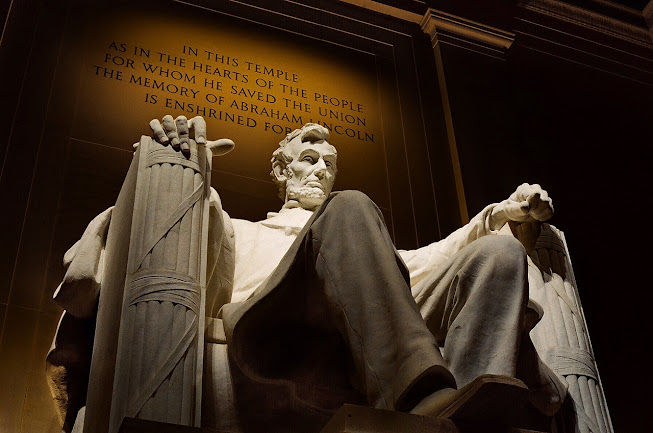
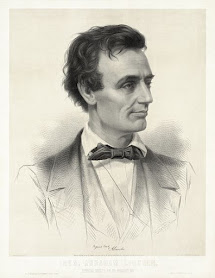
Abraham Lincoln & January 6th

Review by Bill Doughty––

This “found haiku” comes from Abraham Lincoln’s Lyceum Address in Springfield, Illinois on January 27, 1838:

Reason must furnish

all the materials for

our future support


The speech is quoted in one of the four forewords in the massive “The January 6th Report: Findings from the Select Committee to Investigate the January 6th Attack on the United States Capitol” (December 2022, U.S. Government Publishing Office).


In fact, Lincoln appears on the very first page of the report.

Representative Adam Schiff, author and finisher of the J6 Report, recounts how Lincoln –– then a state legislator in Illinois –– addressed young men about a rebellious time of mob violence, including lynchings, general crimes, and disregard for the rule of law. Lincoln chose to speak about "The Perpetuation of Our Political Institutions.”

In Schiff’s words, Lincoln spoke about internal threats “not the threat of foreign invasion, even though the War of 1812 was only two decades past. It was the danger from within that a young Lincoln identified as our gravest threat.”


Lincoln is also quoted in the second foreword to the book by former Speaker of the House Nancy Pelosi: “Let us always honor our oath to, as Abraham Lincoln said, ‘nobly save or meanly lose, the last best hope of earth.’ So help us God.”


In the third foreword to the book, chairman of the committee Rep. Bernie Thompson says he was advised to remove his lapel pin so he wouldn’t be identified and targeted by attackers who threatened to kill legislators and the vice president. He chose not to remove his pin and thereby showed support for the defenders of the Capitol and against the attackers.


“We can never surrender to democracy’s enemies,” Thompson writes. “We can never allow America to be defined by forces of division and hatred. We can never go backward in the progress we have made through the sacrifice and dedication of true patriots. We can never and will never relent in our pursuit of a more perfect union, with liberty and justice for all Americans.”


Former Representative Liz Cheney, vice chair of the committee, opens the report’s fourth and final foreword with a story about Abraham Lincoln issuing the first call for volunteers for the Union Army in April 1861 and how her great-great grandfather, Samuel Fletcher Cheney signed up for the 21st Ohio Volunteer Infantry.

Cheney, a Republican like Lincoln, writes: “I have found myself thinking often, especially since January 6th, of my great-great grandfather, and all those in every generation who have sacrificed so much for (quoting OVI’s regimental historian Silas Canfield) “the unity of our Nation and the perpetuity of our institutions.”


Cheney says, “At the heart of our republic is the guarantee of the peaceful transfer of power.”


Cheney notes how General George Washington resigned his commission and handed control of the Continental Army back to Congress. (When Washington’s term as president ended, he rejected calls by some to remain in office as dictator.)

This bipartisan report features a comprehensive Executive Summary that encapsulates the main thrust of the investigation and its findings in the report. Within the summary is a list of witnesses, nearly five dozen of whom are registered Republicans. Only one witness, the Secretary of State of Michigan, is identified as a Democrat.


Most of the report, itself, is a “Narrative” in 8 chapters that explores: the Big Lie of a stolen election, the scheme of fake electors, the plan to block certification of the election by the vice president, the invitation of then-President Trump to come to D.C. and march to the Capitol to “fight like hell,” an examination of the role of far right extremists in the insurrection, and “187 minutes of dereliction” in which the commander in chief chose not to call off the rioters nor order DOD to send the national guard to defend the Senate and House of Representatives.

The long “narrative” is excellent writing: True historical storytelling in the tradition of David McCullough; careful citing of facts and sources in the vein of Craig Symonds; and drama and suspense –– especially during the actual lead-up and breaching of the Capitol –– in the style of Tom Clancy. As with the Executive Summary, there are extensive endnotes throughout.


Military readers will be interested in reading two of the appendices: Government Agency Preparation for and Response to January 6th, and DC National Guard Preparation for and Response to January 6th.


The report cites what one witness called “decision paralysis” and “decision avoidance.” Army leaders were “sensitive to the sight of troops near the site of the congressional certification of electoral votes.” The report examines “fears of politicizing the military in an anti-democratic manner” in the wake of the heavy handed National Guard confrontation with protesters in the summer of 2020, which included low-flying military helicopters. The Guard was deployed and used chemical agents to clear Lafayette Square for Trump’s photo-op holding up a Bible at St. John’s Church.


While the report has been criticized by some progressives for not examining the motivation and role of Christian Nationalism specifically, the report does mention QAnon Shaman Jacob “Angeli” Chansley’s leading of a “conspiracy-laden prayer session” at the Senate dais after shouting “Mike Pence is a f—ing traitor” at the spot where Pence had been presiding. Chansley left a note that read: “It’s only a matter of time. Justice is coming.”


The committee thoroughly investigated the actions of other QAnon conspiracy believers and white nationalists. Chapter 6, “Be There, Will Be Wild,” examines extremist militia groups such as The Proud Boys, The Oath Keepers, and The Three Percenters.”

More than 1,000 rioters have been indicted since the insurrection. Many remain in jail and many more have been stained with a criminal record. While some have had their lives ruined, others, like Chansley, who has already been released from prison, are cashing in on their fame and hardening their support with the far right. Some key leaders and planners of the attack are facing much longer prison terms.


Since publication of The January 6th Report, the most serious convictions have occurred among military veterans who in many ways led the attack. On May 4, five members of the Proud Boys were convicted of various charges, including four members convicted of seditious conspiracy.


Last week, on May 25, the Department of Justice announced: “Elmer Stewart Rhodes III, the founder and leader of the Oath Keepers, and Kelly Meggs, the leader of the Florida chapter of the organization, were sentenced today for seditious conspiracy and other charges related to the breach of the U.S. Capitol on Jan. 6, 2021.”

Rhodes, an Army veteran from Texas, was sentenced to 18 years in prison, “the longest sentence, to date, related to the January 6 attack on the Capitol.” Fellow militia leader Meggs received a sentence of 12 years. “This is the first time a court has found that a defendant’s conduct related to the January 6 attack was tantamount to terrorism warranting an upward departure under the sentencing guidelines,” according to DOJ.


“Today’s sentences reflect the grave threat the actions of these defendants posed to our democratic institutions,” said Attorney General Merrick B. Garland. “The United States proved at trial that the Oath Keepers plotted for months to violently disrupt the peaceful transfer of power from one administration to the next. The Justice Department will continue to do everything in our power to hold accountable those criminally responsible for the January 6th attack on our democracy.” 


It’s becoming clear that there is a litmus test for who will be elected as the next President and commander in chief of the military next year: Voters will choose between those who believe in accountability for those who stormed the Capitol and those who promise pardons for the seditionists and rioters such as the Proud Boys and Oath Keepers.


Rep. Adam Schiff
The “Oath Keepers” name seems Orwellian when one considers the actual oath all military service members take to support and defend the Constitution –– and a similar oath civilian leaders take to support the Constitution –– the foundational document that outlines the peaceful transfer of power.

Representative Schiff said this about the Constitution and the oath:

“Even the most brilliant Constitution cannot protect us if the people sworn to uphold it do not give meaning to their oath of office, if that oath is not informed by ideas of right and wrong, and if people are unwilling to accept the basic truth of things. None of it will be enough.

But if we allow ourselves to be guided by facts –– not faction –– if we choose our representatives based on their allegiance to the law and the Constitution, then we should have every confidence that our proud legacy of self-government will go on.”

That’s the accountability, respect for truth and justice, and faith in the rule of law Lincoln spoke about in the Lyceum Address, “The Perpetuation of Our Political Institutions.”


Lincoln believed in an informed electorate, honest leaders, and support for the Constitution and rule of law, which he called “the political religion of our nation.”


with other pillars,

hewn from the solid quarry

of sober reason


Pillars of logic and reason found in the Constitution support our democracy.


There's more “found haiku” from Abe Lincoln and others on Navy Reads.