Showing posts sorted by relevance for query locksley. Sort by date Show all posts

Monday, February 19, 2018

A Great President Gleams

Review by Bill Doughty

USS Harry S. Truman (CVN 75)
Presidents Day is, of course, held in honor primarily of Washington and Lincoln, among our greatest presidents and commanders in chief. This holiday is also an opportunity to reflect on another great American who once occupied the office of the presidency: Harry S. Truman.

Truman is namesake of the nuclear-powered aircraft carrier USS Harry S. Truman (CVN 75).

As with many other of our nation's great leaders like Jefferson, John Quincy Adams, Teddy Roosevelt, and JFK, Truman was a dedicated reader of books. As we explore the life of HST, it's apparent that his famed "common sense," came from an uncommon love of learning and discovery.

President Truman reads a book on the "Truman balcony" of White House. First Lady Bess Truman is seated at far right, partly obscured. (Truman Library)
Truman is featured in a compelling book about the integration of the military, called "The Double V" by Rawn James, Jr.  (A review on Navy Reads is forthcoming and, once posted, will precede this blogpost.)

James tells us of Truman's love of the works of the poet Alfred, Lord Tennyson, including "Gleam," which he and his friends chose as the title of their high school yearbook. "On the cover of the inaugural issue, framed by a student's artwork, were Tennyson's words":
Not of the sunlight, Not of the moonlight, Not of the starlight, O, young Mariner, Down to the haven, Call your companions, Launch your vessel, And crowd your canvas, And, ere it vanishes, Over the margin, After it, follow it, Follow the Gleam.
We can't help but read these words and think of the Navy, which – along with the other military services – Truman helped integrate. 

Tennyson also figures in the massive biography, "Truman" by David McCullough (Simon & Schuster, 1992).

McCullough reveals that HST kept a neatly folded copy of "Locksley Hall" in his wallet. 

This is the excerpt of that poem chosen by McCullough, foreshadowing the future of civil and military aviation as well as the United Nations, but remarkably written in 1835 and published several years later:

For I dipt into the future, far as human eye could see,
Saw the Vision of the world, and all the wonder that would be;

Saw the heavens fill with commerce, argosies of magic sails,
Pilots of the purple twilight dropping down with costly bales;

Heard the heavens fill with shouting, and there rain'd a ghastly dew
From the nations' airy navies grappling in the central blue;

Far along the world-wide whisper of the south-wind rushing warm,
With the standards of the peoples plunging thro' the thunder-storm;

Till the war-drum throbb'd no longer, and the battle-flags were furl'd
In the Parliament of man, the Federation of the world.

There the common sense of most shall hold a fretful realm in awe,
And the kindly earth shall slumber, lapt in universal law.

Alfred, Lord Tennyson
Truman brought up Tennyson in his remarks at a dinner for members of Congress sponsored by the Civil Air Patrol, May 14, 1952. He read from "Locksley Hall," noting how he'd carried the poem with him for 30 years and pointing out how Tennyson seemed to predict modern aviation and even a nuclear age:
"Now, that was written in 1842 by Alfred Tennyson. That is a prophecy of the age in which we live now. And we are faced with a much greater age than the one that Tennyson dreamed about. If we will just keep our feet on the ground and our heads level, I am sure that this discovery of the way to break the atom will bring not only fantastic things for us to use, but it will be used for peaceful purposes – just as all the other destructive articles that have been invented have been used for that purpose."
Truman, who would one day have an aircraft carrier named after him said, in those remarks:
"We are making a great deal of progress in the science of aviation now. In fact, I think we are at the door of the greatest age in history in everything. If we can prevent a third world war-and I have been trying 7 years to prevent that third world war, and I hope we will be successful at it – the young people today, I think, will see a fantastic age, an age that our fathers and grandfathers dreamed about, but never thought would happen."
McCullough reveals Truman's love for Plutarch, Shakespeare and Mark Twain ("patron saint of literature"). He also read Dickens and Sir Walter Scott, and he immersed himself in history and biographies. McCullough describes the Truman home:
"At home in the small, simply furnished apartment on Connecticut, Truman's corner of the living room included a chintz-covered armchair, a reading lamp, his phonograph, and his record collection. In a small, free-standing bookshelf within arm's reach was a leatherbound set of Plutarch's 'Lives,' a two-volume 'Andrew Jackson' by Marquis James, all four volumes of Freeman's '(Robert E.) Lee,' the Bible, 'Stories of the Great Operas,' a biography of John Nance Garner, and 'Don Quixote.'"
Truman reads while on vacation in Florida, circa 1947.
Beside his chair is "The Lincoln Reader" by Carl Sandburg.
McCullough writes, "Margaret could not recall her father sitting down quietly at home without a book in his hand."

At more than 1,000 pages, McCullough's masterful biography provides a complete look at the 33rd president in our nation's history. (Truman considered himself the 32nd president, since Grover Cleveland had two nonconcurrent terms.)

We see Truman embrace the best of the values of his upbringing and shed the worst, including the racism of his place and time – growing up in Missouri of the early 20th century. We learn about his heroism as an Army captain in World War I. We experience his failure in business (but his repayment of his debts) and his success in politics and as an elected leader who advocated for a strong military while rooting out corruption and waste.

Truman died Dec. 26, 1972. "He was remembered in print and over the air waves, in the halls of Congress and in large parts of the world, as a figure of courage and principle." He "followed the Gleam."

McCullough concludes:
"That he would later be held accountable by some critics for the treacheries and overbearing influence of the CIA, as well as for the Vietnam War, was understandable but unjustified. He never intended the CIA to become what it did. His decisions concerning Vietnam by no means predetermined all that followed under later, very different presidents.His insistence that the war in Korea be kept in bounds, kept from becoming a nuclear nightmare, would figure more and more clearly as time passed as one of his outstanding achievements. And rarely had a president surrounded himself with such able, admirable men as Stimson, Byrnes, Marshall, Forrestal, Leahy, Acheson, Lovett, Eisenhower, Bradly, Clifford, Lilienthal, Harriman, Bohlen, and Kennan – as time would also confirm. It was as distinguished a group as ever served the country, and importantly, he had supported them as they supported him.Born in the Gilded age, the age of steam and gingerbread Gothic, Truman had lived to see a time of lost certainties and rocket trips to the moon. The arc of his life spanned more change in the world than in any prior period in history. A man of nineteenth-century background, he had had to face many of the most difficult decisions of the unimaginably different twentieth century. A son of rural, inland America, raised only a generation removed from the frontier and imbued with the old Jeffersonian ideal of a rural democracy, he had had to assume command of the most powerful industrial nation on earth at the very moment when that power, in combination with stunning advances in science and technology, had become an unparalleled force in the world. The responsibilities he bore were like those of no other president before him, and he more than met the test.Ambitious by nature, he was never torn by ambition, never tried to appear as something he was not. He stood for common sense, common decency. He spoke the common tongue. As much as any president since Lincoln, he brought to the highest office the language and values of the common American people. He held to the old guidelines: work hard, do your best, speak the truth, assume no airs, trust in God, have no fear. Yet he was not and had never been a simple, ordinary man. The homely attributes, the Missouri wit, the warmth of his friendship, the genuineness of Harry Truman, however appealing, were outweighed by the larger qualities that made him a figure of world stature, both a great and good man, and a great president.'Watch the President,' Admiral King had whispered to Lord Moran at Potsdam. 'This is all new to him, but he can take it. He is a more typical American than Roosevelt, and he will do a good job...'He was the kind of president the founding fathers had in mind for the country. He came directly from the people. He was America."
Truman personified the lines in Tennyson's "Locksley Hall" that the common sense of ordinary citizens and universal humanity – found in books – would ultimately "hold a fretful realm in awe."

President Harry S. Truman eats lunch with members of the crew of the USS Augusta (CA 31) July 12, 1945. Seated with him are: Albert Rice, Seaman First Class, Independence, Missouri and Elmo Buck, Pharmacist's Mate Second Class, Marceline, Missouri. (United States Navy and Harry S. Truman Library & Museum)

Monday, April 19, 2021

Earth Day & ‘Ten Lessons for a Post-Pandemic World’

Review by Bill Doughty

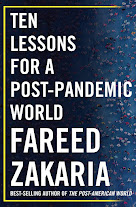
Fareed Zakaria takes a global look at the past to predict the future in “Ten Lessons for a Post-Pandemic World" (W.W. Norton & Company, 2020). In fact, Zakaria takes an out-of-this-world look at the impact of disease, pollution, and climate change on human survival:

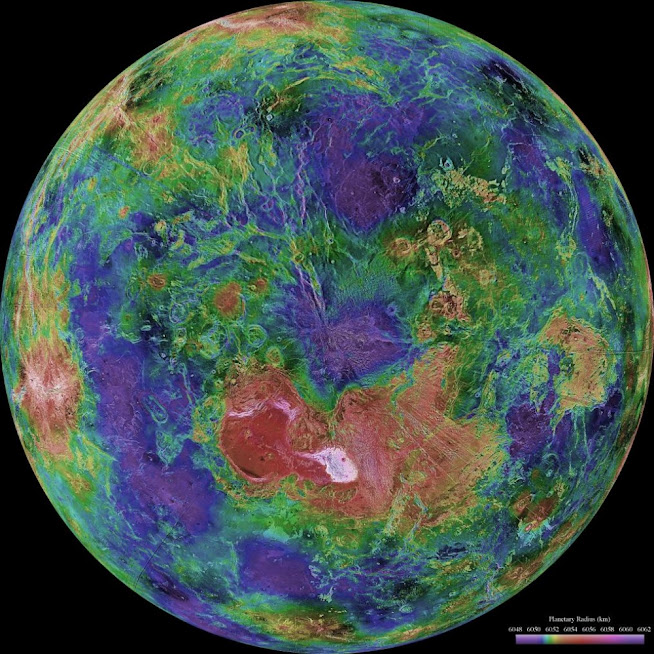
“Climate scientists who warn of the dangers of our current path are unconsciously mirroring Nobel laureate Joshua Lederberg’s warnings to us about viruses, back in 1989. Like him, they are urging us to assume that nature is a benign force that has any particular interest in the survival of life on this earth. The climate doesn’t care about us; it is simply an accumulation of chemical reactions that could easily get out of control and destroy the planet and all who live on it. Millions of other planets in other celestial systems may have suffered the same fate. In our own solar neighborhood, NASA’s recent computer modeling suggests that Venus (above) might have been habitable for around 2 billion years, after which a ‘runaway greenhouse gas effect’ led to the scorched and sterile conditions on the Venus of today. We can mitigate the forces that are pushing the earth in a similar direction. If that is not a sound reason for cooperation, then we will not find another.”

Non-cooperation within and between nations can be life-threatening.


Cooperation, on the other hand, can be lifesaving. That’s a chief lesson of the COVID-19 pandemic: telling the truth, marshaling resources, and cooperating together can reduce the number of cases and prevent deaths.


“If people cooperate, they will achieve better outcomes and more durable solutions than they could acting alone,” Zakaria writes, in what sounds a lot like Adm. Mike Mullen’s ‘A Cooperative Strategy for 21st Century Seapower’ from 2007. Zakaria continues, “If nations can avoid war, their people will lead longer, richer, and more secure lives. If they become intertwined economically, everyone ends up better off.” Updated versions of the U.S. Maritime Strategy continue to note the interconnectedness of nations sharing the same oceans.

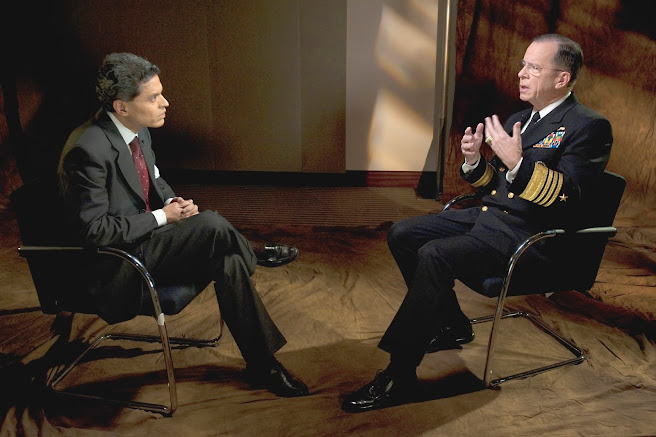
Zakaria interviews then-Chairman of the Joint Chiefs of Staff Adm. Mike Mullen in 2010. They discussed, among other topics, a drawdown of troops in Afghanistan.

Such idealism is not blindfolded. With China’s saber-rattling toward Hong Kong and Taiwan, as well as it’s maritime claims in the South China Sea, the world may be on the verge of another Cold War. Yet Zakaria writes, “Tensions between the United States and China are inevitable. Conflict is not.”

Zakariah shows how a “deeply interconnected” world can prevent wars despite “a real-life butterfly effect,” in which a fluttering butterfly’s –– or bat’s –– wing can supposedly influence the wind and eventually weather patterns on the other side of the world.

“There is a paradoxical feature of pandemics: even though they have come to be named for specific locations, they are decidedly not contained by borders. This has been true for centuries, since the Silk Road caravans and merchant galleys of the medieval world, and especially over the past 150 years since the age of steamships and trains. There was the ‘Russian flu’ of 1889-90, the ‘Spanish flu’ of 1918-19, the ‘Asian flu’ of 1957-58, the ‘Hong Kong flu’ of 1968-69, the ‘Middle East Respiratory Syndrome’ (MERS) of 2012, and now the ‘Wuhan virus’ of 2019-21. By revealing obsession with foreign labels, these names –– even when incorrect as to the origin of the virus –– betray the diseases’ much wider reach. The urge to view a pathogen as coming from abroad is strong, but of course, those diseases have rarely been known by those monikers in the places they’re named for. In Spain, the ‘Spanish flu’ was just the flu.”

Naturally, Zakaria –– a voracious reader –– cites numerous authors and books: William Maxwell’s “They Came Like Swallows,” Katherine Anne Porter’s “Pale Horse, Pale Rider,” Thomas Friedman’s “The Lexus and the Olive Tree,” Francis Fukuyama’s “Political Order and Political Decay,” and Michael Lewis’s “The Fifth Risk,” for example.

Other writers and thinkers he cites include Shakespeare, Clausewitz, Ian McEwan, Yuval Noah Harari, and Doris Kearns Goodwin.


Zakaria quotes Apple CEO Tim Cook, who, like Henry J. Kaiser in the past century, believes that his company’s “greatest contribution to mankind … will be about health.” (Kaiser, who helped shape history in the American West and in World War II, is featured in the most recent Navy Reads post earlier this month.)


It’s in his evaluation of history that Zakaria makes his most insightful conclusions about the importance of international cooperation in the wake of the pandemic –– and toward continued world peace.

“Franklin Roosevelt was assistant secretary of the navy in Woodrow Wilson’s administration and a great admirer of Wilson’s vision of a world ‘made safe for democracy’ He watched that idealism collapse in the years after World War I, leading to an even wider war during his own presidency. But the lesson FDR drew from Wilson’s experiences was to try international cooperation again, this time with America at the center of the new system –– and this time giving the great powers stronger practical incentives to fully commit themselves to the peace. A few months after America entered World War II, when victory was still uncertain and distant, FDR began formulating plans to create international institutions and systems of collective security that made future world wars unlikely. His longtime secretary of state, Cordell Hull, having seen how the trade wars of the 1930s spiraled into hot war, singlemindedly championed a new, international free trade regime. His successors realized this vision in the years after 1945 –– first through the General Agreement on Tariffs and Trade, which evolved into the World Trade Organization.

Roosevelt was known to be an idealist at heart, but his successor, Harry S Truman, had no such reputation. Truman is credited as the hard-nosed realist who dropped the atomic bombs on Hiroshima and Nagasaki, created NATO, worked to contain the Soviet Union, and waged war in Korea. But Truman was also a deeply idealistic man, and he too had drunk from the well of Wilsonian internationalism.”

Truman, when asked why he strongly supported the United Nations, would quote from Alfred Lord Tennyson’s poem Locksley Hall,” a poem which foresaw a world where cooperation reigned and nations formed a federation based on peace, commerce, and “universal law.”


Twice in this book, Zakariah recalls Dwight D. Eisenhower’s visit to the U.S. military cemetery at Colleville-sur-Mer in Normandy (above) on the twentieth anniversary of D-Day. In an interview with Walter Cronkite, Eisenhower, who as president had called for abolishing nuclear weapons worldwide and strengthening the UN, spoke to Cronkite about the 9,000 American bodies buried there: “These people gave us a chance, and they bought time for us, so that we can do better than we have before … So every time I come back to these beaches, or any day when I think about that day 20 years ago now, I say once more we must find some way to work to peace, and really to gain an eternal peace for this world.”


“Ten Lessons” advocates for people listening to experts –– and experts listening to people. One lesson is that “what matters is not the quantity of government but the quality.” Another is about the reality of virtuality: “Life is digital.” Still another is recognizing the rise of ultranationalism and that “the world is becoming bipolar” as well as more unequal.

U.S. Marine Corps Cpl. Larry Hunter, an energy NCO with Headquarters Battalion, Marine Corps Base Hawaii, monitors as a child spins a questionnaire spin wheel during an Earth Day event, Apr. 23, 2019 about the importance of energy conservation, recycling, and protecting the environment. (Sgt. Zachary Orr)


But the most important lesson, one that permeates the whole book, is the importance of the world’s interconnectedness and need for cooperation.


George W. Bush initiated a war on AIDS in Africa. Obama/Biden led the global battle to contain the Ebola virus in Africa. Unfortunately, in early 2020, despite declaring war on COVID-19, the Trump administration failed to acknowledge and confront the threat and provide a centralized plan for testing, tracing, and telling the truth.

“By the middle of 2020, tragically, with the pandemic raging across most of its fifty states –– long after Europe and East Asia contained their outbreaks –– America had no attention for anything or anyone else, except to bash Beijing. The Trump administration is not wrong to critique China’s handing of COVID-19. But coming from such a messenger, the message lands with a thud. A lifelong friend of America, the former Australian prime minister Kevin Rudd wrong in Foreign Affairs of his horror and disappointment over how far America has fallen: ‘Once there was the United States of the Berlin airlift. Now there is the image of the USS Theodore Roosevelt (CVN-71) crippled by the virus, reports of the administration trying to take exclusive control fo the vaccine being developed in Germany, and federal intervention to stop the commercial sale of personal protective equipment to Canada. The world has been turned on its head.’”

At the beginning of March, 2020, only a few people in the United States had died from COVID-19, but the number of cases was beginning to grow exponentially. By the end of April, just after the United States commemorated the 50th anniversary of Earth Day, there were more than 1 million cases in the U.S. and more than 60,000 deaths –– despite messages from President Trump that everything was under control, the virus would go away, people should take Hydroxychloroquine, and we should try injecting bodies with disinfectants (one year ago this week).

A runner pushes through the last 100 meters of a 5K Earth Day Fun Run at Marine Corps Air Ground Combat Center, Twentynine Palms, April 2014. (Cpl. Ali Azimi)

One year later, on Earth Day 2021, there have been nearly 570,000 American deaths. But a coordinated vaccination campaign is working now to reduce cases and fatalities. Unfortunately, the world has suffered 3.1 million deaths due to the novel coronavirus pandemic, and new variants threaten everyone.

“Ten Lessons” presents the stark realities and possibilities ahead; Zakaria warns about the near certainty of another pandemic this century in a connected world. But he also presents an optimistic message about the possibilities ahead if the nations of the world become more educated, more equal, and more committed to cooperation to confront existential threats, including global climate change.


Idealism is not dead. Hope is alive. And the opportunity for lifesaving cooperation is here now despite –– and because of –– the pandemic.