Wednesday, August 4, 2021

Monuments: Human Values or States’ Rights


Review by Bill Doughty

Last summer some of the statues of heroes of the Confederacy were removed from Monument Avenue in Richmond, Virginia. Gone are JEB Stuart and Stonewall Jackson. The removal of Robert E. Lee and his horse, Traveler, seems just a matter of time.


Lee and the horse, like other monuments to the insurrection of the 1860s, will likely travel to a cemetery, museum, or warehouse. How those monuments came to be on display in the first place is revealed in “No Common Ground: Confederate Monuments and the Ongoing Fight for Racial Justice” by Karen L. Cox (University of North Carolina Press, 2021). Cox dedicated her book: “For everyone who speaks truth to power.”

A photo of General Lee and horse –– and a Black Lives Matter projection –– are featured prominently on the cover of “No Common Ground.”


Cox explains why monuments were erected and why some military bases were named (or renamed) for leaders of the Confederacy. She shows how believers and supporters of the “Lost Cause” wanted desperately to hold onto their positions of privilege and power in the face of a changing culture of inclusion, integration, and equal rights.


Above all, United Daughters of the Confederacy (UDC) and white supremacists said they believed in vindication and “states’ rights,” even if those rights included the right to own other people as property.

“Through a broad-based agenda to perpetuate Confederate memory, the Daughters gave inspiration to southern white men intent on dominating black Southerners at every step, and by violence if necessary. Two generations removed from the Civil War, these women saw their efforts as part of an overall program of vindicating the Confederacy and those who sought to preserve it. Their battle to maintain Confederate culture –– by perpetuating pro-southern history, educating white children, and yes, building monuments –– required that the men of their generation be victorious in creating a southern power structure that their forefathers had failed to achieve. And they were. Those men established a political foundation based on white supremacy, disenfranchised black men, compelled entire black communities into submission through racial violence, and wielded states’ rights like a saber to thwart racial progress, while the federal government turned a blind eye and the Supreme Court upheld segregation. While states’ rights for the Confederate generation meant maintaining the racial status quo through laws and customs that gutted African Americans’ rights as citizens, underfunded their schools, re-enslaved them through mass incarceration, and made it nearly impossible for black southerners to break free from systems of inequality that limited where they could live and work.”

Robert E. Lee statue is unveiled in Richmond, Virginia, in summer of 1890.

Monuments to the Confederacy, especially at court houses and state capitols, were polarizing symbols inspiring either continued white supremacy or greater civil rights. 

“To understand their history is to understand how white southerners memorialized men who fought in a war to preserve slavery and created a ‘new’ South that sought to limit the freedom of black southerners whose ancestors were enslaved. Yet at the same time, to fully understand their history is also to understand how generations of black southerners have demonstrated their scorn for monuments they have always believed were symbols of slavery and oppression.”

Forrest
Despite initial institutional racism, the United States military has been on the leading edge of gradual integration and equality throughout American history. In fact, the UDC, KKK, and other white supremacists built more monuments as they witnessed that greater post-war integration in the United States after World War I, World War II, and the Korean War. The building of Lost Cause monuments saw an uptick in the mid-60s during the civil rights movement and the centennial of the Civil War in 1965.

Cox presents some history pertinent to military readers:

  • How the Army renamed Camp Peay in Tennessee, as Camp Nathan Bedford Forrest, the founder of the Ku Klux Klan, Dec. 7, 1940.
  • How Air Force Sgt. James Meredith, an African American, tried to get an education at the University of Mississippi in 1961 but was blocked by a crowd led by retired Air Force Gen. Edwin Walker, a white supremacist, at the pedestal of a Confederate monument.
  • How 21-year-old Sammy Younge Jr., a black U.S. Navy veteran and student at Tuskegee University, was murdered in 1966 and how his white murderer was acquitted by an all-white jury. Protesters gathered at the town’s Confederate monument.
  • How middle-aged WWII veteran James Holley –– Portsmouth, Virginia’s first African American elected to the city council –– fought the UDC to decorate the town’s Confederate monument on Memorial Day with American flags instead of the traditional Confederate flags, “primarily battle flags.”

Marines of Range Company, Weapons and Field Training Battalion, walk through a museum on Fort Sumter during an educational trip Feb. 21, 2014, to Charleston, S.C. The Marines visited Battery Park, the Fort Sumter National Monument and rode a ferry to Fort Sumter itself, which is the site of the first shots of the Civil War. The trip was part of the company’s professional military education program, which helps Marines expand their knowledge outside their primary occupational specialties. The Marines of Range Company train recruits and Marines in marksmanship on Parris Island, S.C. (Photo by Cpl. Octavia Davis)


Cox considers monuments to be weapons of the culture wars, erected ostensibly to teach history but in reality teaching or perpetuating something else.

“Confederate monuments are not innocuous symbols,” she writes. “They are weapons in the larger arsenal of white supremacy, artifacts of Jim Crow not unlike the ‘whites only’ signs that declared black southerners to be second-class citizens. Removing a monument from the public square is no more an act of erasing history than removing those signs from public accommodations.”

The war over secessionist monuments to the Civil War includes marches and battles for voter registration and against gerrymandering as well as fights over flying the Confederate flag or keeping it as part of several southern states. The Lost Cause is losing this war too, with symbols falling and statues being removed. Selma, Alabama became the first city in the nation to remove a Confederate monument and relocate it to a cemetery. New Orleans removed several monuments exactly six months after nine people were murdered at the Emanuel African Methodist Episcopal Church by a white nationalist June 17, 2015.


Karen L. Cox
Yet, state laws about monuments remain an obstacle to change, Cox notes, where “states rights” overrule local communities’ votes. Legislatures that came into power thanks to redistricting and gerrymandering through voter suppression are passing laws to keep the Lost Cause monuments in their states. “Voter suppression, in fact, is key to understanding not only the current state of Confederate monuments but also the battle over their construction in the nineteenth century,” Cox writes.

While some southern leaders, notably in Texas, Alabama, and Tennessee, have resisted removal of Confederate monuments, the trend to reject and remove the memorials, especially from public land, continues to grow. Monuments came down this summer in Charlottesville, Virginia –– site of a deadly riot at a white nationalist rally centered around a monument to Robert E. Lee. A statue of Confederate General Alfred Mouton was removed July 17 in Lafayette, Louisiana. Even officials in Tennessee voted to remove a bust of KKK leader Nathan Bedford Forrest this summer from the Tennessee Capitol.


But removal of statues, like the monuments themselves, is just symbolic unless people consider human values and American ideals of equality and justice.

“Removing a monument does not remove the systemic racism with which it has long been associated. It is a symbolic act only, although it may also serve as an important first step. The hard work of dismantling racism and honestly confronting racial inequality within that community must come next. After all, it was a movement against white supremacy that initially brought public concerns about Confederate monuments into the open. Today’s protests against Confederate monuments, therefore, are but one stage in a much longer fight for racial justice.”

Truth to power.


DOD will likely rename hundreds of names of bases, buildings, and streets, etc. in coming years. The “Commission on the Naming of Items of the Department of Defense that Commemorate the Confederate States of America or Any Person Who Served Voluntarily with the Confederate States of America” –– commonly called the “Naming Commission –– is chaired by retired Navy Adm. Michelle Howard, former VCNO. The commission, which includes retired Gen. Robert Neller, former Marine Corps commandant, is visiting Army bases this summer. The Naming Commission is mandated to update Congress by Oct. 11 and continue its work through FY22.

Aviation Ordnanceman 2nd Class Teven Reed (left), from Cottonport, La., and Aviation Maintenance Administrationman 3rd Class Makayla Cabel, from Smithville, Mo., shift colors on the flight deck of the aircraft carrier USS Abraham Lincoln (CVN 72) April 5, 2021, in San Diego. Abraham Lincoln is underway conducting routine operations in the U.S. 3rd Fleet area of operations. (MC3 Michael Singley)

TOP PHOTO:

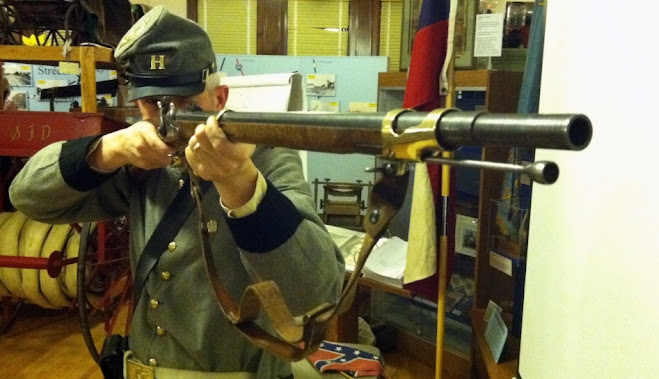
Ward Zischke, a native of Cedar Falls, Iowa, and historian for the Army Reserve 88th Regional Support Command, explains the Confederacy mind-set to an audience, April 19, 2012, during a Civil War lecture series at the Deke Slayton Memorial Space Museum in Sparta, Wis. Zischke is also an Army Reserve lieutenant colonel with 3rd Brigade of the 75th Battle Command Training Division. (Sgt. 1st Class Osvaldo Sanchez)


Saturday, July 24, 2021

USNS John Lewis

By Bill Doughty

Last week the United States Navy honored late Congressman John Lewis with the christening of USNS John Lewis (T-AO 205), the Military Sealift Command’s newest fleet replenishment oiler. Former Secretary of the Navy Ray Mabus was among the dignitaries present. Speaker of the House of Representatives Nancy Pelosi was the keynote speaker. “John was a man of great courage and a fighter. He was always about nonviolence,” Pelosi said. “Non-violence and insistence on the truth. John always insisted on the truth.” In her remarks Pelosi recalled that one year ago Lewis, a hero of the civil rights movement, lay in state in the Capitol Rotunda on the same catafalque built for Abraham Lincoln, Lewis’s hero. A new book of John Lewis wisdom by his former chief of staff, Michael Collins, is out now: “Carry On: Reflections for a New Generation.” Chapters include "On Courage" and "On Voting." in an interview on Good Morning America, Collins notes that Lewis fought against racism and hatred, and he stood for optimism, joy, and a new generation of hope.


Monday, July 19, 2021

Declaring War on Culture

Review by Bill Doughty

U.S. Army General Mark Milley, Chairman of the Joint Chiefs of Staff, defended reading, education and critical thinking in testimony to Congress last month when some members of Congress seemed to question his and his military’s intellectual curiosity.


Milley said,"I've read Mao Zedong. I've read Karl Marx. I've read Lenin. That doesn't make me a communist. So what is wrong with understanding — having some situational understanding about the country for which we are here to defend?" Milley said.


Like former Secretary of Defense Marine Gen. Jim Mattis, Milley realizes that great leaders need to be well-read and open to understanding competing ideas. Milley defended the military’s efforts to understand white nationalism and extremism in the context of critical race theory and other theories.


Hundreds of white insurrectionists who waged war on the Capitol Jan. 6 in an attempted coup are part of a long line of culture warriors who feel impelled –– and were compelled –– to fight to overturn an election and subvert the Constitution.


Milley said, ”I want to understand white rage, and I'm white, and I want to understand it.”


“A War for the Soul of America” by Andrew Hartman (University of Chicago Press), published in 2015 on the eve of the Trump presidency, seeks to explain the rise of white rage in modern history.

The book’s title comes from neoconservative iconoclast Patrick Buchanan, who called for “a war for the soul of America” at the 1992 Republican National Convention in Houston. But when people declare war on the Constitution, there may be no common ground.

"Leave it to Beaver"
While the 80s and 90s were pivotal to the rise of white nationalism, the first shots in the modern culture wars were heard in the 1960s, according to Hartman, as backlash to the civil rights movement, and as nonwhites, especially blacks, gained equality and political power.

“Normative American” families of the simple 1950s, as depicted in “Leave It to Beaver,” gave way to Archie Bunker’s complex 1960s “All in the Family” liberation and confrontation. Battle lines were drawn between the right and left: neoconservative vs. new leftist, traditional vs. progressive, color-blindness vs. color-consciousness, states’ rights vs. federal assistance, punishment vs. prevention, self-sufficiency vs. social safety net, etc.

The civil rights movement, first supported at the presidential level by Harry S Truman, accelerated under Navy WWII veterans John F. Kennedy and Lyndon B. Johnson with pressure led by Dr. Martin Luther King, Jr. Then, with LBJ’s signing of the Civil Rights Act and Voting Rights Act in the mid-60s, black Americans could finally participate fully in American democracy.


"All in the Family"
But as public schools became desegregated, many white Americans turned to segregated private schools, Christian day schools, and homeschooling. “The drama of white Americans resisting desegregation was played out again in the 1970s in struggles over busing across the nation,” Hartman says.

Thus began a “holy war” against secular schools as self-described “fundamentalists” “successfully enacted laws that mandated reading the King James Bible in schools and outlawed the teaching of evolution. Such activism sprang from a desire to reassert religious control over a society that was becoming increasingly modern and secular.”

“By the 1970s, conservative white evangelicals were confronted with a perfect storm of secular power that they deemed a threat to their way of life and to the Christian nation they believed the United States once was and ought to be again. This realization, more than anything else, led religious conservatives to take up arms in the culture wars. Worldly activism became more imperative, so much so that conservative evangelicals formed an uneasy political alliance with conservative Americans from different theological backgrounds. Even fundamentalists, whose insistence upon correct doctrine meant that minor differences in biblical interpretation often led to major schisms, reluctantly joined forces with conservative Catholics, Jews, and Mormons. This was all the more remarkable given that many fundamentalists viewed the 1960 election of John F. Kennedy, a Catholic, as a sign that the end times were fast approaching.”

The so-called Moral Majority was led by right-wing Christians like Buchanan, Phyllis Schlafly, Jerry Falwell, Pat Robertson, Tim LaHaye, and James Dobson. The Moral Majority declared war on cultural relativism, secular humanism, feminism, and the teaching of evolution.


Andrew Hartman
Hartman show how and why black studies evolved on college campuses. “A variety of theories emerged in the 1980s and 1990s to explain why the civil rights revolution had failed to relegate racial inequality to the dustbin of history.”

Harvard University law professor Derrick Bell developed Critical Race Theory to explain how resistance to power-sharing, true equality, and even identity as an “American” acted as a plexiglass ceiling. Do cracks in that ceiling over time threaten a historically predominant white hierarchy (and patriarchy)? Is that the cause of the white rage that General Milley seeks to understand?


As painful as it may be, there is great value in confronting the realities of the past to prevent future problems. 


W. E. B. DuBois
In “The Souls of Black Folks,” W. E. B. DuBois writes, “The United States, after all, was founded on the dispossession of indigenous nonwhites and made rich by the enslavement of African blacks.”

Author Toni Morrison writes, “The people who invented the hierarchy of ‘race’ when it was convenient for them ought not to be the ones who explain it away, now that it does not suit their purposes for it to exist.”


And speaking of a glass ceiling, the culture wars also include fights over gender. “For conservatives, gender differences were sacred,” Hartman writes. “Working women threatened the traditional family model …” and “conservatives were threatened by female economic autonomy.” Some state legislatures attempt to restrict women’s rights, including the right to terminate an early pregnancy, even in the case of rape or incest.


Critical Gender Theory now considers the role of socialization in determining sexual orientation. As for homosexuality, where did nature end and nurture begin? How can being gay be a sin, as Moral Majority fundamentalists (as well as ISIS and Al Qaeda) insist?


Culture wars continue to be fought six years after Hartman’s book: abortion restrictions, transgender discrimination, voter suppression, election interference, anti-vaccination conspiracies, and battles over school curriculum regarding “the contested American past.”


The result is a continual bipolar chasm in schools: divisive ethnocentrism vs. egalitarian cultural pluralism. Hartman explains the history of division as well as attempts at finding compromise.


“The History-Social Science Framework” put into effect in California in 1988, came close to closing the chasm, at least in schools. Historian Arthur Schlesinger Jr. called for a “vital center” bridge that included the California Framework. Hartman writes:

“Although the new California history curriculum recognized the legitimacy of multiculturalism as one factor among many that shaped the nation’s historical narrative, some conservatives supported the Framework because it also accentuated that which bound Americans together in common cause. Students were to ‘realize that true patriotism celebrates the moral force of the American idea as a nation that unites as one people the descendants of many cultures, races, religions, and ethnic groups.’ Due to such language, Schlesinger believed the California approach, unlike the later New York plan, resolved ‘the conflicting commands of our national motto, E Pluribus Unum. Out of many, one.’”

Schlesinger had been critical of any ideology that “belittles unum and glorifies pluribus.”


Navy readers may be interested in certain people and issues highlighted by Hartman in “A War for the Soul of America.” For example: 

  • how then-circuit court judge Robert Bork rejected a case brought by an enlisted sailor in Dronenburg v Zech in 1984, 
  • what Adm. William Leahy said were “ethical standards common to barbarians in the dark ages,” and 
  • how veterans groups and Lynne Cheney teamed to prevent a display of Enola Gay at the Smithsonian Air and Space Museum (a display that was planned to present a contextualized explanation of Hiroshima that helped bring an end to WWII).
Enola Gay at Smithsonian
I was particularly interested in Hartman’s insightful discussion of Murray and Herrnstein’s “The Bell Curve,” a book that fostered racist theories, slammed by evolutionary biologist Stephen J. Gould in his fascinating “The Mismeasure of Man.” Gould republished his “Mismeasure” with a devastating critique of “The Bell Curve.” Nurture AND nature!

It is critically important to understand how people are led to believe falsehoods in the wake of the insurrection and attempted coup of Jan. 6.


In last month’s testimony to Congress at the Capitol last month Milley asked: “So what is it that caused thousands of people to assault this building and try to overturn the Constitution of the United States of America? What caused that? I want to find that out.”


Gen. Milley’s role –– not only preventing an actual coup but also blocking Trump’s authoritarian attempt to deploy the military against U.S. citizens during Black Lives Matter protests in the summer of 2020 –– is revealed in a new book, “I Alone Can Fix It: Donald J. Trump's Catastrophic Final Year” by Philip Rucker and Carol Leonnig.


Hodgkins
We are reminded of Milley’s mea culpa following Trump’s march against protesters in Lafayette Square June 1, 2020, and of Milley’s frequent refrain that military service members take an oath to the Constitution, not to an individual or party. We are also reminded of a great communicator from the last century, Edward R. Murrow, who said, "I simply cannot accept that there are, on every story, two equal and logical sides to an argument."

As this Navy Reads blog is posted, Paul Allard Hodgkins, 38, of Tampa, Florida, has become the first Trump-supporting rioter to be sentenced for his role the Jan. 6 insurrection. Hodgkins pleaded guilty and expressed shame and remorse. He was sentenced to eight months in prison.


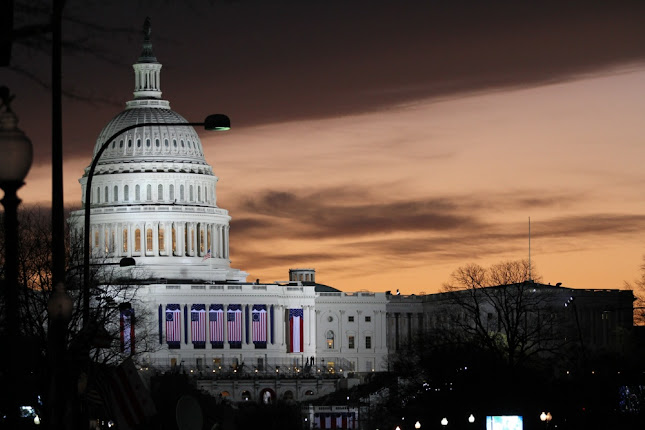
A view of the U.S. Capitol before the 57th presidential inauguration in Washington Jan. 21, 2013. President Barack H. Obama was elected to a second four-year term in office Nov. 6, 2012. More than 5,000 U.S. service members participated in or supported the inauguration. (U.S. Army photo by SSgt. Christopher Klutts)

TOP PHOTO:

NORFOLK, Va. (July 15, 2021) – Gen. Mark Milley, Chairman of the Joint Chiefs of Staff, gives remarks during the ceremony to declare Joint Force Command (JFC) Norfolk’s Full Operational Capability aboard amphibious assault ship USS Kearsarge (LHD 3) on July 15. (U.S. Navy Photo by MC2 Kris R. Lindstrom)


Saturday, July 10, 2021

‘Opening the Great Depths’ for What?

Review by Bill Doughty

At the end of John Piña Craven’s masterful memoir, “The Silent War,” Craven praises the team of military and civilian warriors who supported the silent service and helped win the Cold War: “They taught us that eternal vigilance is not enough. They taught us that society must organize for the deterrence of nuclear war and the preservation of world peace. These are still missions of the people of the world’s free democracies, and we must again organize a band of individuals whose lives are dedicated to these missions.”


I reached for Craven’s book, subtitled “The Cold War Battle Beneath the Sea,” after reading a new comprehensive history of deep-sea exploration: “Opening the Great Depths: The Bathyscaph Trieste and Pioneers of Undersea Exploration” by Norman Polmar and Lee J. Mathers (Naval Institute Press, 2021).


Polmar and Mathers credit Craven’s innovative role in leading key Cold War tactics including creating systems to “rescue trapped crewmen in sunken submarines down to crush depth, allow divers to work at 600 feet, and locate and recover small objects down to 20,000 feet.” The Navy deployed Craven’s brainstorming ideas in classified intelligence missions, according to the authors. In 1964 “Craven had succinctly defined a program that the Navy would pursue until the end of the Cold War and beyond.”

The first practicable idea for a vessel capable of reaching the bottom of the ocean came from an eccentric European scientist who served as a balloonist in the Swiss Army in the First World War. Auguste Piccard was at the center of the “excitement and turmoil that physics was experiencing” one hundred years ago. Piccard “rubbed elbows with” Albert Einstein, Max Born, and Marie Curie, among other revolutionary scientists and explorers.


“Opening the Great Depths” opens with a get-together in New York hosted by Amelia Earhart, where Piccard meets fellow adventurer Charles Lindbergh. Piccard envisioned a metal “balloon” that could sink to the bottom of the ocean and then –– with a system of lead pellets and petroleum as ballast –– be able to float back to the surface.


Auguste Piccard’s development of the first bathyscaphe, spelled “bathyscaph” by Polmar and Mathers (who also present measurements the English rather than metric system), is a story of international cooperation. The first working bathyscaphe was funded by King Leopold of Belgium. Development was led by scientists in Switzerland and supported by the French Navy. It was built in Italy and tested in Portuguese territorial waters and near the Horn of Africa.


Lieutenant Larry Shumaker, Assistant Officer in Charge; Lieutenant Donald Walsh, Officer in Charge; Dr. Andreas B. Rechnitzer, Scientist in Charge; Jacques Piccard, Co-Designer and Technical Advisor of Bathyscaphe Trieste, Nov. 16, 1959.

Jacques Piccard, Auguste’s son, took over for his father and accelerated development of Trieste, named for the town in Italy where it was built. The younger Piccard, who stood 6’5” according to John Craven, reached out to coordinate directly with the United States Navy in further development of the new technology. The Navy acquired Trieste in the mid 1950s through the new Office of Naval Research.


ONR was created after the end of World War II and the beginning of the Cold War. With a bathyscaphe, the “Navy would gain the capability to operate in the deepest ocean depths.” Exploration of the ocean’s depths would be spurred by the Soviet Union’s advances in space, leading to the launch of Sputnik in 1957.


In late 1958, a young submarine officer who saw himself stuck behind a desk in an administrative billet at Submarine Flotilla 1, volunteered to oversea, operate, and maintain Trieste. Lt. Don Walsh conducted the first dives near San Diego. Trieste was “re-welded to Navy standards” and readied for deep dives off Guam. Other key members of the early dives were Dr. Andy Rechnitzer, Navy Lt. Lawrence Shumaker, Giuseppe Buono, and Jacques Piccard.


Polmar and Mathers provide a brief history of discovery of the deepest trenches in the ocean. Their book is comprehensive and detailed, often reading like a logbook filled with names of personnel, places, support ships, and missions. The authors describe “white” and “black” operations, focused on finding either U.S. or Soviet debris or equipment on the ocean bottom.


Walsh and Piccard aboard Trieste
The Navy first deployed the Trieste, in part, to search for life at the deepest part of the ocean for a specific purpose: “Was there a depth below which complex life could not survive? The answer to that question might determine whether the deep-ocean trenches would be used for the long-term disposal of radioactive and other hazardous waste material.”

In the best chapter in the book, Polmar and Mathers describe the tension as Piccard and Walsh took a long “elevator ride” through the thermocline, passing two layers of phosphorescent plankton, and heading into the hadal depths for the first time. The bathyscaphe suffered small leaks and a cracked entry tube window. The temperature inside the bathyscaphe was 45 degrees Fahrenheit. Piccard and Walsh ate chocolate bars and peered out as best as they could, unsure when the bottom would appear. After more than four and half hours they reached the “six-three hundred fathoms” –– 37,800 feet, significantly deeper than anticipated.


Their discovery of “a shrimp and a fleet of madusae proved that the ocean’s deepest depths contain complex life forms.” Piccard thought he saw a "sole" on the bottom, but that sighting was unlikely a fish.


The team received a heroes’ welcome  in Guam, Hawaii, and Washington D.C. President Eisenhower presented Piccard, Walsh, Rechnitzer and Shumaker with awards in the presence of Chief of Naval Operations Adm. Arleigh Burke. Lt. Walsh received the Legion of Merit. He would go on to have a distinguished naval career, retiring as a Navy captain. Jacques Piccard, a non-citizen, was awarded the Navy’s Distinguished Public Service Award.

“Piccard was especially proud of a White House letter dated 9 February 1960 that stated in part, ‘As a citizen of Switzerland, a country admired by all the free world for its love of freedom and independence, you have the gratitude of all the people of the United States for helping to further open the doors of this important scientific field. Sincerely, Dwight D. Eisenhower.”

As the general who led the liberation of Europe from Nazi fascism in WWII, Eisenhower was revered in the free world. America’s commitment to international cooperation –– along with a “major influx of American dollars through the U.S. government’s Marshall Plan” –– led directly and indirectly to the development of shipyards, refineries, and research that helped build the Trieste bathyscaphe.

President Eisenhower dines in the crew's mess aboard USS Seawolf (SSN-575) off Newport, Rhode Island, Sept. 26, 1957. With him are Chief Hospital Corpsman Milton W. Tucker; Press Secretary James Hagerty (partially visible); and Seaman Apprentice W.J. Dooling, the youngest man in Seawolf's crew. (NHHC)

Meantime, the Cold War and space race were heating up at the end of the 1950s and through the 1960s, where relations with the Soviet Union were about competition, not cooperation.


The Navy saw that “advancing undersea technology was vital to the security of the United States,” according to Polmar and Mathers. “Classified operations for the Trieste were suggested in the summer of 1961.” The Navy, Air Force, and CIA reportedly considered using Trieste to locate and retrieve debris from the ocean floor. 


Trieste was deployed for the search of the USS Thresher (SSN-593), a nuclear-powered submarine lost 220 miles east of Boston on Apr. 10, 1963. The Navy was concerned about the sub’s nuclear reactor “potentially contaminating waters close to the U.S. eastern seaboard,” according to the authors. “And, the Navy had to examine the wreckage in an effort to determine the cause of her loss.”


"Overhaul and Refiitting Bathyscaphe Trieste," painting, watercolor on paper, Salvatore Indiviglia, 1961. (NHHC)

Unfortunately, the Trieste itself was subject to numerous casualties and limitations over the years, including fires, leaks, corrosion, mechanical failures, insufficient battery power, and propulsion motor issues –– a “maintenance nightmare.” Mare Island Naval Shipyard architects, under the supervision of chief design engineer Herbert L. Graybeal, designed a more advanced float that was stronger and safer. The Trieste II was born. Eventually three versions of Trieste would serve, but nomenclature was (perhaps deliberately) confusing for what would be Trieste, Trieste II, Trieste III, and/or DSV-1. For simplicity, I’ll refer to all versions of the Trieste bathyscaphe throughout this review as “Trieste.”

As the Cold War heated up, on May 28, 1964, Secretary of the Navy Paul H. Nitze assigned Trieste and the Deep Submergence Program to the Special Projects Office. The “Deep Submergence Systems Project” became a separate agency under the direction of chief scientist Dr. John Piña Craven. (Craven is a descendant of a long line of Navy officers; he served as an enlisted battleship sailor in World War II, and he earned his PhD with help from the G.I. Bill. Craven's Special Projects team developed the Polaris Fleet Ballistic Missile.)


Among other duties leading DSSP, Dr. Craven headed the recovery effort for a hydrogen bomb that had fallen near Palomares after a U.S. Air Force B-25G strategic bomber collided with a refueling tanker off Spain’s Mediterranean coast on January 17, 1966.


USS Scorpion (SSN-589) outside Claywall Harbor, Naples, Italy, 10 April 1968, one of the last known photos of Scorpion before the submarine was lost with all hands in May 1968 while returning to the U.S. from this Mediterranean deployment (NHHC).

Chapter 14 of “Opening the Great Depths” begins with this chilling line: “The year 1968 was a very bad year for submarines.” The authors refer to the losses of Israel’s diesel-electric submarine Dakar and France’s Minerve, both lost in the Mediterranean; the Soviet Golf II ballistic missile submarine K-129, lost in the Pacific; and the USS nuclear-propelled submarine Scorpion (SSN-589), lost in the North Atlantic. Even the U.S. Navy’s deep submersible Alvin, operated by Woods Hole Oceanographic Institution, was lost off the coast of Massachusetts in October, 1968. Response to any recovery operations was complicated by events on the world’s stage involving the Navy: the War in Vietnam and North Korea’s seizure of the U.S. intelligence ship USS Pueblo (AGER-2).


Polmar and Mathers present the history of Trieste’s role in the late 60s matter-of-factly with emphasis on personnel, dates, stats, and details. For a more personal account and for context, readers may want to do what I did and turn to Craven’s “The Silent War.” Craven writes about his lead role in the search for USS Scorpion and then the clandestine search for the missing Soviet submarine.


Always the innovative thinker, Craven proposed a way to go inside a sunk submarine. According to Polmar and Mathers, “Dr. Craven’s idea was that a vehicle small enough to enter one of the Scorpion’s 21-inch torpedo tube might help to determine if her loss had been caused by an internal or external torpedo explosion.” That idea resulted in “flying eyeballs” developed by the Naval Undersea Center in San Diego.


USS Ruchamkin (APD-89) in Hampton Roads, Virginia, with USS Mountrail (APA-213) beyond, Jan. 16, 1967. (NHHC)


Fifty-three years ago this month, above the site of the USS Scorpion, Craven and his team were aboard the support ship
USS Ruchamkin (APD-89) when Neil Armstrong stepped onto the moon, July 20, 1968. They listened to Voice of America's report and thought of how their efforts at reaching the limits of inner space coincided with what was happening in outer space. After all, their team had reached the deepest part of the ocean less than ten years earlier.

“Dr. Craven recorded that when Armstrong placed his foot onto the Moon’s surface everyone in the wardroom thrust their hands above their head –– a sporting celebration for ‘score!’ An anonymous voice shouted out, ‘No, dammit, no! Two small steps!,’ referring to Trieste’s simultaneous work at a depth of 11,100 feet.”

On July 30, the team retrieved some debris from the Scorpion, including the ship’s sextant. Subsequent testing showed that the main battery had exploded; the submarine was not torpedoed.


Trieste and the Deep Submergence Program entered the 1970s in “neglect and decline,” a period when funding trickled away, support evaporated, and billets dwindled. The future would be with unmanned vessels. Nevertheless, Trieste and other submersibles were used in recovery operations off Hawaii as well as monitoring for radiation contamination from transponders near Midway Atoll.


The Navy’s eccentric and ubiquitous Adm. Hyman G. Rickover, who headed the Naval Reactors Directorate, had the bathyscaphe deployed in response to the Marine Protection, Research and Sanctuaries Act of 1972. The mission: investigate USS Seawolf’s nuclear reactor, which had been dumped in 1959 in 9,000 feet of ocean 120 nautical miles off the East Coast.


Among Trieste’s last missions was a series of dives in the eastern Pacific off Acapulco, southern Mexico at a depth of 16,141 feet. The expedition was part of an effort to investigate plate tectonic dynamics, according to Polmar and Mathers. “The effort sought to identify a permanent disposal site for high-grade nuclear waste –– radioactive waste with half-lives in hundreds or thousands of years.”


Acclaimed filmmaker James Cameron, left, and Dr. Don Walsh, a retired U.S. Navy captain, stand at the Trieste research bathyscaphe, which reached the deepest known part of the earth's oceans, the Challenger Deep in the Mariana Trench near Guam, on Jan. 23, 1960. Lt. Don Walsh and scientist Jacques Piccard were original pilots of Trieste, which is now at the National Museum of the United States Navy at the Washington Navy Yard. Cameron piloted his Deepsea Challenger nearly seven miles to Challenger Deep on March 26, 2012. Cameron donated Deepsea Challenger to the Woods Hole Oceanographic Institute in Massachusetts. (MC1 Gina K Morrissette)

Polmar and Mathers wrap up their book with a "post script" mentioning the recent history of deep submersibles, where unmanned vessels have taken over but where people still have a role, including filmmaker James Cameron, astronaut Kathryn D. Sullivan, scientist Howard P. Talkington, and explorer Cmdr. Victor Vescovo, USNR (Ret.).


The authors provide an important history for readers interested in undersea research. This book includes a personal perspective in its foreword by “U.S. Submersible Pilot No. 1” Don Walsh, Captain, U.S. Navy (Ret.), PHD. It also has an introduction from author Polmar; glossaries of abbreviations and designations; comprehensive notes, a bibliography, and two indexes.


"Opening's" dedication, which is similar to the conclusion of Craven’s indispensable “The Silent War,” reads: “This book is dedicated to the adventurers and scientists, both military and civilian, who in frail craft challenge the Earth’s most inhospitable environment –– the deep ocean.”