Showing posts with label Tipping Point. Show all posts

Sunday, October 18, 2009

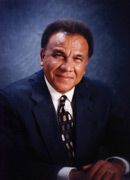
Dr. Betances: "You Can't Lead if You Don't Read"


How important is reading?
Ask Dr. Samuel Betances, diversity advisor to Chief of Naval Operations Adm. Gary Roughead, and three U.S. presidents...Betances, who conducted "Strengthening the Navy Through Diversity" training for nearly 1,000 people at Pearl Harbor, Hawaii, Oct. 13-15, talks about the power of books...and words...and mentors...and, most importantly, diversity.
The cover of Pulitzer Prize winner David McCullough's book John Adams flashes on the screen early in one of Dr. B's training, along with this quote from Adams:
"Freedom is a wonderful thing, provided you have the courage to defend it."

So there it is, plain and simple. Diversity is freedom...

* Freedom from discrimination, from harassment and from a hostile workplace.

* Freedom for an equal opportunity to achieve.

* Freedom to be respected.

Two books about respect that Dr. Betances recommends:
Back off by Martha Langelan and Diversity Toolkit by William Sonnenschein.

In his training, Dr. Betances shares his personal journey from high school dropout to educated scholar with two post-graduate degrees from Harvard University, consultant to two U.S. presidents.

His education started with a caring mentor who had the courage to confront him and say, "It's not intelligence you lack; you don't have enough words."

As Dr. Betances points out, people in poverty use an average of 1,500 words. People in the middle class, especially those who were read to as children, use 3,500 words.

In order to succeed, one must read...

As a very young man, Betances was encouraged to read "the literature of resiliency" - the memoirs of others who faced difficulties: people in death camps, under slavery or in relocation camps.

Two books he says changed him forever:
The Narrative of an American Slave by Frederick Douglass ("a book to share with your entire family") and Man's Search for Meaning by Viktor Frankl.

These books opened his mind and helped him sharpen his critical thinking.

As a better thinker he is able to recognize cultural shifts, discard faulty assumptions and recognize not only the letter of the law but also the spirit of the law.

By the way, that's the difference between equal opportunity and diversity, according to Dr. B.
EO is the law; diversity is the spirit of the law.
It's not good enough to enforce laws against illegal discrimination; we must actively prevent legal discrimination, where members of a preferred group are included in a so-called "circle of trust," to which outsiders are not welcome.

Are there good and bad Circles of Trust?

As Dr. Betances points out, studies revealed in the works of
Malcolm Gladwell (author of Blink, Tipping Point and, especially, Outliers) prove that those who are included in a group - for whatever reason - are
more likely to succeed.

Those who are included and made to feel welcome in an organization will succeed.

Those who get informal coaching in a complex organization like the Navy are better equipped to retain what they learn in a classroom.

And, "If your organization is complex," says Betances, "you need diversity."

As part of his training, Dr. B. plays a
CSPAN clip of The Director of National Intelligence, Retired Adm. Dennis Blair, former Commander in Chief of U.S. Pacific Command.

Admiral Blair recognizes the benefits of "being as diverse as possible so that we can better understand people around the world."

Such thinking should be intuitive, and intuition is often undervalued. So says Malcolm Gladwell in
Blink.

Gladwell is mandatory reading at the
Naval Academy, under the leadership of Vice Adm. Jeff Fowler.

This year the Naval Academy has achieved record-breaking numbers of minority accessions - more than one-third of the class of 2013. The people who have the biggest advantage at the academy, according to Betances, are the children of military families, regardless of gender, economic background or other factors.

Why?

Because those children from military families are part of a greater, wider circle of trust; they are made to feel welcome in the organization. They get the informal coaching and mentoring and one-on-one time with experienced people who care.

"We increase our cultural competencies in informal networks," says Betances. And cultural competencies are keys to success.

Want your child to succeed?

In a sidebar discussion between training sessions, Dr. Betances shared this advice: "Have your son or daughter become a tutor. Have them teach someone. The person they help will leapfrog forward, and the tutor, your son or daughter, will catapult to the front."

Dr. Betances: "You can only keep what you give away."

Back to books...

Is that one of the hidden benefits of reading, that books - often freely available, filled with insights and ready to teach us - can be our mentors?

(I'll have to read more about that...)

Other books discussed or recommended by Dr. B.:

The Nature of Prejudice by Gordon Allport

The Disuniting of America by Arthur M. Schlesinger, Jr.

Making the Impossible Possible by Bill Strickland

Shattered Sword by Jonathan Parshall and Anthony Tully

Women in the Military by Maj. Gen. Jeanne Holm, ret.

Future Think by Edie Weiner and Arnold Brown

Go For Broke by C. Douglas Sterner

Rising Sons by Bill Yenne

Women Pilots of World War II by Jean Hascall Cole

Reel Bad Arabs by Jack G. Shaheen

The Other Face of America by Jorge Ramos

Our Separate Ways by Ella LJ Edmondson Bell and Stella M. Nkomo

Cane Fires by Gary Y. Okihiro

Leading from the Front by Angie Morgan and Courtney Lynch

The World is Flat by Thomas L. Friedman

Hot, Flat, and Crowded by Thomas L. Friedman

Ten Steps to the Head of the Class by Samuel Betances

How important is reading?

"If you don't read, you can't lead."

The
Navy Reading Program recommends titles tailored to various levels of leadership.

Monday, September 7, 2009

Here Comes Everybody by Clay Shirky


Review by Bill Doughty

Superfreakonomics comes out soon, as we learned earlier this month when our blog and Roxanne Darling’s photo from USS Nimitz were featured on the New York Times .com’s Freakonomics blog. Meantime, here’s a book in a similar vein...

Here Comes Everybody grabs you from the first chapter. What happens when someone loses her phone in the back seat of a taxi and the finder of the phone refuses to give it back?

The unfriendly, recalcitrant phone-finder gets a virtual butt-whupping, thanks to the power of social media to share information, encourage cooperation and foster collective action. The story is hilarious.

Clay Shirky fills this topical book about social networking with lots of stories, anecdotes and reports that illustrate the tectonic (“tech-tonic”?) shift we’re experiencing thanks to technology. Among his examples:

  • How collective action exposed the Catholic priest sex abuse (and institutional coverup) scandal because of shared information via the Web, e-mail and blogs in 2002.
  • How airline passengers who experienced poor customer service pooled information and resources to bring about a passengers’ bill of rights in 2006.
  • How, thanks to Twitter and QQ (China’s largest social network), the world quickly became aware of the massive earthquake in Sichuan Province on May 12, 2008. Shirky reports that a Wikipedia page was created 40 minutes after the quake. The page provides a comprehensive review of the quake and its aftermath, including the controversy surrounding construction of the buildings and access to information within China.

Coming after publication of this book is another illustrative example of social media’s power: street protests in the wake of this year’s elections in Iran, fueled by Twitter and other sites.

Shirky explains how shared awareness can bring about social action in the information age.

In 1989 small protests in Leipzig, East Germany grew steadily till 400,000 people turned out as a “flash mob,” pictured above, leading to the downfall of the communist government and the destruction of the Berlin Wall.

The lesson for repressive states was: “Don’t let even small protests start, and don’t let the documentation get out.” Reading this gives you an appreciation for our founders’ wisdom about freedom of expression and freedom of assembly, among the inalienable rights of all people.

As Shirky puts it, “With the arrival of globally accessible publishing, freedom of speech is now freedom of the press, and freedom of the press is freedom of assembly.”

But, to paraphrase Spider-Man creator Stan Lee, with great freedom comes great responsibility.

Shirky notes that social systems cannot be of value without some sort of governance, and the best form of control is self-control from a feeling of love and devotion.

Wikipedia shows the overall effectiveness of collective governance out of a passionate devotion to truth. Individuals can edit, but a group can provide democratic oversight.

Free expression through collaboration and cooperation has replaced a great deal of institutional planning and bureaucratic control -- another part of that tectonic shift we’re all experiencing.

Shirky provides an example from military history:

In May 1940, the German army was smaller than France’s. The Panzer III and IV tanks were smaller and less armored than the French Char Bs. But, Germany won decisive victories in its Blitzkrieg, or “Lightning War” attacks because of one difference -- radios.

Communication transformed standalone tanks in to a coordinated, networked group weapon that required a much higher degree of autonomy among commanders coordinating actions in the field.

Which is not to say the Germans in 1940 had the right message... just better technology and tactics for their time.

Technology can be abused by people, whether invading another country or refusing to return a cell phone.

Social media can be misused by cyber-vandals posting false information on Wikipedia or bullying someone on Facebook.

But, collective goodness in people can police the commons, tell the truth and provide governance; that’s ultimate freedom. Freakonomics comes to a similar optimistic conclusion about collective goodwill.

Other cool stuff in Here Comes Everybody:

  • Homophily and “Small World” pattern show the effects of probability underlying the six degrees of separation.
  • Social media can connect everyone through a disproportionately few people, called “connectors” by Malcolm Gladwell in Tipping Point.
  • The “Nash Equilibrium,” Pareto as relates to social networking, the “Birthday Paradox,” and homeostasis of group structures, among other laws and principles.

The last two words of Here Comes Everybody are “epochal change,” a great way to describe our collective experience as the millennial generation comes of age.

This is a time in history when those of us born prior to 1980 need to unlearn much of our assumptions, according to Shirky: that news about politics and announcements about jobs come from newspapers; that music comes from stores; that conversations are only by phone; that complicated things like software and encyclopedias have to be created by professionals.

Luckily, as Here Comes Everybody makes clear literally and tangibly, for people of all ages there is still a place in this world for books.

Note: My friend Nancy Harrity, introduced me to this book, along with Groundswell by Charlene Li and Josh Bernoff, another really good read on a similar topic, written from a business organization standpoint. In September 2009 Nancy is finishing a gig as public affairs officer for Pacific Partnership 2009, a Navy mission with international partners that builds friendship and promotes peace. Here Comes Everybody is not on the Navy's Professional Reading Program, but it would be of interest to anyone in or out of the military trying to put social media in context.

Friday, August 14, 2009

Freakonomics - A Rogue Economist Explores the Hidden Side of Everything by Steven D. Levitt and Stephen J. Dubner

Review by Bill Doughty
I would not recommend Freakonomics to anyone who knows exactly how the world works. Don't read it if you already have the answers to all of life's questions. It's not for people who are easily offended, either. However, for the rest of us, read on...

(Freakonomics at sea)


Written by a completely out-of-the-box economist named Steven Levitt, with help from New York writer Stephen Dubner, Freakonomics challenges conventional wisdom and assumptions on both sides of all fences.


Freakonomics
key points:


"Knowing what to measure and how to measure is the key to understanding modern life," and "if morality represents the ideal, then economics represents the actual world."

Through measurements and analysis, and without being moralistic, Levitt spends most of the book presenting evidence of dishonesty in the actual world - cheating by Japanese sumo wrestlers, Chicago school teachers, day care parents, online daters, funeral directors, and bagel buyers, among others.
His conclusions are based on facts, metrics, and other data, and they are compelling.

The bad news: Many people will lie, cheat, and abuse power.


The good news: With the right incentives, the vast majority of people are, and remain, honest.


So what are the right incentives?


What do you think?


Freakonomics
teases the reader to formulate his or her own opinion, but provides ways to step up and see over the fence.

Challenging conventional wisdom and superstition, this book promotes critical thinking. Take, for instance, the issues of abortion and gun control and their relevance to crime. Without making any outwardly moral judgments, Freakonomics explores these and other red-hot issues like the death penalty, crack cocaine, discrimination and the role of parents in raising children.
Some chapters may make you laugh, shake your head, or read passages aloud to your friends and family. A friend of mine couldn't resist writing arguments in the margins of his dog-eared copy.

Here are a few things you can discover in Freakonomics:


You'll see evidence that drug-dealing gangs have a similar business structure and hierarchy as McDonald's.


You'll learn that the Ku Klux Klan was a largely ineffectual group by the late 1950s, undermined by a children's television show.


You'll read the story of Robert Lane and two of his sons - one he named Winner and the other Loser. Which young man did well in life? How important is the name your parents gave you?


You'll see whether having lots of books in the home contributes to success later in life - which is intriguing information for supporters of the Navy's Professional Reading Program.


Freakonomics
delves into the science of "cause and effect," "correlation," "nature and/or nurture," "fear," and the power of incentives in influencing behavior.


The three "basic flavors" of incentives according to Levitt are economic, social and moral. They are often most effective when combined such as in the U.S. anti-smoking campaign.


But, as asked earlier, what are the "right," most effective incentives in life?


Though not stated outright in the book, here’s what Freakonomics suggests: You can incentivize honesty, hard work, and good will by trusting in people, listening to them, and showing them love.

It’s that simple and that profound.


You don’t have to agree with all of the conclusions in Freakonomics in order to appreciate the authors’ courage in raising controversial questions, challenging assumptions and opening a dialog about critical, skeptical thinking.

Freakonomics is one of many great reads at the Navy Professional Reading Program. You can learn more about the program here.

For a cool Freakonomics essay by Tipping Point author Malcolm Gladwell click here.

To follow the Twitter-like Freakonomics blog at The New York Times, click here.

Special thanks to Roxanne Darling and Nathan Kam for use of their photos from an August 2009 embarkation to USS Nimitz. Roxanne left a really nice comment after the July 12 interview post with Prof. Jackson. I hope you'll scroll down and take a look.

Saturday, May 2, 2009

Gladwell, Navy and Diversity in San Diego

By Bill Doughty
Are good athletes, high achievers and strong leaders born that way or are they developed - or both?
The question was posed by Rear Adm. Patrick McGrath, the Commander of Naval Air Forces Reserve at this past week’s Fleet Diversity Council in San Diego.
The Council, led by Navy Capt. Ken Barrett, was titled “The Power of What If?: An Open-Minded Approach to Diversity.”
Rear Adm. McGrath shared the insights of Malcolm Gladwell, author of Blink, Tipping Point and Outliers.
In Outliers, Gladwell shows how an accident of birth may give an arbitrary advantage in size and experience to children who play organized hockey, an advantage that continues into their pro careers.
Those born in January, February and March, right after the age-class eligibility cutoff of Jan. 1, are naturally bigger and stronger than the younger kids, so they get more playing time and coaches’ attention.
The same circumstances occur in baseball and soccer, creating bias against kids with the “wrong” birthday, according to statistics cited in Outliers. Last December ESPN verified the stats for National Hockey Players, showing that 158 players had birthdays in Jan., Feb. and Mar., while only 97 players had birthdays in Oct., Nov. and Dec.
Gladwell is one of the authors featured in the Navy’s Reading Program. His work keeps coming up in the context of diversity and the Navy’s achievements at recruiting, retaining and rewarding its total force.
Are we moving toward a "tipping point" in understanding, accepting and implementing diversity now that the Navy has been selected as one of America’s Top 50 employers?
At the Diversity Council Rear Adm. McGrath and DiversityInc CEO Luke Visconti spoke about the business of diversity: get the best people and keep the best people... and listen to alternative voices.
As the Chief Executive Officer for DiversityInc, Mr. Visconti is a renowned lecturer who has appeared on FOX, MSNBC, CNBC and NPR. His magazine DiversityInc has a circulation of more than 200,000.
Key business points from Mr. Visconti:
-- Diversity management increases engagement; engagement drives innovation and productivity in quantifiable, measurable ways.
-- Representation, recruitment and retention are linked.
-- Communication and mentoring are critical.
Next, communication expert Dr. Steve Robbins gave a powerful talk about critical thinking as an antidote to unintentional intolerance.
A flexible, adaptable and engaged mind - one that reads! - is better able to overcome adversity and become a better leader and achiever.
Be more mindful and less mindless...
...It’s good business.
Recently, the CNO recognized the Navy’s Strategic Diversity Working Group which received the 2009 Diversity Council Honors Award. Adm. Gary Roughead said, “Your demonstrated results and commitment toward measurement, accountability, communication and education have set the standard for others to follow.”
The group met in San Diego Apr. 29 after the Fleet Diversity Council, where they planned community outreach events and conducted other Navy Diversity business.

It was a busy week for Navy diversity professionals, many of whom attended the 29th annual professional development and training symposium of the Association of Naval Services Officers (ANSO) nearby.

Lt. Lori Campbell, of Navy Recruiting District San Diego, speaks with members of the La Habra High School Navy Junior ROTC program at ANSO's Youth Outreach Program Apr. 28, 2009. (U.S. Navy photo by Mass Communication Specialist 3rd Class David Smart)

Once again, books were part of the discussion. Sailors, Marines and Coast Guardsmen were treated to a keynote speech by Joachim de Posada, author of Don’t Eat the Marshmallow...Yet! -The Secret to Sweet Success in Work and Life.
Attendees also received a copy of Juan Gonzalez’s Harvest of Empire - A History of Latinos in America, which the New York Times called, “A serious, significant contribution to understanding who the Hispanics of the United States are and where they come from.”
Some key points from Dr. de Posada’s book and motivational talk:
-- “Each morning in Africa a gazelle wakes up and knows it must run faster than the fastest lion, and each morning a lion wakes up knowing it must run faster than the slowest gazelle.” But, applied to competition and cooperation between countries, “Technology has made this world a level playing field.”

Community Outreach: Cmdr. Yvette Davids, of the Association of Naval Services Officers, presents a certificate of commendation to Cadet Seaman Emmarow Taledo, a freshman in the Navy Junior Reserve Officer Training Corps , at Junipero Serra High School for maintaining a 4.0 grade point average. (Photo by MC2 Daniel Taylor)
-- “If people feel passion for what they do, they will do well.”
-- Successful people are willing to delay gratification (“think long term”), keep promises, assume responsibility/accountability and “do what unsuccessful people are unwilling to do.”
-- Teamwork: “None of us is worth more than the sum of all of us.”
Of course, there was a lot more happening at ANSO all week long, with participation by numerous flag officers, senior and junior officers and enlisted leaders and people from all three naval services. Vice Adm. D.C. Curtis, Commander, Naval Surface Forces gave a passionate talk about Maritime Strategy and leadership empowerment at a luncheon on Apr. 30.

A big part of ANSO's agenda was reaching out to the community, including a youth outreach program with a Coast Guard vertical delivery demonstration, a Marine Corps weapons booth and K-9 (working dog) demonstration, Navy SEALs demonstration and Navy SPAWAR static display.
Kids from different schools and organizations around San Diego County grab Navy gear at the youth outreach program during ANSO Apr. 28, 2009. (Photo by MC3(SW/AW) David Smart)
For more information about ANSO and to learn how to join, visit their website at www.ansomil.org.
Diversity Update...
We just had to share this great photo from the Naval Service Training Command, Navy City Outreach, Chicago; the photo was taken June 10 at the Rickover Naval Academy commencement :
Valedictorian and Cadet Commander Jaqueline Duarte is overcome with emotion during her remarks to the first graduating class of the Rickover Naval Academy in Chicago. Mrs. Eleanor Rickover walked from her seat on stage to provide Duarte with a much needed hug and words of encouragement. Duarte will be leaving for Plebe Summer at the U.S. Naval Academy in 19 days. (Photo by Lt. Jeffrey S. Gray.)
We’ve been mining from the diversity vein since the beginning of this blog and have seen how the Navy Reading Program relates... Next we’ll turn the page to The Kite Runner by Khaled Hosseini. An awesome read.
What's on your book shelf?

Sunday, April 26, 2009

Hōkūle‘a

This week I had the privilege of participating in a Native Hawaiian Cultural Communications Course at Mokapu -- Marine Corps Base Hawaii (Kaneohe), sponsored by DoD. Key points: Our similarities outweigh our differences; understanding each other helps build trust and partnership.
We all respect and protect our environment: Malama kekahi i kekahi; Malama Aina. We respect and protect the earth: Malama Honua.
I've had the link to the Hokule‘a blog on Navy Reads (under Maritime/Voyages) since shortly after starting these reviews and discussion.

The most recent posting on the Hokule‘a blog is a Q&A about their recent voyage to Palmyra. Fascinating insights and brilliant imagery.


"For more than 30 years, voyagers aboard Hokule‘a – the iconic traditional Hawaiian open-ocean canoe – have combined the wisdom of their ancestors with modern insights to navigate a course for our future. Embracing the concept of Malama Hawai‘i (caring for and protecting Hawai‘i), these explorers have reconnected to their heritage while helping to foster a community committed to peace, caring and a healthier world.

"Now, Hokule‘a and her sister vessels will begin an eight year voyage to circumnavigate the globe to find answers, through exploration, on our journey toward a shared destination – a healthy and sustainable Earth for future generations. With Hokule‘a as a catalyst for global attention and local action, the worldwide voyage is a journey that will chart a new course for sustainability."

(Photo: Mike Taylor)

By the way, two books from the Navy Reading Program came up in discussions or as an actual part of Native Hawaiian Cultural Communications presentation: Covey's 7 Habits of Highly Effective People and Malcolm Gladwell's Tipping Point. Both were brought up in the context of relationships/connections and developing and building trust. Maritime Strategy!