Showing posts sorted by date for query applebaum. Sort by relevance Show all posts

Friday, June 26, 2026

A Republican View of Autocracy –– Pt. I

Review by Bill Doughty––

Retired Army Lt. Gen. Mark Hertling, former commanding general of U.S. forces in Europe, reminds us of this old saying: “If you want a new idea, read an old book.”


A book that is not too old –– and seemingly written yesterday –– shows how the United States is embracing autocracy. Longtime Republican campaign strategist Stuart Stevens captures the country’s current radical slide with the clarity of hindsight in “The Conspiracy to End America: Five Ways My Old Party Is Driving Democracy Away” (Twelve, Hachette Book Group, 2023).


For a new idea, read an good book!


Stevens quotes key authors of other “old books” to investigate the seeds and roots of an anti-democracy and pro-authoritarian movement growing in the government –– including the justice department, legislature and military –– and branching into society. Five building blocks of autocracy include propagandist media, MAGA followers, oligarchic financiers, corrupt legal theories, and shock troops such as J6ers and right-wing militia all supporting the totalitarian movement.


One of the first authors of “old books” Stevens cites is George Orwell, who writes, “Totalitarianism demands, in fact, the continuous alteration of the past, and in the long run probably demands a disbelief in the very existence of objective truth.” [Instead of a belief in belief. Or skewed news and propaganda.]

In 1984, Orwell warns about Big Brother and in effect Big Lies despite objective facts. “The party told you to reject the evidence of your eyes and ears. It was their final, most essential command.” It means loyalty to the leader, not the Constitution or even to concrete reality.


Hannah Arendt in “The Origins of Totalitarianism” writes, “Total loyalty is possible only when fidelity is emptied of all concrete content, from which changes of mind might naturally arise.”


Regarding dictators and autocratic movements, Arendt (above) says, “Their most conspicuous external characteristic is their demand for total, unrestricted, unconditional, and unalterable loyalty of the individual member.”


Examples today are obsequious cabinet meetings in the White House and the recent firing of freethinking military officers, including General Todd Donahue, commanding general of United States Army Europe and Africa and commander of Allied Land Command. [Secretary of Defense Pete Hegseth, who calls himself Secretary of War, has removed or pressured removal of more than two dozen senior military leaders, including former Chairman of the Joint Chiefs, Air Force Gen. CQ Brown Jr.; Navy’s Chief of Naval Operations, Adm. Lisa Franchetti; Coast Guard Commandant Adm. Linda Fagan; Army Chief of Staff Gen. Randy George; and Army Gen. James Mingus, vice chief of staff of the Army. A disproportionate number of people removed from power are women, African-Americans, and/or free-thinkers.]


Attacks on education and science are a hallmark of authoritarians, as Stevens points out through the perspective of philosopher Umberto Eco, who writes, “The Enlightenment, the Age of Reason, is seen as the beginning of modern depravity” to the fascist, and “thinking is a form of emasculation … Distrust of the intellectual world has always been a symptom of Ur-Fascism.”


As fascist-friendly forces attempt suppression of free speech, media and voting rights, authors Steven Levitsky and Daniel Ziblatt write in “How Democracies Die,” “The tragic paradox of the electoral route to authoritarianism is that democracy’s assassins use the very institutions of democracy –– gradually, subtly, and even legally –– to kill it.”


Anne Applebaum writes in “Twilight of Democracy” that this “soft dictatorship … relies upon a cadre of elites to run the bureaucracy, the state media, the courts, and, in some places, state companies.”


Legislative and judicial enablers, administration sycophants, propagandist media, and oligarchs –– “elites” –– either endorse or allow the authoritarian to gain power and restrict liberty.


It happened in 1930s Germany.


Another seminal author quoted by Stevens is William Shirer, who penned “The Rise and Fall of the Third Reich.” Shirer writes about Franz von Papen, an aristocratic conservative politician who served as Chancellor of Germany in 1932. Papen made a deal with Adolf Hitler, thinking he and his fellow conservatives could control him and the Nazis.


Shirer writes, “By means of a shabby political deal with the old-school reactionary he privately detected, the former tramp from Vienna, the derelict of the First World War, the violent revolutionary, became chancellor of the great nation.” Hitler then removed, often violently, anyone not completely loyal to him.


In her book “Strongmen: Mussolini to the Present” Ruth Ben-Ghiat (above) describes this as a tradition of the strongman: “…divide-and-rule and bullying tactics to weed out government officials who won’t conspire in his corruption and subversion of the rule of law.”

Their efforts are often funded by misguided oligarchs.


Ghiat writes, 

“Once the ruler is in power, elites strike an ‘authoritarian bargain’ that promises them power and security in return for loyalty to the ruler and toleration of his suspension of rights. Some are true believers, and others fear the consequences of subtracting their support, but those who sign on tend to stick with the leader through gross mismanagement, impeachment, or international humiliation.”

In a chapter titled “The Financiers,” Stevens examines the role of Peter Thiel through Max Chaikin’s book “The Contrarian: Peter Thiel and Silicon Valley’s Pursuit of Power.” Thiel wrote in an essay for the Cato Institute, a libertarian think tank, “I no longer believe that freedom and democracy are compatible.” Thiel is a big funder of his proteges J.D. Vance, who would become vice president, and Blake Masters, who would win a Republican primary election but lose to Arizona Senator Mark Kelly.


In the same chapter, Stevens uses Jane Mayer’s (above) 2016 book “Dark Money” to springboard onto a discussion about the influential Koch brothers.

The Kochs inherited a fortune from their father who helped both Stalin and Hitler develop oil industries that were indispensable in their respective war efforts. As libertarians, the Kochs were ironically opposed to centralized power and autocracy. They championed and funded Mike Pence, Trump’s first vice president. Pence served Trump faithfully until January 6, 2021 when he resisted an effort to subvert the election in the face of an angry populist mob demanding he be hanged at the Capitol.


A highlight in Stevens’s “The Conspiracy to End America” is a timeline in a chapter titled “The Legal Strategies.” After the formation of the Federalist Society in 1982 and appointments of Federalist judges to the Supreme Court –– Scalia, Thomas, Roberts, Alito, Gorsuch, Kavanaugh, and Coney Barrett –– there is an exponential growth of the influence of money in politics, inequality in society, control by Christian Supremacists, and corruption within the executive branch, including lying to the public.


Moisés Naim cites “3 Ps” of the autocrat in “The Revenge of Power”: Populism, Polarization, and Post-Truth. The 3 Ps are often seen as nationalism, division and outright lying, where the truth no longer seems to matter to those in power.


A “Big Lie” like election denial is an example of the 3 Ps and the root cause of the J6 insurrection coup attempt. Russians and the Soviets before them sowed discord in U.S. elections. Stevens writes, “There is no more fundamental assault on democracy and the rule of law than overturning the results of a free and fair election.”


When Trump announced his last election campaign in Waco, Texas, it was a form of endorsement of White Christian Nationalism. According to Stevens, it was a link to Branch Davidian cult leader David Koresh, Randy Weaver and Ruby Ridge, and Tim McVeigh and the Oklahoma City bombing that targeted the federal government.


In Kathleen Belew’s masterful “Bring the War Home: The White Power Movement and Paramilitary in America,” the author writes, “Nowhere was the horror of Ruby Ridge more acutely registered than in the white power movement.”


Trump’s Waco speech starkly presented his election as a “final battle” of good versus evil and of a “final battle,” linked to biblical end times.


Stevens writes, “As Philip Gorski and Samuel Perry (above) wrote in their 2022 book, “The Flag and the Cross,” as absurd as it might seem that a three-time divorced failed casino owner who bragged about grabbing women by the pussy could appeal to conservative Christians, Trump fits a narrative of Christian Nationalism:”

“The first thing to note is that Trump's MAGA narrative can be understood as a semi-secularized version of white Christian nationalism's deep story. Trump's narrative is shorn of the sorts of biblical references and allusions that peppered earlier presidents' speeches.

But the MAGA narrative still has many parallels with the deep story. The most obvious one is between the apocalyptic strand of white Christian nationalism and the catastrophizing aspect of MAGA. Premillennialists believe that there will be a final battle between good and evil, a life-and-death struggle between natural and supernatural forces that is visible to them, but invisible to unbelievers. Trump's worldview is similar. ‘Disaster’ is one of his favorite words. He sees life as an endless battle between us and them. He sees hidden conspiracies everywhere he looks. We should not be surprised that Trump's rhetoric resonated so strongly with many white devotees of Christian nationalism. Their deep stories are quite similar.”

At today’s Faith and Freedom Coalition conference President Trump lied to evangelical supporters that recently elected democratic socialists were “hardcore godless communists” who “will close your churches in this country.”


Trump said. “They will kill your people and that's what they're about. They want to end religion.”


The opposite of “diversity, equity and inclusion” can be considered as religious-based “racism, inequality, and exclusion.” It’s “Us vs. Them” instead of “E Pluribus Unum.”


By using the words of other authors to make his point, Stevens achieves a brilliant strategy of illustrating the five “building blocks” of autocracy: propagandists, support of a major party, finances, legal theories to legitimate actions, and shock troops.


General Hertling’s reminder to read old books for new ideas also applies to “old” ideas: freedom over suppression, ethics over corruption, and democracy over autocracy.


We have Hertling’s book, “If I Don't Return: A Father's Wartime Journal” on our summer reading list.

Thursday, April 24, 2025

‘Origins of Totalitarianism’ in Context


Review by Bill Doughty

Seventy-five years ago, in her preface to the first edition of “The Origins of Totalitarianism,”  Hannah Arendt warned of the rise of authoritarianism. She decried the complacency of people in accepting and even supporting antisemitism, imperialism and totalitarianism.


Her preface to her first edition, written in 1950, describes dark clouds of pessimism just five years after World War II and in the heart of the Cold War with the Soviet Union. The dark clouds in these excerpts (from the preface) sound familiar today:

“Never has our future been more unpredictable, never have we depended so much on political forces that cannot be trusted to follow the rules of common sense and self-interest - forces that look like sheer insanity…”

“Desperate hope and desperate fear often seem closer to the center … than balanced judgment and measured insight.”

“To yield to the mere process of disintegration has become an irresistible temptation…”

“The totalitarian attempt at global conquest and total domination has been the destructive way out of all impasses. Its victory may coincide with the destruction of humanity; wherever it has ruled, it has begun to destroy the essence of man.”

“And if it is true that in the final stages of totalitarianism an absolute evil appears (absolute because it can no longer be deduced from humanly comprehensible motives)…”

We have reviewed Hannah Arendt’s remarkable book several times over the years. In this review, we are focusing on Arendt’s preface to the first edition as well as a compelling introduction by historian Anne Applebaum in the recently reprinted Mariner Classics HarperCollins paperback (2024). 

Applebaum puts Arendt’s warnings against autocracy and authoritarians in context, including those who lie, grift, and threaten to invade neighboring nations as well as promote inequality in society.


The world has experienced an increase in inequality, xenophobia and extremism in recent years. That combination has led to a rise in autocracies, kleptocracies, and oligarchies over free-thinking, people-powered, and liberal democracies. 


According to Applebaum, the rule of power and force wants to overtake public order and rule of law. Even the antisemitism and imperialism Arendt writes about, along with totalitarianism, is on the rise. Unfortunately, complacency, submission, and blind obedience have allowed those anti-freedom (what Arendt calls “evil”) forces to take hold. Applebaum writes:

“And yet the questions Arendt asks remain absolutely relevant today. She was fascinated by the passivity of so many people in the face of dictatorship, by the widespread willingness, even eagerness, to believe lies and propaganda— just consider the majority of Russian people today, unaware that there is even a war going on next door and prevented by law from calling it such. In the totalitarian world, trust has dissolved. The masses ‘believe everything and nothing, think that everything was possible and that nothing was true. To explain this phenomenon, Arendt zeroes in on human psychology, especially the intersection between terror and loneliness. By destroying civic institutions, whether sports clubs or small businesses, totalitarian regimes kept people away from one another and prevented them from sharing creative or productive projects. By blanketing the public sphere with propaganda, they made people afraid to speak with one another. And when each person felt himself isolated from the rest, resistance became impossible. Politics in the broadest sense became impossible too: ‘Terror can rule absolutely only over men who are isolated against each other.. Isolation may be the beginning of terror; it certainly is its most fertile ground; it always is its result.’ 

Reading that account now, it is impossible not to wonder whether the nature of modern work and information, the shift from ‘real life’ to virtual life and the domination of public debate by algorithms that increase emotion, anger, and division, hasn't created some of the same results. In a world where everyone is supposedly ‘connected,’ loneliness and isolation once again are smothering activism, optimism, and the desire to participate in public life. In a world where ‘globalization' has supposedly made us all similar, a narcissistic dictator can still launch an unprovoked war on his neighbors. The twentieth. century totalitarian model has not been banished; it can be brought back, at any place and at any time.”

Military leaders have long studied the wisdom of Hannah Arendt and other thinkers. Arendt’s “The Origins of Totalitarianism” is on the DOD Overdrive Professional Reading List. It was listed on the U.S. Naval Institute Proceedings site as a recommended book in 2008. In 2013, retired U.S. Army General, Stanley McChrystal, discussed his book, "My Share of the Task: A Memoir,” at the Hannah Arendt Center.

Saturday, April 16, 2022

Putin’s Big Mistake – ‘Weak Strongman’

Review by Bill Doughty––

“Weak Strongman: The Limits of Power in Putin’s Russia” by Timothy Frye (Princeton University Press, 2021) opens with the exit of Ukrainian President Viktor Yanukovych, Feb. 21, 2014. The corrupt puppet of Vladimir Putin fled to Russia after being ousted by free and fair elections in Ukraine in which pro-European politicians were subsequently elected.


In Response, Putin invaded Ukraine and occupied Crimea and eastern areas of the country.


It was a big mistake.


Hoping to have more influence and control over his neighbor in 2014, Putin instead strengthened Ukrainian nationalism, European influence, and NATO unity (just has he has –– ten-fold –– since his all-out unprovoked war on the people of Ukraine in 2022).

“The annexation of Crimea brought a four-year surge in support for the Kremlin in Russia, but also removed the largest and most pro-Russian voting bloc –– the roughly 1.5 million Russians in Crimea –– from Ukrainian politics. In past elections, parties openly sympathetic to Moscow regularly received around 40 percent of the vote, but advocating for close relations with Russia is a tougher sell with the Ukrainian electorate after the annexation of Crimea. The landslide victory of the thirty-eight-year-old Volodymyr Zelensky, a Russian speaker from Eastern Ukraine, in the presidential elections in Ukraine in April 2019 suggests that the polarization between eastern and western Ukraine that served Russia so well is less important today than prior to 2014. Moreover, Ukraine’s largest trading partner by far is the European Union ($40 billion per year) rather than Russia ($11 billion), and China is soon to replace Russia as its second-biggest trading partner.

“Moscow’s policies toward Ukraine have bolstered NATO. By the end of 2020, NATO members are expected to have increased spending on defense by $100 billion. NATO has moved roughly four thousand advanced troops to the Baltic states and a smaller number to Poland as a token force to deter Russia. Given the centripetal forces at work in Europe today, weakening of the European Union, and election of a NATO skeptic as US president [Trump], one would have expected NATO to be in grave danger, but it has held up better than anticipated. And that is largely due to Russia’s moves in Crimea, eastern Ukraine, and elsewhere.”

Strong sanctions in the wake of Putin’s war in 2022 are hurting the country, especially leaders and oligarchs. Sanctions also slowed the Russian economy after Putin’s revanchist annexation of Crimea in 2014, according to Frye.

Oligarchs like Oleg Deripaska and Viktor Vekselberg reportedly lost billions after the US government sanctioned them in April 2018 for “malign activity around the globe.”


Frye says Putin is, in effect, a candle with a low-burning wick. (Which may explain why he invaded Ukraine again in 2022.)


“Reelected for another six-year term in 2018, Putin has struggled to find a new narrative to lead Russia. With enthusiasm for the Crimean annexation fading and the economy stagnating, his popularity has faltered.”


Speaking of mistakes or consequences of war…


Frye notes, “The best available evidence indicates that Russian-backed rebels in eastern Ukraine shot down a Malaysian commercial airliner by mistake in July 2014, killing almost 300 passengers and crew.” Will a mistake –– or an intentional act made to look like a mistake –– against NATO ignite a larger war in Europe?


It was no mistake this week when Ukraine hit Russia’s Black Sea flagship, the cruiser Moskva, pictured above, with at least one Neptune anti-ship missile, according to U.S. analysts, sinking the ship and moving the Russian fleet away from Ukraine’s coast. At first Russia lied and said the ship was not attacked but had suffered a fire of unknown origin.

Using data and statistics, Frye illuminates that “autocracies have long struggled to elicit honest information from subordinates and monitor implementation of policies.


Frye is a self-described “information warrior” associated with the Levada Center. He is immersed in Russian culture, economics, and statistics.

“Russia has been fertile ground for studying authoritarian rule. Public opinion polls have been far more credible than in other autocracies, and Russia provides more detailed administrative data, including election results, economic information, and social indicators, than do many other authoritarian governments…

“Although less so than in the Soviet period, views of Russia in the West are still highly politicized. Some on the nationalist Right depict Russia as a defender of the traditional family, white race, and Christian faith, but as Anne Applebaum notes, Russian reality if far from these American dreams. Abortion rates in Russia are twice as high as in the United States, few Russians attend church regularly or read the Bible, and a third of Russian families are headed by single mothers with children. And Russia regularly accepts more immigrants than just about any country but the United States.”

Pro-Ukraine protest (Pixabay)
Citing statistics from carefully conducted polls and surveys within Russia, Frye makes some surprising conclusions: At one point prior to Putin’s annexation of Crimea and resultant sanctions, 85 percent of Russians wanted closer ties with the West.

People in Russia would prefer a good home economy than status as a top-five great power. They say they are in favor of freedom of speech and freedom of assembly. 


And, while historically Russians admire, rather than fear, the brutal imposition of order, Putin’s popularity has been waning in recent years.


“Putin fatigue appears to be setting in; in summer 2020, his presidential approval ratings sagged to their lowest levels since he took office,” Frye notes. The public rewards politicians during a good economy and punishes them in economic downturns.


Perhaps most interesting is this finding: “Despite the broad popularity of the annexation of Crimea, a majority of Russians in 2015 were willing to tell pollsters that they opposed sending Russian troops to Ukraine, and 80 percent of Russians were willing to express opposition to incorporating Ukraine into Russia. The public uses public opinion polls to rail against corruption, inequality, and Russia’s notoriously bad roads as well.”


Although national pride swelled after Crimea was annexed, “the public greatly appreciated that the annexation occurred with little cost in Russian lives.” We continue to see public nationalistic support for Putin now because of Kremlin propaganda and disinformation. But how will the Russian people react when they eventually learn about the cost to their country in blood and treasure?


From his foundation of statistics and data, Frye analyzes the type of autocracy in Russia –– personalist [aka “strongman”] as opposed to party (as in Communist China) or military (as in Thailand).

Frye notes, “The Putin team will cling to power for the same reason that all personalist autocrats do: the fear of what comes next.” He notes, 80 percent of personal autocracies who lost power ended up in jail or exile, or dead…”


The cult-of-personality style of populist authoritarianism seen in Kim’s North Korea, Orban’s Hungary, and Putin’s Russia seems to attract fundamentalist followers who want a return to traditional “values,” “law and order,” less freedom in the media, and more xenophobic nationalism, willing to tell lies to stay in power or achieve political aims.

“Rather than treating Russia’s most recent autocratic turn as rooted in Putin’s KGB past or a return to Russia’s thousand years of dictatorship, we can trace it to a more familiar and recent pattern of modern autocratic rule. As long-standing democracies become increasingly dysfunctional and less attractive as a model, an outsider comes to power in a highly unequal middle-income country. Facing a disorganized opposition, the ruler rides an economic boom to popularity, which he then uses to dismantle courts and legislatures, intimidate the free press, and discredit political opponents as foreign agents. With some nuances for local context, this story would be familiar to observers of Turkey, Venezuela, and Hungary, to name just a few.”

Frye quotes Russian political scientist Vladimir Gel’man, who described Putin’s first half of time in office as “vegetarian” autocracy, fueled by a good economy due to energy resources which helped him avoid the heavy-handed repression, coercion, and criminal violence we now see. Now he is a carnivorous, even cannibalistic, autocrat, considering what he’s doing to Ukraine and Russia itself.

Frye notes, “In 2008, the Bush administration led efforts to bring Ukraine and Georgia into NATO. The stakes were high given Ukraine’s size, complicated history with Moscow, and strategic significance.” Russia ferociously voiced its opposition, and Germany and France criticized the United States position.


“After much internal debate, NATO pledged that Ukraine and Georgia ‘will become NATO members,’ but did not offer a Membership Action Plan with any details or start date.,” Frye writes. “The open-ended commitment was the worst of all worlds.” In 2014 and again in 2022, Putin filled the vacuum with missiles, bombs, and bullets.


Putin’s pretext for annexation of Crimea (and recent invasion) –– feeling threatened by the United States and NATO –– is belied by the facts and statistics Frye presents, in part quoting Professor Stephen Sestanovich: “The number of US troops in Europe in 2014 was one-sixth as large as in 1990, the number aircraft in Europe was down 75 percent, and the United States had removed all of its tank divisions from the continent.”


CJCS Gen. Mark Milley testifies April 7, 2022. (Lisa Ferdinando)
Chairman of the Joint Chiefs Gen. Mark Milley testified again recently to the House Armed Services Committee, He said the world is getting more unstable, "and the potential for significant international conflict between great powers is increasing, not decreasing.”

Milley called Russia's invasion of Ukraine "the greatest threat to peace and security of Europe and perhaps the world in my 42 years of service in uniform."


He said Putin's unnecessary war threatens not only European peace and stability, but global peace and stability, noting the war could be protracted over months or even years.


Milley brought up memories of World War II.


"The islands of the Pacific and the beaches of Normandy bore witness to the incredible tragedy that befalls humanity when nations seek power through military aggression across sovereign borders," Milley said. "Despite the horrific assault on the institutions of freedom, it is heartening to see the world rally and say 'never again' to the specter of war in Europe.”


Imperial Japan and Nazi Germany made fatal errors in the 1930s and 40s, ending in the creation of two thriving democracies dedicated to a more peaceful world. Putin’s miscalculations and war crimes have strengthened NATO, united most Americans and Europeans, hardened the resolve of brave Ukrainians, and wreaked havoc on his own country. Big mistake.

Wednesday, December 15, 2021

‘Wildland: The Making of America’s Fury’

Review by Bill Doughty––

“Wildland” by Evan Osnos (Farrar, Straus, and Giraux, 2021) is a deceptively easy-to-read roadmap of a book, a journalist’s journey to three hometowns to discover the reasons for the rifts that rend American culture today.


Osnos takes readers with him to Clarksburg, West Virginia; Chicago; and Greenwich, Connecticut. We meet people in poor and rich neighborhoods, and we learn about the history of discontent and division that has been driving our politics. Sounds simple, but this is a powerful and necessary book.


Clearly, the most poignant story in this book is about former U.S. Marine Sidney Muller and his fellow West Virginian battle buddy Herman Lubbe. They served together in Sangin, Afghanistan, and their ordeals and near-death experiences are vividly portrayed in Chapter eight, “Getting Loaded.”


U.S. Marines with 1st Squad, 3rd Platoon, Bravo Company, 1st Battalion, 7th Marine Regiment, Regimental Combat Team 6, conduct a security patrol in Sangin, Helmand province, Afghanistan, Sept. 9, 2012. (DVIDS)


For Lubbe, life changed forever in the spring of 2011, midway through the 20-year war in Afghanistan.

“Lubbe was on patrol when a marine near him stepped on a bomb the tore off his legs from the thigh down. In the chaos after the explosion, Lubbe crouched over the stricken marine and started to light a smoke grenade that might be able to guide an incoming helicopter. That’s when another marine stepped on another IED. This second blast blew Lubbe into the air. When he landed, he felt a wave of pain and heat settle, like a blanket, across his face. The explosion had torn open his chin and nearly amputated his right ear. Down below, his legs were a tangle of broken bones and flesh. A lieutenant crouched over him. Lubbe pleaded for morphine, and then blacked out. He spent the next two years at Walter Reed Medical Center. Doctors repaired his face and ear, and mended his legs. He learned to walk again. He felt lucky; most of his fellow patients had no legs.”

For Muller, life changed forever after he left the Marine Corps, when he suffered PTSD –– anxiety, insomnia, and anger-control issues.


Muller abused alcohol and pills. He took opioids, such as Percocet, and drank bottles of prescription cough syrup. He lost his driver’s license and opportunities for jobs. “He had come to believe his mistake was not joining the Marines, but leaving them,” Osnos writes.

Osnos reports the horrific details –– as only a journalist can, of what came next in Muller’s life, including four murders. And he adds context in a heartbreaking wake of destruction: “It turned it over in my mind for a long time, considering the sheer waste of it all…”


“When Muller unraveled, nobody caught him –– not his family, his hometown, or his country. It was a conspiracy of failures.”


Osnos explores other failures, too, in “Wildland”: the failure of the coal industry in West Virginia to protect the environment and provide a sustainable economy; the failure of Chicago to deal with guns and violent crime on its streets; and the failure of Greenwich, like a lot of communities, to deal with inequality, corruption, and housing problems. Failures of unfulfilled promises.


Out of the failures arose a feeling of fear, suspicion, and even persecution that connects some areas of the country. “Black Chicagoans and white Appalachians had come to share a sensation that was calcifying in America’s political culture –– a feeling of being trapped by an undertow of economics and history of being ill-served by institutions, of being estranged from a political machinery that was refined, above all, to serve itself.”


Self-serving politicians are then attracted to any means to stay in power, which is alarming to anyone committed to supporting and protecting the Constitution. “Compromise” and “cooperation” become dirty words. Norms and ethics are thrown out. Democracy is subverted, and tyranny is embraced.


Osnos’s journey is bookended primarily by two attacks: September 11, 2001 and January 6, 2021. But he also takes a winding road through history to examine potholes that slow progress and grow division, including: Barry Goldwater, Tea Party, Pat Buchanan, Rodney King riots, NRA, Confederate monuments, Birtherism, police shootings, Kanye West, and the Covid pandemic.

The pandemic caused people to choose sides: science, masks, and vaccines on one side –– conspiracies, misinformation, and disinformation on the other side. “The fault lines in America’s political coherence, which had been expanded for years, broke wide open,” Osnos says. Compared to 9/11, “American unity had given way to bitter rivalries …”


Violent rhetoric by politicians, including President Trump, became normalized.


The election of President Joe Biden in 2020 was verified by election officials, certified by the states, recognized by the courts, and confirmed by Attorney General Bill Barr and other Republican and Democratic leaders. But not by Trump, who called his supporters from across the nation to Washington D.C. and directed them toward the Capitol, saying, “If you don’t fight like hell, you’re not going to have a country at all.” Osnos notes that Trump used the word “fight” twenty times in his remarks on the morning of Jan. 6.


Thousands of Trump supporters, some carrying Confederate flags, assaulted the Capitol and attempted a coup. They erected a gallows and hanging rope. They called for Speaker of the House Nancy Pelosi’s head and trashed her office. And they searched for Vice President Pence, shouting “Hang Mike Pence!” They injured and killed Capitol Police officers.

Osnos was there.


In his superb reporter’s voice, he speaks with some of the rioters and then explains in “Wildland” both their actions and their motives, using their own words. He asks them where they get their information. He asked them about their die-hard support for Trump. One person he spoke with was Stacie Dunbar of Seneca Missouri, who said, “I did this for my kids. I have a son in the Navy, and Trump’s done more for the military than any president ever has.”


Babbitt
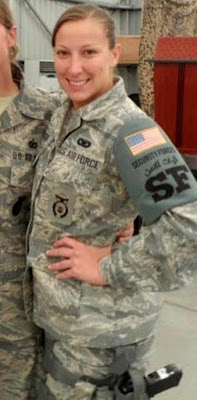
Osnos briefly examines the life and death of Ashlii Babbitt, who was shot while trying to enter a window of the Capitol. He sees similarities with former Marine and Afghanistan War veteran Sidney Muller.

“Babbitt’s fortunes had followed the course of the country’s. In 2002, after graduating from high school, she had been drawn to the military, much as Sidney Muller had, in pursuit of a purpose larger than herself. Babbitt enlisted in the Air Force and was assigned to guard the gates at air bases around the world. She served in Afghanistan, Iraq, and the United Arab Emirates. She was discharged in 2016… her debts piled up.

“As her financial life deteriorated, she poured more of her energy into politics. She filled her social-media channels with paeans to QAnon and Trump, and rants against immigration, drugs, and Democrats…

“In its particulars, Ashlii Babbitt’s life was an uncanny reflection of the population that stormed the Capitol the day. After police had arrested more than a hundred of them, patterns emerged. Nearly 20 percent had served in the military, according to an analysis by NPR. And nearly 60 percent had a history of financial trouble…”

(A more recent study by George Washington University shows that the number of active duty service members and veterans is closer to 12 percent, but the study shows other troubling information related to the U.S. military and extremist groups, as reported by Military Times.)


Lincoln and Seward
Osnos reflects on why “Donald Trump’s insurrection failed” and how close it came to succeeding.

The preservation of democracy depends on enough good people willing to put country ahead of self.

“When I paused to consider just how far the coup progressed,” Osnos says, “it often put me in mind of an observation from the Civil War by Abraham Lincoln’s Secretary of State, William Seward: ‘There was always just enough virtue in this republic to save it; sometimes none to spare.’”


People who love good books will be pleased with some of Osnos’s references, many touching on the rise of autocracy and threat of tyranny –– works by: Hannah Arendt, Anne Applebaum, Phil Klay, Susan Jacoby, Rick Perlstein, Norman Mailer, Martha Nussbaum, Joanne B. Freeman, and Wendell Berry.


U.S. Marine Corps veteran 2nd Lt. Phil Klay, signs his book 'Redeployment' as fans bring the book to him at the Marine Corps Exchange aboard Marine Corps Base Quantico, Va., March 11, 2015. Klay’s book offers a dozen short stories based on the perspectives and views of Iraq veterans. (LCpl. Nathaniel S. McAllister)


These authors will help anyone have the widest possible rear-view mirror to see the road we’ve been on toward division in our country, up to and including the attempted coup of 1/6. They also give hope and inspiration to patriots dedicated to defending the Constitution.


Evan Osnos has written a compelling work of contemporary and contextual history in “Wildland: The Making of America’s Fury” to help us get to a final destination of understanding –– and accountability.


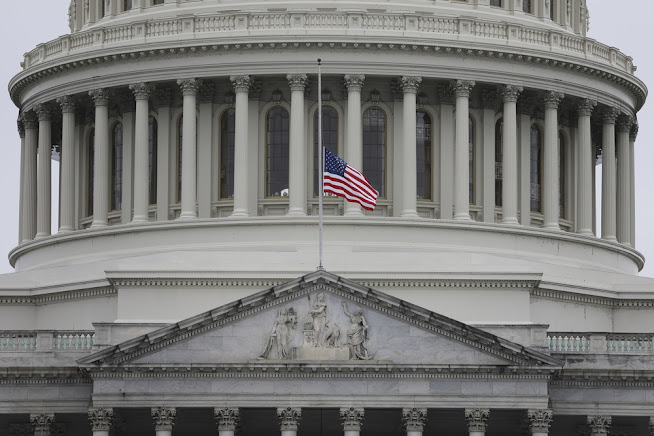
Top photo: The U.S. Flag at the Capitol building flies at half-staff for fallen Capitol Police officer Brian Sicknick, Jan. 11, 2021. Sicknick sacrificed his life to protect members of Congress during the insurrection at the Capitol on Jan. 6, 2021. (U.S. Air National Guard photo by Staff Sgt. Devlin Drew)