Showing posts sorted by relevance for query "found haiku". Sort by date Show all posts

Sunday, May 13, 2018

The Found Haiku of John McCain

By Bill Doughty

In recent years Navy Reads  posted blogs on the found haiku of Abraham Lincoln, Mike Krzyzewski, Marshawn Lynch and other leaders, coaches and philosophers. "Found haiku" are discovered in the writings or utterances of others and fit the three-line 5/7/5-syllable rule and goal of communicating deeply but in few words.

Sen. John S. McCain III reenlists Sailor of the Year ET2 Michael Papapietro in Cam Ranh, Vietnam
aboard destroyer 
USS John S. McCain (DDG 56) June 2, 2017. (Photo by MC3 Joshua Mortensen).
Senator and former U.S. Navy aviator John S. McCain III, who was held as a Prisoner of War during the peak of the Vietnam War, has written a number of memoirs and endorsements of others' books, which provide the source for the found haiku that follow.

Like all humans, he is not perfect, and he is the first to admit so. In fact, his self-awareness and self-assessment provide a treasure-trove of words from which to find these found haiku gems.

Most of these words reflect McCain's thoughts about war, service, sacrifice, captivity, character, resilience and reflection. The Vietnam War understandably casts a long shadow in his life as it does for our nation.

Leading with honor
is about putting service
to others ahead

Immortality ...
the aspiration of my
youth has slipped away

Time to examine
what I have done and failed to
do with my career

All people, even
captured enemies, possess
basic human rights

For two centuries
men of my family were
raised to go to war

Freedom: America's
honor, and the honor comes
with obligations

A few stories from
my misspent youth that I had
managed to bury

If you valued them,
and held them strongly, love and
honor would endure

In Vietnam I (came)
to understand how brief a
moment a life is

Defying death's call
in ... (the) bamboo cages of
South Vietnam haunt

There are some stories
of the soul that extend far
beyond prison walls

We paced the open
compound at Plantation Camp
together, waiting

communicating...
affirmed our humanity.
It kept us alive

communicating
was the indispensable
key to resistance

It was best to take
the long view (that) we would get
home when we got home

Glory belongs to
the act of being constant
to something greater

To a cause, to your
principles, to the people
on whom you rely

Before Vietnam
the truth of honor ... courage ...
obscure to many

I learned the truth in
war: there are greater pursuits
than (just) self-seeking.

I have managed to
prevent bad memories of
war from intruding

(I regretted)
I hadn't read more
books so I could keep my mind
better occupied

The headstones bear the
names of people of every
ethnic origin

The final resting
places of professional
soldiers and conscripts

Rich and poor, Christian,
Jew, and muslim; believer
and non-believer

The last three found haiku come from McCain's "13 Soldiers: A Personal History of Americans at War" (Simon and Schuster, 2014, written with Mark Salter). Salter has served on McCain's staff for more than two decades.

John McCain reassesses in 1973.
Other haiku are from McCain's "Faith of My Fathers: A Family Memoir" (Random House, 1999), "Worth the Fighting For: A Memoir" (Random House, 2002), the foreword of "Glory Denied" (by Tom Philpott, W.W. Norton, 2001), the foreword of "Leading with Honor" (by Lee Ellis, FreedomStar Media, 2012) and the Senate Floor statement published in "The Official Senate Report on CIA Torture: Committee Study of the Central Intelligence Agency's Detention and Interrogation Program" (Skyhorse Publishing, 2015).

McCain, with collaborator Mark Salter, just published another memoir, "The Restless Wave: Good Times, Just Causes, Great Fights and Other Appreciations," to be published May 22 and to be featured in a future Navy Reads post.

NPR published an excerpt that brings forth more John McCain found haiku, and in the classic form – bringing forth nature themes:

I'd like to go back
to our valley ... see the creek
run after the rain

cottonwoods whisper
in the wind ... smell rose scented
breeze and feel the sun

I want to watch the
hawks hunt from the sycamore
and then take my leave

Hear the truth, passion and peace in McCain's words and voice

McCain's memoirs show how much he revered his grandfather, respected his father and loves his mother, Roberta. He feels especially close to his mom

Happy Mother's Day 2018.

John McCain and his mother, Roberta, on NBC's Meet the Press in 2007.


Friday, August 11, 2023

Found Haiku in 'Believer'

Review by Bill Doughty––

Did the pilot encounter a UFO before losing contact with air traffic control? What do people, including his fiancé, believe happened to Frederick Valentich on Saturday, October 21, 1978, over Bass Strait, Australia? And what did Valentich report he saw and experienced just before his transmission cut off, the pilot never to be heard from alive again?


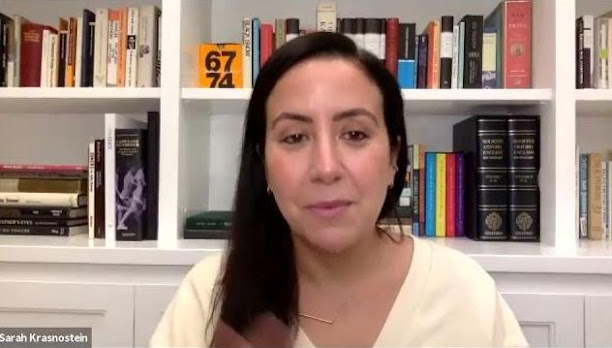
It’s one of the true stories explored by master writer Sarah Krasnostein in “The Believer: Encounters with the Beginning, the End, and Our Place in the Middle” (Tin House, 2022).

In “The Believer” we meet UFOlogists, an abuse survivor who hired a hitman, members of a Mennonite choir who perform in a New York subway, a “death doula” who helps individuals and families, ghost hunters who search for evidence in haunted places, a geologist who wants to believe the earth is 6,000 years old, and others following and sharing their beliefs. Throughout, Krasnostein presents characters in ways that make us care about them. The sometimes floating, sometimes strobe-like stories are often deeply painful but always thought-provoking, poetic and profound.


Her writing unfolds the biggest of issues: life, death, hope, reality, existentialism.


“From the absurdity of our deepest paranoias to the radical coherency of our highest art, we are compulsive converters of fact into meaning.”


UAP screen shot by a naval aviator (U.S. Navy)
She visits the Creation Museum in California, discusses the cantina scene in Star Wars, shares the beauty of Wynton Marsalis’s “Canon for Three Trumpets and Strings,” and considers the science of oneness and shared atoms with religious fundamentalists, noting, “…they believe I am going to Hell, and I believe they may already be living in one…”

This is a book of fascinating encounters and deeply personal contemplation.


As if taking a book from a library shelf, Krasnostein quotes works by great minds such as Hanna Arendt and her “warning against mistaking knowledge for thought, and truth for meaning;” Haruki Murakami who contemplates “existential reality of nonexistence;” and Martin Rees’s observation that “absence of evidence is not evidence of absence” (now pertinent to discussion of Unidentified Aerial Phenomena, including recent revelations by U.S. military pilots and former naval aviators).


She spotlights Alvin Toffler, author of “Future Shock,” who in 1970 identified “the dizzying disorientation brought on by the premature arrival of the future.”Midway in the last century telephones were just for calling people. Computers were the size of large rooms. TVs had three channels –– all black-and-white, mostly white. 


Krasnostein writes about some of the people in their early sixties and late fifties who experienced Toffler's future shock: “Over the span of their lives to date, LP records disappeared and then cassettes. Reel-to-reel, Beta, VHS. Carbon copies, typewriter ribbons. The black tongue of film inside a camera, every frame precious.”


Ahhh, an unexpected “found haiku” –– a five-seven-five-syllable stanza of words. Poignant. Exquisite. Unintentionally a poem:


…ribbons. The black tongue

of film inside a camera,

every frame precious


Other found haiku emerge as we read Krasnostein’s investigation of religion, alien abductions, and other beliefs.


She investigates UFO sightings, events, and conspiracies in Australia, including the Westall event of 1966. She visits with a sect of fundamentalist Christians in their homes and at their services, including in the dead of winter. She befriends a dying woman and her family, who allow her to share in the process of saying goodbye. And she follows the life of a convicted repentant murderer who helps homeless people stay alive.


Some found haiku in "The Believer":


Green-white flash moving

extremely quickly across

the sky. Metallic…


Over long winters

of short days when nothing thawed

or melted away


The railing is iced

with a thin line of fresh snow

as I climb the stairs


Through which a chill wind

blew: grief frustration closer

to strangulation


Inside, I add my

wet Nikes to the dozens

of similar pairs


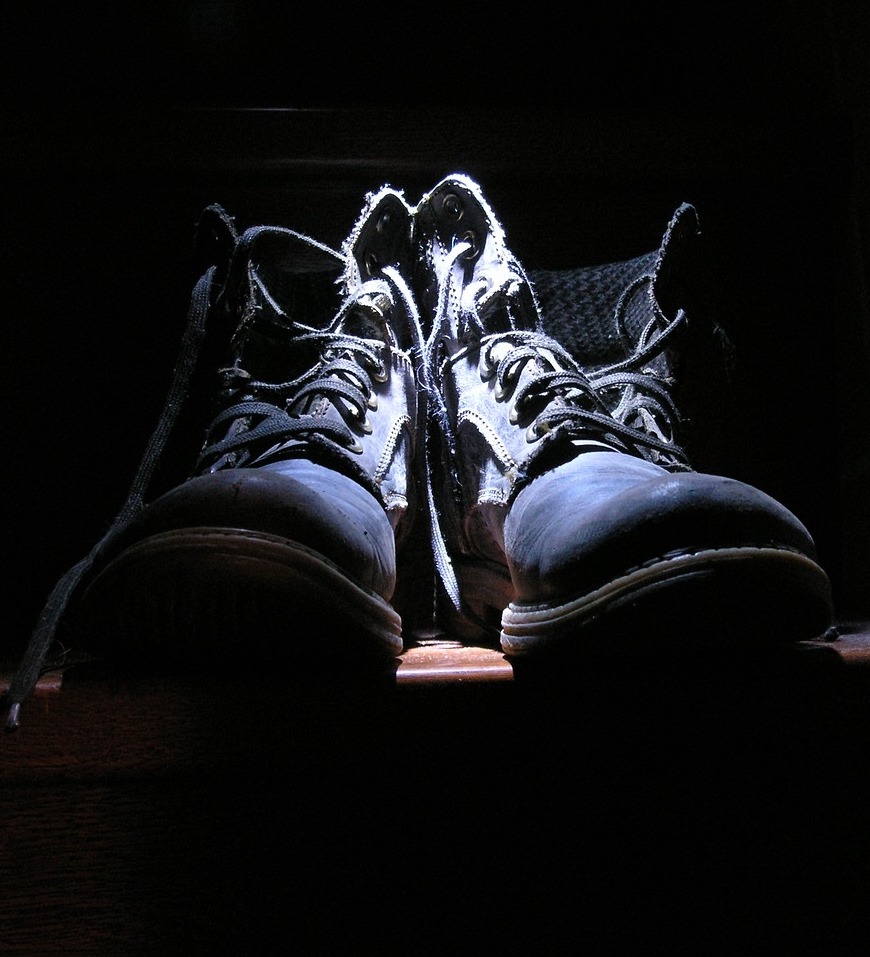
On the sofa where

they lean towards each other like

a pair of old boots


Air is cold through the

clean pane as he looks up at 

the blackness he knows


Of the clock face laid

bare as each hour came once, and

vanished forever


Salting of stars so

thick it reminded me we

are floating in space


How close the remote

past is: we live inside it

the light is the same


Self … rumination

carving neurological

tracks deep as canyons


Krasnostein examines the choices we make in our noble but vain attempt to find answers to every question. She sees how some believers accept certain inevitabilities. Reaching for more books, she cites other authors and thinkers, including Elizabeth Kübler Ross, Stephen J. Gould, George Orwell, Charles Darwin, James Baldwin, Ralph Waldo Emerson, and Jorge Luis Borges. Borges imagined Paradise “as a kind of library,” one that Krasnostein contemplates visiting.


“...I always imagined that library as an Eden where all the operating instructions are filed. Not only all the books ever written, but also each of our stories: the past meeting the future, everything indexed and logically related, a return to when the world was as seamless and whole as an apple. I suppose this reflected a belief in the world as a certain kind of text; a faith that, if I could only ask the right questions, I could finally understand.

“To believe in the world as this type of text is to believe that all lives –– regardless of whether they resolve happily –– make sense. To have faith in context and causation. To insist that people for the most part are intelligibly coherent in the sense of being predictably inconsistent and that they are capable, within reasonable bounds, of incredible insight and meaningful growth as they learn, painfully, to bend themselves around reality instead of expecting reality to miraculously bend itself around them.”


To have such an exquisite belief about people, she says, is just wrong. But adds, “what other choice do we have?”

Hannah Arendt is a touchstone in "Believer." Especially Arendt's "The Life of the Mind" "in which she explored the powers and limitations of our cognitive function. Arendt believed that every civilization is founded on the capacity to ask unanswerable questions. Krasnostein says, "In other words, our social survival –– even our physical survival –– is bound up with our spiritual survival and it might rely, as a matter of first principles, more on the aspirations underlying our questions and our ability to tolerate uncertainty than on our proficiency at defending solutions just for the sake of having them."

Could it be that commonality in our very atoms and shared place in space and time here "in the middle" is more profound than superficial differences –– despite indoctrination, amygdala influence, and ego issues?

I couldn’t help but notice that the subtitle of this wonderful book is, itself, a found haiku:


Encounters with the

beginning, the end, and our

place in the middle


(We have featured Navy Reads posts with other found haiku over the years, including from President Abraham Lincoln and Senator John S. McCain.)

Saturday, February 16, 2013

Abraham Lincoln’s ‘Found Haiku’

by Bill Doughty

Haiku: Insights distilled to three lines of 5, 7 and 5 syllables only.

Originally from Japan and traditionally nature based, haiku are poems that can bring out subtle but deep insights in a few words.  Sometimes, haiku can be found in other people’s words.  The ‘found haiku’ on this page come from the published works of President Abraham Lincoln.  These are his words:

with other pillars
hewn from the solid quarry
of sober reason
(Speech before the Young Men’s Lyceum of Springfield, Illinois, Jan. 27, 1837)

his ruling passion --
a love of liberty and
right, unselfishly
(Eulogy of Henry Clay, July 16, 1852)

steadily as man’s
march to the grave, we have been
giving up the old
(Speech at Peoria, Illinois on Kansas-Nebraska Act, Oct. 16, 1854)

We live in the midst
of alarms, anxiety
beclouds the future
(Speech before the first Republican State Convention of Illinois, May 29, 1856)

In my opinion...
a house divided against
itself cannot stand
(Speech before the first Republican State Convention of Illinois, June 17, 1858)

that if a man says
he knows a thing, then he must
show how he knows it
(Speech at first Lincoln-Douglas debate, Aug. 21, 1858)

Let us have faith that
right makes might; and in that faith
...dare to do our duty
(Speech at New Haven, Connecticut, March 6, 1860)

touched, as surely
they will be, by the better
angels of our nature
(First Inaugural Address, Mar. 4, 1861)

Let us proceed in
the great task which events have
devolved upon us
(First Annual Message to Congress, Dec. 3, 1861)

Slavery is the
root of the rebellion...
it’s sine qua non
(Reply to a committee from Chicago religious denominations, Sept. 13, 1862)

The subject is on
my mind, by day and night, more
than any other
(Reply to a committee from Chicago religious denominations, Sept. 13, 1862)

Sorrow comes to all
and to the young it comes with
bittered agony
(Letter to Fanny McCullough, Dec. 23, 1862)

Peace does not appear
so distant as it did. I
hope it will come soon
(Letter to James C. Conkling, Aug. 26, 1863)

with malice toward none,
with charity for all, with
firmness in the right
(Second Inaugural Address, March 4, 1865)

We shall sooner have
the fowl by hatching the egg
than by smashing it
(“On Reconstruction,” his last public address, April 11, 1865)

President Lincoln, 1864
Lincoln was a master of prose whose writing feels like poetry.  His Gettysburg Address and his inaugural addresses are some of the finest examples of writing in American History.  As we reflect on the 150th anniversary of the Civil War, Navy Reads will continue to periodically feature works by and about our 16th President. As we end wars in Iraq and Afghanistan, deal with perils of a continuing resolution and sequestration, and even contemplate asteroids and meteors in 2013, Lincoln’s words offer inspiration, perspective and hope.

The haiku in this Navy Reads post were "found" by Bill Doughty from works published in “The Essential Abraham Lincoln,” from the Library of Freedom, published by Gramercy Books, distributed by Outlet Book Company, Inc., a Random House company. The works are from Lincoln’s original papers, collected in The Complete Works of Abraham Lincoln (twelve volumes, 1905), edited by John G. Nicolay and John Hay, and prepared with the cooperation of Robert Todd Lincoln, the president’s son.