Showing posts sorted by relevance for query gleaves. Sort by date Show all posts

Tuesday, August 27, 2019

'The Admiral'

Review by Bill Doughty

One hundred years ago, Sept. 1, 1919, Admiral Albert Gleaves, commander of the Asiatic Fleet, broke his flag as a four-star, full admiral. "Four days later we sailed," he writes in his memoirs. "I was glad to get to sea again and into the roaring northeast trade winds which soon blew all the dirt and much of shore out of the ship."


First published in 1934 and republished in 1985 (Hope Publishing House) with a foreword by Adm. James D. Watkins and preface by Vice Adm. William P. Lawrence, Gleaves's autobiography "The Admiral" is a portrayal of a seagoing life and a fascinating portrait of a Navy's transition from sail to coal to oil, from the War of 1812 and Civil War to World War I, and from war to global diplomacy.

During his career Gleaves served under admirals like Barker, Dewey, Coughlan and Walker, "men who had been tried in battle and had served under Farragut and Porter in the Civil War. Without exception they were typical of what is expected of the American sea officers. Even if not always correct in their judgments or methods, they were a fine lot of American gentlemen devoted to their profession, and not one who did not in himself set an example of honor, loyalty and patriotism. All were prime seamen too, adhering perhaps a little too much to the ideas of the sail period, which was natural, but boldly assuming the care and handling of huge modern steel ships, whether singly or in squadron."
"Of course, all these men were not of the same type of mind. Some were prosaic and cautious, strict in interpretation of the regulations, seeing nothing but the letter of the law and following it to the death. Others were a law unto themselves, believing the naval regulations to be intended as a guide for those who carried no light of their own, and more honored in the breach than in the observance. These used their own discretion, never requested instructions, acted on their own and let it go at that. The latter were the better all around officers, and made the better leaders."
Gleaves, who was commissioned an ensign in 1881, writes about the limits of coal consumption at sea, the importance of new "electrical officers" and the dangers of having to bring ice on board (which could mean a deadly typhoid outbreak).

These sentences about the old Navy can bring a smile: "While exercising spars and sails, our main topgallant mast was sprung." And, Admiral Davis "thought the navy was headed to hell ... there wasn't a sailor ... who knew the difference between a topgallant sheet and a topsail reef tackle!"

Old Salts of the Square Rigger Navy aboard USS Mohican in 1888 (Photo by Assistant Surgeon H.W. Whitaker, USN (Navy History and Heritage Command)

Gleaves gives an unvarnished view of enlisted sailors when he first served in the fleet, nearly a century before the modern, all-volunteer, integrated, professional force.
"The crew of the Hartford was a heterogeneous collection of various nationalities. This was usual for that period. Few Americans enlisted in the navy, and those who did were invariably beachcombers and the like. Often they were deserters from other ships who reenlisted under different names. North countrymen, Swedes and Norwegians predominated. They were known as 'square heads' – solid, heavy and dumb – but faithful and, as a rule, excellent seamen. Portugal furnished a large percentage of the stewards, while Norfolk and its vicinity contributed more than half of the colored servants. The worst elements in the ship's company were the degenerate Englishmen, for the most part deserters from their own navy or merchant service. They were known as 'limeys,' and were not liked either forward or aft. The best element beside the few old-timers was perhaps Irish – splendid sailors, hard-drinking and hard-fighting, but ready at all times to reef a topsail in a gale of wind, join a landing party or man a cutter in a rugged sea."
Frederick Douglass
In 1889 Gleaves married Evelina Heap, daughter of David Porter Heap who was nephew of Commodore David Porter "of USS Essex fame." They would have two daughters. 

Gleaves was a son of Tennessee who attended the Naval Academy just eight years after the end of the Civil War. He was born twelve years before nonwhite American males could vote (thanks to the 15th Amendment), and he was 62 years old – and six months from retirement – before ratification of the 19th Amendment acknowledged a woman's right to vote.

As a young officer Gleaves served aboard USS Dolphin, captained by future rear admiral Charles O'Neil, a survivor of the Cumberland's battle with the Merrimac. Their first cruise was a mission to pick up a distinguished American at Puerto Rico and take him on a tour of inspection around Haiti. The Navy provided escort to the new minister of Haiti: Frederick Douglass.
"One day during the morning watch, while lying off Gonave, Mr. Douglass was talking to me on the quarterdeck about the future of the islands and said, 'As long as the natives have only to get their breakfast off the trees they will never work. Frederick Douglass was a most interesting person. He had belonged to Col. Edward Lloyd of the eastern shore of Maryland. When he was at the New York yard, waiting for the man-o'-war which was to take him to Hayti (sic), it was said the Colonel Lloyd's son, an ensign in another ship at the yard, called on his father's former slave and that Douglass said of this visit, he had received many honors in his life, but none had touched him so deeply as this attention shown by the son of his old master."
Gleaves recounts times spent with Assistant Secretary of the Navy and later President Theodore Roosevelt. In his career he deployed to the Falklands, Europe, Aden, Bombay (now Mumbai), Ceylon, Central America, Philippines, Formosa (now Taiwan), China, Japan, Russia and Hawaii.

He was in Hawaii aboard USS Boston shortly before the overthrow of the monarchy.


"The Sandwich, or Hawaiian, Islands, as they are now called, are strategically the most important outpost of the United States," Gleaves writes. "For years they were a tempting prize to the nations of the world, but all feared to take them. Every European nation knew that the rape of those islands would mean immediate restitution, or war, with the United States."
"On the 24th of August (1894) we arrived at Honolulu and moored inside the reef. The San Francisco, flagship of Adm. George Brown, was in port awaiting our arrival, and went to sea that afternoon. The admiral was very popular in the islands and had made several cruises there. He had brought the body of the late King Kalakaua back to Honolulu after his death in San Francisco ... When we had been in Honolulu for several days we were presented to Queen Liliuokalani at the palace. She was coldly polite and did not appear to be overjoyed to see either our minister, Mr. Stevens, or Captain Wiltse. The queen, a pureblooded native, had traveled in Europe and the United States and was a woman of the world. Evidently she sensed the approaching political storm which was inevitable and was about to blow her off her tinsel throne."
Gleaves was also a witness to history at the beginning of the Spanish-American War.

Torpedo boat USS Cushing
In fact, his next ship, the torpedo boat USS Cushing, would have been tied up to the ill-fated USS Maine in Havana Harbor if he hadn't been delayed by the death of his close friend Ens. Cabell Breckenridge on the eve of the explosion of the Maine and start of the war in April 1898. Breckenridge's replacement was Midshipman Henry Mustin.

Adm. Albert Gleaves
Gleaves provided critical communication, patrols, scouting and blockading during the short war, and was commended by Rear Adm. Charles D. Sigsbee for his assistance during "troubled times."

At the turn of the century Gleaves took command of USS Mayflower, "the vessel selected by President Roosevelt (T.R.) for his special use." It was considered a plum assignment and "a great prize in the Navy. I was lucky enough to be the first to get it."

He helped develop torpedoes for the Navy and commanded the North Dakota in the early part of the century. In 1914, Gleaves took command of USS Utah and in 1915 he was promoted to rear admiral.


German sailors of U-53 visit U.S. in 1917.
Admiral Mayo ordered the Distinguished Service Medal be presented to Gleaves for his actions as Commander, Destroyer Forces in 1917 calling for immediate readiness review of all destroyers and destroyer crews. After an interaction with German U-53 submarine sailors Gleaves recognized America's imminent involvement in the Great War.

He would achieve international fame for his service as Commander, Cruisers and Transport Force. According to Adm. Watkins, "That organization ferried approximately one million American soldiers to France. Remarkably, not a single soldier lost his life at sea during this demonstration of American sea power. Their unique story is a classic example of naval power projection."

Return of the Mayflower, as the United States Navy brings assistance to Europe in the First World War. (painting by Bernard F. Gribble)
In his memoirs, Adm. Gleaves calls it "the most important command I ever had." He pays tribute "to the men who carried me through so loyally." In the preface to his 1919 book, "The History of the Transport Service," Gleaves recognizes "the officers and men of the American Transports, and my admiration for their unsurpassed skill and endeavor in the performance of their duties. At sea for many years, these Master Mariners of the United States lived up to the highest traditions of the sea, and brought credit to their country."

St. Nazaire Monument, France commemorating 1917 convo
President Franklin D. Roosevelt wrote, "Admiral Gleaves had already achieved distinction in the Navy before his eminent stature was further revealed by his service as commander of the cruiser and transport force during the World War. He organized the strategy of our transport service and completed the enormous task assigned to him without the loss of a single soldier. For this service he won the admiration of the world. His long naval career was characterized by great versatility and by the utmost tact and diplomacy in the discharge of the varied duties which fell to him to perform."

Gleaves was an intense reader and prolific writer.

Because he was a such a good writer and a great witness to history, it is rewarding to read his perspective from Vladivostok, Shanghai and Hong Kong – when Russia and China were allies or friends and Germany, Japan and Spain were, for a time, our enemies.

After diplomatic work in Russia, China and Japan, Gleaves lowered his admiral's flag for the last time, Feb. 4, 1921, and sailed for home via Vancouver and Seattle.

"My last cruise was ended," Gleaves writes at the end of his memoirs. "For me the lights had twinkled on the rocks for the last time."

Rear Admiral Albert Gleaves (at center, facing right), Commandant of the Boston Navy Yard, oversees the transfer of guns from USS Constitution to the Ancient and Honorable Artillery Company of Massachusetts, 1921. (NHHC)
Gleaves died January 6, 1937, a few days after his 79th birthday. He is buried at Arlington National Cemetery.

His family helped launch his namesake USS Gleaves (DD-423) one month later. His granddaughters, Evelina Gleaves Van Metre and Clotilda Florence Cohen, assisted at the launching ceremony at Bath, Maine. (Clotilda died in 1996. Evelina died earlier this year and was interred last month, July 31, 2019, at Arlington.)

USS GLEAVES (DD-423) joint sponsors Evelina Gleaves Van Metre and Miss Clotilda Florence Cohen at launching of USS Gleaves (DDG-423). (NHHC)


Thursday, February 6, 2020

Navy and 'Great Influenza' Changed the World

Review by Bill Doughty

One hundred years ago another wave of an influenza epidemic crashed on America's shores.
(Illustration from Penn Medicine News)

"By February 7, 1920, Influenza had returned with enough ferocity that the Red Cross declared, 'Owing to the rapid spread of influenza, the safety of the country demands, as a patriotic duty, that all available nurses or anyone with experience in nursing ... (offer) their services," according to John M. Barry, author of "The Great Influenza: The Epic Story of the Deadliest Plague in History" (Viking/Penguin, 2014).

Courage in the Face of Fear

Fortunately, the epidemic did not hit with the same deadly force throughout 1920 that it had in the previous two years. 

The epidemic of 1918 erupted with such speed and scope that it created worldwide fear and terror. This influenza seemed to target young, otherwise healthy, adults as well as people with vulnerable immune systems.
"In 1918 fear moved ahead of the virus like the bow wave before a ship. Fear drove the people, and the government and the press could not control it. They could not control it because every true report had been diluted with lies. And the more the officials and newspapers reassured, the more they said, 'There is no cause for alarm if proper precautions are taken,' ... the more people believed themselves cast adrift, adrift with no one to trust, adrift on an ocean of death."
The misnamed "Spanish Flu" of 1918 (Barry makes a strong case that it originated in Kansas) took more American lives in the first year (675,000) than all the U.S. service members who died fighting in WWI, WWII, the Korean War and Vietnam War combined. In one week in October, 4,597 Philadelphians died of the disease.

Paul Lewis
On the front lines of the war against the killer influenza epidemic – in laboratories and medical facilities – U.S. Navy and other military and civilian researchers searched for the pathogen as well as a vaccine and a cure.

This book is dedicated, in part, to one of those Navy warriors, and opens with a scene about him: "The Great War had brought Paul Lewis into the navy in 1918 as a lieutenant commander ..." Lewis had previously helped prove that a virus caused polio, "a discovery still considered a landmark achievement in the history of virology."

Lewis saw the early signs of disease in sailors in Philadelphia, where the virus was killing five percent of Sailors who showed any symptoms of influenza. 

In Boston, another Navy medical warrior, Lieutenant Commander Milton Rosenau at the Chelsea Naval Hospital, mobilized to fight the epidemic.

(Photo from Bureau of Medicine and Surgery)
"Rosenau too was a scientist who had chosen to leave a Harvard professorship for the navy when the United States entered the war, and his textbook on public health was called 'The Bible' by both army and navy military doctors."

Other military doctors and researchers who raced against the disease included William Henry Welch, Simon Flexner, Victor Vaughn and William Gorgas. Oswald Avery went from Army private to captain; he would eventually make "the most profound discovery of all" in his search for the cause of the disease.

The enemy in 1918 was not only the epidemic of disease, but also a pandemic of fear. "Uncertainty follows distrust, fear follows uncertainty, and, under conditions such as these, terror follows fear." Truth matters.

Emergency hospital in Funston, Kansas.
A Maritime Component

Author-historian Barry profiles each of these courageous warriors as well as dozens of other people who faced the crisis. He reveals the strong maritime component to its global spread.

(Photo from Naval History and Heritage Command)
The pandemic of 1918-1920 was fueled by WWI fervor and war mobilization – in crowded barracks and aboard ships, including international steamers and U.S. Navy vessels. Dozens of shipyards were hit and had to close. Naval hospitals were overwhelmed. Navy brig prisoners volunteered as test subjects for Lt. Cmdr. Lewis and other scientists.

Sailors unintentionally brought deadly influenza to Great Lakes Naval Training Center and Newport Naval Base in Rhode Island; to New Orleans and Puget Sound; back-and-forth to Europe; as well as across the Pacific aboard USS Logan to Guam. Adm. Albert Gleaves and his captains dealt with effects of the pandemic, including aboard USS Leviathan.

Navy collier USS Brutus carried a relief expedition to Juneau, Alaska. "They found terrible things. Terrible things," Barry writes. "In Nome, 176 of 300 Eskimos had died. But it would get worse." Other Red Cross relief teams to the Aleutian Islands found devastation caused first by the disease, then by starvation and finally by starving dogs.

Nineteen U.S. Navy nurses died on active duty during the war, more than half from influenza. One of the survivors was the second superintendent of the Navy Nurse Corps, Chief Nurse Lenah H. Sutcliffe Higbee, recipient of the Navy Cross and namesake of the first USS Higbee, commissioned in 1945. The keel was laid for the future USS Lenah H Sutcliffe Higbee (DDG 123) in November 2017.


Changing the World

The epidemic of 1918-1920 occurred at a time when women increased demands for the right to vote, a right won 100 years ago. Women had supported the war effort in Europe, and they served on the front lines in the fight against the epidemic.

The nation and world changed in other ways too in those first decades of the 20th century. 

President Woodrow Wilson's physician, Navy Rear Adm. Cary Grayson (who had served as presidential physician to Presidents Teddy Roosevelt and William Howard Taft) accompanied Wilson to the peace conference in Paris in 1919. Both Wilson and Grayson, as well as Wilson's wife and others, contracted influenza while in Paris.

President Wilson and Rear Adm. Grayson
Barry contends that the disease caused physical weakness and some mental lapses in the commander-in-chief and may have led to his stroke four months later. But the devastating effects of Wilson's bout with influenza also may have led to his concessions to the allied enemies of Germany in order to save his League of Nations.

"Historians with virtual unanimity agree that the harshness toward Germany of the Paris peace treaty helped create the economic hardship, nationalistic reaction, and political chaos that fostered the rise of Adolf Hitler," Barry writes. Feelings of persecution and resentment in Nazi Germany led to another world war.

Other ways the epidemic changed the world but for the better: Science, as represented by medical centers and researchers, triumphed over superstition. Corrupt local authoritarian governments in Philadelphia (the Vare political machine) and New York (Tammany Hall) were exposed and impeached in the court of public opinion. Truth and ethics were shown to be supremely important in the face of fear and terror.
"The media and public officials helped create that terror – not by exaggerating the disease but by minimizing it, by trying to reassure.Terror rises in the dark of the mind, in the unknown beast tracking us in the jungle. The fear of the dark is an almost physical manifestation of that. Horror movies build upon the fear of the unknown, the uncertain threat that we cannot see and do not know and can find no safe haven from. But in every horror movie, once the monster appears, terror condenses into the concrete and diminishes. Fear remains. But the edge of panic created by the unknown dissipates. The power of the imagination dissipates."
Cmdr. Richard Shope
Meanwhile, researcher Paul Lewis had remained perpetually restless both during and after the epidemic. The microscope was his periscope searching for an enemy lurking in his laboratory – "the mysteries he embraced. He settled into them like a man casting off into an impenetrable ocean fog, a fog that made one feel both alone in and part of the world.

"Among the warriors against fear was Paul Lewis's protege and assistant, Richard Shope. 

Shope investigated swine flu in the 1920s and by 1931 published his papers showing his discoveries. He included Lewis's name as an author on one of his papers.

Shope's research was successful. "He had found the cause of influenza, at least in swine," Barry writes. "We now know that the virus he found in swine descended directly from the 1918 virus, the virus that made all the world a killing zone."

In 1928, in England, Alexander Fleming serendipitously discovered penicillin while researching influenza. Oswald Avery's work on influenza led directly to the discovery of DNA, further changing the world.

Applied Science: Coronaviruses

Barry provides more than a history of the epidemic. He also explains coronaviruses, Acute Respiratory Distress Syndrome, and the science of the influenza virus at the cellular level, including the difference between a slower mutating DNA virus and a faster mutating RNA virus.

"Influenza is an RNA virus. So is HIV and the coronavirus. And of all the RNA viruses, influenza and HIV are among those that mutate the fastest," Barry writes.
"[O]ne cannot leave this subject without speaking to other questions: the likelihood and potential danger of another influenza pandemic, what we can learn from the one of 1918-1919, and how we can apply those lessons to the emergence of a new pathogen, whether that pathogen is a weapon of terror or a new natural menace – such as Severe Acute Respiratory Syndrome, SARS, the disease which spread from animals to man in the spring of 2003 and threatened to become a major pandemic.The answer to the first question – the likelihood and potential danger of another influenza pandemic – is not very reassuring. Every expert on influenza agrees that the ability of the influenza virus to reassort genes means that another pandemic not only can happen. It almost certainly will happen."
Barry offers a special discussion of the coronavirus SARS – Severe Acute Respiratory Syndrome – that appeared in China in 2003 and spread quickly across borders bringing with it susceptibility to ARDS. The Navy forward deployed to the western Pacific was concerned about the possibility of SARS outbreaks in 2004. The Navy maintains a preventive medicine SARS webpage as part of Ready Navy. 

The Navy (Navy and Marine Corps Public Health Center), DoD and Centers for Disease Control are leaning forward to provide information and prevention tips regarding the newly emerged novel coronavirus (2019-nCoV) that reportedly originated in Wuhan, China.

Today, unlike 100-plus years ago, scientists throughout the world are able to communicate and collaborate within seconds. They can, if allowed, share information and assistance across borders. An informed public can make rational decisions and not succumb to fear. Medical scientists have more tools and information to fight against pandemics.

Read this book to see the fate of Paul Lewis after the war. 

Right up there with McCullough's sweeping history books, Barry's "The Great Influenza" is a masterpiece. This is a great Navy read.

Camp Lemonnier’s medical team gives influenza vaccinations to service members, Oct. 28-30, 2019. (U.S. Navy photo by MC2 Marquis Whitehead)

Sunday, May 22, 2022

Gen. Smedley D. Butler, Coup Fighter

Review by Bill Doughty––

Ninety years ago this month –– May 1932 –– thousands of military veterans marched on Washington D.C. and set up a tent city near the Capitol and within sight of the USS Constitution (pictured above).


Victims of the Great Depression, they were hungry, unemployed, and desperate. The “Bonus Marchers” demanded the right to cash in their bonuses, in the form of bonds due to be payable in 1945.

In Congress, the House of Representatives passed a bill authorizing pay to the veterans, but Republicans in the Senate declined to pass it. President Herbert Hoover had vowed to veto the bill anyway.


Hoover would soon order Army Generals Douglas MacArthur and George C. Patton to move against the marchers and get them out of Washington.


Running out of food by July, the Bonus Marchers threatened to storm the Capitol.


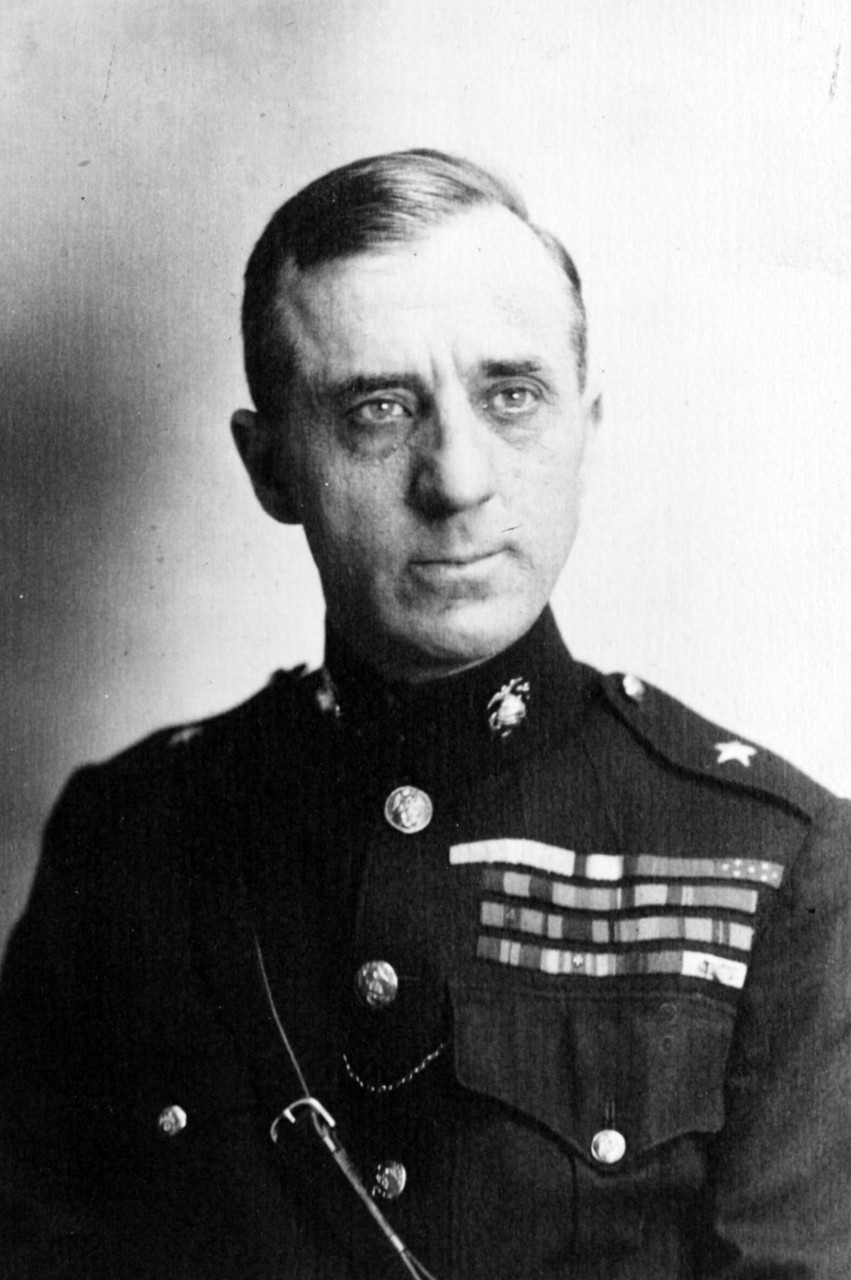
Butler
Enter Marine Corps General Smedley Darlington Butler, twice awarded the Medal of Honor, a respected and renowned veteran of several wars and conflicts. Butler met with the veterans in their tent city. He offered his support and advice: “If you don’t hang together, you aren’t worth a damn!”

He also suggested a different tactic instead of marching on the Capitol: “When you get home, go to the polls in November… Now go to it!” 


Butler warned the marchers against violence against the government, according to author Jules Archer, author of “The Plot to Seize the White House” (Hawthorn Books, 1973).


“You’re all right so long as you keep your sense of humor,” Butler said in is raspy hoarse voice, according to Archer.“ If you slip over into lawlessness of any kind, you will lose the sympathy of a hundred twenty million people in the nation,”


But it was Hoover’s administration that initiated the violence. MacArthur and Patton directed tanks, cavalry, infantry with bayonets, and a chemical weapon (adamsite, an arsenic vomiting-inducing tear gas) against the protesters, dispersing them and then burning down their tents and shacks.

FDR with Marines aboard USS Houston.
People did go to the polls in November. They elected Franklin D. Roosevelt, who righted the floundering economy, addressed greed and wealth inequality, and transformed the country with the New Deal, giving more power and protections to the people.

Butler explains how this New Deal did not sit well with bankers, industrialists, and rightwing groups (DuPonts, Remington, Standard Oil, J.P. Morgan, American Liberty League). And big media, under the control of big business, took on FDR and his progressive initiatives.


During his times in the Marines, as Smedley Butler rose in the ranks, he increasingly saw the influence of industrialists in the military and even in veterans’ ranks.


Some wealthy people, including bankers, funded the American Legion and used veterans to bust workers’ unions.

“The average veteran who joined the Legion in the 1920s had been unaware that big-business men were backing it to use it as a strikebreaking agency. When workers struck against wage cuts, Legion posts were informed that the strikers were communists trying to create national chaos so that the Reds could take over. Legionnaires were given baseball bats to break up strikes and civil rights demonstrations.”

Members of American Liberty League, implicated in a coup plot.
But those opposed to Roosevelt did not rely solely on violent means to change the government. Some of them reportedly conspired to set up a Fascist government modeled on Italy’s Mussolini. In 1935, the American Legion pinned a button on Mussolini to make him an “honorary member.” (On the other hand, Butler had been courtmartialed earlier in his career under orders by President Hoover for Butler’s criticism of Mussolini and the “Italian corporatist state.”)

Ironically, the conspiracy against FDR fell on Smedley Butler’s doorstep, when a representative of the American Legion, linked to the American Liberty League and funded by powerful businessmen, asked him to be part of a coup plot.


They planned to form a powerful paramilitary group modeled after France’s rightwing Croix de Feu (Cross of Fire); then, they would establish an “assistant president” as Secretary of General Affairs. The president would become a figurehead. According to the plan, veterans would rally around Butler as the de facto president of an authoritarian autocracy.


(J.P. Morgan reportedly preferred General MacArthur for the role, but MacArthur’s actions against the Bonus Marchers made him too unpopular with a wide swath of veterans.)


Fortunately, Butler, whose loyalty was to the Constitution, was the absolutely wrong man for the job.


Spivak
He took his evidence of the coup plot to Congress and worked with investigative reporters to tell the story, including in the Philadelphia Record. According to reporter John Spivak, the millionaires behind the plot were woefully wrong in thinking money could buy any thing. Those involved in the plot, Spivak said, “lacked an elementary understanding of people and the moral forces that activate them.”

Archer’s “The Plot to Seize the White House” is dedicated to reporters George Seldes and John L. Spivak “for their courageous dedication to the truth, wherever it led.”


The book is about the plot, but it’s also a fascinating biography of the great, complicated Marine general, an icon in United States Marine Corps history.


Smedley Butler served in the Spanish-American War, Philippines Campaign, Boxer Rebellion, Caribbean Intervention, Chinese Intervention of 1927-8, and World War I.


Archer describes him as “one of the most colorful generals who had ever led troops into battle.” He writes, “Smedley Butler was a wiry bantam of a man, shoulders hunched forward as though braced against the pull of a heavy knapsack, his hawk nose prominent in the leathery face of an adventurer.”


When he commanded Quantico he built a football stadium with and for Marines. He promoted health, fitness, and wellness for wounded warriors.

“He was even more famous and popular among rank-and-file leathernecks, doughboys, and bluejackets for the fierce battles he had fought against the American military hierarchy on behalf of the enlisted man. He was also admired, respected, and trusted because of his one-man fight to compel Americans to remember their tragic war casualties hidden away in isolated  veterans’ hospitals.”

Popular for his skill as an “enormously persuasive speaker” –– Butler toured VFW posts. He saw growing divisions and right-wingers willing to believe in conspiracies.

“Continuing his tour for the VFW, Butler observed more and more storm signals flying in the United States as he traveled around the country. The nation was rapidly becoming polarized between the forces of Left and Right. Demagogues with apparently inexhaustible funds for propaganda and agitation led ‘patriotic’ crusades against Communists, Jews, and ‘Jewish bankers,’ who were alleged to be behind the New Deal.”

Butler was called before the House of Representatives to testify about the attempt by industrialists via the American Legion to subvert democracy and “seize the White House,” according to Archer.

The first “House Un-American Activities Committee” was “equally oriented against Fascist and Communist activities, according to Archer. “Under Representative John W. McCormack, later Speaker of the House, it spent considerable time and energy unmasking Fascist agents in America.”


Though written nearly fifty years ago, Archer’s book is invaluable for its perspective. He interviewed Butler’s immediate family members as well as contemporary reporters, witnesses, and researchers. And, Archer interviewed HUAC’s McCormack. 


Archer writes: “I asked him, ‘Then in your opinion America could definitely have become a Fascist power had it not been for General Butler’s patriotism in exploding the plot?’”

McCormack acknowledged, “It certainly could have.” Coming out of the upheaval of the Great Depression and World War I, “The people were in a confused state of mind, making the nation weak and ripe for some drastic kind of extremist reaction,” McCormack told Archer. “Mass frustration could bring about anything.”


Archer’s book led me to find “War is a Racket,” by Brig. Gen. Smedley Butler. It’s a short book published in 1935 based on Butler’s speech against war for profit and against big business’s influence in the military. 


Butler was for a strong national defense but against using the military to fight wars to help commercial companies make profits.


Guarding Spanish POWs at Portsmouth Navy Base, New Hampshire, 1894; 1st Lt. Smedley Butler is standing, third from right.
Butler said:

“I helped make Mexico, especially Tampico, safe for American oil interests in 1914. I helped make Haiti and Cuba a decent place for the National City Bank boys to collect revenues in. I helped in the raping of half a dozen Central American republics for the benefits of Wall Street. The record of racketeering is long. I helped purify Nicaragua for the international banking house of Brown Brothers in 1909-1912 … I brought light to the Dominican Republic for American sugar interests in 1916. In China I helped see to it that Standard Oil went its way unmolested.”

Butler expounds on what, a generation later, President Eisenhower would call the Military-Industrial Complex in a warning to the nation as he left office. Butler said the only way to stop the “racket” of war was by “taking the profit out of war.”


Archer’s insightful biography includes Butler’s antiwar beliefs and how those beliefs may have gone too far. According to Archer, “Butler’s raging hatred of war led him into the same errors of judgment that ensnared the isolationists of America.” Butler agreed with Neville Chamberlain’s strategy of appeasing Hitler, confident (but wrong) that the Nazis couldn’t successfully invade France.


On June 21, 1940, just hours before France was to surrender to Adolf Hitler, Maj. Gen. Butler died in U.S. Naval Hospital Philadelphia.


Gleaves-class destroyer USS Butler (DD-636)
Butler’s death came eighteen months before the attack on Oahu. Eighteen months after Pearl Harbor, the U.S. Navy commissioned the destroyer USS Smedley Butler to serve in WWII. “Converted to a high-speed minesweeper, it saw distinguished service during the war.”

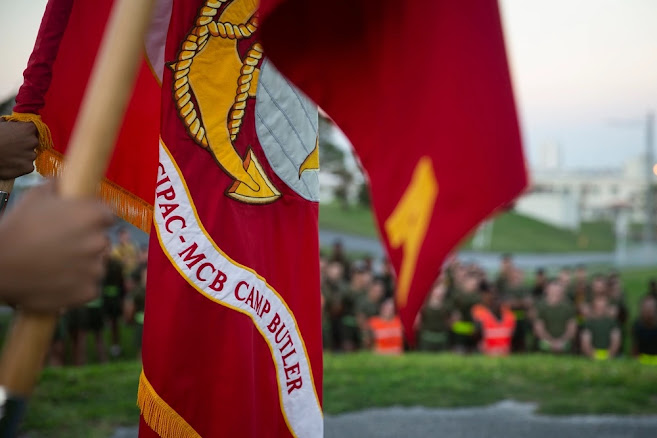
Marine Corps Base Camp Butler on Okinawa is another namesake of the great Marine warrior who came to hate war fought for what he considered the wrong reasons.


Butler believed war should only be conducted to defend the United States or the Constitution and Bill of Rights. He would have absolutely been against misadventures in Vietnam and Iraq. He would have also taken a stand against the insurrection at the Capitol and coup attempt of January 6, 2021.


Marine Corps Base Camp Butler, Okinawa.

[One hundred years ago, 1922, Smedley Butler introduced the first English bulldog into the Marine Barracks, Quantico. Bulldogs have become the mascot of the Marines ever since, with Chesty, namesake of famous Marine Lieutenant General Chesty B. Puller, in residence at Marine Barracks, Washington, D.C.]