Showing posts with label environment. Show all posts

Saturday, April 29, 2023

Three Navy-blue Green Presidents

Review by Bill Doughty––

Six United States presidents in my lifetime were Navy veterans: John Kennedy, Lyndon Johnson, Richard Nixon, Gerald Ford, Jimmy Carter, and George H.W. Bush. Each in his own way and to varying degrees was an optimistic champion of the environment.


Efforts of the first three –– JFK, LBJ and RMN –– led to the first Earth Day in 1970, now Earth Month in April.


The environmental movement is sometimes overshadowed by the other tectonic shifts during that era: The Cold War, Civil Rights, and the Vietnam War. But Douglas Brinkley takes the history of the green movement out of the shadows by centering on the three presidents of the era, as well as highlighting the life and work of ecologist-writer Rachel Carson, in “Silent Spring Revolution: John F. Kennedy, Rachel Carson, Lyndon Johnson, Richard Nixon, and the Great Environmental Awakening” (HarperCollins, 2022).


Sailor JFK
The Navy had a large part in shaping the vision of the presidents who defended pristine wilderness, clean air and water, and preservation of the environment.

For Kennedy of Massachusetts, it began with a deep love of the sea and shoreline, according to Brinkley, who opens the book with this:

“Beguiled by the way sea and sky played together, almost always unpredictably, John F. Kennedy was enthralled by the complexity of the Atlantic Ocean: the moody sky, the invisible might of the tides, shifting clouds, and the yaw and pitch of movement. To be on the water in a sailboat, even in a cruel wind, provided him with a profound connection with nature.”

Kennedy saw, in his own words, the human “biological fact that all of us have, in our veins, the same percentage of salt in our blood that exists in the ocean, and, therefore, we have salt in our blood, in our sweat, in our tears. We are tied to the ocean,” he said.


Johnson of Texas, was saddled with fighting the Vietnam War, poverty, segregation, and voter suppression. Environmentalism took somewhat of a back seat to other priorities. Brinkley writes:

“On the conservation front, Johnson probably should have been aware of of the importance of intelligent land stewardship. His favorite novel –– John Steinbeck’s ‘The Grapes of Wrath’ (1939) –– was based on a man-made ecological catastrophe during the Great Depression that destroyed ranches and farms in Texas, New Mexico, and Oklahoma. It was soil depletion that led to the Dust Bowl. Johnson, however, was left wanting to help the rural poor, without setting an equal priority on nurturing the natural world around them. Johnson liked Bureau of Reclamation dams, because he knew first-hand how electricity lit up forgotten regions, literally and figuratively.”

LBJ’s penchant for dam-building, both at home and abroad, as well as his escalation of the Vietnam war, caused consternation for environmentalists.

LBJ
Yet, in 1968, Johnson signed the Wild and Scenic Rivers Act. “Rivers, Johnson believed, from the far-flung waterways of Alaska, Idaho, and Wyoming to those coursing through the rural countryside of Vermont and Maine were the lifeblood of America,” Brinkley observes.

Johnson “forged ahead on conservation legislation to protect wild places because it was part of America’s frontier heritage.” LBJ is responsible for bringing about the Wilderness Act, Highway Beautification Act, and a commitment to “a green legacy for tomorrow.” According to Brinkley, Johnson should be given more credit for his advocacy to conservation, particularly of America’s rivers (just as President Eisenhower is recognized for the national highway system). As regards LBJ, “His Wild and Scenic Rivers Act was a visionary law passed purely on behalf of the aesthetics of rivers.”


Nixon of California, was captivated by the Pacific Ocean, as a child in Orange County. In 1969 he would make his home, as Kennedy did, next to the ocean. In Nixon’s case, it was in San Clemente, where he enjoyed whale watching. Though facing his own corruption issues that would eventually lead to his expulsion from office, Nixon still managed to achieve positive global initiatives such as rapprochement with China and arms control talks with Russia. And he not only supported the Clean Air Act, Clean Water Act, and National Environmental Policy Act, but he also created the Environmental Protection Agency.

“If Nixon’s signing of NEPA and his Everglades protection were the first big time indications of the administration’s serious commitment to environmental protection, the State of the Union address on January 22, with its plea that ‘Restoring nature to its natural state is a cause beyond party and beyond factions,’ was seen by surprised Democrats as the Great Reconfirmation that Nixon indeed harbored a genuine TR streak … When Nixon delivered a Special Message to the Congress on Environmental Quality on February 10 (1970), he listed fourteen executive orders and twenty-three legislative proposals to combat pollution and provide parkland. ‘The time has come when we can wait no longer to repair the damage already done,’ he told Congress.”

Brinkley notes several times that Nixon was “suspicious” of liberal traps, so he did not appear on TV for the first Earth Day. He even asked FBI director J. Edgar Hoover, to spy on high-profile Earth Day events on college campuses, fearful of their ties with the anti-Vietnam War movement.


Yet, Nixon’s support of conservation, preservation, and a clean environment persisted.


Nixon
In 1970 he created the EPA (Environmental Protection Agency) and NOAA (National Oceanic and Atmospheric Association, and he signed the Clean Air Act.

On October 21, 1972, Nixon signed the Federal Environmental Pesticide Control Act of 1972, an achievement to the legacy of Rachel Carson. He signed the Marine Mammal Protection Act in 1972 and the Endangered Species Act of 1973.


And he signed the Emergency Highway Energy Conservation Act (limiting nationwide speed limits to 55) and the Federal Energy Administration Act in 1974 (the same year he was forced to resign because of Watergate).


Brinkley briefly shows how the Navy stopped pumping sewage into San Francisco Bay while in port. He also discusses how, during the Nixon administration, Marines at Camp Pendleton helped protect endangered wildlife. In coordination with the Department of Interior and NASA, the Navy sponsored the first all-women team of aquanauts in Tektite II to study the ecosystem at the bottom of the sea.


All three Navy-veteran presidents –– two Democrats and one Republican –– were following the lead of conservationist Republican President Theodore Roosevelt of another generation, and who had his own strong ties to the Navy and who championed nature and national parks. 


In two appendices Brinkley lists scores of national wildlife refuges and national parks created or authorized by Kennedy, Johnson, and Nixon.


One of President Nixon’s many environmental preservation initiatives included establishing a federally designated Wilderness area, the Cumberland Island National Seashore. “Because Cumberland National Seashore encompassed twenty-three different ecological communities, Nixon agreed that only three hundred tourists at a time be allowed on Cumberland Island. Georgia Governor Jimmy Carter, a moderate Democrat, played a major conservation role regarding the saving of Cumberland…"


Rachel Carson talks about "Silent Spring" in April 1963
This massive book (857 pages!) includes dozens of evocative photos, memorable stories, and captivating personalities of the people who created the environmental enlightenment and “awakening” in the 1950s, 60s, and early 70s.

Rachel Carson provided much of the inspiration for the environmental movement leading up to the first Earth Day and the public’s demand for clean water, air, and land. She wisely connected the long-lasting danger of atmospheric tests of nuclear weapons with the hazards related to DDT, a pernicious pesticide that altered ecosystems. We have referenced or featured Carson’s works several times here on Navy Reads.


Carson’s “Silent Spring” and her Sea Trilogy inspired John F. Kennedy. Family matriarch Rose Kennedy gave a copy of “Under the Sea-Wind,” published in 1941, to JFK in the mid-1950s.


“Although ‘Under the Sea-Wind’ sold in low numbers, perhaps because Pearl Harbor occurred right after it debuted, it became celebrated by marine biologists and other lovers of the animal kingdom,” Brinkley writes.


Carson was, in turn, inspired by Albert Schweitzer. And it seems everyone was inspired by Henry David Thoreau. 


Brinkley also follows the influence and positive impact of artists, writers, scientists, and politicians: Ansel Adams, John Muir, Carl Sandburg, Marjorie Stoneman Douglas, William O. Douglas, Linus Pauling, Harold Ickes, Wallace Stegner, Robert Frost, Ted Sorensen, Robert F. Kennedy, Cesar Chavez, Jacques Cousteau, Sylvia Earle, Barry Commoner, David Brower, Lady Bird Johnson, Howard Zahniser, Ralph Nader, Robert Boyle, John Saylor, Katherine Ordway, Chief Luther Standing Bear, Laurance Rockefeller, Russell Train, Stewart Udall, Ronald Dellums, Daniel Patrick Moynihan, Henry “Scoop” Jackson, Frank Church, Philip Hart, Gaylord Nelson, Edmund Muskie, William Ruckelshaus, Walter Hickel, Al Gore, and John Ehrlichman.


In the book’s preface, Brinkley praises those “serving a cause bigger than oneself” and warns against the ostrich syndrome of ignoring ongoing threats to the environment, including climate chaos. 

He writes: “The poisonous climate cocktail of ravaging wildfires, mega floods, and monstrous blizzards costs American taxpayers billions of dollars every year (soon to climb to trillions), disrupts lives, causes vast displacement, ruins communities, and kills countless citizens.”

Brinkley says, “In some small way, I hope this book illuminates how an engaged citizenry can bring America’s natural beauty back from the brink.” He writes, “Optimism must remain in our oxygen.”


I remember the feeling of optimism, hope, and activism of the first Earth Day in 1970, the first recognition that something needed to be done to confront pollution, overpopulation, and other ecological threats.


Among more than a dozen books, Brinkley is the author of “The Wilderness Warrior: Theodore Roosevelt and the Crusade for America” (2009) and “The Unfinished Presidency: Jimmy Carter’s Journey Beyond the White House” (1998).

Tuesday, August 16, 2022

Chilling with ‘Icebound’

Review by Bill Doughty––

As the summer heats up literally, here’s a way to cool off literarily: Andrea Pitzer’s goosebumps-inducing history-science-adventure true story, “Icebound: Shipwrecked at the Edge of the World” (Scribner, Simon & Schuster, 2021).


It’s the otherworldly true story of Dutch sailors, led by navigator William Barents, as they attempt to find an open polar sea in the Arctic in the age of sail.

Barents, who pioneered map-making in the Mediterranean, made three voyages for the Dutch Republic in the 1590s. This book covers all three ventures, but zeroes in on the third and final fraught attempt. The Dutch, along with other nations, wanted to discover a northern trade route to China.


It was time of growing empires and growing sea trade in slaves and spices.


It was also a time of war between Spain (Catholic and monarchistic) and the Netherlands (Protestant and based in liberty). While war raged in western Europe, Barents and other Dutch sailors headed East and North, hoping to find a warm sea beyond the ice.


Barents was considered a “magician” for his ability at celestial navigation. “He could look into the sun and fix their ship’s position not he globe. He could watch the stars and tell them the day of the year.”


Though no navigable route was found, the young Dutch Republic would continue to expand over the next hundred years –– thanks to the slave trade, spice trade, exploration, and art –– to become the largest economy and naval power in the world at the time, according to Pitzer.


“William Barents would play a role in that drama, but as he readied himself for his first voyage into the Arctic, his country was a blank slate, its sins and achievements still unwritten,” she writes.

Navy readers will appreciate Pitzer’s recounting of history and science, naval lore, and the courage and commitment of sailors in the face of seemingly impossible odds.


For example, as regards history and science…


We are reminded that Vikings “discovered” Ukraine and that the science of navigation relied on the discovery of trigonometry in 1080 by Arab Astronomers, as well as inventions by Babylonians, Egyptians, Indians, Chinese, Greeks, and Scandinavians. What they knew in the late 16th century, though, was dwarfed by what Barents and the sailors didn’t know. Many great scientific discoveries were yet to be made.

“As they set forth, they knew some things. They knew how to set the sails on the ship to catch the wind. They knew how to steer. They knew how to work wood, and hunt, and trap. Barents could reckon latitude and knew the stars, and those he didn’t know, he had charts for. Sailors understood that icebergs haunted the northern regions and could stretch for miles. Sometimes rising more than two hundred feet above the waterline, they were capable of rewarding vessels and the tiny human presence guiding them.

“Barents and his fellow crew members knew some things, but it wasn’t enough. They possessed no scientific understanding of gravity, no telescopes, and no calculus. Though they could find their latitude, they couldn’t yet determine longitude from aboard a ship. They were centuries away from deciphering the germ theory of disease. More than a hundred years could pass before humanity would discover that lightning was electricity. Decades remained before doctors would realize that blood circulates in the body, and that a cell is the unit of life. As he sailed into the Arctic, Barents would, in time encounter wonders and terrors without understanding most of the forces at play in his universe.”

Nenets idols, Vaigach Island.
Naturally, in the absence of information and in the embrace of superstition, early sailors believed good –– and bad –– fortune was the will of God. They believed their religion condoned slavery, for example, and ordained “man” to overcome and rule over nature.

Pitzer describes interactions with indigenous people in the far north, including the Sami and Nenets, who worshipped wooden idols, which fascinated the sailors. One sailor stole an idol and took it aboard ship only to be forced to return it later.


As the Scientific Revolution was beginning to blossom in Europe with Copernicus, Descartes, Francis Bacon, Barents and his crew were collecting and measuring polar bear pelts and walrus tusks and studying flora and fauna –– three hundred years before Darwin. Barents explained mirages, experienced the gap between Earth’s magnetic pole and true polar north, and mapped the geography at the edge of the Arctic. He also resolved a centuries-old superstition about barnacle geese: that they did not spontaneously hatch from barnacles (because no one had previously seen their nests and eggs).


Pitzer hides her history and science within harrowing tales of survival aboard their ship, at Vaigach Island, on boats, and at then-ice-covered Nova Zembla.


We feel the cold chill the crew to the bone. We hear chunks of ice hit the hull of the ship, see the men fend off frequent attacks by polar bears, smell the stink of sickness, and taste the desperation as the men are trapped in the ice over the winter: “Shipwrecked at the Edge of the World.”

Arctic fox
Navy history readers will appreciate passages about sails, masts, knees, joint pegs, and planks; scurvy; mutiny; keelhauling; and generally what life was like for age-of-sail sailors at sea –– endless routines, fear of storms, and trying to thrive in a crowded space.

Ultimately, this is a story of perseverance, the strength of the human spirit, and the will to survive.


The sailors relied on trapping Arctic foxes and finding birds and eggs. They rationed what food they could salvage from their ship. And they built a cabin and collected drift wood to keep warm.


Hampton Sides, author of the great In the Kingdom of Ice,” blurbs: “Engrossing … Andrea Pitzer brings Barents’s three harrowing expeditions to vivid life –– while giving us fascinating insight into one of history’s most intrepid navigators.”


Pitzer visits Nova Zembla in 2019.
Pitzer bases her research on journals, material in museums, and interviews with scholars. She relies on entries in the original diary of Gerrit de Veer, one of the sailors who returned to tell the story.

She also makes a remarkable visit in August 2019 to Nova Zembla, “a numbing, desolate place,” near the ruins of Barents’s cabin. The land is now a Russian Arctic preserve.


The book concludes with a sobering account of the effects of global warming in the Arctic and the loss of ice during summer and over recent decades. Pitzer gives a stunning conclusion about the intersection of Barents’s exploration, our understanding and acceptance of science, and a context for how humans impact the planet.


Survival of individuals, and perhaps the species, depends on the will to endure, adapt, and overcome.


“Icebound” can be a springboard to confront cold, inconvenient truths.


The Arleigh Burke-class guided-missile destroyer USS Ross (DDG 71) prepares to replenish stores and fuel with the Henry J. Kaiser-class replenishment oiler USNS Laramie (T-AO-203) in the Barents Sea, Oct. 29, 2020. Ross is currently on its 10th Forward Deployed Naval Forces-Europe (FDNF-E) patrol in the U.S. Sixth Fleet area of operations in support of U.S. national security interests in Europe and Africa. (MCSN Christine Montgomery)

Friday, June 24, 2022

Rejecting Gilead, Embracing Carson

Review by Bill Doughty––

Retired Admiral James Stavridis writes this about author and environmentalist Rachel Carson, author of “The Sea Around Us”: “I’ve read many, many books that try to describe the power and glory of the deep ocean, but none eclipses the writing of Rachel Carson.”


Stavridis offers that highest praise to Carson in the first part of his four-part collection, “The Sailor’s Bookshelf,” reviewed late last year on Navy Reads. Great writers are drawn to other great writers.


Such is the case of Margaret Atwood, who also highlights Rachel Carson’s “The Sea Around Us” (as well as three other classics, including “Silent Spring”) in the final essay of her latest collection: “Burning Questions: Essays and Occasional Pieces 2004 to 2021.”

Just as Stavridis and Carson believe, Atwood writes, “The oceans are the living heart and lungs of our planet. They produce most of the oxygen in our atmosphere, and through their circulating currents they control climate. Without healthy oceans, we land-dwelling, air-breathing mid-sized primates will die.”


In her 2021 essay “The Sea Trilogy,” Atwood celebrates the republication of Carson’s first three books –– “Under the Sea-Wind,” “The Sea Around Us,” and “The Edge of the Sea.”


Atwood writes: “In all three of these books there is one underlying refrain: Look, see. Observe. Learn. Wonder. Question. Conclude. Rachel Carson taught people to look at the sea, and to think about the sea, in fresh ways.”


Atwood herself is perhaps best known for her fresh observations about the rise of authoritarianism and her imaginings of what might come. She is the author of “The Handmaid’s Tale” and “The Testaments.” She’s the mind behind the demented mind of Aunt Lydia and the darkness of Gilead. Her concern about the rise of authoritarianism continues.


In the midst of the COVID pandemic, she reflected, “Totalitarianisms were preoccupying me; the worldwide drift in that direction was alarming, as were various authoritarian moves made in the United States. Were we yet again witnessing the crumbling of democracy?”

Two years earlier Atwood wrote a scathing essay called “A Slave State” about the effects of restricting reproductive freedom and a woman’s right to an abortion. Here’s a timely excerpt, in light of today’s United States Supreme Court ruling to overturn Roe v. Wade after fifty years as established precedent in U.S. law:

“Nobody likes abortion, even when safe and legal. It’s not what any woman would choose for a happy time on Saturday night. But nobody likes women bleeding to death on the bathroom floor from illegal abortions either. What to do?

“Perhaps a different way of approaching the question would be to ask: What kind of country do you want to live in? One in which every individual is free to make decisions concerning his or her health and body, or one in which half the population is free and the other half is enslaved?

“Women who cannot make their own decisions about whether or not to have babies are enslaved because the state claims ownership of their bodies and the right to dictate the use to which their bodies must be put. The only similar circumstance of men is conscription into the army…

“No one is forcing women to have abortions. No one either should force them to undergo childbirth.“

In a gripping 2015 essay, “Reflections on The Handmaid’s Tale,” Atwood writes this:

“As a generalization, let us say this: absolutist governments have always taken an inordinate interest in the reproductive capabilities of women. In fact, human societies have taken such an interest. Who shall have babies, which babies shall be ‘legitimate,’ which shall be allowed to live, and which shall be killed (in ancient Rome it was up tot he father, etc.), whether abortion shall be allowed or not, or up to what month; wither women should be forced to have babies they didn’t want or couldn’t support, and so forth.”

While many fundamentalists want to restrict a woman’s right to choose, most Americans, according to numerous polls, are not in favor of overturning 1973’s Roe v. WadeAs today’s SCOTUS decision sinks in, so does anger and resentment.


Atwood discusses the anger she witnessed in the early 1970s, “at the time of the second-wave feminist movement.”


Atwood and Le Guin
In her 2018 obituary essay “We Lost Ursula Le Guin When We Needed Her Most,” Atwood turns to Le Guin to explain the outrage women felt after decades of “suppressed anger” from “being treated as lesser –– much lesser…” Atwood quotes from Le Guin’s 2014 essay, “About Anger”:

“Anger is a useful, perhaps indispensable tool in motivating resistance to injustice. But I think it is a a weapon –– a tool useful only in combat and self-defence … Anger points powerfully to the denial of rights, but the exercise of rights can’t live and thrive on anger. It lives and thrives on the dogged pursuit of justice … Valued as an end in itself, it loses its goal. It fuels not positive activism but regression, obsession, vengeance, self-righteousness.”

About Le Guin, Atwood writes, “The long-term goal, the dogged pursuit of justice –– that took up a lot of her thought and time.”


Le Guin was a premiere voice in science fiction and speculative fantasy. She's the author of "The Left Hand of Darkness" and the "Earthsea" series.


Atwood’s collection of essays is a tribute to a wide spectrum of iterature and free-thinking wisdom. Readers will be rewarded with deep dives into the works of Shakespeare, Alice Munro, Ray Bradbury, Gabrielle Roy, Homer, Dickens, Graeme Gibson, Richard Powers, and, of course, Rachel Carson.

Tuesday, May 17, 2022

‘American Buffalo’ by Steven Rinella

Review by Bill Doughty––

America’s most famous living hunter-conservationist is Steven Rinella. He is the brain and heart of the MeatEater Netflix show, podcast, and franchise. Rinella believes in respect for nature, conservation, and the environment. And he sees a deep connection between us and our food.


On one of his shows Rinella takes former Navy SEAL and Navy Reservist Cmdr. Rorke Denver, for a hunt in Alaska for black bear.* Denver is a fellow author who starred in “Act of Valor.” They eventually find a bear, and when he looks through the rifle’s scope at the bear now coming closer, Denver pauses to appreciate the beauty and power of the life he is about to take.


Rinella has a similar moment when he sights a buffalo, as described in gripping detail in “American Buffalo: In Search of a Lost Icon” (Spiegel & Grau, Doubleday, Random House; 2008).


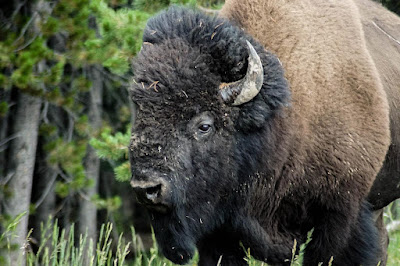
A North American buffalo.
Lucky to have won a lottery for a hunting permit for wild buffalo, Rinella is luckier still to be one of a few who actually finds and shoots one. His journey in Alaska, eluding bears and other predators, battling the elements, and navigating dangerous waterways, is compelling. So is his moment of truth as he prepares to shoot. His careful butchering of the animal is presented in precise detail. Though written fourteen years ago –– before Rinella became a world-renowned figure –– this book reveals the talents of a gifted writer and outdoorsman.

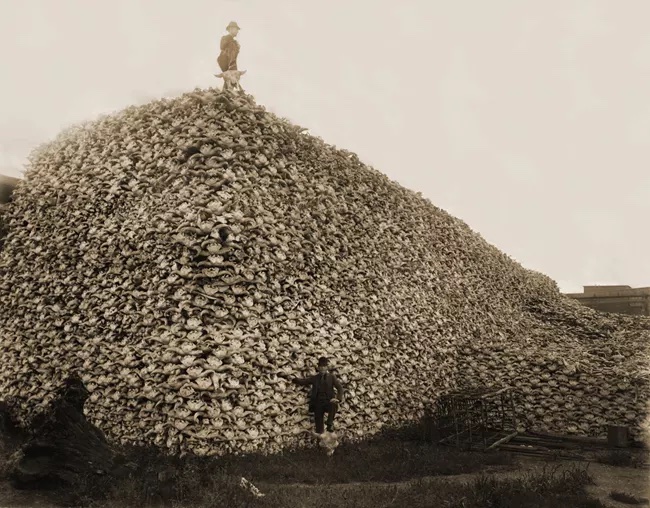
But what makes “American Buffalo” truly great and lasting is the author’s panoramic view of time and a philosophical connection to nature and life. He looks unblinkingly at the devastating destruction and near extinction of bison and other species in North America, lamenting the wanton greed and shortsightedness of people who killed only for profit and trophy. Rinella eats what he kills.


In this photo from 1892, men stand next to and atop a pile of American bison skulls waiting to be ground up for fertilizer.

Like other hunters, he sees the animal’s skull as a kind of connection to life’s mysteries.

“Buffalo skulls were put to various uses by Indians, most of a spiritual or metaphysical nature. The buffalo skull was an especially potent symbol to many Plains Indians tribes, but not because it equaled death. Rather, a skull represented a form of rebirth to many tribes. To reduce a buffalo to its skeleton was like ushering the animal back to a sort of primordial starting line, or beginning. The clean skull allowed for continuity, like a blank canvas upon which future buffalo could be created…

“I’m not a particularly religious person, though I do sense an inkling of the spiritual when I look at this buffalo skull. Many people have tried to explain to me what they feel when they look at a crucifix of Torah scroll; it’s an emotion often described as a mixture of gratitude, devotion, continuity, and awe. Looking at a buffalo skull is probably the closest I’ll ever come to experiencing those feelings, however faintly, and I’m glad to have a taste of that…”

Rinella describes how he embraces the privilege of being alive for the relatively short time we have.


Alaska's Copper River Valley
He searches for meaning and symbols. He calls the landscape he hunts in a "trophy."

And he questions the connection between his reverence for the animal he hunts and his commitment to killing and eating it.

“In a historical sense, I suppose that my confused and convoluted relationship to the buffalo is nothing new. For the entirety of man’s existence in North America, we’ve struggled with the meaning of this animal, with the ways in which its life is intertwined with our own. I think of the first hunters who walked through some long-ago gap between glaciers and stumbled onto a landscape populated with strange and massive creatures. The buffalo was just one of many then, a giant among a host of other giants, but over time these many animals were whittled away by the forces of man and nature. Eventually the buffalo stood alone, like the winning contestant in a game show.

“The prize was humanity’s never-ending attention, which was ultimately a bittersweet award. For thousands of years, the first people of North America fed on the buffalo’s meat and wore the buffalo’s skin, and then made a deity of the animal as a way of reconciling their need to slaughter the thing that granted them life. My own European ancestors came to the New World and scoffed at the heathen nature of the Indians’ ideas, then stood by as the buffalo nearly vanished from the earth beneath their notion that the animal was an expendable gift of their own God, a commodity meant to get them started before stepping aside and letting ‘civilization’ bloom in the wilderness.”

Throughout this book, Rinella blends spirituality with superstition, history with mystery, and his own life’s experiences within the context of our shared science and reality.


“American Buffalo” opens with an extended soliloquy about Neil Young and his early band Buffalo Springfield.

In a fun and mind-bending “association game,” he links “For What It’s Worth," a song against the Vietnam War ; Dances with Wolves, filmed in Canada; Hernando Cortéz of Spain; Crazy Horse of the Oglala Sioux; Springfield rifles; the Civil War; Black Diamond, the buffalo on the American nickel coin; President Theodore Roosevelt, hunter and conservationist; and the city of Buffalo, New York.

"Buffalo," is the name of cities in eighteen states. But, Rinella notes, no wild buffalo lived near Buffalo, New York.


On Saturday, Buffalo was the site of another race-based mass shooting by a white supremacist with an AR-15 "assault-style" rifle. Today, President Biden and First Lady Jill Biden visited Buffalo. Biden, a lifelong supporter of the Second Amendment, has asked Congress to pass legislation to require new background checks for gun buyers, and ban military-style "weapons of war" and large-capacity ammunition magazines.


Steven Rinella
Rinella does not hunt with AR-15s. He uses bolt-action rifles, pump shotguns, and bows and arrows for hunting. Rinella is an ethical hunter who calls himself “an evironmentalist with a gun.”

He became interested in environmental issues, according to a profile earlier this year in The New York Times by Malia Wollan, when one of his big brothers gave him a paperback of Aldo Leopold’s “A Sand County Almanac.”According to Wollan, “Most people read Leopold as belonging to the pantheon of American environmental writers, with the likes of Henry David Thoreau, Rachel Carson and John Muir. Rinella reads Leopold as a fellow hunter.” (Marjory Stoneman Douglas is another great environmentalist in that pantheon.)


On his latest podcast, Rinella discusses hunting, fishing, and books. He talks to Cameron Hanes about Hanes’s new book, “Endure: How to Work Hard, Outlast, and Keep Hammering,” with a foreword by Joe Rogan and afterword by David Goggins. Hanes says, “If you wish you could run farther and shoot straighter, this book is for you.”


Rinella, himself, is the author of a half-dozen books, with more planned for release in coming months and years, including books for children, outdoor cooking, and an “atlas for the outdoors.”


Steven Rinella, the “environmentalist with a gun,” is also a philosopher with a pen and a voice.

Some people, especially vegans and those who prefer not to think about where their super market food comes from, will be turned off by the whole MeatEater oeuvre. But that’s the beauty of American freedom, diversity, and the right to choose.


In the MeatEater episode with former Navy SEAL Rorke Denver, after Denver bags his bear, and just before he and Rinella skin and butcher it, Rinella expresses his appreciation for the service and sacrifice of Denver and other veterans who serve in the nation’s defense.


In “American Buffalo: In Search of a Lost Icon” readers can discover an ethos of honor, courage, and commitment.


*(Top photo: Denver and Rinella trek their bear meat and fur out of the Alaskan wilderness in a scene from MeatEater, YouTube.)

Thursday, April 21, 2022

Timely ‘How Civil Wars Start’

Review by Bill Doughty––

Here's a fascinating revelation: “Blacktivist” on Facebook was “one of more than 470 accounts linked to a Kremlin effort to infiltrate the Black Lives Matter movement.” The Russians' goal was to foment hate and division along racial, religious, and ethnic lines. [Just some of ways to create division, especially via social media.*]

Vladimir Putin and his Russian operatives were not just interested in helping elect their chosen candidate in the presidential election of 2016; they were also actively promoting general discord and division in America and Europe.


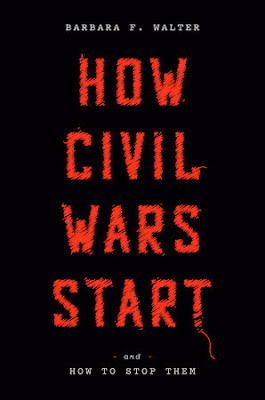
But they are not the only actors on the world stage using social media platforms to create and accelerate discord, as Barbara F. Walter reveals in “How Civil Wars Start: And How to Stop Them” (Crown, Random House; 2022). She presents a world history of civil wars with a special focus on recent history –– that is thorough, comprehensive, and well-written. It's scholarly without being narcoleptic.


We learn about “anocracy” (neither full democracy nor full autocracy),“factionalism” (countries split along political parties based on ethnic or other identity factors instead of ideology), “superfactions” (groups that share identity factors as well as a different religion, class and geographic location), and “accelerationism” (“the apocalyptic belief that modern society is irredeemable and that its end must be hastened so that a new order can be brought into being.”).

According to Walter, “Two variables –– anocracy and factionalism –– predicted better than anything else where civil wars were likely to break out.” Studies show that superfactions are twelve times more likely to start a civil war. Superfactions use a lot of symbols, phrases, flags, and other paraphernalia to appeal to national pride and their leader. Walter notes, “One of the greatest fault lines that tend to emerge among super factions: the urban-rural divide.”


Accelerationism is a core part of modern American extremism, according to Walter. We see it expressed by some "end times" Christian nationalist extremists, white supremacists, and other right wing militia especially in the tragedies of the Waco and Ruby Ridge sieges in the early 1990s. We also see it in Michigan militiaman Timothy McVeigh’s bombing of the Alfred P. Murrah federal building in Oklahoma City in 1995.


A scary thought: What if Vladimir Putin’s main motive in his war on Ukraine is based on accelerationism –– a desire to bring on armageddon? Who will stop him?


Putin orders, condones, and excuses genocide from a distance.
As Putin's war atrocities in Ukraine continue to come to light, the West condemns and documents his war crimes and charges of genocide. Walter introduces us to the “Ten Stages of Genocide,” according to Gregory Stanton of GenocideWatch.com.

Another revelation in Walter’s book is the sheer number of civil wars in history and throughout the world, including in Russia just over one hundred years ago. She presents a history of civil wars –– battles often over Left and Right ideology –– in Mexico in 1910, China in 1921, Greece in the 1940s, Yugoslavia in the 1990s, and Burundi in 1993. Civil wars have been fought in recent times in Syria, Iraq, Yemen, Afghanistan, Ukraine, Sudan, Ethiopia, Rwanda, Myanmar, Lebanon, and Sri Lanka.


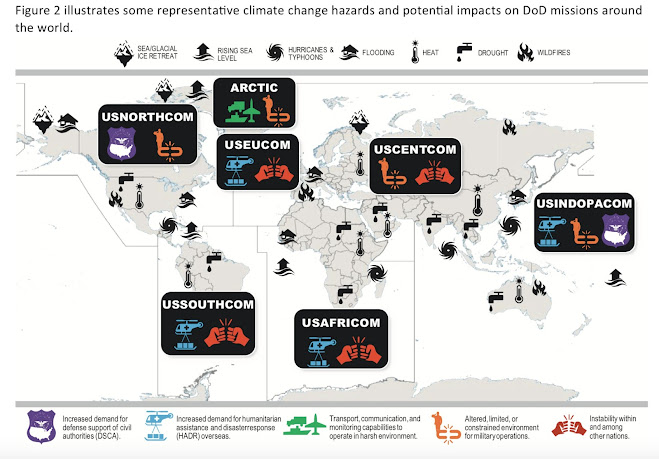
She notes, “Immigration is often the flashpoint for conflict. Migrants come into a country and compete with poorer, more rural populations –– sons of the soil –– fueling resentment and pushing these groups toward violence. It is especially alarming, then, that the world is entering an unprecedented period of human migration, in large part due to climate change. As sea levels rise, droughts increase, and weather patterns change, more and more people will be forced to relocate to more hospitable terrain. By 2050, the World Bank predicts, over 140 million “climate migrants” will likely flee Southeast Asia, sub-Saharan Africa, and Latin America. Experts have also warned that climate change is likely to lead to scarcity of resources, which could also fuel conflict.”


DoD spells out similar security implications, including competition for resources and the potential for civil unrest in its updated October 2021 “Department of Defense Climate Risk Analysis.” It's worth reminding ourselves of these realities as we approach Earth Day, April 22, 2022.


Another key point by Walter: “In the 21st century the most dangerous factions are once-dominant groups facing decline.” People who feel left out of the political process and who feel they’ve been “downgraded” in a trajectory away from power can be rich or poor, black or white, Christian or Muslim, Walter says.

Using the Catholic-Protestant “Troubles” in Northern Ireland as a case study, Walter shows that when a government violently cracks down on protests, it creates a loss of hope and more violence. In the face of peaceful protests, leaders should choose reform over belligerence, tolerance over violence.


Long periods of protests, along with anger over elections, make a country ripe for civil war, she says. “Elections are potentially destabilizing events in highly factionalized autocracies –– especially when a downgraded group loses.”


“The government should obviously take a zero tolerance stance on hate, and punish domestic terrorism, but it would weaken support for extremism by addressing the legitimate grievances that many citizens have.” She notes, “Civilian deaths at the hands of the government can tip conflicts into all-out war.”


As citizens in Putin’s Russia experience hardships due to international sanctions and significant military casualties, one wonders if there will be more protests and, if so, how the Kremlin will crack down on the protesters. For now, using propaganda especially on TV and in social media, Putin seems to be keeping his country largely in the dark about the realities of his war.


Walter calls social media a “pandora’s box” used by authoritarians such as Russia’s Putin, Philippines’s Duterte, India’s Modi, Turkey’s Erdogan, Brazil’s Bolsonaro, Venezuela’s Maduro, and Hungary’s Orban to influence their own citizens and citizens of other countries.

“Now any country, any group, and any individual can use the internet to destabilize an adversary. Rivals of the United States are deeply invested in stoking civil conflict., through support for a preferred group or by inciting both sides. Vladimir Putin, an ex-KGB officer, has long understood the power of disinformation. Others have caught on. The Empirical Studies of Conflict Project –– together with a team of scholars at Princeton –– found that Russia, together with China, Iran, and Saudi Arabia, used clandestine social media campaigns fifty-three times between 2013 and 2018 to try to influence the internal politics of another country. Most of the campaigns examined by the Princeton team (65 percent) aimed to denigrate a public figure, usually a politician, in order to get his or her opponent elected. (Between 2012 and 2017, for example, seven of the ten most-read online pieces about Angela Merkel were fabricated, according to BuzzFeed.) The United States was the main target of these attacks but not the only one. Great Britain, Germany, Australia, and others were also targeted. Almost all the attacks were aimed at democracies.”

Even France is experiencing an erosion of its democracy –– due in part to the use of social media to rile up yellow vest protestors to become violent, and in the rise of pro-Putin French National Front Party politician Marine Pen, who is challenging Emmanuel Macron for the presidency. “The party has spread its message –– exploiting and inflaming racial tension –– with the most sophisticated social media operation of any major political party in France.”


Social media achieves success in fomenting divisions by using behavioral algorithms. Walter puts Facebook and YouTube, in particular, under the microscope. It’s been shown that these platforms are incentivized to provide false, inflammatory, angry, and outrageous content because that gets more likes, clicks, and investment of time. The Pew Research Center reveals that “posts exhibiting ‘indignant disagreement’ received nearly twice as many likes and shares as other types of content.”

“Worse, the behavioral algorithms began creating self-reinforcing, increasingly outlandish information silos that led users down dangerous paths: toward conspiracy theories, half-truths, and extremists seeking radical change. These recommendation engines, as they are called, ensured that users were channeled toward more narrow and more extreme information. If a user “liked” a post on a police officer helping a kitten, say, Facebook would funnel additional posts to the user on police benevolent associations, then pro-police stories, then increasingly more fanatical material. Walter Quattrociocchi, a computer scientist at Sapienza Università di Roma, analyzed fifty-four million comments over four years in different Facebook groups. He found that the longer a discussion continued, the more extreme the comments became. One study found that YouTube viewers who consume the kind of ‘mild’ right-wing content created by provocative talk show host Joe Rogan, whose audience in 2020 was 286 million, are often pulled into much more radical alt-right content. The study concluded that YouTube is a ‘radicalization pipeline.’

“It’s this business model of engagement that makes social media so terrifying to those of us who study civil wars.”

Fortunately, after insurrectionists rioted on the Capitol of January 6, 2021, the military updated its review of extremism in its ranks. In December 2021 Secretary of Defense Lloyd Austin released his Report on Countering Extremist Activity Within the Department of Defense, which addressed, in part, not only increased education and training, but also greater screening and investigation of “electronic platforms,” including social media resources.


“The overwhelming majority of the men and women of the Department of Defense serve this country with honor and integrity," Austin said. "They respect the oath they took to support and defend the Constitution of the United States. We are grateful for that dedication.” He added, “We owe the men and women of the Department of Defense an environment free of extremist activities, and we owe our country a military that reflects the founding values of our democracy.”


Walter notes that military leaders, especially former SECDEF Mark Esper and Chairman of the Joint Chiefs of Staff Gen. Mark Milley, were among the institutional or human guardrails that prevented a coup attempt immediately before and after the 2020 presidential election. Both apologized for taking part in former President Trump's march to a photo-op at St. John's Church, where he posed holding a Bible.


Then-President Trump directs AG Barr, SECDEF Esper, and CJCS Milley to march to St. John's Church. (Shealah Craighead)

After failing to overturn results in state election offices and courts (including the Supreme Court) but before turning to his supporters and directing them toward the Capitol, Donald Trump attempted to influence the military (and then delayed responding to the insurrection).

“Trump catered to America’s generals throughout his time in office, but rather than validate his bids for more power, they distanced themselves from his agenda at key moments. In 2020, Secretary of Defense Mark Esper refused to use active-duty troops to control black Lives Matter demonstrators (he was later fired). And on January 3, 2021, the ten living former defense secretaries, including James Mattis, Mark Esper, Dick Cheney, and Donald Rumsfeld, issued a statement in The Washington Post making clear that they would defend the Constitution, not the president. They concurred with a statement made months earlier by General Mark Milley, chairman of the Joint Chiefs of Staff: ‘There’s no role for the U.S. military in determining the outcome of a U.S. election.’”

New reports are coming to light about Trump's attempts to use the Insurrection Act to deploy the military along the border and on American streets in the months leading up to the 2020 election but DoD guardrails held. According to news reports this week, Congress is looking for ways to strengthen the Insurrection Act so it cannot be easily abused by a commander in chief.


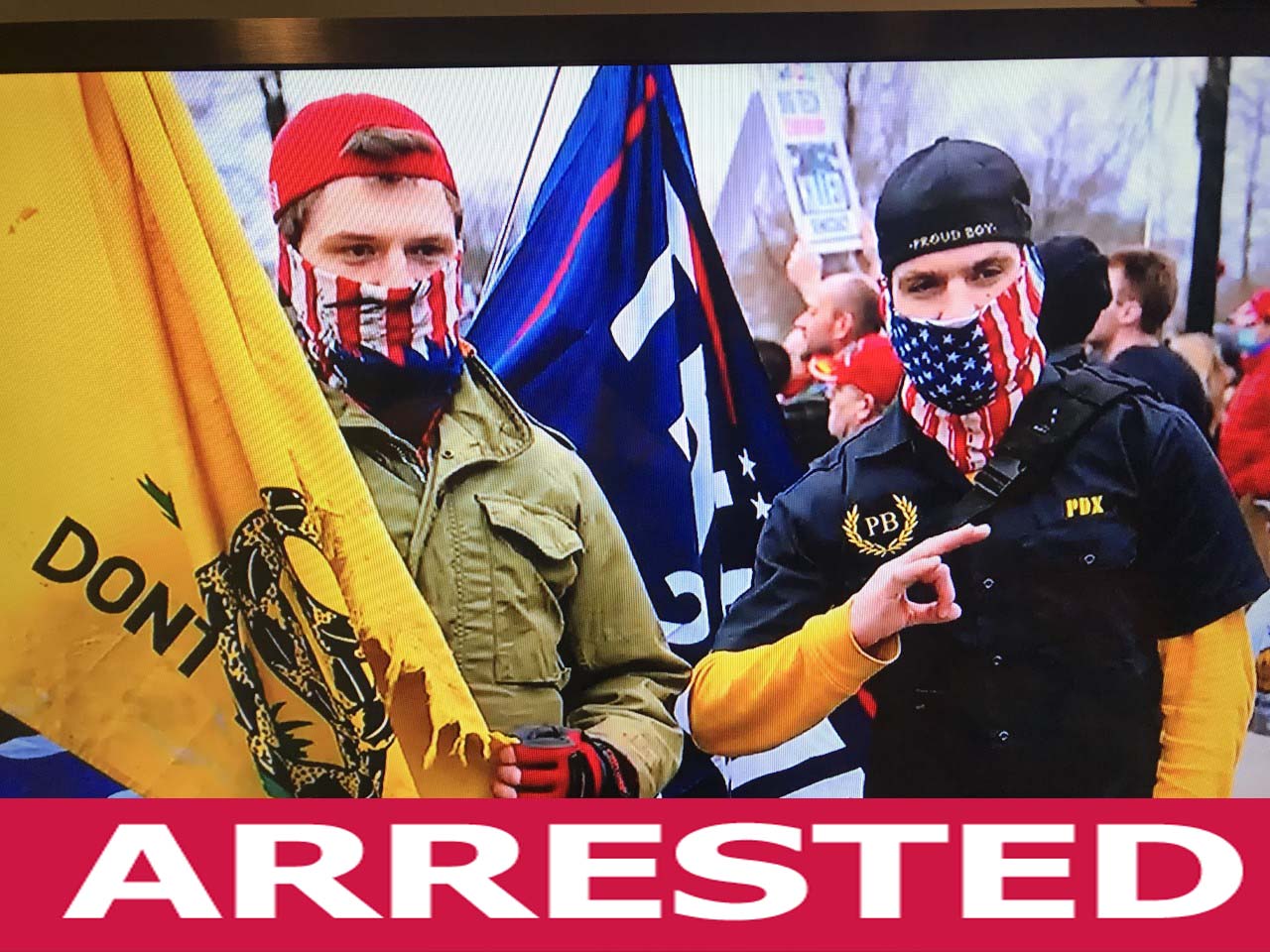
Walker says extremism has grown to a pre-insurgency level probably since Ruby Ridge, Waco, and Oklahoma City. She briefly examines groups such as the Proud Boys, Three Percenters, and Oath Keepers, but she notes how unwise it would be if militia again tried to overturn the government.


Barbara F. Walter
“It was not crazy for Confederates to think they could take on the American military in 1860,” Walter writes. “It is crazy for militias to think that today.”

Nevertheless, we can expect militia groups and other disaffected Americans to continue to be targets of Putin’s campaign of disinformation, misinformation, and division, particularly via the internet.


Walter offers hope, advice, and a stirring patriotic conclusion in this very timely and now essential book.


[*Russia has used social media to divide Americans along lines of race, religion, politics, energy and environmental issues. The U.S. Senate has presented extensive information on Russian interference in the U.S. elections, including via heavily redacted reports. In 2018 the House of Representatives revealed how Russia also creates division among conservatives and liberals in the United States through social media in views about energy and environmentalism.]